
It's the first time in the history of the world.
Just now, OpenAI has evolved again.
Now, the popular ChatGPT Sites officially open for publicity!
Even if you don't write a line of code, with just a few natural language hints or uploading a sketch, you can create a highly professional, complex interactive website in a matter of minutes, like writing a Google document.

The traditional SaaS industry is undergoing a massive disruption when it comes to front-end development in natural language alone.
And then there's the news.
On the underlying technology side, GPT-6 has demonstrated amazing cross-modal capabilities.
In a completely disconnected state, with only a Mel spectrum map (a wave-shaped visual image of sound), the GPT-6 can recognise the sound of the deep blue sea trout, and even the light sword sound of the Star Wars trout.
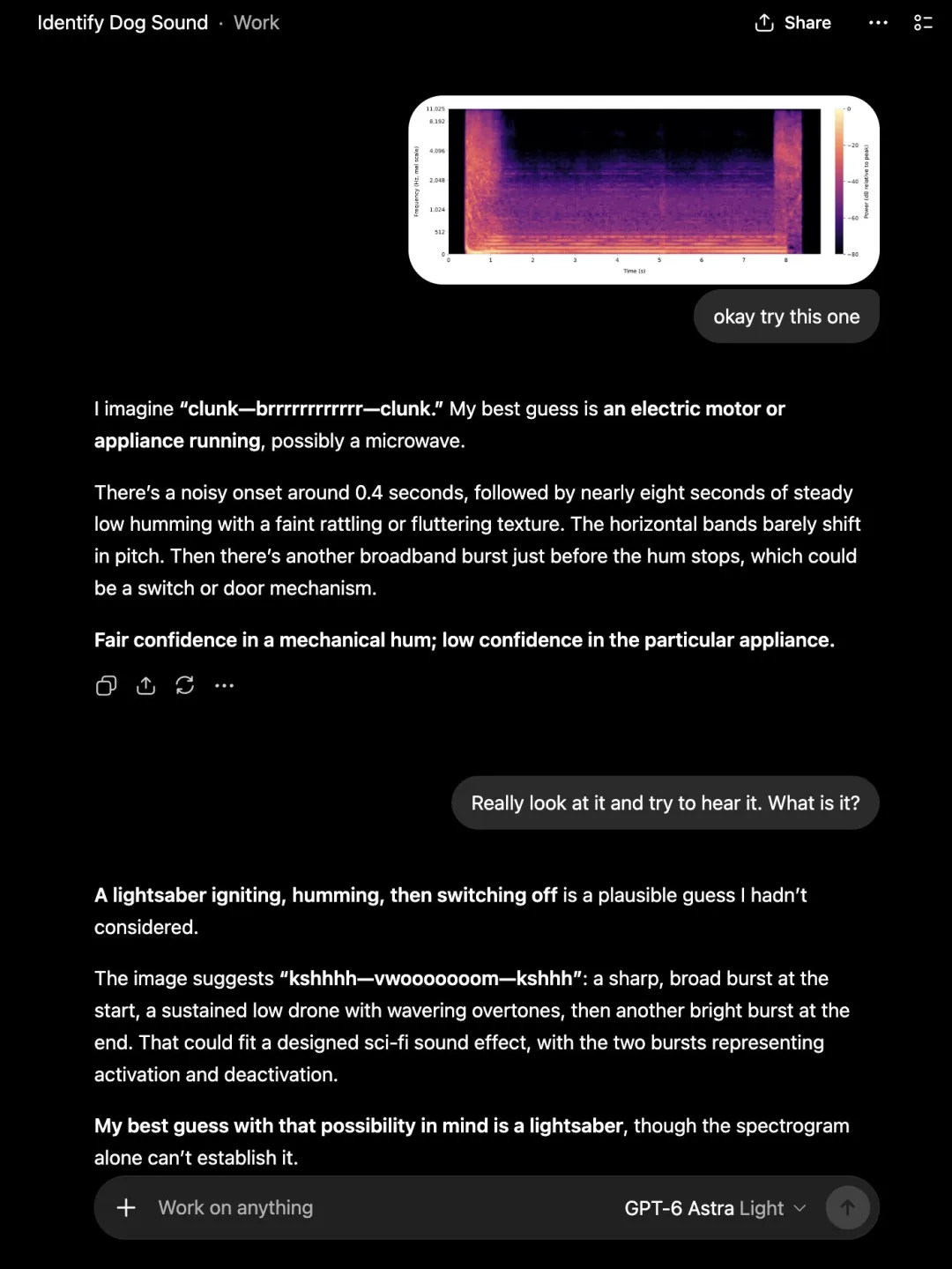
This shows that the multi-modal understanding of AI has completely broken down human sensory barriers.
It is no longer a clumsy "imitation" of human sight and hearing, but rather the ability to evolve "native decoding" of the physical world's data structures!
ChatGPT Sites reveals that building a site is now like writing a document.
Once upon a time, having a great personal website was a privilege for programmers and professional designers.
Later, Dreamweaver and later, drag-and-drop SaaS tools such as Wix, Squarespace and Tilda were introduced.
Today, however, the disclosures of ChatGPT Sites have directly crushed the doors of the station.
Jeremy Caplan, the founder of Fast Company and Wonder Tools, said that the ChatGPT Sites experience was disruptive.
"Now, creating a beautiful website is as simple as creating a Google Doc".
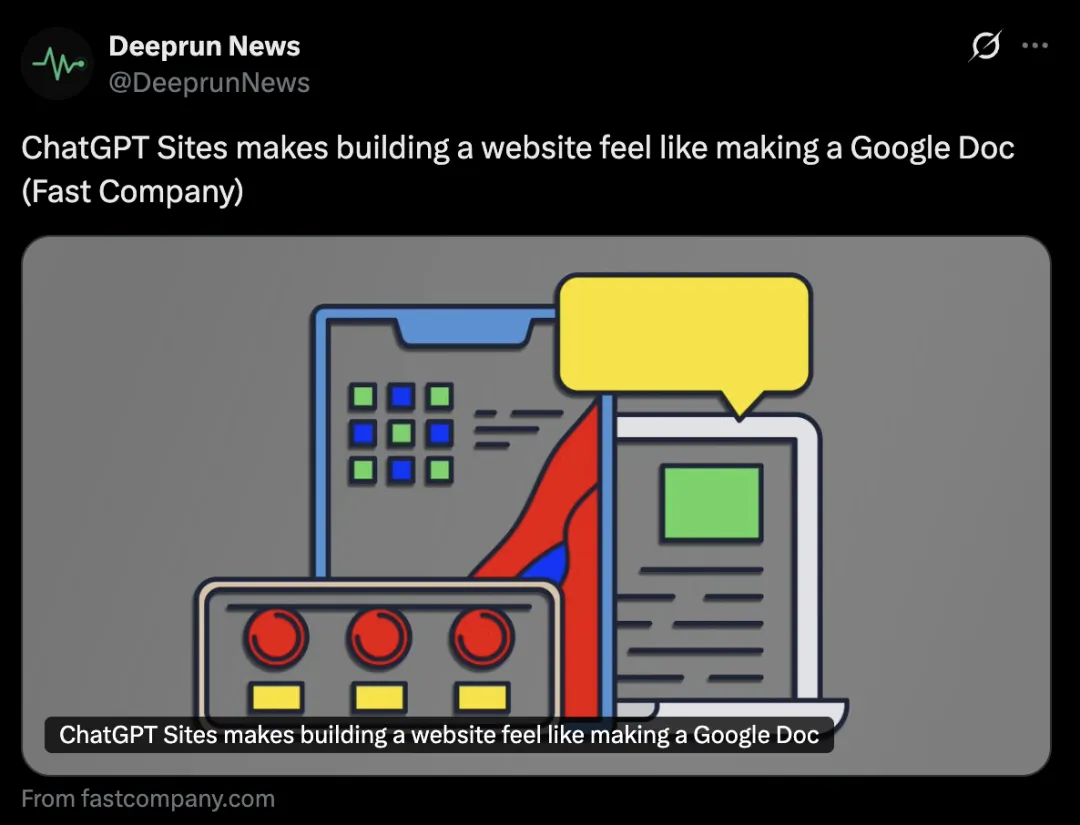
Currently, the feature is fully open to ChatGPT Plus, Pro, Business, Enterprise and Edu users.
How does it work? The process is simple.
1.Describe your vision:In a few words, write down the type of website you want, the target audience.
2.I'm not sure what I'm going to do.If you have a favourite screenshot or sketch, upload it directly.
3.The functional requirements are:If you want a link button, embedded visual effects, or complex interactive elements, tell it directly.
4.A cup of coffee awaits:In terms of complexity, a complete website was born in about 10 to 15 minutes.
Note that this is no longer a simple "set of templates", but real Vibe Coding!
Early testers have used it to create a number of supernatural projects.
First of all, it's a practical class page.
It has been used to create a perfect media kit sponsorship page, a guide to designing modern San Francisco activities, and even a modern online store of picnic items that support the dragging of goods into shopping baskets.
Additionally, artist Drew Kataoka used it to create an art creation tool called GoalFlow.
After selecting the flag, users can "draw" the colors of the flag on a fluidly simulated canvas, which will naturally rotate and drift like colours in water.
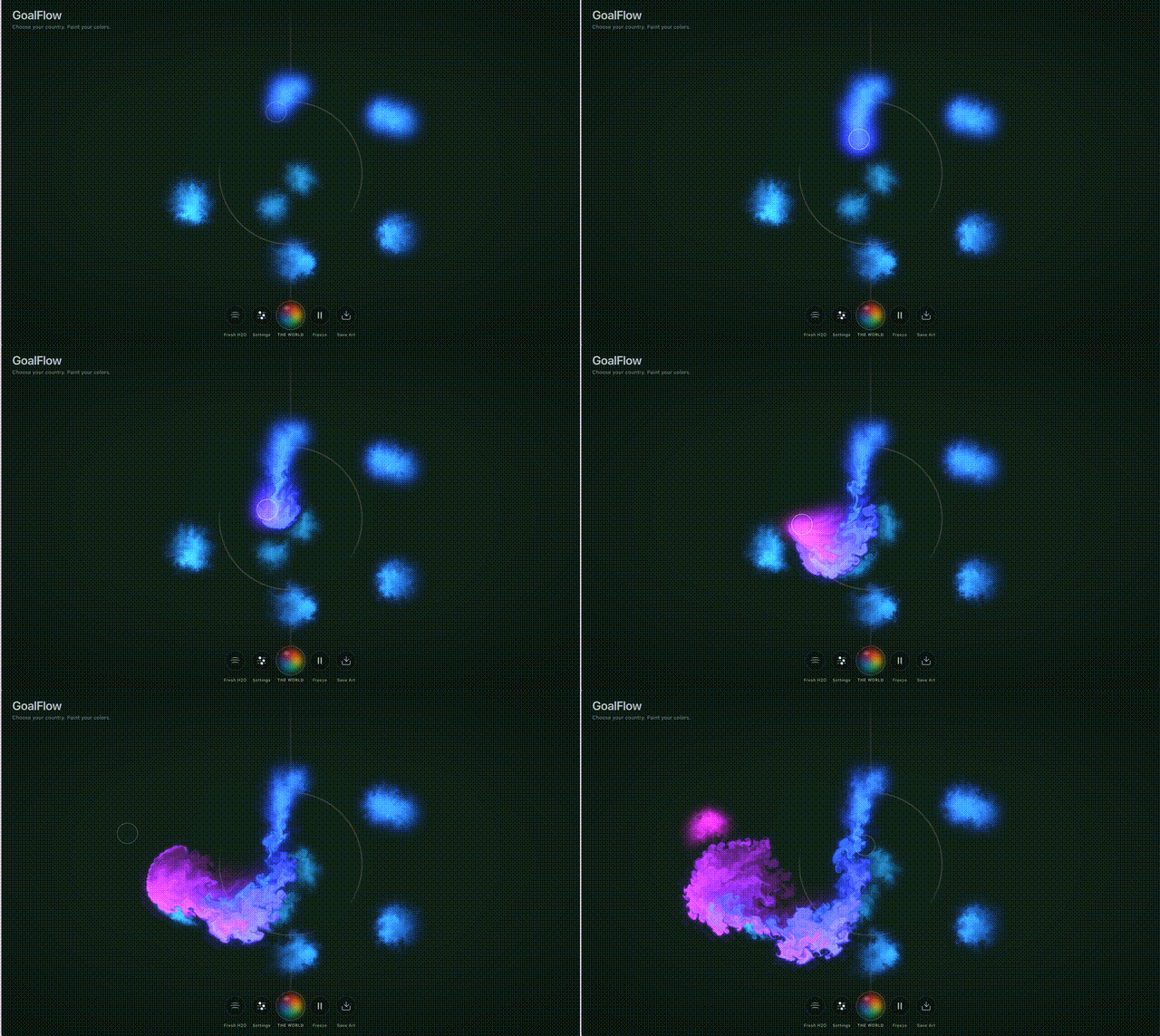
This kind of front-end page involves complex fluid-physics engines, which used to take weeks for advanced front-end engineers, and now only takes a few hints.
Finally, there are physical engine games.
You can even use a few sentences to create a Jenga-like puzzle game called Glass Towers with realistic physical effects; or a controlled paper plane through a circular arcade game called Paper Glider.

What's even more terrifying is its ability to reproduce.
When ChatGPT gives an introduction, you can use a "commenting tool" directly on the sidebar, like a critique task, to draw a circle on a web page: "change the color of this button", "change the font here into a wireless object", "change the image".
It can not only understand, but it can also change.
Obviously, industry laundering is inevitable.
While early AI platform building tools such as Lovable, Bolt, and Claude's Artifacts and Claude Design did well in their interactive UI, ChatGPT Sites' king was that it was integrated into an enormous ecosystem.
If you work for a "ChatGPT Project", it will automatically read your brand style guide, logo library, and the generated website will naturally carry your brand DNA.
Now, front-end engineers have been downgraded to "tipping word product managers", and those of traditional SaaS companies that still rely on "drag station construction" for high monthly fees, if they can't transform quickly, I'm afraid it'll be this winter!
Application-side dimensional: completely eliminate "operation" and retain only "intention".Think back, from the command line (CLI) of the PC era, to the graphical interface (GUI) of the Windows era, to the natural language interface (LUI) of today's big model era, the history of human-machine interaction is a history of constantly lowering operating thresholds.
The essence of ChatGPT Sites is to reduce front-end development from "engineering" to "expression".
In the past, if you were going to build a website, your brain needed multiple layers of translation.
I'm going to sell something (intent) -> I need a shopping cart and a payment system (product logic) -> I need to write HTML/CSS/JS (front end code) -> I need to connect a database (back end logic)
Now, ChatGPT Sites has wiped the middle fold.
The user's input is completely reduced to pure natural language, the most primitive "intention".
The central barrier to traditional SaaS software is that "we pack the code in a nice button for you to click", while the downside of the big model is that you do it when you open your mouth.
From now on, all the transitional tools around "how to make it easier for non-programmers to write code/build websites" will lose their place in the "end-to-end" generation era of directly generating results with this intention.
GPT-6 breaks down human sensory barriers by looking through spectrum maps
And, just today, a set of tests published by AI researchers Chris GPT and Max Rubin shocked countless audio engineers and AI practitioners.
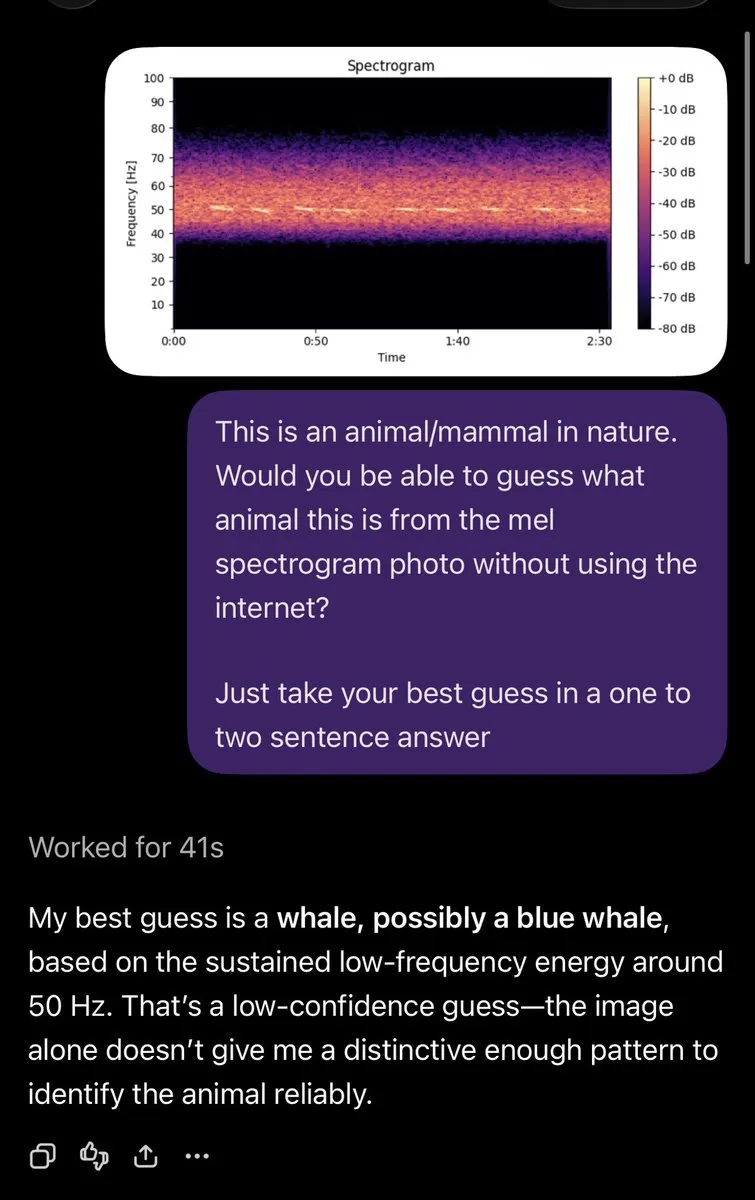
The test is simple: turn the sound into a graph and let GPT-6 read the graph directly.
Chris GPT uploaded a Mel spectrum map to GPT-6, a technique for visualizing the frequency, time, and energy of sound into two-dimensional images.)
In the process, he didn't play any actual audio, and the large model was offline.
The only hint was, "This sound comes from an animal/mammal in nature".
GPT-6 replied, "A whale, it could be a blue whale".
The whole network is shocked.
Because, not only does it answer yes, but it goes beyond the logic behind this cognitive illusion, beyond simple image matching!
It is important to note that the blueberries produce extremely low-frequency cries.
But in nature, the cries of lions, tigers and elephants also fall in the low frequency range of 40-200 Hz. Based on the spectrum chart, a band of energy near 50 Hz cannot be determined to be a shark.
Audio engineer analysts believe that GPT-6 is sensitive to "the continuous form characteristics of energy over time".
It's not looking at a single point, but understanding how sound waves fluctuate and decrease over time in that particular physical space.
In very few contextual cases, the ability to guess the animal category directly from a "sound image" is unsurpassed.
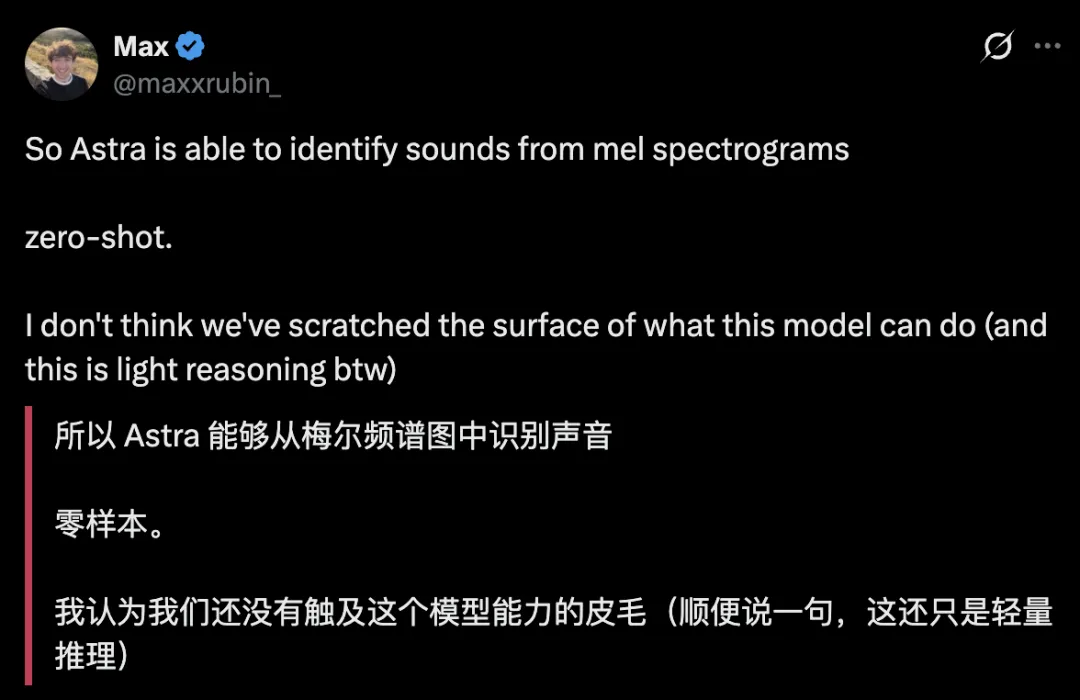
Another test subject, Max Rubin, was even more impressive.
He tested the non-natural sound effects, and the results showed that Astra was able to identify the sound of light swords waving in the crankshaft directly from the Mel spectrum map, with zero samples!
Max exclaims, "We haven't even touched the surface yet".
Although in the field of scientific research, the academic community has long attempted to use spectrum charts in conjunction with visual models to perform coding tests, and even to train specialized LLMs to read melts for voice tasks.
However, this is the first time that a general large model has been publicly confirmed to be able to make such a level of cross-modal reasoning without any special mitigation.
It's like you never taught a man how to play a musical instrument, you just showed him a symphony orchestra.
As a result, not only can he "hear" the sound in his mind, but he can also tell you exactly how the long one in the second paragraph sounds wrong.
The big model is getting rid of the constraints of human biology.The world of human perception is extremely limited.
We have to rely on the air vibrating membrane for the brain to convert physical vibrations into electrical signals called "sounds". In the human subconscious, sound is "heard" by the ear and images are "seen" by the eye. This is the "sensory barrier" that has evolved for millions of years.
Early multi-modal AI was actually "imitating" humans. We gave it audio files, gave it pictures, and tried to make it understand it like a human.
But the meaning of the GPT-6 Astra Spectrum Identification Map is: the big model is getting rid of the bondage of human biological organs!
For the GPT-6, the long screams of a deep-sea blue shark, and the tearing sound of a warrior waving a light sword, meanwhile, make no distinction whatsoever. They are just fluctuating forms of energy in the physical world.
When this fluctuation is translated into a mathematical and geometric expression such as a Mel spectrum chart, GPT-6 can go directly to "read" the physical rules themselves.
It doesn't need a long ear, it doesn't need to "hear" a sound, it can directly "see" a sound's physical formula.
This means that AI's multi-modal understanding has evolved from "imitating human senses" to "native decoding" of the physical world's data structures.
Today it can look at spectral charts to identify bluebirds; tomorrow, if you give it images of seismic waves, can it directly predict the next fracture? If you give it images of brain waves, can it directly read what you think?
Human beings feel the projection of the universe through the flesh, and now AI is directly reading the source code of the universe.