
A year ago, Hugging Face declined a $500 million investment in the platform, with good reason not to let a dominant investor influence the platform's decisions.
A year later, the same buyer spent $12.930 million, and it agreed.
On September 3rd, local time, the company announced that it had acquired Hugging Face for $11.9 billion, with up to $1 billion left to its shareholders. 18 million developers, 3 million models, 500,000 datasets, and the world's largest open-source AI platform took over.For the robot industry, the real share of the transaction is not just in the exchange rate. HF has developed a data shelf with physical intelligence, the LeRobot framework, 181 standardized robot datasets, from simulation to real migration code.
When the GPU seller buys the map, the miners then have to recalculate each expense.
01.
HF's independence myth, which has never been solved
If you want to understand why it's selling now, you have to look at what happened to HF over the last year.
At the end of 2025, Ingrid submitted a $500 million investment plan, valued at about $7 billion. HF CEO Clément Delangue declined. The reason was that he did not want a single investor to have too much say in the company's technical direction and strategic decisions. This refusal was entirely reasonable at the time, after all, the core value of HF was that it did not belong to any chip company.
The days of independent platforms were not good.
HF's business model is a free hosting model that makes money from enterprise subscriptions, reasoning services, and computing services. It sounds like GitHub, but the cost of hosting an AI model is much higher than that of a code warehouse.
The reality is brutal. According to third-party estimates, HF has annual revenues of about $150 million, with paying customers accounting for about 3 percent. The platform hosts over 3 million open models, 1 million datasets, 15 million registered users, but the traffic is not huge enough to make money. The real money owners - banks, securities, insurance, large manufacturing and tech companies - are increasingly concerned about data security and deployment privatization.
Greater pressure comes from two extremes: the upstream model makers, Meta with its own distribution channel Llama, Google with its own Vertex AI, Microsoft with its own Azure AI Foundry, OpenAI with its own API ecosystem, DeepSeek and Qwen with their own self-building download stations and communities. They don't have to give the best of everything to HF. The downstream cloud makers, AWS, GCP, Azure themselves have model markets and hosting services, and HF's reasoning services are essentially doing business in their pools.
HF's location is subtle. It's stuck in the routing layer between the model from the paper to the production, but the location itself doesn't make money. It's more like a traffic-heavy charging station, but it can't afford to pass through.
So after a year, the attitude reversed, and not only did Ingrid become more sincere, but HF found it increasingly difficult to stand down independently. Adopted by giants, he was stronger than marginalised by giants.

Figure 1 of the Hugging Face official logo; source, Hugging Face brand assets
02.
86 times the market rate, bought by Ingrid's anxiety
I'm sure you've learned from various articles that the following set of data, based on annual revenues of $500 million, is that $129.3 billion is 86 times ARR. Microsoft bought GitHub for $7.5 billion in 2018, and it earned about $250 million a year, which is 30 times ARR.
It's not a premium, it's insurance. It's not HF's revenue, it's the certainty that it won't be circumvented in the future.
In the present day, Great Britain still looks like a king, but there is a crack beneath the throne.
In the 2026 financial year, INVEDA generated $215.9 billion in total revenue, with a data center business of $193.5 billion, accounting for nearly 90 percent. The gaming business revenue of $22.5 billion, accounting for about 10 percent. This is not even a two-wheel drive, it's a single-legged walk. Once the data center business slows down, the entire company's narrative is waiting for a new turning point.
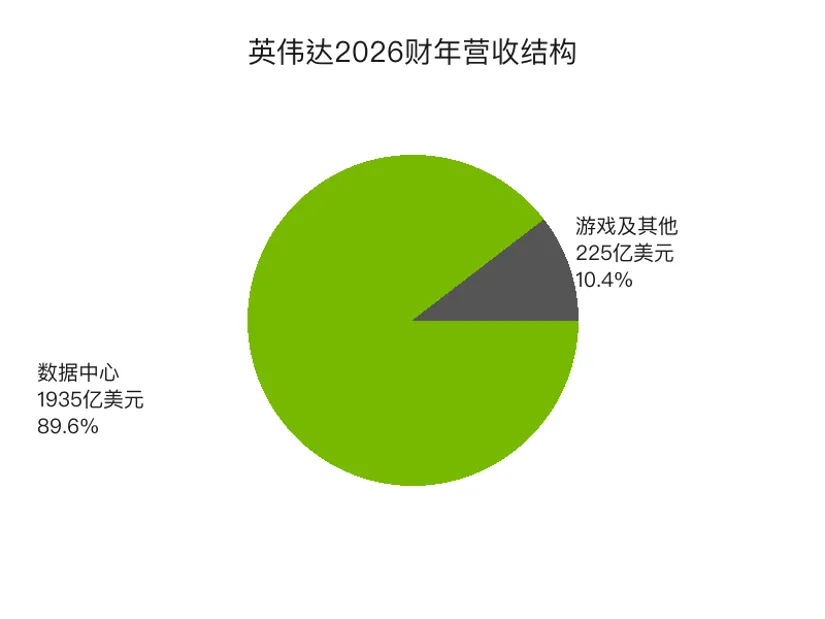
Figure 2 The structure of revenue for the financial year 2026; source, UK Financial Report, author compiled
More importantly, its biggest customers are turning into rivals. OpenAI has launched the Jalapeño self-developed logic chip, developed by Bottom Design, Planned for deployment by the end of 2026, which may be open to other companies in the future. Anthropic has been exposed to synchronization with Samsung's self-developed chip with a 2-nanometer system. Both Anthropic and AMD NScale have signed a $45 billion computing agreement. Google, Amazon, and Microsoft already have their own TPU, Trainium, Inferentia, and Maia.
These AI labs used to be the biggest buyers of Intel, and now they continue to buy Intel chips while struggling to find Plan B. This isn't a small shift in business relationships, it's an industry that's trying to reduce its reliance on CUDA's one-time lifestyle.
It's not impossible to ignore. Its response is clear, since everyone is looking for an alternative at the hardware and distribution levels, which is deepening the binding on the software layer. The chips, reasoning services, models, distribution platforms, Huang Jinping wants a whole chain in his hands. Acquiring Run:ai, taking the Poolside team, releasing the Nemotron open source model, now buying Hugging Face, every step of the way to turn the key nodes of the open source ecosystem into a chain of their own industry.
Buying an HF isn't the end, it's the last piece of the puzzle. It's about every open source model you download, and the next step takes precedence over CUDA.
03.
LeRobot is not a small project.
Many people are not familiar with LeRobot. It is not an HF edge project, but it is the most important crawler in the field of physical AI.
LeRobot is an HF-led startup, Meta FAIR, and deeply engaged academic physical AI open source framework. Its goal is to solve the problem of fragmentation of robot data formats. In the past, each lab used its own format, HDF5, TFRecord, ROS bag, customized CSV, to train a model across a data set to write a set of data loaders. LeRobot integrated everything into a Parquet form and MP4 video, allowing developers to load any data set in the LeRobot format with two lines of code, directly accessing training processes such as ACT, Diffusion Policy, VQ-BeT, etc.
With more than 51 pre-trained models, 181 standardized datasets, and seven Spaces tools, the HF Hub has grown from 1145 to 26,991 robots in 2025, the fastest-growing HF category.
As of mid-2026, LeRobot has compiled more than 181 robotic datasets, with incomplete statistics covering mainstream robots such as The Robot Studio's SO-100/SO-101, Koch from Koch Robotics, the Stanford ALOHA team's Mobile ALOHA, Unitree G1 from Utrecht Technologies, Reachy 2 from Pollen Robotics, Stretch from Hello Robot, and the self-developed HopeJR from Hugging Face.
We have to admit that it is becoming one of the real standards for collecting, training and emulating robot data to real migration.
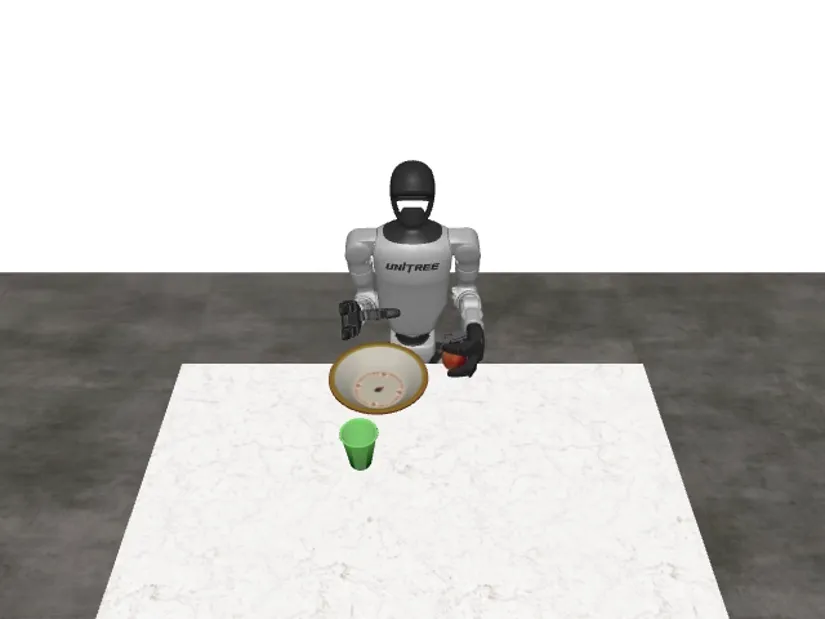
Figure 4 is based on a LeRobot data format simulating the operation of a Unitree G1 robot task; source, Hugging Face data set jnsungp/unitree-g1-robocasa-pick-apple-bowl-contact-1k ((CC BY 4.0)
More importantly, the binding of Ingrid and HF in the robotics field has already begun early.
In July 2026, two months before the rumors of the acquisition, both sides announced the introduction of the NVIDIA Isaac GR00T 1.7 open source model and the Isaac Teleop framework to LeRobot, as well as plans for further access to the NVIDIA Cosmos 3 world model.
The LeRobot on HF and this closed loop combined, the robot industry's training data, model weight, and deployment tools are all tied together on a rope. The other end of the rope is increasingly pointing towards the CUDA ecosystem.
For robotics companies, models can be changed, and data formats can be difficult to migrate once unified. If LeRobot and its data sets increasingly lean towards Ingrid's hardware and software, teams that do not follow Ingrid's route will be forced to bear additional migration costs. This is not a conspiracy theory, but a business logic that will inevitably be discussed again after the acquisition of the platform.
04.
Don't force it, but it'll stick your neck out.
Huang's promise is clear that Hugging Face will remain open and will not force the use of Intel's hardware. Justin Boitano, vice president of Intel's enterprise computing, also said that HF is "essentially a decentralized platform".
Both Huang Ren and Boitano's statements have been reported, but another thing to be clear about is that commitment and mechanism are two things.
Invidia doesn't need to turn off HF, and it doesn't need to make AMD or Google's TPU model "accidentally" useless. It just needs to make a few things happen "accidentally".
In the search rankings, the new model's cold start power tends to lean towards who. In the recommendations, the homepage banner and the official account forward more of whose work. The default rear end of the Space key deployment points to whose chip. In case of code and document maintenance, which hardware tutorials are updated faster. Data set pre-processing scripts are optimized for which computing rear end. The "one-key deployment" button on the model card page jumps default to which cloud service.
These details are small, but accumulated over several years, can reshape an ecosystem.
The real problem is not that HF will block the bid, but that when future developers look for models on HF, the optimal path will "naturally" point to Ingrid's reasoning services and CUDA backend.
05.
What Chinese companies face
In a regulatory filing, INVIDA lists "many of the popular open models come from China".
This isn't a bad word. A Spring 2026 report by Hugging Face shows that China's self-developed open-source model downloads accounted for 41% of all open-source model downloads on the platform, surpassing 10 billion cumulative downloads for the first time in the United States. Among the 25 open-source models with the highest HF downloads, Chinese models accounted for 19 percent. In the case of the AliQwen family, the number of derivative models has surpassed 150,000, associated code warehouses more than 200,000, and the entire network has accumulated more than 3 billion downloads.
Figure 5 Hugging Face platform open source model share of source downloads; source, Hugging Face 2026 spring report, author compiled
Both sets of data make it clear that HF is deeply tied to China's open-source model, and that this binding will later be accounted for by Ingrid.
China's robotics companies are facing two challenges. The first is chip acquisition. Under export control, Chinese teams would not have been able to get the most advanced Intelligent Training Cards, and many people are already using Ascension, Cold War, Dynamics, or alternatives to AMD and cloud vendors. The second is the rules of the platform. If models on the future HF are distributed, data collected, and training frameworks are accessed, increasingly ecologically tied to CUDA, teams with state-of-the-art chips will be transferred on the cards in toolchain adaptation and data format.
With HF, your training processes and data set formats are slowly locked into the UK's ecosystem. Without HF, the cost of migration is extremely high, and the accumulation of domestic alternative platforms on physical AI open source is not deep enough.
China's corporate-intelligent data sovereignty is not a slogan that can be solved.
06.
Written at the end
Hugging Face's value was based on the premise that "it doesn't belong to any chip company".
For ordinary developers, the question of the future is whether search rankings and the default deployment buttons will change. For robotics companies, the question is whether the entrance to trained data and open source frameworks will be ecologically bound. For Chinese physically intelligent, the question is how much time remains when the world's largest physical AI open source platform sells chips, data sovereignty and domestic product alternatives window.
Invader doesn't need to turn off the Hugging Face. It just needs to make way for other homes, which is a bit of a struggle.