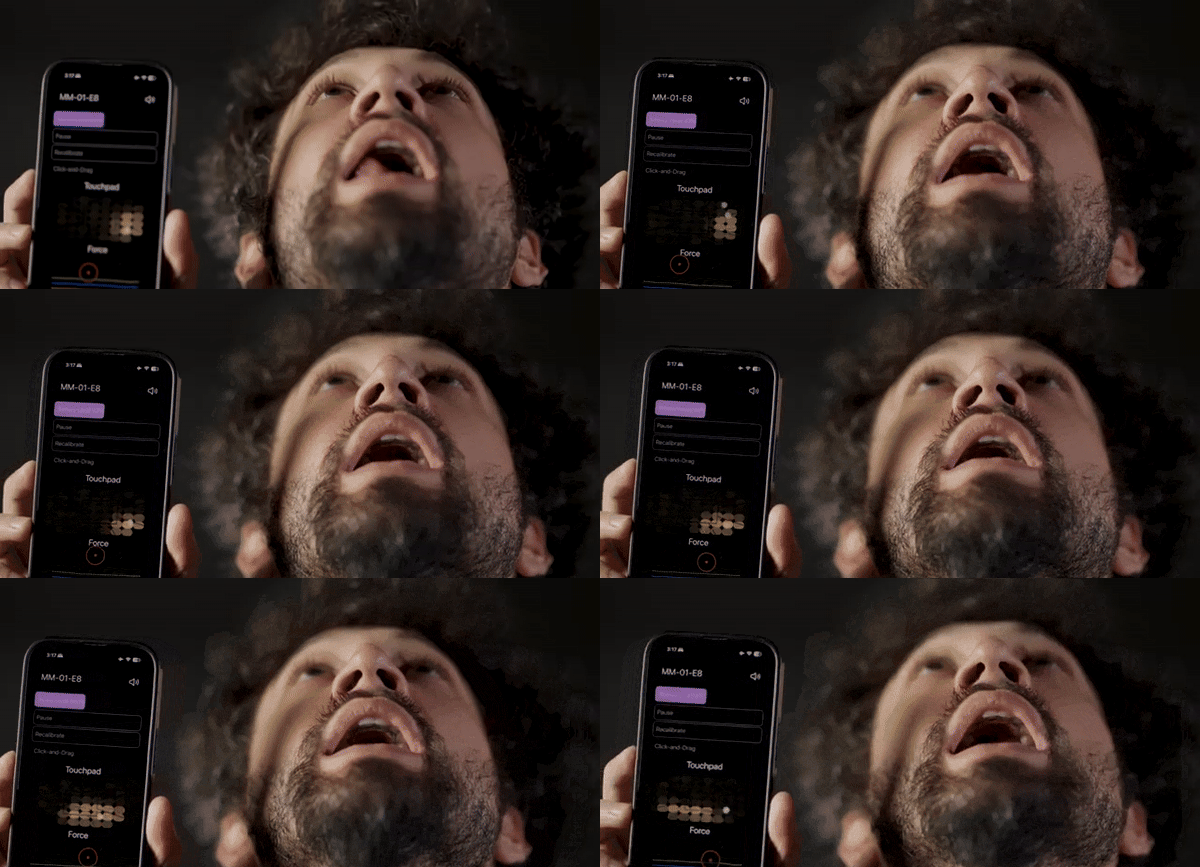
“ I've been using my tongue to play with computers, cell phones, and iPad tablets.
For more than half a century, the field of human-machine interaction has been implying a premise: to allow the body to adapt to the machine without having enough keyboards, the screen too small to look close, and to want to sit down and manipulate the computer on the table.
But a group of engineers from MIT is reversing the whole logic: let the device read the body's smallest signals proactively, instead of forcing the body to get enough of the keyboard.
One of the most notable products on this route is a transparent toothbrush about 1 millimeter thick and weighing about 10 grams. It is worn on top of the toothbrush, the tip of the tongue slides lightly, and the light on the screen moves, clicks, rolls.
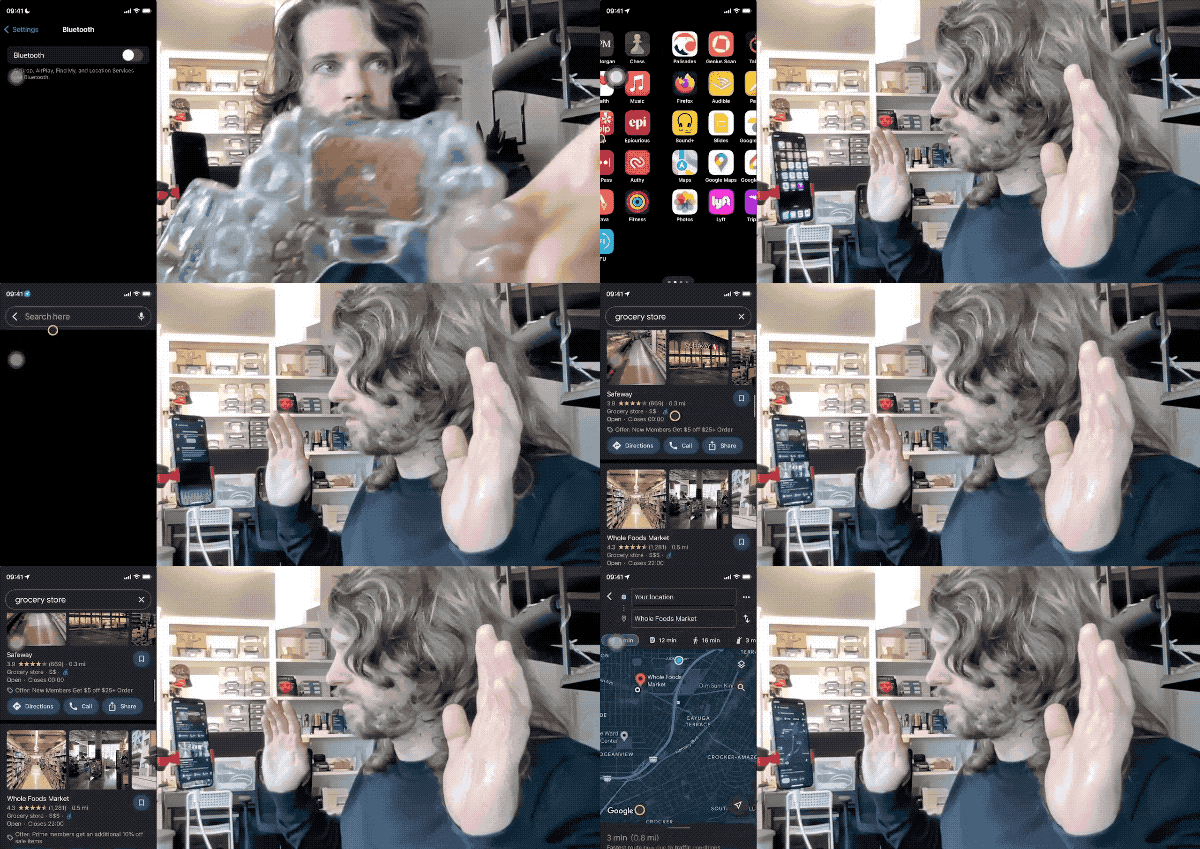

Of course, you can also play in a crib.
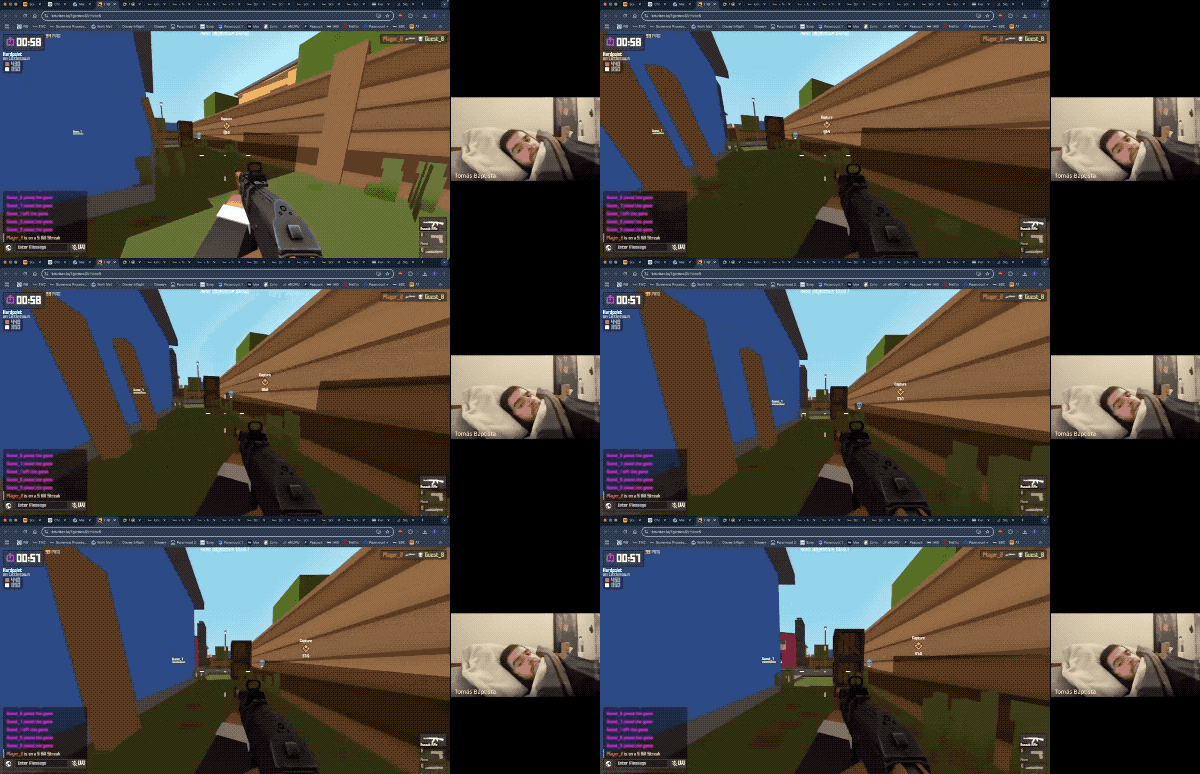
It's called the MouthPad, developed by Augmental, a company owned by MIT Media Lab, and has recently been publicly available in the U.S. for $1,400.
This is not a sex toy. Its first users were people who had no access to their hands.
01.
A pair of gloves, how to turn into a mouse
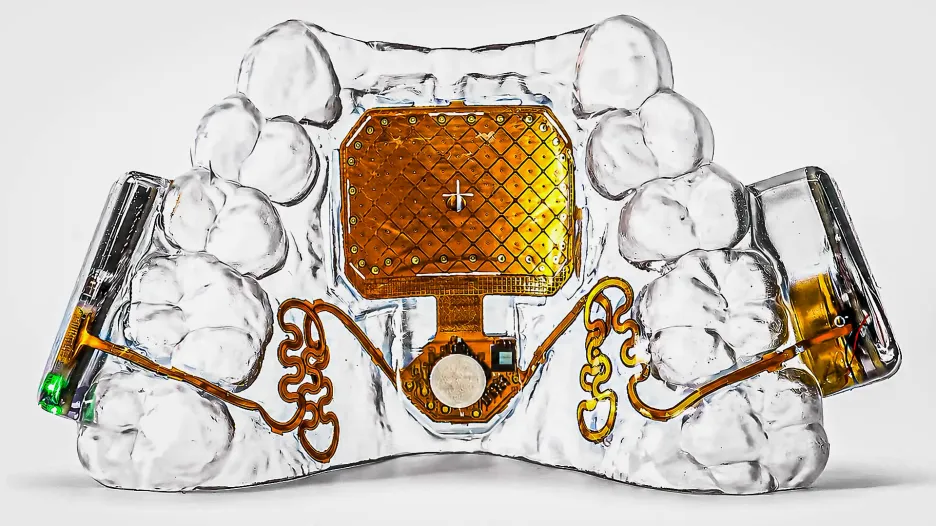
MouthPad is a customised retainer that is attached to the user's upper teeth, back teeth, and upper jaw. The device is centered on a golden capacitor touch panel, similar in principle to that of mobile phones and laptops, which moves the light signal by detecting the position of the tongue on the upper jaw. Inside the device is also integrated a small air cavity and air pressure gauge, which is used to distinguish between pressurizing and inhaling the tongue.
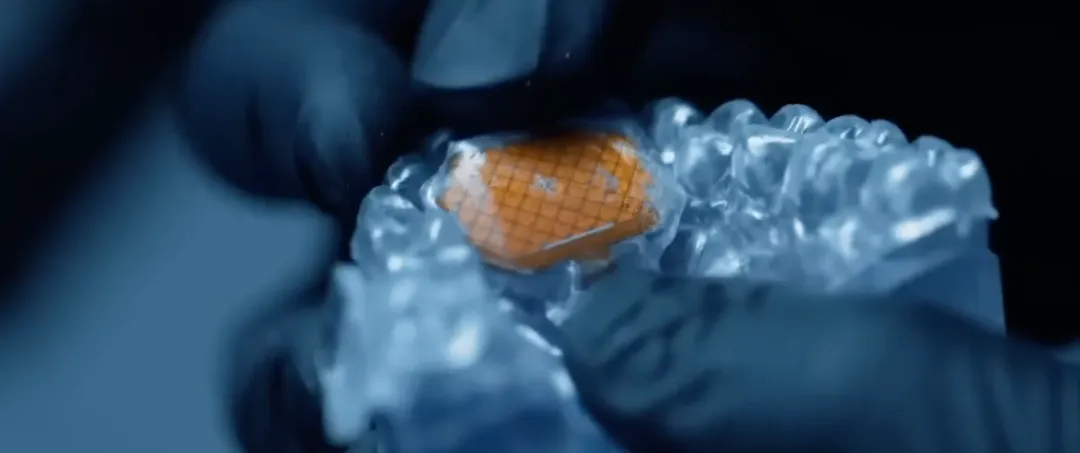
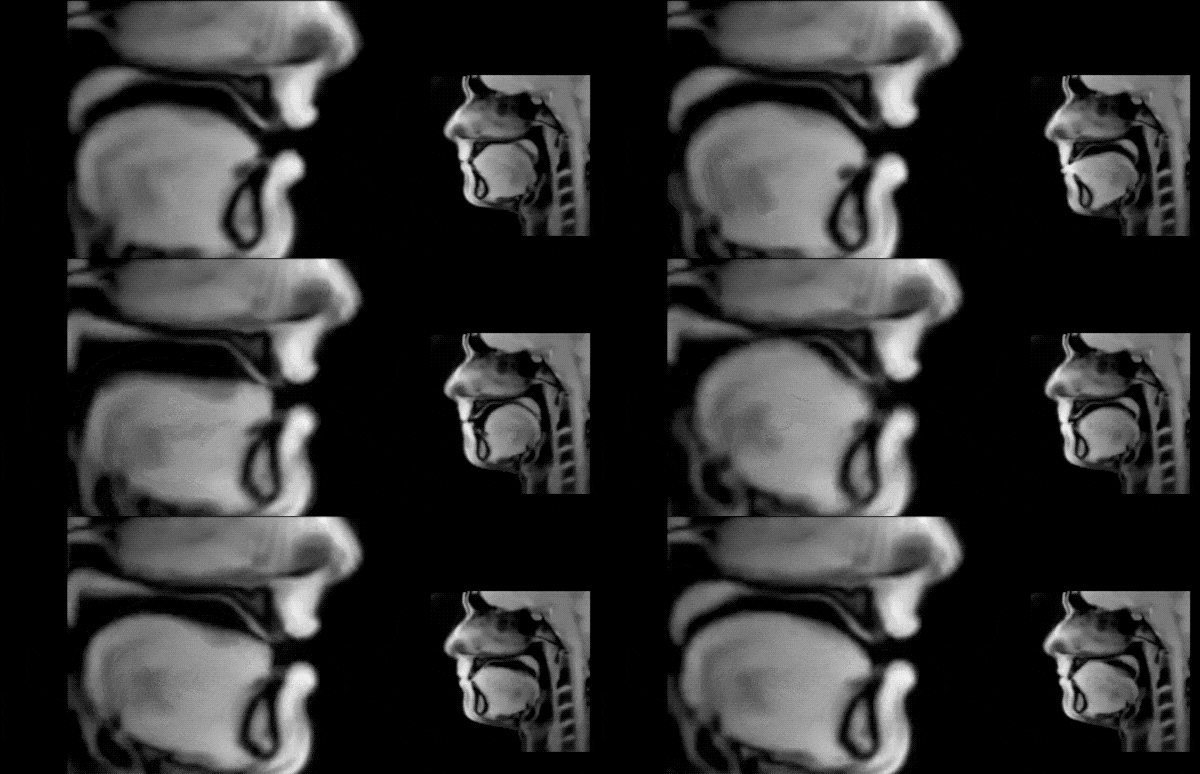
The engineering challenges faced by this system are far more complex than ordinary external ones. The mouth is wet, mobile, and can also produce bites. Tomas Vega, co-founder of Augmental, used a touchscreen in a saliva environment like "use a touch screen on a rainy day", the difference being that the phone can be wiped dry by rain, and the mouth cannot be suspended to secrete saliva for operation. Early versions used pressure sensors are easily deformed and signal drifted, and the team later switched to electrical sensors.
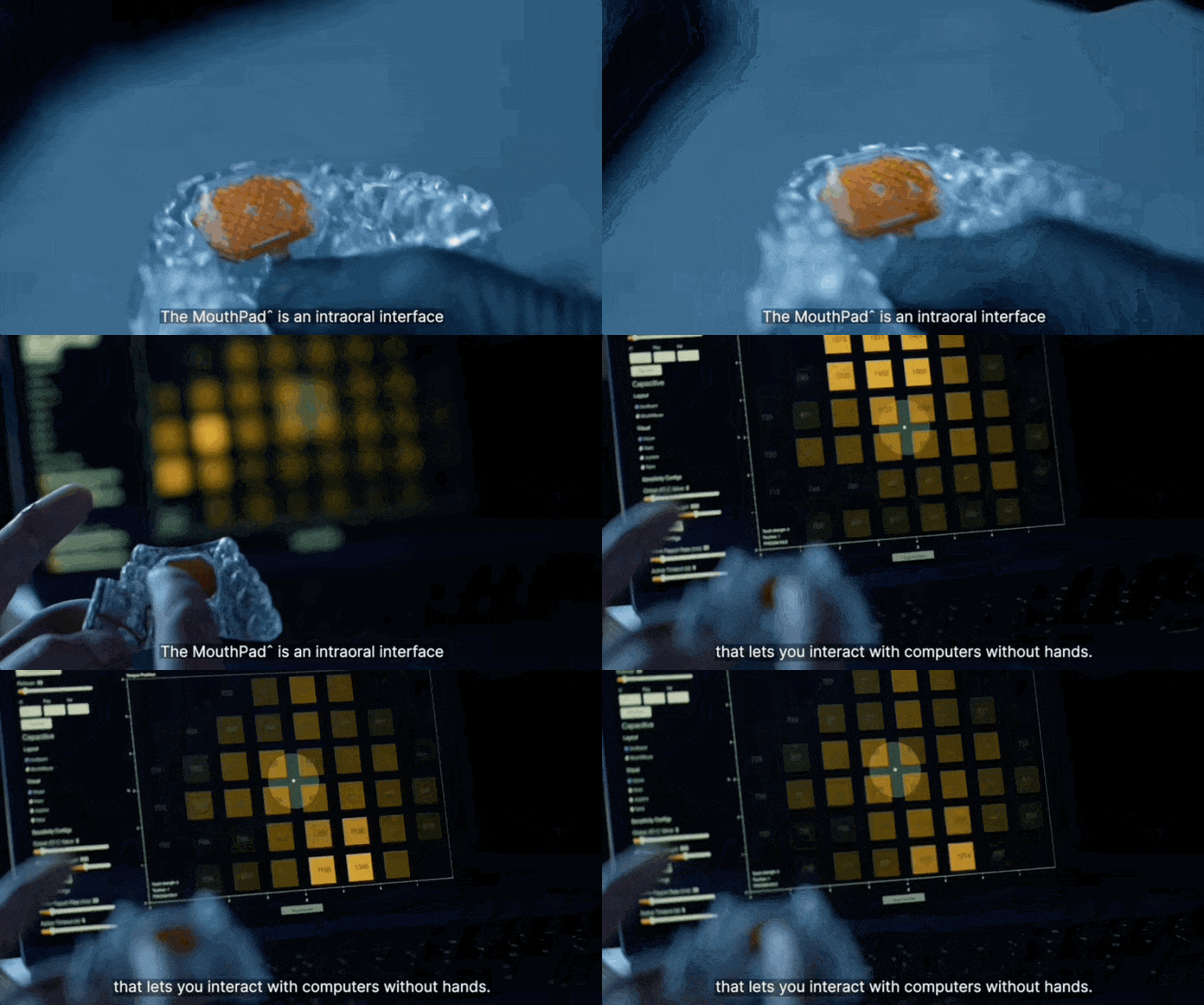
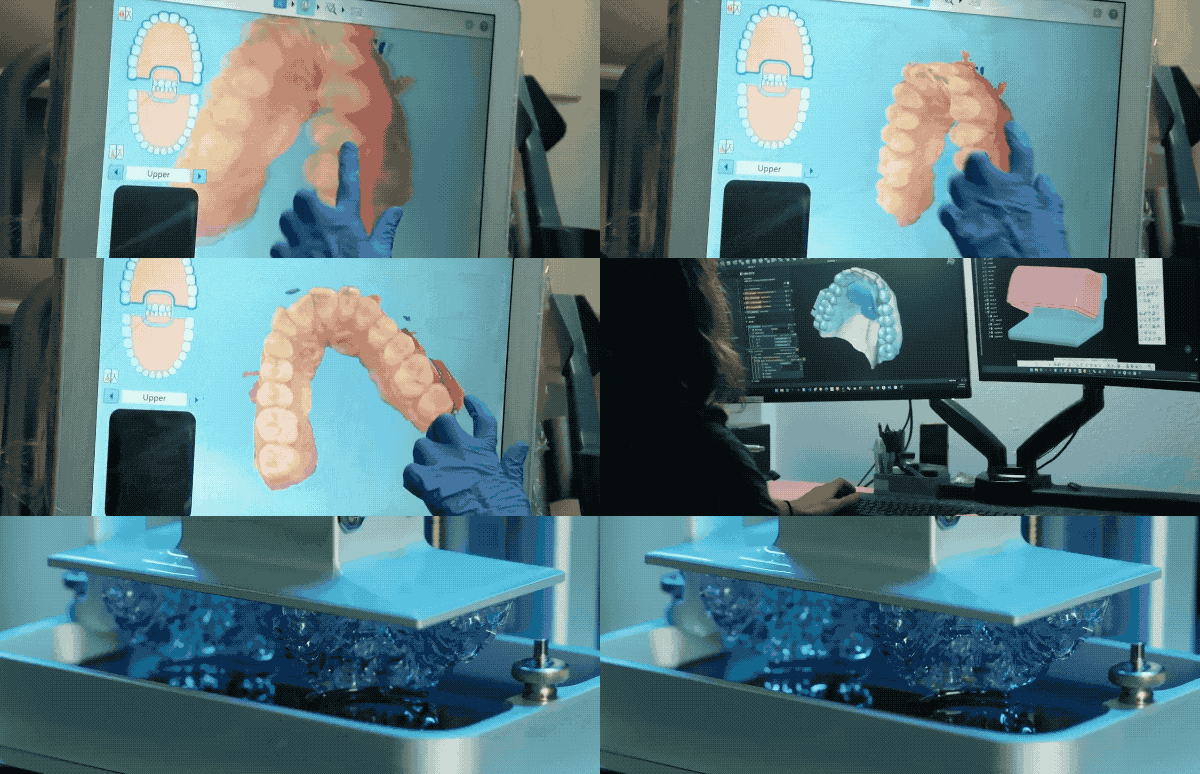
Each MouthPad needs to be manufactured separately. Buyers complete oral 3D scans in a dental or scanning facility, and the company prints the subject and packages the electronic components with dental resin, with a delivery cycle of about six months. The device connects to macOS, Windows, Linux, iOS, and Android via Bluetooth, and the operating system identifies it as an ordinary wireless mouse.
It lasts about seven hours. For users who need to use it for a long time, some buy a second or even a third device rotation.
02.
At 10.47 bits per second, what range does the tongue run into?
In July 2026, Thomas Baptista, a quadriplegic, completed a point selection test using the MouthPad with a score of 10.47 bits/s.
As a reference, Neuralink's first clinical trial participant, Noland Arbaugh, published a score of 8.0 bits/s in 2024, while Neuralink's engineers at the time published a score of about 10 bits/s using a physical mouse. In other words, Baptista's score fell between an implanted brain-machine interface and a normal physical mouse.
However, this comparison needs to be considered with caution. Augmental only says that the test task is "like WebGrid", has not published a complete test method, nor has it been independently verified. The size of the grid, the method of clicking, the length of the test and the information rate algorithms used by different teams can affect the results. 10.47 bits/s indicates that skilled users can use the MouthPad to operate highlights quickly and accurately, but it is not enough to prove that it is equivalent to an advanced brain interface under the same conditions.
The boundaries of application are also quite different. The brain machine interface directly decodes neural activity, which can cover users whose head and tongue are unable to move independently; the MouthPad requires the user to maintain a certain level of tongue, head or breathing control. The MouthPad bypasses surgery and long-term clinical trials, and the scope of application is narrower. They solve adjacent problems, not two players in the same competition.
03.
The third path from disability to robotic manipulation
MouthPad was not originally designed for "future lifestyles". Its core users were people with spinal cord injuries, degenerative disease, multiple sclerosis, and other conditions that could not use their hands. A September 2024 report documented a user named Keely Horch, who was 19 and 12 years old when she suffered a stroke while studying mathematics and computer engineering at the University of Maryland, Baltimore.
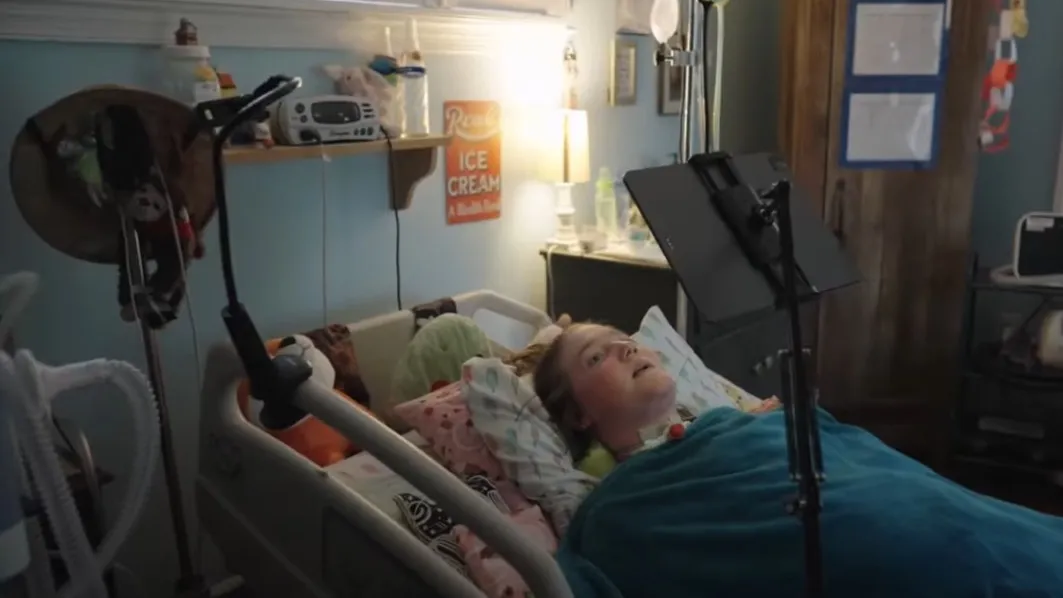
You can spend the night writing or playing games and make Ho Chi Minh feel normal. @augmentaltech
But the potential of tongue-control technology clearly goes beyond replacing mice.
In the field of robotics, manipulation of input has always been a central challenge. Whether it's surgical robots, industrial robots or service robots, the operator's hands are often occupied, or need to be precisely controlled at a certain distance. Voice control is limited to ambient noise, eye tracking is limited, and brain interface distance is still a long way off. Tongue control offers a new path: no hands, no voice, accuracy of up to light signal level, and the device is completely hidden in the mouth.
Imagine a surgeon on the operating table with his hands performing fine-tuning operations while roaming the patient's imagery or adjusting the parameters of the device. He doesn't have to order an assistant, and he doesn't have to step out of his hand to complete the operation, as long as the tongue slides slightly upwards. It's not purely imagining that the mouse MouthPad has support for head movements in charge of aiming, the tongue in charge of moving, a game configuration that will allocate continuous movements and button operations to different parts of the body, which is highly similar to the logic of hand-splitting operations in remote robotic operation.
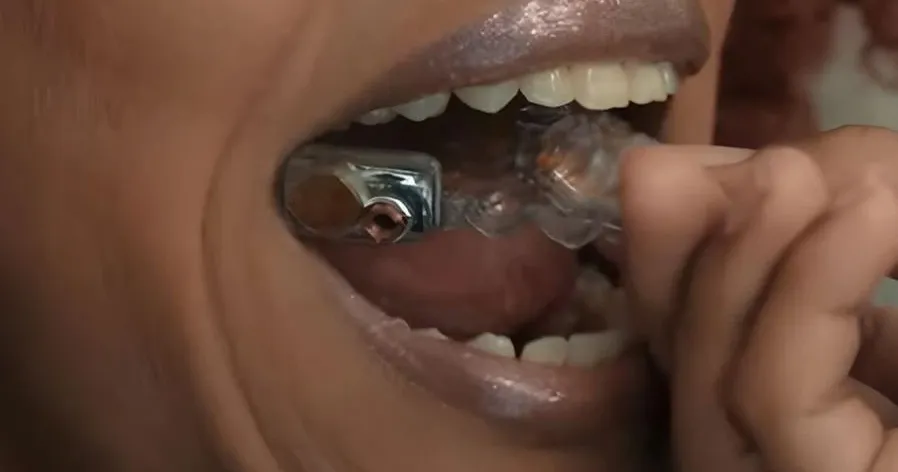
Looking ahead, in 2024, the Natural Electronic Scholarship reported another smart mouthpiece oPad, developed jointly by the National University of Singapore and the University of Tianjin. It sets the click action to a tooth bite, designs 50 tongue sliding patterns and 6 bite patterns, and synchronizes controls to produce 365 instruction combinations. With AI training, the accuracy of the system-recognition motion patterns reached 98.7%, and after two to three days of training participants could use the oPad to play fruit ninja-like games, input characters, and wheelchairs. The oPad circuit is only 10×14×1.6 mm, with a sustainable charge of 20 hours of work.
Augmental also launched a $200-priced Vox microphone hanger that can pick up sounds with vibration transmitted by the body in a low-volume environment such as libraries, shared offices, and more. The company combines the MouthPad and Vox with a "Skinware" pad that is attached to the teeth, upper lip, or skin to read the movements and sounds of the body while hiding as much as possible from view.
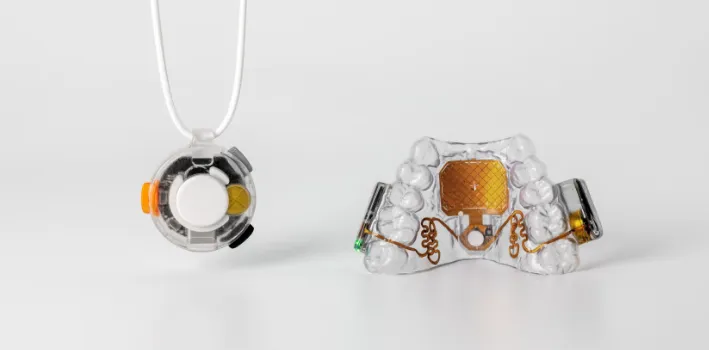
VOX (left) with MouthPad (right) Image source: Augmental
04.
The body becomes an interface and privacy issues come with it.
Meta's Neural Band musculoskeletal wristbands, MIT-intensified AlterEgo default reading recognition devices, and Augmental's tongue-control devices are essentially doing the same thing by turning more physical activity into machine-understood inputs.
But getting a degree of freedom means allowing the device to take a step closer to the body. Traditional privacy discussions concern what data the app reads, while attached hardware pushes the question further: before information becomes text, photos or location, is the body itself already data? When the mobile trajectory of the tongue, the downward microwave signal, the muscle-prepared signal of the wrist can be understood by the machine, the manufacturer may get not only what the user says, but also how the user moves, when tired, how hesitant.
A report in August 2026 documented a post-00 presenter named Aimin Ming, who was unable to control his quadriplegia due to a fast-moving cerebrospinal fluid, operated a computer game with a blowing device called QuadStick, and performed complex operations such as swiveling, stuttering, and flickering in the live room. Earlier in 2012, Kaine Hutchinson, who suffered a stroke in 2012, drank her first cup of coffee in fifteen years through a machine-controlled arm.
05.
Written at the end
The MouthPad is currently priced at $1,400 in the U.S. and costs close to $1,500 for oral scans. It does not support insurance premiums, nor is it a medical device. The company says it has released 180 devices, has more than 120 users, and a waiting list of more than 6,300. The product goes from the launch of the early experience project in 2024 to the public release in 2026, two years from the laboratory prototype to the commercial sales stage. Whether it moves from the disability accessory to a broader consumer scenario depends on three variables: whether the technical cost can be lowered to below $300, whether the user experience can be near-insensitive, and whether the application scenario can be upgraded to replace the mouse to a new interactive model.
At least now it can be determined that human-machine interaction is not only two ways to open a hat and wear a helmet. For people who can still control their tongues, a mouse can also be left in a small area.