On August 24, Ali's Wan 3.0 video-generation model was officially launched on the PC end of the Q&A and the Q&A App. At the same time, the Q&A also featured the Agent Teams creation model: users submitted an idea, and a group of writers, directors, artists, filmmakers, and sound engineers joined the Agent automation team to make it into a video work.
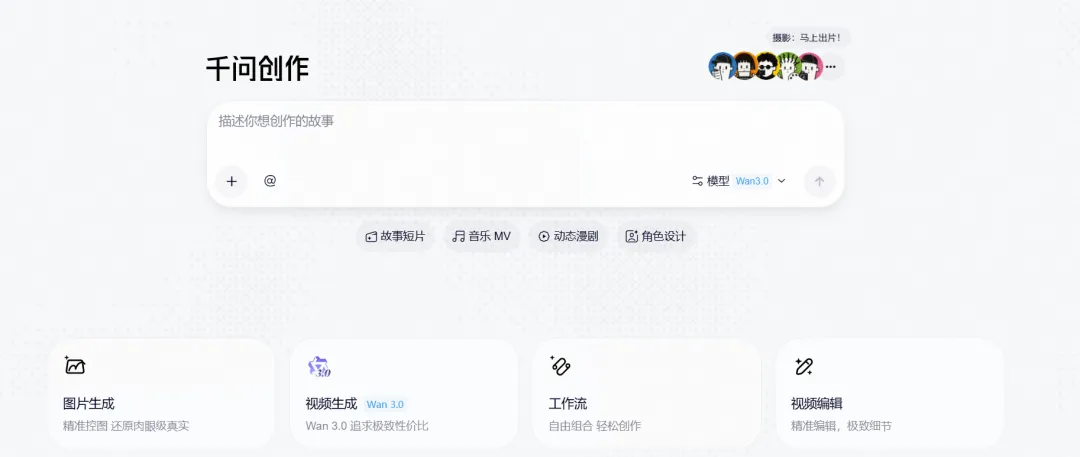
It is positioned as a creative platform for professional creators: Wan 3.0 and its full-blooded Prime version are available online, Prime versions generate faster and even more effects; in addition to the video model, the platform also brings together top-of-the-line Ali models such as Qwen-Image-3.0 with visual and audio materials that can be solved on the spot.
Yes, Q&A creates models, materials, and processes in the same workstation. Just look at Wan 3.0, which is a model upgrade, with 30 seconds straight, multi-model references, a lower one-second price. Just look at Agent collaboration, which is an extension of the Agent paradigm in another scenario.
Because for professional content production, the issue of card efficiency is no longer the quality of a single video.
People who have done AI shorts are probably familiar with this process: a three-minute short film is broken down into thirty-four shots, the script is written in a chat window, the character four views are drawn in a graphic tool, the split mirror is placed on the table, and the mirror description is translated into a prompts word by word into a video model; the return of the character in one of the shots changes the face, returns to the upstream and downstream reference map. The soundtrack is repeated in the other two software, and finally the cutting software to the timeline.
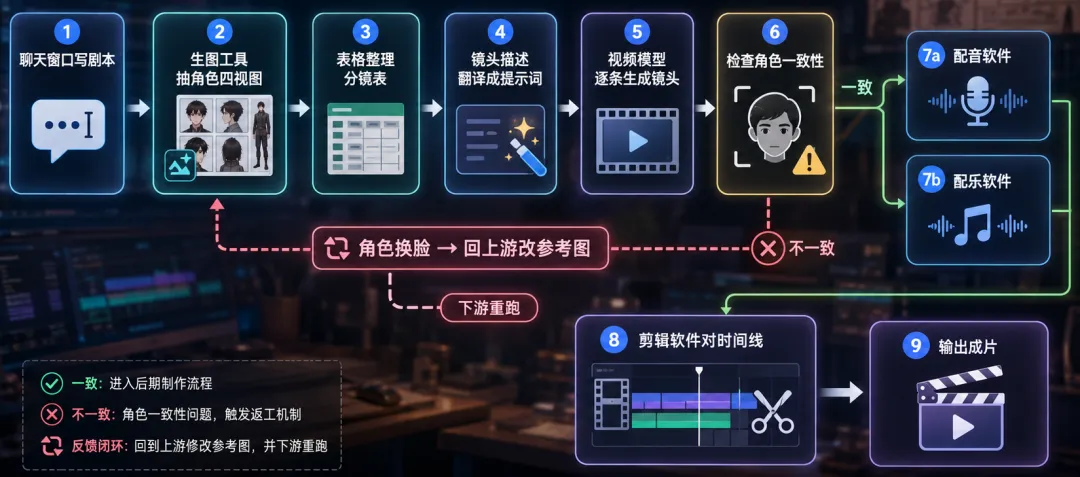
The process of making short plays using AI
Over the years, the capabilities of video models have improved rapidly, with timing, graphic quality, audio synchronization, and character consistency being updated almost every quarter, but the improvement in capacity limits has not been transformed equally into production efficiency. To complete a short film, there is also a need for script structure, character set-up, lens planning, cross-sectional alignment, and later editing. These volumes disappear not as the model grows stronger, but because of variations in generation, options, and management costs.
The industry has realised that this is a platform that is being worked on by Quentin Tarantino and byte jumps. Overall, the focus of the competition is shifting, with the goal of "organizing a complete content production".
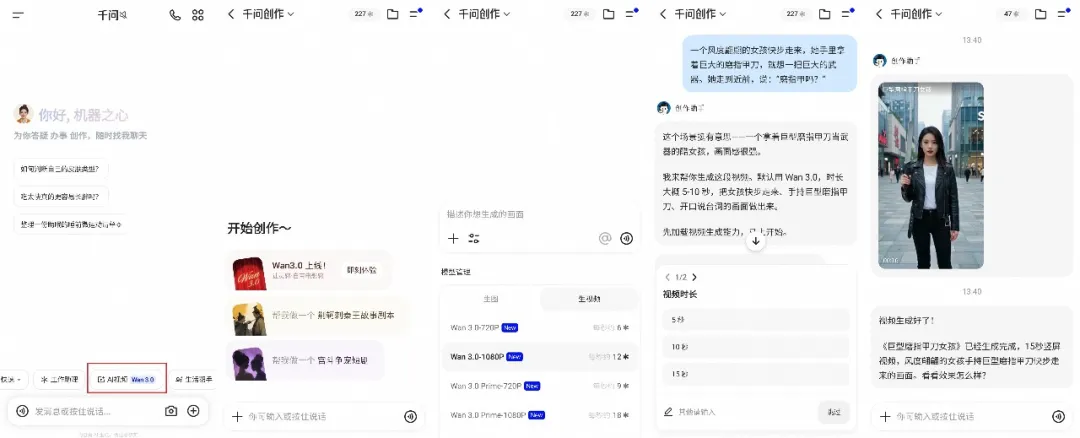
Ask questions about how to create a mobile app.
Wan 3.0: First raise the single-lens cap
In order to achieve effective multi-agent collaboration, the production quality of each workplace is high enough. Otherwise, clever division of labor will only increase the production rate of waste.
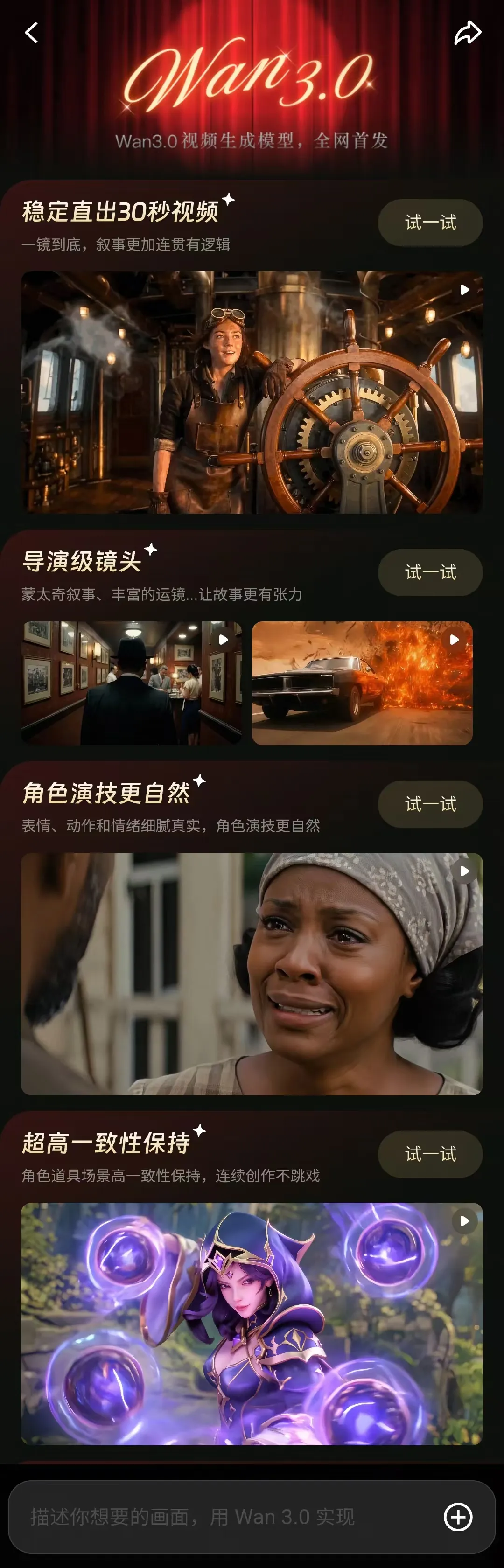
In terms of video generation, Q&A has access to the Wan 3.0 video generation model and its Prime version, while the Wan 3.0 generation's upgrading direction is to make the output directly usable.
 Scroll down and see
The first is the time span. A single segment lasting up to 30 seconds, which means that a single character appears, a round of complete conflicts or a product presentation can be generated in the same sequence of footage, without requiring more than 10 second segments to be rewritten. Note that rewriting is one of the main sources of consistency problems: changing faces, props drift, environmental noise rupture, mood reboots, most of which occur at the intersection.
In addition to the four basic formats of text, images, audio, and video, it also supports the input of document formats such as doc, xls,ppt,pdf,md, and web links. This has great significance in the professional scene: commercials have brand visual specification documents, copes have original papers or PDFs, and corporate promotions have product manuals.
The third is consistency with the language of the footage. Wan 3.0 supports pixel-level controls in dimensions such as character appearance, scene layout, costume props, sound and image style, can reproduce reference assets, and can drive push, pull, shake, move, and other motion of the footage, and move the scene through camera switching and montage. In public testing by third-party creators, 20- to 30-second short footage was indeed able to switch between special effects, behind-the-scenes shots without collapsing characters, clothing and stations in the darkroom and under heavy movement.
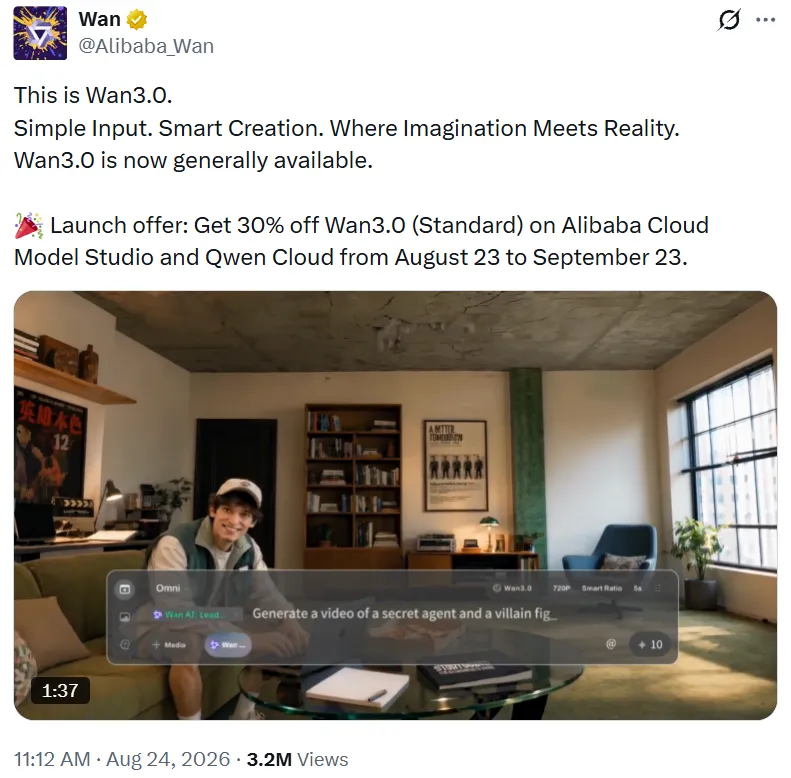
The price of Wan 3.0 is also highly competitive. The API rating of Wan 3.0 is 480P/720P/1080P at 0.3/0.6/1.2 yuan per second; according to the information provided by QQ, the membership limit is 4 folds, 720P per second down to 0.26 yuan.
More information about Wan 3.0 can be found in our previous test videos:
The image-side partner is Qwen-Image-3.0, released on July 21, which supports up to 4.5k token ultra-length inputs that can be generated at a time, with knowledge graphics and complex UI interfaces that combine elements such as formula symbols, geometry graphics, logical inference steps, and support native rendering in 12 languages and more than 20 fonts.
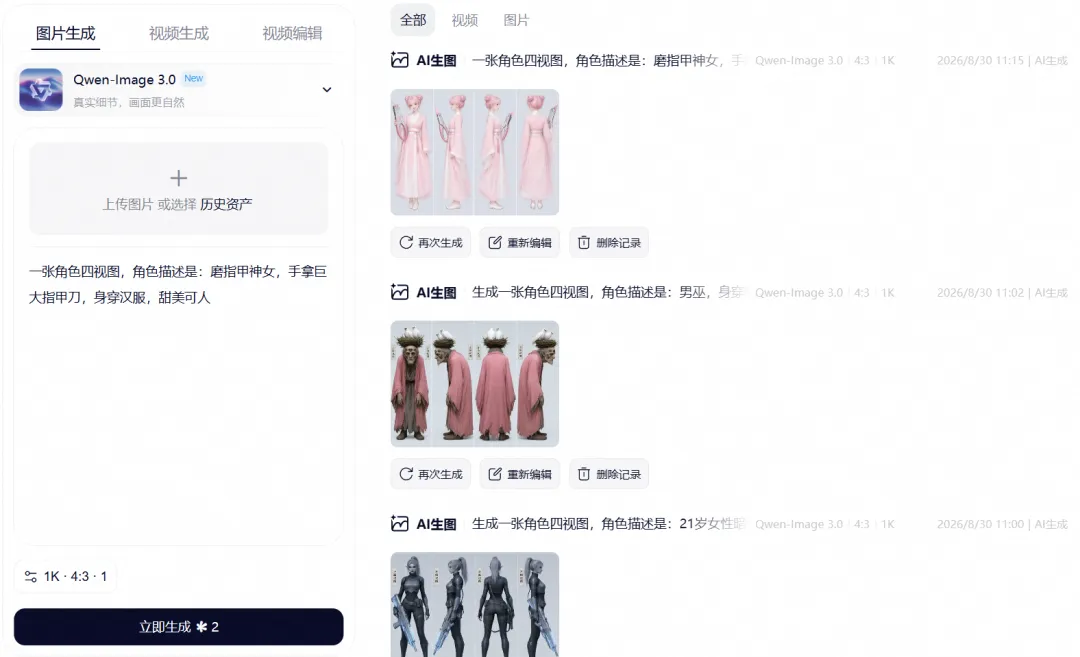
Of course, you can also choose a full-blooded version of Qwen-Image 3.0 Pro, which produces better results.
For video processes, this is critical. Character views, scene references, props, lens sketches are assets that must be fixed before a video is generated. The more controllable an image model is, the fewer drawing cards are drawn during the video stage.
Agent Teams: From "Writing Tips" to "Posting".
Agent Teams is going to solve the transportation problem that we've had before.
Its interaction starts with a natural language. Users come up with creative ideas, system autonomously dismantles tasks, allocates different linkages to sub-agents to assume roles such as director, screenwriter, visual design, and cinematographer, and collaborates around the plot, characters, visual style, and lens expression.
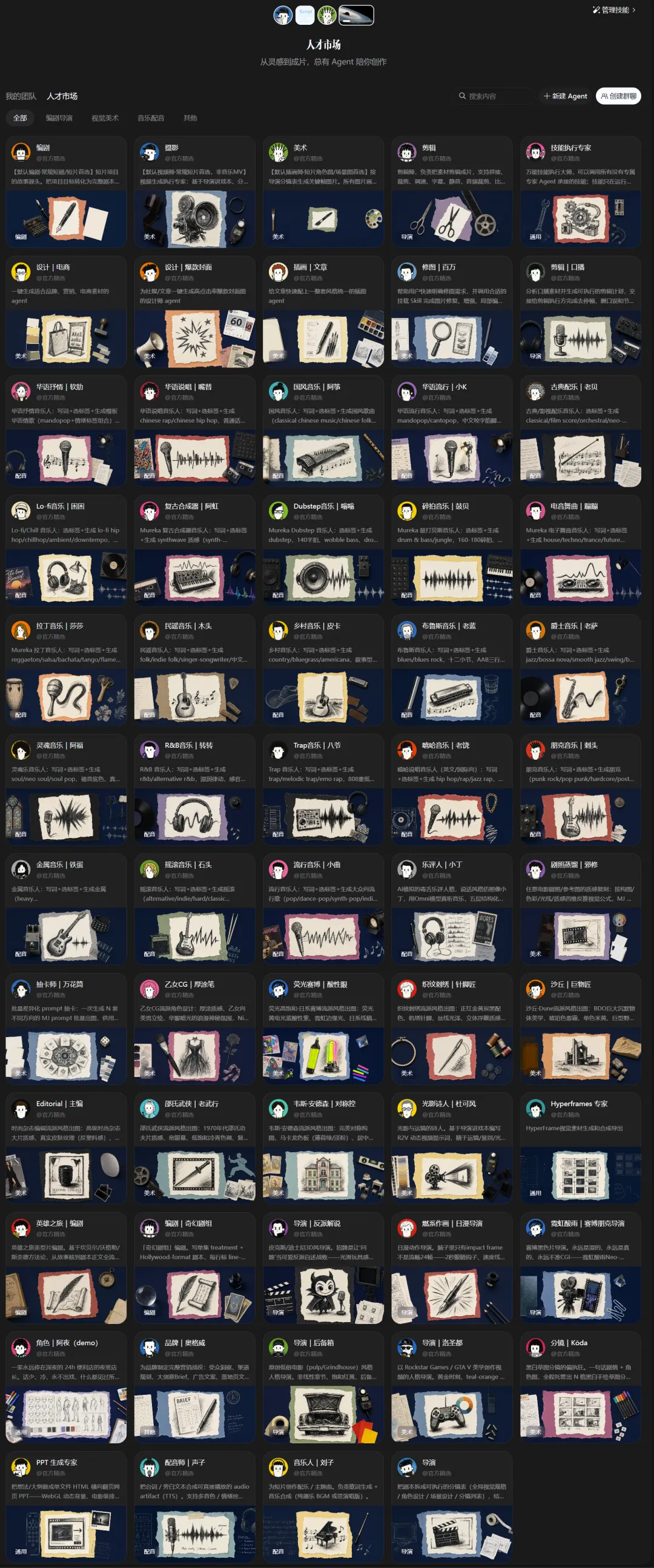 Click below to see that "The Talent Market" has 59 Agents, including directors, artists, writers, singers, and more, and users can create new Agents on their own.
This is referred to as the "Automatic Team". Subsequent creative planning, scripting, character set-up, lens design, image generation, soundtrack production until the film is completed, and the team is powered by the Agent, which allows users to intervene in the dialog box and change the direction of the creation.
Web links and documentation can be accessed directly as a reference to the project, with current attachments supporting PDF, Word, TXT, Markdown and Excel, etc. In product form, both PC and mobile app endings provide direct access, and web endings can be accessed directly through c.qianwen.com.
We've created a "JoJo's fantasy buyer".
Our requirements were very simple: a text script for "Wangyang Buy Guava", with the addition of a suggestion: "To make this script into a video, a video style reference to JoJo's wonderful adventures".
The first thing to do after starting Agent Teams was to send a creative assistant, who did a round of task analysis and then asked a question: What is the aspect ratio of the video? This is exactly the parameter we neglected in the prompts.
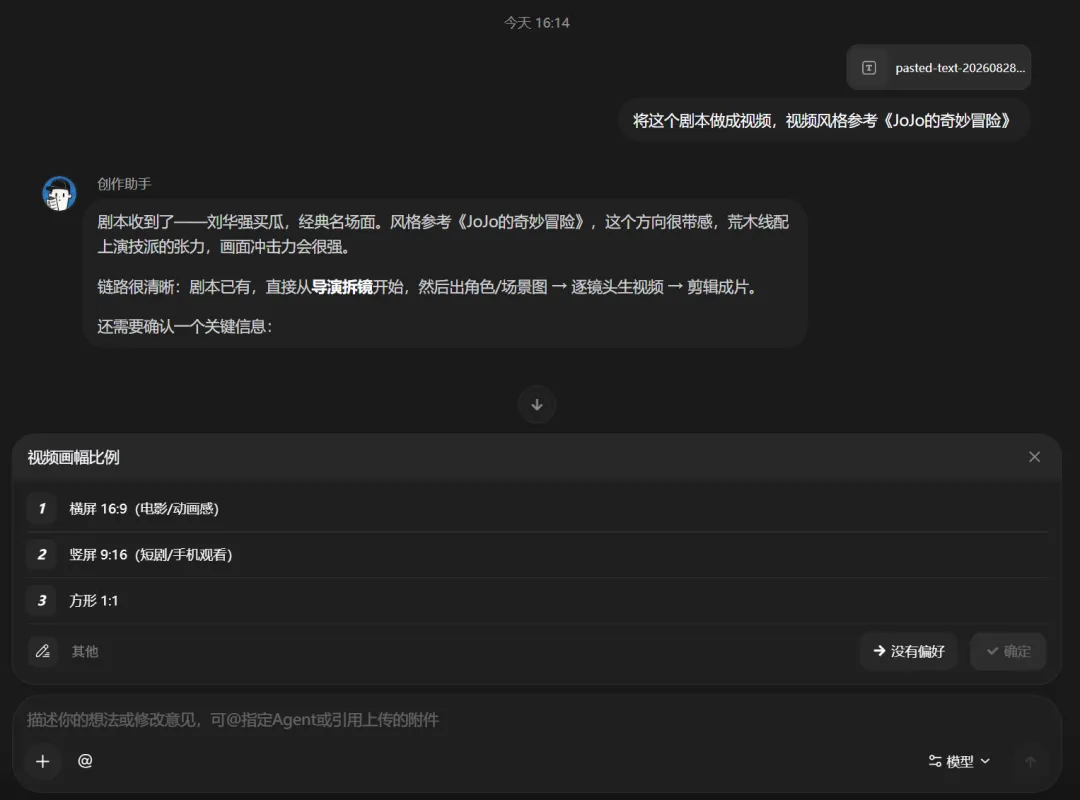
After the confirmation, the creative assistant took the task to a more subtle level and gave a team plan. The film required four jobs: director, illustrator, videographer, and editor.
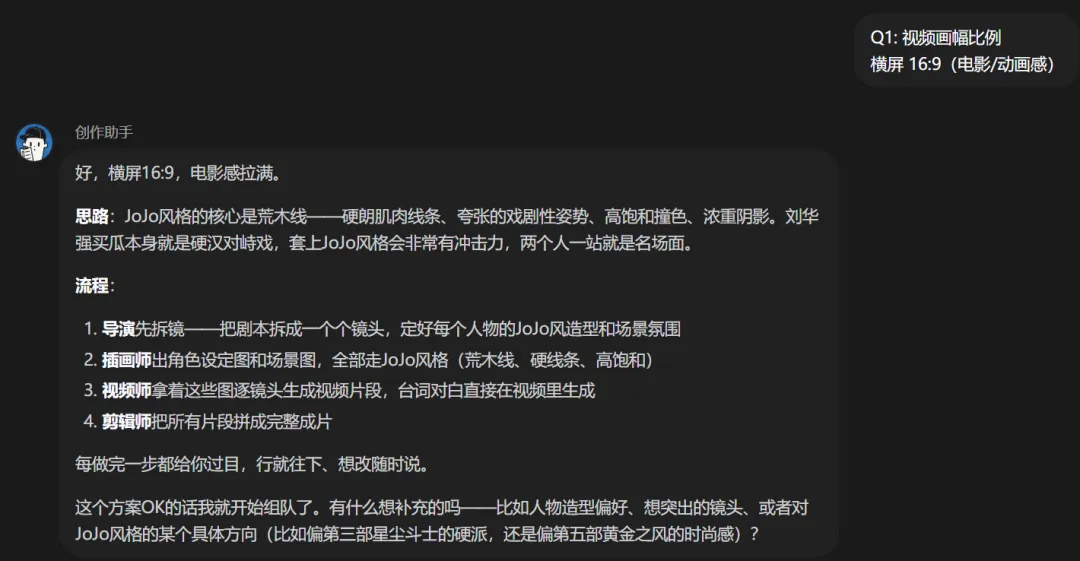
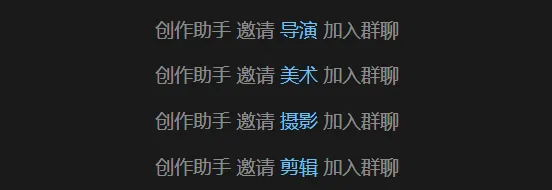
Once confirmed again, four agents officially joined the project. So far, all the content we've entered is only the beginning of the script and one sentence.
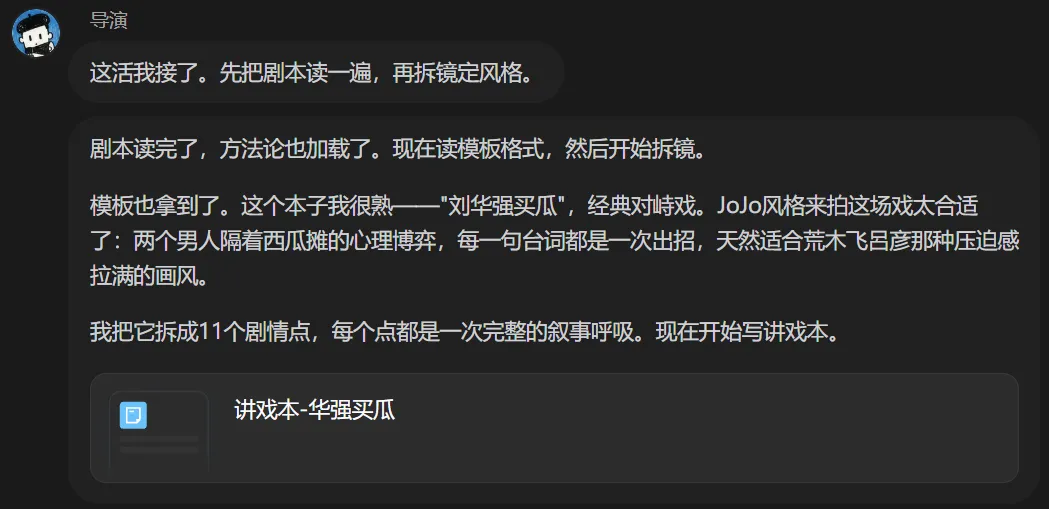
The first was the director, who dismantled the original script into 11 scripts and wrote a complete narrative play. Each episode's emotional settings, character motivations, and footage intentions are clearly interchanged. The narrative play itself is evidence that the process is confined to the same context, and is the common reference of the next few Agents.
 Scroll down and see
Then the illustrator started working, producing the visual assets of the characters and scenes.
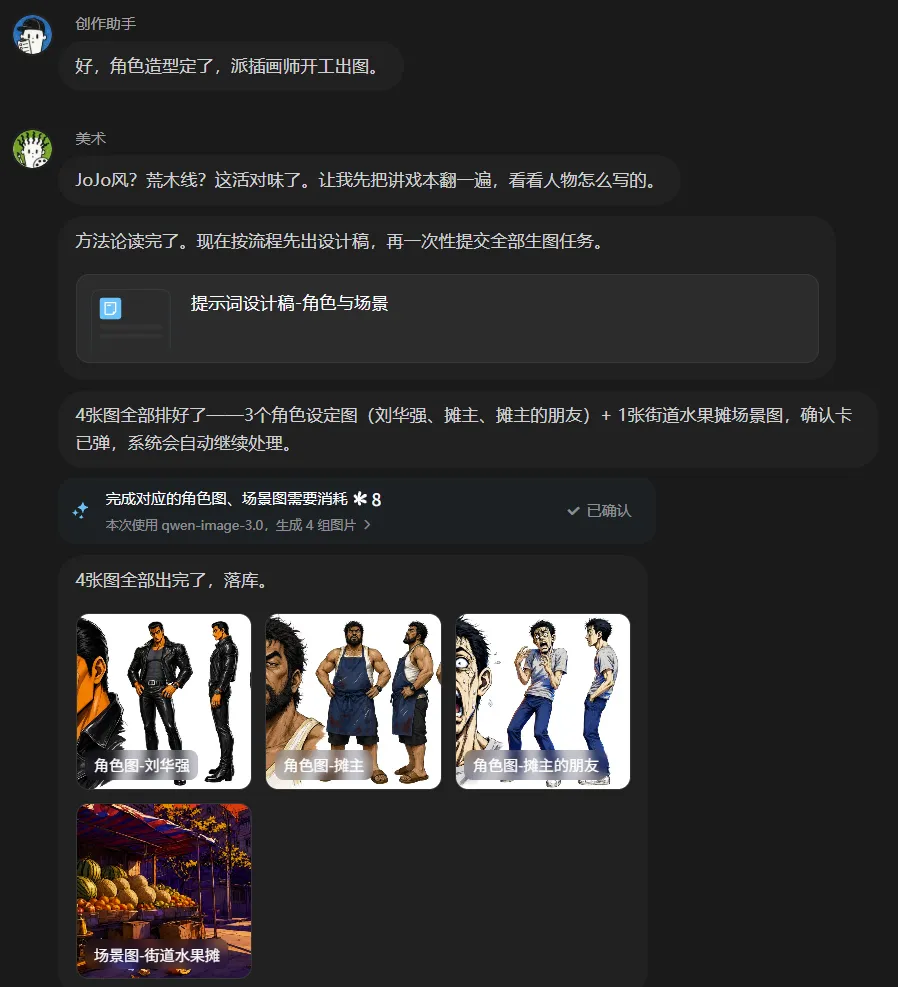
The product of this step is a character asset that can be referenced repeatedly downstream; the personality consistency of the next ten shots hangs on them.
With the character material, it was the turn of the video division to generate footage in the style of JoJo. But it didn't start burning directly, instead writing 12 footage hints before us, waiting to be reviewed and modified.
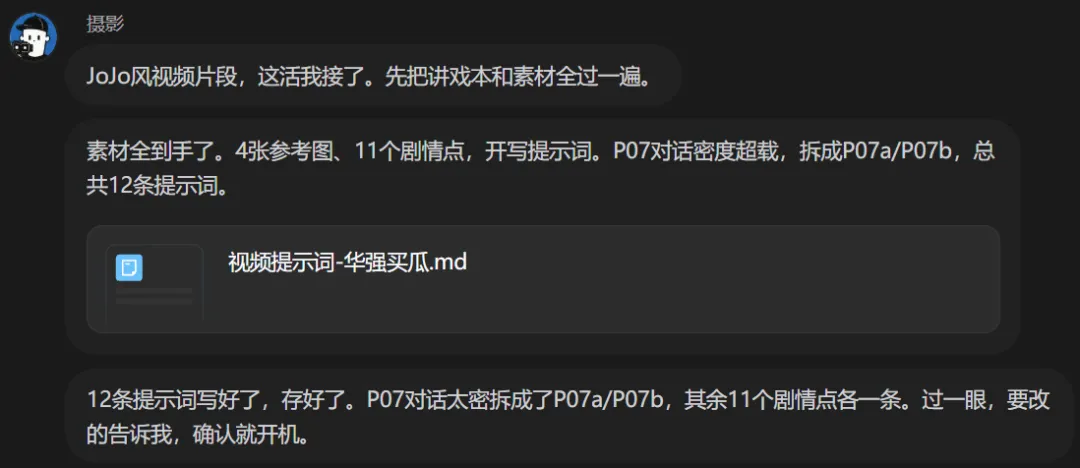
Here, too, we can see a key design of Agent Teams: it's not a natural-language translation between Agents, but a readable, modifiable, roll-backed structured intermediate product: playlists, character assets, and lens suggestion tables. It means that every job has a clear delivery, and every delivery is open to people.
The following is an example of a quotation:
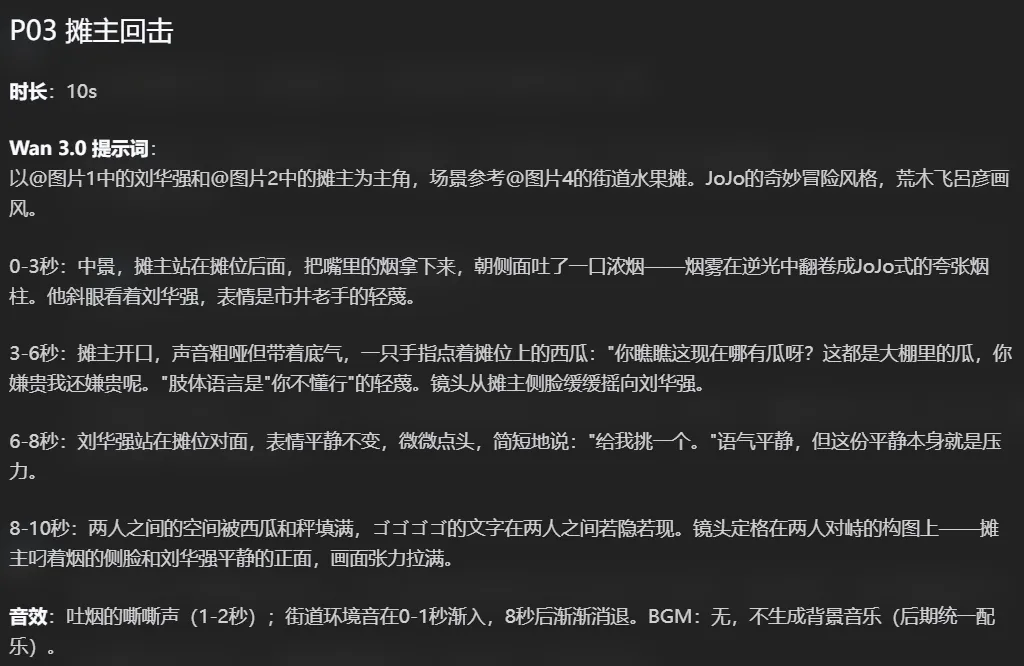
At the same time, the logic of "give a hint first, then confirm" is also very practical, after all, video generation is the most expensive, the slowest step in the entire process, and once all 12 items are running, it is found that the direction is deviated, and the cost of return to work is the highest.
To tell the truth, the suggestion was already quite complete. But in order to test the resilience of the system, we decided to forcibly add a modified opinion: "turning heavy motorcycles in China into some broken little donkeys" and removed a photo of a small donkey from the original video as a reference. At the same time, we switched the video model from Wan 3.0-720P to Wan 3.0-1080P.
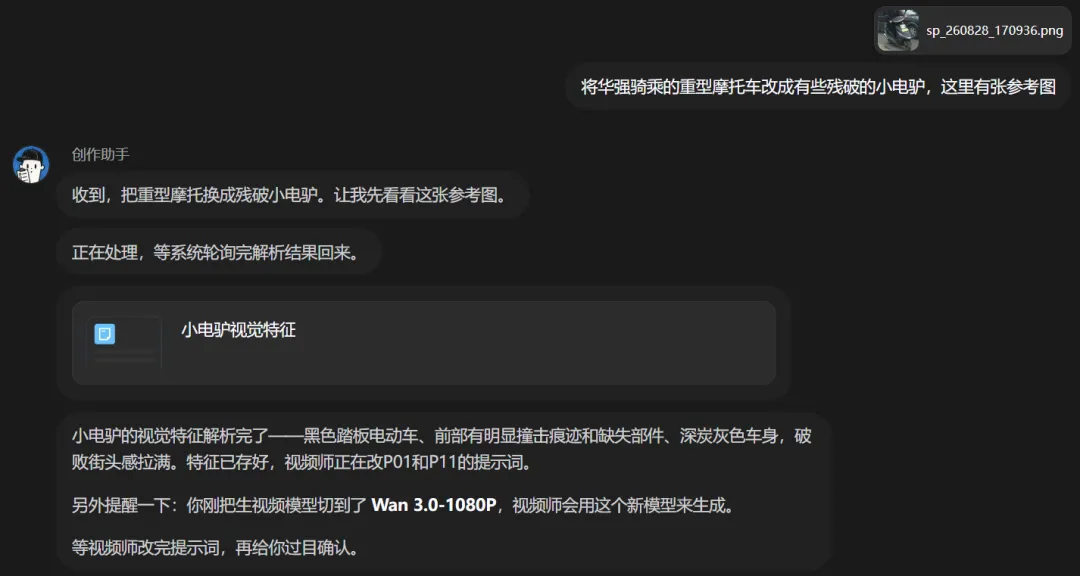
This moves three things simultaneously: the content of the footage, the reference assets and the underlying model, and the Agent Team is holding onto it.
Next up is the most expensive link: video generation.
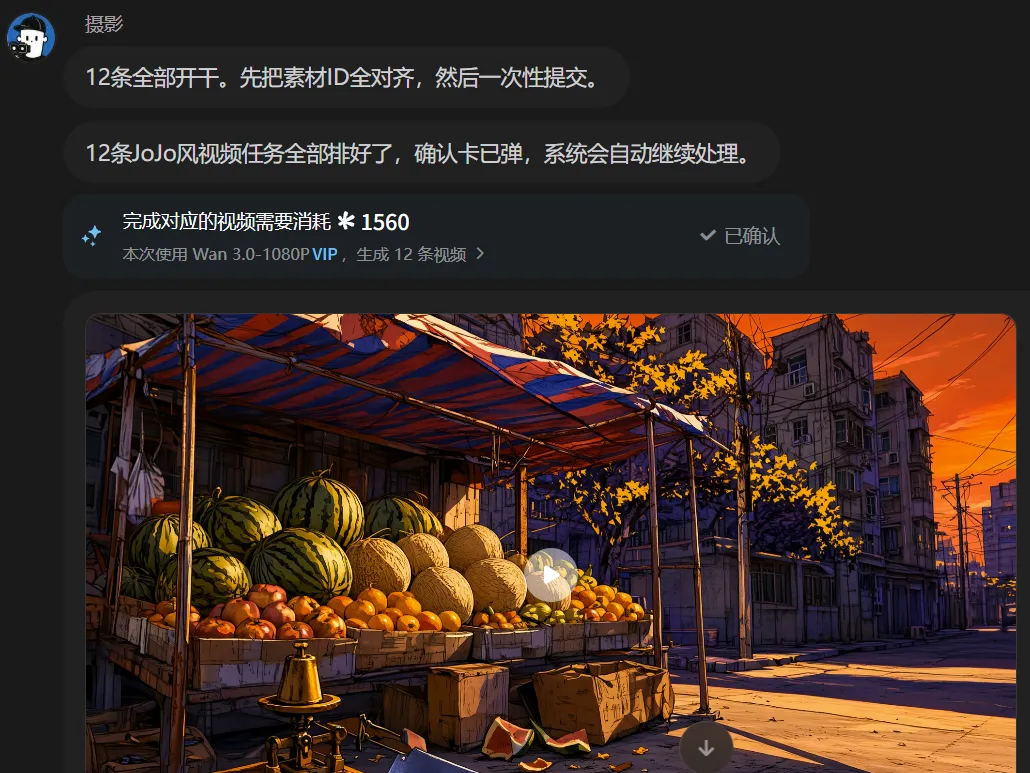
After producing all 12 clips, the editors came forward and put them together into a complete video:
The creative assistant then gave a summary of the entire project.
Of course, we have to admit that the finished product is not perfect, and there is still a lot of confusion. But this is exactly where Agent Teams is with the "one-click generation" product: the project does not end at that moment.
Here's a new version that we've just tweaked after three clips:
The result was a clear improvement, and this optimization process can be continuous and iterative.
Overall, our judgement is that this process can really push the need for a single script and a single sentence into a complete, structured, unified style file that doesn't have to move assets back and forth between multiple software. But it's not a "one-click file" that goes from "can run" to "can deliver" that's still next to human verification and multi-cycle optimization.
It's worth a second thought: Why is this video scene so biased that more Agent collaborations seem to work?
Why the video?
After this, I wanted to talk about the video itself.
The multi-agent collaboration paradigm, which has been tried in many directions over the past year, has had mixed landing effects. In retrospect, where it has run relatively smoothly, there is one thing in common: the task itself has a mature distributed collaboration paradigm.
Video production is also well suited to this condition. Screenwriting, directing, art, photography, editing, sound, the boundaries of responsibilities of each type, delivery format, upstream and downstream interfaces, have been hardened in the film industry for a century. The division of Agent does not need to be redesigned to copy the script. The lens table natural is a structured intermediate product, and the character set natural is a replicable asset specification.
But the video also has its own unique difficulty, and this difficulty is magnified in the multi-agent system.
Code class agents can be iterated autonomously because they can be tested using compilers and test use cases, and the results are easy to verify.
Video, on the other hand, is not. A shot "good or bad" is a subjective judgment, "unsuccessful" requires people to look at the whole scene to know that "feeling wrong" is not even formalized. There are no quantifiable acceptance criteria, and the interaction between Agents can only default the upstream output is right, and errors are transmitted downstream until people find out at the finished stage.
And that's why it's more important than the degree of automation itself to know which nodes users can intervene in, and whether changes can be made right downstream after the intervention. In retrospect, Agent Teams put the playbook and 12 tips in front of users waiting for confirmation, rather than the product's attention, rather than the inevitability of the scene.
From this point of view, the real value of a product like Agent Teams today may not be that it is "fully automated", but that it clusters the processes that were originally scattered across dozens of tools into an upper context. In the same project, the script knows how to set characters, the lens knows the script, the generation knows the lens.
Can a person make a professional film?
If you look at "professional", professional films have at least three layers: technical availability, image integrity, sound synchronization, timing; narrative integrity, structure, emotional advancement, pitch; and commercial availability, compliance with brand specifications, auditability, and timely delivery on budget.
The first layer of the model is basically solved, the second layer is where products like Agent Teams are being solved, where the direction is not right to look at the quality of the bonding power, and the third layer is repeated modification, precision adjustment requirements, and control of waste rates within a limited budget; this layer is still highly dependent on humans.
Over the past two years, AI video's competitive narrative has revolved around model indicators: who lasts longer, who is consistent better, and who is single-second cheaper. These are still important, and the progress of the Wan 3.0 generation does fall on these dimensions.
Putting scripting, directing, and art together as a team that can be regulated by a single word is an answer to this question. There are many unverified boundaries, but this direction does seem to be possible.
If you want to be good at it, go directly to Qianwen.com, where you can start (the first c stands for create); you can also use the Qianwan App to remotely control, create assets and projects interacting across multiple devices, and do it back and forth at any time following the previous progress.