The price of memory chips has skyrocketed, and the average consumer can't afford computers, while AI-loaded devices sell hot.
According to sources inside OpenAI, over the past few months, OpenAI has purchased tens of thousands of Mac mini and Mac Studio devices for enhanced learning and the development of computer-operated smartphones.
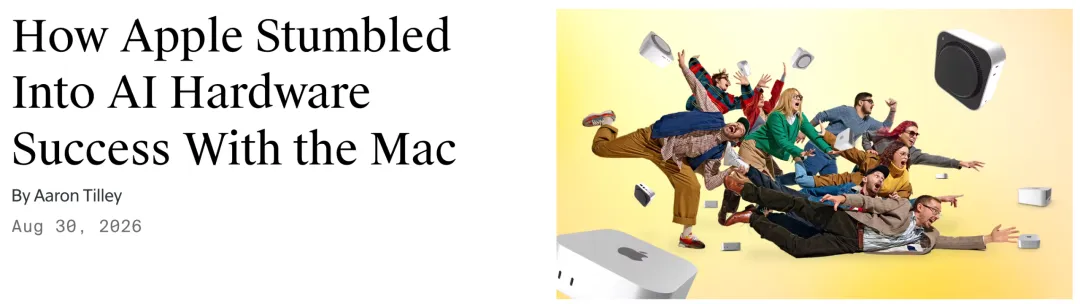
The devices are centrally deployed to train and test agents capable of operating computers autonomously. The report also reports that Anthropic is also leasing large amounts of Mac computing through Amazon's AWS.
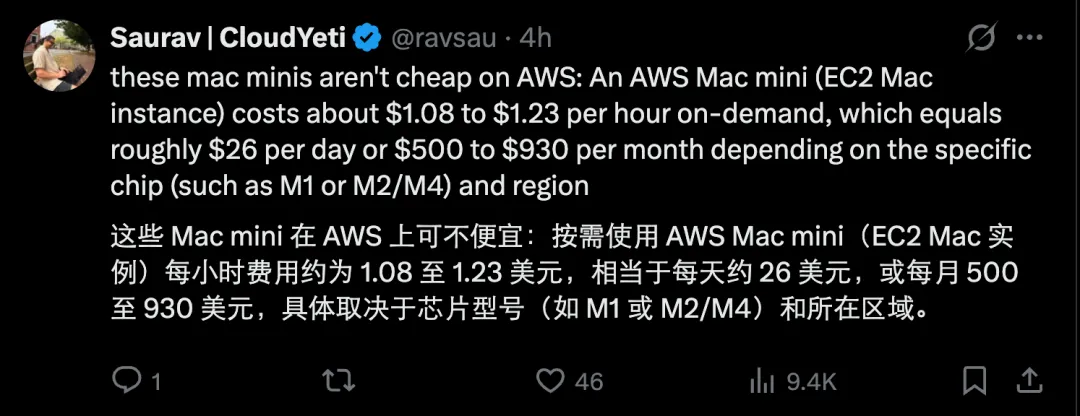
In the past, Apple computers were primarily aimed at ordinary consumers and professional creators, but now they are entering top AI labs in clustered form, performing code testing, mail sorting, document processing, and multistage tasks.
The identity of the Mac is changing, and it is gradually becoming part of the AI infrastructure from a personal computer.
Why did AI Labs start screwing up the Mac?
OpenAI and Anthropic are not lacking in GPUs.
They have a huge cluster of UK-based accelerators and are continuing to acquire more data center computing power. OpenAI is suddenly buying large quantities of Macs, targeting the new demands of computer-operated intelligent agents.
This type of agent requires clicking buttons, entering text, and dragging files, as well as continuous work between different applications. OpenAI's previously released Computer-Using Agent learns how to directly operate graphical interfaces through reinforcement learning.
Training such systems requires a large number of parallel running, repeatedly reset operating system environments in which agents execute tasks, record the system's operational trajectory, judge whether the results are correct, and use these feedback for subsequent training.
Mac is more like a training ground and execution node for the smart body, providing a native macOS environment that avoids interface, permissions, and application compatibility biases between simulated systems and real devices.
Therefore, the acquisition of tens of thousands of Macs by OpenAI does not mean that the main training of its front-end models has been transferred from the GPU cluster to Apple devices. Macs are more likely to undertake parallel interaction, trajectory acquisition, task verification, local reasoning, and partial post-training work. The centralized updating of model parameters is likely still done by data center accelerators.
Apple M-series chips use a unified memory architecture, CPU, GPU, and neural network engine to access the same memory cell, reducing the repetitive transfer of data between different memory regions. For local large model reasoning, this can alleviate the common display capacity limitations of consumer-grade independent graphics cards.
The latest M5 Ultra version of the Mac Studio has 512GB of unified memory, a memory bandwidth of up to 1.2TB/s, so large that the memory pool can be installed in a single unit with parametrically large quantitative models. The desktop is designed with active heat dissipation and is better suited for high-load tasks that last for hours or even days.
Apple also reinforces multi-machine collaboration in the new Mac Studio. According to Apple's official announcement, multiple devices can be clustered through Thunder 5 with distributed AI reasoning up to three times the performance of a single machine.
Apple is finally starting to look at the business.
The Mac mini was once the cheapest desktop computer in the Apple ecosystem. It was small in size, low in power, and could run for long periods without a display. With the popularity of permanent AI agents, these previously common product features suddenly became well suited for data center and local AI deployments.
The Wall Street Journal reported earlier that the Mac mini accounted for about 3 percent of Apple's U.S. Mac sales last year, but after 2026 it became a popular host of the privately-owned, all-weather Agent.
Apple seems to be overwhelmed by this demand as well.
Todd Dailey, marketing manager for AI products at Apple's predecessor company, quotes Mac as saying that there is a strong chance of a crash in the enterprise AI market where Apple has not built a complete system of enterprise engineering support and developer relationships around the market.
In June, Apple hosted a rare closed-door corporate event at Apple Park, attended by Jared Kaplan, co-founder of Anthropic.
By August 25, Apple released the M6 Mac mini and M5 Ultra Mac Studio, and the publicity focus had shifted significantly to end-to-end AI, big model reasoning, and multi-machine clustering.
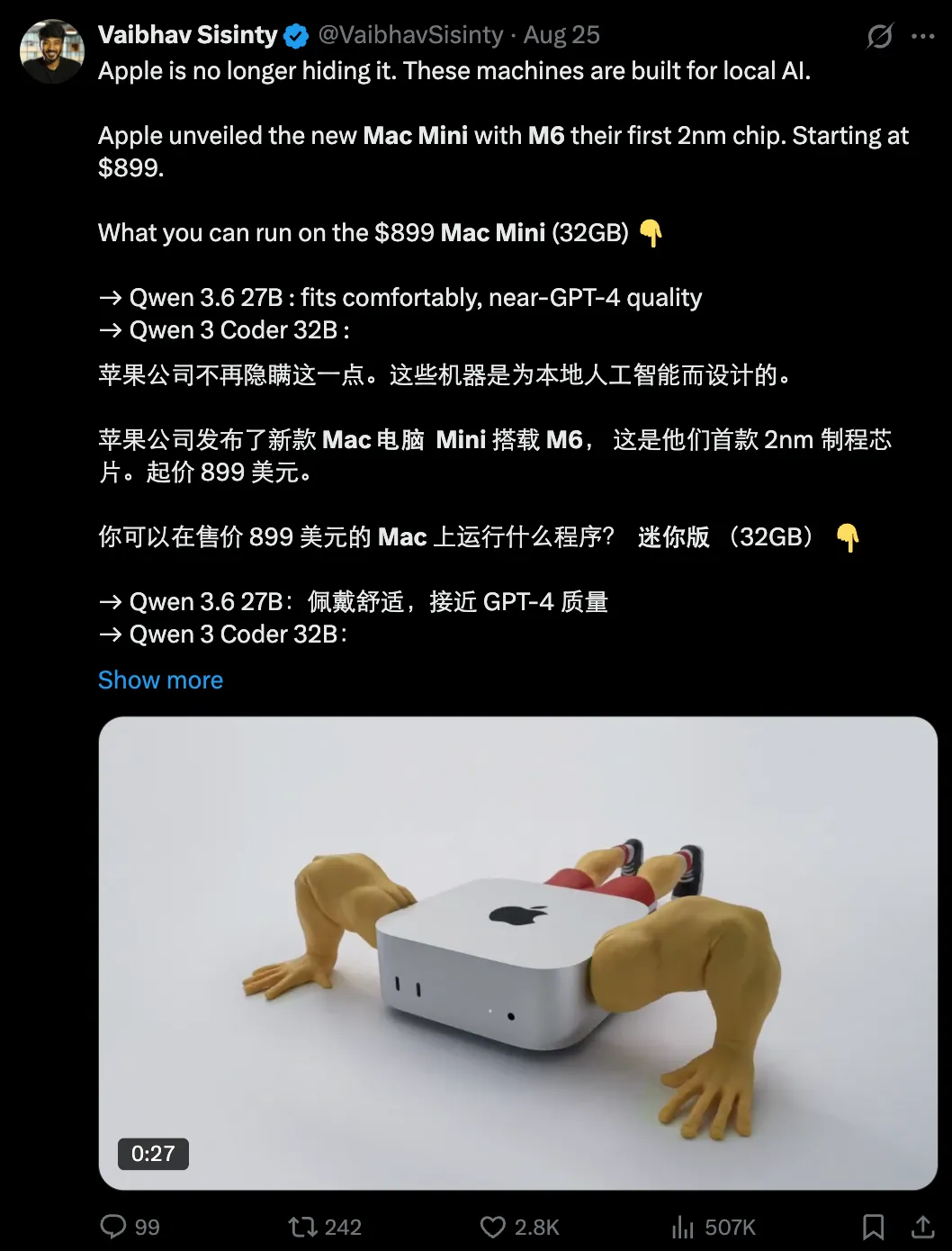
In 2024, the M4 Mac mini with 16GB of memory was priced at 4499 yuan. In two years, the entry price of the Mac mini increased by about 56 percent. Chip upgrades were partly due to the increase in memory and storage costs, which also boosted the overall machine price.
AI demand is already reflected in Apple's financial data. In the third quarter of fiscal year 2026, Apple's Mac business revenue reached $103.52 billion, an increase of about 28.7%, faster than other hardware categories for the same period.
The demand for a high-memory Mac by enterprises and developers has become an undeniable variable in this round of growth.
Desktop AI is the new battleground for Apple and Intel
Apple's changes have attracted the attention of Ingrid.
From DGX Spark to this year's newly announced RTX Spark, UKDA is compressing data center AI computing capabilities to desktop and laptop computers. RTX Spark integrates Grace CPU and Blackwell GPUs, providing up to 1 PFLOP of AI computing performance and 128GB of unified memory while supporting CUDA, TensorRT and RTX software packages.
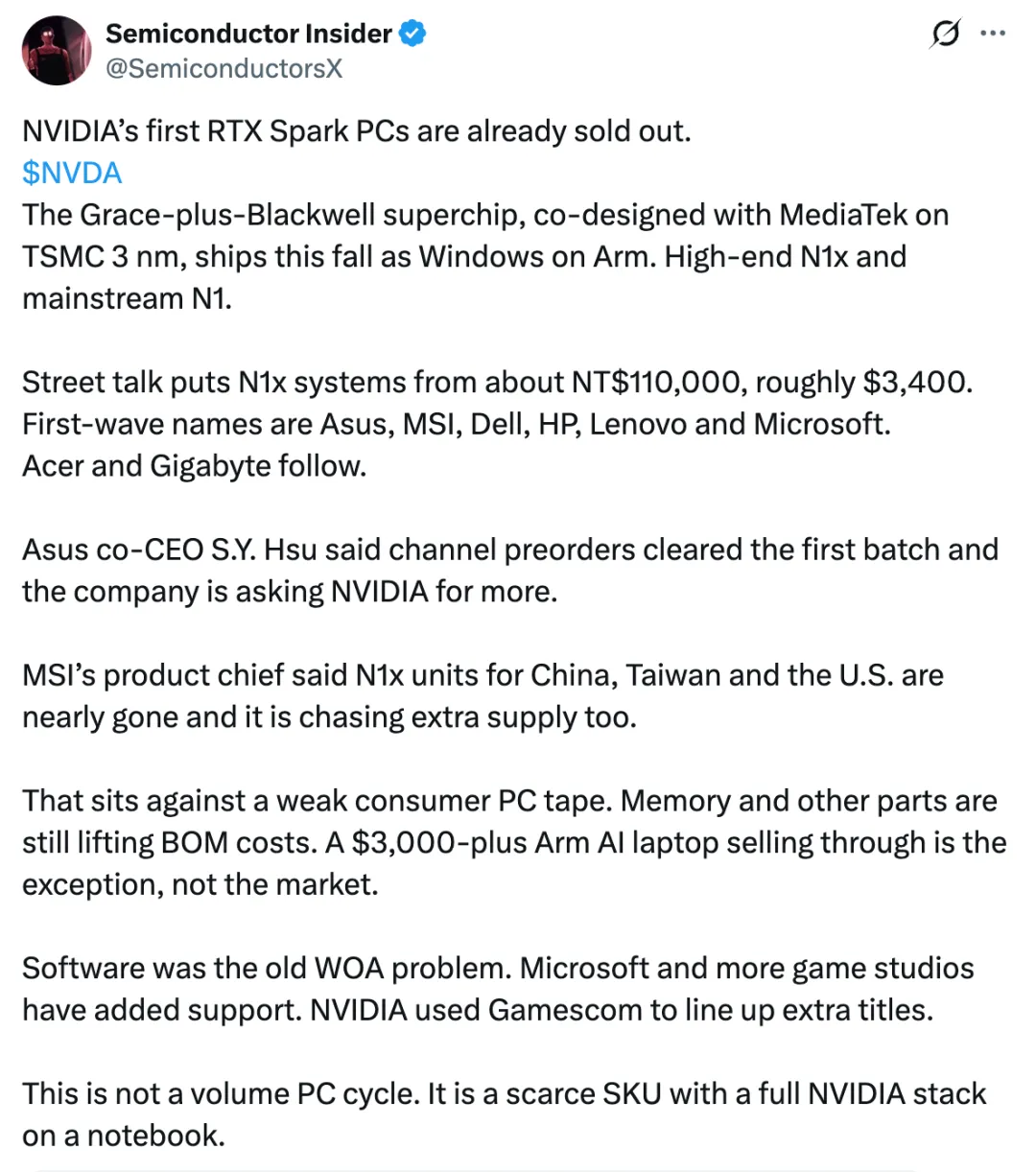
Invisalign has directly defined it as a new PC aimed at a personal smartphone. According to official plans, the first RTX Spark laptops and compact desktops will be launched in the fall of this year.
The product has not yet been officially released, and supply has tightened. It is reported that the first batch of Huawei RTX Spark models has been booked by Channel customers, the first batch of Microsoft's high-end N1x models is close to being sold, and both companies are seeking more quotas from Ingrid.
Apple and Invisalign set off on the same new track.
Apple has a large-capacity unified memory, a more energy-efficient and native macOS environment. Intel has mastered CUDA, TensorRT, and more mature AI, and is deeply integrated with Windows's intelligent systems. The core scenarios for both parties include local reasoning, Agent execution, reinforcement learning trajectory generation, model evaluation, and lightweight post-training.
These desktop devices will not replace large training clusters in the near term. They complement a layer of cloud computing that is difficult to fully cover: allowing the Agent to be closer to user data, operating systems and real applications, and to continue to run at a lower latency.
There are also problems with the supply.
AI data centers are consuming large amounts of DRAM and NAND, driving the cost of the entire storage market. At the same time, local AI and smart entities also need greater memory capacity. Upstream data centers and downstream AI terminals are competing for memory simultaneously, ultimately forming a chain reaction to rising prices, delivery delays and high-end model shortages.
The rotation of the Mac mini reveals a new hardware route to the era of the smart body. Future AI computing will not only be concentrated in giant data centers, but more and more computing tasks will be assigned to local nodes in offices, homes and corporate offices.
The next competition for AI hardware has spread from the cloud to every desktop.
The link is as follows: