At the WRC, we found that physical intelligence may be entering an anti-intuitive phase: the real scarcity in the next phase of physical intelligence is not the amount of data, but whether there is enough physical world in the data.
Over the past year, there has been a rapid emergence of physically intelligent training centers across China, with robots being sent to venues, laboratories and data factories to collect motion data via remote operations. By mid-2026, more than 90 related training centers are under construction or in operation in China.
Data is changing and the effectiveness of data is not growing at the same time. This may be the first sign that the industry really deserves to be warned about after the introduction of physical intelligence into commercialization.
01.
The stronger the model, the more expensive the real-world data.
A robot is not a ChatGPT, a language model can use the Internet world as its own training ground; a robot has no such convenience. It has to deal with friction, shading, weight, collision, shape change and failure in the real world. A video tells a robot how one person takes a cup but does not tell it why the cup does not slip; an image allows the model to recognize the table, but does not allow the robot to know how the body should adjust after the handshake is pressed.
Digital AI pursues the quantity of information, while physical AI ultimately pursues experience density. This will change the way the next stage of the robotics industry competes.
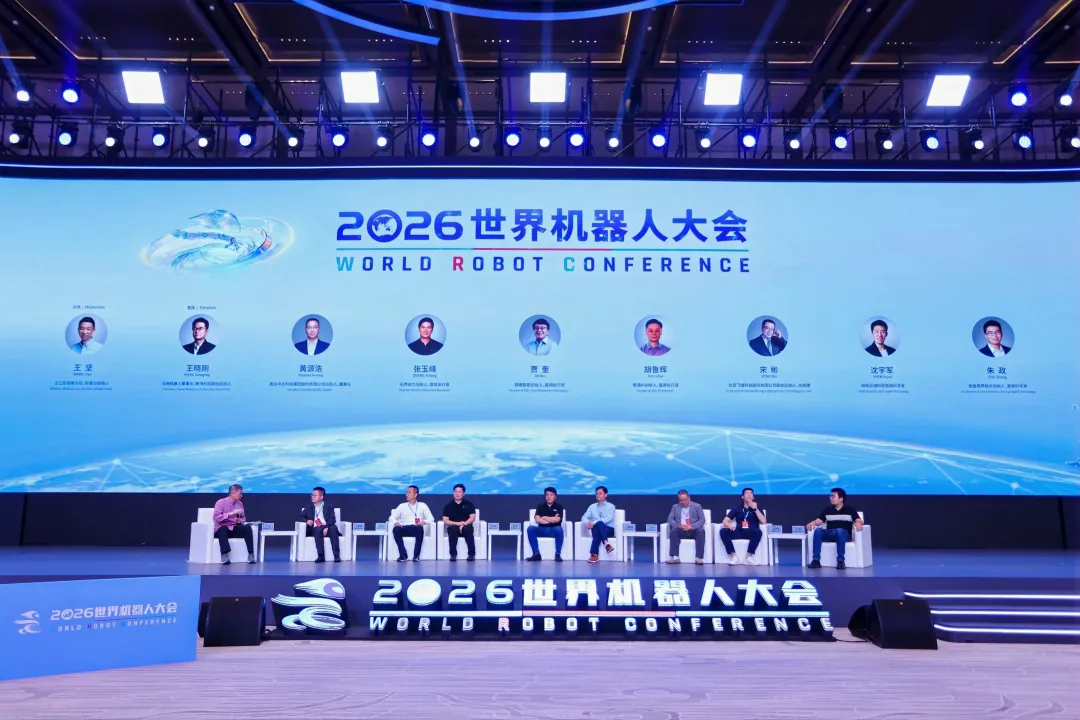
Obi-Wan Kenobi, founder, chairman and CEO, Dr. Huang Zheng, has a clear framework for this in the main forum of the conference: the first half of AI is a language model, primarily optimizing pre-computer intelligence work; the second half is physical intelligence, a deep fusion of the physical world and digital intelligence. It states that the explosion of digital intelligence is due to two conditions, big data comes from enterprises such as Great Britain and big data from massive texts that already exist on the Internet. But physical intelligence is completely different.
Recent studies have shown a marked turnaround. SPEAR-1 of CVPR 2026 does not simply continue to build data along the path of "increasing robot demonstration data", but attempts to increase 3D space understanding to ordinary images and then to use robot basic model training. The study uses about 45 million tons of data, reducing the need for robot demonstration data by 20 times while achieving or exceeding some of the performance of advanced models.
FreeTacMan, on the other hand, even takes robots out of the data collection process: the research team designs wearable visual touch collection devices that allow people to directly complete extensive contact operations while simultaneously recording visual, tactile and motion information and then applying these experiences to robot strategy learning.
Both directions look completely different, and they're actually answering the same question: Is the bottleneck of robot training too little data, or is the way we produce data too expensive, too unique?
The answer is getting closer and closer to the latter.
02.
The matrix of Orion light expands
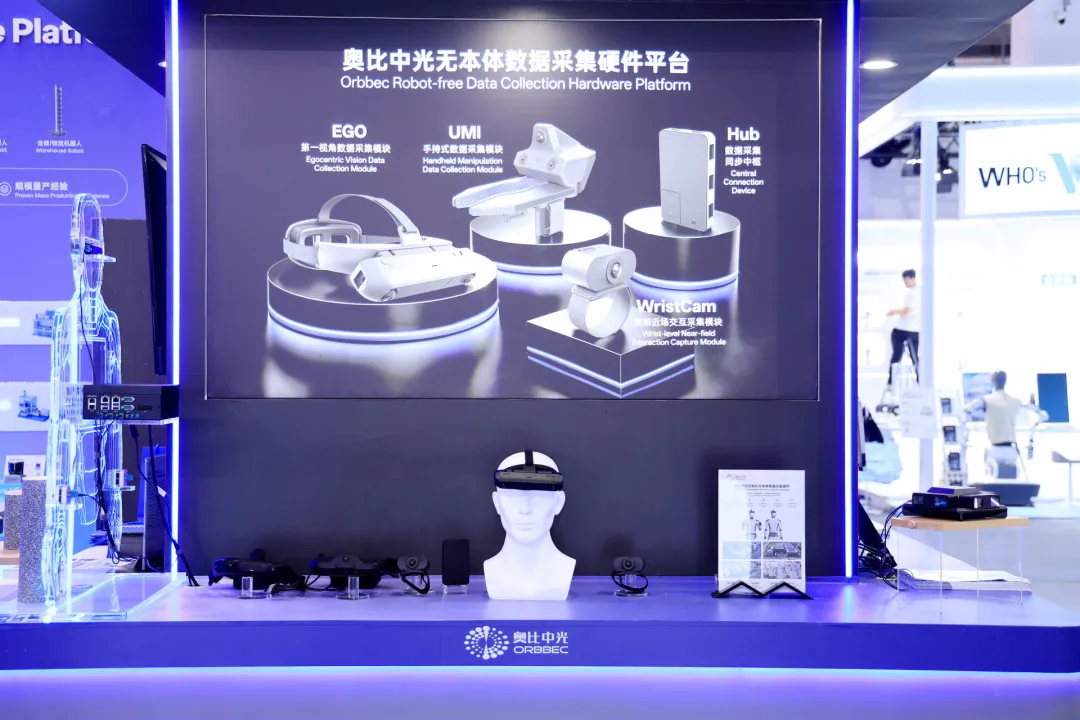
In this trend, the Robotics Workshop discovered that the WRC has released two sets of products that appear to belong to different fields: EGO, UMI, WristCam, Hub, and the Physis series for robotic vision.
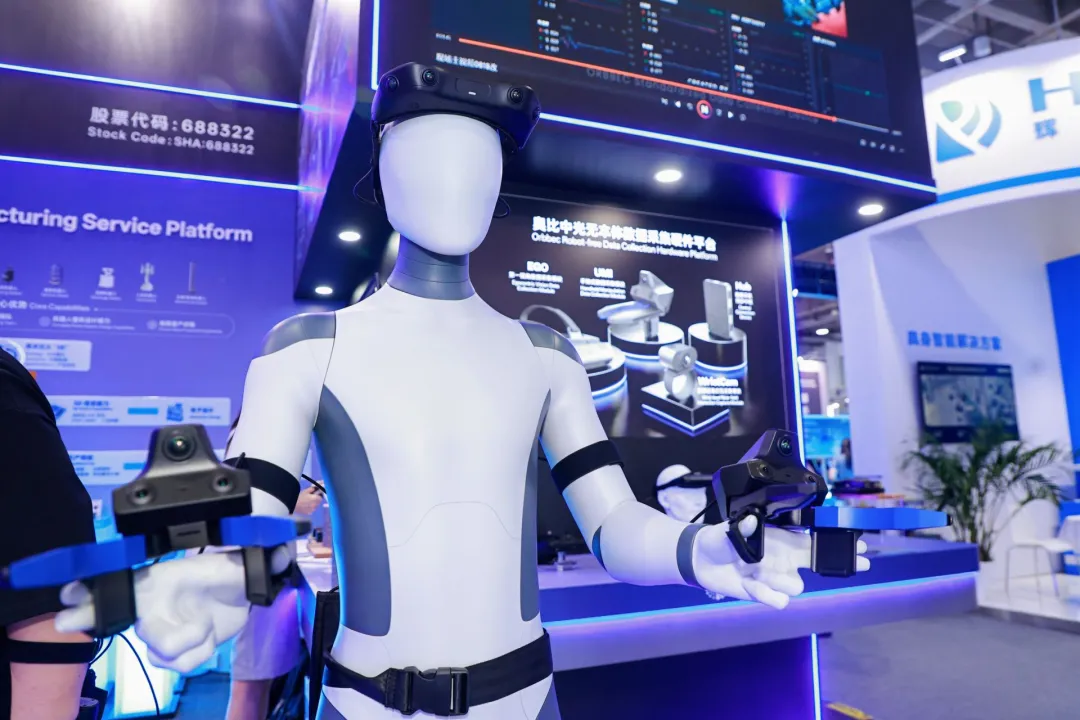
EGO is responsible for the first viewpoint, UMI is responsible for hand-held operations, WristCam enters the wrist area, and Hub is responsible for multi-device synchronization. The four devices form a collection matrix covering the critical viewpoints of real interaction, organized into a real interaction data collection system.
On the other hand, Physis 257g uses 63mm pupil-distancing baseline, H120°×V90° wide field of view, 1920×1200@60fps two-way color data flow, depth perception range of 0.1m to 10m or more, and is designed for robotic operating environments with IP67, 30°C to 65°C wide temperature and high impact operating conditions.
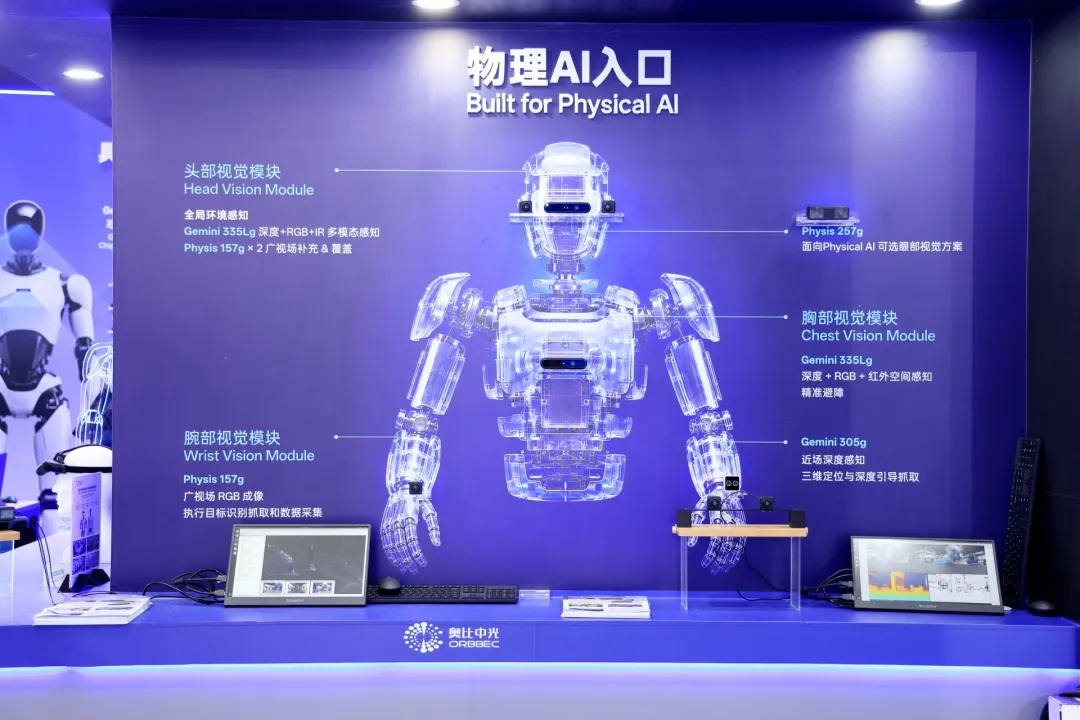
If you look at the two sets of products separately, they are just data-gathering devices and robotic cameras. But if you put them in the industry cycle of 2026, you will find that they point to the same industry change: the robotic industry is moving from "manufacturing robots" to "the real experience of making robots".
With the experience of sensors, Obi-Wan has moved downward into data collection, connecting models and robots, and reorganizing dispersed sensory connections, from a 3D vision company to a provider of physical AI infrastructure.
In the past, the core assets of the industry focused more on entities, joints, controllers, and supply chains; the importance of data acquisition, perception, synchronization, labeling, and model training and feedback is also increasing as physical intelligence moves toward continuous learning.
Once a robot actually enters a factory, a successful seizure isn't just about completing a task. It should leave behind what the robot saw at the time, where the hand was, how the object moved, whether there was any slippage in the process, and how it should adjust the next time it encounters a similar situation.
If this information is not left behind, the robot will consume every single job; if it is left behind, each job will likely become the next training material. This is a great divide between physical AI and traditional automation. The goal of traditional automation is to make a given action stable enough at once.
The goal of physical intelligence is to allow robots to continue to gain experience in uncertain environments. Thus, the value chain of the robotics industry is also beginning to change. In the past, the most valuable is the robot itself. The future is becoming increasingly important, possibly the invisible layer of data between robots and the real world.
03.
From "data volume" to "experience density"
Data quality is becoming more important than the simple pursuit of quantity. Today, the industry is used to talking about the size of data: how many hours, how many tracks, how many lights, how many samples.
Because a repeated success trajectory has a completely different training value than a single operation that involves complex contact, failure and correction.
A million times the same catch is not necessarily more valuable than ten thousand times covering different materials, different postures, different shadows and different reasons for failure.
So, what physical AI needs to build is not a simple data stream, but an experimental production system. It must be able to continuously capture interactions between people and objects, put information such as vision, movement, touch, and sound into a unified time and space coordinate, and then convert that data into training samples that models can use.
A number of engineering indicators given by Obi-Wan Kenobi at this time illustrate why this is so difficult.
Its data collection equipment recorded continuously for more than 37 hours at 1600×1200@30fps, H.264 conditions, with RGB and IMU zero loss, cumulatively over 100 million tons; camera and IMU aluminum interval fluctuation controls within 30 μs; multi-camera hardware synchronous error is less than 1 ms, and manufacturer label error is less than 0.3px.
What is really important about these indicators is not that they make the parameters more beautiful, but that they determine whether real-world experience can be left intact.
If there is a time gap between vision and IMU, the movements seen by the robot and the physical movement are not the same moment; if there is no uniform benchmark between multiple cameras, the world seen by different parts of the robot may not be spelled out as a continuous space.
Data collection thus began to shift from "recording devices" to "encoders of physical experience". This is precisely a large market that the robotics industry has not really formed before. Sensor companies are entering the bottom of this chain.
Because robot data has a very realistic feature: the more valuable the data is not, but the higher the value, the more it can restore the actual physical state in which the action takes place.
For example, a robot grabs an object, RGB records what it sees, IMU records the state of the device's motion, touch records contact changes, audio video records environmental information. If these data do not have a uniform time benchmark, then what the training system sees is not a complete interaction, but a collection of pieces of time misplaced.
This is also the value of the Hub and the entire synchronization system: the Hub is responsible for connecting and synchronizing multiple devices, while high-precision synchronization and timing together ensure that different models of data can be used under a uniform time-space benchmark.
OBJ summarizes this capability in four dimensions: Real, Reliable, Rich, Ready, and is essentially an answer to an industrialized question: how does real data go from one-time experiments to sustainable data production?
There is a deeper industrial logic behind this step. Yellow source notes that the turn of the data flyer is the most important. Large amounts of data come from real materials and reinforced training real-machine materials, but the core problem is: can different robots, different numbers of miners get the data to be replicated? This requires a standard. Because the data is taken in a single image, the glove data is 15 milliseconds wrong, and the accuracy of the power is more important. Only to fully record information such as visual, motion, tactile operation of objects, the state of the object, the data can be reused across the body, reused across the model, and the data cost can really fall.
This is a critical step. Because what future robotics companies really need is not a few thousand good examples, but a pipeline that can continue to generate data. The more a robot performs a task, the more it should leave a learning experience; every time it solves a long-tail problem, the less the next robot should go wrong.
This is one of the biggest industry differences between physical AI and traditional automation: in the past, robot deployments have been completed, projects are essentially over; in the future, robot deployments have been completed, data closures are just beginning.
04.
Cameras are also changing from sensors to "interfaces to the world".
The same changes are occurring in robotic vision. If data collection solves how robots gain experience, then vision solves how robots get to reality. But the difference is that the basic problem of traditional robotic vision is recognition, with physical intelligence further enhancing the requirement that robots continue to understand themselves, the spatial relationship between objects and the environment in the process of movement and interaction.
From traditional machine vision to physical vision, it is not a simple transition from staring at objects to understanding the universe, but a process of perception that moves from relatively fixed tasks and environments to more dynamic, more continuous, and more emphasizing action feedback. Therefore, the parameters of a single camera are no longer complete. Angle of view, depth accuracy, torque rate, dynamic range, synchronous ability, interface, and reliability all begin to become system-level indicators.
Yellow Source has a more basic judgment about this: high-quality real-world data, which is the cornerstone of physical AI with a physically intelligent evolution. World models really need to keep up with human life, hard work, fatigue, hand performance, sensors in all aspects. From the model to the data to the execution of the body, there is a constant need to progress, robots can be the first to enter the most unwilling to do human life, and later to become more generalized, intelligent and penetrate more and more scenes.
The real determinant of the system's capability is not who has the highest single camera parameters, but rather who can make these cameras work in the same time and space coordinate system. This is similar to the changes experienced in car intelligent driving in the past, and the increase in the number of cameras does not automatically lead to an increase in capacity. The real difficulty is sensor integration, time synchronization, space markup and real-time computing.
Robots are entering the same stage, but the world they face is more dynamic.
05.
From selling parts to participating in building physical AI
The real entrance to physical AI is that the physical world will begin to produce "computable experiences", which is why a very interesting change in the robotics industry will begin in 2026.
The Robotics Workshop found that the focus of the WRC's industry discussion was moving from the robot itself to the infrastructure around the robot. In the past, the focus was on the mechanical arm, dexterity, joints, and essence. Now, more and more businesses are entering data collection, touch, vision, simulation, training platforms, and edge computing.
The reason for this is simple. The robot is ultimately not a body, but a system that can continue to absorb real-world experiences. If one success is only one success, then the robot is still a machine; if this success can be recorded, understood, trained, and migrated to the next robot, then it will begin to grow in the sense of machine learning.
This is also the core industry logic of physical AI. Data acquisition leaves the movement in reality, vision converts the real space into information that a machine can process, models learn from that information, robots enter the real execution, execute new data, and new data continue to train models.
Thus, the robotics industry began to form a cycle that had not really been formed in the past era of automation. The more robots, the more data; the more data, the stronger the model; the stronger the model, the more scenarios robots can access.
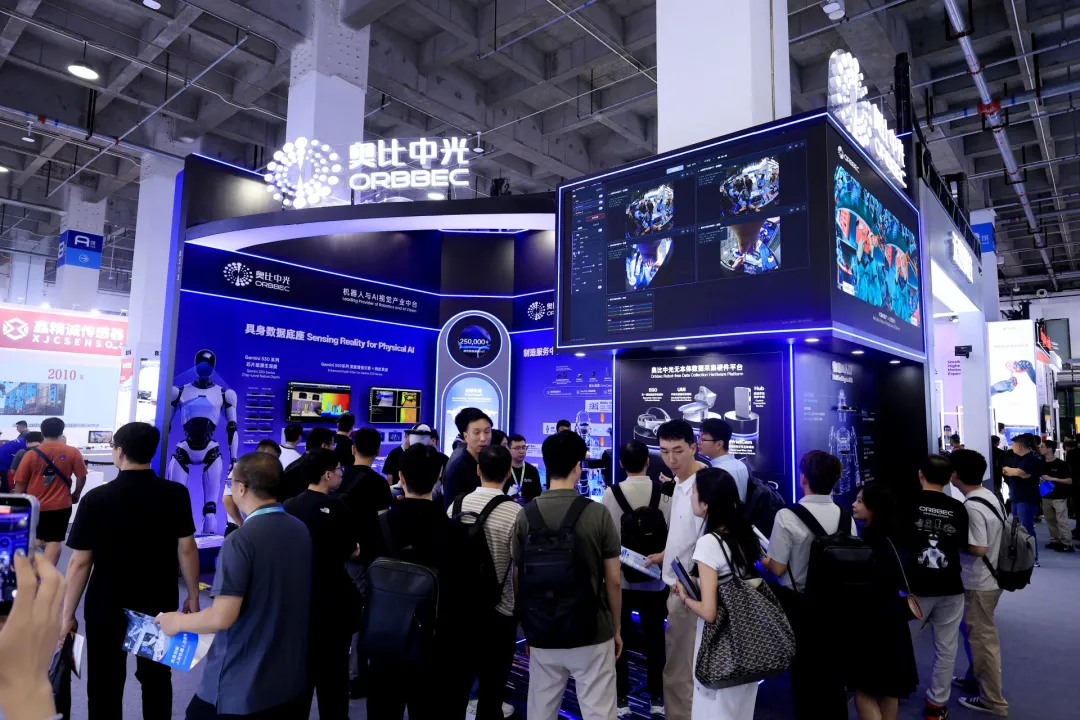
This is where the move really deserves the attention of the industry. If you only look at the product, it introduces data collection equipment and robotic vision. If you look at the industry chain, it actually cuts into two very critical links of physical AI at the same time: one is responsible for producing experience and the other is responsible for giving robots access to real-world space information.
This enables new combinations of optics, chips, algorithms, labeling and manufacturing capabilities that have accumulated in OBI's original optics. The data collection platform is geared towards digital service providers, large model manufacturers, robotic enterprises, and ecological partners such as touch, gloves, and offers standardized products, brand customization, CM and JDM services.
06.
Link to the Future
At the forum, Mr. Huang summarized more directly the positioning of the industry like that of Obi-Wan Kenobi: a hardware base dedicated to building physical data collection. He emphasized in particular that the model and data flywheel is the king-eaten market.
As a result, his main goal is to promote data standardization, allowing data from different sources to circulate and allowing data to serve more model companies.
This is actually a smarter industry location. At present, the physical architecture and physical model routes of human robots are still evolving rapidly and have not yet formed a unified paradigm. But as long as the robot continues to enter the real world, it must see the world and must gain experience from the real world.
This is the opportunity for infrastructure companies. The robots themselves may be a generation of change, model architectures may evolve rapidly, but the underlying capabilities of vision, synchronization, markup and data gathering will be repeatedly called upon as the number of robots grows.
This has also caused the industry to struggle over who can create better robots in the past, and now industrial chains are competing over who can turn the real world into something that robots can learn at a lower cost. This may be closer to the true turning point of commercialization than "who made a general robot first".
Every interaction is an experimental production. And whoever has the infrastructure for experimental production has the potential to master the invisible pipeline that physical AI moves from the lab to scale.
The most scarce resource in the robotic age may not be computing or the number of robots, but the ability to turn the real world into a computable experience.
This is one of the most valuable infrastructures to re-evaluate after physical AI has really begun to enter the deep water zone of the industry.