
The first step in human work: equipping the sensory nerves of robots
From the standpoint of the WRC, transporting material boxes, turning on washing machine doors, pointing screwdrivers and tightening... Every family-owned manufacturer is trying to teach humans how to work to robots, and in the process, mindfulness is becoming the benchmark for robots perceiving the physical world.
Traditional industrial robots are largely power-controlled, although a few programs can indirectly estimate the magnitude of the torque by adjusting the electrical current of the motor, but the accuracy is limited and the response speed is slow. The emergence of six-dimensional sensors and joint torque sensors has allowed traditional robots to escape the limitations of hydraulic power ring control to achieve more precise strength, smoother posture, and complete precise contact tasks such as grinding and assembly.
In the era of humanoid robots, the importance of exertion is obvious: how much force should be used to wash dishes, grab cups, open doors, fold clothes?
Power sensors are at the heart of the answer to this series of questions, and power point hybrid control pumps are also a technological leap forward in the direction of human perception.
Since its founding in 2018, Huawei Technologies has always focused on research and development of high-precision sensors and power control solutions, and the core founding team comes from the National Space Research Institute, with over 20 years of power sensor research and development experience, with space-level engineering capabilities and product reliability.
For eight years, Huawei Technologies has been deeply engaged in the process of giving robotic sensors the power of sensing neurons, and on the way to the rise of the domestic high-end sensing industry, Huawei Technologies is not only a witness, but also a participant and a definer.
Huawei Technology has mastered the dual technology of silicon structure decomposition + algorithm decomposition, which can greatly reduce the interference of sensors in three-dimensional space by different dimensional sensing signals, allowing sensors to have extremely high accuracy and precision, and the accuracy of string control reaches 6-8 times the industry average. Huawei has also developed a high-precision automated six-dimensional joint load labeling equipment, which will compress the labeling time to the minute level, and is the only public company in the country with the ability to self-develop the equipment.
The ultimate starting point for technological achievements is products.16mmMatrix of six-dimensional sensor products up to 200mm full coverageIncluding: areas of scientific research with stringent demands for precision, introducing a super-high-performance HPS series that outperforms international giants; the HRS series designed specifically for high-reliability force-control sensing for humanoid robots; the KWR series for robotics and industry; and the CSR series for all-inclusive products aimed at dramatically reducing demand scenarios.
In the product matrix, the HPS series is a worthy performance flagship, which uses a special aluminum alloy elasticity, with a weight reduction of almost half that of conventional models, a sampling rate of up to 30 kHz, repeat accuracy greater than 0.1% FS, accuracy (containing interference) greater than 0.3% FS, and a core indicator that exceeds similar products of international brands.
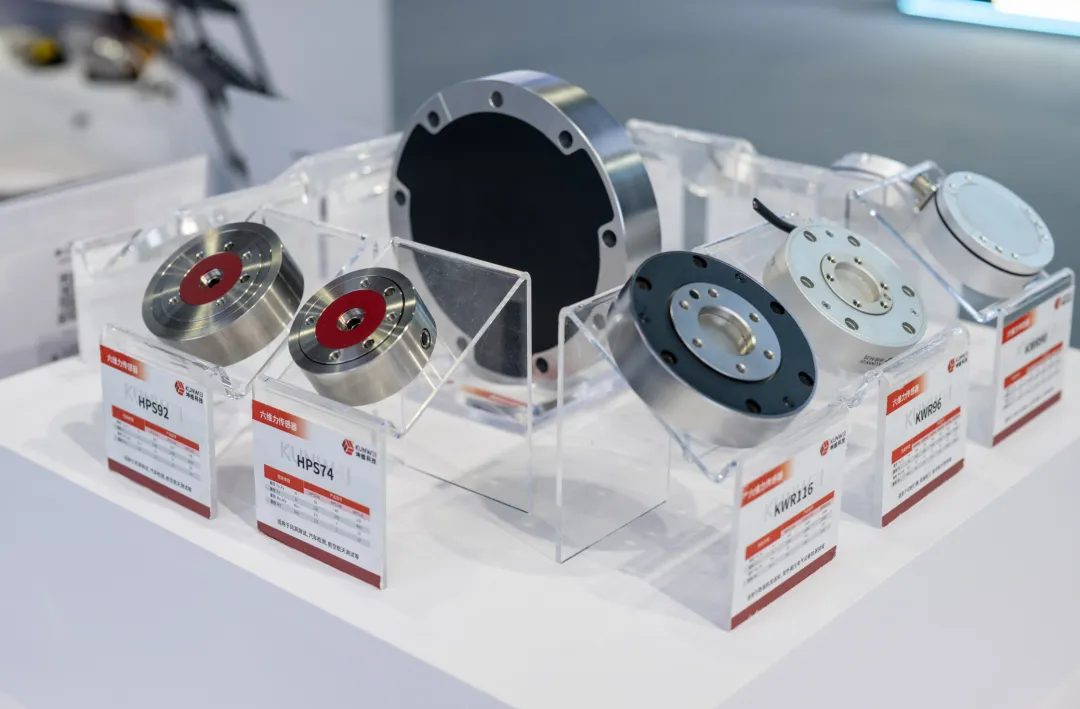
HPS series high-performance six-dimensional sensors
While ensuring accuracy and precision reliability, Zenvi Technologies is also committed to improving upgrades such as sensors' resilient body structure design, aluminum alloy material innovation, MEMS mass production processes, and effectively reducing the cost of using sensors.
The HRS series of humanoid robots from Huawei Technologies is dedicated to six-dimensional sensors, which not only maintain ultra-high repetitive accuracy (0.1% FS) and precision (0.3% FS) performance, but also have ultra-thin thickness, high rigidity and anti-corrosion properties for adapting humanoid robots to joints, the thinnest of which can reach 10 mm thickness, suitable for parts such as human wrists, ankles, and so on.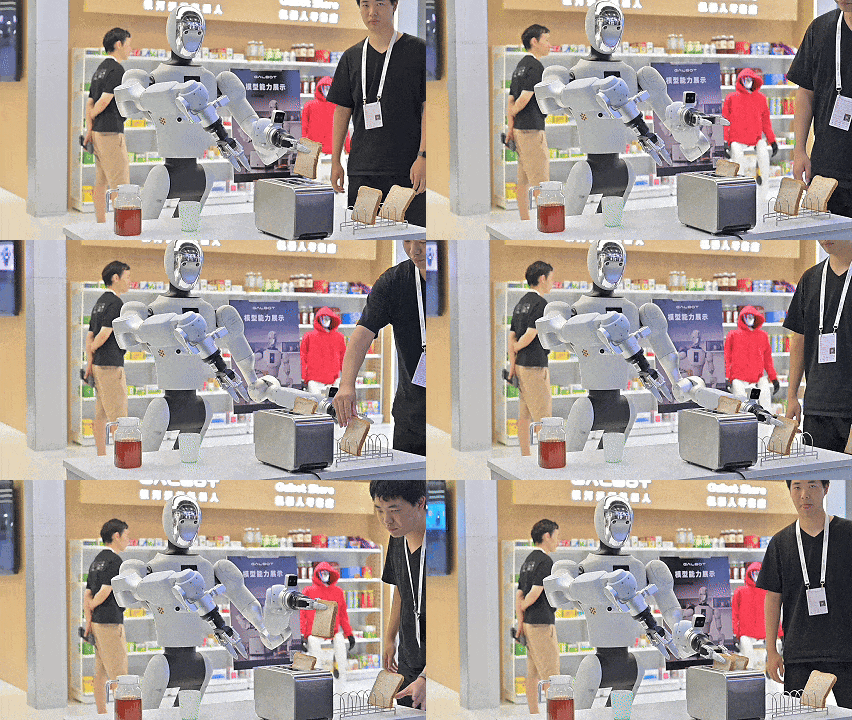 He is the head of the Galaxy General Silicon Robot store, which is equipped with a 6-dimensional sensor.
For example, the Walker series has been fitted with six-dimensional sensors that can transmit control centers at millisecond speeds, helping humanoid robots to maintain negative weight adjustment, smooth grabbing, precise placement, and so on.
Data from the Institute of Advanced Robotics Industry (GGII) shows that Huawei Technologies is in first place in the six-dimensional sensor shipments of the head-to-head humanoid robot brand, and in first place in the collaborative robot end-to-end application market for consecutive years, with a market share of more than 70%.
High-tech robots have learned through research that today's six-dimensional sensors are growing rapidly in the field of humanoid robots, thanks in part to the fact that today's humanoid robots are more primitive in their applications: on the one hand, the sensors equipped with robotic data centers are mostly used for data recording; on the other hand, in situations such as transportation, sorting, folding boxes, overlapping, sensors require greater accuracy (between 2%-3% FS), and the cost of using such six-dimensional sensors is usually in the thousands of megabytes.
As a large number of human-robot enterprises begin to focus on commercialization, actively seeking applications for high-value add-on scenarios such as 3C precision assembly, automotive assembly, and future human-robot applications for precision processes such as industrial-grade assembly, graphite, welding, and fault detection, there will be increased space for market applications of high-precision six-dimensional sensors.
Joint torque sensors
The final piece of the puzzle, complete with smooth muscle control,
If a robot wants to function like a human being, it is far from enough to rely on the power control of the wrist or the tactile feedback of the hands. The posture of the wrist, waist and arm will affect the final operating effect, at which point the closed-loop feedback of the joint torque sensor becomes the core of the whole-body power control.
A humanoid robot on the current market generally has more than 20 freedoms, and in the increasing pursuit of full-body flexible control, future single-person robots are expected to be equipped with more than 20 joint torque sensors.
GGII predicts that by 2030, global sales of humanoid robots are expected to exceed 670,000 units, estimated at hundreds to thousands of yuan, and that the humanoid robot joint torque sensor market will be a multibillion dollar market.
Although the market prospects are promising, there are still few companies on the market that have both reliable technology, non-customization, and rapid production capacity in the field of joint torque sensors.
The KWR series of torque sensors developed by Siem Reap Technology, which have a medium-space structure or Franz-style design, are lightweight in size and adapted to the joint space, and can be installed directly in the filter accelerator. They are strictly controlled in the five dimensions of rated load, overload capacity, repeat accuracy, comprehensive accuracy, and anti-overload characteristics, and optimise temperature stability for the thermal heating of joint modules.
For example, the KWR86N80-NEU model has a repeatability accuracy greater than 0.05% FS, nonlinearity and latency greater than 0.15% FS, and zero-point temperature drift control at ≤ 0.05% FS/10°C. This means that signal output remains stable and reliable even in wide-temperature variations, and has been applied in batch applications in human robots, collaboration robots and industrial robots.
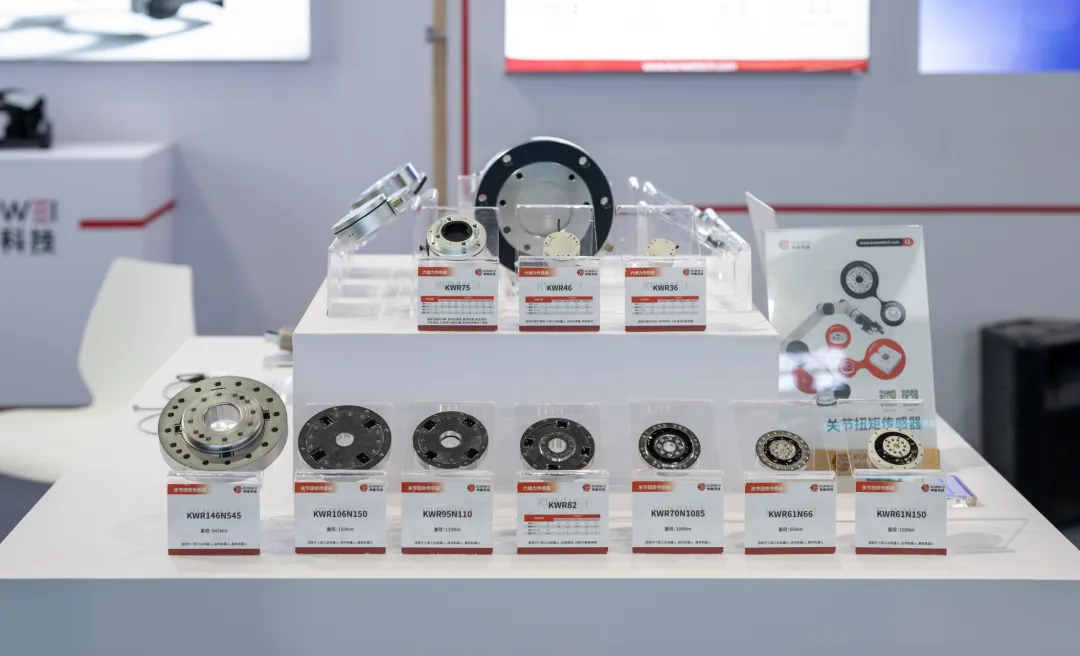
KWR series power sensors
Over the past three years, Huawei Technologies has delivered customized design and mass production of over 200 joint torque sensors, products that have been reverse-engineered by human-robot customers, and have completed adaptations to various types of robot bodies, joint modules, and accelerators.
In the process of communicating needs, sampling testing, and bulk delivery in the right direction, Zenvi has the ability to quickly customize and bulk delivery in the field of joint torque sensors, and currently Zenvi has an annual capacity of 300,000 units.
In 2026, the commercialization of humanoid robots is accelerating, with full capacity and high-quality deliveries, and has become a key player in the competition in the humanoid industrial chain market. For this reason, Huawei Technologies is planning a new round of expansion to reserve enough capacity for the explosive demand for humanoid robots.
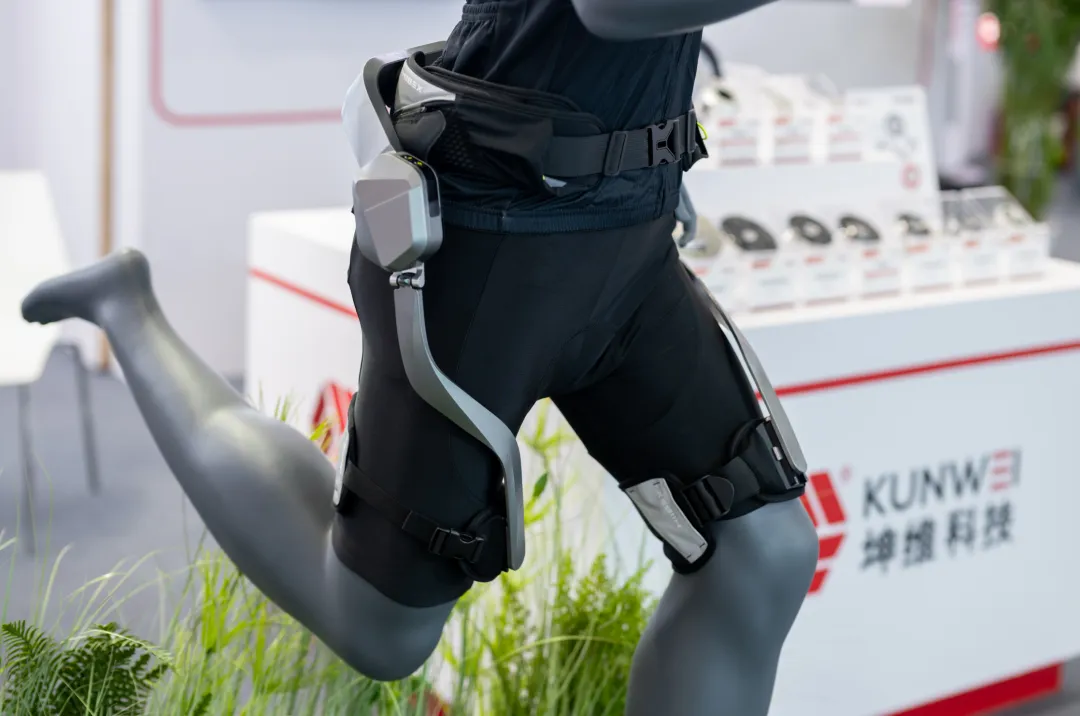
HIIBEX is wearing a space-level controller.The HIIBEX exoskeleton robot was not born out of thin air, but the result of years of deployment in the field of sports science.
As early as 2021, the company was founded in Shanghai, based on high-precision multi-dimensional sensors, AI vision automatic identification, biomolecular mechanical monitoring and other technologies.
The official debut of the HIIBEX brand is also a reflection of the full-scale self-development capabilities of Siem Reap Technology: the core technologies such as structural materials, motor drives, AI algorithms, model lightweight deployment are all developed by Siem Reap Technology's technical team, which has accumulated more than 10 inventions and patents.
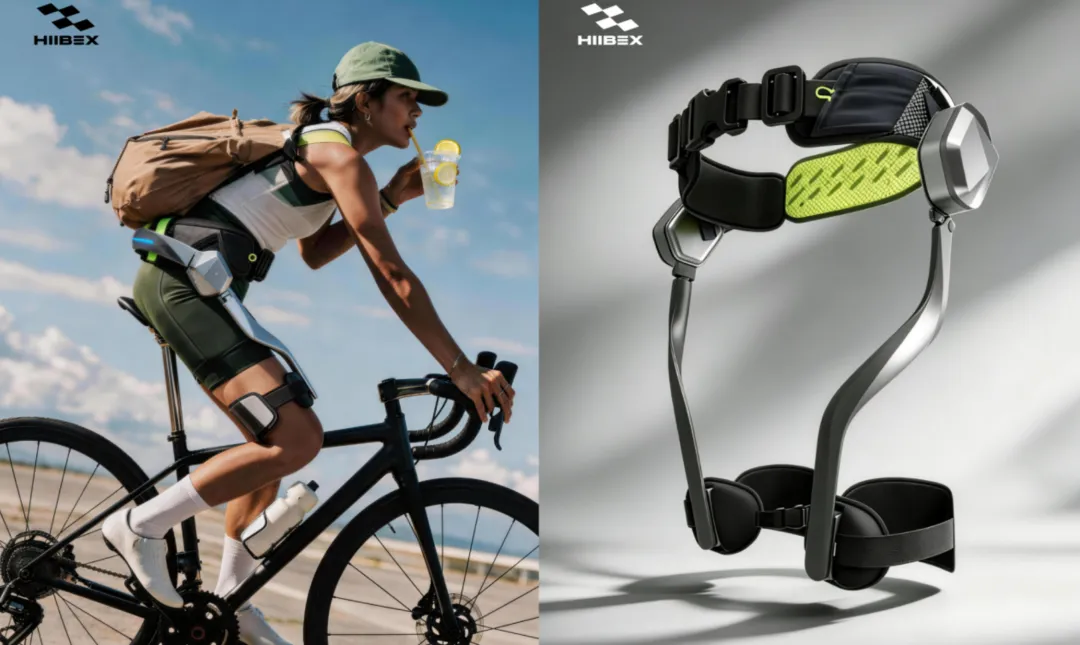
In order to combine lightweight and high performance, 80% of the structural frames of the outer-bone robots are carbon fiber composite materials, including batteries, soft bags with a total weight of less than 2.1 kg. The attached soft bags use the SCF Foaming buffer material from the same source as high-end sneakers to achieve full shock absorbing and high ventilation effects, suitable for long-term outdoor wear and exercise.
At the power level, the HIIBEX is powered by a self-developed AmbiForce high-performance motor, which can achieve a peak torque of 26Nm, enough to cope with the explosive power output demands of cycling, climbing, heavy walking, etc. The 75.6Wh battery allows for a half-life of more than 6 hours, supports side-charging and solves outdoor life anxiety.
At the software algorithm level, AmbiCore has introduced an AmbiCore adaptive model that can capture human gesture changes 200 times per second, predict the intent of human gesture movements in advance within 5 seconds, resolve movement lags, and manage pain points such as cartoons.
The original intention of this product was not to make a profit in the C-end market, but to reuse mature power control technology into the outdoor sports scene to cultivate a brand benchmark for the mass market and to help penetrate the market in the future to the silver issuing market.
In addition to the positioning of C-end users, HIIBEX external bone robots support outdoor-oriented B-end enterprises for ODM customization, supporting customization development in areas such as product appearance, performance parameters and material structure.
High-tech robots learned that in the future, Huawei Technologies will also expand its product line from the lower half of the body to the upper half of the body, while at the algorithmic level, integrating more rich multimodal sensors in predictive technology research and development, improving synchronous efficiency, and truly making out-of-the-box robots a personal travel terminal for everyone.
She wrote at the end:
At the WRC 2026 stage, Huawei Technologies has completed a strategy extension from "empowering machines" to "enhancing humanity" with three technology-on-one products, launching an upgraded warranty gun from its core parts supplier to its full-scenes power-control technology service provider.
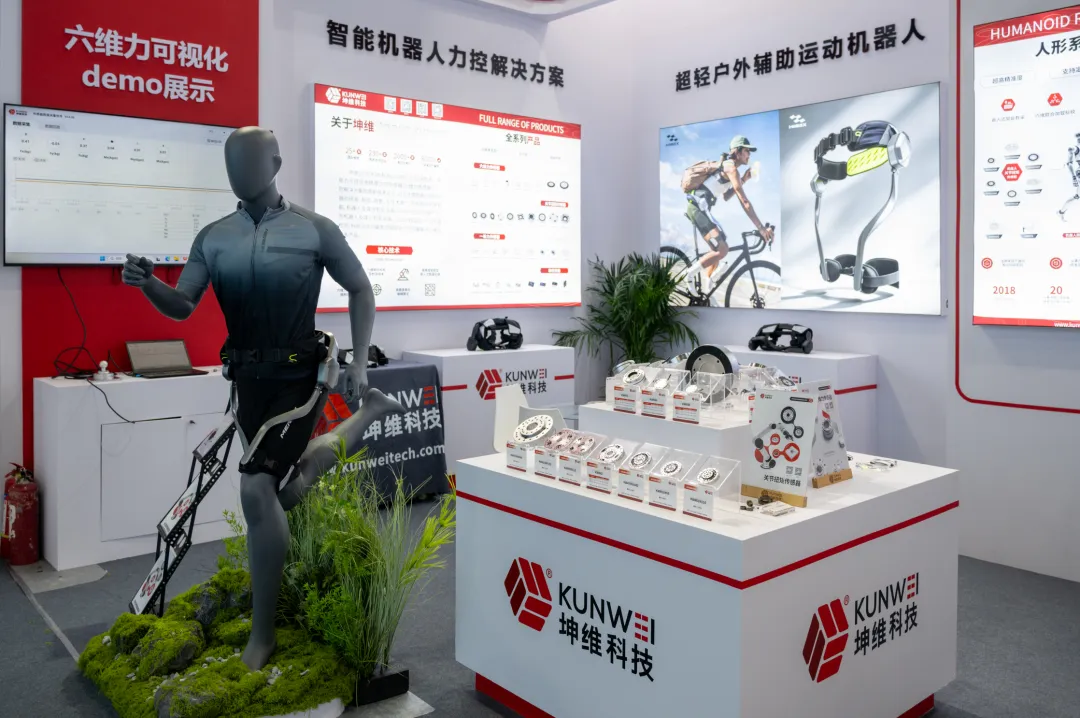
When the commercialization of humanoid robots from non-mobile robots to non-mobile robots, from malleable robots to malleable robots, and from malleable robots to malleable robots, the strategic value of perceiving this technological path is being re-examined. With nearly a decade of technological exploration, Mallevich has proven one thing: whether it's simulating human perception or extending human ability, precise control of malleable robots has always been the underlying language of this intelligent revolution.
It is predicted that with the acceleration of the commercialization of humanoid robots in 2026, the technical thickness and delivery capabilities of upstream core parts enterprises will be the key variables in determining the outcome of the competition.
The team, which came out of the space academy, is focusing on working with robots like humans to create a complete picture of the industrial end to the consumer, building a two-way power bridge between robots like humans and robots.