This year's WRC is hotter than in previous years.
From the dense appearance of humanoid robots in the exhibition hall, to the constant refreshment of models, operations and mobility, almost every step of the way you can see new robot shapes and capabilities displayed.
On 19 August, a two-legged humanoid robot, previously unpublished, took the stage at the "Evolving Path of the Big Model with Body Intelligence: From Technical Classification to Industrial Landing" forum hosted by Galaxy General.
This is the first human-like two-legged robot to be released by Galaxy General.Galbot ET1After arriving, ET1 completed a rhythmic dance, turning, swinging arms, and physically moving, and then interacted with the robot "The Little Goat" who had climbed on the spring evening to show off the walnut disc.
By 2026, robots will be dancing no longer uncommon. Over the past two years, they have learned to flip their heads, box, play football, do household chores, and do some moves even better than humans.
But in the real world, the difficulty is not "to make a move", but whether robots can adjust in time and continue to complete tasks when objects move, targets are blocked, missions are interrupted, and so on.
From VLA, the world model to WAM, the model paradigm is changing, but the ultimate problem remains the same: can robots perform tasks continuously and steadily in dynamic environments?
It also became a main feature of the forum, as well as a showcase for the Galaxy General C104 stand.
I'm talking about ET1, which just got here.
New two-legged feature, focusing not just on two legsET1, which has just entered the field, first raises a question: How much of the original intelligence capacity will be retained when the robot's body changes?
ET1 differs significantly in body shape from the previously disclosed G1, S1, but behind several types of robots there is a common technical substrate that revolves around the self-developed full-body model from the end of the body to the end of the body.AstraBrainOpen it up.
The concept of cross-bodies is to transfer acquired intelligence to different robots as much as possible, rather than training from scratch every time a hardware form is changed.
While explaining the technical framework, Wang Yi, founder and CTO of Galaxy General, a researcher at Peking University, mentioned that the "general" of humanoid robots is more than simply the transfer of a brain to a different body. The more complete structure is the "brain-brain bridge brains": the higher brain is responsible for perception, cognition and action decisions, the brain is responsible for transforming the intention of a person or brain into a continuous, stable whole body movement, connecting the two in the middle and through the "brain bridge".
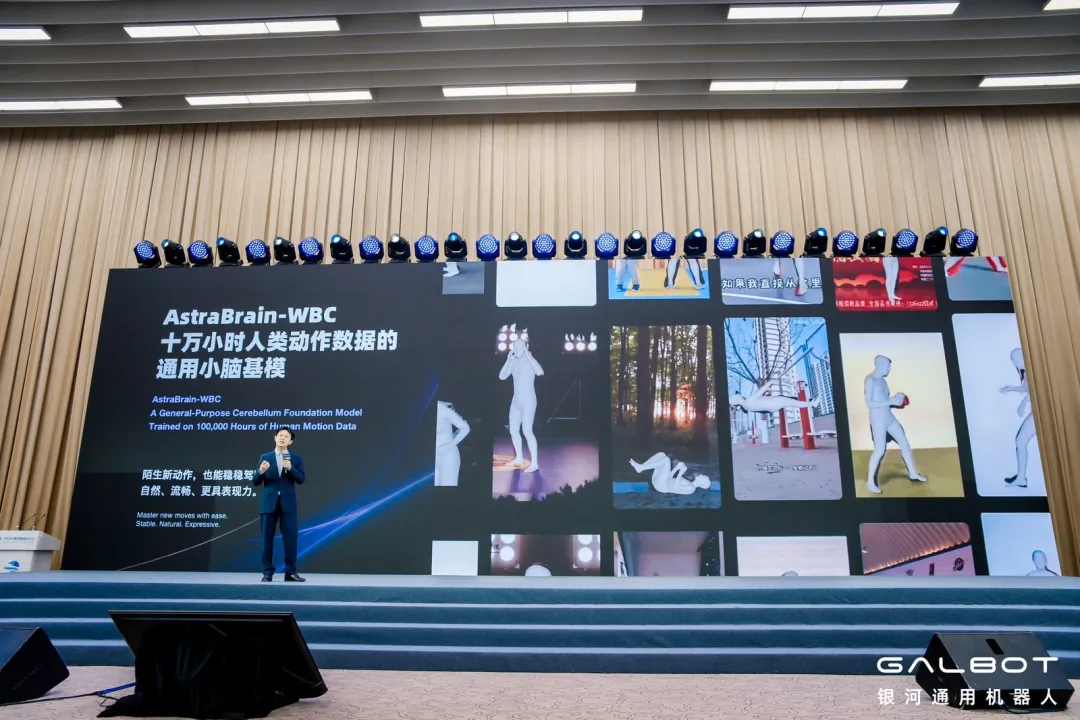
On ET1, the first landing was the AstraBrain-WBC, the "general small brain" of the galactic brain. According to Wang, the previously demonstrated AstraBrain-WBC 0.5 was able to generalize to movements not seen in training, while ET1 used a further iteration of AstraBrain-WBC 1.0.
ET1 is a fully self-contained galaxy.AstraBrain-AgentIt is primarily responsible for its "understanding and decision-making". This multi-mode real-time interaction and motion-controlled intelligence system is designed to allow robots to continuously observe their surroundings, understand natural language, and plan their behavior and movements according to current environments and dynamic instructions.
Wang Yi summarized ET1's capabilities in three words: I See.I Learn.I Act. The robot is able to call on mobility, multi-modal interaction and language interaction in real-world scenarios, and form action plans based on tasks.
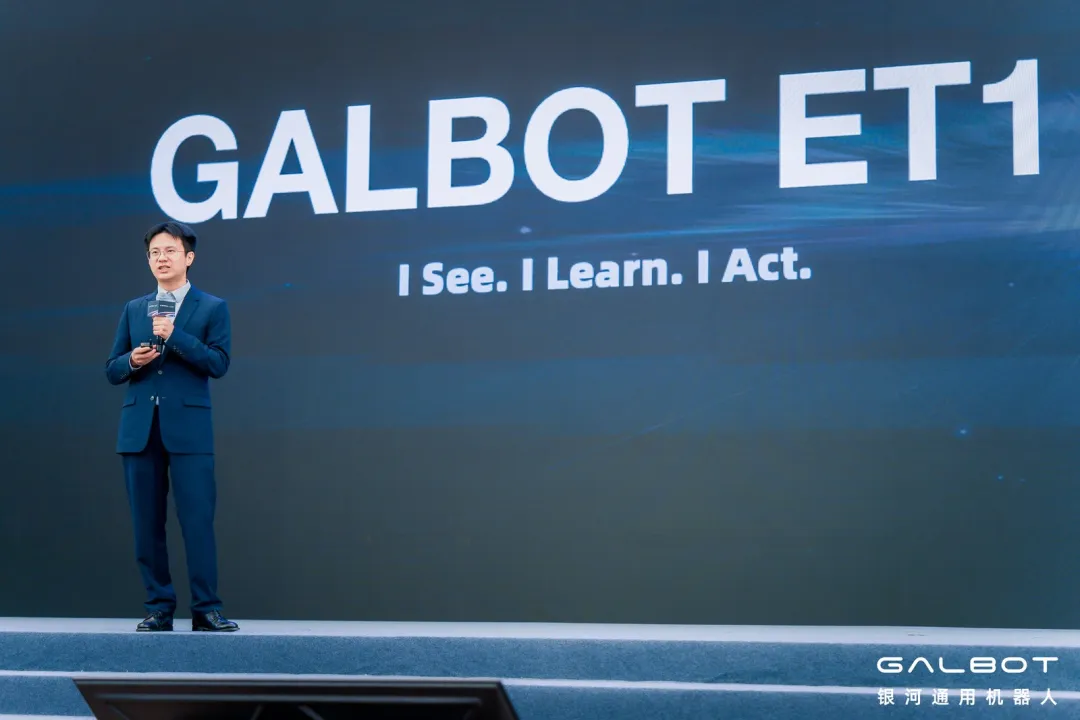
In addition, the "new colleague" also showed a special skill:Learn new moves from people in real time.
In a live demonstration, ET1 can automatically identify, extract, and convert human real-time motion trajectories into its own full-body movements. High-difficulty street dance movements such as hand-held terrain can also be done in combination with operating models and real-time learning capabilities.
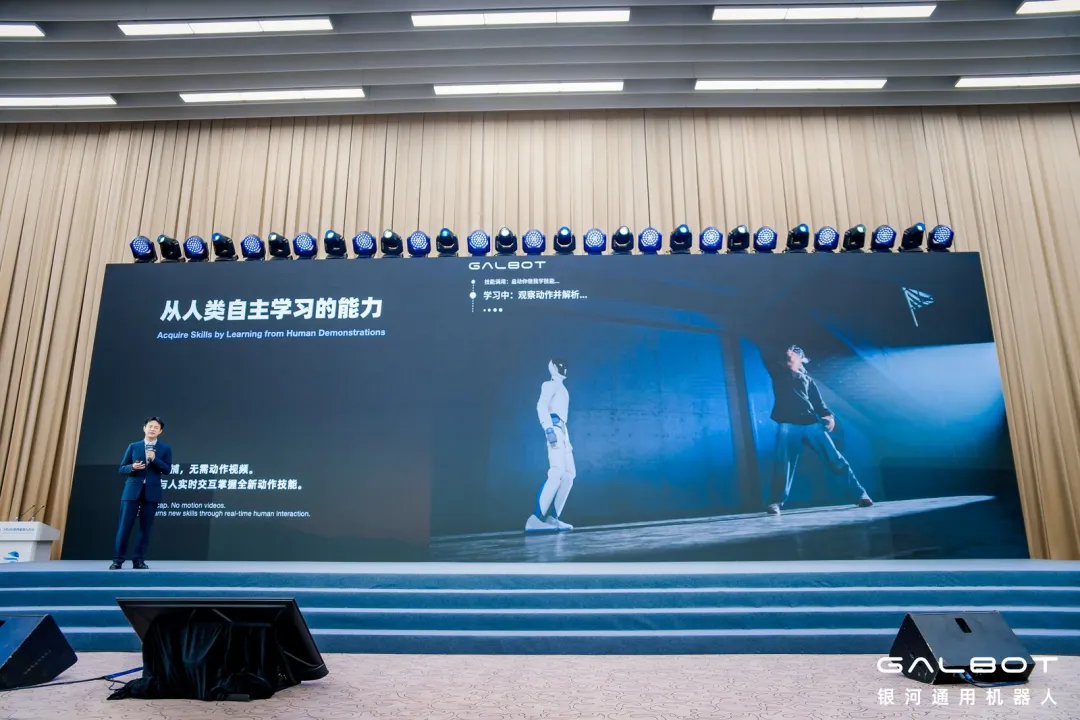
This is in response to the problem of man-made robots not being able to turn on after entering an open environment:Is it not possible to write all the motor skills into the model one by one, and can robots continue to acquire new motor skills from seeing human behaviour?
If a higher-level model is responsible for judging robots "what to do next", the brain solves "how the body specifically moves". Wang Chen calls it the "small-brain paradigm": it receives movement intentions from the human or robot brain and converts them into real-time body movement.
In the AstraBrain-WBC exhibition, humans continuously input full-body motion through motion-catching devices for real-time tracking, accuracy, stability and generalization of test models. AstraBrain-WBC 0.5 has begun to generalize to movements not seen in training.
Wang also mentioned that training with the AstraBrain-WBC used large-scale human motion data. The team observed that as the size of the data increased, joint tracking errors continued to decrease. That is, total body movement control continued to improve along the same Scaling path along the base model.
Both the brain and the small brain rely on data to model.
In his speech, Wang Xi introduced the five-tiered data system AstraData, common to the galaxy, which includes Internet data, human action data, synthetic simulation data, real-machine remote control data, and real-machine backflow data.
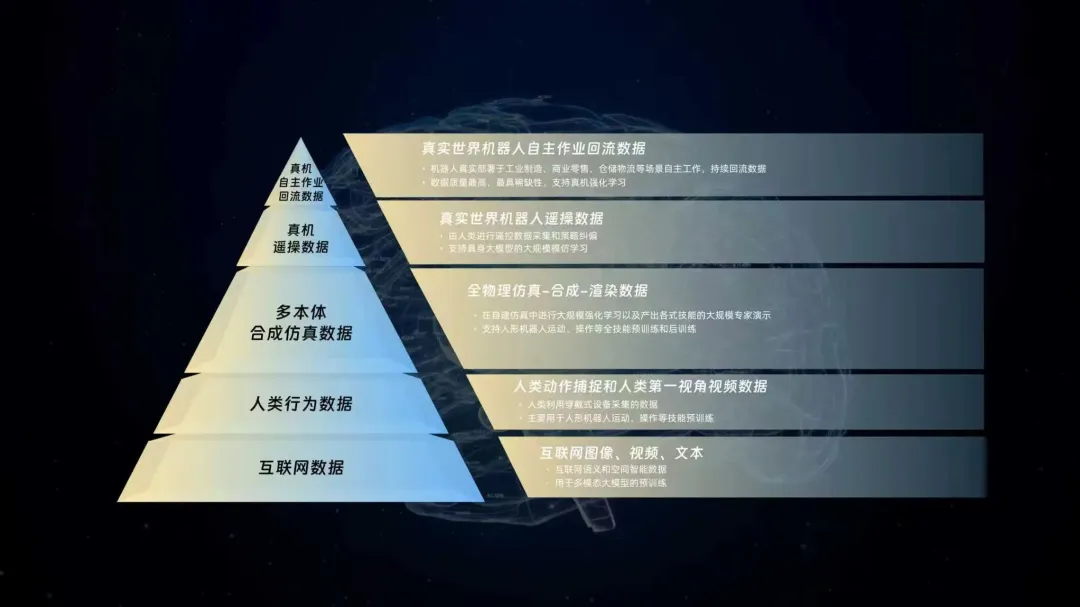
Different data play different roles: the Internet and human video provide semantic and operational pioneers; synthetic simulation data is used to expand the training scale; real-machine remote control data provides high-precision trajectories on real robots; real-machine data that is deployed continues to flow back and forth for subsequent training and iteration.
Regarding ET1's motion control, Wang Yi mentioned that its training data includes high-precision motion capture data, as well as re-directed motion data from human videos on the Internet.
The difficulty will continue to increase as the task moves further into a rapidly changing environment. ET1 is also learning complex sports skills such as tennis.
Unlike carrying boxes and carrying goods, tennis barely leaves a lot of computing time for the robot. The position, speed and landing points of the ball are constantly changing, and the robot has to judge the trajectory, coordinate the movements of the whole body, and control the timing of the swing. This requires continuous perception, decision-making, and movement control in a very short time.

Wang Xiang has portrayed tennis as one of the most representative missions of the humanoid robot, the "AlphaGo Moment". Its focus is not only on motion control, but also real-time decision-making, and the ability to learn in simulation whether to migrate to real robots through Sim-to-Real.
In the meantime, Wang Yi announced on the spot:At 7:30 p.m. on August 22, the Galactic General Human Robot will perform a man-in-the-middle performance at the opening ceremony of the World Man-in-the-Box Games, interacting with guests from the tennis world, which will be broadcast live.
The same star brain, working in different placesComing to the C104 stand, model, generalization and industrial landing quickly became a concrete matter.
G1 works in the home and retail scenes, S1 is responsible for loading and unloading, and on the other hand, there are welcoming and secondary development demonstrations.
In his speech, Wang Yi introduced that cross-scenes, cross-bodies and multi-tasking capabilities correspond mainly to AstraBrain-WAM0.5.
WAM, the world action model. According to Wang, VLA training relies on the Action Label; the world model can predict future states but does not directly give robot actions. WAM attempts to combine future state models with action generation.
AstraBrain WAM0.5 models the future in hidden space, rather than directly generating a complete future RGB image, to reduce information interference with less operational relationships such as light, texture, etc.
The model has been used in different scenarios, in different contexts and in a variety of tasks, including business overloading, folding clothes and carrying boxes.
Look at the family scene.
G1 to complete continuous operations such as placement of items, laundry garments, bed linen, etc. In the face of different objects such as bricks, keystrokes, dolls, fruits, it needs to adjust the grip according to the physical properties; in front of flexible objects such as clothing, bed linen, and find clothing collars, sleeves and layers, complete unfolding, alignment and folding.
The state of objects of different rigidity and flexibility changes with operation, so robots need to constantly update their perception and adjust their grip and follow-up movements accordingly.
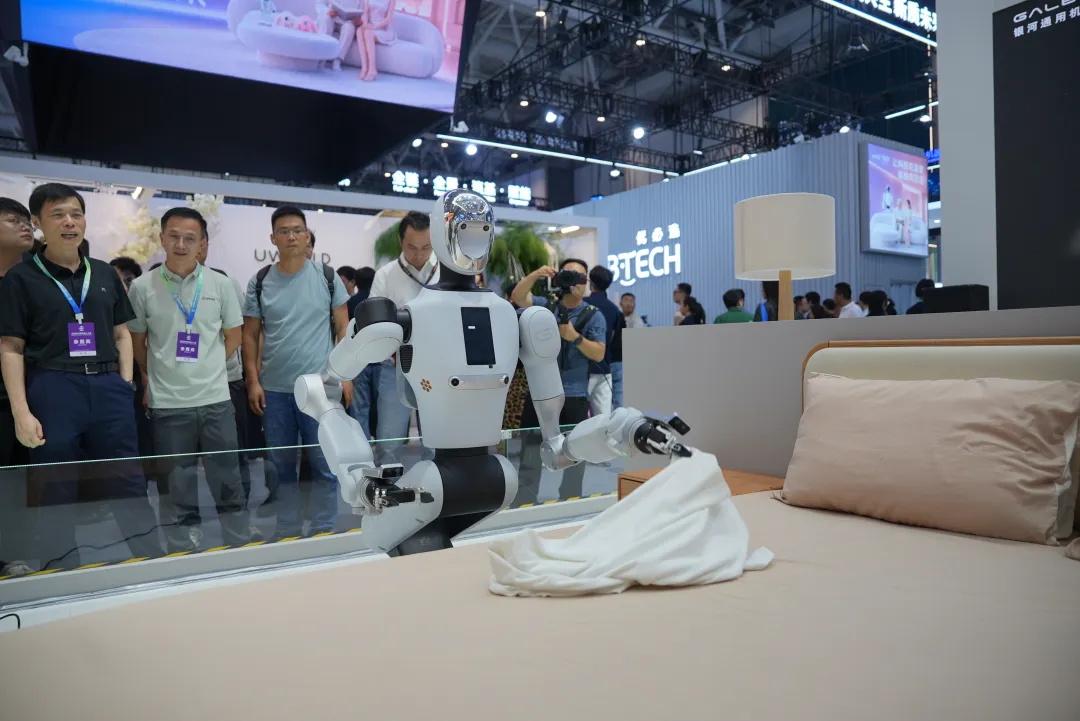
Another task of making breakfast was to put long-distance execution and anti-interference into the same scene.
G1 requires continuous operations such as baking bread, rolling beverages, etc.If someone moves bread, takes cups, shadows targets, or changes the position of objects such as plates, the robot needs to re-identify the current state, adjust the follow-up actions, and continue to complete the task.
Wang Yi explained that this ability comes from a combination of WAM basic modeling and machine-reinforcing learning, and further expanded to 10-minute continuous breakfast tasks, including cutting fruit, making sandwiches, baking bread and pouring water.

In retail, the variable from the dynamic objects in the household to the more complex shelf environment.
In the face of dense deployments, the G1 needs to complete the identification, replacement, delivery and delivery of goods. In the face of changes in goods location and shading, the G1 needs to real-time identify targets and adjust replacement strategies, rather than relying on fixed shelf layouts.

Retail is no longer just a showcase.
Galaxy Universal's smart pharmacy solutions have already made their way into instant retail stores in multiple cities, and the "Galaxy Space Shuttle" has been deployed in multiple cities. The real-world environment of a one-time demo, long-term, iterative operation poses a more direct requirement: that the model not only does the job, but that it continues to work steadily.
The industrial zone has changed a set of requirements.
The S1 site was completed with the disassembly, transportation and coding of kilogram-scale materials. Towards the factory, the question was not only "can't be picked up", but also whether the transported weights could be stabilized, placed accurately, maintained efficiently and accurately over the long term, and whether they would need to be re-deployed after the material's state changes.
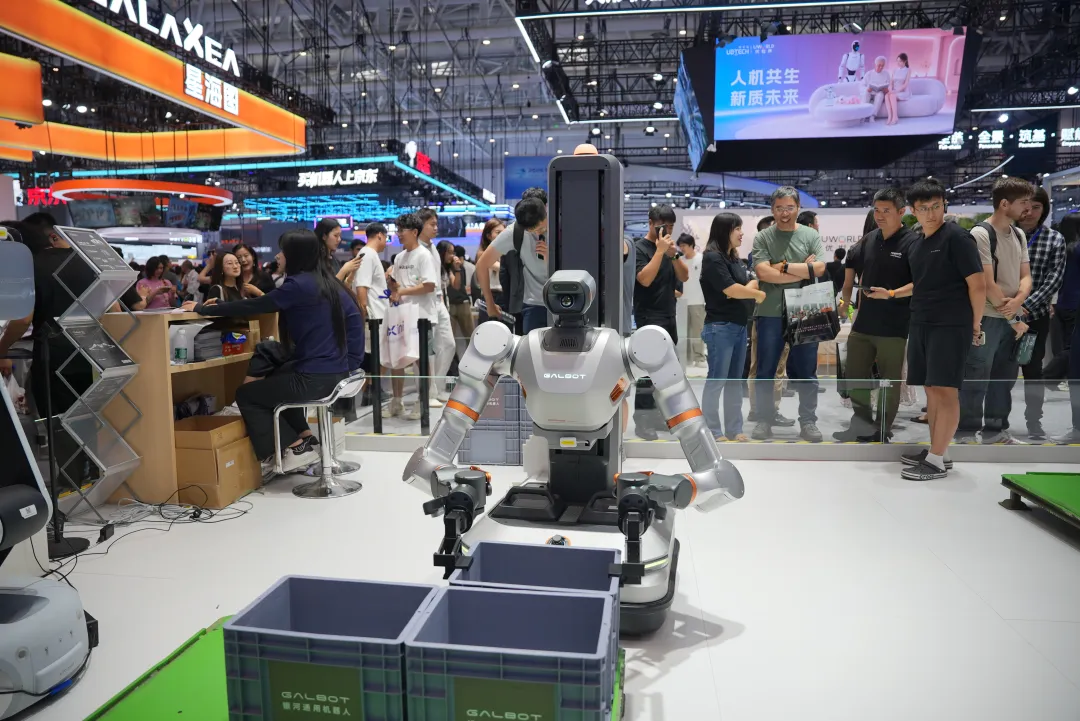
As opposed to highly standardized traditional automation scenarios, physically intelligent people are more exposed to problems such as material location changes, task switching and changes in on-site conditions.
Currently, the S1 has entered the standard 7×24-hour production line in the Ningde era.
From stage demonstrations to continuous work on the production line, it is the distance between "model capability" and "industrial capability".
Putting several scenarios together, long-range, multitasking, flexible operations and anti-interference responses are specific requirements in actual operation: whether tasks can be completed continuously, adjusted after environmental changes, and whether frequent human intervention is required.
The focus of these autonomous missions is the perception, decision-making and execution of robots based on real-time environmental conditions.
In the second development area, the question was whether these capabilities could be used by more developers. On the ground, the company also demonstrated applications for hosting and importing 4S stores based on the Galbot platform.
Whether the model can be cross-tasked, whether the development and deployment capabilities can continue to be used by industry partners, and whether the general capabilities can be replicated on a large scale, is one aspect that is used by Galaxy J. Technology and industry partners such as Invidia, the Nintendo era have also been involved in this open phenomenon.
We need a new "capacity scale" for being physically intelligent.From ET1 to C104, robots have demonstrated more and more capabilities: cross-body migration, real-time interaction, full-body movement, and continuous completion of tasks in dynamic environments.
But as the capacity increases, a more basic problem arises:How do we judge how smart a robot is?
This is also the question that Galaxy General is attempting to discuss at the WRC Forum "The evolution of large-scale models with physical intelligence: from technical classification to industrial deployment".
This year, talking about physical intelligence, VLA, world models, WAM is no longer an unfamiliar word. Instead of explaining these terms, I'm sure everyone is more concerned about the following question: how far have they expanded the capabilities of robots and how far are they from actually entering the industry?
At the galaxy-wide forum, the focus of the discussion was on two issues: how to classify technological capabilities with physical intelligence next; how to move forward; and when these capabilities will be sufficient to support real industrial applications.
The five keynote speeches of the forum addressed these questions from different perspectives.
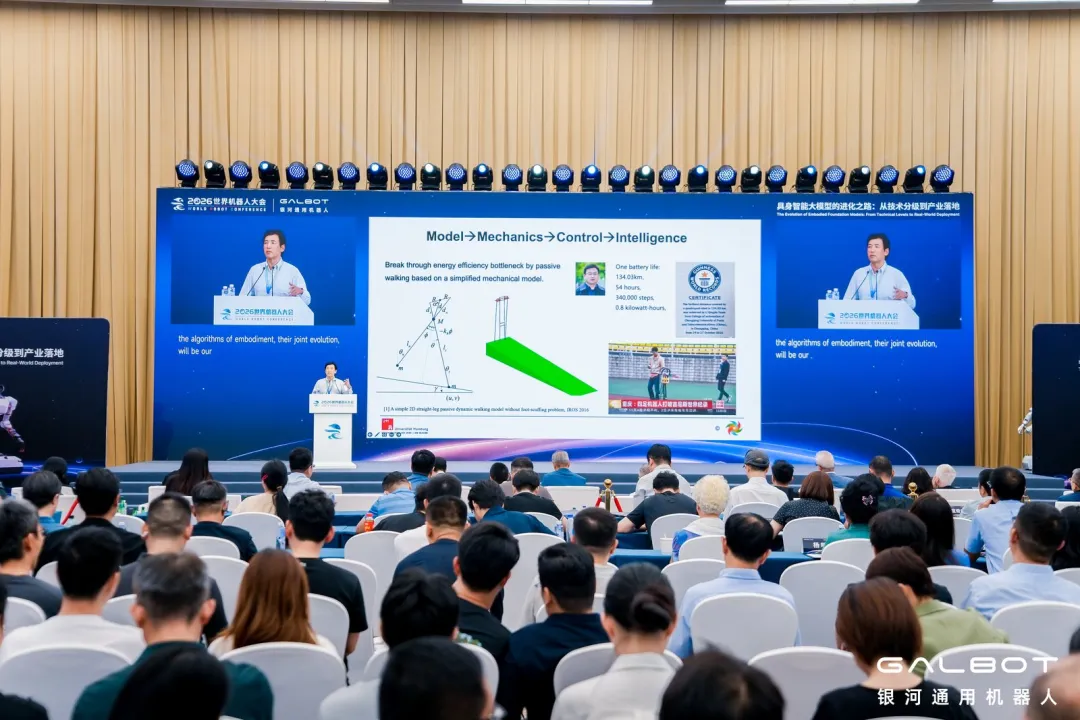
Scholars from the fields of robotics, artificial intelligence, cognitive robotics, and industrial research, ranging from multimodal and end-to-end robotic learning, world models and robotic data, technological maturity and industrialization, class brains and cognitive robotics, and general world models, were discussed. The technological perspectives and research paths adopted in different lectures reflected the fact that today's artificial intelligence is still at the same stage of exploration along multiple technological routes.
And that's why.How to evaluate the progress of competence began to become a fundamental question.
The Forum's on-site release of the Global Body-Smart Big Model Research Report outlined the main technological pathways and model developments of the global Body-Smart Big Model, and proposed a framework for the Body-Smart Model Assessment System, which spanned four levels: data base, end-to-end capabilities, general capabilities, and deployment capabilities, and further proposed the L1-L5 classification to measure the level of development of the model from single capability to multi-scenario, multi-tasking, continuous learning, and autonomous closure.
Another release featuring new data, the "Physical Intelligent Long-Term Value Index", further extends the dimension of observation to the industrial end, from smart borders, data bases, model architectures and other dimension-examination enterprises, focusing on how technological capabilities are transformed into long-term industrial value.
The final roundtable discussion of the forum returned once again to the "Evolving Path and Technological Challenges": from VLA to World Action Models, how do models get further into the physical world?
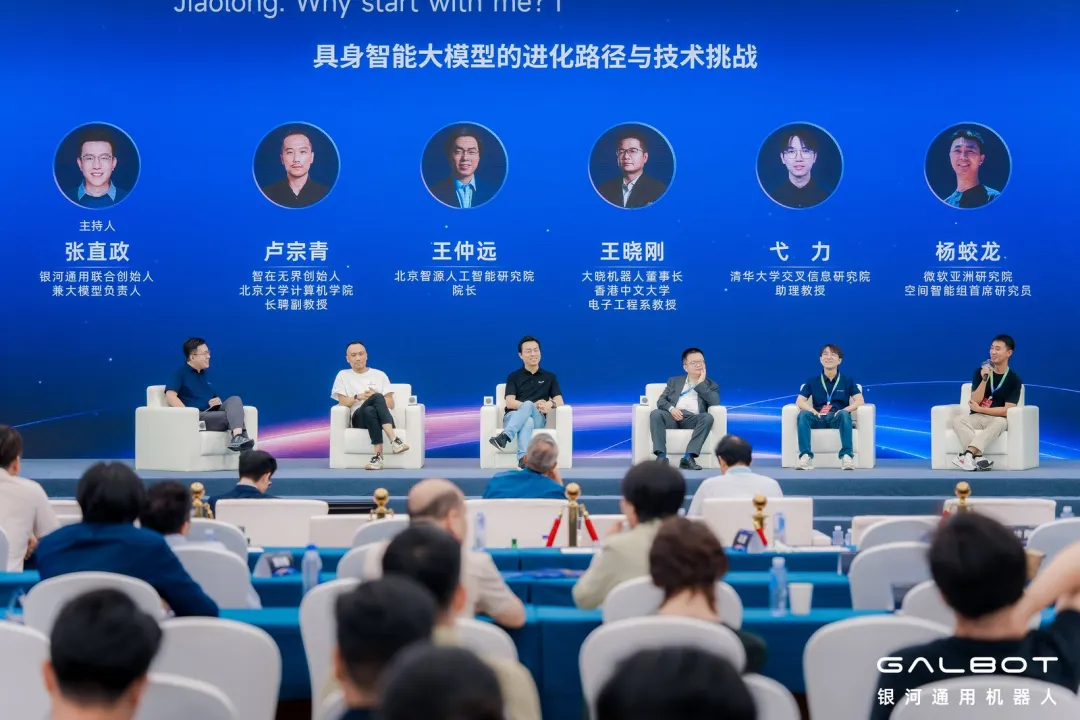
More importantly, whether it can complete a longer chain of tasks, cope with constantly changing environments, migrate to different robotic entities, and maintain stable enough performance under these conditions.
Model names and technical paradigms will continue to change, but from technological research and development to industrial applications, a relatively clear capacity assessment system is still needed to determine where the technology is and what the next step is to solve.
What is the meaning of this verse?The AI industry has a distinctive feature: many things have not yet become common sense, and the next round of change has begun.
Over the past few years, new model architectures, training methods and technical names have emerged. End-to-end, Agent, VLA, world models... keywords in industry discussions will change with time.
However, from the perspective of the forum and the presentation of the platform, a relatively clear direction is taken: model capabilities are moving from single tasks to continuous execution across tasks, interpersonal and dynamic environments. At the same time, how to reduce the cost of scenario adaptation and deployment is becoming as important as model capabilities.
When these capabilities can be stably replicated between different robots and different scenarios, it is only with physical intelligence that we can move further from technology demonstration to large-scale applications.
By then, the answer to a long-standing problem that has plagued the AI industry may well be beginning to emerge: When will the huge amount of research and development that we're investing in today turn into a truly scalable, over-the-top productivity?