At the WRC, we've heard an interesting point: many of the traditional robot tasks, most of them solve location problems. But now that tasks require human robots, the most critical actions often occur in the last few millimeters. Does that mean that what human robots are doing is inherently more difficult?
In the past few decades, industrial automation has actually been a very counterintuitive thing to do: turn the factory into a place where there is no need to judge as much as possible. Parts must be in a fixed position, machinery must maintain a fixed precision, the mechanical arm must follow a fixed trajectory, and the range of human activity is strictly defined. A mature automated production line, the most important ability is not to make robots understand the world, but to arrange the world in advance, and then to make robots execute according to the procedure.
This method created modern manufacturing and pushed industrial robots to the precision and efficiency they are today. But in the 2026 WRC, humanoid robots seem to be trying to do the opposite: prove themselves capable of handling the real world.
It has to go into spaces that have not been pre-arranged. It has to face location biases, load changes, part gaps, equipment wear, and any possible human-to-human contact. It can no longer assume that each grab happens in the same location, nor can it assume that the resistance encountered in each assembly is exactly the same.
The evolution of industrial robots in the past has been to eradicate errors; human robots have evolved deep-water cracks, but they have to learn to feel what happens when they do what they do and learn to deal with mistakes.
At the WRC, we suddenly realized that the competition in the second half of the human-robot industry was getting deeper into a deeper problem: the body needed to be a new feedback system to actually do more work. This may be why more and more human-robot companies are talking about how many sensors are being used at the WRC.
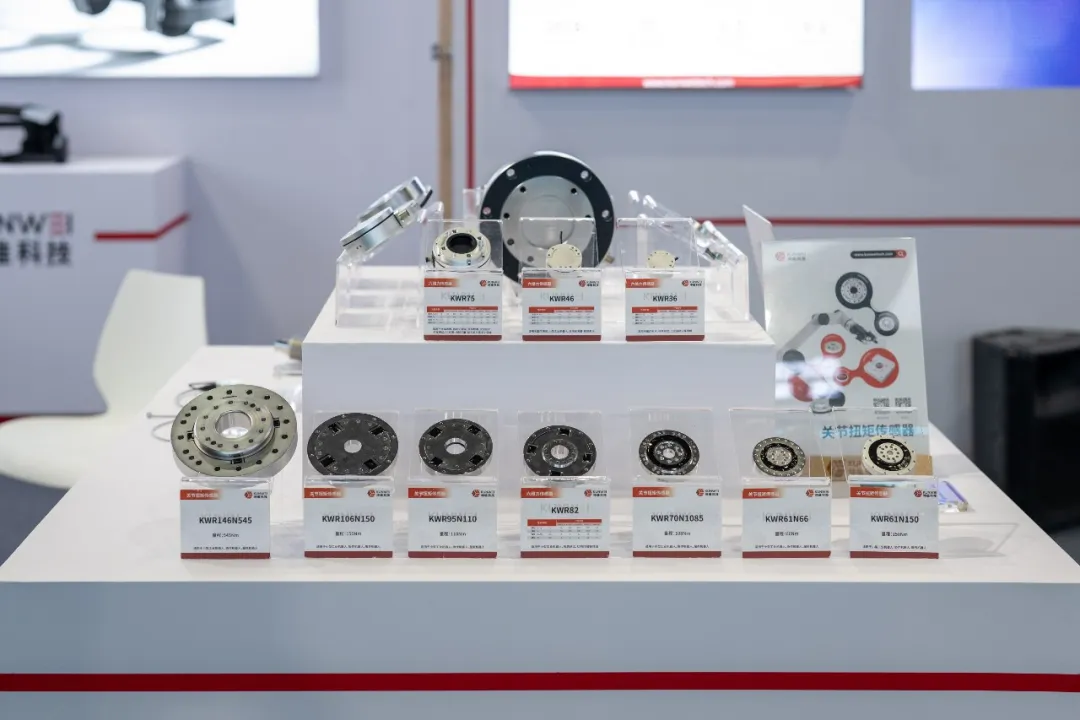
Because a humanoid robot is dismantled, the force sensors are hidden deep in the joints, the palms of the hands and fingers. They are actually the human robot's true perception center, they are silent and invisible, but they determine 15% to 25% of the overall BOM table.
In this sense, the leading company in the field of sensors, Huawei Technologies, began to work along this line, pushing the robot's understanding of the physical world to a deeper level again.
01.
After really touching the world, it becomes more difficult.
Traditional industrial robots typically work in fixed workplaces. Human robots now enter factories, and the difficulty of tasks is one level higher than industrial robots. Because its body itself is moving, joints are more, gesture changes are more complex, and the work space is more open. For example, the task of inserting a part into a hole, but there are gaps in the hole diameter, gaps in the parts, and microscopic changes in the mechanical structure.
It is very natural for humans to solve this problem. The hand touches the resistance, adjusting the direction; feeling that it has already touched, reducing the force; finding the wrong position, rediscovering the right angle.
For a humanoid robot that wants to get into these flexible scenarios, this means that it needs not only position feedback, but also real-time information from the contact process.
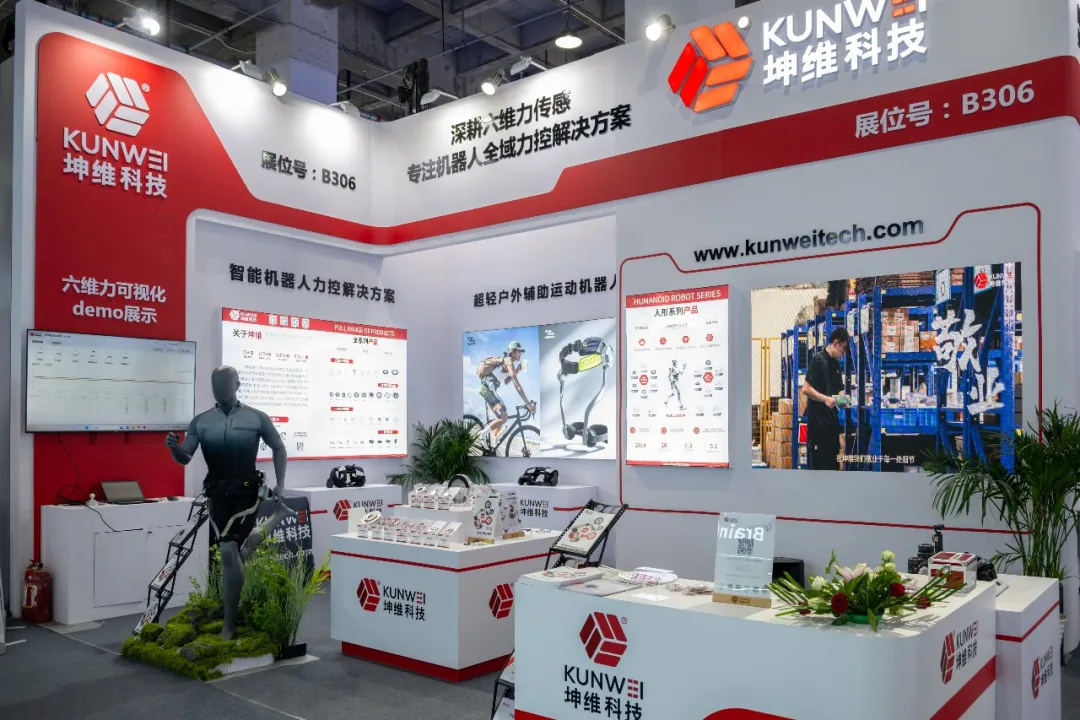
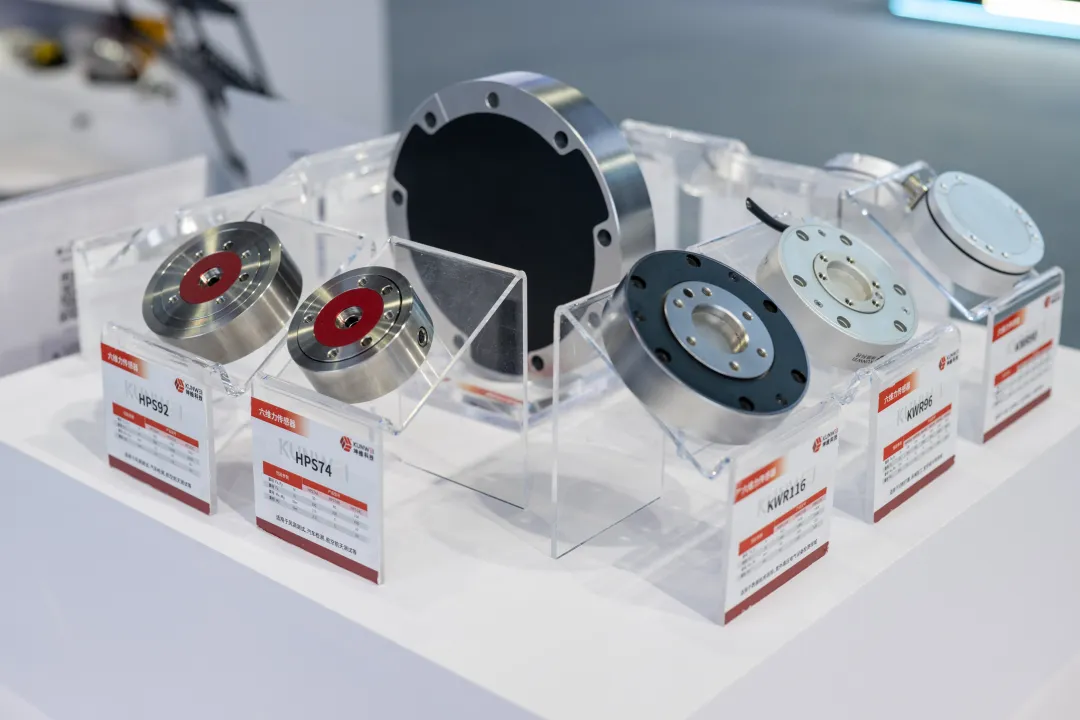
This is precisely what the six-dimensional sensor solves. It is able to simultaneously perceive three-dimensional forces and three-dimensional torques, letting the robot know what external influences it has undergone during contact.
The six-dimensional sensor is really worth considering, not because it adds a new sensor to the robot, but because it changes the way the robot handles errors. Not because the robot has a new parameter, but because it can continue to judge and adjust after contact.
In the past, automation has emphasized being environmentally determined enough to allow robots to work on fixed routes. At the WRC, we see many manufacturers trying to demonstrate humanoid robots that have gradually begun to have the ability to deal with errors, such as when they come into contact, that they can change their state based on force and adjust their actions in real time.
This is a completely different way of thinking about automation. It also means that human robots, as truly advanced robots, do not adapt the real world to their environment, but start learning to adapt to the real world.
In this sense, six-dimensional sensors have become an important gateway for robots to move from the arc trajectory of the arc to the arc flexible interaction arc.
This is also the core framework that Huawei has established. Huawei has formed a full-chain autonomous R&D capability around six-dimensional sensors, from resilience, stress measurement to self-labeling systems, and built professional lab labels, while having automated mass production and stable scale delivery capabilities; it has now bulk supplies to several leading robotic enterprises, with a market share of more than 53% of the six-dimensional sensor market for human robots and collaborative robots, and more than 70% of the market share for collaborative robots.
The significance of this set of data is not just to prove that products sell more. The real competition for the core parts of the robot has never been more in the laboratory. Sensors can't be made, it's a technical problem; they can't work steadily at different temperatures, different loads, different installation conditions, it's an engineering problem; it's a supply chain problem to be able to get tens of thousands of robots to work and keep bulk consistency.
This is also the most important value of Huawei's six-dimensional business, which has moved from a technology category that needs to be educated by the market to a true robotic supply chain. By 2026, Huawei has over 53% of the six-dimensional sensor market for domestic humanoid robots plus collaboration robots. In the field of collaboration robots, this figure is over 70%.[2.1] Therefore, six-dimensional power is not a story that Huawei needs to prove again.
02.
Joint torque: a really underestimated increase that's happening inside the body of a robot
Previously, we talked about the problem of a humanoid robot entering the scene to complete a task, and if the six-dimensional sensor solves what happens after the robot reaches out, then the joint torque sensor solves another deeper problem: the robot's own body, what is it now enduring?
At WAIC, many robotic companies mention WBI (Whole-Body Intelligence, Whole-Body Intelligence), a new concept that means that the next layer of capability that a robot really needs to add is what's going on inside the body during its operation.
This is a problem that is easily overlooked by the industry. Hands are the easiest to see when a humanoid robot is shown. But when a person actually does these movements, the work is never just hands. Picking up a box, shoulders, elbows, wrists are changing; the body rises, knees, knees are redistributing the load; as the robot moves forward, each step means a continuous exchange of forces between different joints.
Traditional robots can estimate joint torque based on motor currents, encoder data, and dynamic models. But as human robots become more complex, the mere reliance on estimates will face more real variables. Even a robot's sudden collision with an object can lead to a significant deviation in the actual joint forces from the theoretical models.
This means that an increasingly intelligent humanoid robot needs more direct physical feedback. Not only does it need to know where its hands are, but it also needs to know what its joints are undergoing. This is also the true industrial value of the joint torque sensor: it does not add a parameter to the robot, but it gives the robot feedback to build a torque inside the body.
It is only when a robot knows the true gravitational state of a joint that smooth movement, adaptive load and collision detection have a more direct physical foundation. And after years of accumulation of joint torque sensor technology, that the need for this layer can be met.
The KWR series of joint torque sensors demonstrated by WRC Juvenile have been designed for tight joint spacing for humanoid robots, can be adapted to the built-in installation of filter wavelength reducers, and through structural optimization and temperature compensation, achieve low interference, high stability and high consistency. More importantly, the Robotics Workshop learned that Juvenile related products have undergone over a hundred program customization, multi-cycle real-time verification, can be adapted to different humanoid body and joint modules, and have entered the batch supply phase.
In the past, the market came up with the concept of six-dimensional torque. But this time at WRC 2026, it started pushing joint torque sensors from behind the scenes to the front of the stage, letting the entire industry know that the end has six-dimensional torque and the joint has torque perception. Robots need to start knowing what's going on in the outside world and what their bodies are going through.
03.
It's a great way to build a system from one point to another.
When these two businesses are combined, a very clear technical relationship emerges. The six-dimensional sensor solves the forces between the robot and the external environment. The joint torque sensor solves the forces between the joints inside the robot.
One is responsible for the external, one is responsible for the internal. One is closer to the end interaction, one is closer to physical control.
When both types of data are sent simultaneously to a robotic control system, the robot receives no longer an isolated force value, but a set of physical state information from the end to the joint. This is where power control technology really begins to enter a physically intelligent system.
Because having physical intelligence doesn't just make a robot understand a word and then make a move. The real difficulty is that once a robot makes a move, it has to know what the result is.
Without these feedback, models would be smarter and harder to get rid of mistakes in the real world. So, the future of the robotics industry will not be just a competition between models and performers.
The model determines what the robot wants to do, the executor determines what the robot can do, and the force that determines when the robot makes a mistake can be corrected in a timely manner. This is why there is a certain continuity in the business layout of the robot.
The two together make up the end-to-joint force-control perception capability. This also leaves room for further exploration of new application scenarios.
04.
To bring industrial control to people's bodies
From this point of view, if the six-dimensional force is the basic disc, the joint torque is a new growth, and the six-dimensional force and joint torque develops along the length of the robot, then the outer skeleton exhibited by the WRC is extended in another direction: from the body of the robot to the human body.
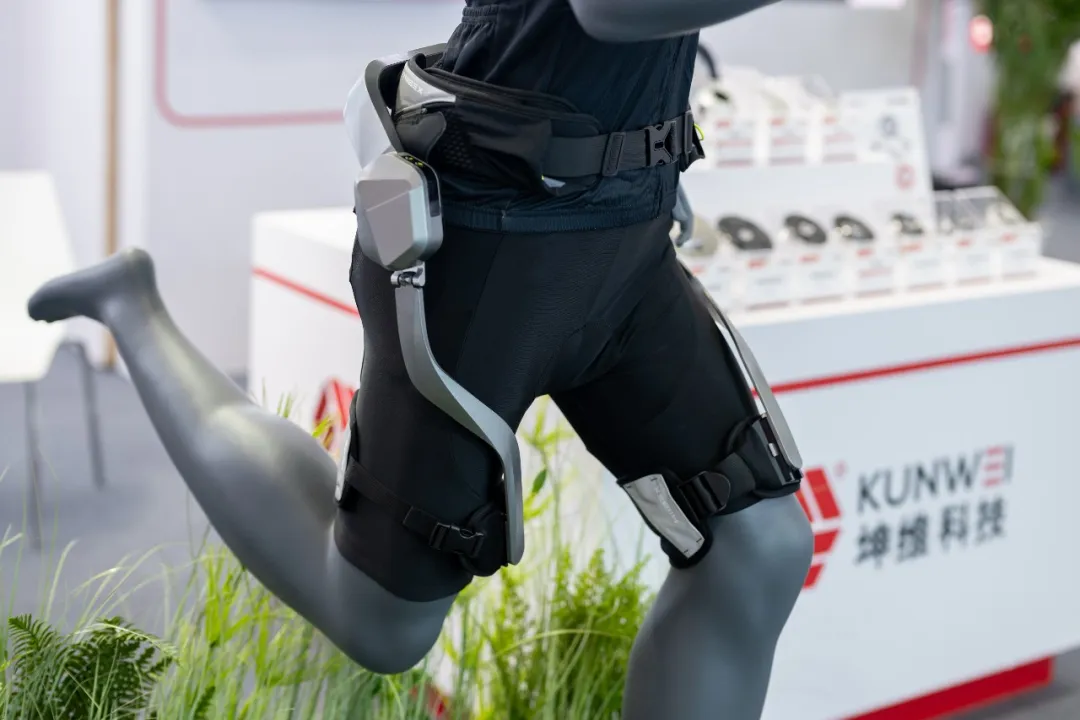
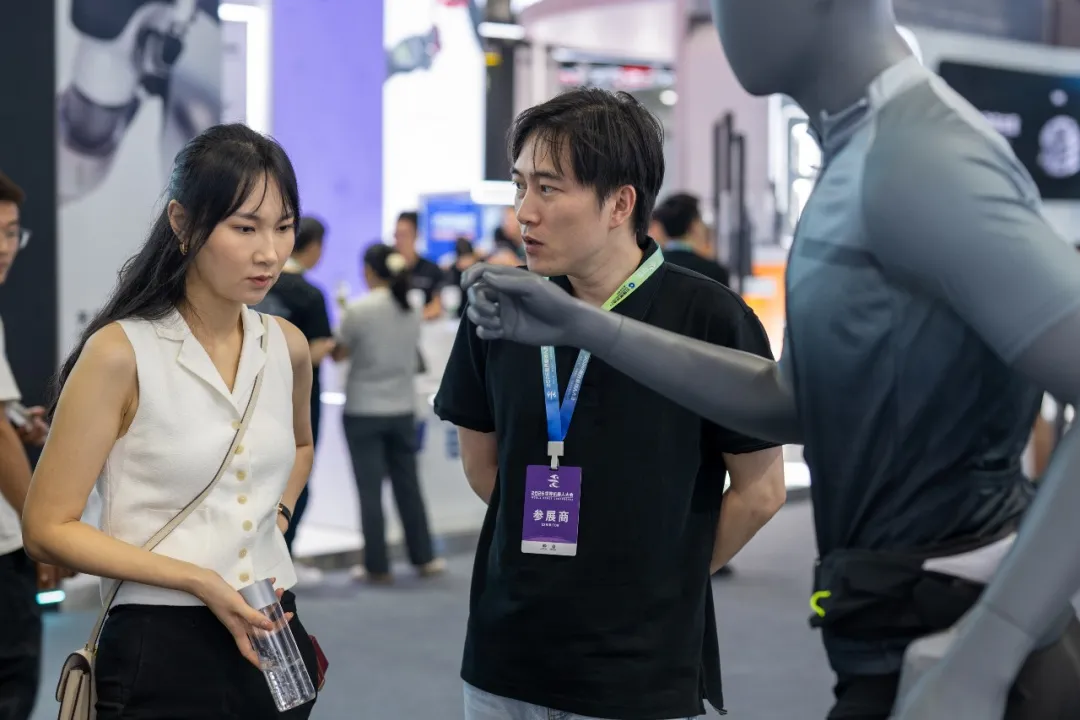
This time at the WRC, the Robotics Workshop, it was discovered that Liu Wei had lowered the technology of six-dimensional sensors and torque sensors to the C-end, introducing an auxiliary outdoor skeleton for outdoor scenes such as cycling, climbing, and other outdoor activities.
But it's not really worth the attention here, and it's not that Huawei suddenly started making consumer products. The Robotics Workshop learns that the outer core of Huawei Technologies is currently defined as a technological exploration and strategic layout that doesn't involve the commercialization, commercialization or C-terminal profitability of the product. Its core is to extend mature six-dimensional, torque-sensing technologies and force-control algorithms to larger scenarios to help achieve a more natural, flexible, human-powered body through the intentions of powerful intellectuals.
The technology behind this also has a common logic. Because the outer bone is really difficult, it is not more powerful to produce. It is to know when to produce and how much to produce. For example, when a person cycles faster, robots need to provide assistance with human forces; when people are preparing to slow down, robots cannot continue to force output; when people climb and descend, their body forces are completely different.
If the device does not know the human power state, the aid can easily become interference. Therefore, the external bone is essentially a power control problem. It is only in the past that robots need to understand the power balance between robots and objects, now that robots need to understand the power balance between robots and humans.
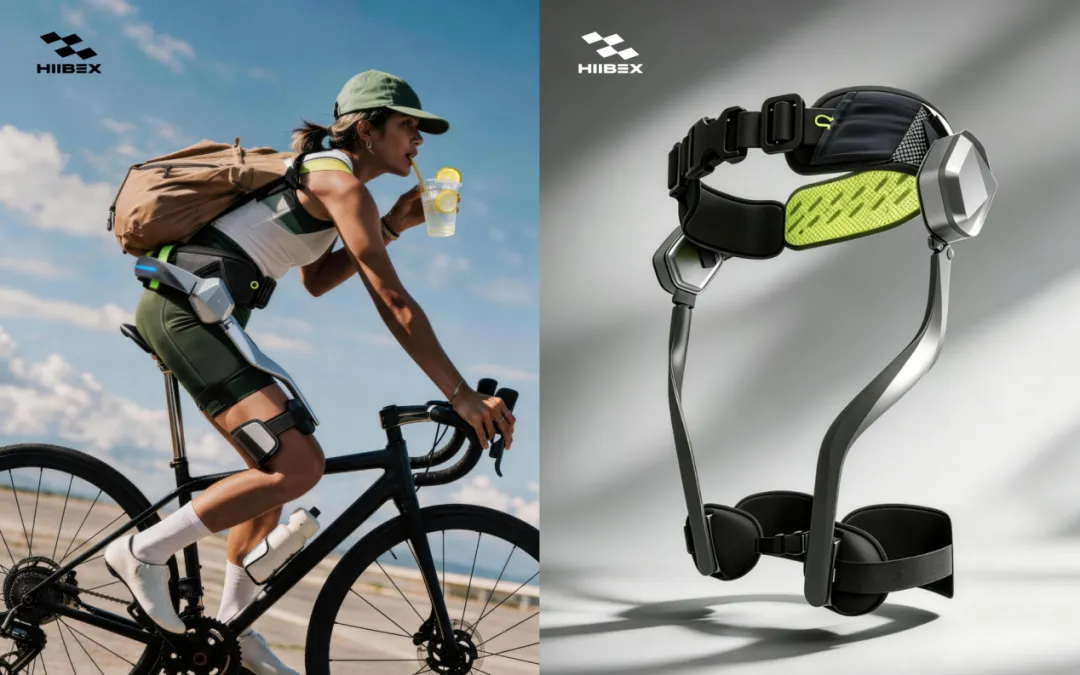
The significance of this step is not that Huawei now has a new consumer business, but that it has begun to verify something longer term: the power sensing capabilities that industrial robots have accumulated, the ability to transcend robots themselves and access the broader human-machine interaction scene.
From this point of view, the external skeleton actually solves the problem that the field of robotic force control has been solving, re-thinking it in a different direction. When robots are installed, it is necessary to know the contact between the mechanical arm and the workpiece. When the external skeleton is running, it is necessary to know how the force exchange between the machine and the human body is taking place.
If the future were to be built, the six-dimensional power, joint torque, and value boundaries of related algorithms would no longer be confined to the robotics industry. That's exactly what skeletons mean as a brand theme. It's not the commercial answer today.
05.
From a sensor to a power control map
Putting together the three directions of the WRC's presentation, the company's technological path is already very clear.
The six-dimensional sensor, which is a market-proven basic disc, from the self-development of core devices, specialized labeling to automated mass production and bulk delivery, has established a more complete product and industrialization capability, and has a strong market share advantage in the market for human-robot and collaborative robot six-dimensional sensors.
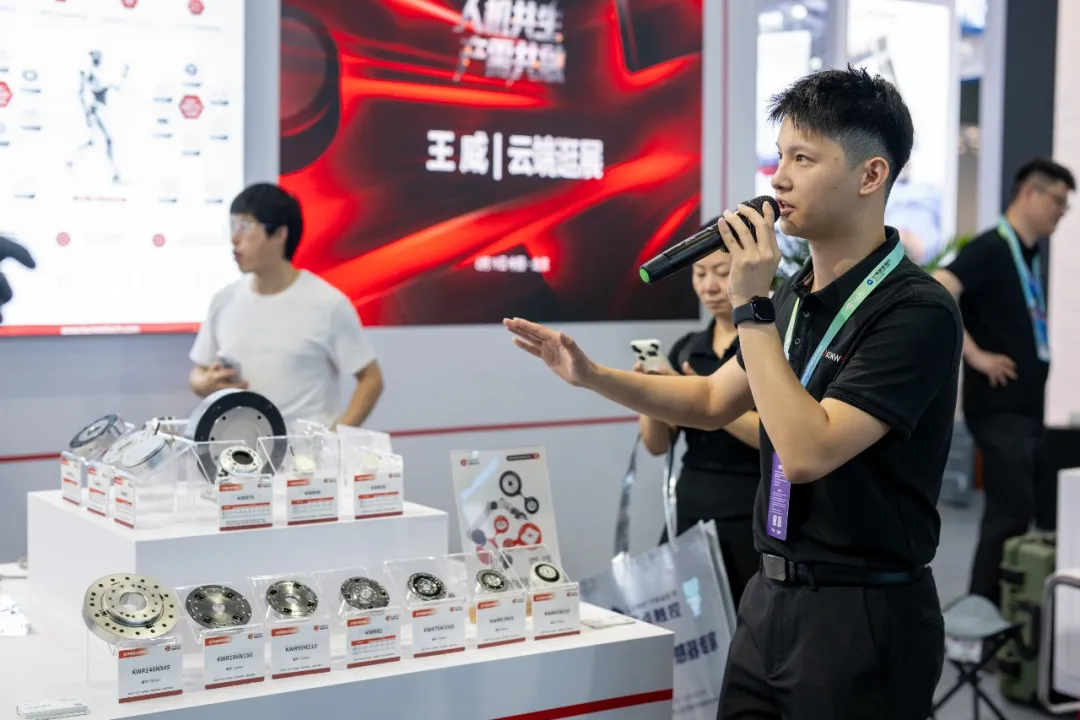
The six-dimensional solution of the torque sensor is the torque that the body of the robot is enduring. As the joints of the humanoid robot become more tight, the movement becomes more complex, and the perception of force is entering the body of the robot further from the end. The BMW KWR series has undergone hundreds of program customization and multi-cycle real-world robot replacement testing, becoming an important growth business for the company in the humanoid robot market.
When power perception is no longer just a service to robots, but is used to understand the power of humans, industrial power control technology has the potential to be extended to the civilian scene. The priorities of the three business lines are therefore very clear: first deepen the mature business, then grow the growth business, and finally use technology to explore the future.
It's also a healthier growth path for a hard-tech company. It's not looking for new business to pursue the next hotspot, but to build on existing technical capabilities to bring new value to the same underlying capabilities in different scenarios.
The six-dimensional solution is how robots perceive the outside world. The joint torque resolves how robots perceive themselves. The outer bone begins to explore how machines perceive people. But from the outside world, to the machine body, and then to the human body.
In the past, its most prominent label was six-dimensional sensors. Now, the label is getting wider. It is expanding from a six-dimensional sensor manufacturer to a manufacturer of robotic full-voltage control sensing software.
06.
Link to the Future
The robotics industry has begun to enter a new phase. In the past, people were more concerned about who can get robots up, down and running. Now that robots are entering real factories, the questions that are really important to the industry are becoming more specific: can it stabilize its work? can it deal with errors? can it adapt to load changes? can it guarantee safety when it comes into contact with people? can it adjust back in time after a defect has occurred?
These questions ultimately point to the same answer: robots need to have more and more real body feedback. Power is the most basic and most difficult type of information to replace.
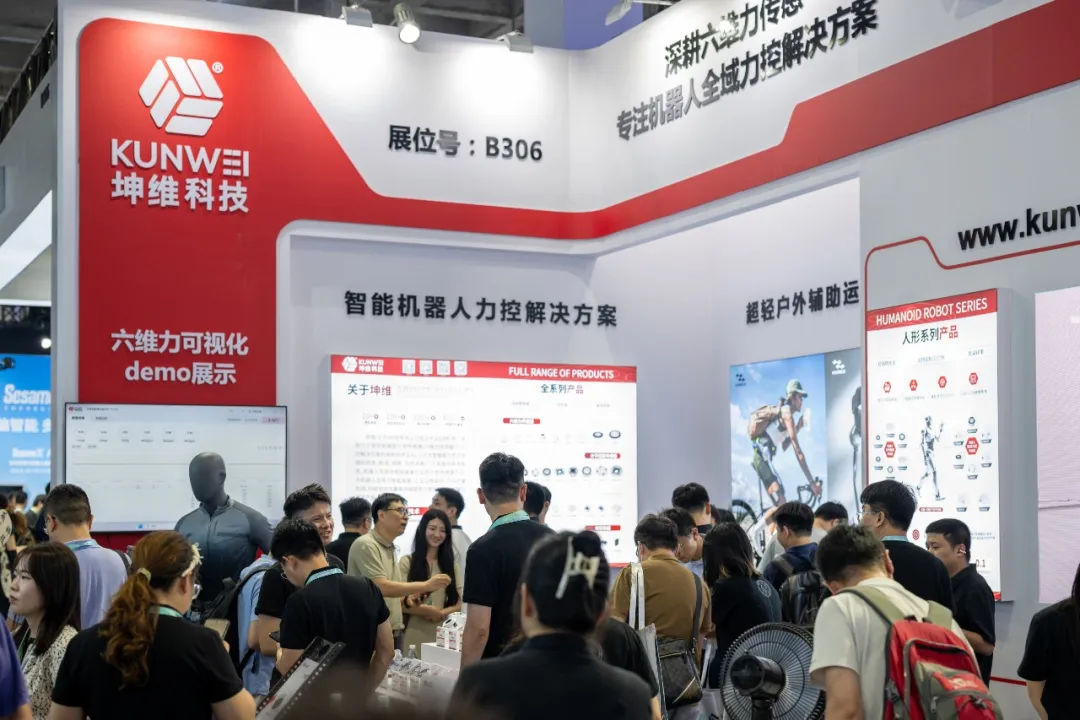
Six-dimensional sensors, allowing robots to know how they are in contact with the outside world; joint torque sensors, allowing robots to know what loads are being carried inside the body; step-by-step, force control can even become a way for machines to understand human intentions and to collaborate with natural man and machine.
In other words, robots really need to be complemented, not by another sense, but by a physical feedback path from the real world back to the control system.
The first stage is to prove that you can measure the force. The second stage is to prove that you can bring the sensation of force into the body of a robot. The longer-term direction is to make the robot truly understand these forces and use them to do more natural, safe and complex tasks.
Robots are becoming more and more like humans, but what's really important is never their appearance. What they ultimately need is the physical ability of humans to sense touch, understand loads, adjust forces, and continue to work in the uncertain real world.
This is the real industrial value of power control, and what Huawei is doing is to start with a sensor and take it one step at a time.