From August 19 to 23, 2026, the 2026 World Robotics Congress was held in Beijing, China. More than 300 exhibiting enterprises, more than 2,000 exhibits, more than 150 new start-ups, the number of exhibiting enterprises increased by 36% compared to last year, and the number of exhibits increased by 27%.
The heat on the smart track has been burning for years, more and more people are entering, the borders are becoming increasingly blurred, and this year the WRC has attracted many cross-border participants, including car companies and mobile phone manufacturers.
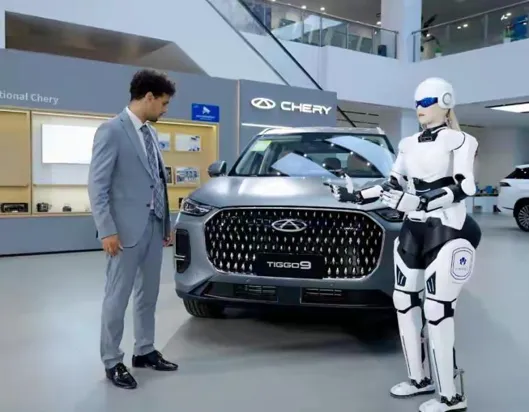
For example, recently, Goldman announced that the bodywork of the Autobot has been fully upgraded, that it has released five models of the Autobot-N1, ABot-M0.5, ABot-ER, Autobot-AgentOS, Autobot-C0 all at once, and that it has scored SOTA (the current world's best in 17 authority benchmarks), while Goldman has previously released its own product.
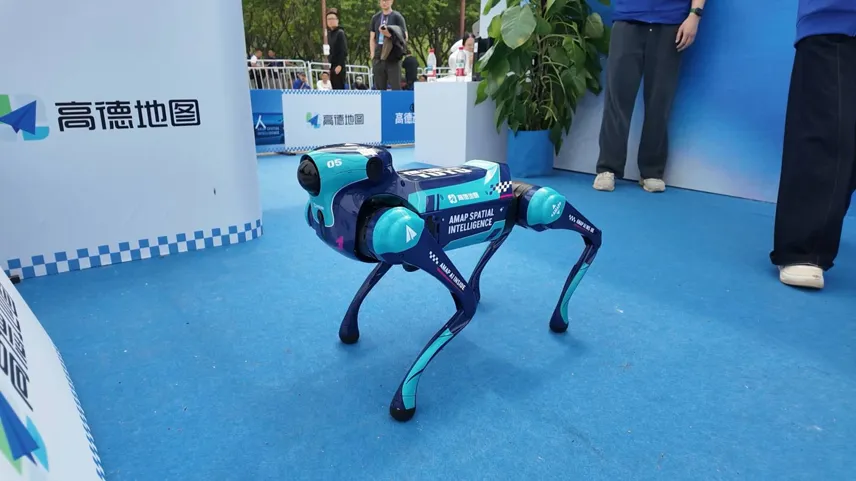
As a map tool platform, even Gould has tried to break away from the smart industrial chain, without causing some shock. In fact, in retrospect, it is not uncommon for large factories to introduce smart devices, such as Huawei, Tencent and others, to cut from the big models, Beastie Boys with their car manufacturing supply chains, and consumer electronics manufacturers are busy with hardware, and a bunch of cross-border companies are busy releasing prototypes.
Nowadays, everyone is talking about being smart, and everyone wants to benefit from being smart, as if the good game of reversing the layout of the new energy car of the year is in sight.
But the new forces in physical intelligence are difficult to really counter vertical players on the industrial track, the current industry landscape is very clear, trying to empower players with physical intelligence has not been able to attract too many partners, cross-border enterprises to create humanoid robots, shipments are too much behind professional players...
These developments mean that while the new cross-border forces are gaining momentum, they are slowly failing to produce large-scale landings.
Considering that today's smart fighting game is a game of power, that money and body are no longer the only winners, that the thickness of industrial understanding and commercialization are actually redefining the rules of competition.
As for the classic scenario of big fish eating small fish, it is not necessarily possible to simply repeat it on a smart racetrack.
01.
It's a new wave of mind-blowing, mind-blowing, mind-blowing energy that has no boundaries.
During this year's WRC, the Cherry-owned Mercedes-Benz robot will be on display, and the Xiaomi robot will make its first public appearance at the WRC.
The exhibitions of these companies are a shortened version of the professional showcase stage for cross-border players.
According to the past understanding of the laws of development of emerging industries, under the winds most of the players who enter first will win, with deep talent to live. In a race track hot to cross-border crowds, the blurring of industry boundaries is often a signal that bubbles with opportunities coexist.
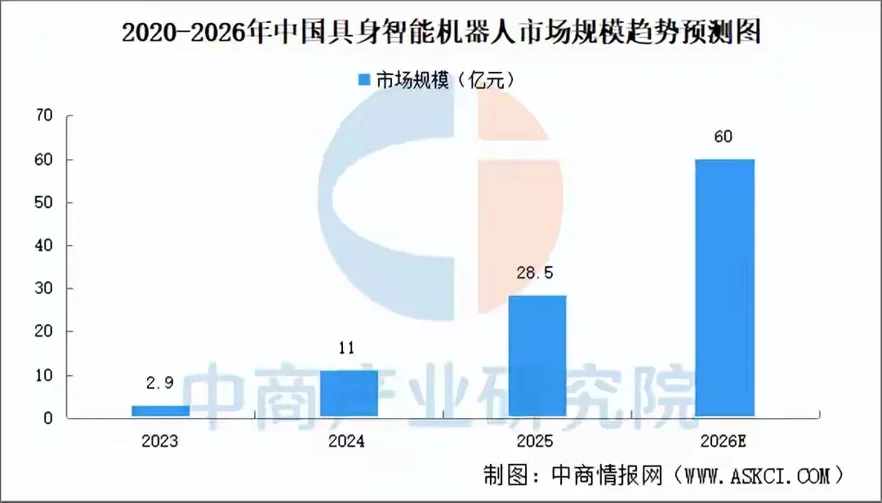
In 2026, China's 15th Five-Year Plan clearly identifies robotics as a strategic emerging industry, so that physical intelligence can be incorporated into the industry of the future. For the future, analysts at the Institute of Commerce and Industry predict that by 2026, the Chinese market for physical intelligent robots will reach 6 billion yuan, and in the coming years could reach tens of billions of yuan.
Almost all tech giants don't want to miss out on this ticket - from industrial tours to home care, from emergency relief to science education, with physical intelligence being seen as the next smart terminal entrance after smart phones and new energy vehicles.
So cross-border migrants flourished.
It is reported that players with physical intelligence can be divided into several typical routes.
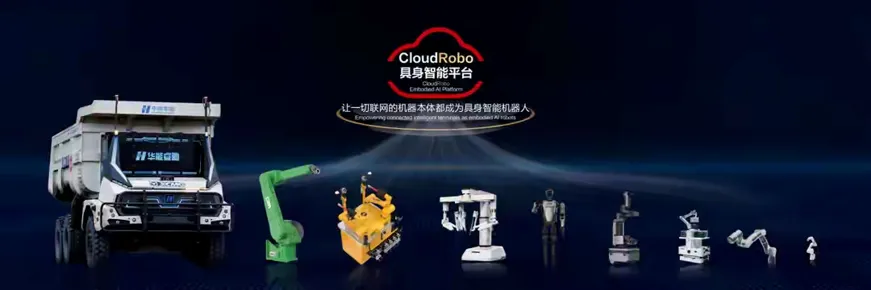
Similarly, the Tencent RoboX and the Bounce Byte Seed teams have previously introduced separate open platforms and robot-based models, but they have tried to make robots of different shapes share a set of intelligent underpinnings, without touching the hardware kernel themselves, only outputting algorithms.
On the part of the phone manufacturers, Honor, Vivo and others are involved, among which the Honor-based robot made a surprise run at the previous marathon in Beijing, its flashing lightning-powered robot won the championship with a time of 50 minutes and 26 seconds (net use time) and the same series of products once again covered the top six of the competition.
But frankly, among the many new cross-border forces, the cross-border sector is the most concerned - BYD, Chongqing, Chang'an, among others - by placing the accumulated motors, batteries, and supply chain capabilities in the field of robotics, and Chongqing is particularly radical. In June this year, Chongqing announced that in addition to serving as CEO of Chongqing Group, he will also serve as the CEO of the robotics business.
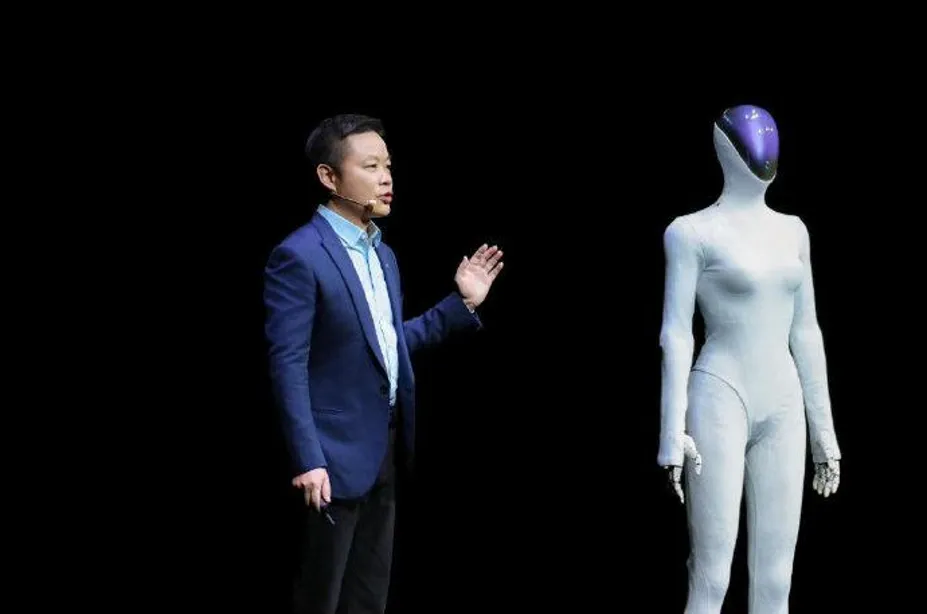
Several brokers, including Tesla Optimus, Auto-Band Traffic, Toshiba Securities, and Shenzhen Securities (002736), noted in their 2026 strategy reports that in the first half, electrification reduced valuations from 10 times PE to 30 times; in the second half, physical intelligence is expected to push 30 times to 50-100 times.
It follows the path of hardware mass production and self-development algorithms. However, forces such as Tesla are not the end of the smart cross-border, and in the future, there are many other players in the industry who will try to get into the realm of smart infrastructure building and supply chain research.
Although there are too many camps, we can generally summarize some of the characteristics of typical cross-border players.
For example, in addition to investing in coded smart players, the Internet factory camp itself continues the idea of the platform, developing robotic operating systems based on a general model, trying to make hydropower coal in the industry. In addition, home appliance manufacturers, consumer electronics brands are squeezing into the racetrack, mostly from lightweight products such as scanning robots, accompanying robots.
In terms of the size of the industry as a whole, the borders have long been messed up under the heat wave.
Objectively, many cross-border companies look more like experimentation than all-in strategic investments. Major growth companies look for a second growth curve, companies with market pressures relying on the concept of value-raising, real-world mind-control, and less likely to have reliable hardware.
Many products and large model interfaces have dared to be called physically intelligent, the essence of which is that traditional remote-controlled robots have replaced packaging. The industry's early savage growth has made physically intelligent an all-rounder, and the boundaries of new and old forces have become increasingly blurred.
Of course, the blurred nature of the border is that the industry has not yet formed a unified technical standard and business model, in which everyone in the industry is on the dark side.
02.
New and old forces face each other, vertical players have won one match
Unlike the new forces in the new energy vehicle industry that sweep away the old pattern, the new forces in the cross-border smart racetrack have not yet won a decisive battle.
In just a few years, the new energy car racetrack has torn apart the lines of defence of traditional car companies, building rapidly on the strength of the product and the direct-to-direct model, transforming the industry landscape.
In the field of counterintelligence, large, cross-border factories have largely stayed in the prototype stage, the technological demonstration stage, real energy production landings, and the product index to achieve large-scale revenues.
Although some products have entered the factory to transport goods, it may not be easy to get to the outside, and large orders are not exhibited to the outside world. At BYD, former managers emphasized that robots compete to the end to compete with who has the strongest manufacturing capabilities, who has the strongest software and hardware, software is the brain, hardware is the core, and in their view, this is not a reality for people who make cars.

As for the Internet enterprises, there have been a number of applications other than JD logistics, most of the other enterprises have not run out of typical benchmarks, in terms of robotic platforms, and even families have not really disclosed commercial progress.
It is easy to see that, from the WRC's point of view, the new forces are not small, the pace of commercialization and product generation is slow, and the explosive power of the new forces is not at all on a quantitative scale.
Large factories, in particular, although they have money reserves, technological recycling capabilities, and an existing network of channels, look like they're full, but they have one deadly shortcut: resources are always leaning towards the mainstream, intelligence is more of a strategic reserve, and it's impossible to dump everything in.
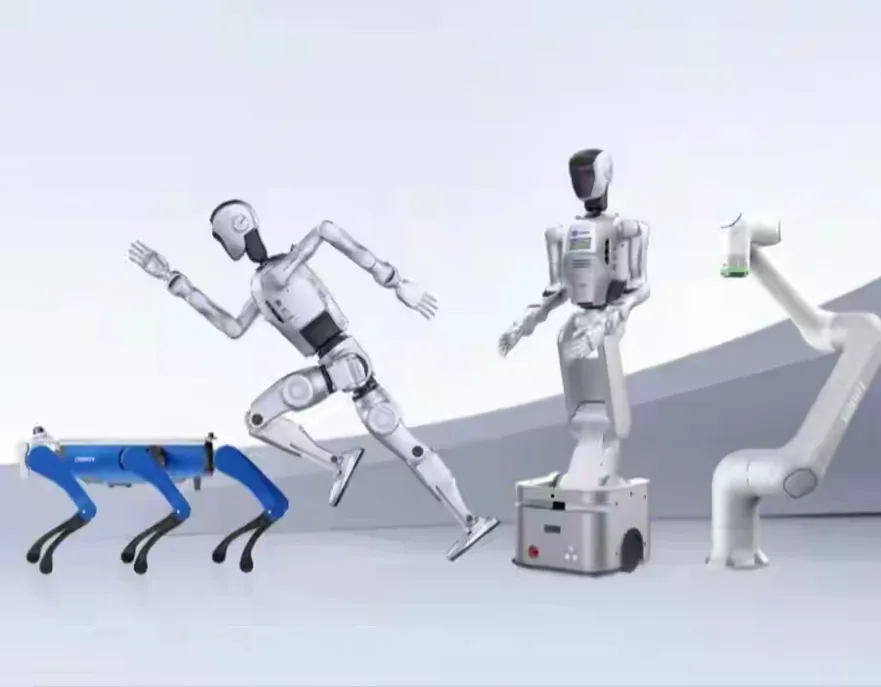
Vertical players, on the contrary, are companies such as Wu-Tang Technologies, Cloud Deep, Chiyo Robotics, which have basically been rooted in the first day of their founding, all their human resources, funds, and technology have been focused on the robot's body, control of movement, and adaptation to the scene. Open data shows that Wu-Tang Quadruped Robot has a global market share of 60% and 70%, totaling more than 30,000 units sold.
As of this year, according to data from the independent market research organization Smart Analytics Global, in the first half of 2026, Intelligent robots have surpassed Yuke's technology for the first time, taking the top share of the market, with 8,400 units shipped in the first half, accounting for 44% of global shipments, while Yuke's technology shipped 5,900 units. The shipments far exceed those of companies such as Tesla and Figure AI.
According to this data, the top players on the vertical track are faster at the pace of commercialization and have more shipments.
That is to say, the current mix of new and old forces may not necessarily be bigger than companies with more money than understanding the laws of the smart industry, rather than the advantages of landing on the scene. For example, the underlying technological accumulation of motion control, the repeated grinding of hardware reliability, the continuous accumulation of scene data, these are barriers built up over time, not a few billion.
Theoretically, large factories can build prototypes quickly based on their own strengths, good production capacity, adaptation to the situation, and after-sales maintenance systems, all of which can't be done without years of hard work.
However, there is no denying that vertical players have kept their position in the next city by farming deeply, while the industry is unlikely to have remained at the stage of small batch landings.
The question arises as to whether the Internet and the hardware industry will replicate the law of big fish eating small fish on a physically intelligent person.
03.
Do big fish eat small fish and play smart again?
To be frank, the windmills ultimately lead to a head-focused, big fish eating small fish, almost an unpleasant rule of thumb.
The winners of the Internet era are basically two or three giants; the smartphone industry is in a wave of bankruptcy, small brands continue to emerge, and the leading players take the vast majority of profits. According to this logic, the smart grid is mature, and large factories with supply chains, channels, and brand advantages will eventually absorb players vertically, completing the smaller format.
However, it has its own industrial logic, which can be seen in the WRC.
First, it's not a purely digital product that can't be consumed quickly by network effects. Physical intelligence is a deep combination of hardware, algorithms, and scenarios, with varying demands for different scenarios.
For example, industrial inspection is about the level of protection and durability, household services are about safety and interactivity, emergency rescue is about the complexity of the terrain, there is no one general product that can cover all the scenarios.
Secondly, the vertical player's shields are deeper than imagined. The motion control algorithms of the quadruped robot, the modulation of the joint motor of the humanoid robot, are hard technologies that have been refined after tens of thousands of tests. The accumulation of data at the end of the scene is more difficult, the industrial scene will not open up to strangers, and customer trust requires a project to be built.
Especially critical is the fact that the industry is still in its early stages, the technical routes are untyped, the standards are not uniform, the market is fragmented and fragmented, and the scale advantages of large factories are not being realised at all.
Of course, big fish eating small fish doesn't disappear completely, but only in a different form. When the industry enters the mass production boom, big factories are likely not to go out of their way to make hardware themselves, but rather to incorporate vertical players into their systems through investment, mergers, and eco-cooperation.
After all, having physical intelligence is a racetrack that needs to burn money, but it's not a racetrack that burns money to win, it's more like high-end equipment manufacturing, which requires slow work and deep accumulation.
04.
Link to the Future
Power games with physical intelligence, which are indeed in the zero-sum game phase of new and old forces, cross-border new forces are heating the racetrack, bringing money and attention, while vertical players are deepening the industry, running through the technological and commercialization closures.
The two of them, of course, are not entirely dependent on who replaces who, and they need to penetrate each other in the collision and accomplish each other.
On top of that, many people are constantly thinking about repeatedly upsetting myths, expecting new forces to overturn the old format overnight.
The real industrial evolution has never been so dramatic, and there is currently no new power position from the WRC's point of view, so let the bullet fly for a while.