The Ministry of Industry, Information and Communications has previously said that the production of humanoid robots in China is about 20,000 units in 2025, while in the first half of 2026 it has exceeded 40,000 units, which means that the total production of humanoid robots is expected to exceed 100,000 units a year, achieving a five-fold jump.
More importantly, the structural changes, according to data from market research firm Smart Analytics Global (SAG), accounted for more than 97% of global shipments in the first half of this year.
Behind the production frenzy is the accelerated penetration of capital to the upstream of the industrial chain, where money is flowing from the integrated system to the upstream core components such as joint modules, sensors, and smart hands.
Competition in the robotics racetrack, which has long been more than a mix of total machine shipments, is focusing on the technological breakthroughs of core components and the autonomous control of the supply chain.
From August 19 to 23, the 2026 World Robotics Congress (WRC) will be held in Beijing's Economic and Technological Development Zone, with the theme of human robots coexisting, products need to be combined. The conference is expected to feature more than 300 enterprises, more than 2000 exhibits and 150 new products.
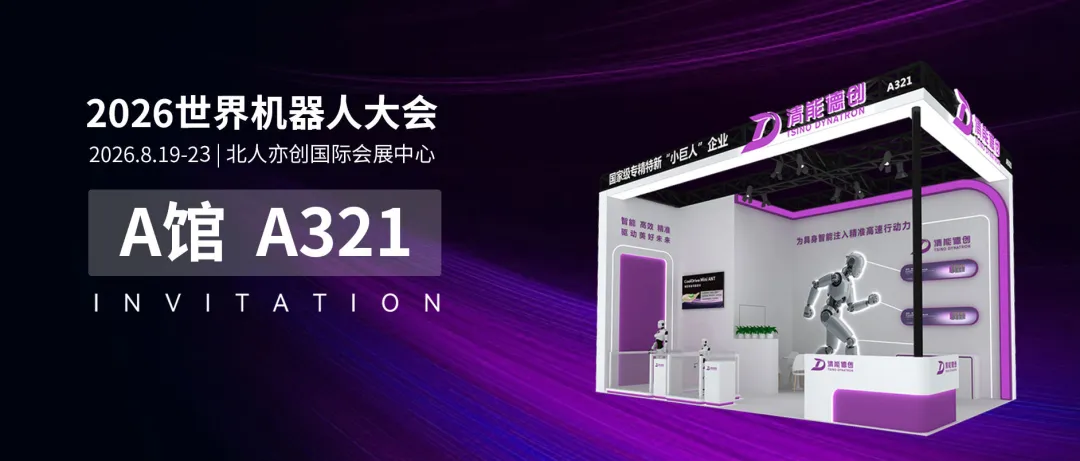
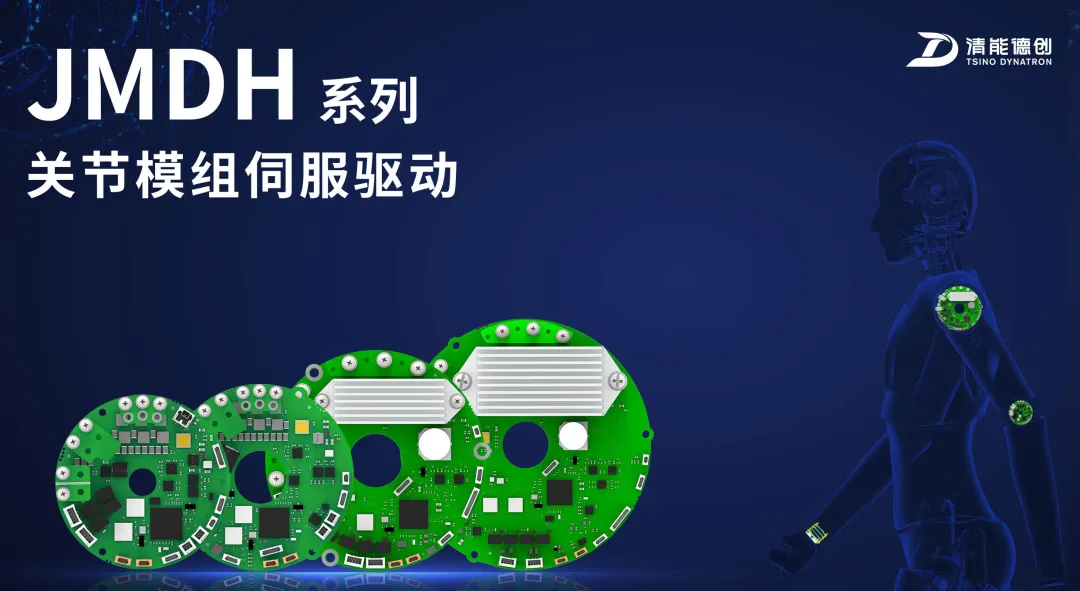
At this industry event, focusing on how to get into the field of industrial robotics, the 14-year-old servo-driven enterprise in the field of industrial robotics introduced two core products: the JMDH series of connective module servo drives and the CDM-ANT high-performance overload servo modules.
The first is the focus of the exhibition, and the second is the standardized servo modules for high-explosion scenarios. Behind these two products, the company is trying to re-establish an industry coordinate system for human-robot joints using industrial-grade silicon standards.
01.
From the invisibility championship of industrial robots to a new benchmark for man-made joints
At a time when human-robot racetracks are full of new faces, the identity of Chiang Kai-shek is somewhat unusual, and he has worked tirelessly for more than a decade on the robot-service driven racetracks.
As one of the leading enterprises in domestic robot servo-driven, Qingdao has been focusing on long-term robot servo-driven technology since its founding in 2012. It is one of the first manufacturers in the country to be certified for conformity through EtherCAT and pioneered the introduction of multi-axis servo drivers for industrial robots.
Over the decade, Qingdao has completed 300,000-level robotic axle support in the field of industrial robots, with customers covering more than 2,000 industry enterprises, products used for transportation, welding, collaboration, reloading and other scenarios, and is one of the largest domestic manufacturers of industrial robot-driven shipments.
In 2023, the company became one of the co-founders of the Beijing Center for Human Robotics Innovation. In November 2025, the Ministry of Industry published a list of members of the Human Robotics Standardization Technical Committee, and its founding vice-chairman, Wang Jian, was elected as a member. In addition, the company has also been deeply involved in the integration of human robotics connector interface specification, the integration of robotics connector performance and testing methods.
Currently, its drive scheme has been applied to the products of several leading humanoid robot enterprises, especially in the arm-driven segment, where some customers have achieved large-scale shipments.
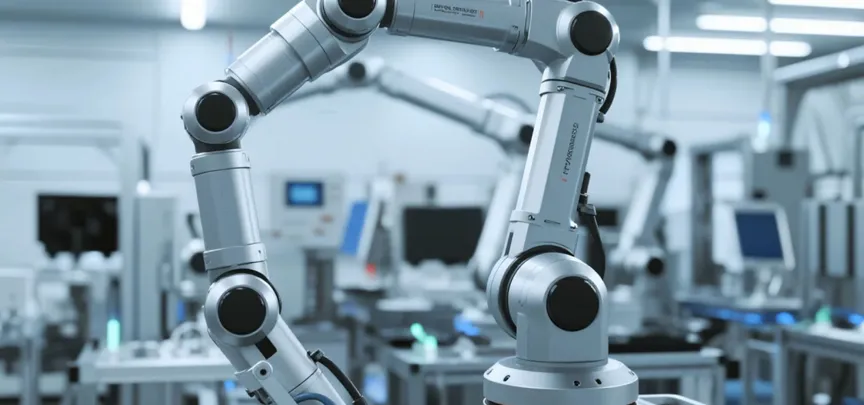
From an industrial robot to a humanoid robot, which seems like a track switch, it's a natural extension of the technological pathway. Industrial robots' demands for servo drives, such as high-precision positioning, vibration suppression, collision protection, long-term reliability, etc., are precisely the capabilities humanoids must have to walk from hydrogen to hydrogen to activate hydrogen.
The differentiation route of CENERGY DREAM is the accumulation of more than a decade of industrial servo technology, the injection of lithium-ion batteries into the human robot joint drive, and the redefinition of the degree of human robot drive by industrial standards.
02.
JMDH Series: Reduce the load on both arms and increase stability
The two arms of a humanoid robot are never a shortened version of an industrial mechanical arm. It requires extreme precision for power control and extreme precision for smooth operation, with smaller, thinner and lighter space constraints. Thus, the servo drive of the upper arm, arm and wrist joints has always been one of the most difficult bones in the human robot supply chain.
Space constraints, smooth movement, and accuracy are the engineering challenges that these parts face together.
This time around, the JMDH series of WRC's first-ever joint modules will be powered by servo drives, which hit the hard bone.
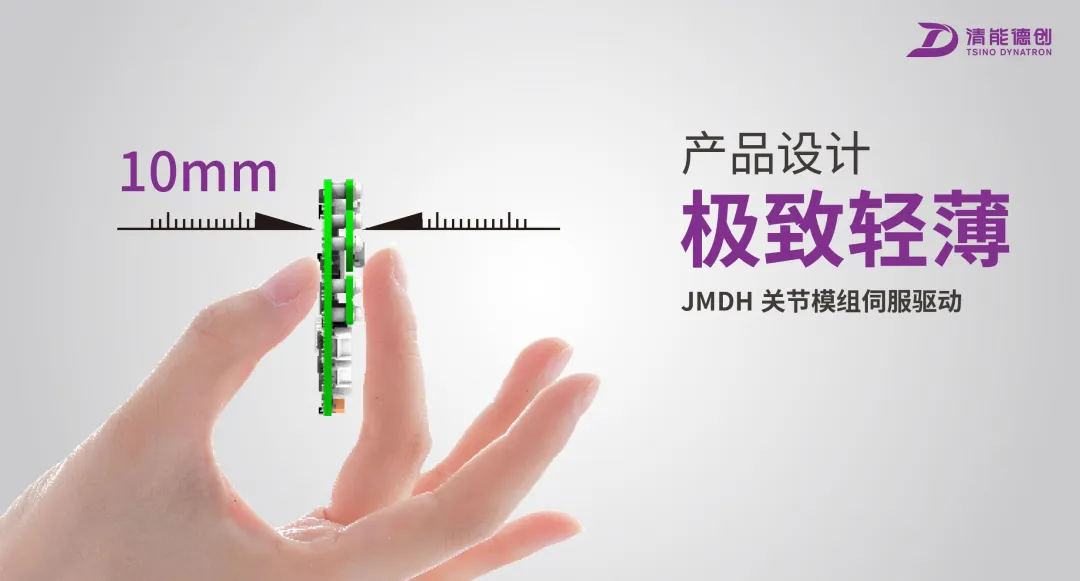
The most intuitive feature of the product is that it is extremely lightweight. The smallest specification product thickness in the JMDH series can be made less than 10 mm and can further compress the space in the tight joint cavity of the humanoid robot, leaving more design residue for mechanical structure, accelerators and sensors. The series design allows it to be adapted to different sizes of joint modules, covering the load requirements from the precise hand movements to the upper arm of the arm.
Beyond lightweight, JMDH's core competence lies in power smooth control. In industrial robotics applications, Qingdao has accumulated extensive engineering experience in torque control, friction compensation, and circuit response. JMDH uses these capabilities to drive joints with industrial accuracy, making the human-robot arm movement smoother and smoother, avoiding rigid shock damage to objects during clutching, and improving safety in human-robot collaboration scenarios.
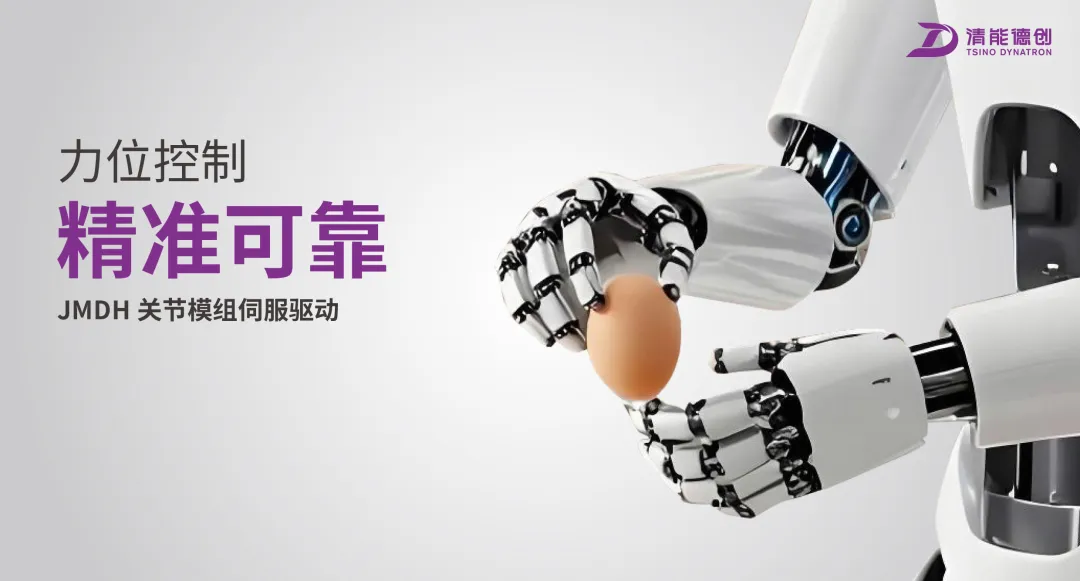
Another capability derived from industrial-end gear reduction is vibration suppression. Industrial robots have very high requirements for positioning accuracy and arm-end stability, and any arm brake can affect rhythm and accuracy. Human robots are equally prominent in the process of motion due to the longer handlebars, the more flexible structure, and the high-frequency resonance of the low-arm brake and the decelerator. The JMDH series of built-in vibration suppression functions can effectively suppress the arm brake during movement, making the grip and positioning more precise.
At response speeds, the JMDH series supports broadband communications of several megawatts, has high bandwidth responsiveness, and is capable of meeting the requirements of multi-junction synchronous control for real-time. At the interface level, the JMDH integrates multiple power-controlled sensors and encoder interfaces. This means that humanoid robot enterprises can flexibly select encoder programs or enhance sensory perception based on their own connectivity design, without limiting the uniqueness of the driver interface.
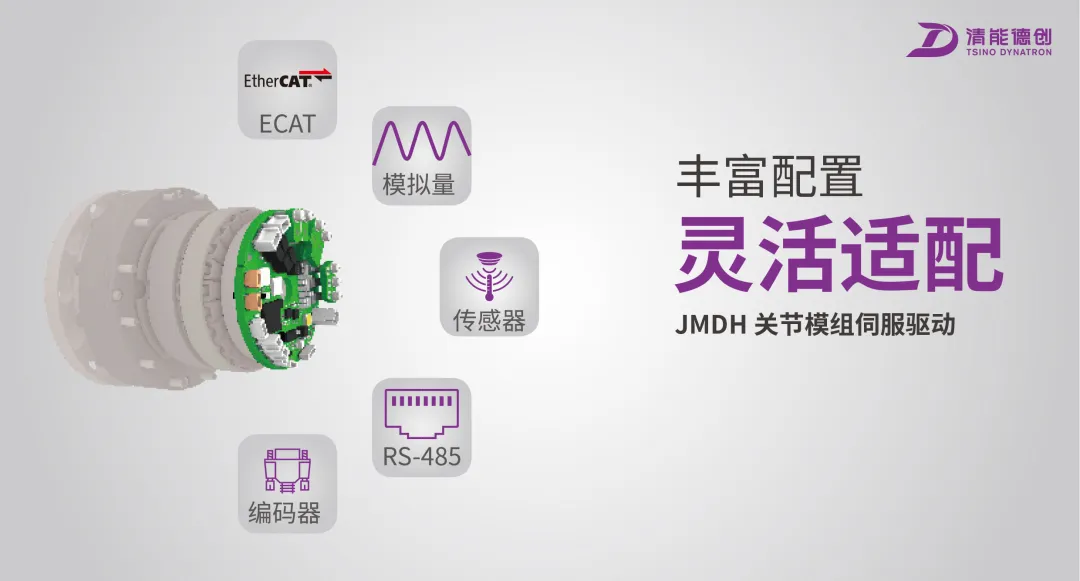
From an underlying architecture point of view, the JMDH series continues the consistent design idea of the industrial-grade products of Cinderella: long life of mainstream chips, years of refinement of software-inherited algorithm modules in the field of industrial servers, and support for directional modulation and parameter customization. For human robot customers who are mass-producing in the laboratory, this kind of handling, long-term stable product characteristics and industrial-grade reliability thinking is scarce at this stage and even in the future.
03.
CDM-ANT: Campaigning for a high leg blow to the ankle
The JMDH series solves the problem of fine-tuning the upper half of the humanoid robot, while the lower half of the robot's lithium-explosion lithium needs are met by CDM-ANT high-performance supercharged servo modules.
The legs, elbows and arms of humanoid robots are essentially different, requiring high-torque output in a very short time, high dynamic movements such as running, jumping, and stopping, while also controlling volume and heat dissipation within limited installation space. This poses extremely high demands on the overload capacity, power density and heat management of the drivers.
The technology offered by CDM-ANT is the third generation of semiconductor lithium-ion (GaN) technology. Compared to conventional lithium-ion devices, lithium-ion has a higher switching frequency and lower switching losses, allowing drivers to output higher current and achieve higher power density while maintaining small volumes.
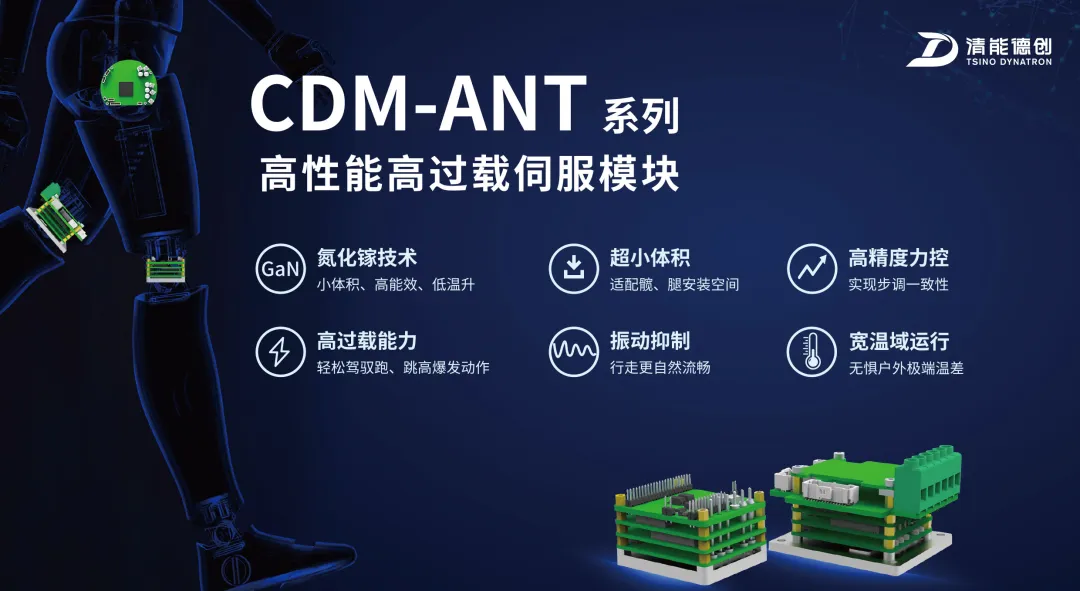
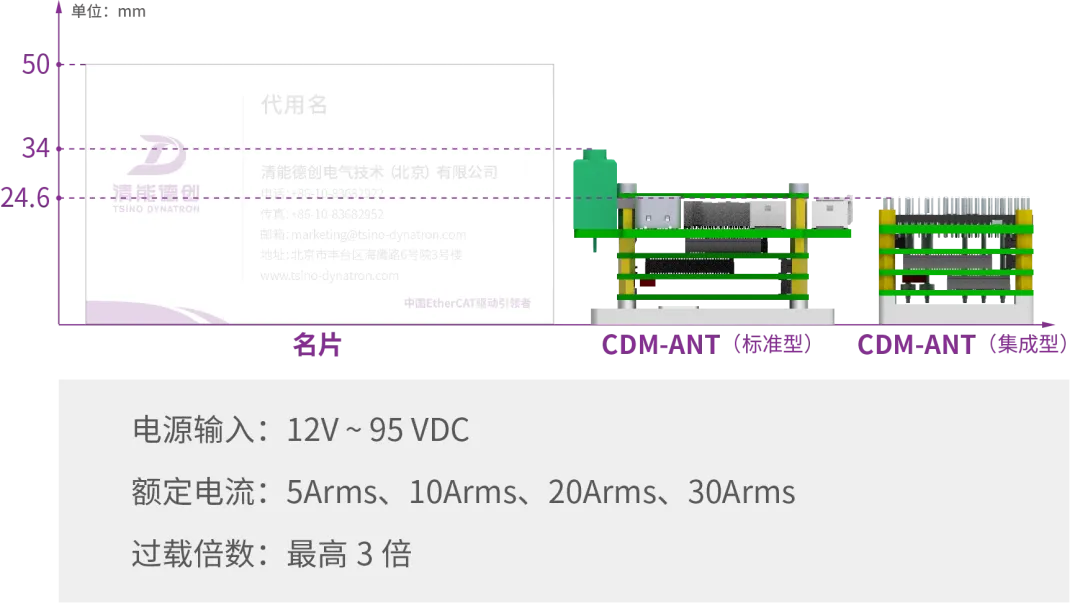
Specifically, the CDM-ANT itself weighs only 40-60 g and can produce a current of up to 70 Arms, switching frequency exceeding 100 kHz, and a bandwidth of up to 8 kHz. These parameters are not only suitable for areas where the installation space such as the human skull and legs is extremely tight, but also perfectly suited for typical human lower limbs, such as high frequency shutdown, instant overload, and fast response.
High overload capability is one of the core labels of the product. The instantaneous high-explosion movement of the human-robot leg is an ongoing test of the instantaneous overload capability of the driver from an electrical point of view. In the face of repeated high-frequency overloads, ordinary servo drivers often rise in temperature, trigger protection and even damage. While the low switching losses and low-temperature uplift characteristics of silicon silicon technology allow CDM-ANT to maintain a lower temperature rise and stronger thermal stability under high overload conditions, ensuring continuous high dynamic operation.
In power control and exercise performance, CDM-ANT integrates high-precision power control and vibration suppression functions. The former ensures that the two legs are in sync with the load-bearing timing of walking, reducing posture deviations caused by the difference in the drive of the left and right legs; the latter suppresses the low-frequency vibration of the leg joints and the resonance of the joint decelerator, making walking more natural, fluid, and reducing the mechanical sensation of friction.
The CDM-ANT is also capable of operating in a wide range of temperatures and is able to adapt to temperature fluctuations in outdoor and complex environments, providing greater environmental adaptability for industrial patrol, outdoor operations, and other robotic applications.
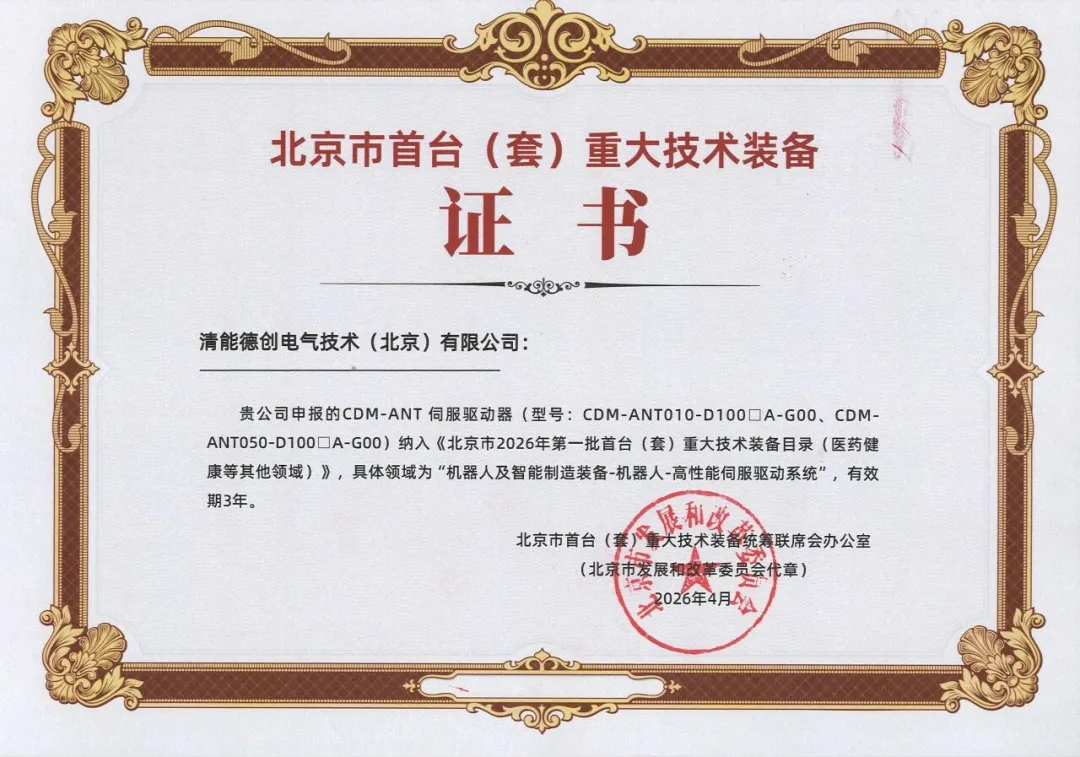
It is worth mentioning that CDM-ANT has been nominated for the first list of major technical equipment in Beijing in July 2026, which is an important backbone of its technological leadership at the official level.
04.
Industrial standards are the new answer to man-driven
From JMDH to CDM-ANT, the real point of view of the WRC's debut was not just two pieces of hardware.
The robotics industry is at a critical stage in the transition from non-mobile to non-mobile. At this stage, the consistency, reliability, manufacturability, and bulk delivery capability of the drive system are starting to attract more attention than mere high performance parameters. This is precisely the strength of industrial robot servers.
The path of Chiang Kai-shek is clear, with the industry's proven precision control, vibration suppression, broadband communications, functional safety and manufacturing capabilities, and the systematic migration to human-robot joint drive. It does not pursue the narrative of disruptive innovation, but more pragmatically answers a question: can human-robot joint drive be as stable, reliable and maintainable as industrial robots?
Behind the tagline of the new benchmark-driven robot, which was built by Liu, lies a long line of judgments made by an industrial serviceman over the course of the robot race.
The significance of the benchmark is in defining a set of industry-verified engineering standards. This is precisely the most scarce and urgent resource for the silicon-certainty silicon-looking human-shaped robot industry.