In 2026, the human-robot spider-sensor spider will fight its way into the deep waters.
In the past few weeks, the touch sensing circuit has launched a new round of intensive financing. Several startups have announced the completion of 10 million to hundreds of millions of yuan of financing, with investors including leading Internet funds and industrial capital. After vision, computing and motion control, touch is becoming the most crowded direction of attraction on the physically intelligent circuit.
Capital's enthusiasm stems from the industry's genuine desire to refine operational pumps.
When man-made robots evolve from stationary hydrogen to hydrogen-powered reactors, in scenes such as 3C precision manufacturing, assembly of automotive parts, and sorting of detrimental items, the problem of assembly, sorting, clutching, and operating tools eventually falls to the same point in time as the hammer and object come into contact.
If the cup is caught, if the parts are sliding, if the plug is not aligned, or if it has reached the edge of the interface, can the egg apply a little more force?
These problems are difficult to solve with cameras alone.
In a previous public interview, the CEO of Racing Technologies, Bear Jump, mentioned a very typical phenomenon: some robots clearly don't really pick things up, but still continue to do their hand-lifting, moving, placing on the original trajectory.
It is at this juncture that a group of companies in the fields of materials, sensors and flexible electronics have been pushed to the forefront of the robotics industry.
One of them is race sensing technology.
According to the Robotics Conference, the company, which has not been established for a long time, has just received a batch order for smart touch modules. At the upcoming 2026 World Robotics Congress (WRC), the company will also focus on showcasing its smart fingertip 3D touch modules and adaptive gripping solutions.
But to really understand the concept of competition, you can't just look at mass production orders, you have to look at them from the bottom-up.
Racing sensing technology is a relatively rare touch-sensing technology that is currently used to make electromagnetic touch sensors.
01.
Why is aluminum disconnected from electrical tanks?
It wasn't until after the robot was set on fire that I decided to switch to electronic skin.
Established in June 2023, the company's technology comes from the Southern Technology University's Ultra-Flexible Electronics Laboratory. Founder and chief scientist Guo Fufei has been engaged in long-term research in areas such as e-skin, flexible electronics, and the team has accumulated over a decade in related fields.
The choice of nanosensory interfaces to disconnect electromagnetic capacitors is a very real contradiction in flexible touch. How can a large number of frequencies be simultaneously synchronized?
When the robot first touches an object, the force is small, and the sensor must be sensitive enough; once it actually enters the grip, the force increases rapidly, requiring a large enough range of measurement. At the same time, the output signal must be better linear, from light touch to heavy pressure, in order to reflect the force change more accurately.
This is why the concept of race was chosen from the material interface.
Its disconnect program uses the nanoscale interfaces formed between the electron and ion conductors to convert the effective contact changes caused by external pressure into capacitance signals. Because the interface capacitance is very sensitive to contact surface changes, combined with a material and microstructure design, the sensor can respond significantly to fine micro-pressures while covering a wider range of sensitivities.
This allows the same set of sensors to cover different stresses from light touch to continuous grip.
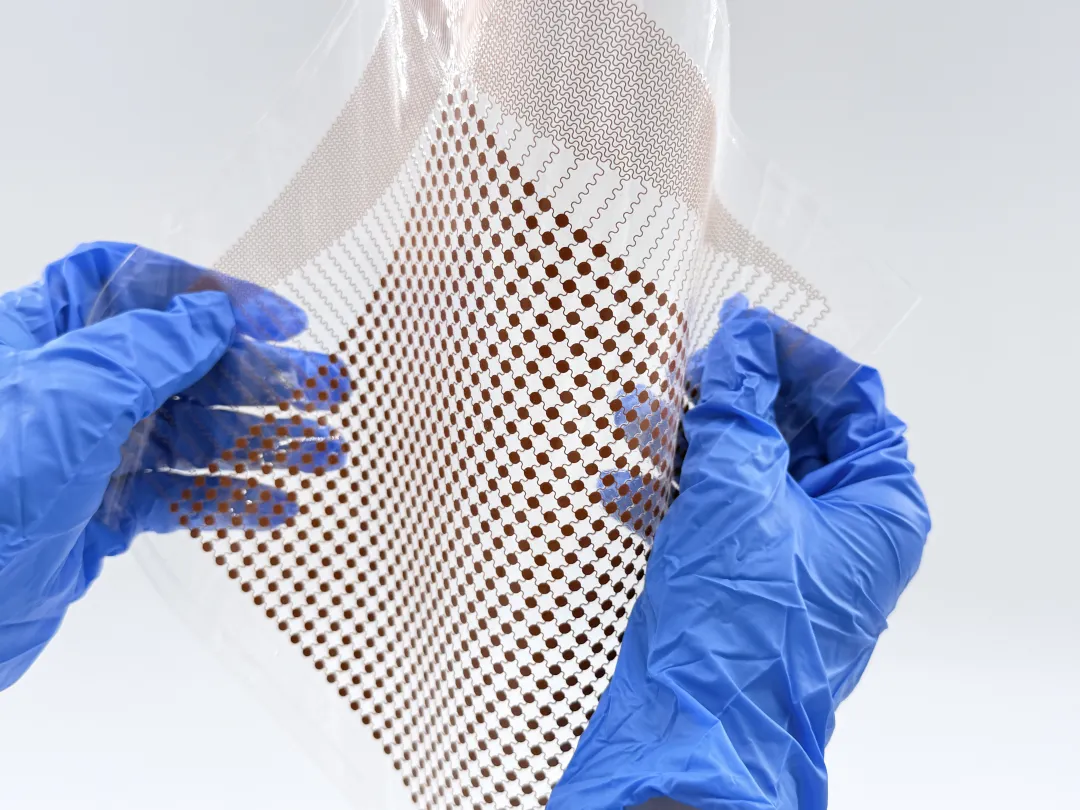
But this technology is really going to the product, and not just the material.
The CEO of the company has previously publicly revealed that material innovation accounts for about six to seven percent of the entire off-the-shelf technology system of the company. From materials to devices, modules, solutions, and know-how to supporting production lines, everything is a barrier.
From materials to robots, what really determines the value of the technology, or what kind of perceptive capabilities it ultimately provides for the robot. For the agile hand, what's most important is not measuring a force value, but perceiving what actually happens between the fingertips and the object.
This is the key ability of race sensing to be extended from disconnected materials: three-dimensional force perception.
02.
Three-dimensional power: real grasp of the robotic fingertips
If off-the-shelf technology solves the underlying performance of touch sensing, then the sensor further transforms this capability into three-dimensional force perception at the fingertips of robots.
It differs from ordinary pressure sensors in that it measures the direction and torque at the same time.
The law of perception of force is vertical pressure, i.e. the magnitude of the grip, and the force of perception captures the tendency of objects to slide along the surface of the fingertips. These two forces, combined, really correspond to the state of the grasping hand.
Electro-sensitive disconnected three-dimensional touch sensors, which can be precise in deciphering the direction of force and torque without signal interference, produce clear signals under very small changes in force. In response to the actual grabbing, objects have just emerged in millimeters of sliding trend, the sensors can capture and seek the time window for subsequent force control adjustments.
In the method of obtaining three-dimensional power, the concept of race is to use the algorithm for solving the puzzle using the solution of the puzzle structure design + algorithm.
Some three-dimensional power sensing programs require complex structural transformations to be detected first, and then re-imposed in different directions by modeling or formulae, requiring higher requirements for algorithms and calculations.
The concept of race is based on a microstructural design that allows for differentiated response characteristics at the physical level of force and torque. The algorithm can solve force values using simple linear mapping.
The advantages of this scheme are its simplicity of structure, high tolerance for assembly gaps, suitable for mass production, and lower synthesis capacity.
This is particularly important when it comes to skill. As soon as the object has a tendency to slide, the shifting force changes, the more direct the signal, the faster the feedback, and the faster robots can adjust their grip force in a timely manner, rather than waiting for the object to actually slide back and fix it.
In addition to the three-dimensional power, racing sensing also integrates high-density flexible tactile arrays into agile applications.
Compared to single-point measurements, arrays are able to obtain further contact pressure distribution and perceive information about texture, softness, materials, etc. That is, the robot is getting a more complete set of contact information, rather than just a numerical value of how much force it uses.
These data, combined with real-time force control algorithms, allow robots to dynamically adjust movements based on forces and contact states to achieve flexible holding, precise operation, object recognition and adaptive grabbing.
From force-to-turn, to the distribution of pressure and the surface characteristics of objects, this tactile sensing scheme is really complemented by the sensors that know how tightly to grip, when to slide, and adjust their movements accordingly.
03.
From a sensor to a bulk order, putting the touch really into your hands
The sensor performance is good, and the final answer to the question is that only one pump can be fitted in a skilled hand, stable work, and bulk delivery.
Fingerprints are small in area and complex in curvature. Fingerprints vary greatly in size, mechanical structure, and sensor position from manufacturer to manufacturer. Therefore, the Fingerprints 3D Touch Module is not a fixed specification sensor.
The Robotics Workshop learned that it uses an ultra-thin, flexible design that allows flexible attachment to complex curves, while adjusting sensing density, size and thickness for different customers, and supports the integration of flexible attachments and hard-core plates.
The next step is to find out how to steadily read more and more tactile signals.
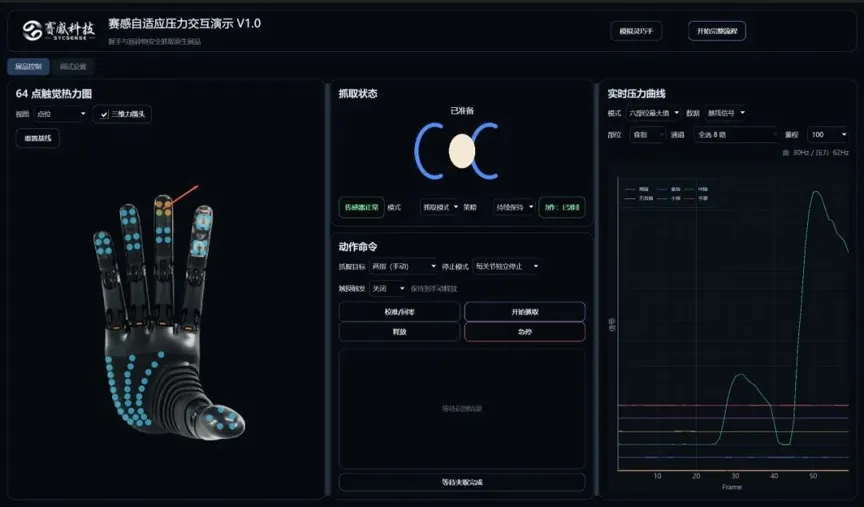
When the touch actually reaches five fingers, the number of sensor points increases rapidly, and a large number of weak capacitance signals appear at the same time, and the collection of speed, interference, resistance to interference and circuit volume immediately becomes a new engineering problem.
This is the reason why Intel has introduced it. Its agile touchscreens feature the PSoCTM 4 capacitor chip from its strategic partner, Intel, which supports high-density point-to-point synchronous high-speed acquisition, and features such as anti-interference and low signal drift.
One in charge of the thumb sensors and one in charge of the thumb reading sensors. The thumb sensors have thus combined the three-dimensional power sensing, signal collection and module integration into a complete package, compressing both the volume of the finger tips and ensuring the stable reading of multi-way touch signals.
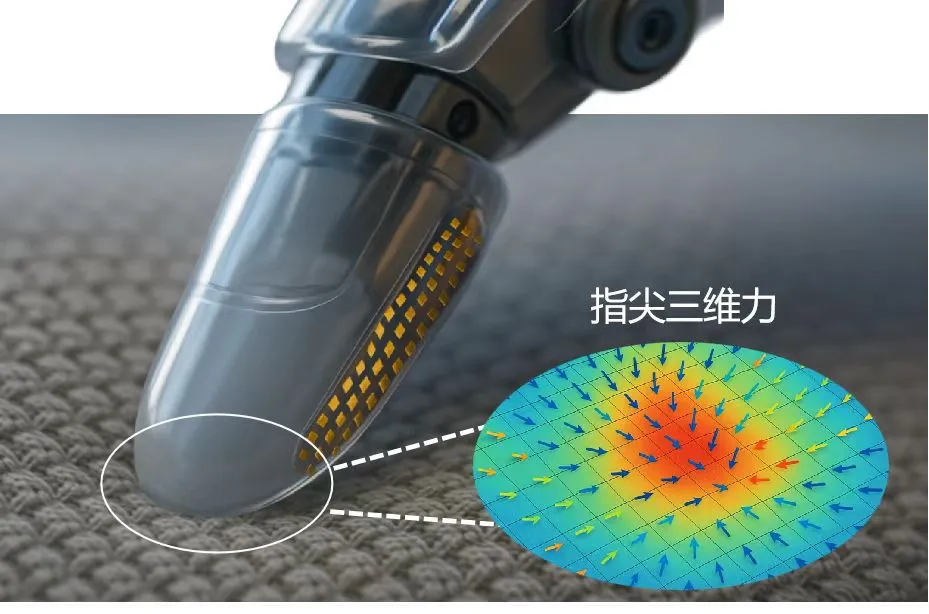
In terms of product performance, the racing-sensing fingerprint three-dimensional touch module supports 0.05N minimum force recognition, response time of 10ms. 0.05N is approximately equal to 5 grams, which can capture the level of contact of feathers; 10ms response time meets the refresh needs of real-time power control circuits. That is, from signal generation to feedback to control system, almost no delay is felt.
The next step is mass production.
Racing sensors have already built up the mass-production capabilities of off-the-shelf flexible touch sensors. From materials, devices to modules and signal harvesting, this technological route that originally emerged from the laboratory has become the foundation of the robotic supply chain.
Millions of orders have been placed at this node.
According to Race Sensing Technology, the company has recently signed a batch order for flexible hand touch modules. In other words, race sensing off-the-shelf touch has gone further from material and device research to the actual procurement link of robot customers.
From screening the pumps, to putting the pumps into the pumps, and then actually ordering the customers, this is the most obvious industrial progress to date.
04.
Starting at the fingertips, the touch pads are spread all over the robot.
If the answer to the bulk order is whether or not a customer is buying a batch, then the WRC site is worth seeing more about how the 3D touch is involved in robot crawling.
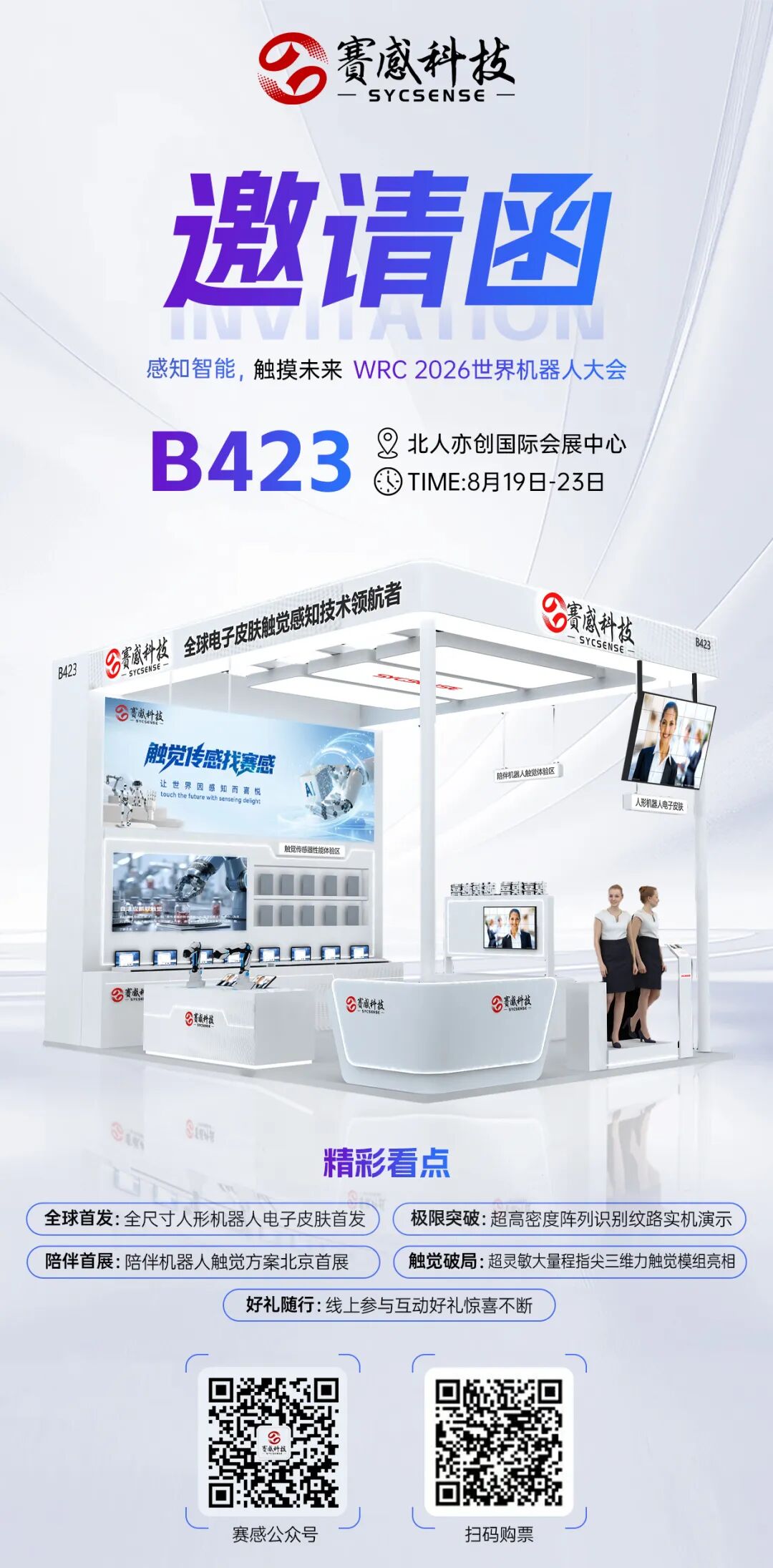
On August 19-23, racing sensors will focus on the field to showcase sophisticated finger tips three-dimensional touch modules and adaptive grappling schemes. Compared to the product parameters individually, it is really worth observing: how the three-dimensional power is reflected in the grappling state; how the hands can be adjusted in a timely manner after the change in force; and how the touch can participate in the final grappling action in the face of objects of different hardness, materials and shapes.
These are the places where 3D power really needs to be verified after moving from a sensing capability to a robot's operating end.
But the three-dimensional grip of the finger is not the whole WRC feel of the race.
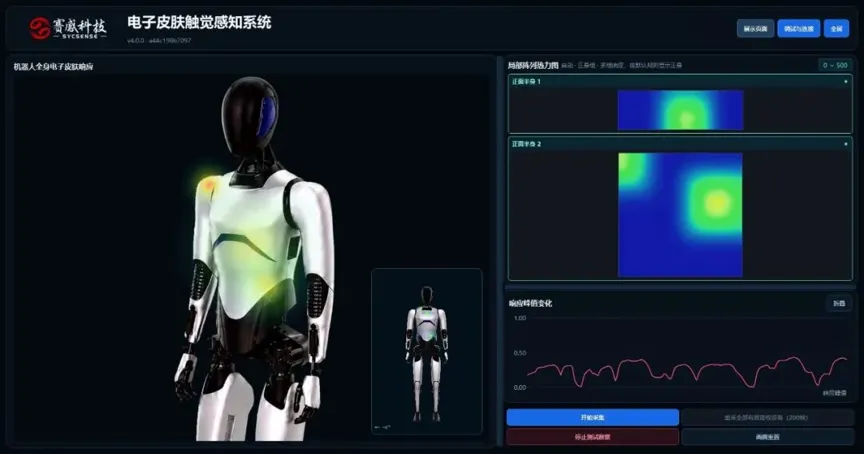
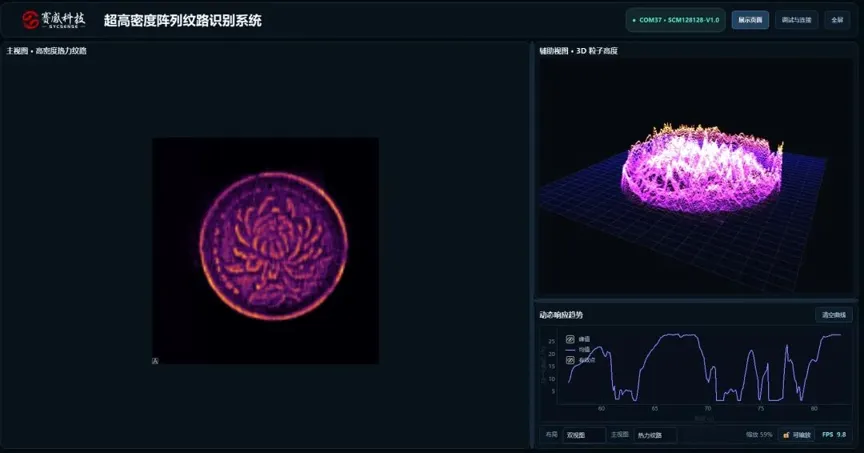
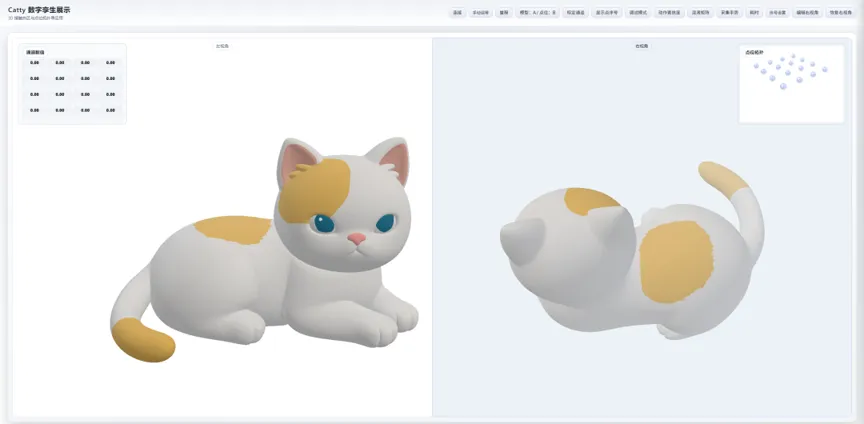
According to the latest pre-show information, the company will also launch a full-size human-robot electronic skin system for the first time globally on the ground, and showcase the SmartMatrix ultra-high-density touch array and CompanionBot accompanying robot touch software.
Among them, full-size human-robot electronic skin will further extend the sensation to areas such as the foot, ankle, and arm for pressure sensing, collision detection, step feedback, and environmental interaction.
SmartMatrix further enhances perceptual density for more fine-grained pressure and texture recognition.
The CompanionBot will bring the touch to the interaction scene, recognizing movements such as touching, tapping, pressing, and hugging.
Several product-oriented scenarios differ, but the underlying logic is consistent, starting at the fingertips, and gradually transforming off-the-shelf touch into a layer of the robot body's perceptual infrastructure.
05.
Written at the end
In the past few years, the most visible advances in humanoid robots have been models becoming smarter, movements becoming more streamlined, and the freedoms of clever hands becoming higher.
But as robots really start to move from demonstration to mission, industry competition is moving toward the end of the body.
In the past, it was more like an add-on sensor to a robot; in the future, it is likely to be closer and closer to vision, becoming an indispensable perceptual channel in physical interaction.
The next step in the touch industry is to be able to access enough contact information to be stably embedded in robots and send those signals into control systems in real time.
From this point of view, the current path of racing technology is quite clear.
After more than a decade of flexible electronics accumulation in the laboratories of the Southern University of Science and Technology, materials have been embedded downwards to make devices, modules and solutions upwards, and the most intimate part of the operation has been the three-dimensional touch at the fingertips of robots.
This is also a change that is more worthy of observation than the intense racetrack financing this year. Capital's pursuit is no longer just a more sensitive silicon-electronic skin mask that the robotics industry really needs, a handyman who can participate in operations and scale installations.
From August 19 to 23, Beijing also hosted the WRC B Palais B423.