On August 17, it was reported that the domestic robotic power sensor enterprise Bluepoint Touch recently announced the completion of the RMB 100 million D round of financing, which will be jointly invested by Guangzhou Capital, German share capital and Shenzhen Capital. This round of financing will be mainly used for the development of new generation of robotic power sensor products, capacity expansion and global market layout.
Investors in this round of financing are worthy of consideration. Guangzhou Capital is the investment platform of the Guangzhou Group, which has a continuous position in the robotics sector in recent years; shares in the investment company are representative of the new energy storage industry. In addition to previously invested in organizations such as the Nintendo era, Intel robots, Galaxy General, Shanghai, Central Core, the list of shareholders with blue touch control covers several industries such as power cells, automobile manufacturing, robot manufacturing, semiconductor manufacturing, and new energy storage.
The centralized entry of industrial capital typically means two things: first, the technology route has been approved by downstream applications, and second, the market window is opening. For the relatively professional segment of power sensors, this round of financing provides a cutoff to observe the maturity of the robotic industry chain.
01.
Why is the industrial capital plunging into a power sensor company?
From the shareholders' expressions, it can be seen that Guangzhou Capital defines the money as a spare parts card for a hybrid car with a body-smart suspension, and in my opinion, the automakers are no longer satisfied with investing in the robot itself, and they want to take the ring of the core supply chain into their own hands.
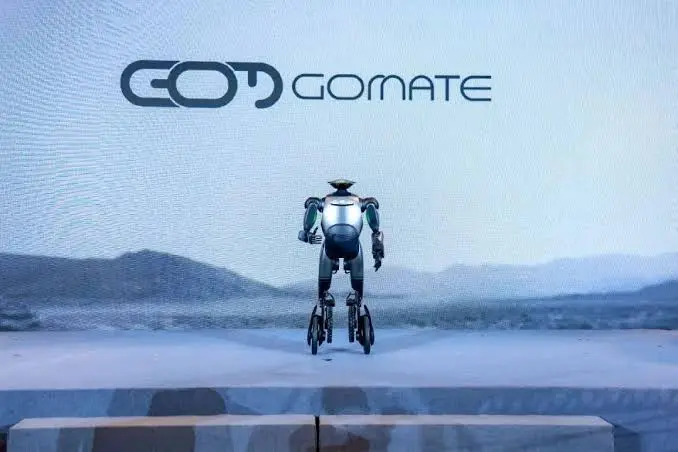
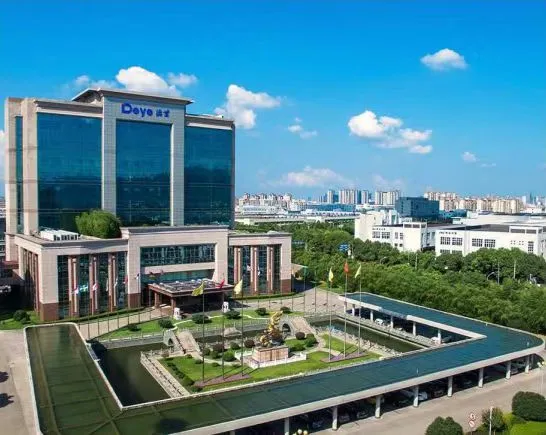
The German share is a global consumer energy inverter plumbing + light storage system provider, which invests in bluepoint touch to buy not a robotic concept, but a potential landing point for power sensors in the precise installation of battery production lines, the flexible operation of new energy equipment, and the benefits to enterprises will be revolutionary if this path is followed.
It is not uncommon for individual manufacturers to invest in core parts companies, such as Xiaoyuan and Galaxy J. These two robot integrators were originally blue-point touch customers who chose to invest after verifying their product capabilities. This pattern of shareholder conversion is relatively rare in industrial investments, usually occurring when supply chain relations are stable, product performance is fully verified, and both parties intend to deepen cooperation.
From an investor's perspective, Blue Dot touch is not only a source of funding, but a relatively complete industrial ecosystem. The value of such networks in product verification, scenarios, and supply chain synergies is often greater than the funds themselves.
02.
Why is force control the last kilometre of contact between robots and the physical world?
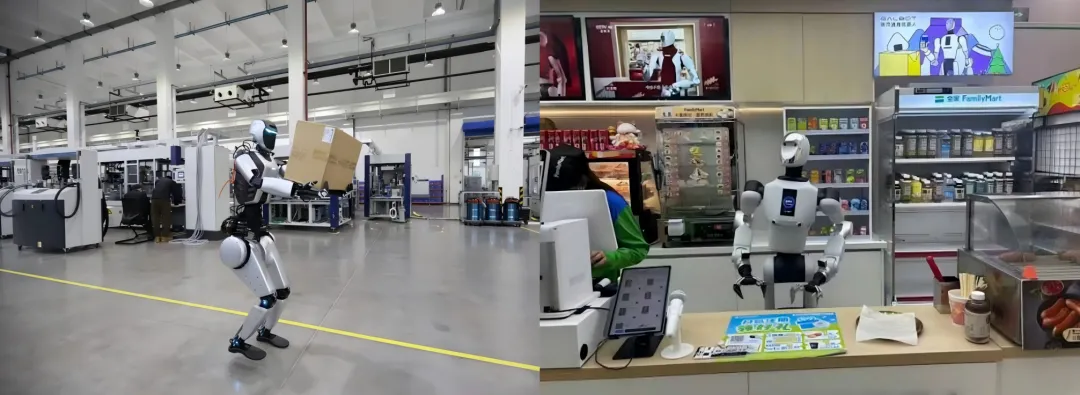
In 2026, the large-scale application of humanoid robots began to change from predictions to realities. In factories and warehouses, robots no longer appear as mechanical arms in fixed orbit, but as robots that complete tasks independently in complex, unstructured environments.
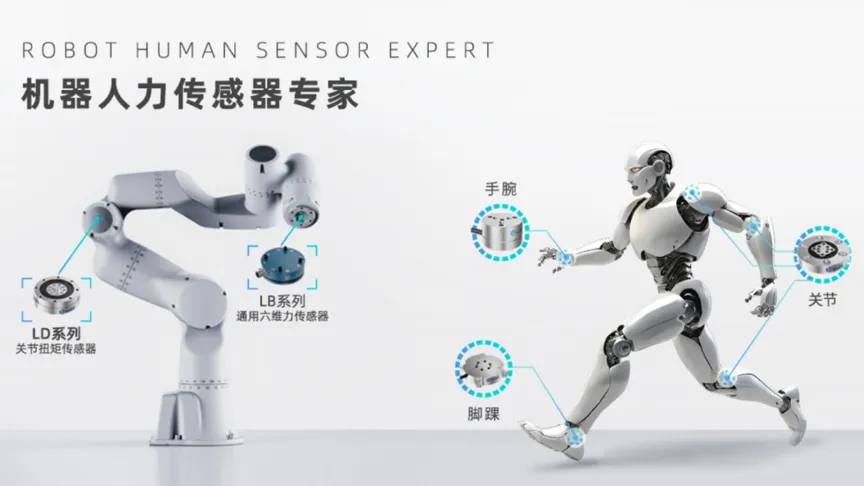
This demand for sensing capabilities goes far beyond the age of industrial automation. Vision and algorithms solve the problem of robots looking at what a mouse is doing, but when actually performing operations, the lack of force control exposes the obvious limitations of a mouse robot's inability to distinguish between soft hardness, lightness, and the inability to adjust the direction and size of the force in real time during contact. Lack of power sensing, precise vision systems and complex decision-making models, all stop at the moment of actual contact.
Blue Point Touch gives the product an accuracy of 0.1% FS and a frequency of more than 10 kHz, which means that the sensor can capture subtle force fluctuations in high-speed operation, rather than just static force values. The 500% overload resistance allows the sensor to remain perfect in the event of an accidental collision with a robot; the volume and weight are compressed by 90% and 80%, respectively, to accommodate the limited space inside the joints.
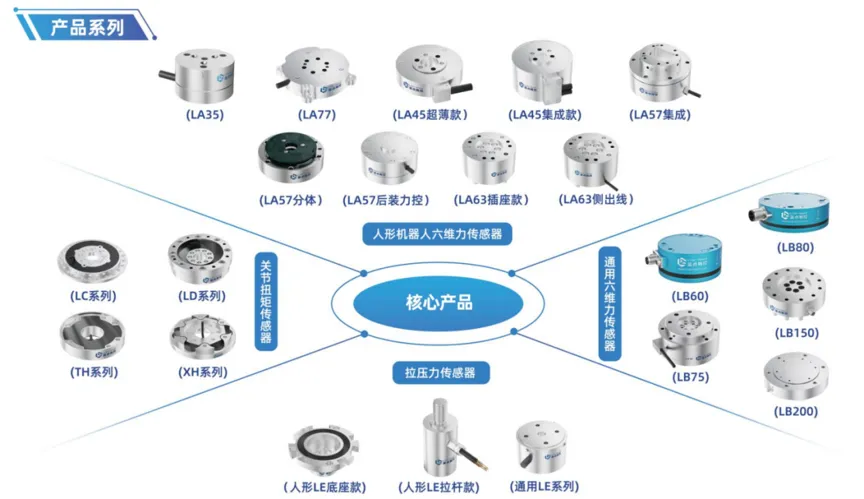
The Blue Point Touch product line has been extended to multiple application locations. The six-dimensional sensor deployment at the end executor, capturing all-directional power information when in contact with the outside world; the joint torque sensor embeds the joint, monitoring the torque changes in the movement process. From single product to cover the chain of motion, the technical layout of the Blue Point Touch has gone beyond the laboratory stage to achieve a scale deployment.
03.
What are the advantages of running first and bulking first?
According to industry research institutions, Blue Point Touch in the domestic human-robot six-dimensional sensor market is at the forefront of the industry, with manufacturers such as Chiyo Robot, Galaxy General, Xiaomi Robot, Ubisoft, Multimotor Robot, and StarTimes using their products.
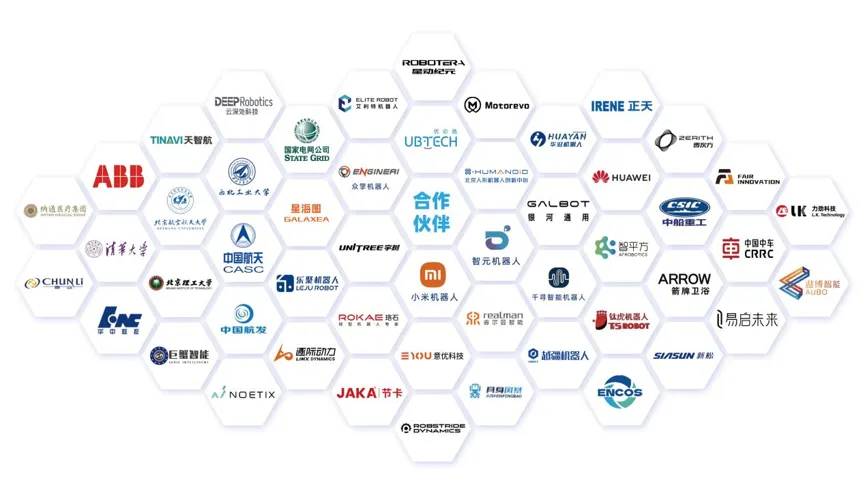
Robot Workshop believes that the current domestic shipment of humanoid robots is still in the transition stage of thousands to tens of thousands of tons, with a limited overall market size. During this stage, the bulk shipment is completed first, while cutting into dozens of mainstream suppliers, more reflected in the establishment of partnerships with key customers in the early markets. The value of this relationship is that when the market size really rises, the established supply chain resilience will form a certain lead advantage.
From a supply chain perspective, Blue Point Touch solves two real-world problems.
One is the delivery cycle, which is compressed from 6-8 weeks for overseas brands to 2-3 weeks. The speed of delivery directly affects the pace of product development of customers in the context of rapid evolution of robotic research and development and high demand for customization.
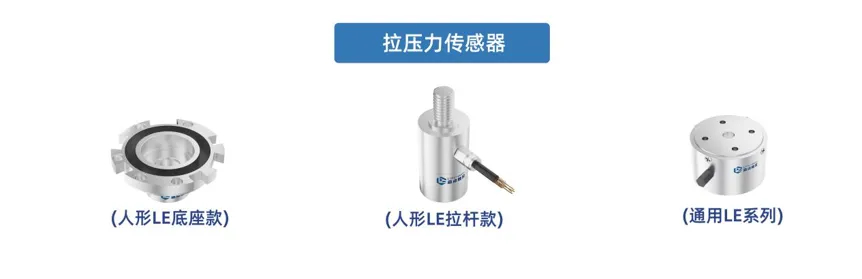
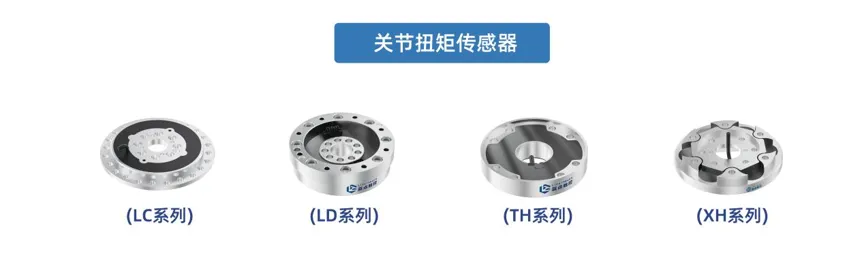
Second, the capacity reserve, the design capacity of the automated production line built in Guangdong reaches 1 million sets of joint force sensors per year and 200,000 sets of end-to-end six-dimensional sensors. This capacity scale corresponds to the demand for future human robots to reach 100,000 units in mass production.
04.
What determines the long-term barriers to competition for power sensors?
The technological threshold for power sensors is not a single point, but whether multiple nodes can be positioned simultaneously. The design accuracy of the sensor body, the signal processing algorithm, the tradeoff between high-frequency response and miniaturization, and the ability of the consistency control pads in mass production depend on each other, and any one of the nodes is exposed in actual application.
This field has previously been largely dominated by foreign brands. Domestic enterprises have been able to enter, directly due to the rapid expansion of the domestic robotics industry, which has brought huge local demand; the deeper reason is that the external dependence on key components at the industrial chain level has become a systemic risk, and the pressure on domestic production comes not only from cost but also from security of supply.
According to the Robotics Workshop, Bluepoint touches on its current location, builds on early entry, establishes stable partnerships with leading automakers, and builds on these capability scales. Whether these advantages are sustained depends on whether their technology evolves to keep pace with customer demand, whether costs scale up and down, and whether supply chains remain stable in the fast-growing market.
05.
What is the next step from breaking through a single product to landing a whole scene?
Moon's goal for the company is to create a blue dot for global robotic force sensors that are much wider than human robots. As long as robots involve actual contact with objects or people, force control is a problem that must be solved, whether it is precise installation in factories or auxiliary operations in hospitals. The upper limits of market space are determined by the depth of penetration of robots into the physical scene.
Industrial scenarios have high requirements for reliability and accuracy and are relatively cost-sensitive; consumer scenarios need to find an acceptable balance between performance and cost; special scenarios such as medical also involve safety certification. Different scenarios differ significantly in requirements for sensor specifications, stretching from the professional market to the general scenario, requiring targeted product development rather than just mass production replication of the same product.
This round of financing introduces two of the world's largest heavy-duty industrial partners, GM and Deutsche, and will further accelerate the large-scale deployment of domestic power sensors in industrial scenarios such as automotive manufacturing and new energy.
With the acceleration of the trillion-dollar industrial wave of humanoid robots, six-dimensional sensors have shifted from a high-voltage array to a core critical component of the body-smart commercialization landscape, becoming industry benchmarks. Blue dot touch is now powered by domestic core components, helping China's body-smart industry to lead the world.