The year 2026 is widely regarded by the industry as the golden age of commercial scale, with policies, costs, and supply chains accelerating. However, commercial scale is not instantaneous, and the industry as a whole is still in the transition period from technical verification to scenario verification, and then to scale landing.
In the heat of the moment, the smart industry is entering a new round of value revaluation. The high energy crisis scenario as the highest entry threshold, the strongest security constraint, is an important example of the industry's trend observation, and is playing a practical test of the future direction of the industry.
01.
The market for specialised robots is expanding, but there is a lack of a hydrogen-powered robot brainwasher
In terms of market size, special robots are still on the rise. According to data from the Institute of Commerce and Industry of China, China's special robots market is expected to reach 29 billion yuan in 2025, which is expected to increase to 35.2 billion yuan in 2026; agencies such as Seedy Advisors predict that the domestic special robots market will surpass 50 billion yuan in 2030.
However, the expansion of the market does not mean that all players can benefit equally. In recent years, there have been two distinctly different narrative routes for the Special Robot Race: one is the hardware route represented by traditional special robot manufacturers, which emphasizes the breakthrough of hardware parameters such as motors, materials, durability; and the other is the algorithm route represented by general-purpose smart startups, which attracts capital attention with large model concepts and demonstration capabilities.
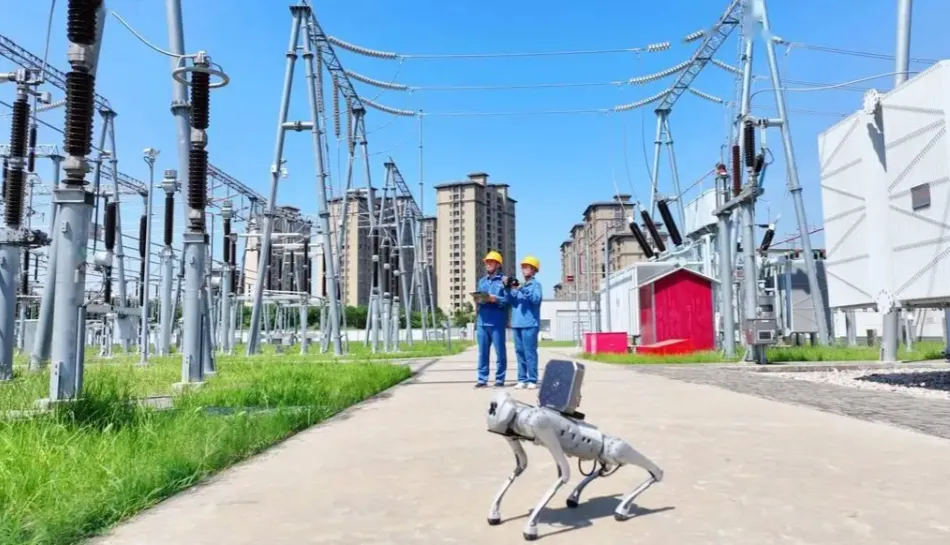
According to industry experts, existing specialised robots have formed a certain application base in fixed-flow patrol and standardization operations, but their autonomous decision-making, task-adjustment and continuous adaptation capabilities still have room for improvement in the face of environmental change, abnormal operating conditions and complex operational tasks. On the other hand, intelligent technologies such as VLAs, world models are improving robots' understanding and generalization of the open environment, but to enter the energy crisis scenario, further problems such as real-time control, anti-explosion compliance, security constraints, engineering reliability and long-term operation need to be addressed.
As a result, there is a clear market gap in the industry: there is a severe shortage of qualified, brain-powered, landing-capable, and operational vertical scenarios with intelligent solutions.
And this gap is exactly where foolish technology is trying to cut through.
At the policy level, the Ministry of Industry and Communication and the State Finance Commission of the State Council jointly launched a special operation on human-to-human robots and human-to-human-to-human-to-human-to-human-to-human-to-human-to-human-to-human-to-human-to-human-to-human-to-human-to-human-to-human-to-human-to-human-to-human-to-human-to-human-to-human-to-human-to-human-to-human-to-human-to-human-to-human-to-human-to-human-to-human-to-human-to-human-to-human-to-human-to-human-to-human-to-human-to-human-to-human-to-human-to-human-to-human-to-human-to-human-to-human-to-human-to-human-to-human-to-human-to-human-to-to-human-to-human-to-to-human-to-human-to-human-to-human-to-human-to-human-to-human-human-to-to-human-to-human-to-human-human-to-human-to-to-human-human-to-human-to-human-to-to-human-to-human-human-to-human-to-to-human-human-human-to-to-human-human-to-human-to-to-to-to-human-to-to-human-to-human-to-to-to-to-human or to be foundedge-own, and specifically allocated, and invested by the Ministry of the Ministry of the government to the government of the government of the government of the government of the government of the Ministry of the government of the government of the government of the government of the government of the government of the government of the government of the government of the government of the government of the government of the government of the government of the government of the government of the government of the government of the government of the government of the government of the government of the government of the government of the government of the government of the government of the government of the government
In addition to policy dividends, more real drivers come from the energy industry's own rigid demands.
02.
Carpathia Logic: Why is there a high energy crisis?
At gas stations, any static release of volatile gas mixed with air, any metallic spark collision can trigger an explosion hazard. At remote gas stations, workers face high-temperature high-pressure valves, injecting chemicals and pipelines that can leak at any time, a sampling, a leak, all accompanied by a negligible risk of human injury. These high-energy hazard scenarios are characterized by flammability, high-risk, low-capacity errors, etc.
The energy industry has long faced difficulties such as high-risk operations, high-intensity compliance, low-capacity errors, high costs. The traditional human resource compliance model is becoming increasingly prominent in terms of safety and efficiency. For high-risk, continuous, complex operations, it has become difficult to meet the integrated needs of autonomous perception, autonomous decision-making, and autonomous execution in complex environments with traditional automation equipment alone.
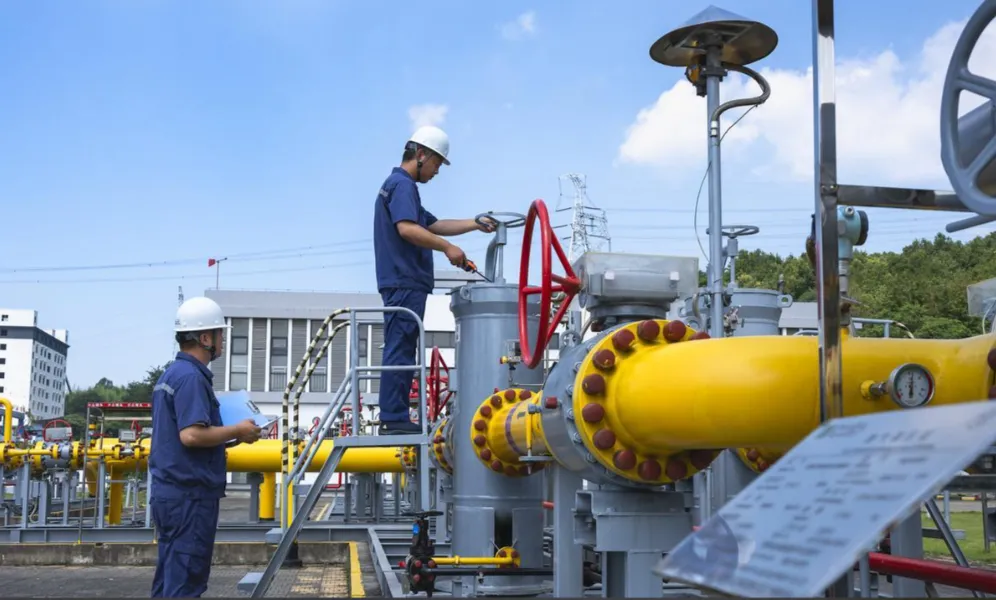
What the industry really needs is no longer robotic equipment to replace high-risk scenarios, but a suite of smart hubs that can continuously understand the on-premises environment, coordinate operational planning tasks, drive collaborative execution of multiple types of robots, and evolve in a data-closed environment.
In other words, the intelligentization of the energy industry has already passed the stage of the argument that we should not go to the robotic stage. The real question is: what kind of robotic brain is capable of entering the energy field, functioning in conformity, continuing evolution?
On 12-13 August, Beijing 2026 Energy Industry Technology Innovation Integration and Development Conference, China Oil, China Petrochemical, China Sea Oil, China China Energy and other energy-centric enterprises joined forces with Chinese companies such as Huawei, China Mobile, and Rangoon Technology. In this high-profile industrial exchange in the energy industry, Rangoon Technology entered the vision of the energy core as a robotic brain with special scenarios. The company's founder and CEO, Zhong Zhong, made it clear in a speech at the conference that Rangoon Technology has been focusing on high-specific scenarios since its inception.
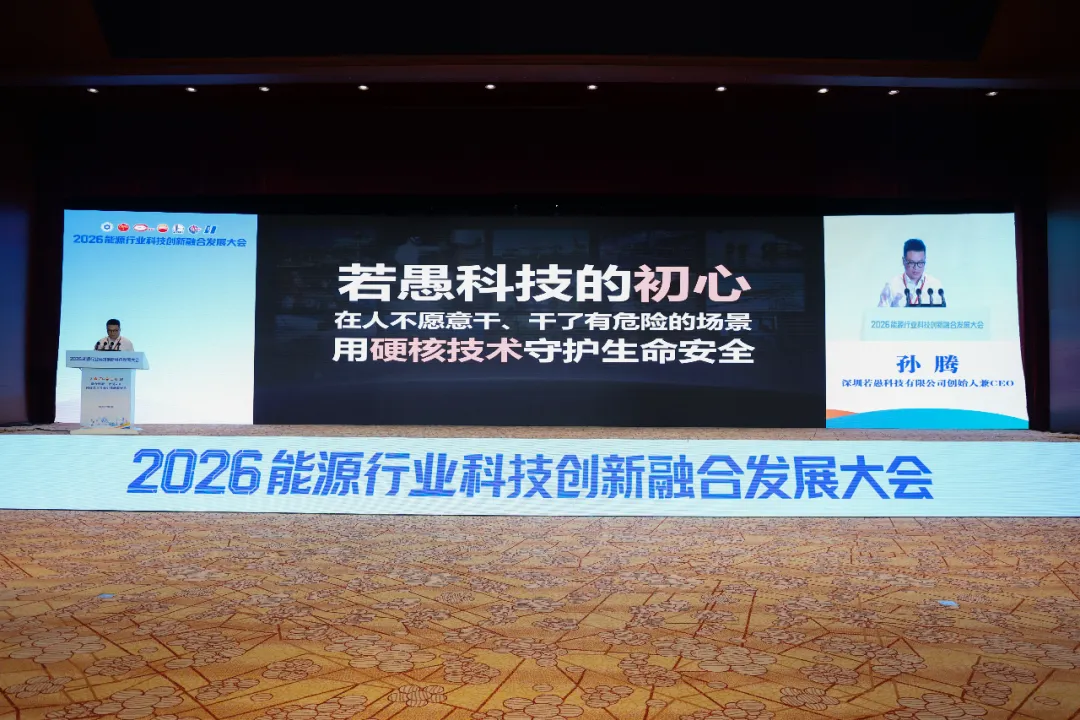
From an industry perspective, the logic of this choice is not complicated: the more difficult the scenario, the higher the barriers to access, the higher the cost of chasing the latter. But, in turn, this also means that companies must undertake longer verification cycles in terms of qualification, technology and operations.
03.
Why is anti-bomb quality the first water separator?
Today, entering these dangerous zones is a robotic anti-blast robot equipped with deep-sea robotic brains. Its manufacturer, Shenzhen-based Shenzhen-based company Liu Xiaobo Technology, was founded just three years ago. In April 2026, if a robotic anti-blast robot enters a gas station in Foshan to conduct a pilot operation, it will have a physically intelligent brain system to land substantially in special situations.
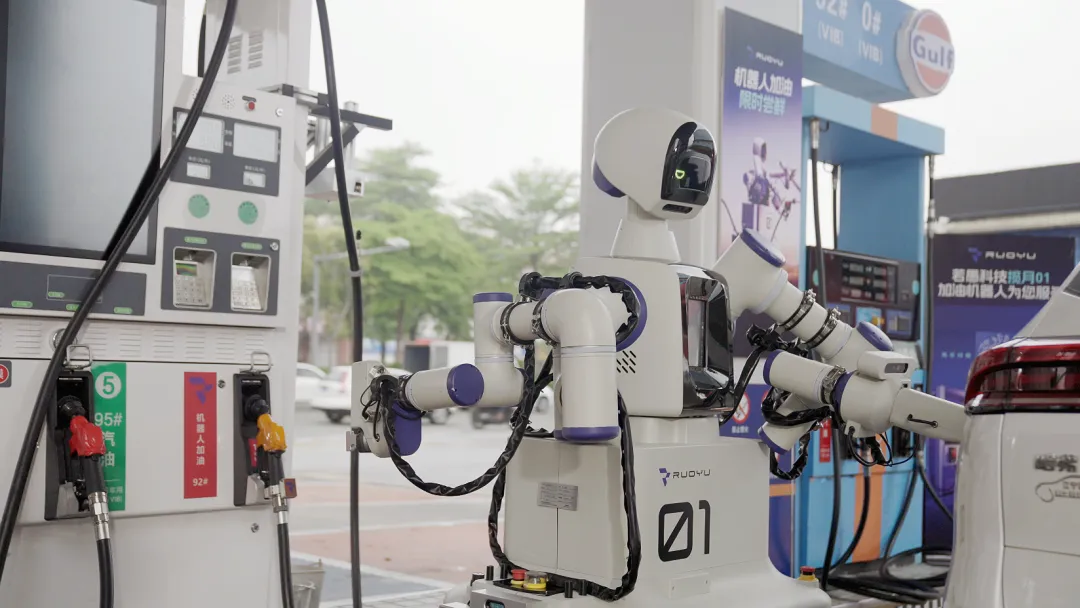
In the purchasing logic of the energy sector, any power transmission equipment entering hazardous areas such as oil and gas stations, gas stations, etc. must obtain an anti-explosion certification issued by the national authorities. This is not only a technical barrier, but also an institutional barrier to industry access.
Currently, mainstream anti-blast design is divided into categories such as positive-pressure, isolation and intrinsically safe types. The positive-pressure type relies on continuous injection of inert gas to maintain internal and external pressures, but the equipment is heavy and adaptable to high altitude; the intrinsically safe type is suitable for low-power circuits, which are difficult to support high-power drive systems for robots; the isolation type is to lock all electronic components in a cavity with sufficient strength, and even if an internal explosion does not ignite the external environment.
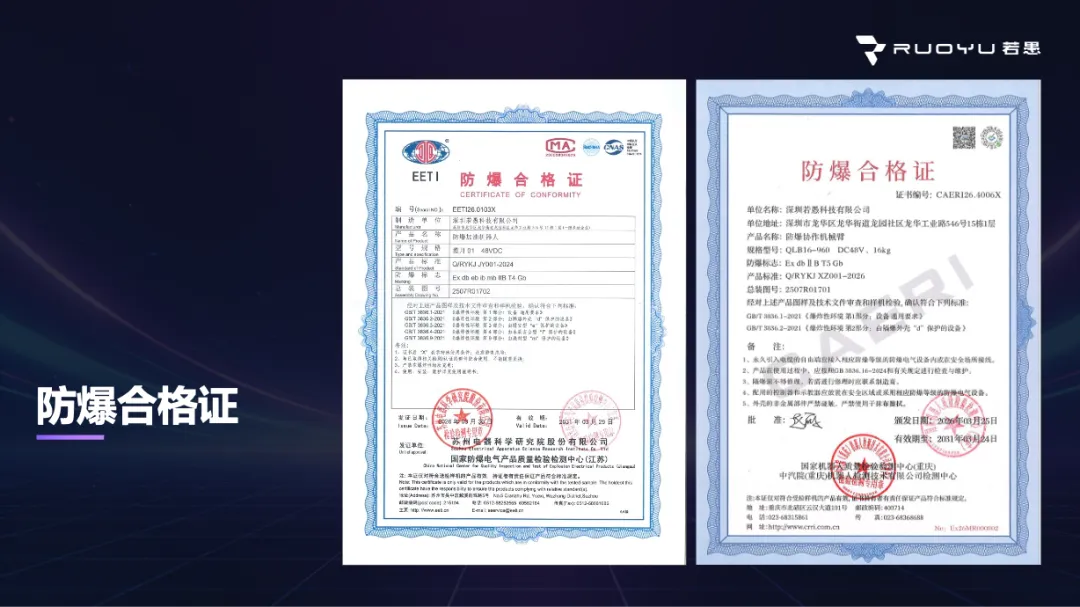
This year's time cost constitutes an unprecedented pace gap for later generations. For the month-by-month technological evolution, a one-year window is enough to allow pioneers to accumulate impressive scenario data and customer confidence. Even if later generations are more advanced in technology, this course must be supplemented with anti-bomb certification. In the meantime, pioneers have already run operational data in real-world scenarios and built awareness within customers.
More importantly, anti-blast certification is not once and for all. Different stations and different operating areas require different levels of anti-blast certification, and integrated and mechanical arms often need to be certified separately. This means that once enterprises enter the energy industry, the pace of their product transformation must be tied to the certification cycle. This institutionalization and process barriers are extremely difficult for consumer-grade robot companies accustomed to rapidly transforming. It naturally screens out players who pursue short-term technology demonstrations and lack industry patience.
04.
From hydrogen to hydrogen-operated hydrogen: the upgrading of the industry's core contradictions
In the last decade, the application of robots in the energy industry has been mainly focused on the circuit inspection link. The typical form is a wheeled or carrying robot with a cloud-based camera and a gas sensor that collects images, identifies abnormalities and generates reports along a preset route. The problem with this model is that it only completes this link of the sensor sensor sensor but does not touch the actual shutter.
To this end, the concept of robotic controlled integrated circuits, proposed by RoboCop as an innovation in robotic brain technology, actually evokes a long-standing potential need in the industry: to combine circuits and operations to allow robots to have initial disposal capabilities after discovering anomalies. At oil and gas stations, catalytic additives, samples, and other linkages, there is a great deal of harm to the human body, and typical cyclists are reluctant to intervene. These operations have been difficult to cover by automation technology because they require power control, visual guidance and multi-step decision-making, and traditional programming is unable to eliminate all possible situations.
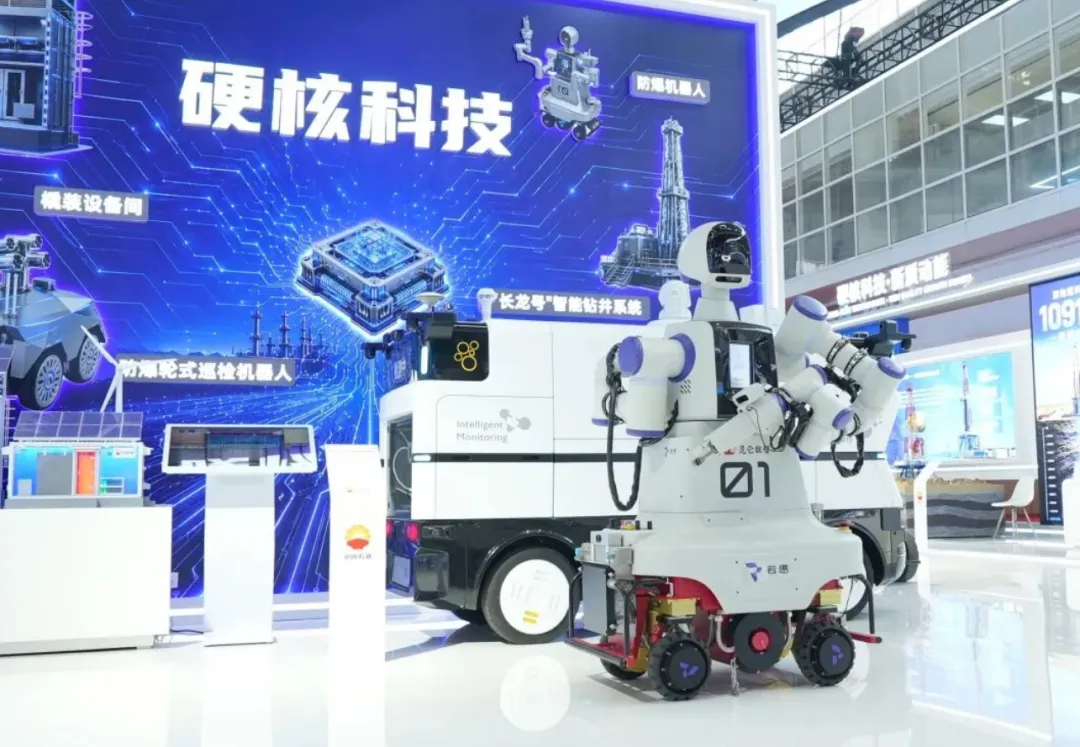
This is the potential value of having a physically intelligent brain.
Unlike conventional industrial robots, robots equipped with physically intelligent brain systems can no longer rely on predetermined trajectories, but instead rely on multi-modal perception, autonomous planning tasks, and real-time generation of action sequences. In a gas station scenario, random deviations in the parking position of vehicles, various forms of tank covers, tank lag, and other incidents, all require a certain generalization of the system.
This landing case confirms that the competitive focus of important industry trends such as robotics is shifting from the hardware kernel to the cluster brain+ scenario adapter. The hardware kernel has a highly mature supply capability that has been accumulated through decades of Chinese manufacturing. The real determinant of landing effectiveness is the brain's ability to handle long-term situations for specific scenarios.
05.
The boundaries between the competitive landscape of the industry and the state of the art
What will be the end result of the special robot industry? The key to answering this question is perhaps not just who created the most adapted bodies, but who's brain can adapt to more vertical scenarios.
In reference to the autonomous driving industry, the competitive landscape of special robotics racetracks may be one of coexistence rather than a few giants. The development of autonomous driving has led to the emergence of two main categories of automakers and suppliers of intelligent driving programs, the former of Tesla, BYD, the latter of Mobileye, Huawei BU, and companies focused on single-field, easy-to-control, mining, port, and other vertical scenarios. The logic of this sub-layer is that the complexity of the real physical world determines that it is difficult for a single company to do so in all scenarios.
The corporate intelligence industry may also form a similar cross-platform ecosystem structure. According to Sun, the industry in the future will not repeat the high concentration of the Internet, but will present a landscape where the main platform and vertical scenario enterprises coexist. One type of enterprise focuses on the essence of the robot and the capabilities of the general platform, while the other type of enterprise in highly specialized scenarios such as energy, chemical, medical, can maintain its ecological status with qualification, data and customer relationship barriers at the same time. Due to the significant differences in the requirements of different scenarios in environment, tasks and compliance, it is difficult for a single enterprise to cover all the robotic shapes and industry needs, which also provides space for independent robotic brain suppliers to develop.
In special scenarios such as energy, chemicals and others, some automakers and system integrators have realized that it is difficult to quickly cover complex and varied real-world conditions with a general model alone, and have begun to seek outside professional teams to collaborate.
If stupid technology's cardboard strategy is essentially to seize a node that is the hub of the smart grid in this vertical raceway of energy. Sun Liu uses an Intel metaphor: Liu makes the robot's host plant run on the Powered by stupid logo.
06.
What is the meaning of this verse?
The competition for special robots is shifting from robots that are not robots to robots that are not robots that can actually enter the industry. In this transformation, companies that are able to lead the way in quality certification, scenario verification and data accumulation will take the lead in the industry's rebranding.
If dumb tech provides a vertically in-depth example: in the event of a breakout qualification as a ticket, the cloud-side-end architecture is limited to adapting to high-risk scenarios, to accumulate critical data in real-life scenarios. This path may not be fast, but every step is building barriers to access that competitors cannot replicate in the short term.
Whether or not this logic will eventually be established depends on its continued performance in real-world scenarios, rather than on single-point technology or qualities themselves. For the industry, the practice of foolproof technology is more like a stress test: the answer is becoming increasingly clear about what kind of robot brains are needed when concepts are in decline, when energy crisis scenarios are high.