

In 2026, there are two levels of numbers that are still surprising: there were 256 domestic financing events in the first half of the year, with a total financing of about 95.3 billion yuan. Data source: high-tech robots are not fully statistical; the cumulative output of the head robotics enterprises exceeded 15,000 units.
Based on product usability requests, industrial pain point analysis, first-line collaborator questionnaires, the robot has developed a clear path to technological transformation.Lumos MOS 2.0, the world's first 50 downloadkgIt's the world's second-biggest robot.
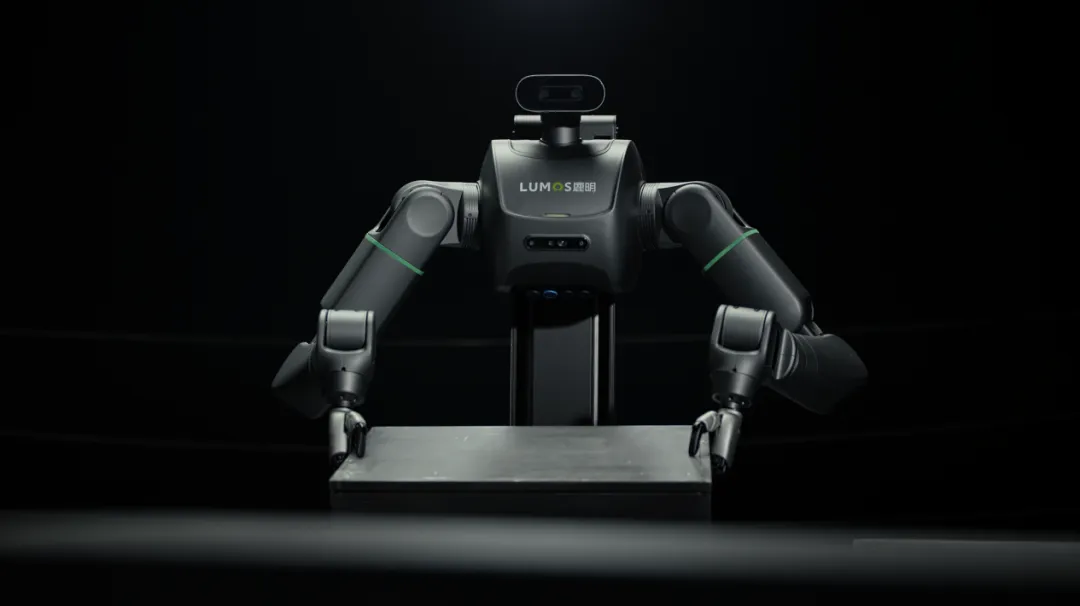
MOS 2.0 arms carrying 50 kg of weight
It's not the only answer.
“The Wheel ArmApprovedOrdersWinning
These five canes are not unique to robot deer. They are the chasm that the entire intelligent industry must cross from the technology-verified canes to the commercialized landing craft.
A core non-consensus view has been repeatedly verified: the optimal shape of robots today does not necessarily have to be the shape of robots. Most industrial customers at this stage will prefer the turbocharged chassis + two-arms chassis scheme to cover the vast majority of today's standardized industrial conditions.
Morals are not complicated. In flat factory workshops and logistics warehouses, the mobility efficiency of wheeled robots is much higher than walking on two legs; in an industrial scenario that requires precise operation and flexible access, the operational capability of the two arms is superior to that of the single arm.
That's exactly what I'm trying to say.Logic of the silicon industryThe value of physical intelligence must be tested on a real production line, allowing scenarios and tasks to determine the shape of the robot.
The industrial scene is the first stage in the exercise of physical intelligence technologyBecause the data here is the most authentic, the most rigorous, the most stressful, and the most iterative. It's only when robots prove themselves on the production line that they can function, that they can create value chains, that they can really open the door to a broader scenario.
MOS2.0
Five answers to five questions
MOS 2.0 is a deep transformation and full evolution towards commercialized landing that has been demonstrated by MOS1 in industry-first places, such as Samsung Motors, including flexible destination arrival, end-to-end mission adaptation, rapid learning and skill deployment, multistage and cross-station operation scheduling, multi-sensor integration perception, simplified deployment, and more.
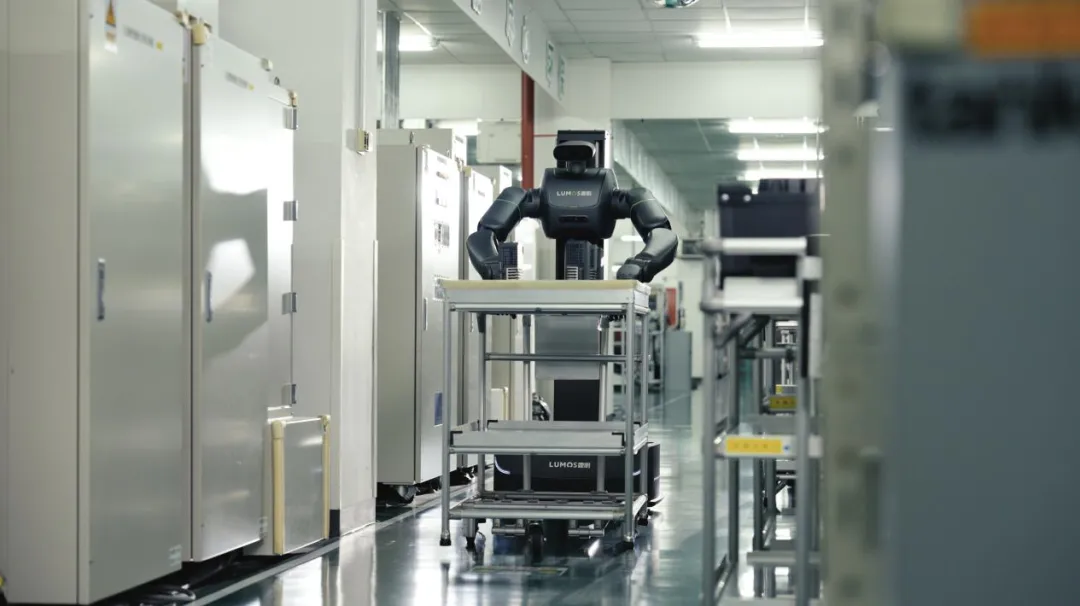
MOS 2.0 performs material transportation tasks in real production scenarios
Currently, the load capacity of most wheeled robots on the market is around 16 kg, with a maximum load of 50 kg, which means that MOS 2.0 can directly access the blind areas of traditional automation equipment such as heavy-duty material transport, visual quality testing, flexible assembly, patrol operation, and new energy charging.
MOS 2.0 is 1.65 meters high, covers an area of 0.5 square meters, theoretical channel width is only 0.8 meters, adapted to the needs of industrial landscape linear spacing. 22 degrees of freedom, new dual-freedom head and all-directional disc, operating altitude covers 0 to 2000 mm. The bottom double multi-line laser radar, wrist double camera and two six-dimensional sensors, head double-lens camera, combined with the top rear radar and chest depth vision accessory sensor matrix, makes MOS 2.0 capable of sensing six-way beams in complex industrial environments.
In response to these five challenges, it is necessary to rebuild the ability to systematize.
Answer one: The ability to generalize.Traditional robots are automated devices that execute fixed programs, and today's manufacturing industry is moving towards a multitude of varieties, small batches, high flexibility, and more and more scenarios that cannot be solved through fixed programs.
What customers need is not a machine that can only do one action, but an excellent employee who is quick-witted, subjectively energetic, and has the ability to learn.
The paradox is captured very sharply: it's not that robots can't do a lot of industrial tasks, it's that robots of the past lack some sort of ability to do a lot.The ability to learn from experience.”
The solution to MOS 2.0 is a modular skill system. Based on three types of replicable skills: body movement, tool integration, and coordination with external equipment, a robot can cover a variety of tasks such as precision mass testing, storage code filtering, patrol operation, screw locking, and charging gun extraction.
The three skills do not exist in isolation, depending on the NexusCore platform, which can be packaged, sorted, iterated, and called freely according to business needs. From switching lines to switching skill sets, from switching to multi-power switching, a hardware entity can cover multiple types of tasks through skill iteration, effectively reducing the cost of purchasing hardware in multiple scenarios for enterprises.
Answer 2: Efficiency issues.Efficiency is the first priority in the industrial landscape.
In a precision manufacturing inspection scene,MOS 2.0 relies on a full set of detection procedures such as millimeter-level scanning precision, high-precision power control and machine vision perception, covering dimensional bit measurement, surface defect detection, installation to site verification. 7×24 hours of continuous operation, the detection efficiency is upgraded several times over traditional man-made sampling.
In the warehouse logistics scene,MOS 2.0's all-directional mobile dashboard is equipped with 50 kg of overload capability, automatically plans the best path to the target position after receiving instructions, achieves unmanned automatic scheduling, allows for flexible avoidance and diversion in narrow shelf corridors; visual system real-time recognition of shelf position, dynamic adjustment grab strategy; modular end-user executors respond quickly to different specification boxes, complete the selection of boxes, transfer of containers in the box, multi-layer cargo high-precision codes.
Response 3: deployment costs.The customer does not want a six-month experimental research kit, but an off-the-shelf production tool.
MOS 2.0 is an industrial native from the beginning of the design, and MOS 2.0 provides standardized SDK document guidance and a graphical task sorting system that enables customers to quickly complete scene adaptation without having to develop from scratch, without having to deploy a large team of engineers. Wireless remote control adapts support for ultrasound and remote control, further reducing the cost of field modeling and time.
Answer 4: Easy to use and reliable.Industrial sites don't need expensive samples in the lab. Customers need a robot that can work hard and have a healthy body.
The MOS 2.0 integrated line beam has been tested over 5 million strong bending endurance experiments (the next goal is tens of millions of times) to ensure that long-term repetitive movements do not fail; fully concealed inline running line design has been designed with the aim of not repairing brakes, both aesthetically and significantly reducing the maintenance frequency; inline inline inline inline coolant thermal combined arm ventilation design, coupled with special hydrothermal gel and thermal insulating stickers, to take full advantage of the continuous performance of self-developed planetary joint modules.
Answer five: Stability.Stability is the lifeblood of industrial automation. An unplanned outage may mean that the entire production line is disrupted, delivery delays, and cost increases.
The stability of MOS 2.0 was not developed in the laboratory, but in the real-life production line, where the MOS1 was copied and checked on site by strategic partners such as Samsung Motors from 0 to 1, a backstory of practice based on real production environments, a credential that no simulated data can replace.
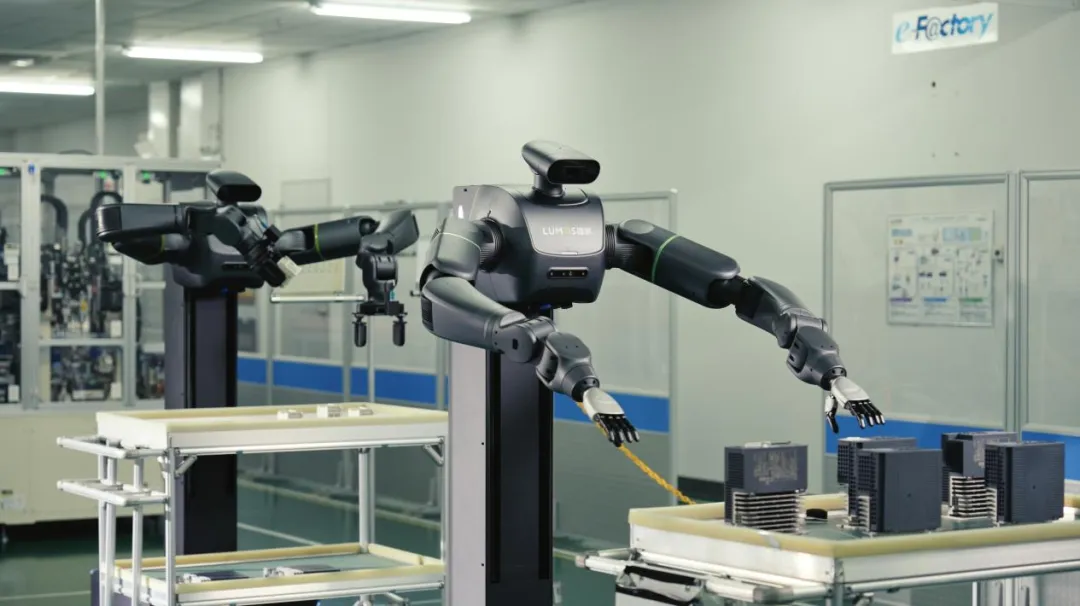
MOS 2.0 performs flexibility testing tasks in real industrial scenarios
On this basis, MOS 2.0 further upgraded the sensor configuration and sensing capabilities, allowing robots to maintain stable sensing and precise operation in complex dynamic environments, with standard French disc and integrated interface designs allowing for quick replacement of end-to-end workpieces and reduced downtime.
It has been repeatedly emphasized:The final value of MOS 2.0 should be reflected in the customer's accounts.When a robot is able to operate 7×24 hours a day, change shape quickly, and learn new skills independently, the ROI becomes a clear, calculable financial statement.
The MOS 2.0 defined by the robot is not a fixed-action machine, but an industrial skilled worker with healthy body muscles and the ability to learn muscles. This is also the systematic answer to the fundamental question of what the robot muscles really need in an industrial setting.
The philosophy of the over-the-top aluminum industry
Putting robots on the production lineContinued evolution
With over a decade of experience in intelligent robotics research and development and industrialization, he led the development of the world's first mass-produced robotic mouse mouse mouse mouse mouse mouse mouse mouse mouse mouse mouse mouse mouse mouse mouse mouse mouse mouse mouse mouse mouse mouse mouse mouse mouse mouse mouse mouse mouse mouse mouse mouse mouse mouse mouse mouse mouse mouse mouse mouse mouse mouse mouse mouse mouse mouse mouse mouse mouse mouse mouse mouse mouse mouse mouse mouse mouse mouse mouse mouse mouse mouse mouse mouse mouse mouse mouse mouse mouse mouse mouse mouse mouse mouse mouse mouse mouse mouse mouse mouse mouse mouse mouse mouse mouse mouse mouse mouse mouse mouse mouse mouse mouse mouse mouse mouse mouse mouse mouse mouse mouse mouse mouse mouse mouse mouse mouse mouse mouse mouse mouse mouse mouse mouse mouse mouse mouse mouse mouse mouse mouse mouse mouse mouse mouse mouse mouse mouse mouse mouse mouse mouse mouse mouse mouse mouse mouse mouse mouse mouse mouse mouse mouse mouse mouse mouse mouse mouse mouse mouse mouse mouse mouse mouse mouse mouse mouse mouse mouse mouse mouse mouse mouse mouse mouse mouse mouse mouse mouse mouse mouse mouse mouse mouse mouse mouse mouse mouse mouse mouse mouse mouse mouse mouse mouse mouse mouse mouse mouse mouse mouse mouse mouse mouse mouse mouse mouse mouse mouse mouse mouse mouse mouse mouse mouse mouse mouse mouse mouse mouse mouse mouse mouse mouse mouse mouse mouse mouse mouse mouse mouse mouse mouse mouse mouse mouse mouse mouse mouse mouse mouse mouse mouse mouse mouse mouse mouse mouse mouse mouse mouse mouse mouse mouse mouse mouse mouse mouse mouse mouse mouse mouse mouse mouse mouse mouse mouse mouse mouse mouse mouse mouse mouse mouse mouse mouse mouse mouse mouse mouse mouse mouse mouse mouse mouse mouse mouse mouse mouse mouse mouse mouse mouse mouse mouse mouse mouse mouse mouse mouse mouse mouse mouse mouse mouse mouse.
Compared to traditional robots and automation technology, it is widely believed that the biggest change in this generation of artificial intelligence is:Data-driven as the core technology, with a common hardware platform as the carrier, and the ability to solve open-scenes problems through continuous learning.
He had a straightforward judgment that once he entered the industry, the real competition would revolve around four dimensions: universal hardware costs, data acquisition efficiency, model generalization capabilities, and industrial delivery efficiency; who can do more real tasks more efficiently, who can win.
Today, MOS 2.0 is the complete landing of the concept from conception to the production line, taking on the hardware responsibilities of performing real industrial tasks.
But in the industrial hardware body of the robot, hardware is just the beginning. The real evolutionary capability comes from another core puzzle: Lumos NexCore, which provides a systemic foundation for continuous learning and skill evolution of robots.MOS2.0The NexCore, which is equipped with the Intelligent Evolution Engine, will also be officially launched at the WRC site.
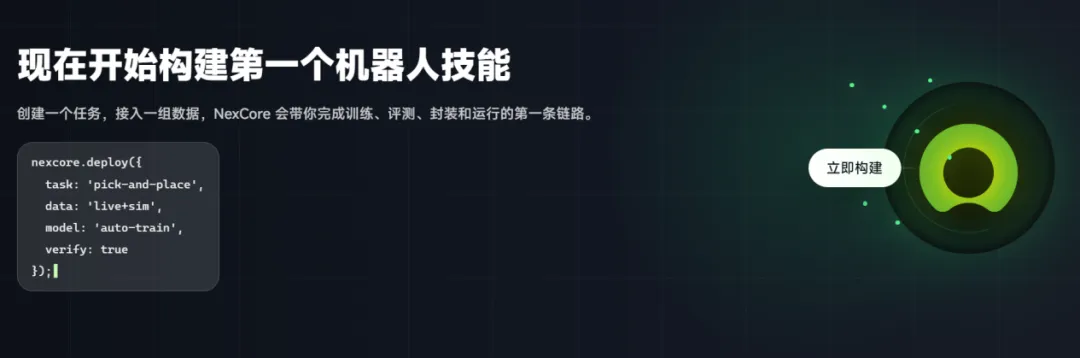
NexCore One-Stop Robot Skills to Build the Development Interface
The key to the future of robot competition is not who owns more robots, but who has the ability to keep them evolving.
As robots enter the age of skill evolution, new questions arise: how do robots acquire skills? how do skills continue to be optimized? the ability of a robot to learn, how to quickly replicate to more robots and more industrial scenarios?
If MOS 2.0 is a robust bodybuilder, then NexusCore is a continually evolving brainbuilder. The core value of this platform is that it enables robots to be called, trained, and verified like a cloud service using a fishing rod.
The survey found that industrial customers have a strong need for data security, personalized skills and self-learning capabilities: industrial scenario data is valuable, processes are diverse, product lines change frequently, and general models and skills are often not 100% suitable for new users.It's a data asset platform, a model training platform.EvaluationThe systemSkills management and robotics operationsThe five collaboration modules allow customers to create exclusive skills based on their own experience in the industry, implement one-stop training and deploy them to real-world applications.
This makes MOS 2.0 a flexible work carrier that can continuously define new capabilities through software, making it possible to truly move from hardware vending to hardware vending.
It's a bit of a mess.,I'm going to the AI Worker.
The robot has a deeper definition of the future: the robot of the future will become a new intelligent production partner, like an ever-growing industrial worker: entering a new environment, learning new tasks; completing new jobs, accumulating new experiences; each time it is executed, it drives the next capacity upgrade.
This is the kind of AI worker that robots understand. It's not limited to form, what's really important is whether it can understand tasks, adapt to change, and continue to create value.
The value of being physically intelligent is not in being able to walk cool, but in being able to stay on the production line for a long time, to do a lot of living, to create a lot of value. MOS 2.0 is proving that when a robot actually goes into a factory, picks up materials, goes through quality checks, completes tasks, it is no longer an exhibit in a lab, but an AI Worker on the production line.
And that's exactly what a deer-eating robot and a super-eyed, physically intelligent person should look like.