If the robot is shortened to a few millimeters, the first thing that may disappear is not the mechanical arm, but the engine shell.
Batteries are nowhere to be plugged, motors are limited in size, and it is difficult to pull wires and move freely in narrow environments. So micro robots have always had a very real question: the body gets smaller and smaller, where does the power come from?
The Zhejiang University Super Team recently released a new program that gives power to the soundtrack.
They built a spiral robot about 6 mm long and 2.5 mm in diameter. The robot itself had no batteries and no conventional motors, and an external pressure switch generated an ultrasonic field to provide power and directional control.
It can move forward in the tube, rotate at high speeds, or climb 30°, 60° slopes, completing 90° vertical movement; after entering S- and Y-shaped complex passages, it can also rotate and select a path. Finally, the researchers sent it into an isolated pig vein about 3 mm in diameter, which still completes forward and reverse reversion.
In a sense, a prototype of a millimetre-grade silicon-vascular shield-building shell has emerged.
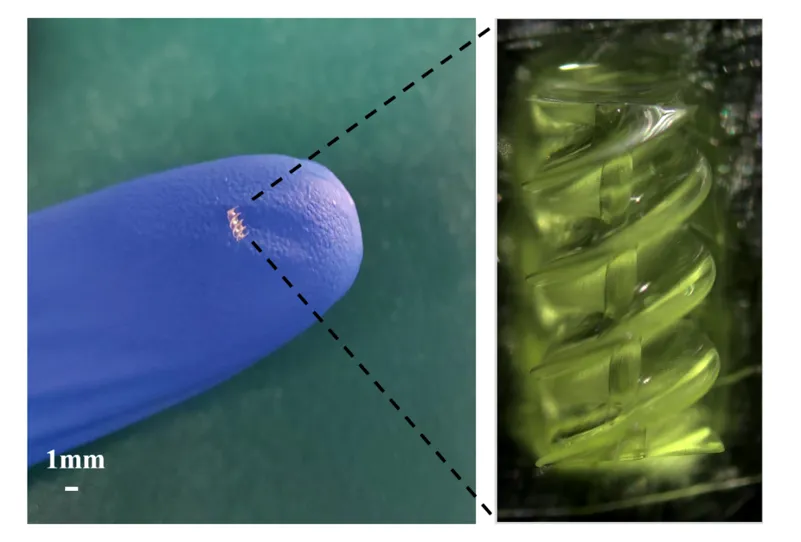
Millimeter-scale helicopter robot under the microscope
The study was recently published in Elsevier's journal Ultrasonics, titled Acoustic-driven millimetric helical robot: Ultrasonic synergistic manipulation in confined fluidic environments.

The study was led by Zhejiang University's National Key Laboratory for Industrial Control Technology, Intelligent Systems and Control Institute, and was conducted in conjunction with Zhejiang University's Zhejiang Institute of Technology, Zhejiang University School of Pharmacy, Zhejiang University School of Professional Technology, and Zhejiang Teaching University.
01.
Without the engine, the sound is the engine.
It's not complicated to look at this robot.
It is 6 mm long, 1.5 to 5 mm in diameter, and surfaces around a spiral groove, like a shortened screw. The device that drives it is outside. The researchers placed four independently controllable PZT voltage switches around the sink, working mainly in the range of 45 to 55 kHz. By changing the activation composition, frequency and phase of different switches, the sound pressure and flow field around the robot will also change.
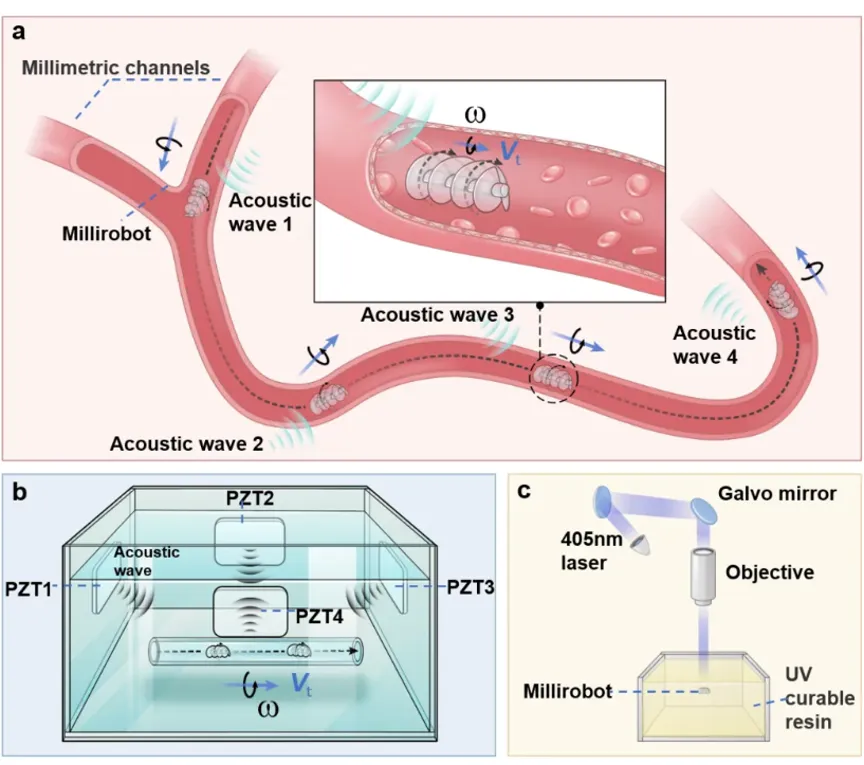
Specifically, robots really run, mainly on two forces.
The first is the acoustic radiation force.
When a sound wave hits a robot, it is scattered and reflected, while completing its motion. For a robot, the equivalent of an external sound field directly gives it a thrust torque that can be controlled in direction.
The second part is Acoustic Streaming.
High frequency sound waves continue to oscillate in the fluid, and some of the acoustic energy is converted into stable fluid motion due to the effects of frictional dissipation and boundary layer effects. The fluid flows along the robot's spiral structure, further allowing the robot to spin and propel.
One push, one turn, and the spiral structure turns the rotation into forward motion.
Thus, the power chain of the conventional robotic lithium-ion battery lithium-ion batteries that transmits lithium, where it becomes: extracorporeal pressure power converters → ultrasonic fields → sound radiation power + sound flow → robot rotation and motion.
What's really important is that the team further discovered through multi-physical field simulation and PIV particle image acceleration experiments that when multiple PZTs were simultaneously engaged in work, synergies between the sound fields could be formed, significantly amplifying the flow field; changing the activation combination, frequency and phase of the converters, and reshaping the sound field.
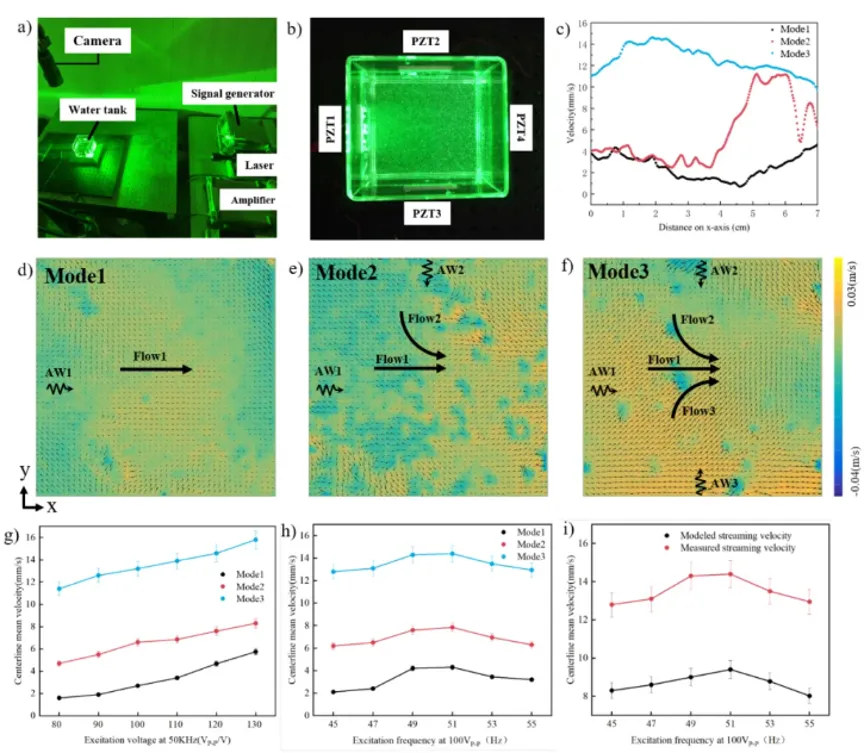
This means that if you want a robot to change its movements, you don't have to change a robot to reconstruct an external voice field.
02.
It's not just going forward, it's starting to filter the road.
For vascular robots, speed is important, of course, but it is far from enough.
True blood vessels are not a straight-glass tube. It can bend, twist, and change direction. A tiny robot that only bounces along a straight line will be hard to use again.
Therefore, dynamics is also an important indicator for biomedical applications.
In microfluid channels of different angles, the robot completed horizontal movement, 30° and 60° tilt movement, and vertical propulsion in 90° direction. It further complicated the environment and entered S- and Y-shaped channels.
The S-shaped corridor test is a continuous filter. The Y-shaped corridor test is a route option (to get to the corridor, the robot must decide left or right).
The team's method is still not to give the robot an extra steering wheel, but instead follows a semi-autonomous path, switching the PZT switches at different locations, re-adjusting the sound field, and changing the direction of the thrust.
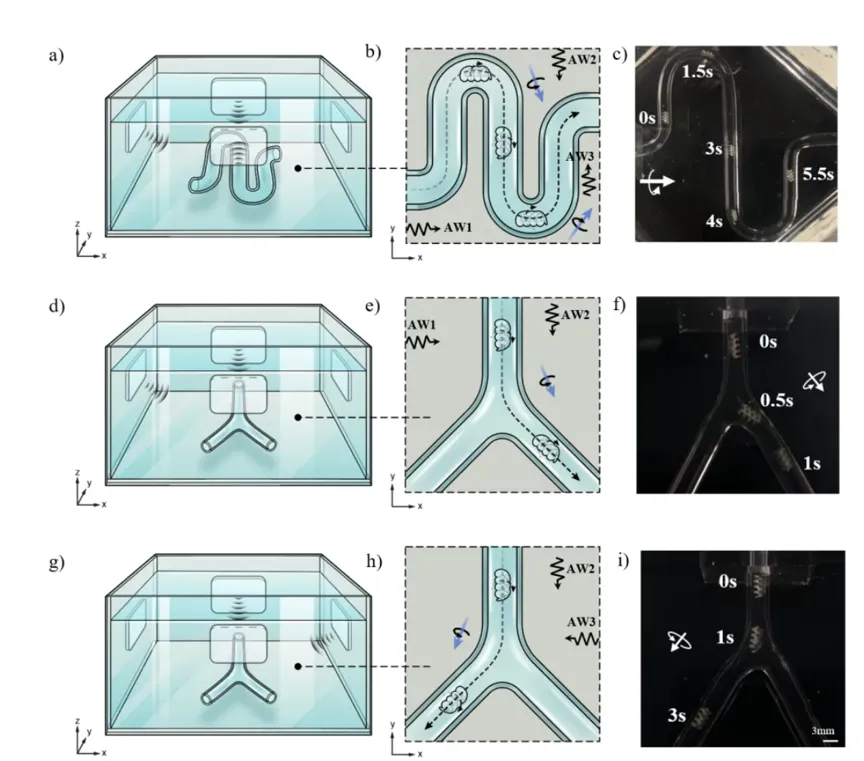
The performance crossover is equally evident.
Compared to a public similar study of about 100 μm/s, the robot reaches about 12 mm/s in a biovascular environment, about a hundred times faster; in ordinary pipelines, it can reach up to 100 mm/s and rotate close to a mile per minute.
More importantly, it has not only moved forward in a straight line, but also achieved horizontal, inclined, vertical, turning and turning movements.
As you can see, acoustics controls the past, not just the speed, but also the scale threshold from micrometers to millimeters, from the powered pump to the controllable pump.
03.
The real link: 3 millimeters of pork veins
The complex movements of robots are ultimately not meant to make robots operate in pipes. It's really targeted at micro-operations within the blood vessels.
Cardiovascular disease is still one of the world's leading causes of death, with blood clots causing blood clots being an important cause of acute conditions such as heart attack and anemia. For millimeter-level robots, if they can be positioned and controlled in real time in the body in the future, they can deliver drugs directly to the vicinity of the pathogen, even with imaging, sensing or sampling modules, into deeper, thinner branched blood vessels.
Therefore, the real question that needs to be answered in the study is: can artificial tubes run instead of real blood vessels? Because blood vessels are not glass tubes. It is soft, elastic, and absorbs and decreases sound waves; there is friction between robots and blood vessel walls, and the entire sound field changes as a result.
So the researchers found a freshly dissociated pig vein.
Testing with a vein with a diameter of about 3 mm, a robot with a diameter of 2.5 mm is already quite close. The robot first progresses through the glass tube, reaching a speed of 19.1 mm/s; after crossing the glass tube at the intersection with vascular tissue, it has no apparent strain, and the velocity in the vein still reaches 17.4±0.5 mm/s, about 91% of the original speed.
It's more like a real pumpkin remote control cabin.
After the robot enters the vein, the researchers reverse the direction of the sound field. It slows down until it stops, then turns backwards, reaching a maximum reversal speed of 9.7±0.5 mm/s and finally returning to the starting point in about 9.5 seconds.
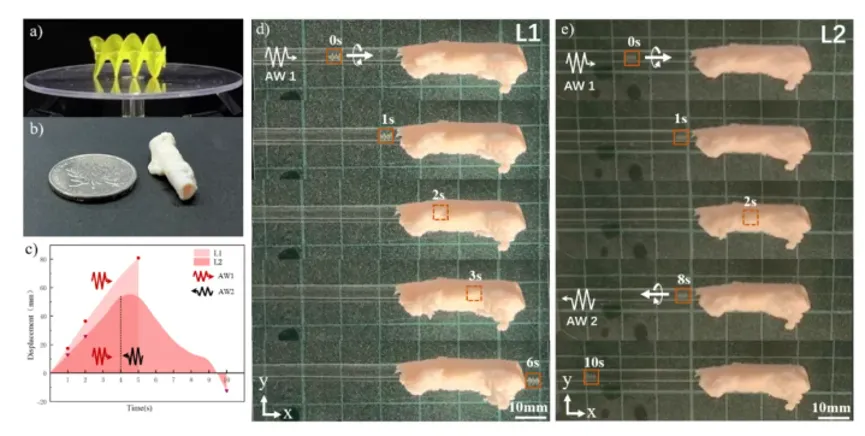
This step is more important than simply refreshing.
From static glass tubes to the flexible fissile pork veins; from being able to navigate only forward, to being able to turn around, to be able to turn around, to be able to navigate the navigational functions of a catfish's eggs, to a sound wave screwdriver that floats like an E. coli, which is a little bit closer to the real blood vessel environment.
Perhaps in the future, it will not only be a pump delivery pump in the blood vessels, but also a scout pump near a blood clot and a pump construction team pump: first find the clogs, then send the medication to where it's most needed, and even, with existing pipes and pumping devices, complete more precise local treatments, relying solely on the sound of the pumps we can't see.
04.
The Future and the Word
Seeing here, it's easy to continue to imagine the next scene of a fast-spinning millimeter robot arriving at the pathogen along the blood vessels, spinning at high speeds near the blood clot, completing local therapeutic work like a micro drill.
But this step hasn't happened yet.
The study has not yet conducted a blood clot breakdown experiment, nor has it entered live animals. The pig vein test is still performed in isolated, static, no real blood flow conditions. After actually entering the human body, the robot also faces blood flow shocks, pulses, wall cuts, and more complex blood-thinning robot interactions.
Ultrasound safety is another threshold. Current experiments do not observe any apparent vacuuming, bubble formation or macro tissue damage, but further assessments of vocal strength, tissue decay, local temperature rise and long-term biological effects are needed to move to the living organism. Real-time imaging, closed-loop navigation and material biocompatibility also need to be addressed.
So, more accurately, today's prototype is not a robot that can actually drill a blood clot, but a mechanical prototype of a millimeter-scale cervical shielding machine.
But this does not diminish the significance of this work.
It means that acoustic manipulation starts from micron-level liquid droplets, particles and microstructures to a millimetre-level functional robot that can move, rotate, and select high-speed paths through complex channels and into a real bio-vascular environment.
When the scale of the robot is reduced, the power and control systems need not be integrated into the robot itself simultaneously, but can be provided by an externally programmable voice field, which reduces the complexity of the robot structure and provides new technical pathways for wireless, non-contact drive.
In the future, after further microscopy, physiological blood flow verification, closed-loop imaging control and systemic safety evaluation, the platform is expected to provide a new research basis for applications such as targeted drug delivery, intra-vascular pathogen detection and thrombosis-assisted therapy.
Link to the paper:https://doi.org/10.1016/j.ultras.2026.108233