Over the past two years, if one of the most crowded racetracks at a robot show were to be chosen, it's probably the gymnastics, running, dancing, back and forth, walking from both legs to full body control, and robotics companies have been proving with more complex movements that a machine is becoming more like a person who can freely move.
But this year's WAIC, a less visually impactful move, is becoming increasingly important:
Get something.
We tried to unravel this strange backward technological trend with the example of three very typical enterprise demos.
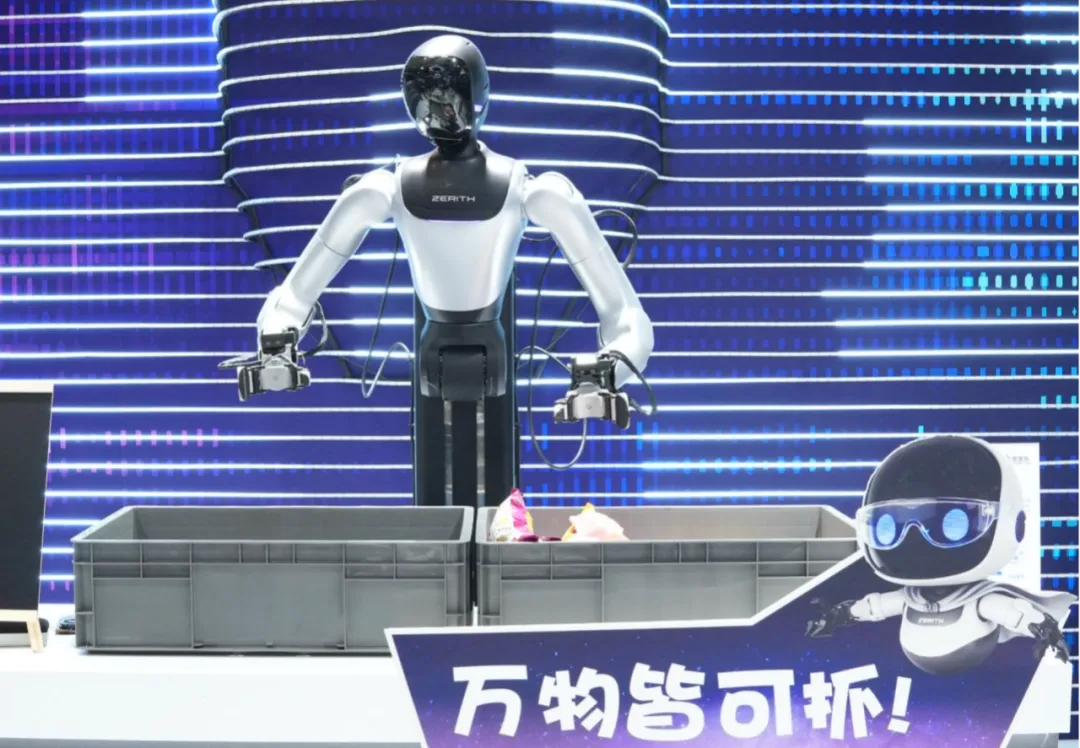
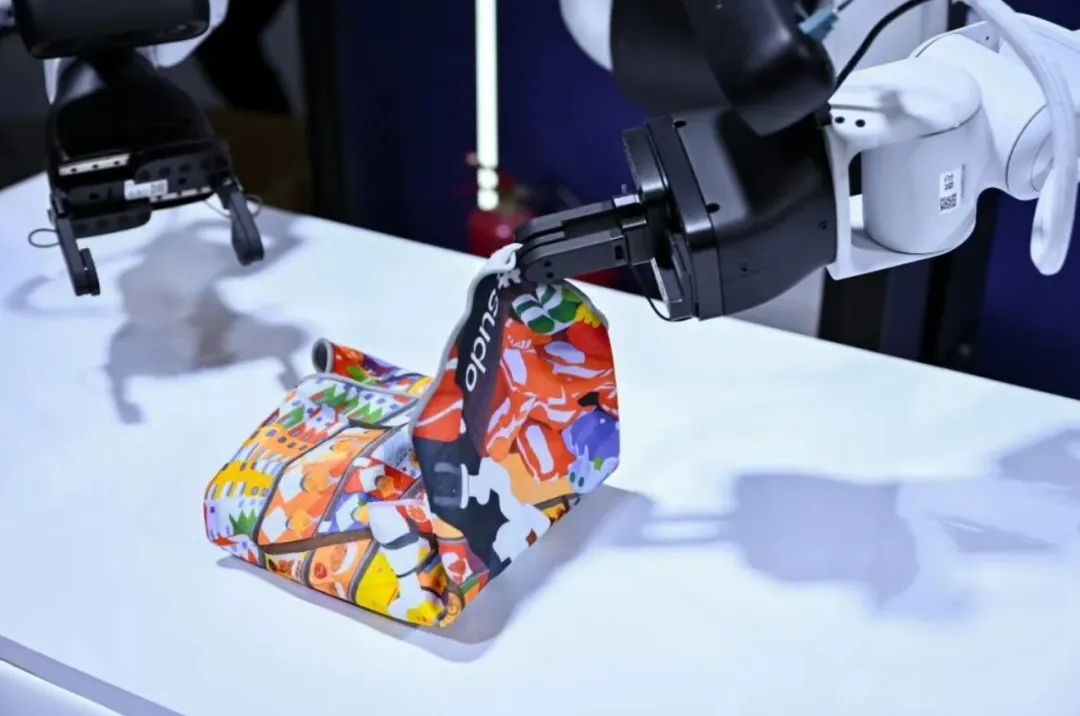
This year, robots at Sudotech stood in front of the workbench, continuously grabbing unknown organisms, handling flexible materials, surrounding the crowd, and watching the video is still very surprising:
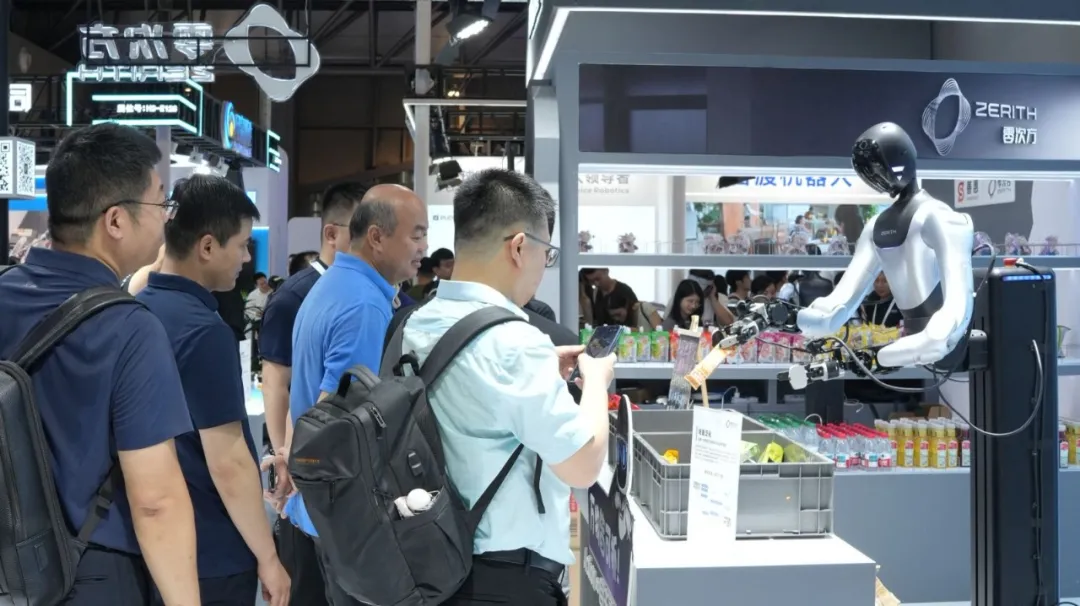
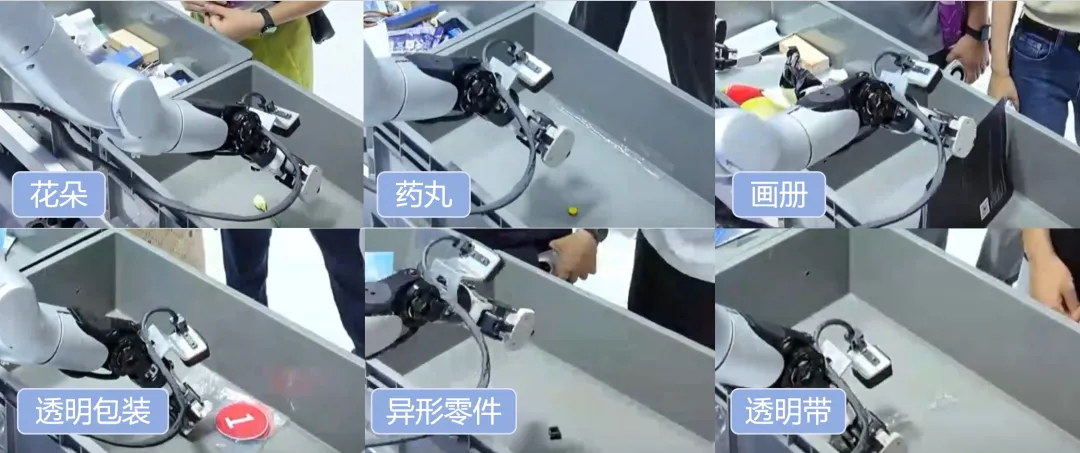
Zero Seconds is simply turning the stand into a public challenge, inviting viewers on the ground to bring out all kinds of things that robots can grab directly, from conventional goods to chocolate beans to soft, transparent bands that robots can easily grab:
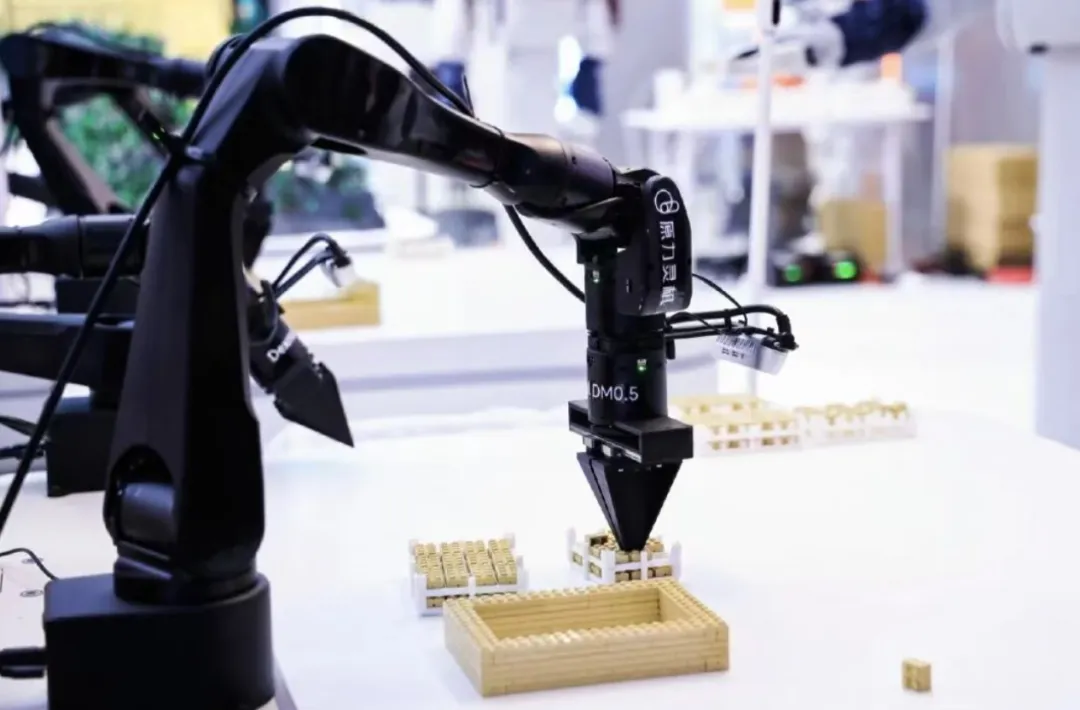
Using six robots of different configurations, the power machine grabbed the blocks for 15 hours and assembled a wall made up of 81920 small blocks:
They all seem to be doing the Picking thing, but as the Robotics Workshop observed, the three companies are essentially answering three different questions and going three different paths.
To conclude, we think that the answer is whether the ability of robots to grow like big models through simulation data and scaling is constant; zero-dimensional is putting the problem into the real physical world, trying to explore whether it can rely on mass-real interaction data, find Action's Scaling Law and achieve everything that can be captured, pushing intelligent physics to capture APIs; dynamic machines are trying to answer whether a set of models can work in a long enough, complex enough, real task.
A consensus at WAIC this year is that in the past, the industry first needed to demonstrate robotic pumps; now, more and more companies are beginning to demonstrate that robotic pumps are capable of powering pumps. From robotic pumps to powered pumps, it is likely that the simplest and most basic Pick & Place technology needs to be crossed first.
01.
Pick & Place, why is it such a hard fight?
Cracking, of course, is not a new problem in the robotics industry. Machine arms in automotive factories grab doors, robots in 3C factories grab parts, robots in logistics warehouses grab packages. Industrial automation in the last few decades has essentially solved a lot of cracking problems.
The real difficulty is that, in turn, robots are no longer adapting the world to robots, but are adapting it to a changing world. For example, a cup can be placed or dropped; a dress is shaped differently each time it appears; transparent glass, reflective metals, flexible cables can directly disable traditional vision; the same object is touched by people next to it, and the planned trajectory can be ruined.
As a result, today's rethinking of Pick & Place by physically intelligent companies is no longer about whether a robotic arm can hold a thing, but about whether a robot can face a changing open world where it can perceive, judge and execute itself.
That's why this seemingly decades-old robotic capability is becoming a test piece again with a physically intelligent landing. Because it's simple enough for viewers to see success or failure at a glance; it's complex enough for a seemingly simple take-and-drop, behind-the-scenes test of visual perception, spatial understanding, grab-and-go prediction, game planning, real-time control, and re-decisioning after failure.
More importantly, it is close enough to commercial value. Logistics needs to grab the packages, manufacturing needs to grab the parts, retail needs to take the goods, household services need to keep cups, clothing, dining and all sorts of garbage.
If walking solves how robots arrive at work, then picking solves what robots can do after they arrive. So it's worth noting this year at WAIC that robots aren't just starting to practice collective crawling.
02.
Three types of enterprise, three types of capabilities
(1) Scale technology: Simulation can make robots scale
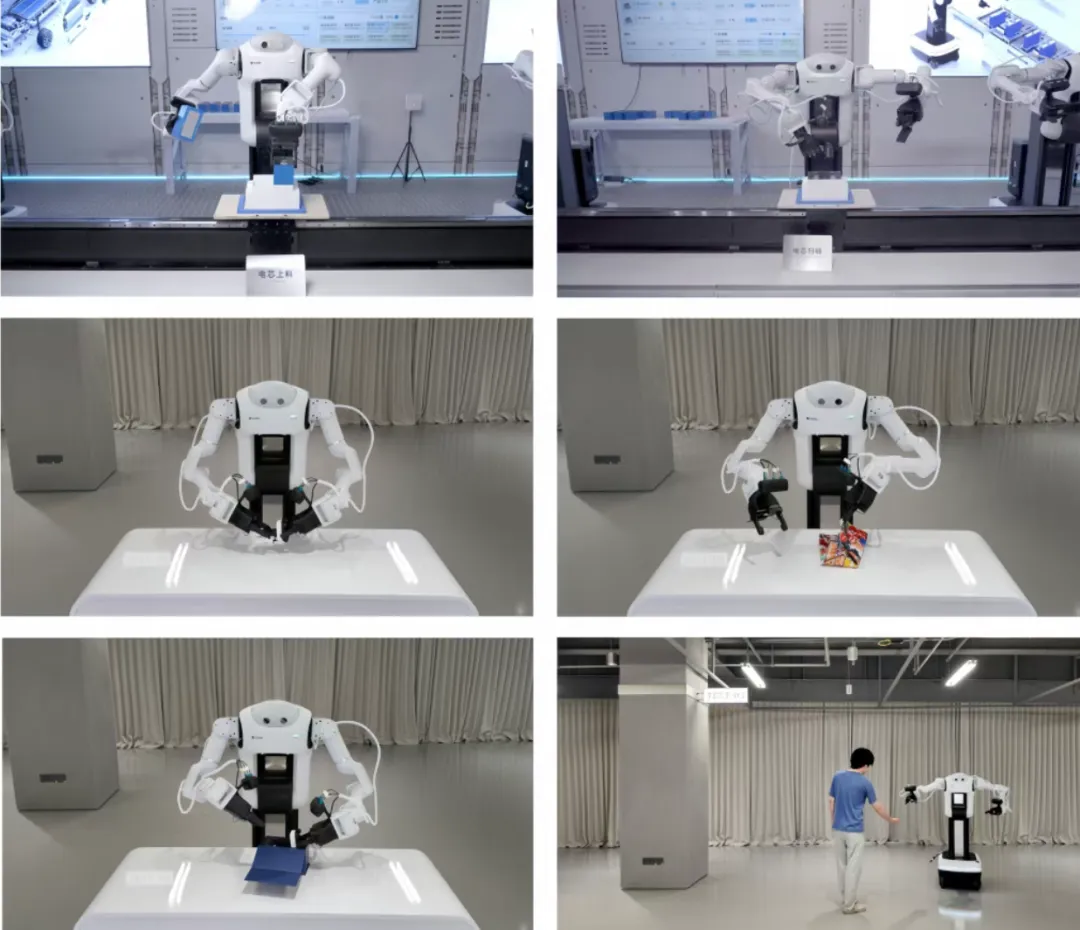
In April, Suzhou unveiled its first fully self-developed smartphone platform, the Sudo R1, in a 60-minute video demonstration that demonstrates different types of objects; at WAIC, its display capabilities have been further expanded to more than a dozen skills such as precision placement, flexible object handling, hand-held collaboration, mobile crawling, and autonomous navigation.
Sourdough broke down the basic capabilities of robots in the physical world into the capabilities of the hydrogen atoms. Clutching is one, placing is one, moving is one, and working hand-in-hand is one. Complex tasks are not an isolated skill set, but should be the result of these basic capabilities continually accumulating and combining.
This is a typical Scaling mindset. It argues that when data, models, and computational capabilities continue to expand, models may grow beyond a single training task. Therefore, the method of Sculpture's choice is mass simulation. It tries to move these experiences to the real world through more efficient data production, allowing robots to experience more objects, more materials, and more tasks in the virtual world.
(2) Scaling Law of Action in the Real World
Unlike SoD, the direction of zero-dimensional selection is almost at the other end of the spectrum, allowing robots to directly search for Scaling Law that belongs to Action through diverse physical interactions in the real world.
This is particularly the case with picking. Scraping is not a problem that can be solved by a mouse, objects that are sliding, spinning, shaping after being touched, and robots that have to face a series of continuous movements in intensive physical contact. This is also why zero-dimensional data focuses on real interactive data, but the real data problem is expensive and slow.
The real-world grabbing challenge at the WAIC site is an open-pressure test of the zero-faceted technical route. For four consecutive days, viewers can participate directly, take out objects that robots haven't seen before, and allow robots to complete the grabbing. The challenge cumulatively runs 24 hours, completes more than 8,600 real grabbings, attracts more than 2,800 viewers, and has a multiple-grabbing overall success rate of 99%.
The robotics workshop also observed two items representative of the device on the spot: a chocolate bean and a transparent band. The chocolate bean is small enough to have higher requirements for visual positioning, point-to-point judgement and end control; the transparent bands have both fine, soft, transparent and deformable features. They represent a long tail that can never be worn in the real world.
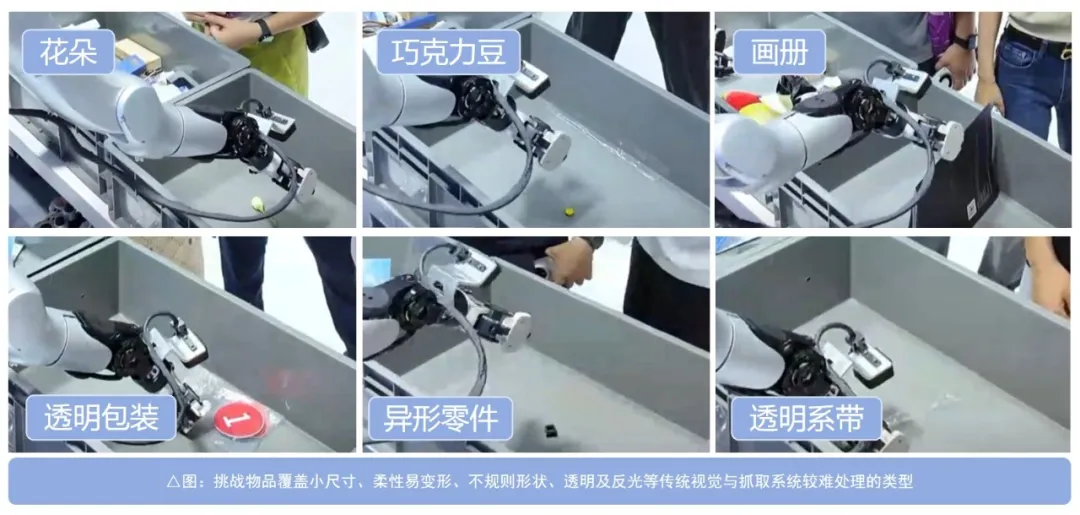
In other words, the crawler really needs to prove that the model can find a way to act only when something that is not predefined appears. In this sense, the crawler's further proposed crawler physics crawler API crawler is more like a possible delivery of the capability in the future. It wants to standardize not just a single action of a particular robot, but to make crawler capability condensed into a callable, portable, replicable crawler API so that robots can quickly adapt to different contexts and application scenarios.
(3) Power Plane: It is harder to complete a task than it is to finish it.
If the only thing that matters is the speed of capacity growth, and the only thing that matters is the ability to scale and generalize in the real world, then the test of a nuclear reactor is whether the capacity can be sustained over time.
On the WAIC site, six different types of robots worked together for 15 consecutive hours, assembling a large-scale model of 81920 tiny blocks. According to the Robotics Conference, the real difficulty was not to grab the first block, but to keep working until after the 5th, 10th, or even 14th hour of the task.
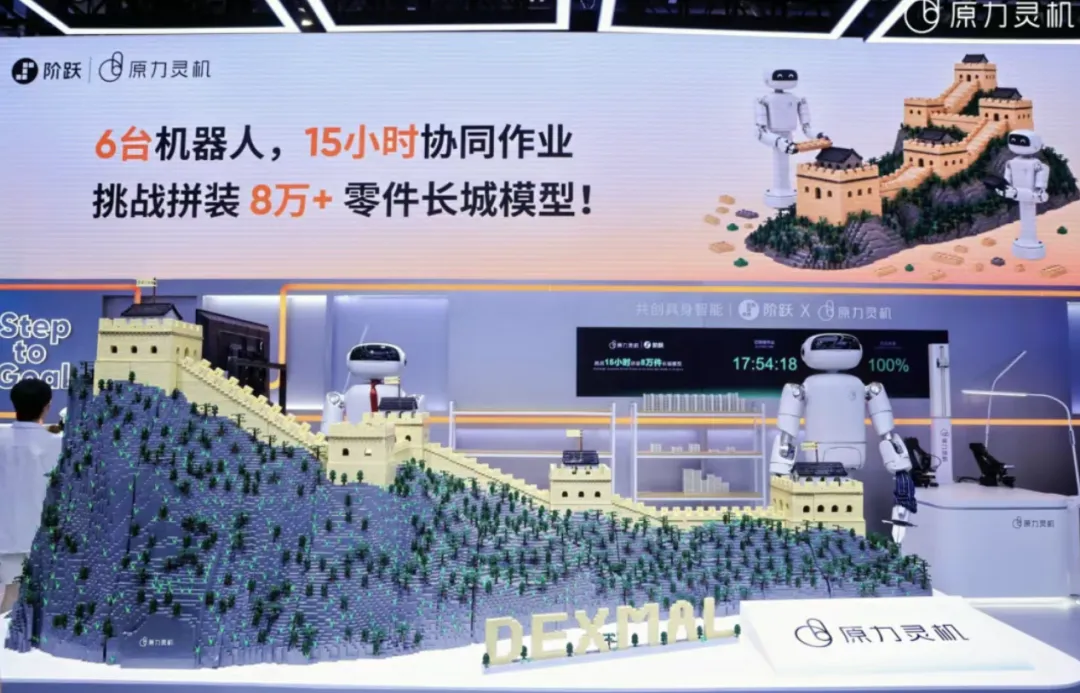
Because the real-life commercial scene and the factories do not accept the tenth sudden shutdown because the robot succeeds nine times. Therefore, what is really interesting about this demonstration is that it does not only complicate the task, but also actively turns time into a pressure test tool. Through the collaboration of DM0.5 and DW0.5, the execution model DM0.5 is responsible for real-world operations, while the world model DW0.5 anticipates the possible results of different actions in virtual space, providing feedback to the execution model, thus forming a technical closure.
Another metric that is being redefined: stability should not be just a success rate, but should include time. A robot working continuously for 15 minutes and 15 hours is a completely different system.
03.
After three routes, we finally have to answer the big question of cosmetics.
As the three companies move forward from the three directions of simulation data, real action and long-term stability, a more fundamental problem is emerging.
It is difficult to fully simulate the existence of gaps, frictional forces, distortions, lighting and collisions between simulation and reality, and it is still necessary to verify whether the ability to move without loss.
Zero-dimensional attempts to generalize the problem of the ability to solve problems in the real world through bulk physical interaction data. Its core assumption is that when robots accumulate enough physical interaction data in a wide variety of real scenarios, the model will gradually gain the ability to find solutions independently in the face of alien organisms, a path that requires longer-term validation.
Long-range stability is the assumption that the task has been defined and that stability can still be maintained in the face of completely unknown objects.
All three routes are focused, but in the end they all collide with the same wall: the real world cannot be lifted up.
This is the most fundamental dividing line between physical intelligence and traditional automation. In the past, when new parts enter the production line, engineers can redesign fittings; new goods enter the warehouse, re-collect data, and set up new crawling strategies. But physical intelligence faces an open world, where it can't crawle when the 101st, 10001st, and undefined objects appear.
04.
How to build a path across borders?
When the amount of simulated data reaches a critical point, the model changes in mass. It no longer merely remembers the grappling glass as the grappling glass, but begins to understand the relationship between abstract features such as oval + smooth surface grappling and grappling strategies. When it encounters an unprecedented, cylindrical-like thermal glass in the real world, it can call upon this abstract knowledge and automatically generate grappling schemes. This is the transition from the grappling glass that the grappling glass has made to the specific object in the training collection that the grappling glass has seen to the new object.
Simulation is perfect, reality is chaotic. Simulation must solve the migration problem of Sim-to-Real simulation. Their methods typically include: intentionally adding random noise (such as texture, friction, small gravitational fluctuations) to simulations, allowing models to learn to work under various imperfect sealing conditions, thus making real world biases more robust. When models are deployed to real robots, they use a small amount of interactive data in the real environment to rapidly fine-tune and calibrate the errors of simulation. In general, they believe that when the virtual world is rich enough, everything in the real world is only a subset of this huge set.
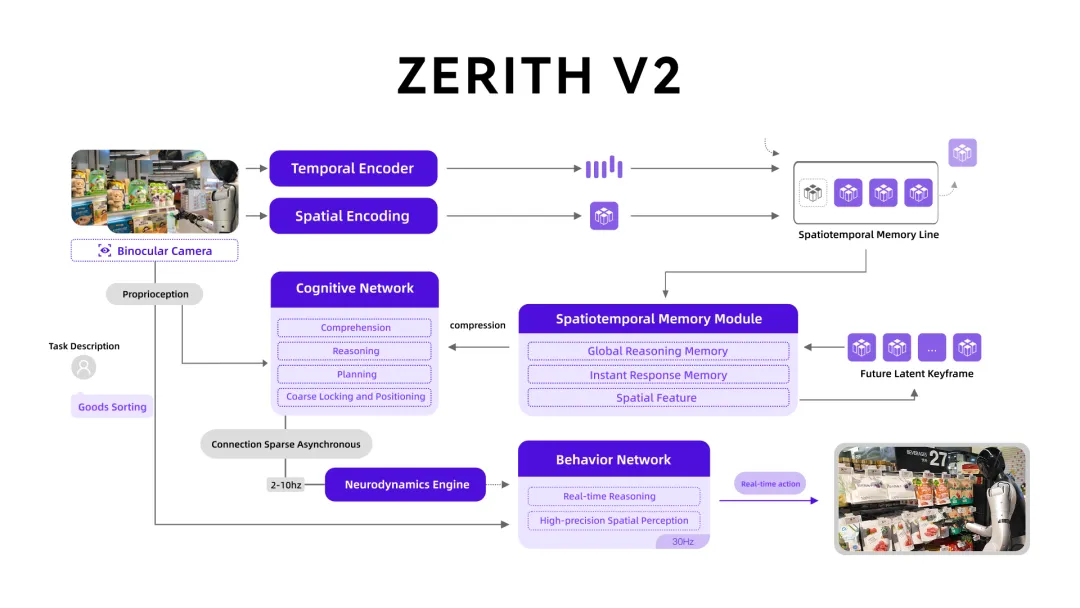
The zero-dimensional path is to use the density of the commodity in exchange for the generalized width threshold. Their underlying foundation, ZERITH-V2, builds a native model around Action that deals with continuous decision-making and control in intensive physical contact. It learns not what the threshold is, but how to move the object with my hands. This design initially abandoned the library of objects that relies on pre-defined and instead embraced the continuity of physical interaction itself.
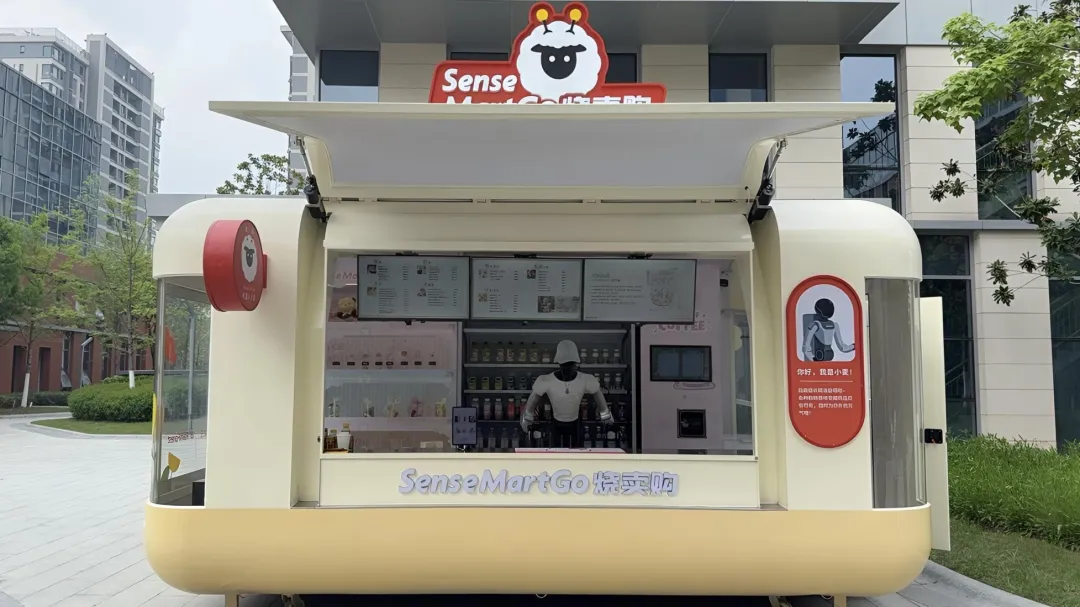
On the upper level, there is a huge amount of real-world physical interaction data. For example, robots in retail stores that process hundreds of orders a day can allow models to continue to face new commodity and long-tail problems in real operation. Zero-side commercial value hedges data costs.
There are more scenarios going back and forth, creating scaling capabilities to improve→ entering more scenarios→ generating more data→ driving the cycle of model evolutionary scaling. The final thing to verify is a Scaling Law that belongs to Action: as real interaction data continues to increase, can generalization capabilities continue to grow.
The more than 8,600 crawls on WAIC are a concentrated examination of this route. The reason chocolate beans and transparency bands deserve repeated mention is not because they are special, but because they are common enough. The real world does not tell robots in advance what comes next.
The trajectory of a nuclear reactor is constructed by the thickness of the reactor's timing in exchange for the elasticity of the system. The traditional grappling goal is to successfully grapple with the reactor once. The goal of a nuclear reactor is to keep the reactor at a high level of elasticity within 15 hours, each time the grappling rate is maintained. This means that the model must learn to maintain a stable operating state in dynamically changing environments (such as the height of a pile of blocks gradually decreases, its own electricity gradually decreases). This state of elasticity maintains the reactor, which is itself a higher stage of generalization.
But every iteration of the world model requires computing power. How to make predictions of future states and give the best directions in millisecond-level decision cycles is a huge engineering challenge. This requires extremely efficient model design and powerful edge computing capabilities. The DM0.5 and DW0.5, which can be self-simulated and self-tested, allows robots to cope with unknown variables over long mission cycles.
Overall, the three routes are hard to tell right now, because the technological threshold for crawling crawling crawling is essentially facing out-of-concept objects that can still operate.
If this thing can finally be established, it may have properties similar to physical crawling APIs.
Because it's only when the capability is no longer attached to a fixed object, a fixed scene and a fixed entity that it can be packaged, summoned and replicated on a large scale, that it can truly become the industry's iconic moment and face the real world.
05.
It's only after Picking is solved that real competitive ability begins.
Over the past few years, the industry has been working to make robots more human-like - with a more flexible body, greater freedom, and stronger movement controls.
But when a robot really reaches out, it faces no longer just itself, but an almost infinitely complex real world.
The three explorations of zero-dimensional technology, zero-dimensional and zero-energy machines together illustrate that the robotics industry is entering a new phase.
This capacity needs to grow faster and be stable over a long period of time.
But ultimately, it also has to answer a more fundamental question: What do robots do in the face of something they haven't seen before?