Faced with this contradiction, the industry's existing technical routes can only be passively substituted in the long run. Part of the program relies on artificial advance sorting and sorting of the containers to ensure the stable operation of the equipment in exchange for manpower, and the value of automated discounting is greatly weakened; the other part follows highly customized routes, only suitable for the fixed box type, with the goods having to be re-modulated once adjusted, the universality is weak, and it is difficult to replicate across scenarios.
It's not hard to see that the bottlenecks of mixed-box unloading are not at the end of the mechanical execution. The mechanical arm, the delivery system is mature enough, and the real problem is that the system lacks the ability to propel the physical world. Traditional algorithms can only make snapshot recognition, read the state of a given moment's cargo pile, and cannot predict the chain reaction. To achieve breakthroughs, automation systems must have the ability to understand and predict dynamic environments, which is also the main reason why mixed-box vehicles have become an important engineering test site for industrial intelligence.
Messol-S:
Adapting to the original disordered execution system
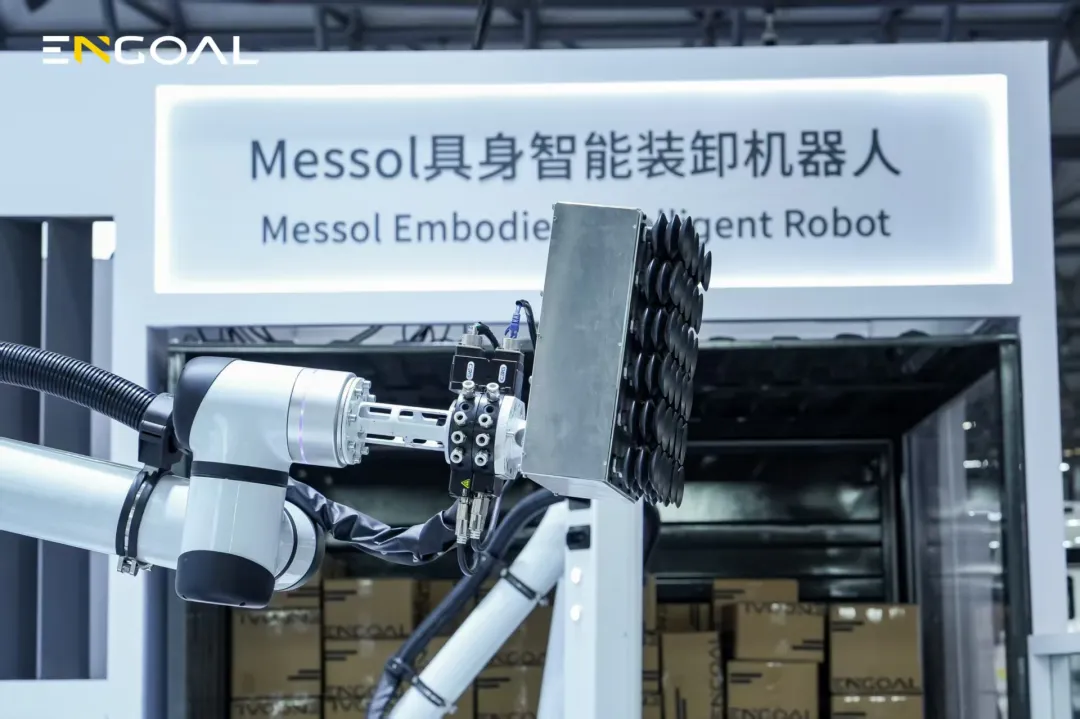
Messol-S is the executive carrier of the body-smart unloading robot. It jumps out of the conventional automated pre-assembly, then automated unloading idea, and is geared towards the development of the car's native mixed-box condition, no longer using the standardization of goods as a prerequisite for automation.
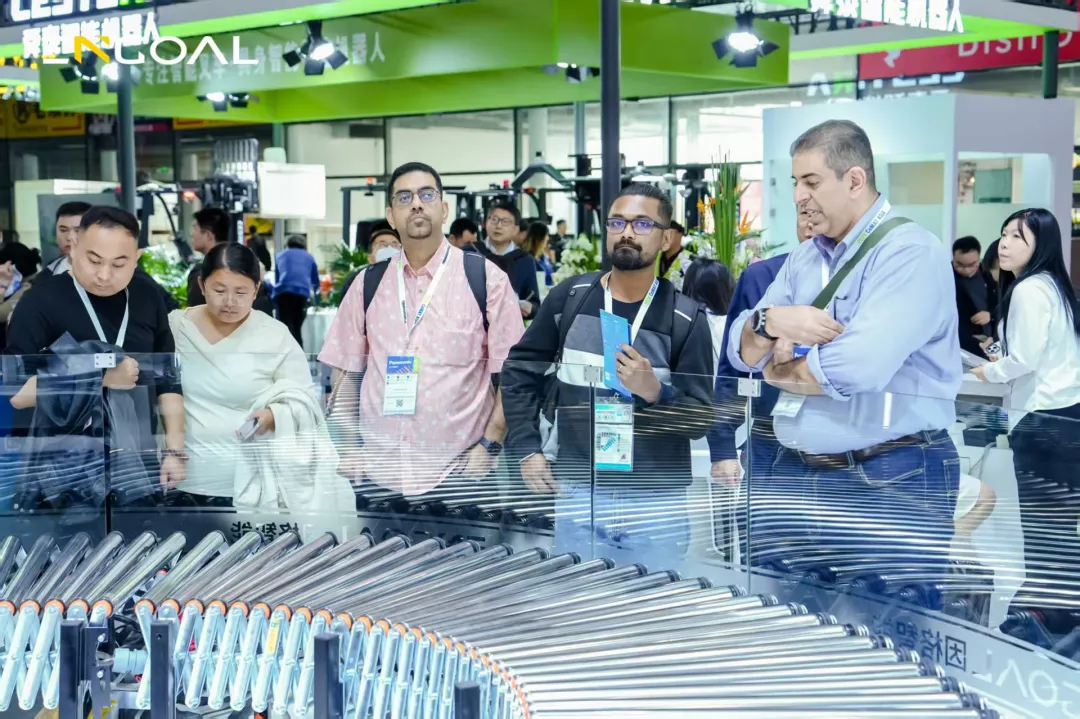
The robot supports multi-box, multi-gesture mix box crawling, and the operation process requires no man-made access to the car repair. On the stand of CeMAT, Inger Intel built a real-life container transfer workstation, restoring the real car repair and unloading process, where visitors can fully see the fully autonomous operation of the cargo perception, crawling and transfer to the connected rear-end warehouse, and intuitive sensing of the continuous operation performance of the system in the constantly changing restructuring of the stack of cargo.
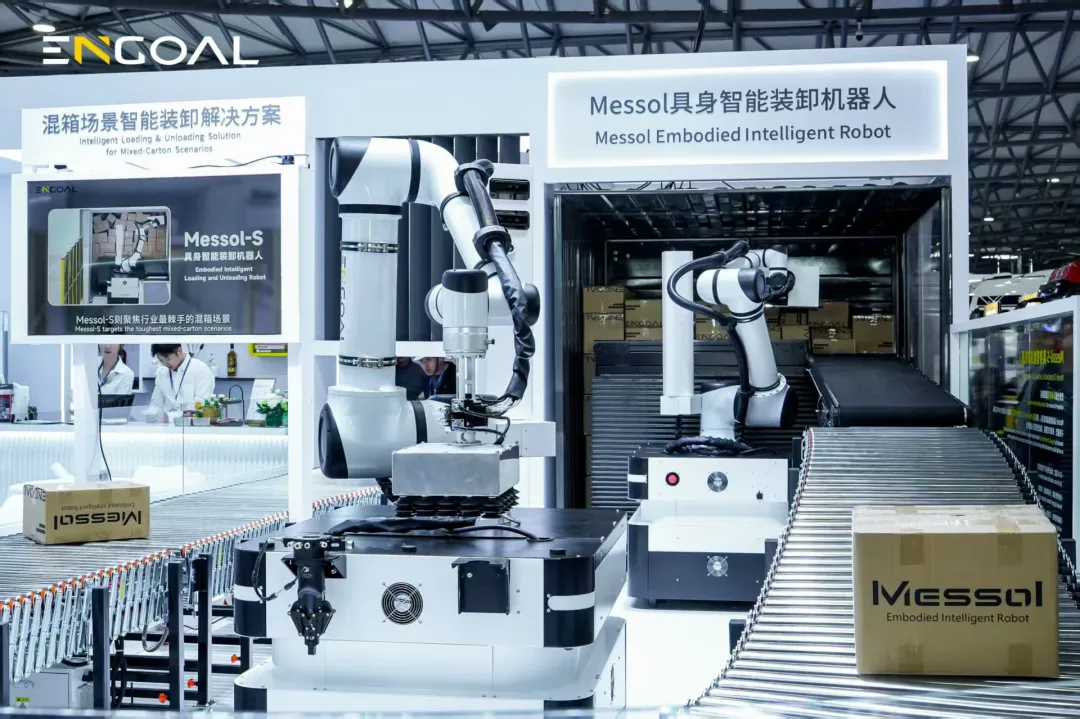
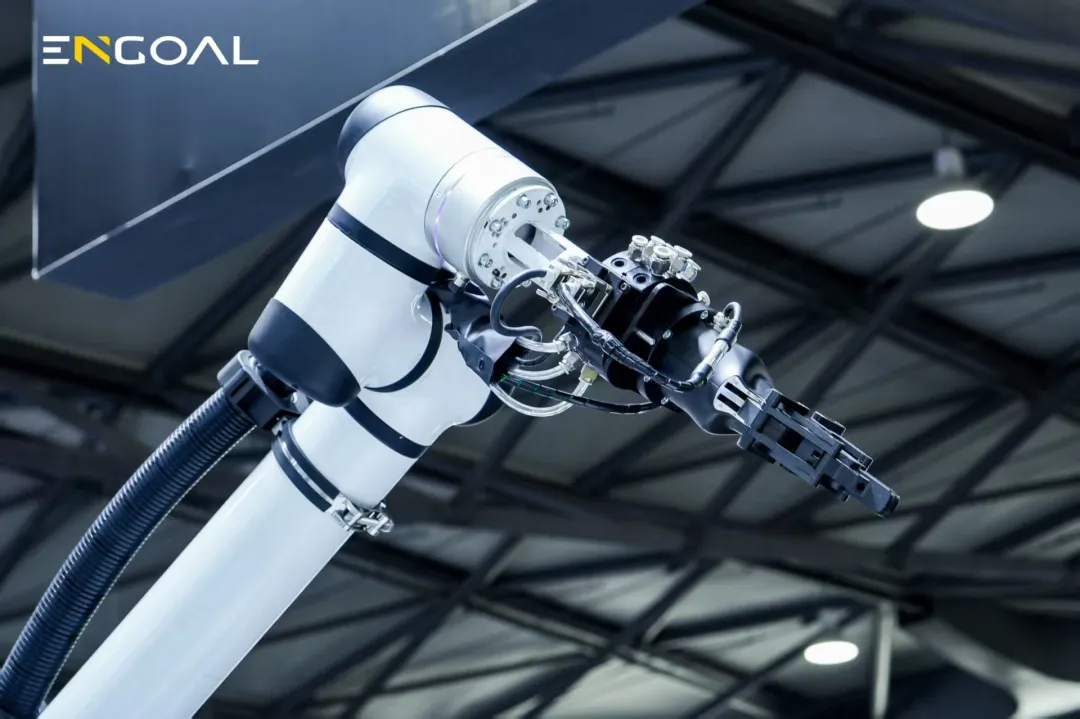
As a terminal for the interaction of a physically intelligent system with the physical world, Messol has the dual role of action execution and environmental feedback. It receives dynamic strategies from the output of the upper-level model, completes actions such as grab, gesture adjustment, avoidance; at the same time, it senses the module's continuous forwarding of the mode data, forming a closed loop of perception-decision-execution-re-sensing, continuous real-time changes in the stack of cargo.
OmniPredict2.0:
A pre-determined cognitive core aimed at mixing container unloading
The essence of normal 3D vision is a snapshot observation, which can be done in case detection, partitioning, positioning, following the logic of what the clutch sees and planning what the clutch does. But it only interprets the current image, lacks the projection of physical interaction, and cannot predict the chain consequences of grappling after the weight shift, squeeze, collapse, etc. In regular static scenarios it is still possible to overcome, and in the face of continuous change of the mixing clutch, single-point identification defects will be magnified, grappling fails, stability of the clutch, stationary anomaly occurs.
The OmniPredict 2.0 unloading world model is the decision-making core of the whole suite. It is not a simple set of general physical simulation models, but an exclusive model of the world in which the mixed-box unloading scene is refined, focusing on the study of the physical interactions of container-stacked container-stackers. It relies on the dual 3D visual collection point cloud, rebuilds the three-dimensional state of the cargo stack, the size of the container body, gesture contact, and relationship; combines the accumulated physical precedents of the unloading scene, to derive the power changes from different crawl points, advance identification of the shifting and collapse risk, and select the best path to balance risk and balance in multiple selectable operations.
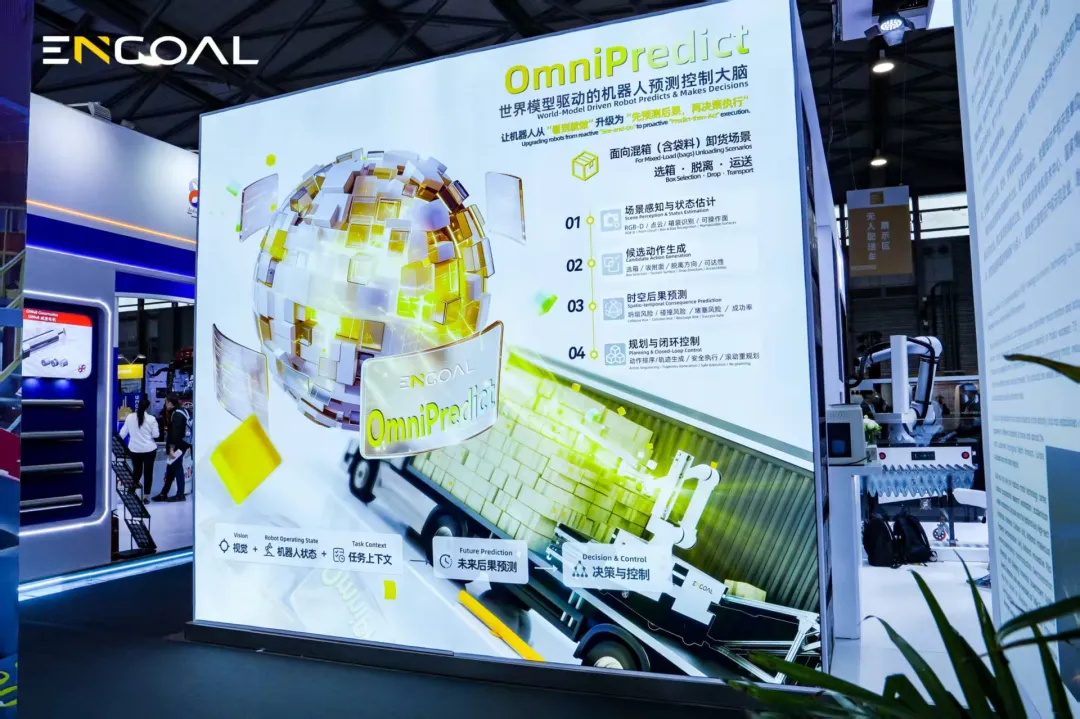
Unloading is a long-term continuous task, and single-step optimization is not the same as a complete vehicle task. Model decisions are not a one-time output, but a continuous rolling loop. Each time the load stack structure is changed, the system is based on the latest perceptual updated environmental judgments, re-evaluates the stability of the load stack as a whole, while considering rear-end transmission links, prejudging congestion packages, stack hazards, and iteratively generating the next operating strategy.
This mechanism allows the system to weigh not only the individual boxes in front of it, but also from the overall perspective of unloading the entire car, avoiding the problem of short-term seizure of efficiencies and subsequent worsening of working space. With this set of pre-determined closed-loop decisions, the robot no longer responds passively to the immediate image, but with the pre-determination of physical results, to operate steadily in unordered and variable stacks of cargo, which is also fundamental to its distinction from traditional fixed procedures and static identification programs.
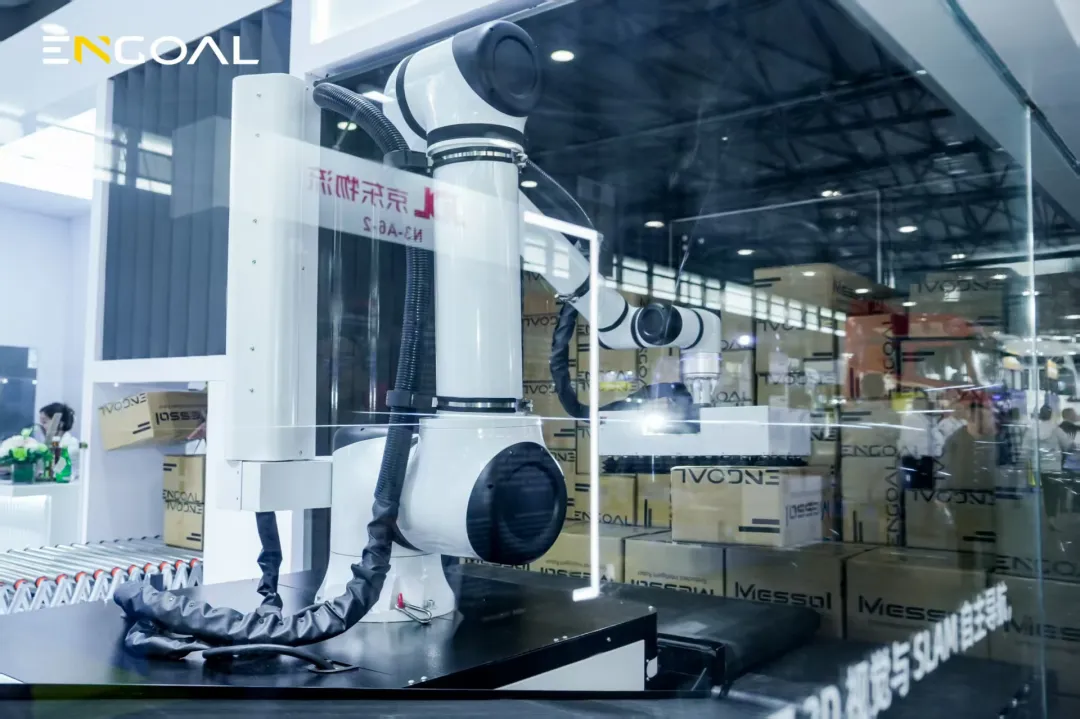
The commercialization of physical intelligence in the industrial scene is moving from conceptual verification to real-world testing, mixed container unloading is a highly gold-containing milestone. How to make automation systems read the constantly changing physical cargo stacks, non-sampling unloading racetrack central propositions. The real-world verification exploration presented by Inger Intel on the stand, also provides a reference sample for the industry to further understand the boundaries of the unloading site of intelligent equipment. With the continuous evolution of technology, the imagination of non-labeling automation of logistics endpoints will also be further opened.