
It's the first time in the history of the world.
Recently, Molence Bio, an AI pharmaceutical company based in China, released its first biomolecular base model, Mol-1, which has achieved exciting results in infrastructure prediction, supercomplex assembly and nanoscale antibody design, including:
- Mol-1, published by Molence Bio, matched the front-end closed-source model by 75%, with a similar success rate to the closed-source model IsoDDE from Isomorphic Labs, a Deepmind cement company, far outperforming other open-source models. In other important drug models, such as polymers, small molecules, molecular silicon predictions, it is also well ahead of the open-source model.
- In supercomplex assembly tasks: Long-running smartphones based on Mol-1 using a single NVIDIA H20 GPU, nine of the 10 large complexes evaluated outperformed Anthropic's previously reported correspondence; the latter used nodes equipped with eight B300 GPUs to explore supersystem predictions.
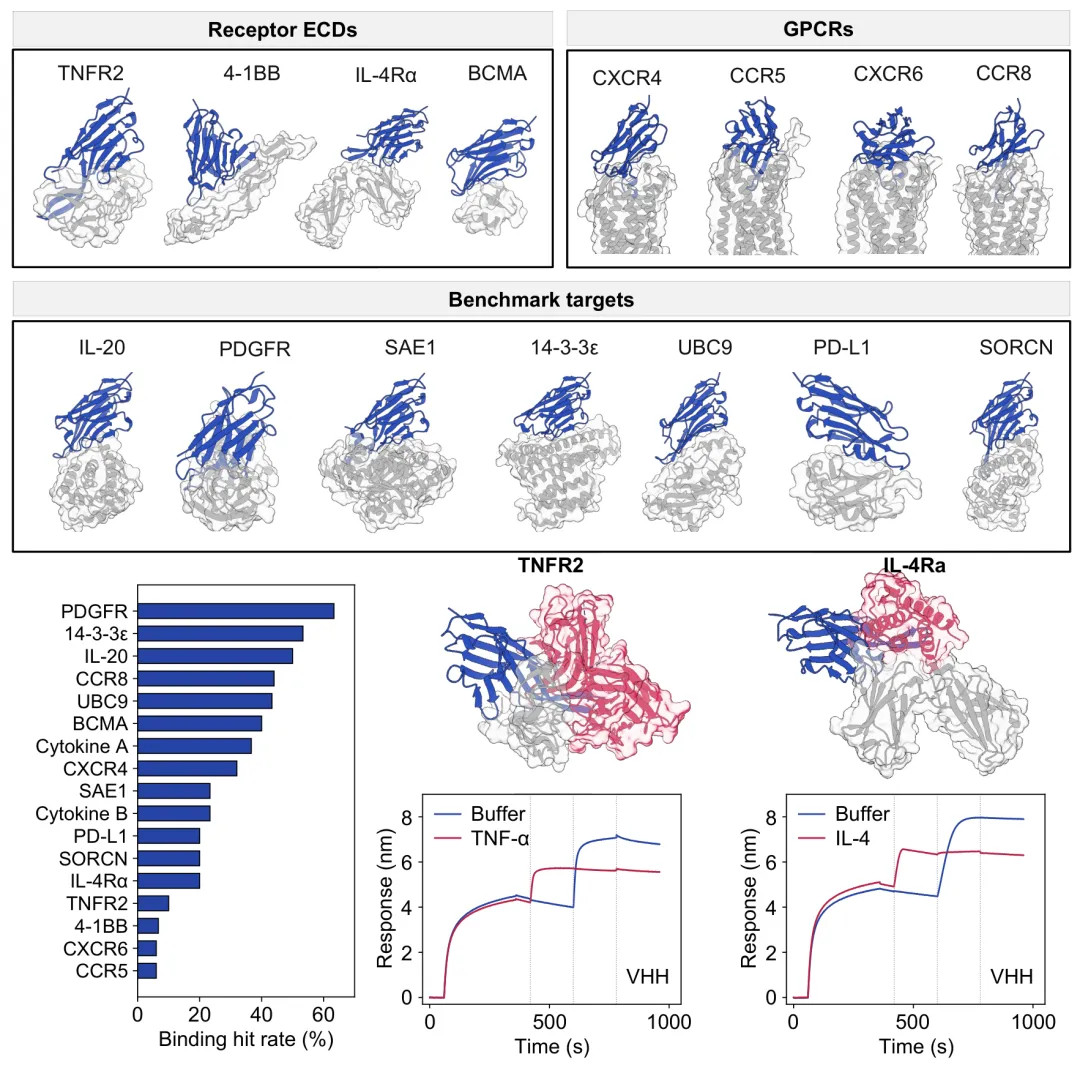
- Initial design tasks for nanoparticles: an internal antibody design platform developed on the basis of earlier versions of Mol-1 that combined candidates at 17 focal points, including four GPCRs, with a combined hit rate of up to 63% for single focal points and a maximum affinity of 43 pM for 30 BCMA candidates; a second round functional hit rate of up to 85% for 4-1BB activated antibody design after single-cycle experimental feedback; a successful design of GPCR antibodies; and the design of a cross-combination sequence consistency of only 54% protein-resistant VHH.
Mol-1 is currently open source and model weighting on GitHub, and provides online web services:
This is the first time I've ever heard of this project.
It's the first time I've ever heard of this.
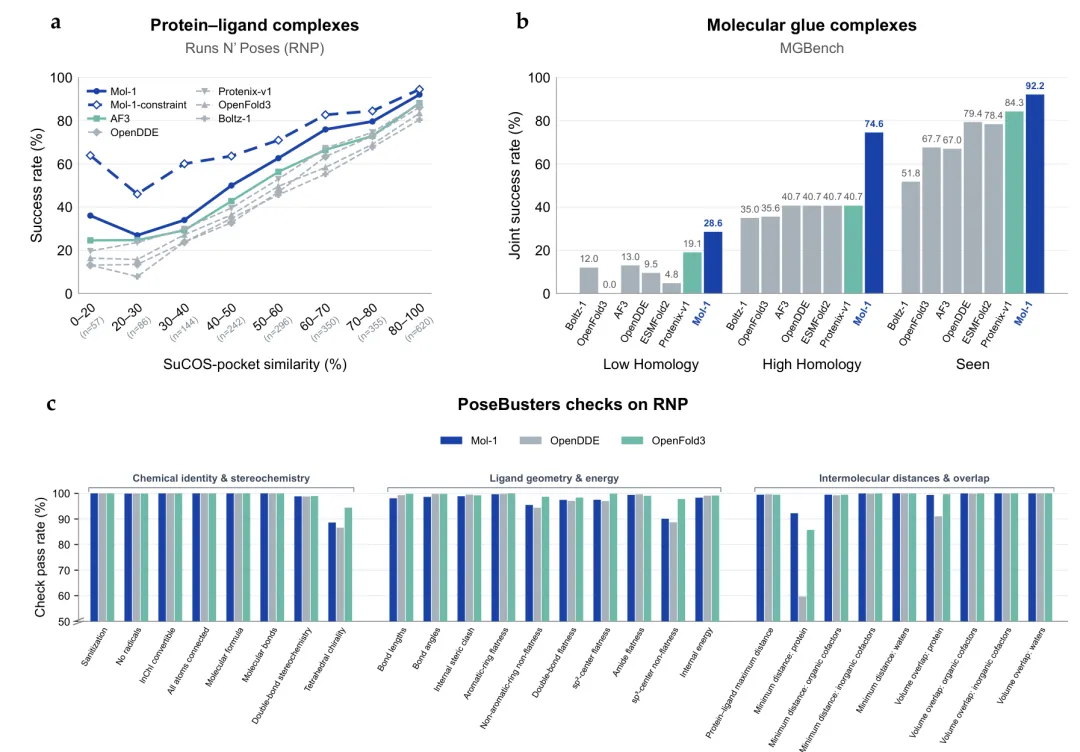
Isomorphic Lab predicts antibody and antigen structure levelingMol-1 uses a single model to predict a variety of complexes such as antibody antibodies, protein polynomials, protein covalent molecules, and molecular covalents. Mol-1 is significantly ahead of other open-source models in the multiple drug models evaluated.
In the FoldBench-AB antibody antigen test set,The success rate of Mol-1 was 75.0%, equivalent to 75.6% of the IsoDDE technical report published by Isomorphic Labs; it was further increased to 88.3% after the inclusion of the constraint.
To assess the sensitivity to random seed selection, Molence also analyzed all 201,376 combinations of five seeds selected from 32 seeds.62.22% combined to at least 75% success rate and 17.85% combined to more than 76%。
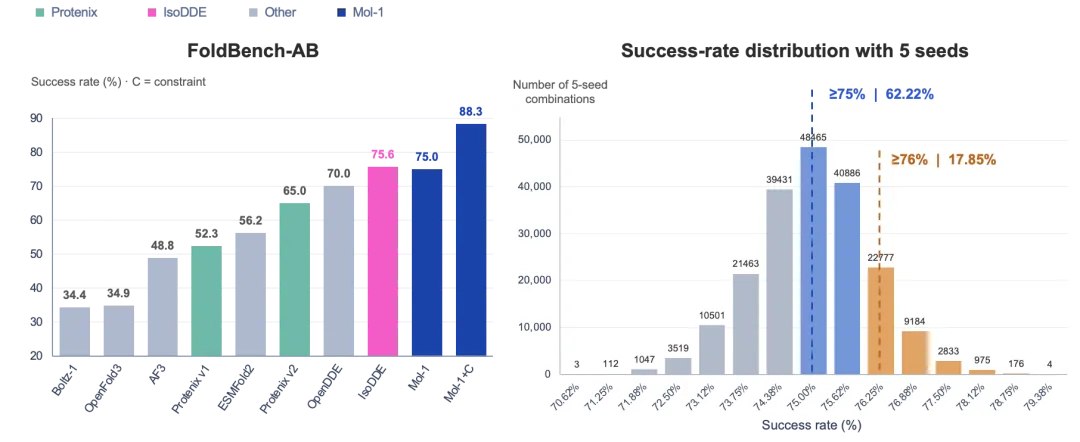
As a common biomolecular base model, Mol-1 uses a single model to predict a variety of complexes such as antibodies to phosphate antigens, protein polynomials, protein polynomials, and molecule polynomials.
Molence Bio was evaluated for more drug molecule-related tasks such as small molecules, polymers, and molecules, and Mol-1 was the optimum level of the open-source model in each category of evaluation.
Molecular membrane is capable of inducing or stabilizing interactions between proteins; for such a challenging triad complex system, Mol-1 is present in highly homogeneous subclusters.The projected success rate was 74.6%, up from 40.7% in second place.。
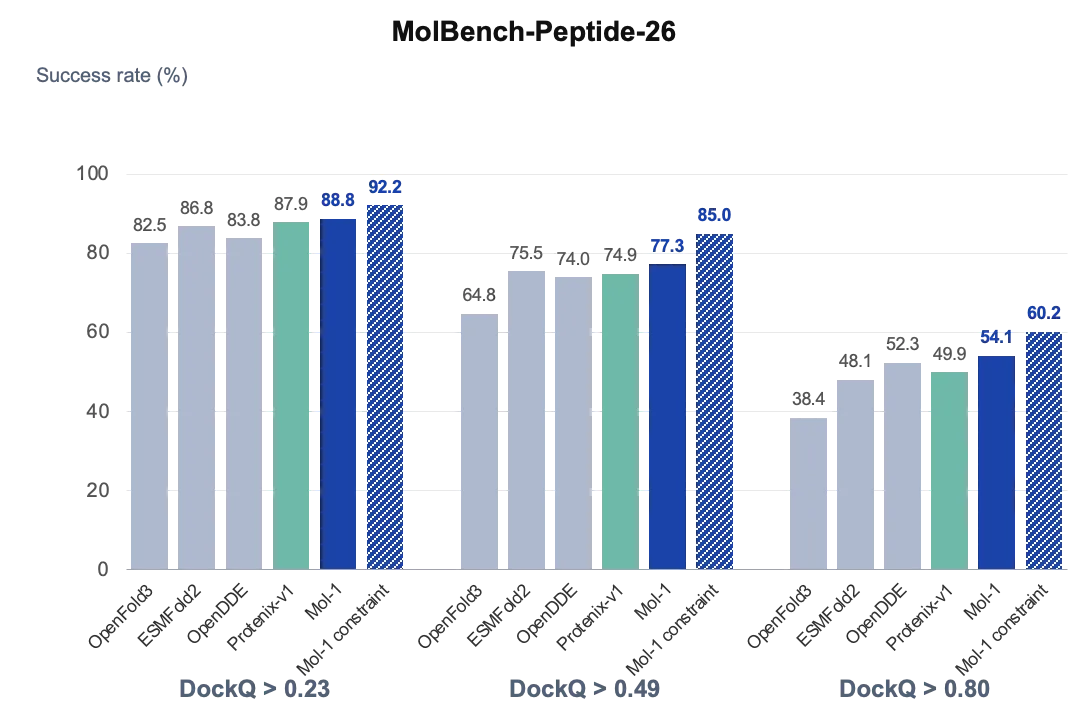
In a project to predict protein polytetrafluoroethane complexes, Molence Bio constructed MolBench-Peptide-26, covering 172 interactive interface pairs from 150 PDB entries published in the first three quarters of 2026.
At three thresholds of DockQ > 0.23,> 0.49 and > 0.80, Mol-1's predicted success rate was 88.8%, 77.3% and 54.1%, respectively, higher than other open source models.
At the most stringent DockQ >0.80 threshold, the Mol-1 success rate was 54.1%, with the best unrestricted control model at 52.3%; the Mol-1-constraint was further upgraded to 60.2%, demonstrating high-precision modeling capabilities for multicomponent interfaces.
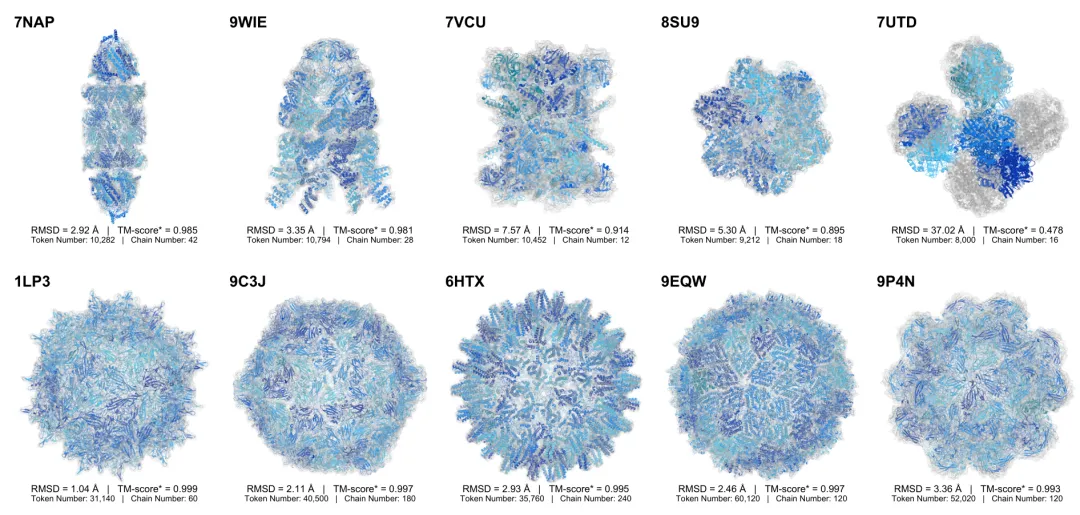
Structural prediction of supermassive protein complexes is one of the most challenging tasks of current structural prediction models.
These complexes are typically made up of dozens or even hundreds of protein chains, including important molecular machines such as protein enzymes, p97s, and others that are closely related to tumor research. As the complex grows in size, models need not only to accurately predict local interactions, but also to ensure that hundreds of chains are assembled correctly in three-dimensional space.
In Anthropic's previous work, eight B300 GPUs were used to predict large molecular complexes, with a maximum accurate prediction scale of about 10,000 amino acids. However, when the system expanded to about 310,000 to 70,000 residues, none of the seven systems were able to accurately predict the overall structure.
To address this challenge, Molence Bio built a long-running set of smart objects that incorporated biological knowledge into the modeling process, organized Mol-1 structural prediction and automation assembly, and continued to adjust strategies based on intermediate results.The forecast exceeds Anthropic.Previously reported results showed a TM-score of more than 0.9 for eight of these compounds.
The largest successful prediction system reached 60,000 amino acid residues, 120 protein chains, and a TM-score of up to 0.997.More importantly, the entire workflow uses only a single NVIDIA H20 GPU, which significantly reduces the need for computing power, and researchers do not need the most advanced GPUs to do the work.
Molence Bio used an early model version of Mol-1 to develop an internal antibody design platform from scratch and experimentally validate the design molecules in an internal laboratory, with a combined candidate score of up to 63% at each of the 17 focal points of the test.
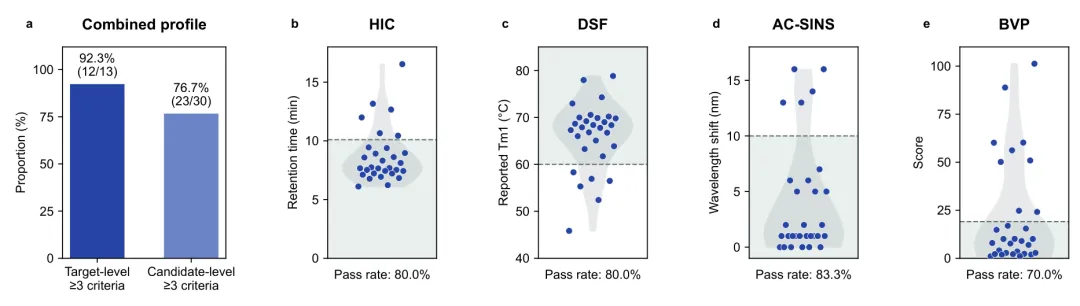
For 30 VHH-Fc candidates from 13 hotspots, the system assessed critical biophysical properties such as dehydration, thermal stability, self-interaction and non-specific binding.Of these, 23 candidates met at least three screening criteria, and 12 of the 13 points received at least one candidate who met the requirements.In addition to this, there is a strong potential for further development.
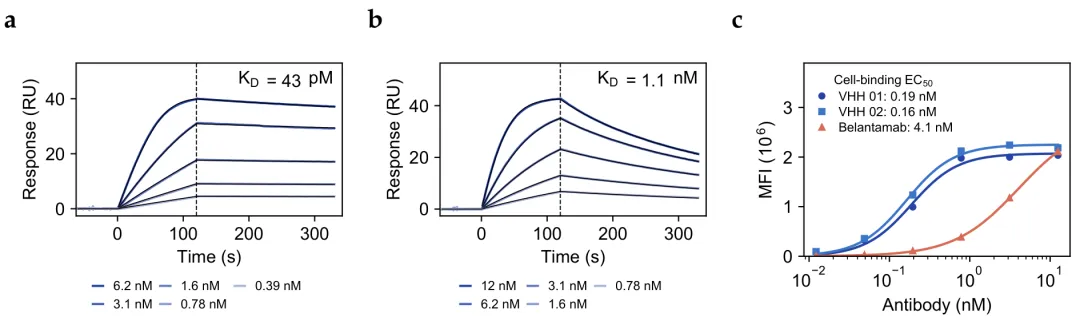
BCMA is an important focus in the treatment of multiple myeloma and has been widely used in the development of TCE and CAR-T.
Molence Bio has designed 30 VHH candidates from scratch, 12 of which can be combined with BCMA.The optimum candidate KD measured in the SPR experiment was 43 pM.The team also further tested the design's VHH's ability to identify BCMA on the cell surface.EC50 at least 0.16 nMThis is significantly lower than the 4.1 nM of belantamab.
Using Mol-1, Molence Bio also designed the activated VHH for 4-1BB, hoping to activate this important immune co-stimulatory receptor by combining antibodies.
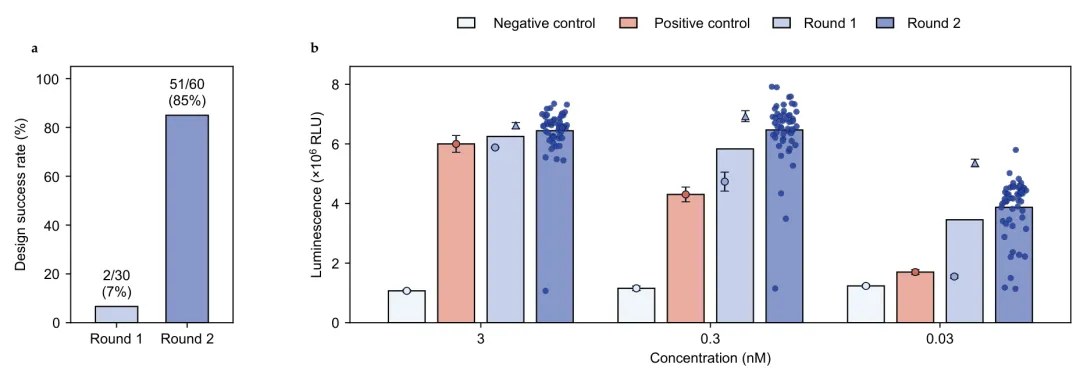
In the first round of design, two of the 30 candidates exhibited activism.Cells activate EC50 at 0.05 nM and 0.22 nM respectively.In the same experiment, Utomilumab was measured at less than 0.43 nM, showing stronger receptor activation.
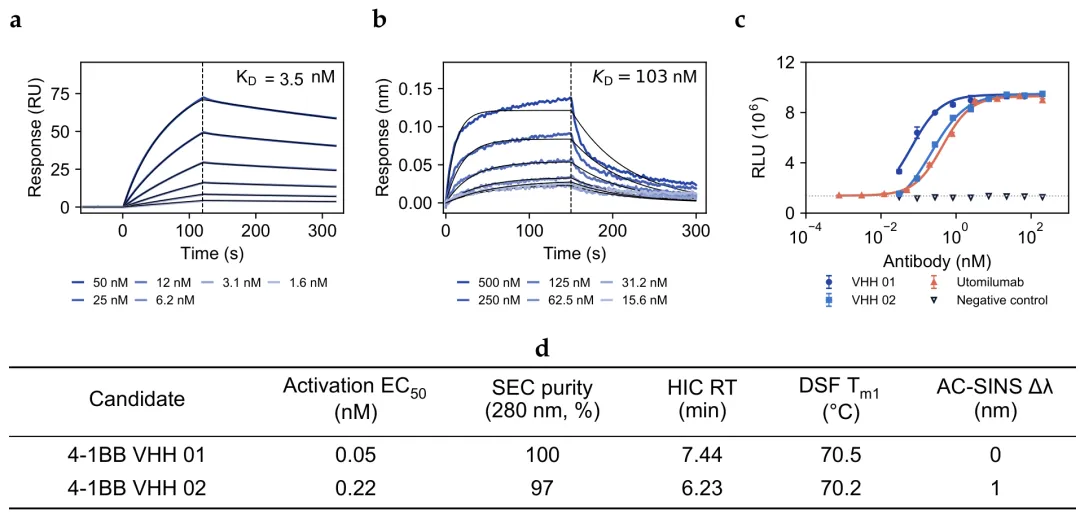
What's even more important is that the teamAfter only one round of experimental feedback, 51 of the 60 designs in the second round showed functional activity, and the functional hit rate increased significantly from about 7% in the first round to 85%.
The results suggest that Molence Bio's antibody design platform, which can be continuously optimized through experimental feedback, will be able to improve the effectiveness of antibody design.Structural prediction, antibody design and experimental verification of the synthesis of efficient cytoplasmic closures。
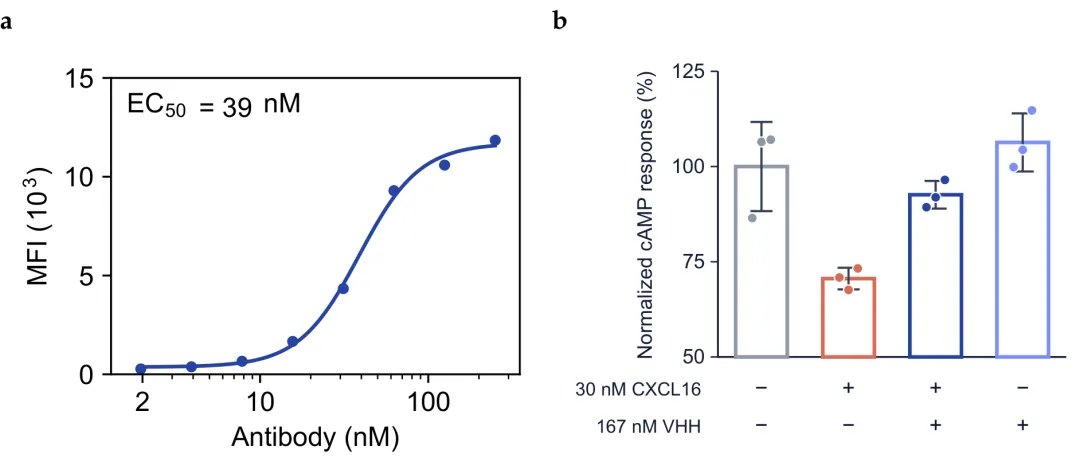
At the GPCR focal point CXCR6, the designed VHH is not only able to bind to the cell surface of CXCR6, with an EC50 value of 39 nM, but is also able to inhibit downstream signals induced by its natural complement CXCL16, demonstrating the feasibility of using this platform to design antibodies with specific anti-fouling properties.
Molence Bio tries furtherDesigned with pre-set cross-reactive antibodiesThe aim was to combine two sequence coherencies of only 54% of the cytokines, hoping to design a VHH capable of identifying both antigens simultaneously.
In the first round of 30 designs, five candidates successfully combined two antibodies.This demonstrates the feasibility of early design to identify two non-direct homogeneous antigen VHHs simultaneously.
Mol-1 officially open source, full capacity for structural predictionFrom precision-leading full-module molecular structure predictions, to super-large complex assemblies of hundreds of protein chains, and to comprehensive experimental verification of VHH on-demand from scratch, Mol-1 demonstrates the broad application potential of structural predictive base models in the pharmaceutical research and development landscape.
At the moment,Molence Bio has released the source code and base model weight of Mol-1 on GitHub.At the same time, it provides online prediction services of Mol-1 and Mol-1-constraint. Researchers can not only use models directly via web pages, but also deploy Mol-1 in their own computing environments to build more complex prediction, design and intelligent body workflows.
This is the first time I've ever heard of this project.
It's the first time I've ever heard of this.