“ O my people!
In the last week of October 2026, China's robotics industry is doing two things at once.
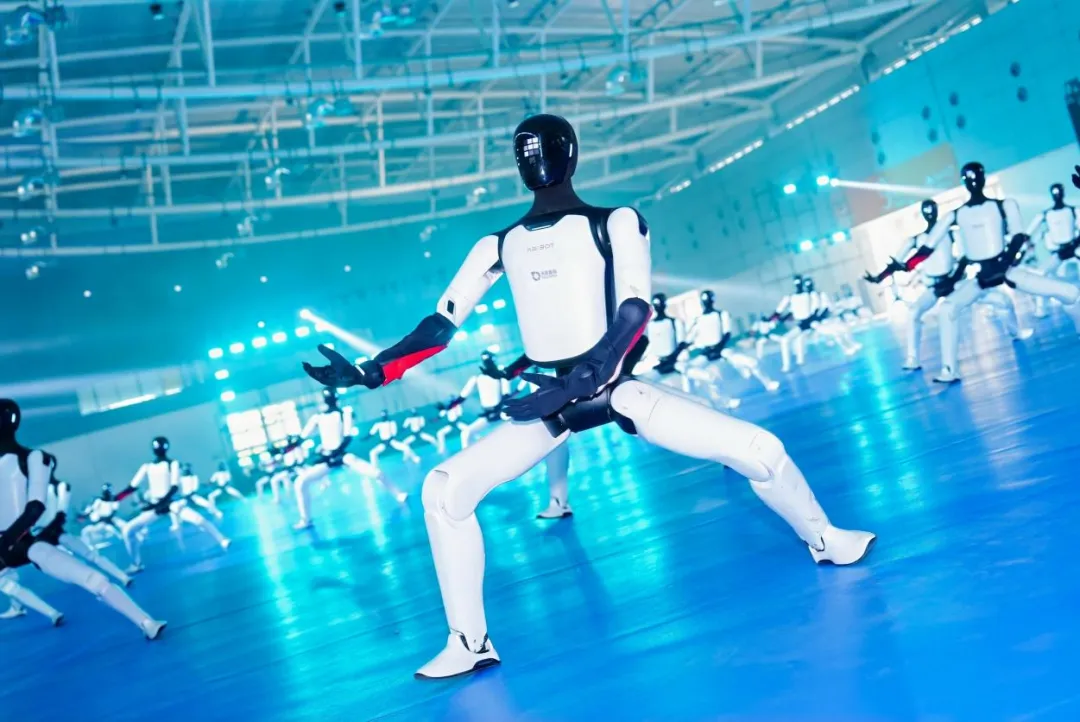
On 24 October, Jinan, China, 110 A3 robots simultaneously lifted their arms, transformed, and turned their heads, setting the Guinness World Record for the most human-like robots dancing simultaneously.
Almost at the same time, the National Directorate of Market Supervision and Administration approved the release of the first six national human-robot standards in the country, which will be implemented on April 1, 2027.
One is the show, the other is the exam.
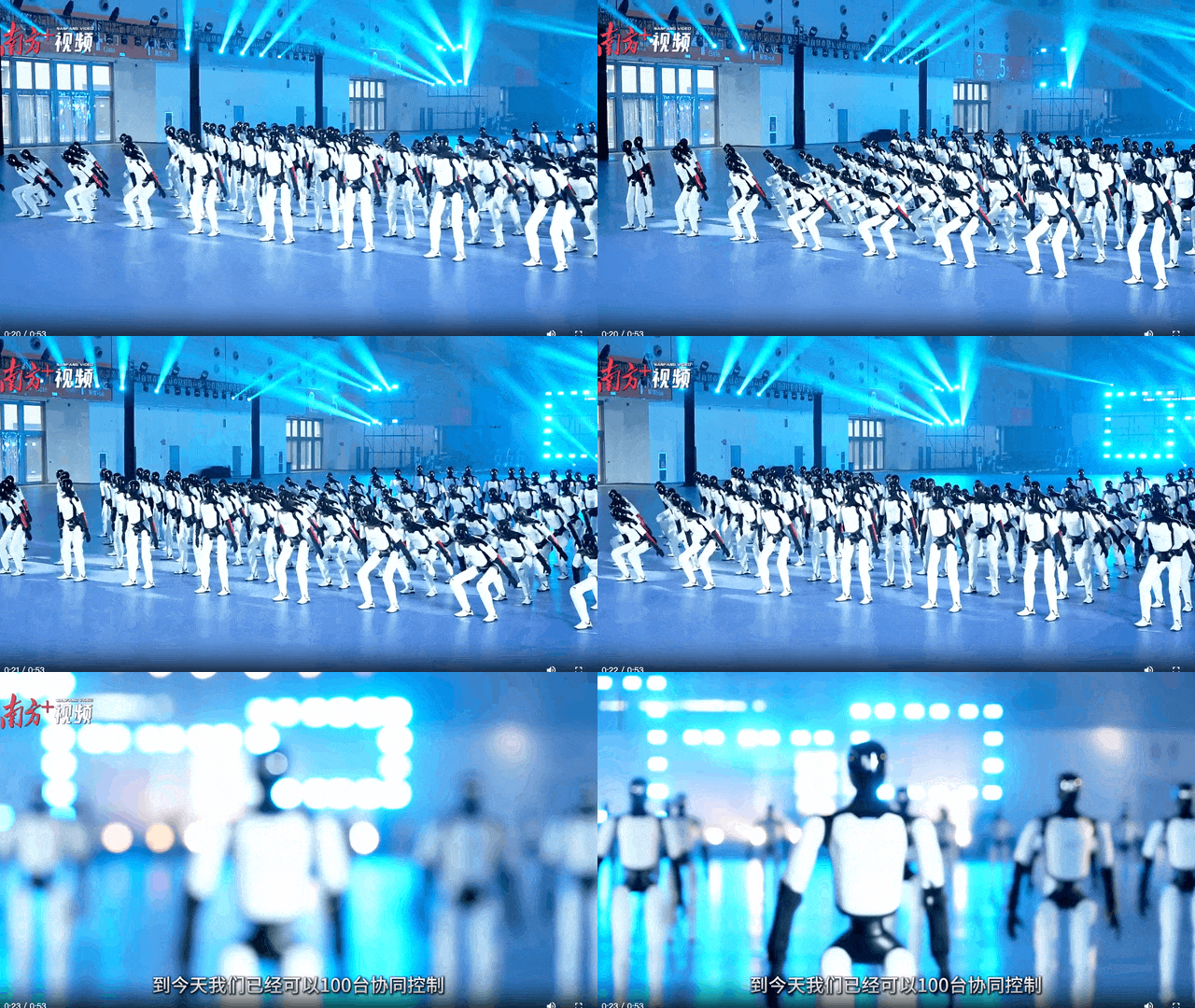
Chart: 110 A3 humanoid robots on an expedition to the Jinan Huang River International Exhibition Center, created the Guinness World Record for most humanoid robots dancing at the same time.
The dance test is coordination, the maximum coordination of dozens of joints in the rhythm. The national test is another thing: the robot stays in the factory for eight consecutive hours and moves will not drift; if it is hit by a person, it can not recover in a second; say good 16 degrees of freedom coordination, is not really a coordination.
For the past three years, the industry has been buying robots by watching videos.
01.
For the first time ever, I'm going to work on my writing standards.
These six standards, numbered from GB/T48316 to GB/T48317.5, are a complete chain from comprehension to completion.
In general, the framework is defined, the environmental perception tube sees, the decision planning tube thinks clearly, the motion control tube moves steadily, the operational operation tube works.
It's really worth seeing the numbers that have been quantified in it.
As an example of movement control, the official text, in black and white, reads:
- The whole-body motion decomposition cycle is not greater than 20 milliseconds;
- the underlying servo control cycle is less than 1 millisecond;
- Control of multiple freedoms, coordinated at least 16 freedoms;
- The movement of a single workspace interferes with the position of other workspaces by less than ±5 mm;
- Clock synchronization accuracy between each control module is greater than 0.5 milliseconds.
This set of numbers was put in place three years ago when no one could write it into a national standard. Because at the time, no one could say exactly how much a humanoid robot could move. Now, standard designers have broken down the movements into milliseconds and millimeters.
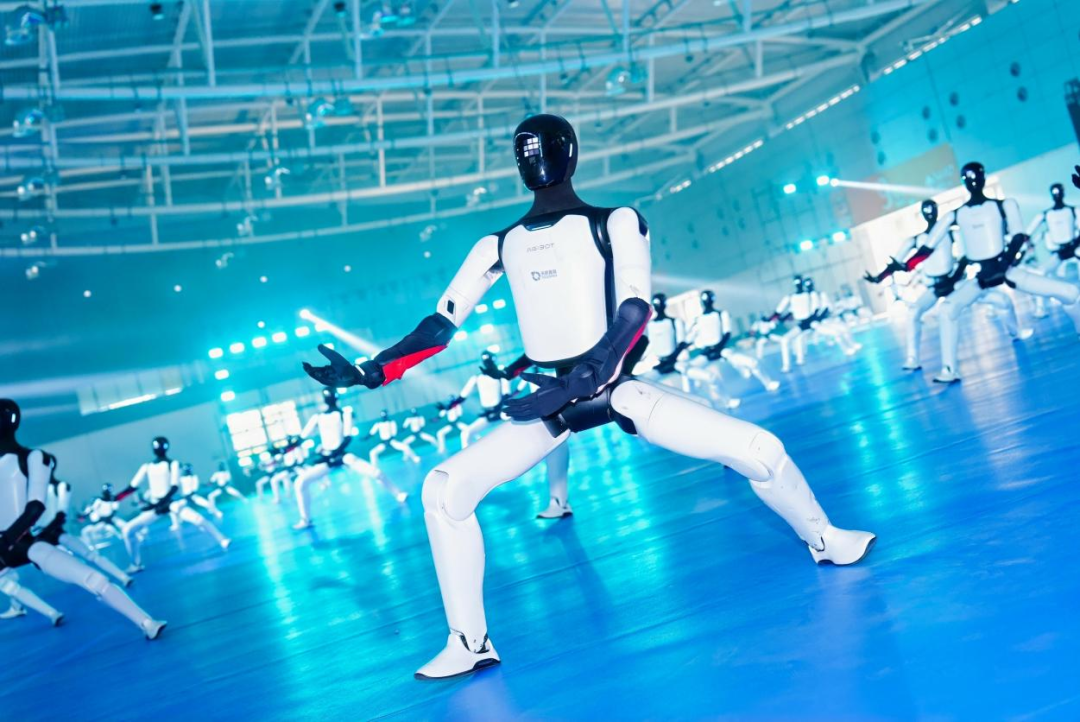
In the A3 group dance scene, dozens of robots simultaneously perform bow-and-run movements. Image source: South + nfnews
That's what the scale means. It doesn't solve whether robots can dance, it solves how you say you're going to work, how you're going to prove it.
The Beijing Human Robotics Innovation Center, which drafted this standard, clearly states the principle: standardize capabilities and performance, without limiting technical routes. That is, you can use any algorithm, any architecture, but your ultimate ability to control movement must be measured by the same metric.
These words are the smartest part of the whole set of standards. It both sets the rules for the industry and does not lock down technology that is still evolving rapidly. Technology can continue to flourish and accept only one quality.
02.
53 units, on a card table
The standard is never just a technical document, it is an admission voucher, and the list of admission vouchers issued is itself a projection of the industrial landscape.
Movement controls the project (GB/T48317.4), which includes a draft list of 53 institutions. From Beijing Human, Ubisoft, Utrecht, Xiaomi, Vietnam, the Cloud Deep, to Jiangsu Laboratories, Kanop, and Dragon Drive, the main players in the domestic human-robot circle are almost wiped out.
It is headed by the Beijing Human Robot Innovation Center. The organization's name appears most often in the whole thing, and it is also the brainchild of the movement controller.
But the division of labor at the table is more interesting than the list.
When the Central Television did the standard interpretation of the program, it asked three drafters: Wang Xing to talk about environmental perception, full-length talk about decision-making planning, and allowing him to talk about movement control.
In this concept of environmental perception, Wu tied perception and security directly together, his original idea was that when a robot approaches a person, its speed and power should be lowered below the safety line, at a maximum speed of no more than 0.5 meters per second.
The information revealed by this division is more true than any official announcement.
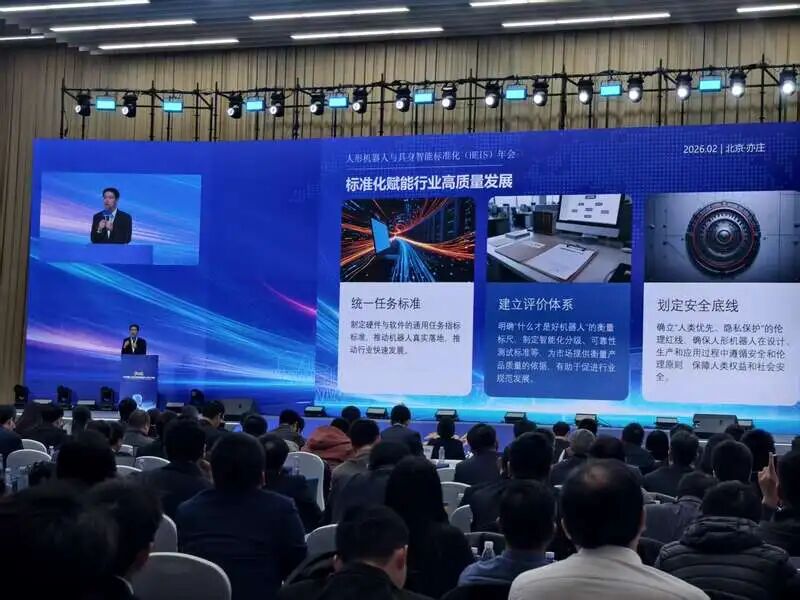
Table of contents: In February, Beijing also hosted a human-robot and body-intelligent standardization (HEIS) meeting, in which the three levels of the standard system were displayed in the background screen.
Of the six criteria, motion control is the most difficult to write and should be written first.
It's difficult because there are the biggest differences in how architectures, algorithms, and software are implemented. The Beijing Manuscript acknowledges this when explaining the drafting process, so it insists on only determining capabilities and performance, regardless of algorithms.
This was written because motion control is precisely the step from intelligence to action. The model wants to understand more about what it is like to not be able to stand, what it is like to not be able to reach, what it is like to not be able to fall after being pushed, the whole card at this step.
And this step has been the most difficult to accept in the past.
When people talk about robots in factories, one of the most frequently asked phrases by customers is "Hey, you say your distance is 0.02 millimeters, and I say I want 0.01, so I'm going to cut the price.
So the movement controls the first one that is written into the standard, not by chance. It is the closest link to the entire perceived mission chain, from being able to actually enter the factory to work.
03.
Watershed in April 2027
The standard has been published, but has not yet entered into force. More than five months after its approval and implementation, it falls on April 1, 2027.
At this point in time, it is the real watershed of the industry's destiny.
Before entering into force, these 6 standards are recommended national standards, which enterprises can see and can not use. After entering into force, it will become the direct basis for product conformity and verification certification. According to an industry report in October, compliance is no longer a directional requirement, but a deadline engineering task.
It's good for the head. Yu-Gi-Oh! and Yu-Gi-Oh! are companies that have systematic R&D and testing, and the standard is to give them the quality system behind the books and raise the threshold with their hands.
There's a lot of pressure on the tail. Testing certification costs money, technical indicators are aligned, and the pace of R&D can be disrupted. Those who rely on a demo video to finance their robots will face an inevitable problem for the first time since April 2027.
The report also gives a cooler judgment. The industry is in a cold-heat bipolar phase, and the first round of clearance will be completed in the next two to three years.
The standard is not the reason to know, but it is the reason to know. When everyone has to use the same measurement, who is really going to work and who is just dancing and can't hide.
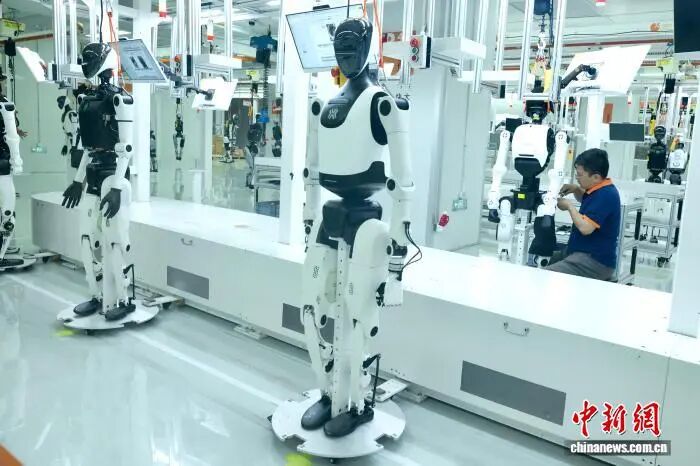
Chart: assembly and test production lines of the humanoid robot superfactory, robots at work in production mode, workers engaged in operations.
So the next time you see a humanoid robot doing a surprising move, whether it's dancing, flipping over, or picking up a car, do not rush to applaud.
Ask it three questions.
Whether it has a real job contract, who signs it, which step it accepts. Its good rate can't be stabilized, it has to look at a record running continuously for a month, rather than a demonstration.
These three answers determine whether it is a functioning robot or a performing robot. After April 1, 2027, this distinction will be made clear for the first time by a national standard.
The scale has already been raised. The question remains who will pass and who will not.
The time of judgment has come.