It doesn't sound complicated to tighten screws with screwdrivers.
But when you really move, you often have to move a little bit, turn a little bit, step back, and then rearrange. Instead of remotely manipulating robots to collect data, this process will only test patience. Even skilled numerical miners from Great Britain, faced with tasks that require extreme precision, may not be able to give a smooth enough demonstration from start to finish.
This poses a question to the post-training model of visual language action: What kind of experience should robots learn from if it's difficult for a number of miners to draw a near-perfect trajectory on their own?
A team from Shenchunhua University of Zhejiang, together with the Chinese Institute of Telecommunication Artificial Intelligence (TeleAI) and the Phnom Penh Intelligent Cloning team, has proposed Graph-Reweighted Behavior Cloning (GR-BC) to address this issue.
The team is considering another possibility: a better path to success, which may not be entirely present in a single demonstration, but may be hidden in the connections between multiple attempts. Putting these experiences into the same diagram, can we first find a better path in the brain of the graph, and then use it as a referee to guide robot learning in actions worth imitating?
Currently, the work has been received by CORL 2026 and the paper and code have been made public.
Graph-Reweighted Behavior Cloning with Human Interventions for Precise Robotic Manipulation
Link to the paper:https://arxiv.org/pdf/2610.20504
The main page of the project:https://gr-bc.github.io
The code link:https://github.com/Gamma-Robot/GR-BC
Core method: retrieve progress with a graph, then load the action

Figure 1 GR-BC: Constructing, reverse search, weight training and new trajectory backflow.
Step 1: Connect the decentralized experience
To judge whether an action is good or bad, it is first necessary to know how far away the robot is from completing the task. The team observed that progress in precise tasks is relatively strong within the task. Putting multiple attempts at the same task together and using the links between them can provide a more concrete basis for judging progress.
The GR-BC uses a frozen MCR (manipulation-centric representation) visual encoder to extract representations from three camera angles, combined with a crawling state, to co-encode nodes in the graph.
There are two edges. The time edges connect adjacent nodes on the same trajectory at fixed intervals, the cost of which is equal to the number of crossings, so the distance on the graph corresponds naturally to real physical time.
Similar sides are responsible for bridging separate trajectories, requiring three conditions to be met at the same time: that K is adjacent to each other in each camera's perspective, that the state of the claw is consistent with each other, and that the distance after integration is less than the threshold value according to the local scale. The local scale used for integration is the visual distance of the node adjacent to the switch, which allows the threshold value to remain consistent under different tasks and perspectives.
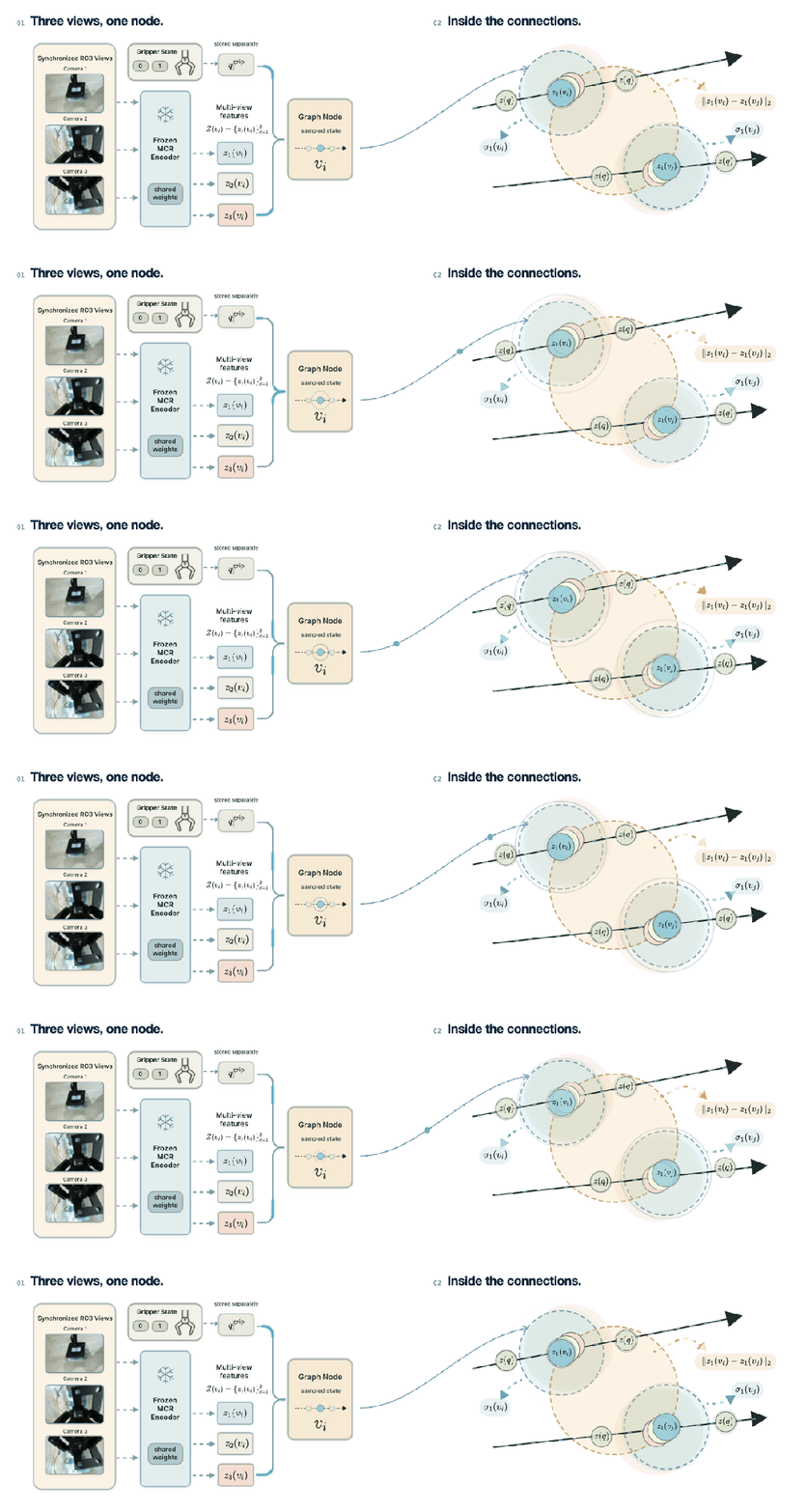
Figure 2 shows the multi-point state, the claw state and the cross trajectory.
Step 2: Searching from the Reverse to the Successful End
Using the cost-to-go and chart search ideas of reinforcement learning, GR-BC translates the progress into: how many steps are needed from the current state, along a path already supported by data, to success? Once the chart is constructed, the algorithm starts from the successful endpoint, using reverse Dijkstra searches to calculate the remaining steps of each state to the smallest chart path to success.

Figure 3: Screw tightening and graphics card insertion: movements, image retrieval of progress and corresponding changes in weight.
Step 3: Check the net progress and mid-return at the same time
The remaining step number is mapped to the graph retrieval progress (GRP) of 01. Each movement block must be checked simultaneously by two methods: the net progress exceeds the threshold and the maximum return of the relative starting point is not exceeded.

Formula 1 of the block weights rule, extracted from page 6 of the paper:
Δ indicates the net progress of the endpoint relative to the starting point, d indicates the starting point progression minus the minimum progression within the block. The weight is directly multiplied by the loss of supervision of the original VLA, without the need to modify the architecture; the zero-weight segments do not contribute to the gradient, and the corresponding state remains in the graph.
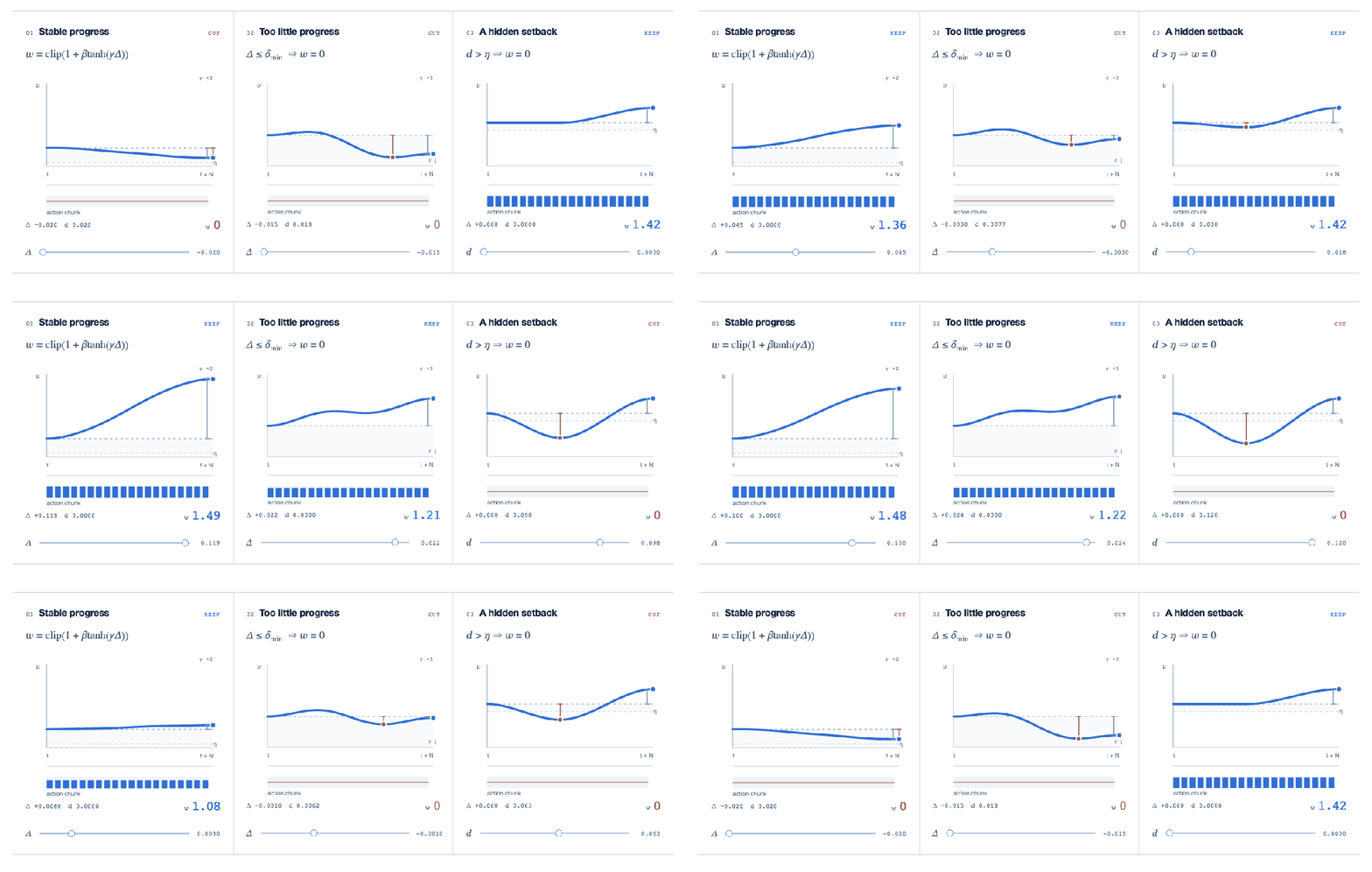
Figure 4 shows how net progress and mid-return affect the training weight of the movement segment.
After each round of execution, new collected successes, failures and intervention trajectories are added to the data pool. System expansion charts, re-search and update weights, and the next round of offline training strategies. New experiences can also change the learning value of old segments without the need for additional training reward models or progress predictors.

Figure 5 of the GR-BC off-line representation
Experimental results: four fine operations with an average success rate of about 91%
The real-machine experiments covered four-hole parts assembly, graphics card insertion, dual screw tightening, and memory bar insertion. In these, the DDR4 slot opening is about 1 mm, with higher requirements for position and gesture alignment.

Figure 6 Demonstration of the operation and robotic disruption of four types of real robot tasks.
The main experiments were based on X-VLA, with the methods starting from the same behavior clone checkpoint. GR-BC's final success rates on the above four missions were 98%, 93%, 89% and 83%, respectively, an average of about 91%; the DAgger-class power aggregation baseline averaged 64%, a difference of about 27 percentage points.
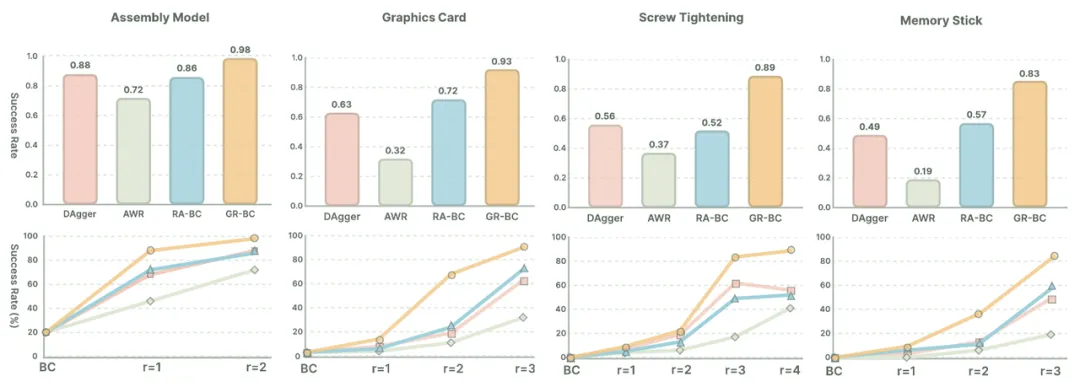
Figure 7 shows the success rate of the X-VLA four missions and the change in iteration.
Independent experiments with graphics card inserts also covered SmolVLA and π0.5, with GR-BC both superior to their respective DAgger baselines, supporting its backbone compatibility on the task. 91% of the above only refer to the results of four X-VLA tasks.
Progress Assessment: Is there a step backward on the path to success?

Table 1 of progress assessment and input conditions; GRP for internal diagnosis.
Figure 8 shows local deviation, redirection and slippage, with the GRP's progress signal falling backwards.
Each task has a fixed rating of 30 successes and 30 failures. In four missions summarized, GRP has a success rate of 0.97, and a local deviation detection rate of 0.92. This means that it not only distinguishes between successes but also captures the steps in the success process.
Summary and Prospects
Real machine data is not easy to come by. One insertion, one round of alignment, one stage of artificial correction, behind which are equipment operation and human time. Requiring miners to submit a near-perfect complete demonstration in advance often means more retesting, and may cause many locally effective experiences to be discarded together.
GR-BC brings together effective experiences from multiple imperfect attempts to provide new ideas for pre-training data cleaning, post-training data quality optimization, and task-progress-based data benchmarking. By connecting decentralized experiences, identifying effective action segments, allowing data values to be judged from the success of the entire trajectory to the real contribution of local action. This idea is also expected to help strategies to learn bias correction and frustration recovery to support more robust robot operations.
The author's team description
The first author, Li Xiaomong, from the CAD&CG National Priority Laboratory at Zhejiang University, participated in this study during his internship at the Chinese Telecommunications Artificial Intelligence Institute (TAI). The work was done in collaboration with institutions such as Zhejiang University, TeleAI and Zhejiang Intelligent.
© THE