“ The developer's distance from the scene is re-measured.
Rents plummeted by 70%, a figure misread by the market.
When most people are claiming that the lease on robots has collapsed, the Robotics Workshop is more willing to understand the 70% drop as a return on average.
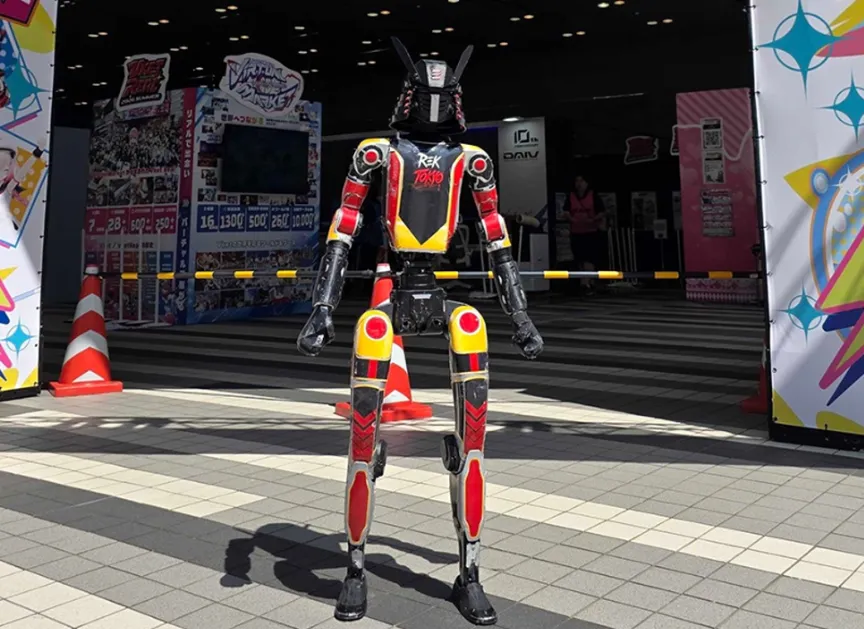
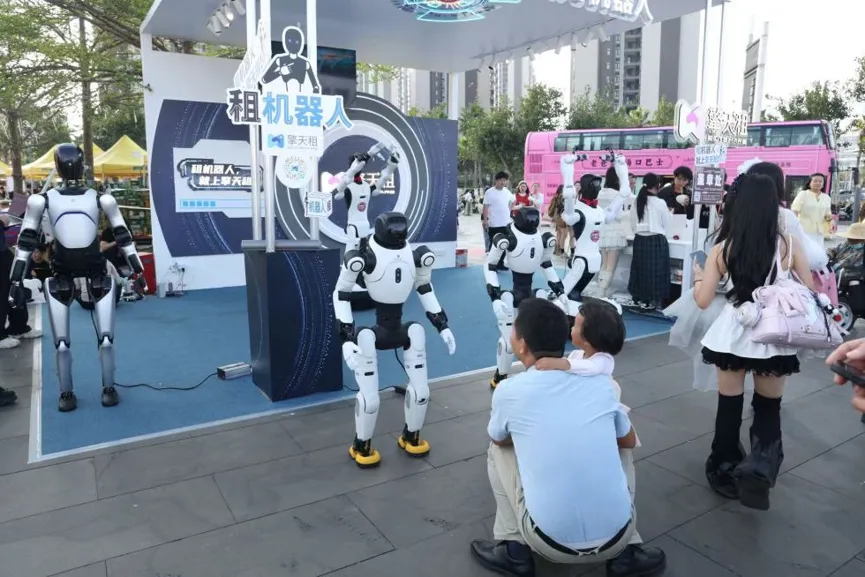
After the spring of 2025, a humanoid robot waved at the entrance of the mall, with a single-day rental price of 15 thousand yuan, a change in the price per day, customer queues, etc. Today, the rental price of the mainstream model fell to 1 to 2 thousand yuan, and individual platforms even hung a one to 200 yuan a day quote price.
If you look only at this price curve, the conclusion seems clear: the robot rental bubble has broken.
After all, the profit space of the hardware itself has been squeezed to the point where it is insufficient to cover the hidden costs of naked machine deliveries, on-site maintenance, manpower residency, failure response, all of which are engulfing thin rent gaps. Continuing to stay in the hardware lease coordinate system, the tenant faces a negative and a gamble.
Under this sound wave, the choice of platform players can illustrate the problem. With less than a year of engine lease in place, almost a January round of financing in the first half of 2026, valued at up to 7 billion yuan, explicitly invested in the construction of the RaaS system.
Platform player action points to a judgment that RaaS is the turning point, and the industry realizes that rental fees themselves are no longer the revenue stream. The real profit actually comes from the ability to deliver when devices circulate at a near-cost price.
For the robot developers who are sitting in front of the screen writing code, modeling, and pairing scenes, this shift is far more important than how much the rent has fallen. It's re-writing the hidden balance sheet in front of every developer.
It's just that most people don't realize that the most valuable thing in their hands is no longer the hardware or the model, but the distance between the actual scene.
01.
Rental collapse killed, never rented
To equate a fall in rent directly with a recession in the industry is an overly lazy attribution. The real question that needs to be asked is: What was the part of the price that fell on?
After the spring of 2025, the lease of humanoid robots is essentially a scarcity package. In 2025, Utrecht shipped more than 5,500 units, about 5,200 units, while the entire industry added less than 1,000 units in 2024.
At the time, rents of tens of thousands of dollars were bought not by robots, but by the eyes of those around them.
When supply volumes to lease-related businesses exceed 153,000 and new registrations reach 382,000 by 2025, scarcity premiums will inevitably collapse.
Even more lethal, the demand itself has not been repurchased. Orders for entertainment shows and commercial marketing accounted for up to 65% at a time, with robots returning to warehouses eating ash, and humanoid robots typically depreciating between 20% and 30% annually.
There is no mathematically established trade logic for making money with equipment, under the double squeeze of depreciation and vacancy rates.
So China's North Korea's 9th conglomerate evacuation ground, which actually killed off, is the fact that China is selling robots as futures to China. It's empty, it's a bargain space for hardware transport links, not the real price of robot services.
Meanwhile, what the engineers are doing is the exact opposite. They don't own the equipment, but instead pack the contents of the engine body + operator + content sorting + insurance + on-site debugger into a delivery result, charged according to the scene.
The apparently unreasonable price difference between the total package price and the price of the naked plane is actually the cost truth between the fake delivery van and the genuine delivery van.
Today's robots don't have the ability to operate autonomously, and every single one of them has an engineer on site.
The lease collapse exposed the fact that there is a severe shortage of delivery capacity as the entire industry moves from hardware to hardware to services.
02.
The threefold changes faced by developers
In this round of collapse, the most underestimated beneficiaries are precisely those who write code, do skills and code the moves.
(1) First major change: Hardware
In the past, the biggest enemy of a robot developer was not being able to buy enough bodies to validate the algorithm. A humanoid robot powered hundreds of thousands of people, a university lab bought one to report on, and the budget, went shopping, got its hands on half a generation back.
With the advent of leases, this capital expenditure was turned into operating expenses. Developers no longer need to wager hundreds of thousands of dollars in a one-time bet on a potentially unsuccessful hypothesis, but can use a month's rent to run an entire generation on real robots.
A deeper change is that leases allow developers to define their own technology routes using scenarios for the first time.
The 95% success rate of a robot running in a lab, and the 95% success rate of a robot running in a shop, in a factory, in a non-structured environment, are two completely different engineering problems. Leasing decreases the cost of real-world testing from buying a machine to renting a scenario, which means an increase in the quantity of iteration frequencies for teams of intelligent algorithms.
The reason why the RaaS model became the core path to scale-down in 2026 is that it transforms robots from a one-time asset buffer to an input buffer that continues to generate scenario data.
For developers, rental platforms actually play the role of a scenario-distributed network. You don't have to go out and find customers, talk to the site, run the site, you just have to plug in the algorithm to get robots to run real tasks and get the data back.
(2) Second major change: Logic of data acquisition
In the field of physical intelligence, there is a bottleneck that has been repeatedly mentioned, and real machine data is not enough. The success rate in a simulation environment can be more than 90%, whereas the real home environment is only about 10%. Related reports show that as of September 2026, the highest success rate in the real machine operating table is only 24.4%. The gap is not in the model architecture, in particular in the context of the data, with failed samples, with real interaction data with physical constraints.
In the past, the paths developed by developers for obtaining this type of data have been extremely difficult. Self-build data collection teams, remotely operated equipment, location tracking, track recording, cleaning labels. The fixed cost of a data output line is enough to consume most of the financing of an early team.
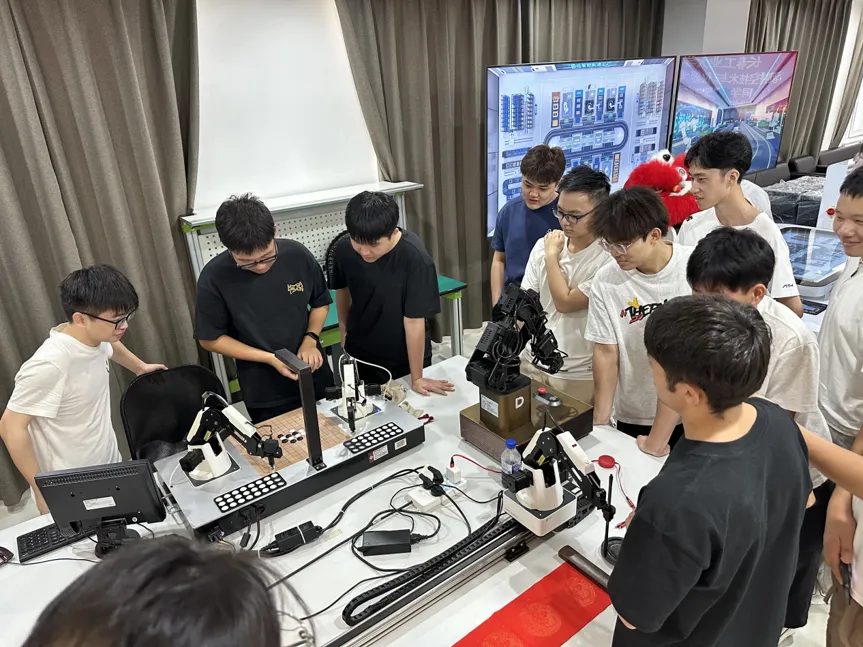
Renting changes the marginal cost structure of obtaining data. Data is a by-product of operations, rather than something that requires a single item to be extracted when robots you rent themselves are performing tasks in a particular business scenario.
That's why when capital plunges into a lease, the platform is instead coded. Every robot running in a real-life scenario is accumulating interaction samples for algorithms, providing feedback on product definitions; in a humanoid robot circuit, scaling scene data is an asset that is more scarce than hardware capacity.
The real value of GMV, which has reached over 35 million end users, lies in the real operating network behind it, which covers multiple scenarios, multi-models, multi-tasking types. For developers, accessing the network is equivalent to accessing a continuous supply of scenarios.
(3) Third major change: Coordinate system of skill pricing
The market is confirming this with pay signals. The salary premium for robotic AI integration engineers ranges from 35% to 45%, while the industry is faced with incompatible hardware architectures, intermediaries, and smart frameworks, and the extremely high cost of cross-platform learning for engineers.
These two facts, put together, point to the same thing. The market is willing to pay a premium for hydrogen's ability to insert an algorithm into real-world scenarios and let it run through hydrogen.
The division of the rental market is accelerating the formation of this pricing logic. After the platform standardizes the base body + operator + insurance + modeling, there is a real scarcity of people who can migrate and adapt between different entities, different intermediates, different scenes constraints.
For individual developers, this means a strategic turnaround. Rather than betting on a specific platform, it means the ability to translate between different platforms, rather than betting on a specific platform. Leasing platforms are naturally an amplifier of this ability, because you are facing a scenario with specific tasks, specific constraints, specific failure patterns.
03.
But don't romanticize rent, it increases opportunities and increases vulnerability.
It is necessary to be cautious that writing about the impact of leases on developers as an optimistic narrative that has disappeared is a misdirection.
While open-source hardware and low-priced kits do lower the thresholds, the performance limits of low-threshold hardware are deadlocked. Algorithms that have been validated on a multi-million-dollar platform and migrated to industry-level nationalities, the difference in sensor noise, execution accuracy, and control frequency is enough to make most silicon labs fail.
The real value of a lease is that it allows you to experiment with an industrial-grade entity without having to take the risk of buying it out of the equity.
There is a more hidden vulnerability. When rental platforms become the main threshold for scenario data, developers' access to the data depends on the platform's data governance strategy. Currently, the main platforms have not developed clear rules for data openness and validity, who has the right to use the interactive data generated in operation, under what conditions to use it, and whether it needs to be priced separately, remains unclear.
This is a governance risk that developers who use backflowing data as a core iterative logic need to think about before they can access it, rather than a technical problem that can be solved by signing an agreement.
04.
The distance between the developers and the scene is re-measured
The rental slump is not a sign of a recession in the industry, it is a calibration of the value that robotic assets must experience when switching from a shortage of lithium to a rise in lithium productivity.
In this calibration process, traders who are not capable of delivering are excluded, leaving behind service networks that can plug robots into real workflows. Whereas the position of developers in this new structure depends on a simple question: how far away are you from the real-world hub where robots are actually working?
In the past, this distance was determined by capital, who could buy a robot, who could build a laboratory, who could build a data collection team, who was closer to the scene.
Leasing and RaaS have matured and are transforming the measurement unit of this distance from the size of the leased asset to the accuracy of the leased scenarios. A team of five people, if the algorithm is robust enough and the understanding of a particular vertical scenario is deep enough, can completely complete the real-world verification cycle that takes a year to run through the leasing network in a quarter.
This is a redistribution of thresholds. Hardware barriers fall, scenarios understand barriers rise; capital barriers fall, delivery density barriers rise.
After the lease collapse of 70%, the business of renting robots was indeed just beginning. But another business started, a business that turned robots into pumps to be used for productivity pumps.
This is the moment when smart app stores are popping up.