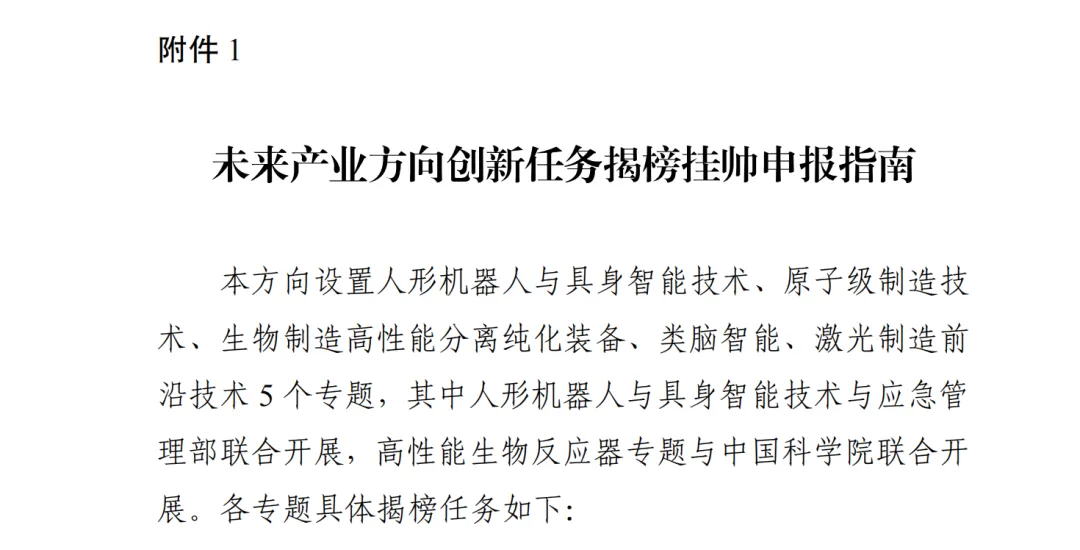
Recently, two documents in the field of robotics and artificial intelligence are worth considering. One is the launch of the 13th series of industry standard revision plans in 2026 by the Ministry of Industry and Informatics, which published the outline of the Future Industry Standard Project Schedule. The other is the launch of the 2026 Innovation Mission Unveiling Unveiling Unveiling Unveiling Unveiling Unveiling Unveiling Unveiling Unveiling Unveiling Unveiling Unveiling Unveiling Unveiling Unveiling Unveiling Unveiling Unveiling Unveiling Unveiling Unveiling Unveiling Unveiling Unveiling Unveiling Unveiling Unveiling Unveiling Unveiling Unveiling Unveiling Unveiling Unveiling Unveiling Unveiling Unveiling Unveiling Unveiling Unveiling Unveiling Unveiling Unveiling Unveiling Unveiling Unveiling Unveiling Unveiling Unveiling Unveiling Unveiling Unveiling Unveiling Unveiling Unveiling Unveiling Unveiling Unveiling Unveiling Unveiling Unveiling Unveiling Unveiling Unveiling Unveiling Unveiling Unveiling Unveiling Unveiling Unveiling Unveiling Unveiling Unveiling Unveiling Unveiling Unveiling Unveiling Unveiling Unveiling Unveiling Unveiling Unveiling Unveiling Unveiling Unveiling Unveiling Unveiling Unveiling Unveiling Unveiling Unveiling Unveiling Unveiling Unveiling Unveiling Unveiling Unveiling Unveiling Unveiling Unveiling Unveiling Unveiling Unveiling Unveiling Unveiling Unveiling Unveiling Unveiling Unveiling Unveiling Unveiling Unveiling Unveiling Unveiling Unveiling Unveiling Unveiling Unveiling Unveiling Unveiling Unveiling Unveiling Unveiling Unveiled Unveiling Unveiling Unveiling Unveiling Unveiling Unveiling Unveiling Unveiled Unveiling Unveiling Unveiling Unveiled Unveiling Unveiling Unveiling Unveiled Unveiling Unveiling Unveiling Unveiling Unveiling Unveiling Unveiling Unve
Together, the two documents cover a full-chain policy framework for human robots, from technical offensives to commercial landings, from which we can begin to understand China's technological breakthroughs and scenic landing schedules for human robots with physical intelligence.

According to the documented plans, 2026 will be the policy-setting year. The unveiling of the mission will begin, industry standards will begin to be drawn up, companies will get a task book, start to form an offensive team, and define their own division. 2027 will be the year of the technical offensive. The offensive year for 18 missions will reach its peak, and some technical indicators will start to meet expectations. The first demonstration scenarios will begin, and the first certified products will begin to enter the market.
Overall, 2027 and 2028 will be the two most critical years of the five years. Technology can't break through, standards can't land, scenarios can't be verified.
01.
Scenic Political Economy
Scenes are the most frequently discussed topics of any human-robot industry report in 2026: factories, homes, warehouses, shopping malls, and almost every entry-level company is repeatedly arguing that their choice of scenarios is right.
The task of unveiling the assignment seems to give a partial sequence of landing scenarios. The task is to divide landing scenarios into three categories: industrial, residential, and special areas. Each category has corresponding basic quantification goals and metrics. Industrial scenarios refer to automotive manufacturing, 3C manufacturing, and storage logistics.
The classification itself is not news. Putting three types of scenarios together and simultaneously looking at their quantitative thresholds and technical indicators is really interesting, because this is expected to be the baseline for promoting high-quality development in the industry. Among them, the most specific indicators of intelligent operational evaluation of industrial scenarios are: positioning accuracy no more than ±0.3mm, repeat positioning error no more than 0.2mm, operational response time no more than 40ms, sophisticated operation success rate no more than 98%.
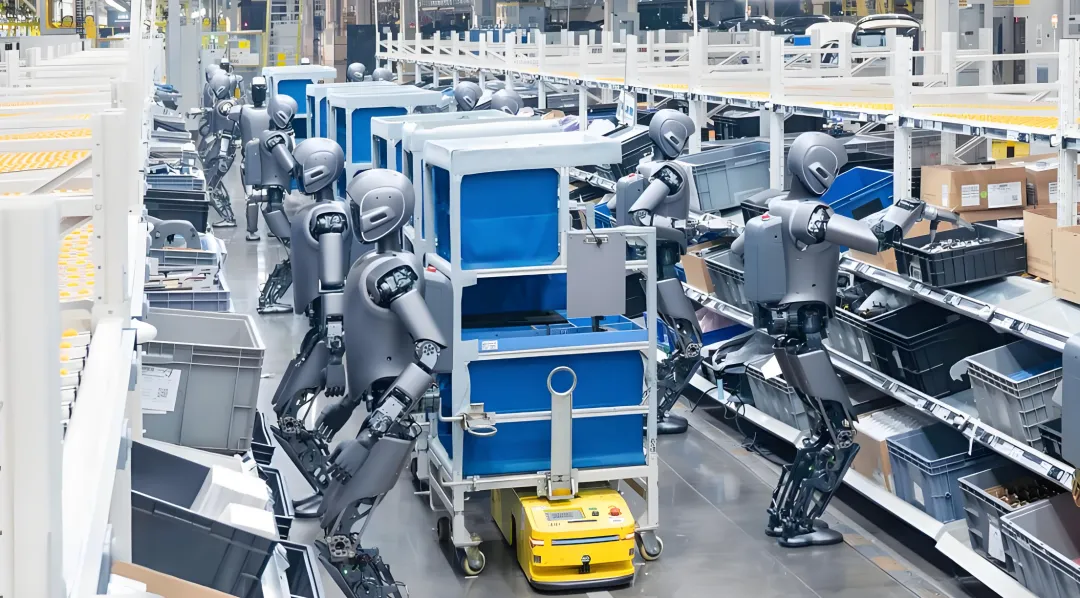
Three scenarios, three standards, three difficulty scales. Overall, the precision requirements of industrial scenarios remain the most demanding, but scenarios are the most manageable; the perceptual requirements of residential scenarios are the most complex, but demand is the most dispersed; the response to special scenarios is the most extreme, but the market is relatively narrow. The nature of this ranking answers the question of where the smart industry should prove itself first.
The factories of the industrial scene, naturally, are a high frequency, low risk, quantifiable data collection site. Each selection's success or failure carries a real data with physical feedback. This is the logic repeatedly emphasized by companies such as Zhejiang, Jingdong and others, that the warehouse itself is a 7×24-hour data collection facility.
Specific scenarios may be the earliest type of man-made intervention to be implemented, with strong policy drivers. Since high-risk scenarios do not have people on the ground, robots enter the mine wells, the logic is essentially that humans do not go, robots go, the legitimacy of this need is almost uncontested. And the Emergency Management Department's head of humanoid robots with the theme of intelligent technology, shows that such scenarios have been incorporated into the strategic security system. Mines, tunnels, disaster relief, these scenarios are extremely risky, the need for robot replacement is the strongest. Policy willingness to buy is clear, and it is crucial to see that products cannot withstand bad environments.
It is not possible for the future industry to focus on a single scenario, but it is being laid out on three routes at the same time, using different evaluation criteria to select the technology that really works in different scenarios. We believe that whoever meets the landing indicators first, whoever hopes to take a large enterprise's procurement form, also means to get a large-scale entry ticket into the next stage.
02.
Technical logic behind 18 missions
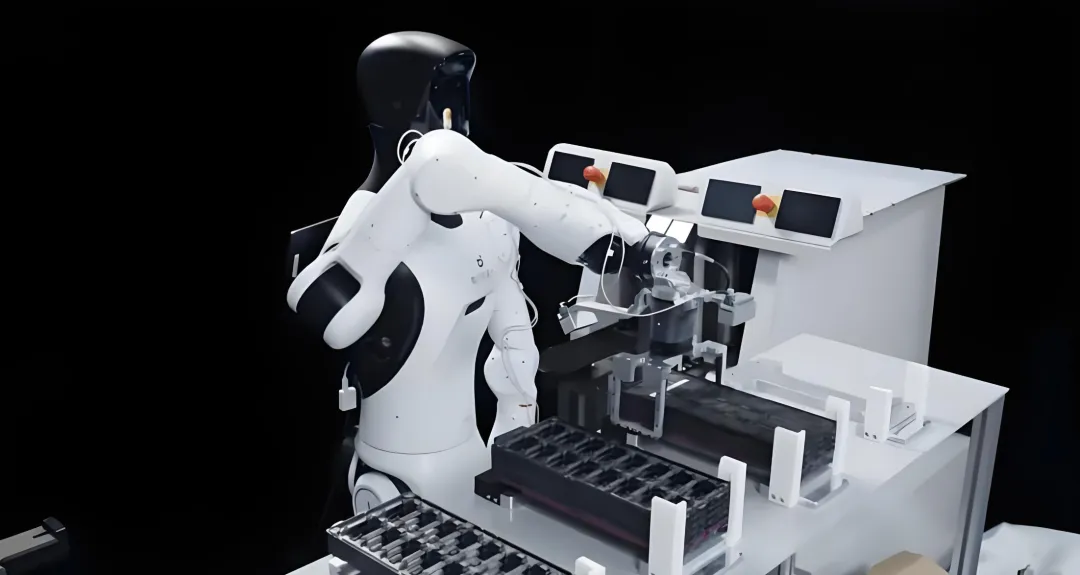
Of the 18 tasks, 7 were hardware-related, 5 were algorithm-related, and 6 were platform and data-related.
The uppermost layer is the model layer. Multimodal large models require visual, language, power touch, intrinsic state four-mode synergy, and the middle layer is the algorithm and control layer, such as full-body motion control requires dynamic equilibrium recovery time not to exceed 0.3s, complex topography passages are 97% successful. The bottom layer is the hardware and platform layer. For example, integrated joints require a power density of more than 8kW/kg. Flexibility requires more than 15 active freedom sensors.
Each layer of the map has clear numerical indicators. The indicator itself is not a technical issue, it is a threshold. The ability to get these numbers out before 2028 may determine whether an enterprise qualifies for a plaque table. The big model, the world model, the motion control algorithm, the three make up the three layers of the brain.
Another feature of the 18 missions is that they cover the entire chain from prototyping to mass production. In addition to algorithms and hardware, they also include high-quality datasets, full lifecycle management platforms, cybersecurity verification platforms, after-sales repair platforms, and data aggregation and detection platforms. This means that the Ministry of Industry is not just doing technical offensives, but building a complete industrial infrastructure.
Each task is not isolated, each task forms a mutually supportive structure between the tasks and the tasks. Since the list is not a research fund. In the past, the companies that receive the list are the ones that receive back-book orders; the companies that complete the list are the ones that get into the list of certified suppliers. This defines the boundaries and thresholds of large enterprises.
2028 is not the time when a humanoid robot can start to function, but the time when it can begin to validate the scale delivery capability with quantitative indicators. Or 2028 is not the deadline, it is the real national starting line. From this point of view, re-read the 18 unveiling tasks, their internal logic becomes clear, not supporting all directions, but defining what is a qualified humanoid robot supply chain.
The three lines are combined and redefined; homologated alternative standards in the field of humanoid robots. It is not a passive replacement for mobile phone chips, but in the new battlefield of robots, actively designing a set of autonomously controllable supply chain standards.
03.
Quantitative output countdown, three core variables waiting to be answered
From the Mission Guideline's 2028 goal, the mass production of humanoid robots enters reverse time. The three core variables decide whether or not to deliver on time. The original supply chain may need to be refreshed and the original good rates re-accumulated.
The first variable is whether the end-side deployment capability of a large model is universal. The 18 tasks require end-side reasoning time not to exceed 70 ms, support low-precision quantification and lightweight compression deployments, and the model adapts to the mainstream robotic framework coverage of more than 92%. This means that the intelligent large model must be submerged from the cloud to the side, from the training mode to the reasoning mode. Currently, some enterprise brain models are already in machine deployment.
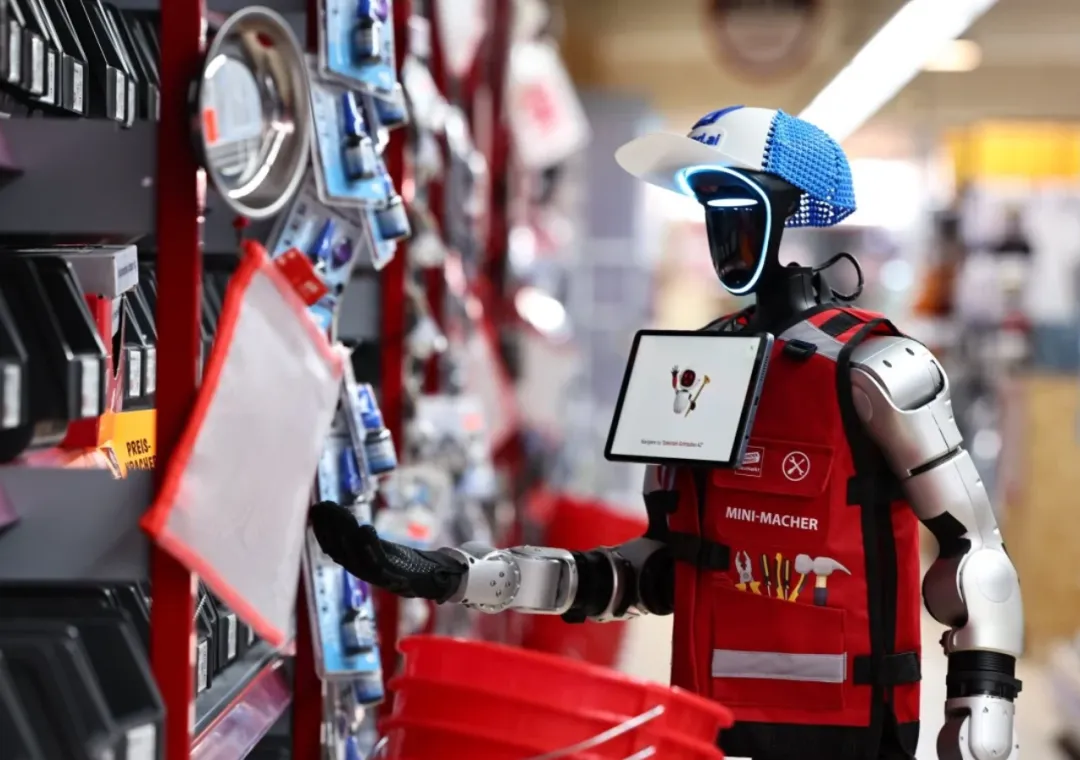
The second variable is whether hardware costs can be reduced to acceptable scenarios. The landing capacity of industrial, residential, and special three types of scenarios determines the commercialisation speed of humanoid robots. Whether workers can be replaced in factories, accompanied in households, and rescued in mines. These scenarios are more important than technical parameters.
The price of the products of some of the leading enterprises is already close to the consumer level threshold, but the industrial scenario for reliability requirements is much higher than the consumer level, and the cost reduction space is still to be verified. The cost of the BOM of an industrial-level humanoid robot must be at least 100,000 yuan below, in order to run the business model in the factory scenario.
The third variable is whether a data flyer can actually run. Data is a fuel that is physically intelligent, but data collection, marking, governance, sharing, each link is faced with scalability challenges. What does 10 million hours of data mean? What does that mean?
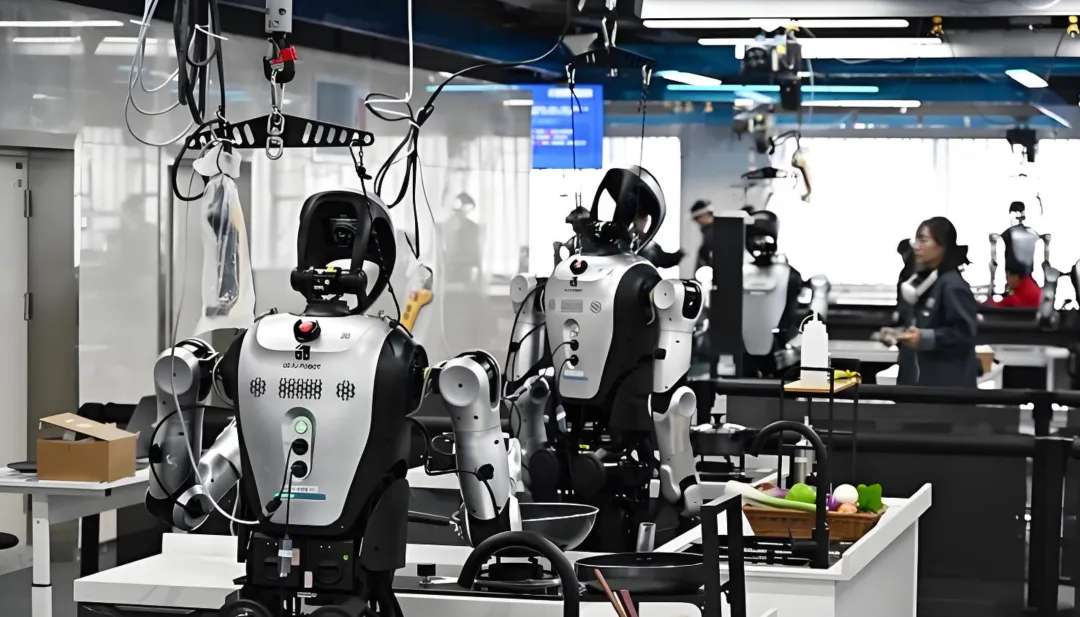
The difficulty of collecting data is not in the technology, but in the cost. A robot works 8 hours a day, only 2,920 hours a year. 10 million hours are required for 3,425 robots to run at full load all year round. This is just a total. If 30 scenarios are to be covered, each scenario requires at least 100 robots, and each scenario requires at least 30,000 hours of data.
This is not an automated problem, it requires a lot of artificial marking. An image marking can cost a few cents, but 10 million hours of video marking is billions of dollars in investment.
Who is willing to share data? Who has the drive to collect high-quality data? Who defines the standards and formats of data? How to stabilize generalized scaling? The answers to these questions determine whether data pilots really work. The construction of data platforms led by institutions such as the China Communications Institute, Shenzhen City Institute for Artificial Intelligence and Robotics, is underway. But the operation of data pilots is not just a platform issue, it is a business motivation issue.
At the end of the day, a human being is just a carrier - AI, data, scenes, the combination of the three, which is indispensable, is the true core of the industry.
04.
The global human-robot industry is in a dark war
Why such a detailed project to unveil the hangouts could be related to the current global human-robot race that is shifting from the competition to the dark war.
The U.S. has banned Chinese robots, and the obvious competition is products and scenarios. Figure deployment at the BMW plant, Tesla Optimus' own factory trials. Companies are fighting over who runs first to land.
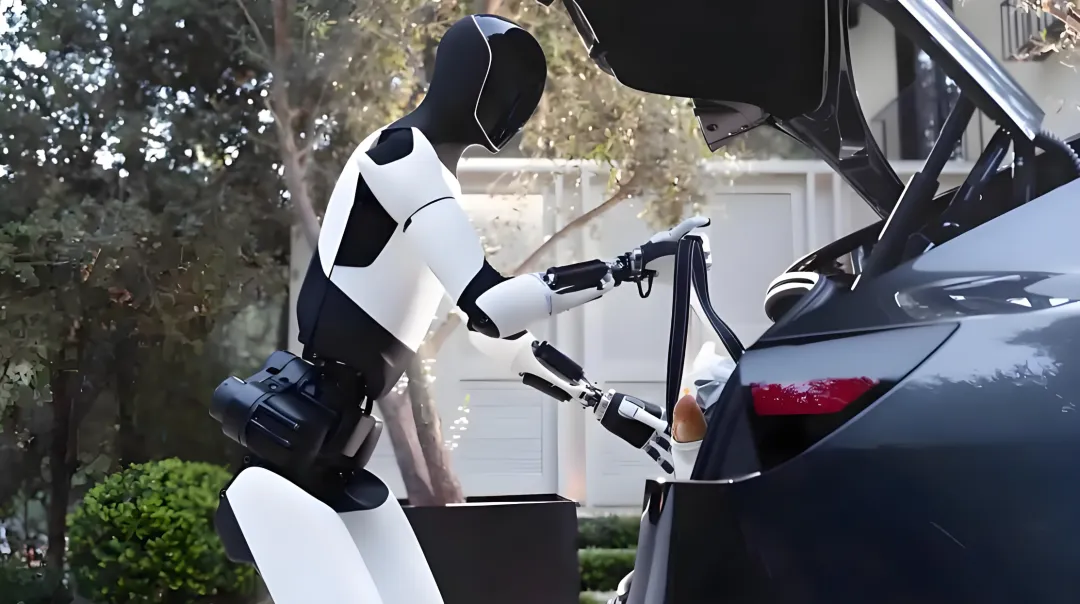
In the United States, NVIDIA is becoming an infrastructure provider for the robotics industry through the Isaac platform and the Jetson series of chips. Figure and OpenAI are essentially an integration of AI capabilities and hardware capabilities. Tesla Optimus has advantages in a triangle of self-developing chips, self-developing algorithms, and home-factory use scenarios.
On the Chinese side, after the entry of the national team capital, the division of the industrial chain is being rebranded. Shenzhen, Guangdong, Shanghai, Beijing, several industrial clusters are in the heights of humanoid robots. Shenzhen has excellent choice, intermodal dynamics, Shenzhen Institute of Artificial Intelligence and Robotics is one of the core drafting units to reveal the link.
The key to the dark war we believe is still data. Figure's production line data accumulated after being deployed at the BMW plant is its core asset. Tesla Optimus' own factory usage data is the key to its training of large models. Chinese companies have the advantage of supply chains and large-scale manufacturing, but data accumulation is still short-lived. Factories don't let robots in, real reliable data can't be obtained; data can't be obtained, models can't be trained.
But it can be predicted that the timing of ChatGPT with physical intelligence will depend on three factors: model architecture, data size, hardware computing. In model architecture, VLA, world models, multi-modal integration are evolving rapidly, on the edge or on the cloud, who can run who can have the right to speak. On the data scale, the data collection infrastructure of Chinese companies is being built, but there is still a gap compared to Tesla, Figure. On the hardware power, the edge computing chip is another hand race, who can press 200 TOPS computing power below 15WPS, who has landed the key key first.
05.
Some of the details that are easily overlooked
In addition to the mainline logic, we think there are a few details and opportunities that can be easily overlooked. The first is a full lifecycle management platform. One of the 18 tasks is a dedicated full lifecycle management platform that covers homogeneous bulk human robot registration certification, identity identification, electronic fences, behavioral auditing and traceability. This means that human robots must have no identification codes like cars and must establish a traceability system like drugs.
The second detail is a cybersecurity verification platform. One of the 18 missions specifically targeting cybersecurity verification and counterattack platforms, requiring no less than 50 security detection projects such as humanoid robot integrators, sensors, controllers, intelligent models, data sets, and developing no less than 5 set of vulnerability detection tools. This indicates that the Department of Industry has begun to consider security risks while deploying humanoid robots. A robot that can enter homes and factories, a security vulnerability may be more dangerous than a phone.
The third detail is the after-sales service standard. One of the five industry standards specifically deals with after-sales service standards, and the drafting units include Jindong, Chiyoung, Cloud Deep Technology, etc. This means that human robots must be supported by a clear after-sales service system once they enter the family.
These details show that policymakers are already considering the entire chain of the human-robot industry. Not just the technology, not just the scene, but from production to sales, from use to recycling, from safety to after-sales. This systemic thinking is where this task guide is different from previous policy documents.
06.
End-of-season judgement
Going back to the questions that have been discussed in the industry in 2026. Where is the future of human robots with physical intelligence? The answer may already be written in two plans. 18 offensive missions, 5 industry standards, 10 or more demonstration application scenarios, and 40 or more landing scenarios.
Standard pioneering, scale follow-up, three types of scenario parallel advancement, large-scale end-to-end deployment, declining hardware costs, data flight operations, all of which are directly related to delivery in 2028. Industrial chain division work has been shaped.
Over the next three years, it is possible that the Chinese robotics industry will really be a key window from proof-of-concept to scale-down.