“ Mathematical understanding of the world
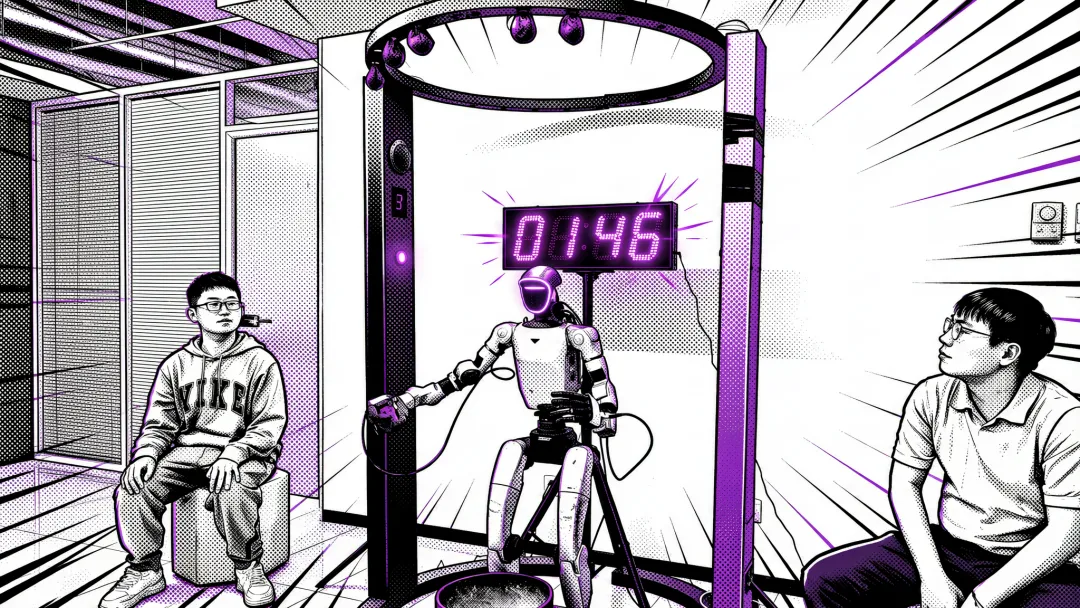
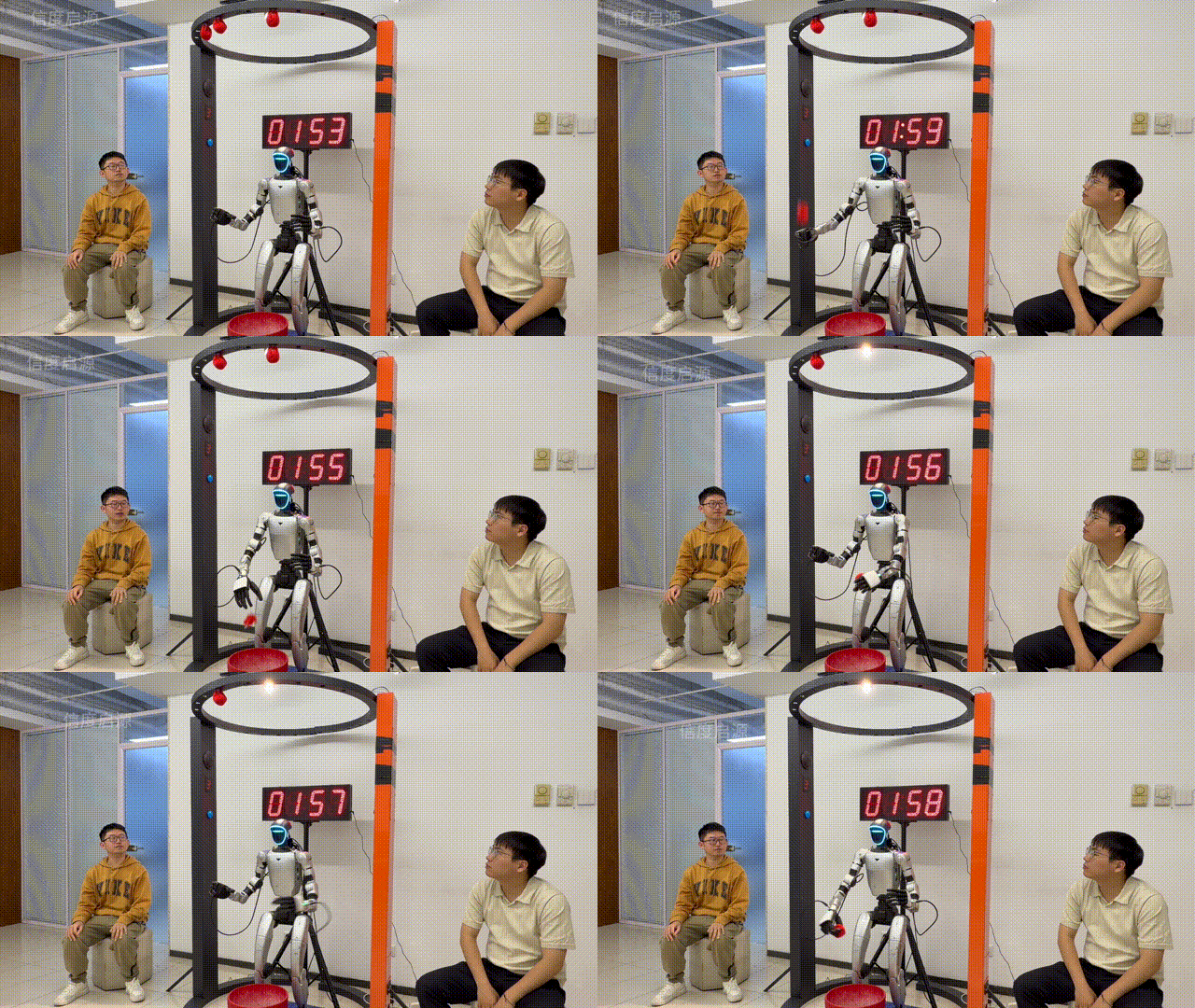
This is the world of 160 milliseconds ago.
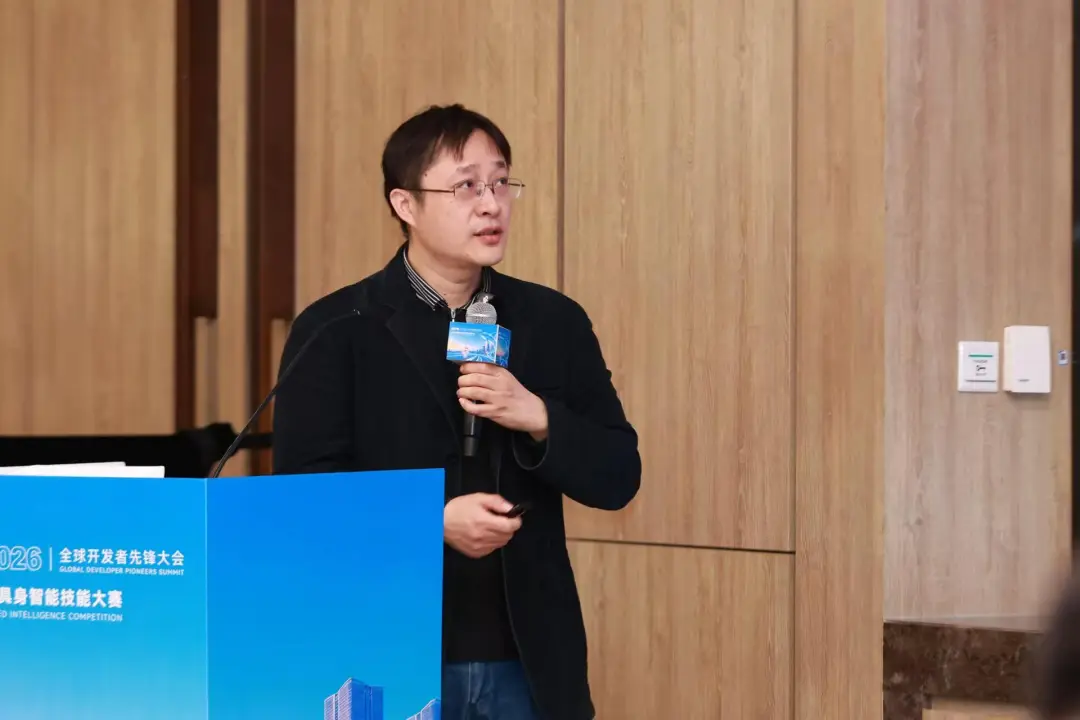
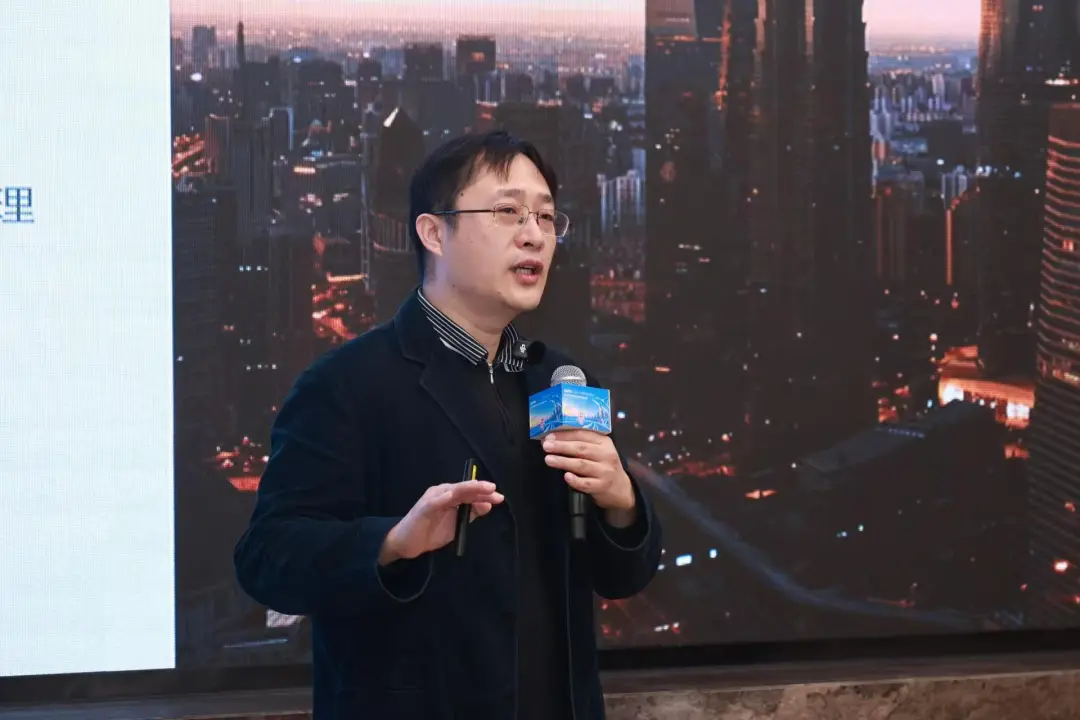
A speaker with a background in mathematical research at the Global Developers Pioneers Conference on the site, who is now a physically intelligent person, counts the time: 60 milliseconds of visual delay, 100 milliseconds of execution control, a total of 160 milliseconds, nearly one-sixth of a second.
There are industrial pain points, with multiple links, such as sensors, transmission, state reading, control execution, delayed, and overlapping, which is the slow and suspicious movement of the robot.
Hundreds of milliseconds, enough for a dynamic object to move, also means that the shape-shifting equations of a flexible object change, ultimately causing the robot to slow down.
Optimization of logic engines, end-to-end delayed compression, and the cost of end-to-end real-time logic baselines have been so high that special system engineering is required to save the brakes, as well as consuming a large amount of computing power.
For the problem of latency, credentials have changed the idea of a solution: to incorporate the capabilities of the problem of latency, predicting the present and projecting the future into credentials world models and algorithms, successfully achieving extremely low algorithmic consumption, faster algorithms, and greater generalization.
01.
160 milliseconds is a deadline.
At the next stage of the brainstorming of intelligent brains, Dixon, the head of confidence-generating technology, raised the first question: how many parameters can be added compared to the model, and what is needed now is whether robots can act in a real environment, in a timely manner.
More complex parametric models can provide richer predictions, but if the reasoning takes too long to execute this step, the predictions are already the results of the past tense.
This is exactly where physical intelligence differs from language models: it involves not only the chips and data needed to train, but also whether the end-of-the-robotic side can calculate within its power consumption, memory and time budget.
Video generation, the world action model, and the visual language action model (VLA) are all looking for the same answer after entering a real-world scenario: Can executable judgments be formed within a limited amount of time, and can they be deployed as safe, controllable actions?
It is easy to simplify predictions of the next physical state to produce more realistic videos, longer interactive projections, or to equate world models to larger-scale video production. The computational power consumption of world action models is naturally higher than that of traditional VLAs.
Speed, or speed that can be safely controlled, has become the lifeline for robots to enter the business scene.
By the time the sensor receives information and the control system receives an image, the object may have already moved. It is not enough to identify the old position behind it, but it is also necessary to estimate where the target is, where the boundary of the movement is, when the next action occurs in various noises.
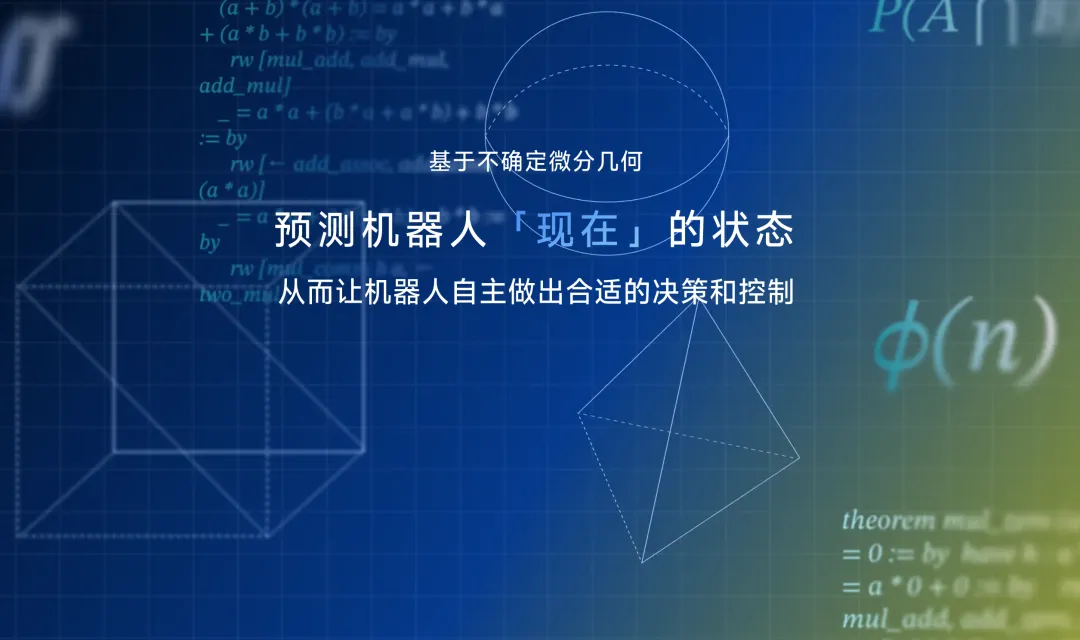
The core prediction module for trust activation is solving this problem: First, uncertain delays in the statistical perception execution of links are used, and then state projections are incorporated, and data from earlier times are used to estimate the current state of the bit and state, thus predicting subsequent changes.
Delay compensation is no longer a backlog of patches, but a built-in part of a world model that combines delayed data to predict the present and project the future of the world, providing a more efficient base of action for robots.
02.
How to measure uncertainty in the physical world
The theoretical basis behind this model algorithm is the uncertainty theory created by Dr. Daegu's assistant professor of mathematical sciences at Tsinghua University, Liu Bei.
Since its introduction in 2007, the theory has gradually developed into research directions such as uncertainty statistics, uncertainty planning, uncertainty processes and uncertainty differential equations. The Uncertainty Theory has also become a representative work in relevant fields and has been translated into multiple languages.
The uncertainty of theories and related tools provides an efficient way to measure uranium for the field of physical intelligence.
The environments faced by robots do not always have sufficient, stable data to determine the probability distribution. When intertwined with object transformations, sensor errors, external disturbances and unknown conditions, a random model based solely on predetermination can be difficult for the system to fully express its judgement of the state.
As an example of an independent event, probability measurement uses multiplication rules, and the multiplication logic of the measurement is not certain. The latter provides new tools when dealing with problems of frequency instability.
From uncertain processes, uncertain differential equations extending to robotic motion and spatial geometry, the team incorporated descriptions and reasoning methods such as motion laws and external perturbations into physically intelligent algorithms, allowing engraving errors and state changes to fall within a clearer, more controllable range of boundaries, and decided to take the next step accordingly.
Basic mathematics has long entered the field of robotics, and its value lies in whether it can make predictions fast enough and reliable enough in different hardware, tasks and environments.
03.
In order for robots to be intelligent, calculations need to be precise and precise.
Our characteristics can be summarized in three key words: strong generalization, low cost, fast.
The direction the team chose was not to have a large neural network contract all the connections, but to do the calculations that could be clearly described using mathematical models.
The mainstream model route is reverse-training, data is constantly being thrown around, and different scenarios often require a new round of collection and labeling.
As an example, the relative position, posture, and motion of objects with mechanical hands must be determined. These relationships can be described in geometry, kinetics, and dynamics. The difficulty is that the real world does not operate according to ideal parameters: sensors have noise, joints perform deviations, the ground is uneven, and the target object may be touched.
Trust is enabled by tools such as uncertain differential equations to incorporate disturbing noise into state evolution calculations, achieve convergence, and further estimate the range of states that objects and robots may be in the future.
In De Jong's view, not every mission needs to restore all the physical details. For a system that is targeted for action, success is determined not by how much information is predicted, but by what key changes are predicted.
This substitution is also reflected in what the team called the seven-channel architecture: hearing, touch, vision responsible for perception, calibration, prediction, decision-making, and control to form a follow-up processing link. The front end can still use neural network extraction characteristics; the back four modules mainly use mathematical form to process state calibration, change prediction, motion selection, and execution controls, reducing the dependence of core reasoning links on large neural networks.
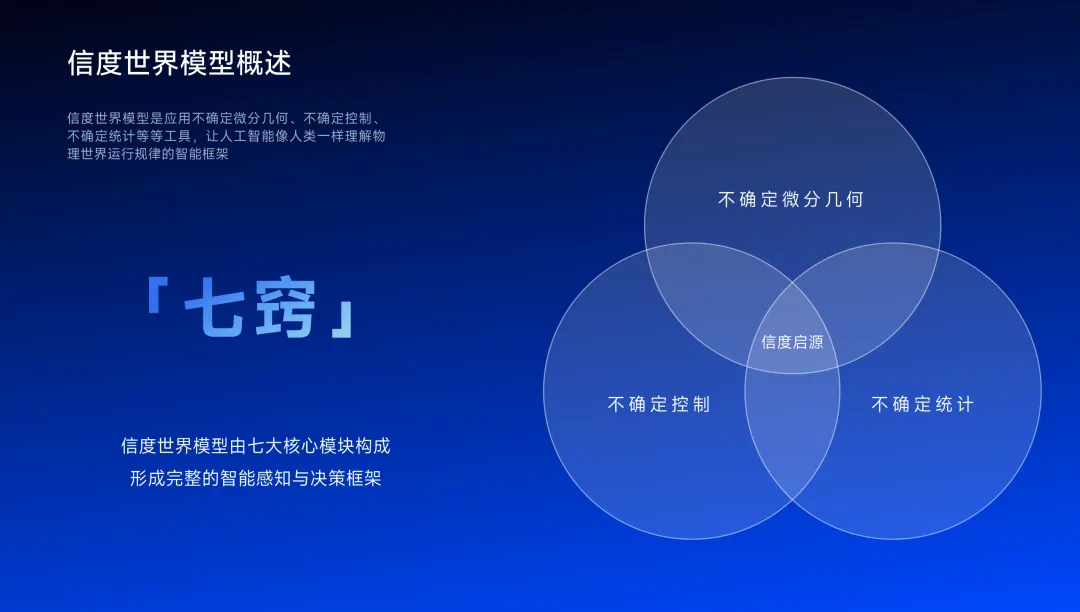
Among them, the scanning module focuses on whether perceptual states are consistent with model constraints; predictive modules estimate the status of updates based on historical information; decision-making and control modules convert task requests into actions.
De Jong mentioned that the model can even be computed in real-time on the edge of some scenarios. Many of the world models that people talk about can be said to have been inspired by a mathematical world.
04.
Dozens of sandbags were seized to verify border security
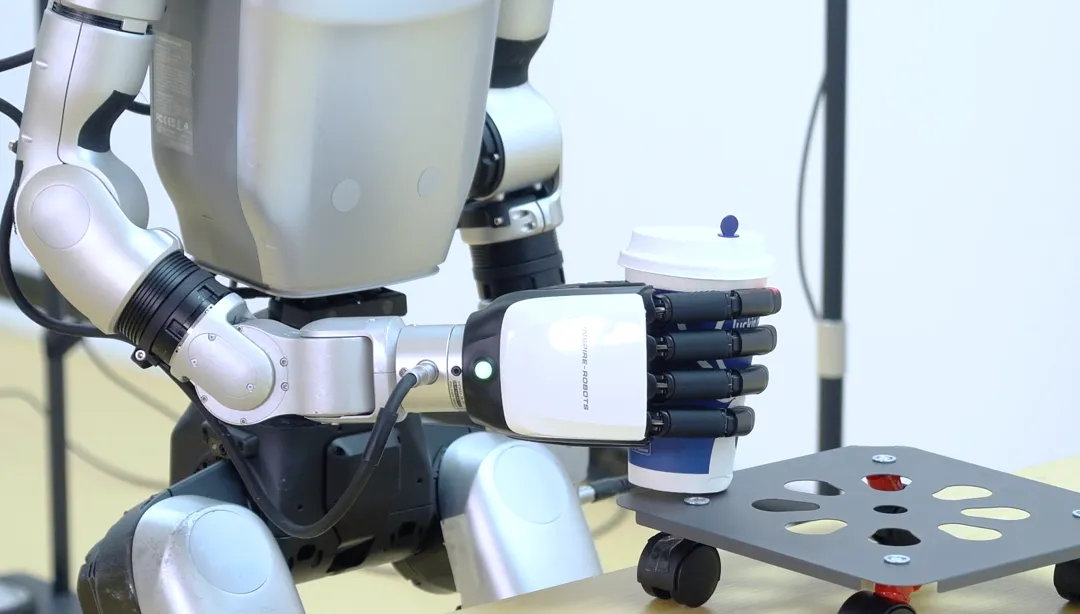
In a demonstration video in August of this year, a person pushed a paddleboard to place a paper cup, allowing it to stand at will on the table, after which the robot received voice commands to go up and grab the cup and hand it to the person next to it.
 Recently, the team has demonstrated new capabilities: in a nearly five-minute video, the U-boat's body is equipped with third-party dexterity, facing eight sandbags that fall irregularly from above, continuously completing a hand-to-hand grabbing and putting in the container. In five rounds of testing in the video, all 40 sandbags are captured and placed in the container.
According to the team, it took only a few days to achieve the ability to accurately grab dozens of irregularly dropped sandbags for reasons such as hardware equipment updates.
In a bulk application scenario, the difficulty is often more than a single grab. Replacement of jobs, materials, or mechanics, which may involve data collection, re-labeling, and controlling parameter adjustment. Testing of credentials to demonstrate the potential for cross-scenario, cross-subjective applications.
On the other hand, the safety boundaries of physical action are predetermined. Unlike routes that rely solely on data learning to form behavioral strategies, uncertain theory-driven systems directly embed physical laws, mathematical reasoning and security constraints into decision-making and control processes.
The microsecond test module determines whether the current state exceeds the credible boundary, slows down, stops or reprograms in a timely manner when it approaches the safe boundary, regardless of the response of the upper-level decision-making module.
The trust-enabled team acknowledges that the ability to execute long-range tasks is still being verified. From single robots to multi-machine collaboration, from structured scenarios to open environments, the effective boundaries of models also need to be verified based on more real-world tasks and more practical scenarios.
05.
Computational constraint is changing from a cost problem to a routing problem
When physical intelligence actually enters the application scene and becomes a large-scale production infrastructure, enterprises need to calculate not model parameters, but the input and output of the entire system. These costs determine whether physical intelligence algorithms can be deployed from demos to products for sustainable use.
As the supply environment for high-end computing changes, the treaty is no longer just a matter of accounts but a matter of routes.
Depending on large-scale training algorithms, the expansion rate depends on chip supply and procurement cycles; algorithms that directly launch algorithms based on mathematical structures are more flexible and deployed closer to the edge.
The trust-enabled team describes this path as a self-developed link that does not rely on the mainstream Western AI paradigm, ranging from the most basic theory to seven modules of autonomously constructing core predictions and decision-making algorithms, to hardware platform deployment modeling, and the entire link itself. The value lies not only in the optimization of computational resources, but also in whether it can shorten the on-site adaptation cycle, make core decision-making processes more traceable, and meet the requirements of industrial customers for data processing and security.
Writing the laws of physics into a model and allowing robots to work reliably in the real world are two different issues.
Our speed can meet a basic requirement for human-machine collaboration. Each model has its own advantages and disadvantages, and we take a balance from them.
Within the team, there is a view that big models are adapted to the world with data, and beliefs are inspired by mathematical understanding of the world, which are two worldviews.