In electronics assembly lines, plugging the connector into the main board seems simple, but requires precise, stable completion within a limited time frame. In the face of a few millimeters of interface gap, small deviations can cause the connector to stick, causing assembly failure or part damage.
The most direct way to get robots to learn this fine-grained operation is to collect high-precision demonstrations of the target task. However, with each addition of a task, a large amount of high-quality data needs to be retrieved. At the same time, we often have a lot of "imperfect" data at our fingertips: some show the right tasks but do not achieve the required accuracy; others are accurate enough but come from different tasks.
How can we use this already available data to reduce our reliance on specially collected high-precision samples?
Samsung's RX (Robotics eXperience) Lab-China team proposed ε4P (Imperfection for Precision) to train participants in flow matching by controlling which noise ranges of different data sources participate in flow matching to convert harmful, imperfect data during direct mixing into performance enhancements. As shown in Figure 1, ε4P's core idea is to identify the faulty sources of different types of data and access them separately to different noise ranges of flow matching to make full use of the effective information in the data while isolating its faulty information from the negative impact on learning strategies.
The paper is titled: Imperfection for Precision: Upcycling Imperfect Data for High-Precision Robotic Manipulation.
Link to the paper:https://arxiv.org/abs/2609.26672
The main page of the project:https://varepsilon4p.github.io/
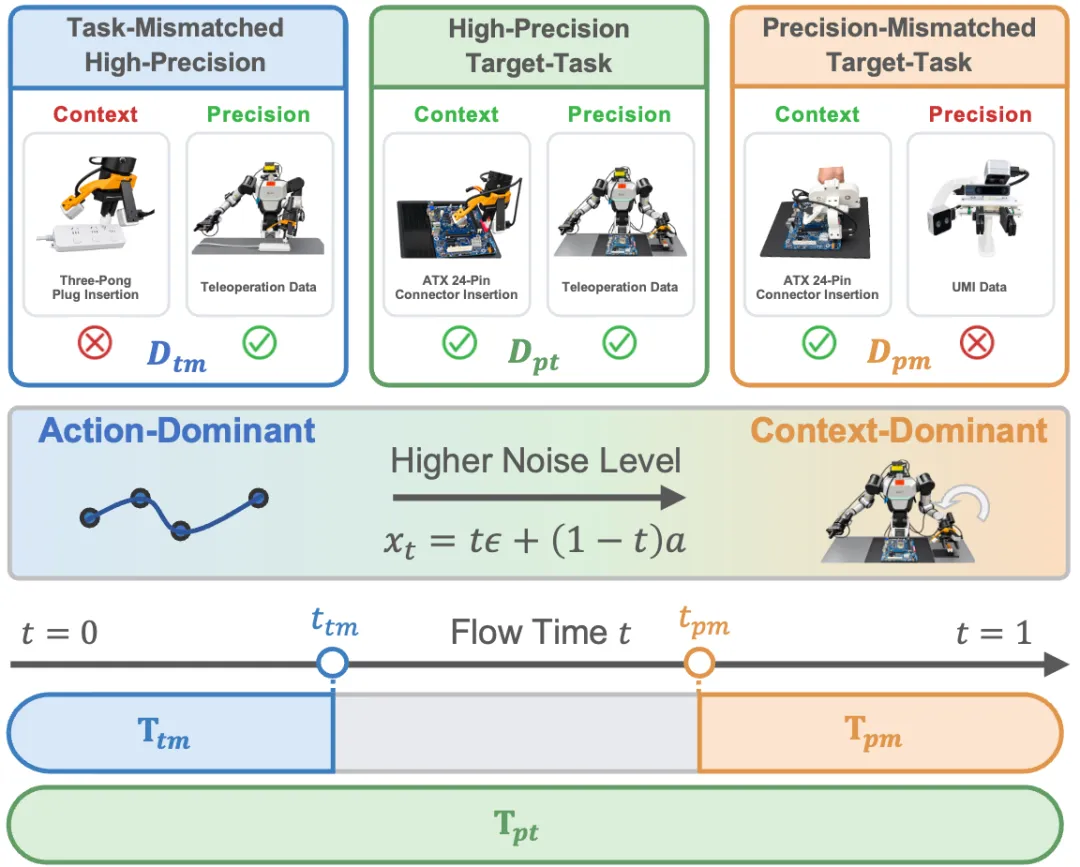
Figure 1 ε4P shows the intent of data training. Access to different noise ranges depending on the different flaws in the data.
Look at the results: the same imperfect data can be improved by using a different method.
The team conducted tests on ATX 24 needle connector inserts, two-phase cable inserts, and bolt screw sorting on three real-machine missions, using only high-precision target mission data, directly mixing the two types of imperfect data, using ε4P mixed training. The results were as follows:
ATX connector inserted: 48.3 → 38.3 → 80.0 ((ε4P)
The two-stage cable connections: 78.3 → 33.3 → 88.3 ((ε4P)
This is the first time I've been able to do this, and I've been able to do this.
The effect is as shown in Figure 2. It is noteworthy that e4P uses exactly the same data set as direct training, changing only the flow-time intervals in which different data sources participate in training. This shows that imperfect data itself is not without value, the key is how to get them to participate in training in the right place.


Figure 2 Training Effect. The above graph is a direct blend of the two types of imperfect data and the following graph is a blend using ε4P.
Do we have to throw away bad data?
In large-scale model training, it is an intuitive judgement that bad data should be discarded. But bad data does not mean that a data is not valuable in all respects. Therefore, the real problem is not how to use or not use the data, but how to avoid defects, using only the part that is valuable.
As shown in Figure 3, depending on the source of the data defect, e4P classifies imperfect data into two categories: one is task matched but inaccurate data, such as UMI data, which retains the correct task information, but the operation is not monitored accurately; the other is precision matched but inaccurate data, such as high-precision remote operation data for other tasks, and the operation is accurate enough, but the mission context is biased.
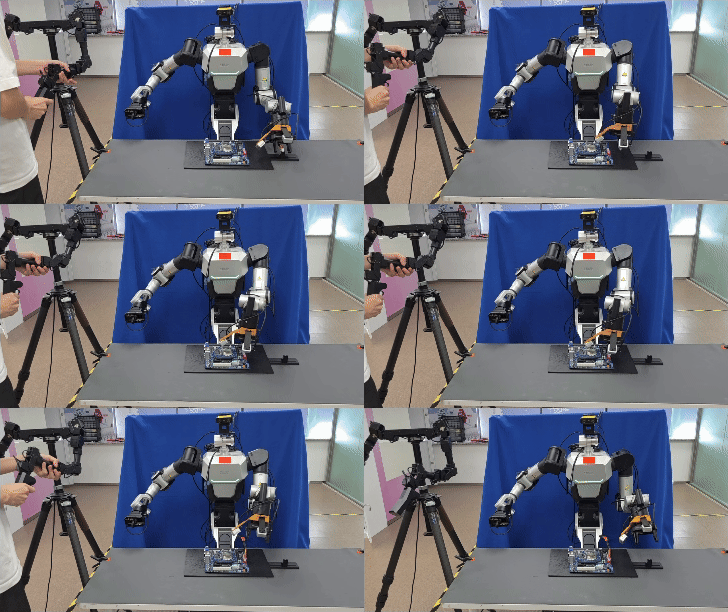
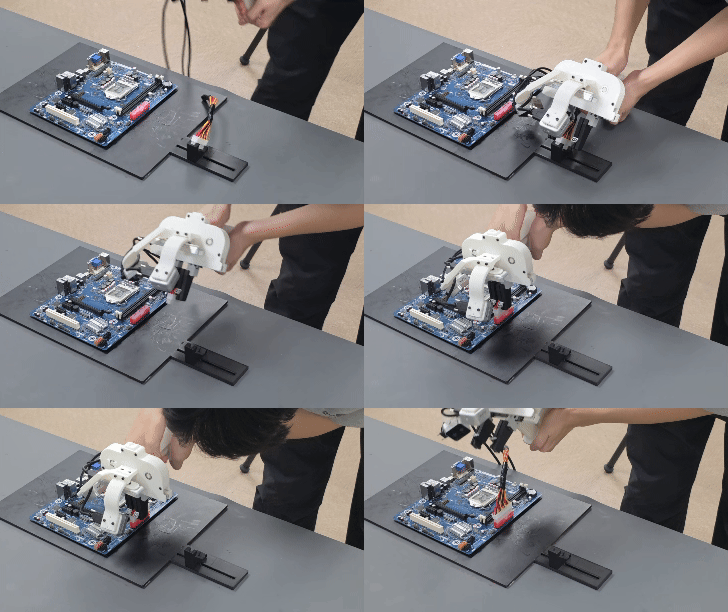
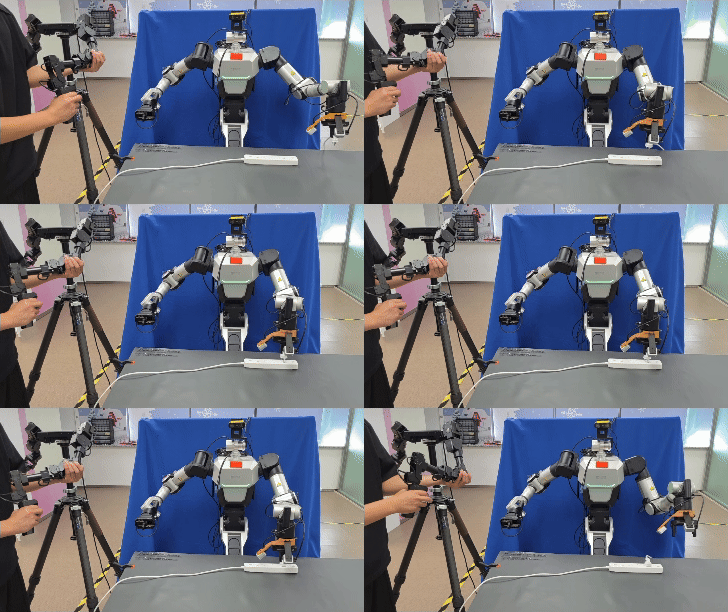
Figure 3 Three data samples: high-quality data for the target task, data for the task but not for the task, and data for the task but not for the task.
To make real use of this data, we need to answer two questions: What information do models rely more on in different noise zones and how do the two types of data determine their respective access boundaries?
The information dependency of the model varies along the noise axis, allowing different data to be generated by different supervisory actions.
The key observation of ε4P is that as the noise process progresses, the sources of information on which the strategy depends also change significantly. As shown in Figure 4, during the noise phase, the model shows a significant difference in the dependence on the noise-carrying function and the context on the task (seeing, speaking and body states, etc.): in the low-noise area, the model predictions depend more on the noise-carrying function; while in the high-noise area, the model's dependence on the context on the task is stronger. The two dependencies present a clear intersection, thus forming two regions of action-dominant and context-dominant. This provides different use directions for the two types of imperfect data.
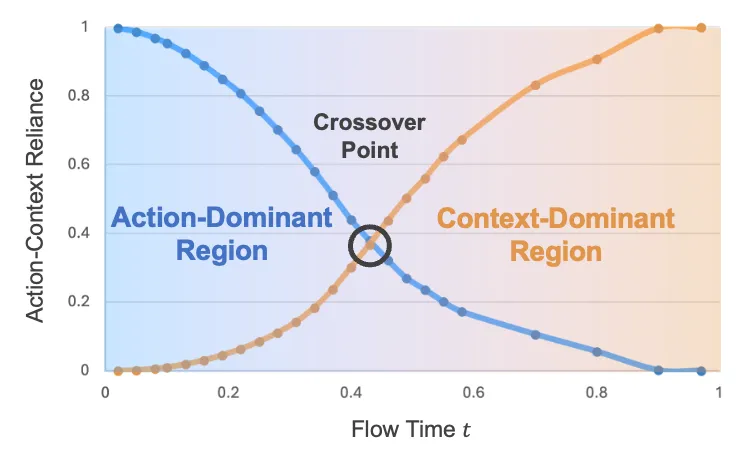
Figure 4 with noise action - Analysis of context dependence on tasks. The blue curve represents action dependence and the orange curve represents context dependence.
For data that matches the task but is not accurate, e4P uses the context of its correct task to access the high-noise range and, through a flow-time-conditioned classifier, determines when high and low-precision movements tend to be difficult to distinguish, thus setting the target to the lower boundary; for data that is accurate but does not match the task, e4P uses its high-quality movement monitoring to limit it to the low-noise range and determine access to the upper boundary based on the model's relative dependence on the pre-action and context. The method of determining the boundary specifically reflects the nature of the data, which depends on the information of the strategy itself.
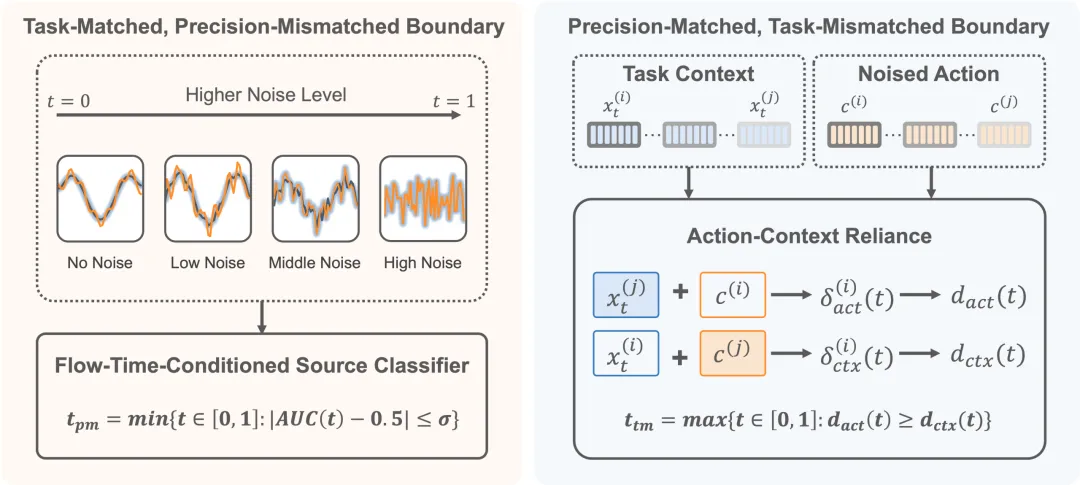
Figure 5 Methods for determining the boundaries between the two types of imperfect data
ε4P only adjusts the noise sampling range of different data sources: target task high-precision data covers the entire range, low-precision target task data is used for high-noise areas, and other task high-precision data is used for low-noise areas; model architecture, flow-matching targets and data source sampling probabilities remain unchanged.
The three key conclusions of ε4P
1. The more harmful the direct mix does not mean the lower the potential value.
Low-precision data from targeted tasks, while causing greater damage during direct mixing, show high value after the choice of ε4P intervals. Whether the data is useful depends not only on its quality but also on its location in training.
2. Weight reduction can mitigate damage but does not necessarily release value
As shown in Figure 6a, while reducing the loss weight of UMI data can mitigate the performance decline, all non-zero weights do not exceed 48.3% with high-precision data alone. At the same time, the success rate of ε4P is 73.3%.
3. Imperfect data can replace some high-quality data
The team further compared the effects of high-precision data columns using ε4P columns with non-perfect data such as lithium-ion reinforcement, with an average success rate of just 4.2 percentage points for two types of non-perfect data and three tasks, meaning ε4P is expected to reduce reliance on high-quality data.
Figure 6 Part experimental results: a for weight contrast reduction, b for two-dimensional universal scanning verification, c for low-noise local disruption verification
Synopsis: Finding the right location for imperfect data
ε4P provides a new way of using data for robot operation: depending on the data defect, allowing data from different sources to function in the appropriate noise area. It is more important to find the most suitable location for its use than to simply judge whether the data is stored or discarded. Imperfect data can also be an aid to precise operations.
The three co-authors, Weiho, Liu, and Down, all from Samsung Robotics eXperience, are now focusing on research into basic models of physical intelligence and robotics, exploring models of robotic learning driven by data scaling, and pushing models to expand from the digital world to the real physical world.
Prior to joining Samsung, he was a senior research scientist at the Tencent Robotics X Lab. He graduated from the Chinese University of Hong Kong and was a visiting researcher at Stanford University's artificial intelligence laboratory. He has published more than 30 papers in Nature Machine Intelligence, TRO, ICRA, IROS, and more than 30 national and international patents.
© THE