A robot parts company that grew out of a motorcycle
Welling Robot Components was founded in 2019, but its bottom isn't from scratch.
With more than 30 years of industry experience in the field of motors, the American Group has accumulated expertise in precision manufacturing, R&D systems, and management, directly providing a high point for WILIN robotic components. Some of its products have entered the international supply chain of robotic manufacturers and have gained market and customer recognition.
In the U.S. Department of Industrial Technology, the core components of a robot are business lines that go hand in hand with heating electricity, data center/storage heat management, and new energy vehicles. GMCC Mecha, Welling Welling, and MR Mechen are brands that cover a range of products from compressors, motors, wind turbines, chips, and robotic components.
Welling Robot Parts also has a decelerator, servo motor industrial base at the National High-End Heavy Loaded Robot Laboratory (NYSE: BLUE LOB) in Shenzhen.
This identity means that it's the part of the robotics industry that needs to be plugged into the chain. Pulverizers, RV reducers, servo motors, man-made joint modules, which are the core components of the manufacturing process, are the key to complementing industrial chain shortcuts and achieving autonomous control in key areas.
Welling's robotic components are well on their way to design and self-development.
Four new products, each with a clear necklace
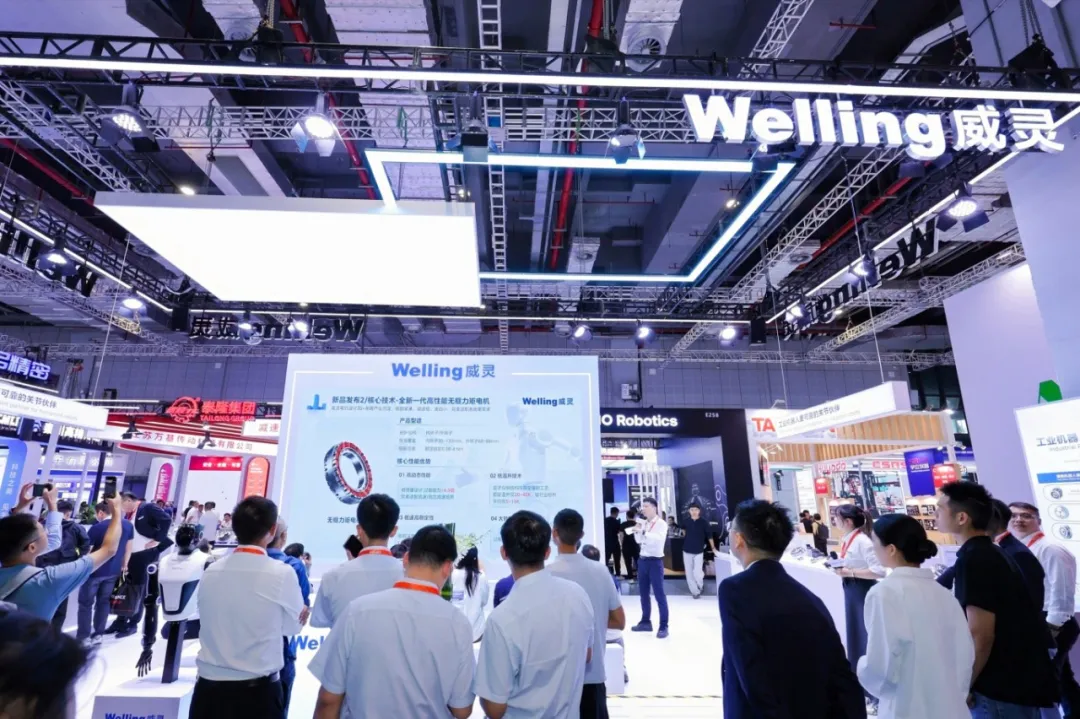
At this trade fair, Wheeling robot components brought four new products: a whole new generation of power-controlled unit joint modules, a whole new generation of high-performance unbroken-powered rectangular motors, a man-made special wave reducer, an RV&MC swing line reducer.
Four products, corresponding to four different battlegrounds.
A whole new generation of power-controlled integrated joint modules is targeted at human robots for power-control performance, response speed, and system synchronization requirements. Its resolution is 0.02NM, power-control bandwidth is 100Hz, and sampling frequency is 1000Hz. These parameters are at the forefront of the industry.
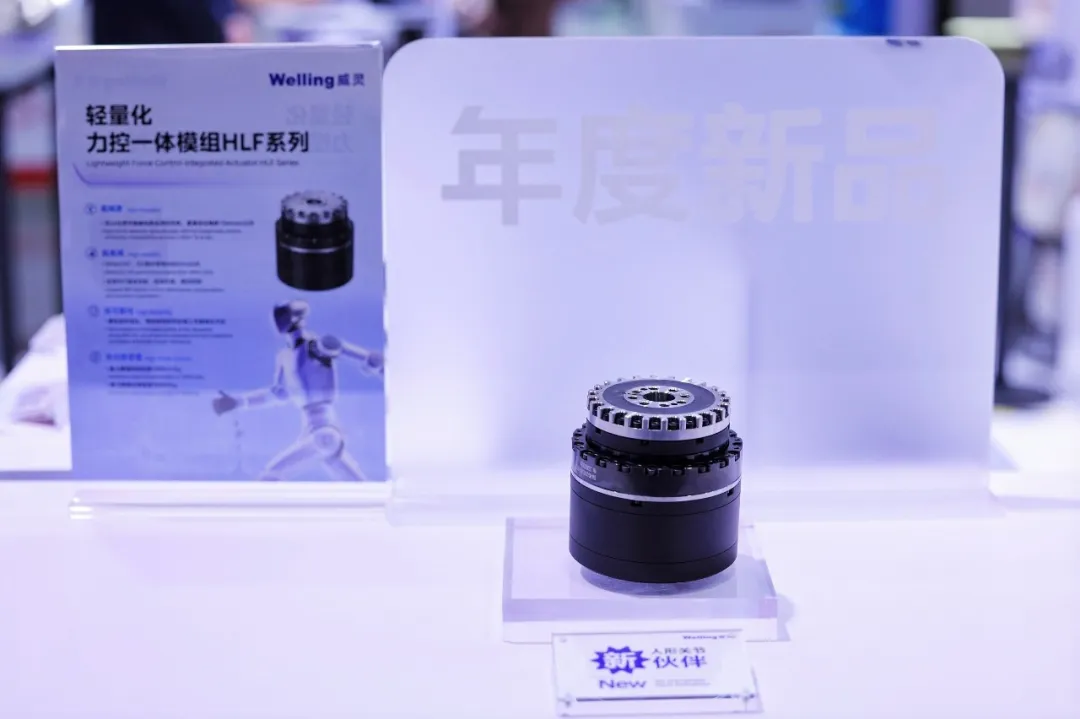
More importantly, the product has achieved breakthroughs in a number of technologies: highly lightweight and integrated design, innovative lightweight design and integration of core components such as torque sensors, unbroken torque motors, pulse reducers, controllers; while incorporating core software algorithms, including nonlinear friction compensation technology, adaptive inertial recognition technology, optimal control accuracy of power control joints and stable mS-level response time; the product's application scenarios include: two-legged robots, rotary humanoid robots, collaborative arms, etc. For customers, it can shorten the development cycle of the machine, reduce the complexity of multi-component assembly and assembly.
The new generation of high-performance, unbroken rectangular motors is the core power component of the joint module. The development logic of this motor is based on the system requirements of the joint module, not the isolation of a single motor.
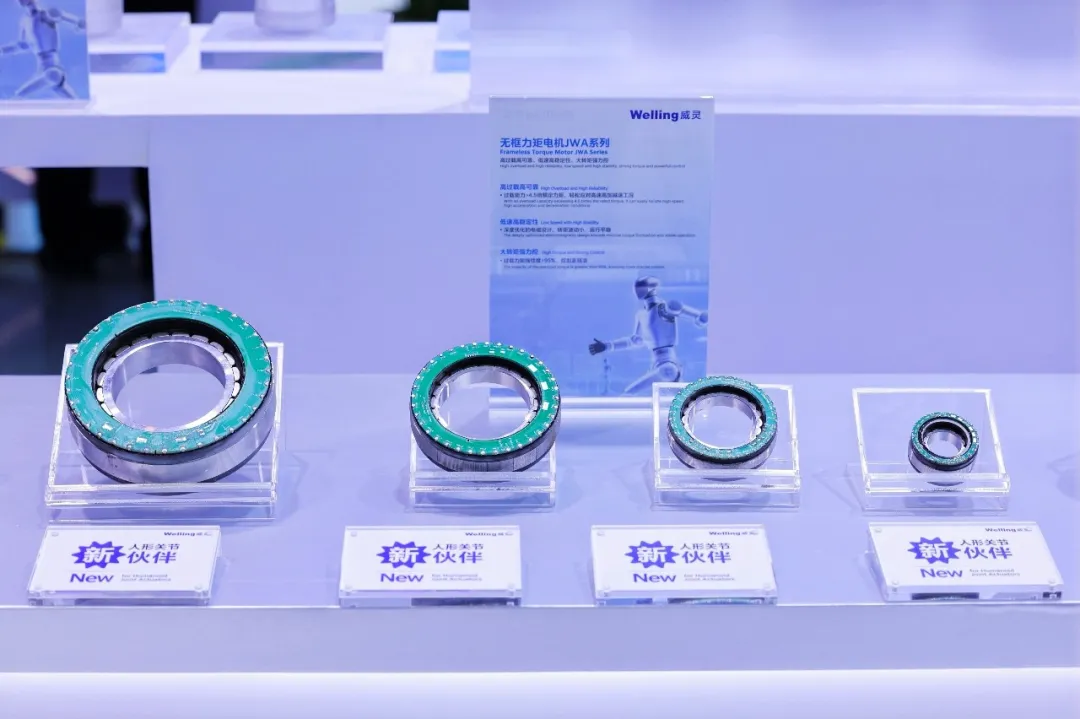
It can be said that the unbroken rectangular motor has accumulated many years of machine design common technology accumulation, with the characteristics of extreme tightness, low wavelength, low volatility, and high dynamic performance, low-temperature lifting technology, low-speed high stability, high torque torque control product advantages, concentrating the technical capabilities of the rectangular core to provide performance support for the power control unit joint module.
Human-shaped special wave reducer is a product developed to match human-shaped robots in depth. It uses integrated design, miniaturization design, structural topology optimization, material surface engineering four core technologies and processes, which give the product the four major advantages of ultralight, small size, high reliability, and bulk capacity.
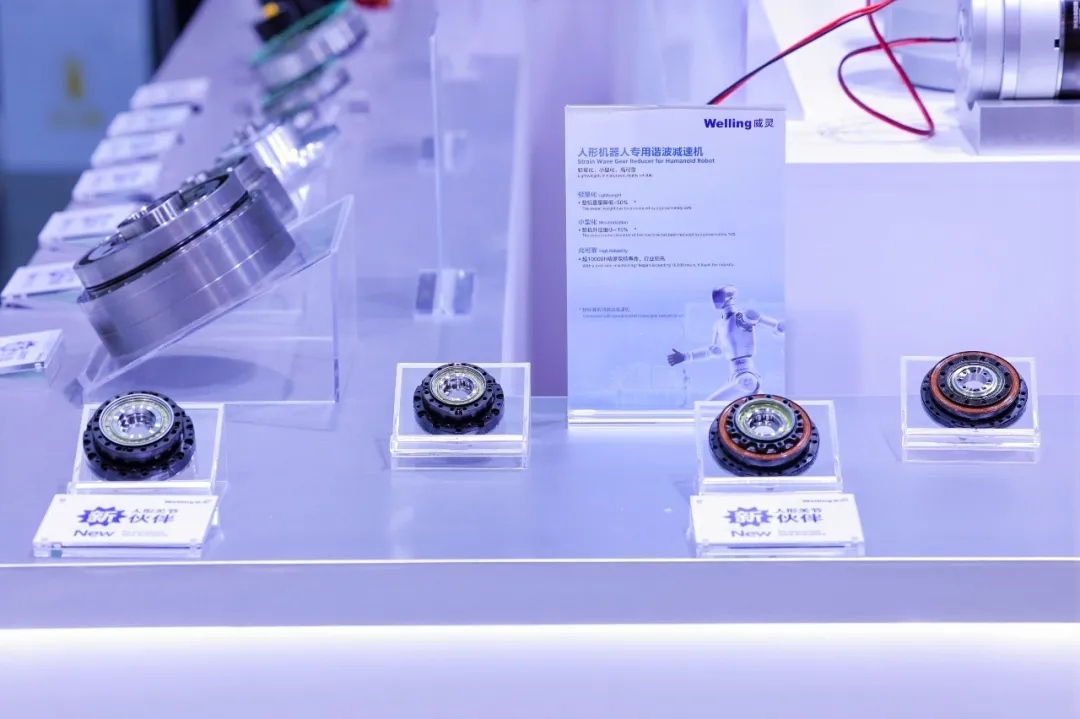
Specifically, the overall weight can be reduced by 50%, the overall outer diameter can be shortened by 15%, the precision life of more than 10000h can be maintained, and the manufacturing bottleneck can be broken and production stability can be scaled up.
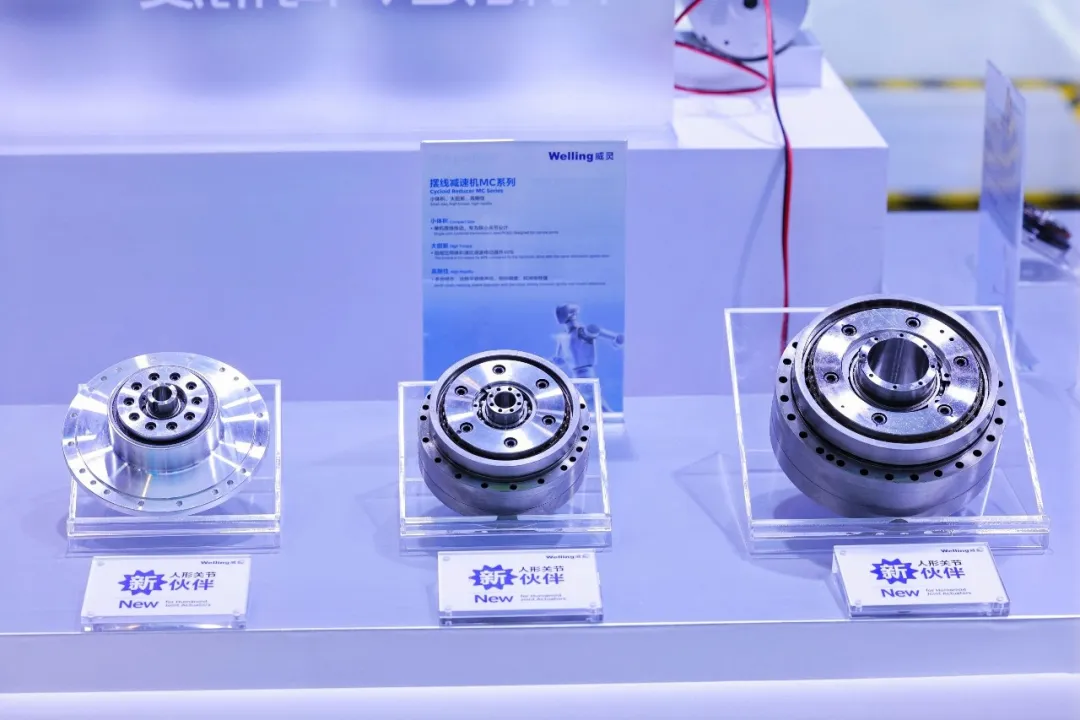
The MC series is mainly for lightweight industrial robots; the MCH series is mainly for humanoid robots. The RV&MC is not only lighter than industrial products, but also more integrated in design, thanks to the use of special wrinkle and friction resistance design schemes, with an efficiency of up to 85%.
It's not a slogan, it's a product matrix.
The four new products are the focus of the trade fair, but what Willing really wants to showcase is the full-scale capabilities behind it.
From development to manufacturing, from lightweight to heavy load, from humanoid robots to all kinds of industrial automation equipment.
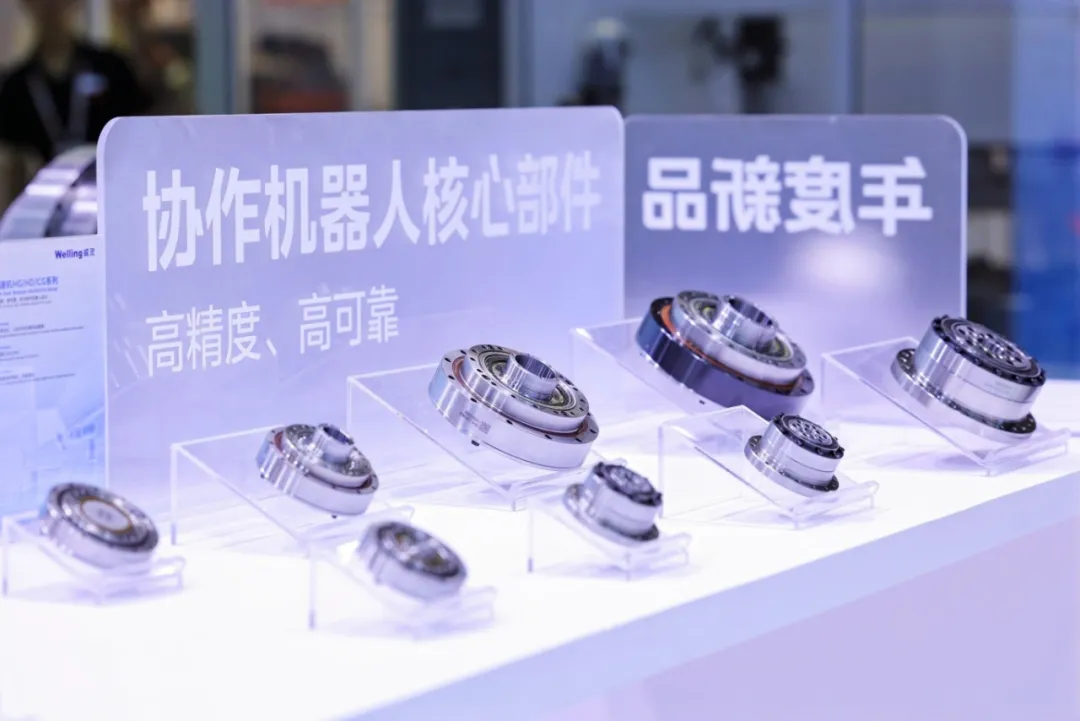
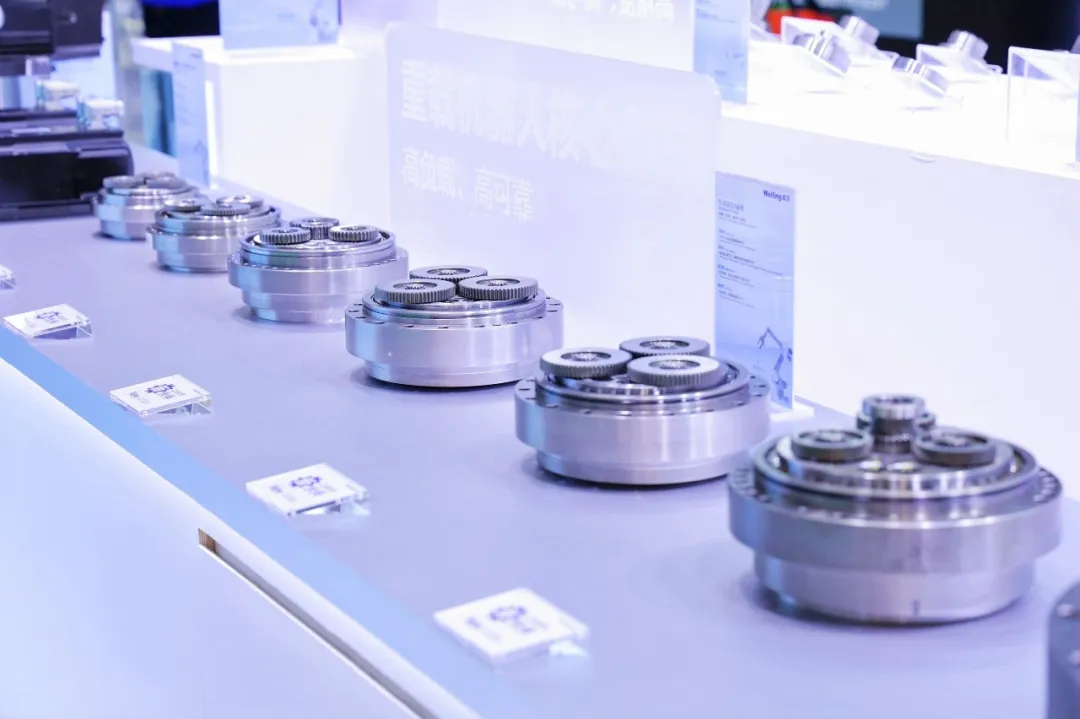
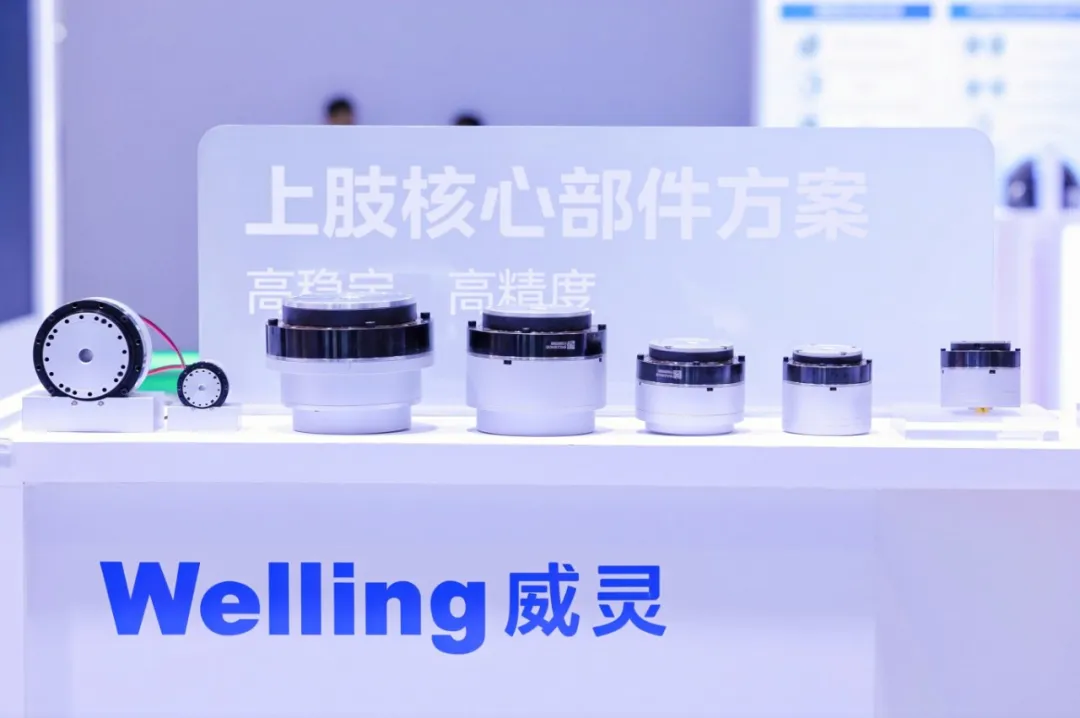
Scrolling left and right to see more
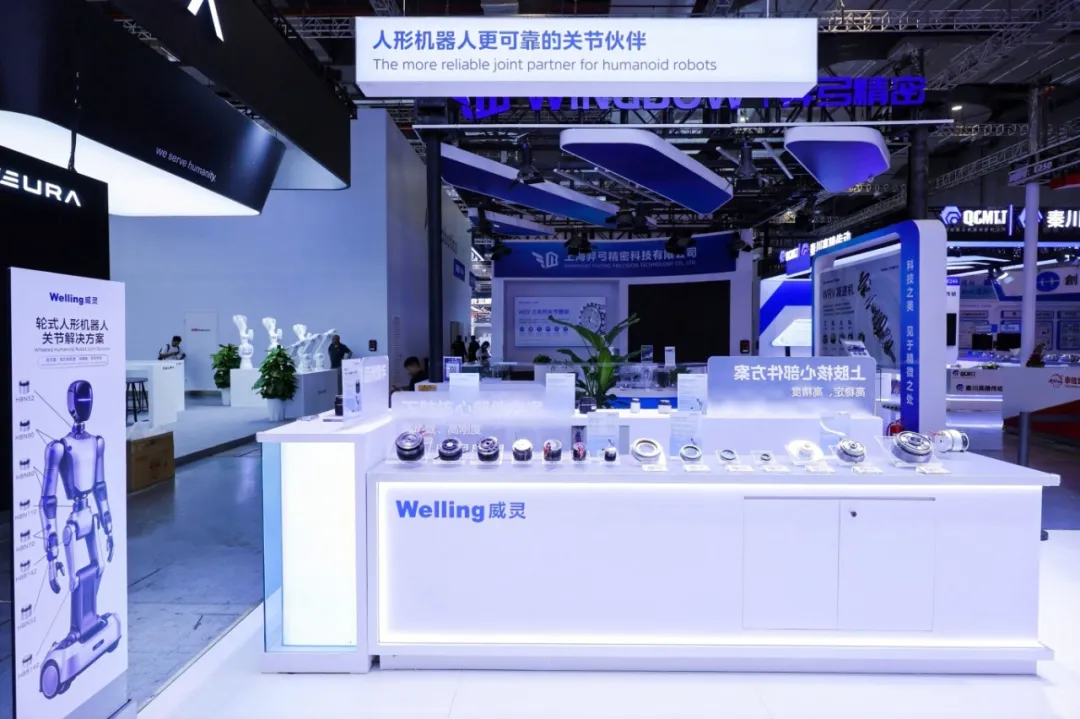
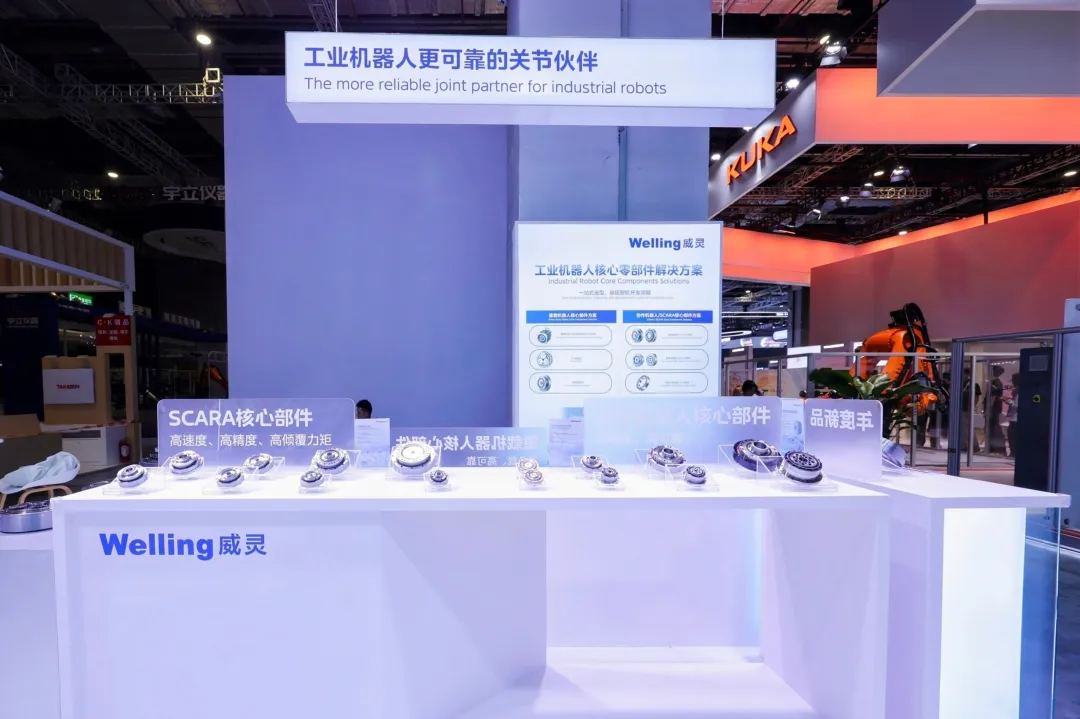
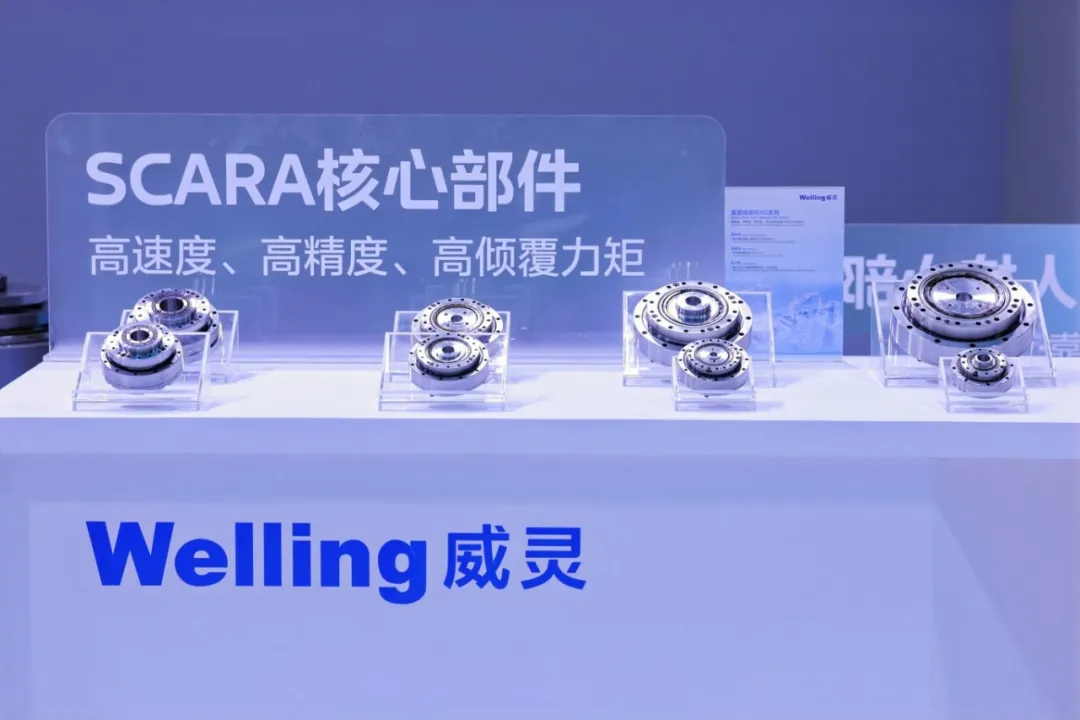
In the field of precision deceleration, the Wheeling robotic components have two technical routes: the pump-wave decelerator and the RV decelerator. The focus of the pump-wave decelerator is on scenarios such as humanoid robots, collaborative robots and six-axis robots, and the transmission error can be controlled in 1 arcmin, after more than 10,000 hours of testing. The RV decelerator is used for recharging applications such as six-axis robots, AGVs, machine switches, and other applications, through optimization in shapes, materials, heat treatment and bearing designs, while maintaining precision, rigidity and durability.
In the field of servo motors, the WILING JWA series of recharged robot special servo motors are based on three times the rated peak power torque design, power density exceeds 270W/kg, overall machine protection level reaches IP65, can be applied to industrial robots, new energy equipment, numerical control machines and various types of recharged automation equipment. The series of products has achieved 5-800Kg ultra-large load range breakthrough, has been tested by the National Industrial Robot Quality Supervision Testing Center in 2022, and has been awarded the international leading certification of the achievements of lithium technology, and currently has a cumulative shipment of 70,000 units.
In the field of joint modules, the Welling robotic components have been built in two main categories: pulse-wave and planetary. Pulse-wave joint modules are integrated with self-developed precision gear reducers, unbroken torque motors and control systems, with maximum peak torque density of up to 100 N/m/kg, maximum peak power density of up to 300 W/kg, repeat positioning precision control within 15 arcseconds, supporting MIT mixed control, EtherCAT and CAN communication protocols. Planetary joint modules have maximum peak torque density of up to 120 N/m/kg, maximum peak power density of up to 450 W/kg, adapted to different joint positions and load requirements for humanoid robots.
The combination of these three lines is the full spectrum of the Welling robot components. Behind the product matrix is the actual movement of the Welling robot components in system synchronization, which will control, drive, drive, drive triad, deep synchronization.
In the words of engine technician Wang Zheng, a well-known expert in the field of robotic components, this is a change in the composition of silicon components from silicon components to silicon synthesized silicon, with the ability to integrate the system to silicon 1+1>2T.
Manufacturing and Capacity is the bottom of two words:
The system must be coordinated and ultimately manufactured and delivered.
Welling Robot Parts has three major R&D centers in Shanghai, Foshan, and Osaka, Japan, with R&D teams of more than 150 people. In terms of product and research, it has cooperated with universities such as Tsinghua University, Shanghai Transport University, Shenzhen University, Hunan Technological University, Shandong University, Northeastern University, and others around vibration, efficiency and integrated performance optimization.
At the manufacturing end, the Welling robotic components have micron-grade precision manufacturing capabilities, with a production line automation rate of more than 80%, and have established a complete process quality system covering R&D verification, production manufacturing, reliability testing and quality tracking.
In terms of capacity, the combined annual capacity of products such as pump speed reducers and joint modules reaches 250,000 units, and the annual capacity of special servo motors and frameless motors reaches 210,000 units.
In July 2026, Willing Robot Components signed an agreement of intent with the government of Shandong District of Bhushan City on a new manufacturing base project. The project is located in the town of North Shore, Shandong District, and plans to build about 55,000 m2 of high-standard thermostatic seismic precision plants, to be implemented in phases one and two.
These numbers and layouts are at the core of what Willing's robots are capable of.
It's the hard road that Whelan chose to take.
Since the launch of the Precision Deceleration Project in 2019, the Wheeling robot component has been on a path towards designing wheels.
The distinction between design and reverse design is clear within the industry. Reverse design quickly covers the market by mimicking the indicators and processes of existing benchmark products, complemented by cost advantages.
It's difficult to design, it's time-consuming, it's costly, it's costly, and it's going to have to face the potential for zero returns.
As an example of the R&D and design process of the WILIN MRV decelerator, the WILIN robotic component assembled a forward-looking R&D team composed of experts in various fields such as materials science, mechanical design, control algorithms, and established the entire process of simulation modeling, prototyping, test-scenes verification, and gene-optimization of pumps as a design system.
In cylindrical design, Wheeling robotic parts invented the 3 frequency micro-displacement method and other geometrical methods to improve power density by 5 percent. In simulation design, the optimization link, using self-developed integrated and component rigidity combined simulation models, achieves high rigidity optimization design and high rigidity consistency design for RV reducers.
The bottleneck, which affects the lifetime of the integrated circuit, was addressed by a vacuum high-temperature pulsed atmosphere complex heat treatment process developed by the material processing team, which extended the accuracy of the integrated circuit to 8,000+ hours. The lubrication medium and contact matching technology introduced during the test phase of the interface study improved product efficiency by 5%, and the lifespan by 33%.
The result of these changes is that the overall performance test results of the Welling Fluorescent Decelerator are equivalent to international industry benchmarks, and the performance remains the same after 10,000 hours of testing; the Welling MRV decelerator remains highly reliable at 2.5 times the rated torque at constant loads and displacements, and the durable test life of the robot has reached more than 6,000 hours.
The robotics industry is moving from technical verification to commercial deployment. Welling Robot Parts will continue to explore the path of robotic core components to cover a highly reliable assurance system for R&D, manufacturing, testing and delivery, providing robust, efficient products and technical support to global robotics and automation equipment customers, and making robotics a more reliable link partner.
At the World's Fair, Welling's robotic components have unleashed their full potential. Next, let's look at how these joint components can really lift the next stage of the robotic industry.