Recently, Shenzhen Ramool Technology Limited (shortened to Ramool Technology Limited) announced the completion of the multi-billion-dollar Pre-A round of financing. This round of financing was jointly financed by Shenzhen Telecommunications, Goldwood Capital, Logistics Capital, Huanghai Capital, and SME Capital. This financing not only brought together publicly traded companies with strategic partnerships, deeply empowered industrial capital, but also introduced local resilient capital and active diversified market institutions, highlighting the global value of industrial ecology and capital markets for Ramool Technology in the long term.
Smart racetracks are bidding farewell to the racetrack phase of the back-to-back sprint competition, entering the deep-water zone of the industry.
While most players are still exhausted from the open-scene parameters, the hardcore enterprise based in Shenzhen is working on a robot brain that understands how to navigate through high-value scenarios.
01.
Beyond the Demonstration Ring: Three Thresholds to the Landing of Smart Industry
When the photovoltaic lights on the exhibition stage are turned off, robots that can really get into high-value scenarios such as energy, chemicals, logistics, and achieve continuous stable operation are still in the dark.
Complex variables such as dynamic interference, environmental noise, physical errors, and emergencies in real-world industrial settings place extreme demands on physical intelligence in terms of perceptual accuracy, decision-making timeliness, operational stability, environmental adaptability, and hardware reliability.
The first threshold: a robot brain that understands the scene and can be reliably manipulated.
As the general model continues to improve its ability to understand and plan tasks on the scene, the key challenges of physical intelligence fall further on the execution of actions: transforming task objectives into continuous, precise actions in a limited budget of algorithms and time delays, and correcting them in a timely manner during object changes, exposure to disruption and operational switching. The ability of single points in the laboratory to be trained repeatedly in a predetermined environment is perfect; but the real world does not run as expected by the model. Brilliant demonstration results do not mean that the basic model can run safely and stably in the real environment.
The second threshold: real-world data crashes and training barriers.
Effective physical data needs to include action, force feedback, spatial relationships, mission processes, and the physical feedback behind success, failure, and abnormal states. Unlike text and images, these physical intelligence data are not naturally present on the Internet. The robot brain really needs reinforcement learning, precisely because the simulation environment is difficult to fully reproduce friction, error, abruptness, and uncertainty.
The third threshold: disconnection between the adaptation of the scene technology and the commercial closure.
There are tens of thousands of scenarios in the physical world, and not all scenarios have commercial bloodshed capabilities. At the same time, the general model architecture, control algorithms, hardware parameters, not necessarily adapted to the exclusive needs of high-risk industrial scenarios such as explosion resistance, dust resistance, anti-interference, high-precision operations, technical adequacy gaps, unstable terrain changes, etc. Only real high-value scenarios can run through customer data depletion models, replacement models, and the closed loop can continue to produce high-purity chemical data, replace model technology, and generate industrial demands, and replace technology commercialization.
There are a lot of smart companies that cross one of these thresholds alone, but there are many that can cross all three at the same time.
02.
High-Value Scene Driven: Developing a robot brain that knows how to walk
Rather than rolling the dice in a general scenario, the opposite is the case: starting from the most difficult real-world scenarios, pushing a robot brain that can truly enter the industry scene to grow, and gradually forming a complete chain of deliveries from baseline models, high-reliability hardware to high-value scenarios.
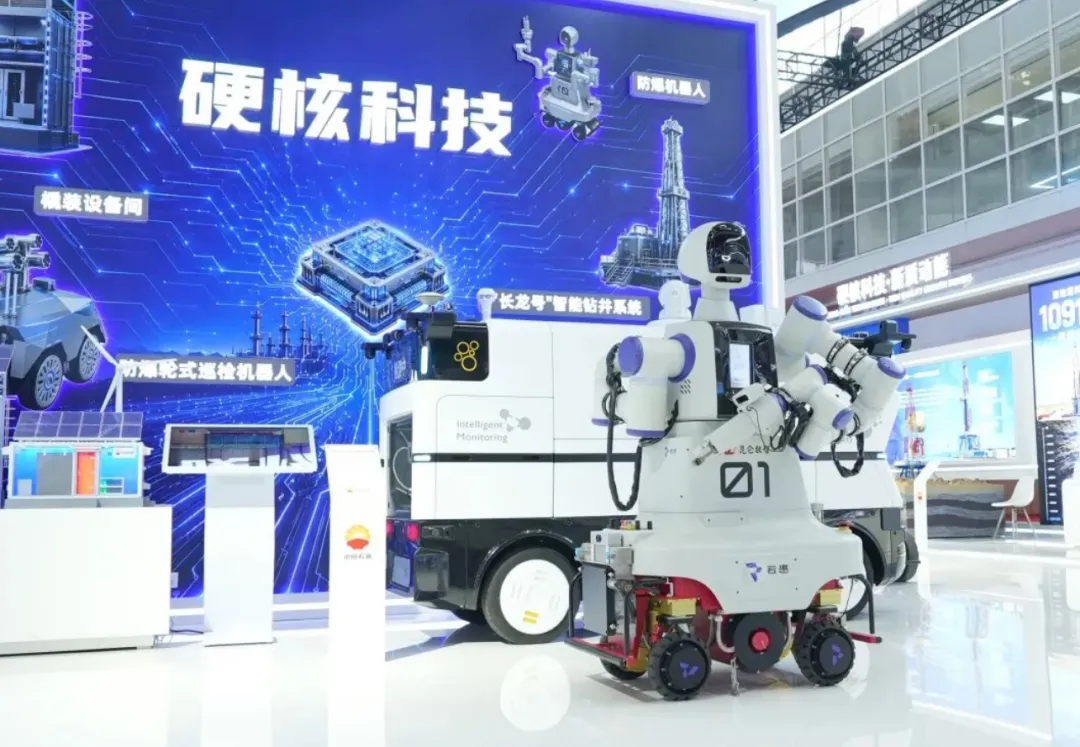
As a native robotic brain, if stupid nine days from the very beginning, practice the roots of the scene and learn to understand the brain's ability to walk. Avoid the general scenarios in advance, if stupid technology uses the robotic brain as the model base, to self-develop high-reliability hardware as a carrier, to train and verify entry points in high-risk scenarios, to form the technical closure of the brain's core scenarios, to integrate multi-modal autonomous perception, physical logic inference, dynamic task dismantling, closed-loop self-control, and other capabilities, to focus on connecting high-level decision-making and physical execution strategies and control capabilities, to enable real robots to realize autonomous decision-making, intelligent, precise operation, complete chain-driven execution, and complete chain-driven automation.
Facing the real world scenario, if Fooltech independently develops high-reliability working hardware, realize software depth integration, directly hit industry data collection and turnaround pain points. The landing of the pilot project of the Bursa Oil Station, marks if Fooltech's robotic brain officially enters the real industrial scene, completing the key transition from laboratory verification capability to on-site verification of operations.
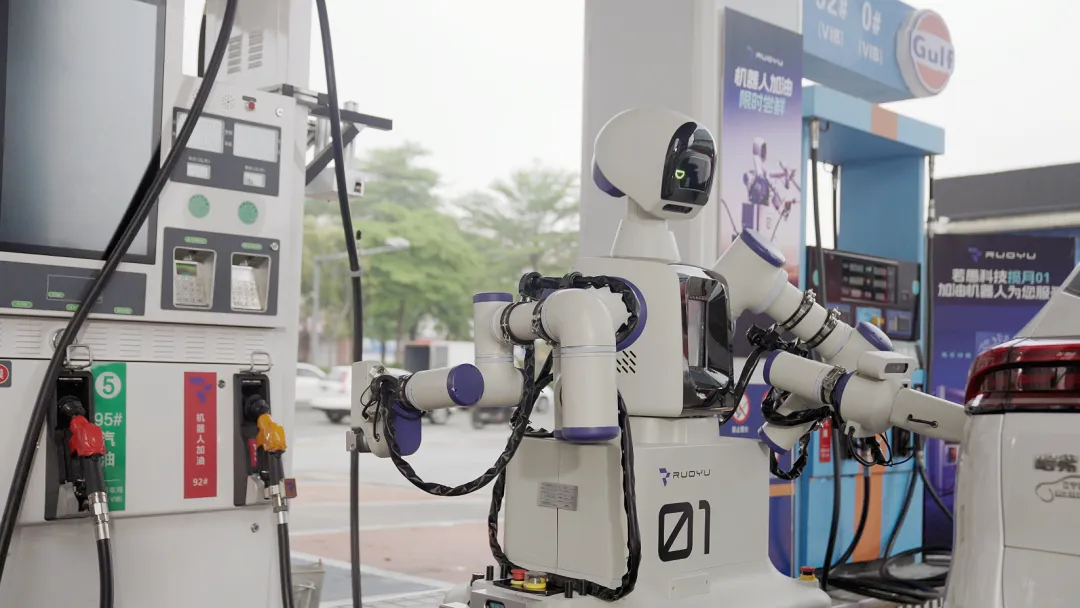
In the technological system of Robotech, high-reliability operational hardware is not only the executive terminal for solving real-world problems for customers, but also an important carrier for the robotic brain of Robotech, connecting to the physical world, gathering real-world data, continuing to capture multidimensional controls, changing environments and unusual operating conditions in real-world operations, forming efficient data backflow mechanisms, providing high-purity clusters of data for the Robotic brain of Robotech. As real-world data continues to sink, the Robotic brain of Robotech can acquire abstract skills in specific tasks from the physical world, real-world scenarios, enhance the ability to follow-up cross-tasks, cross-tasks, cross-bodies, and enhance the stability and replicability of models.
However, the ability of the brain and the ability of data is only the basis for the completion of technology and scenarios, and does not necessarily mean that it can be a qualified product that can truly serve the industry.
Currently, if fooltech has gradually established the ability of the robotic brain to fully land in the vertical field, stand in a high-value scenario, targeted optimization of model lightweighting algorithms, working conditions adaptation algorithms, failure autonomous diagnostic algorithms, reducing the consumption of model computing power, adapting to the needs of localized deployment of terminal devices, solving the problems of traditional big models that rely on cloud computing, high latency, and stability.
Each real operation is both a real-world training of the nine-day robotic brain of a fool and a simultaneous test of technological reliability, scenic engineering capabilities and commercial value. Based on high-value scenarios, fool technology is gradually building an industry-class infrastructure that is powered by fools.
03.
Industrial capital, the first to bet on high-value scenarios
The smell of capital markets is often half as fast as industry consensus. Capital's focus has shifted steadily from fancy parameters, light model demonstrations, to solid on-site performance, mass production orders and autonomous bloodshed capabilities. This round of financing that brings together diverse investment camps is a typical summary of this shift in the value-assessment paradigm.
Relying on the scientific research pool of the Harbin Industrial University (Shenzhen), if the cumulative financing has reached hundreds of millions of yuan since its foundation in 2023, it will receive support from investors such as the marketed investment institution Qin Tcha Capital, publicly traded companies Toshiba Precision and Oriental Crafts. After obtaining anti-bomb quality certification, landing real industrial scenario pilot and gaining attention in the core circle of industry, if it introduces a new round of capital gauges.
This round of financing, which presents the multi-investment structure of publicly traded companies' acquisition+state-backed institutions+marketing of venture capital investments, is not only an additional investment in industrial capital acquired after the completion of the verification phase, but also a high recognition by the industry for its "scene-driven robotic brain" technology path.
Shen Wei Communication said: Shen Wei is highly recognized for the path of domesticalisation of the fully self-developed technology, its deep technological accumulation and industrial vision, and is highly aligned with Shen Wei's long-term strategy. In the future, Shen Wei Communication will be based on core materials and precision components, empowering Shen Wei in its core technological advantages and product landings in the field of smart hardware, and relying on global channels to accelerate its commercialization closure, to build smart software and hardware synergies with industry communities.
It is worth mentioning that this is not the first time that a publicly traded company has maintained its layout, and that early and continuous investments in Eastern craftsmen have always been deeply engaged in the cultivation of intelligent robots, and through forward-looking clustered investments, they have built up a highly competitive intelligent robot industry ecosystem.
Industrial capital has never wagered a single-point technological breakthrough in the laboratory, but a hard-core path through high-value scenarios that have the potential to bleed themselves up: addressing high-value scenarios to address industry's immediate needs, embracing multidimensional data from extreme working conditions, and moving from vertical breakthroughs to industry-wide infrastructure.
This is the core logic of capital's choice of coding in this round. A new round of funding will further amplify its technological and scenographic closed-loop advantages, driving the acceleration of the nine-day robotic brain towards a scale-up of the business landscape and value creation.
04.
Prospects: Commercialization explores new stages, from benchmark scenes to self-blowing craft
From technological breakthroughs, product innovation, to real-world training, conventional deployments, and model runways, the entire robotics industry is entering a whole new evaluation cycle.
If the commercialization of the answer given by foolproof technology is always in the high-value industry scenario. Based on the core logic of bullish-looking technology, technology adaptation scenarios, and data-driven upgrades, this industry-knowing robotic brain grew out of high-value scenarios and eventually retrofitted into a broader industry.
With the completion of this Pre-A round of financing, Jangool Technology will officially enter a whole new phase of building Jangool from a benchmark scenario of verification to a Jangool industrial infrastructure. Funding will focus on the technological evolution of Jangool's nine-day robotic brain, while fully expanding the ecological collaboration map, driving this industry-savvy robot to more industrial sites.
In the future, these capabilities will gradually become the basis of industry-level intelligence, allowing Powered by If Fools to become the intelligence hub of physical robots, allowing more robots to truly understand the industry and adapt to the real world with the help of the nine-day robot brain.