
“ It's a different way of working, and the card is to get back to the book.
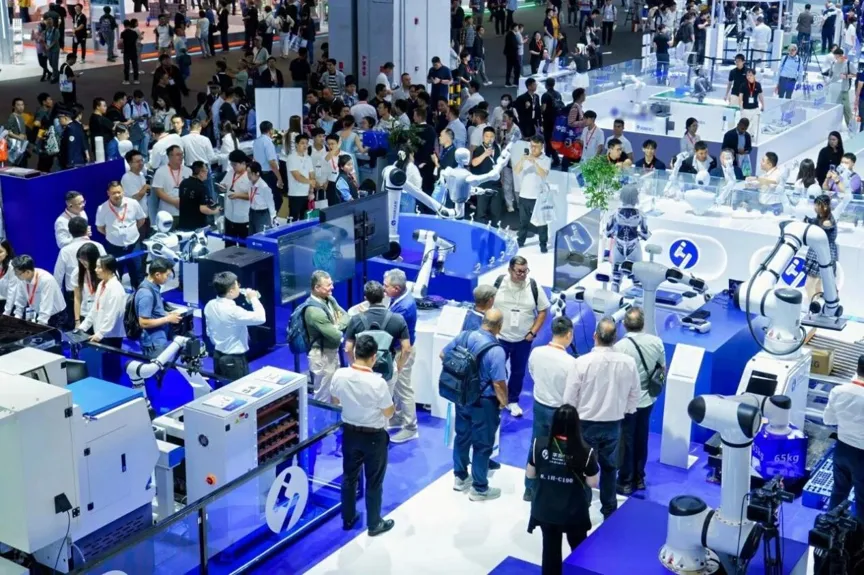
The 26th China International Industrial Expo opened on October 12 at the Shanghai National Exhibition Centre. The robot exhibition still occupies both 7.1H and 8.1H pavilions, 56,000 square meters, more than 400 exhibitors, and only takes half a day to complete the two pavilions.
8.1H is part of the International Pavilion, a family of four power plants, Genko, ABB, Kuca, and Anakawa, with thousands of platforms scattered throughout the pavilion; 7.1H is a supplier of Chinese Pavilion, Aston, Suzhou, Savings Cards, Gambino, and Limestone plus a whole range of domestic parts.
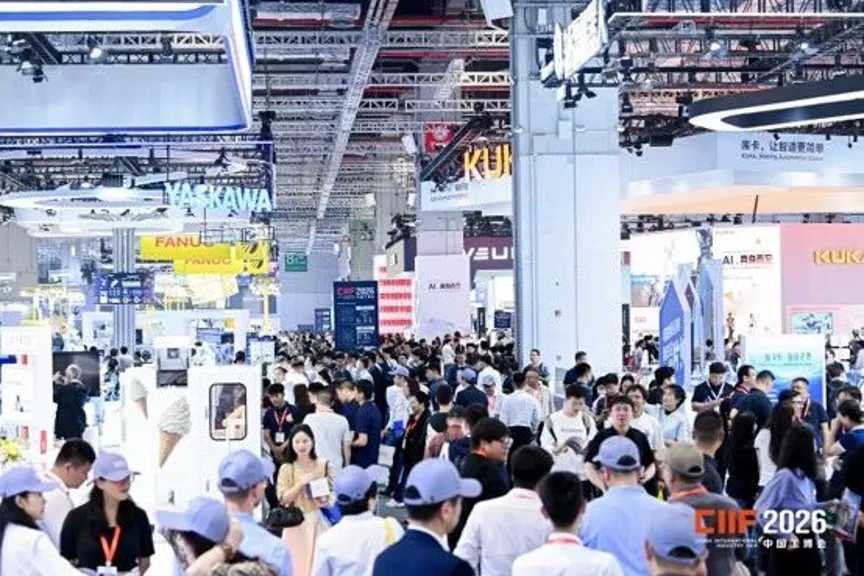
Last year, the corridor in the middle, from domestic to international, was not a set of words. This year, differently, I went around each of the two halls and noticed a detail, in the publicity language of four people and domestic manufacturers, the most frequent occurrence is the same word for physical AI.
The term "physical AI" refers to allowing robots to perceive, judge, and act on their own in the physical world, rather than repeating the trajectory as planned. The term has been used repeatedly over the past year on intelligent and humanoid robots, appearing for the first time on a large scale at the center of an industrial showcase this year.
After a round of discussions with local exhibitors, we summarized the four most memorable changes and three unanswered questions.
01.
Physical AI is changing the way we work
In the past, we've been comparing what robots can do without repeating, and now we're comparing what they won't do. An engineer who worked for decades on the automotive assembly line to summarize his feelings this year. This can basically be seen as an annotation of this year's Robot Expo, where robots are measured by changing scales.
The three-digit evaluation criteria for the past three decades, repeated positioning accuracy, load, arm stretching, examined whether a machine can do the same action ten thousand times without doing it.
This year's new product, with a high level of consistency, is growing in this context.
Anakawa Motors has launched the new autonomous robot series Motoman NEXT, with the official slogan "Operating power x Judgment = Robot x AI". The practice is to incorporate vision, resilience, AI and path planning as standard services, allowing robots to take full control of the situation and make judgments and take action in three steps.
Enrico placed the silicon-physical AI module at the front of the stand, with the base being ROS 2, Python and Stream Motion. The real-time motion controls the three pillars, which demonstrate multi-modal visual perception, autonomous avoidance and real-time trajectory control.
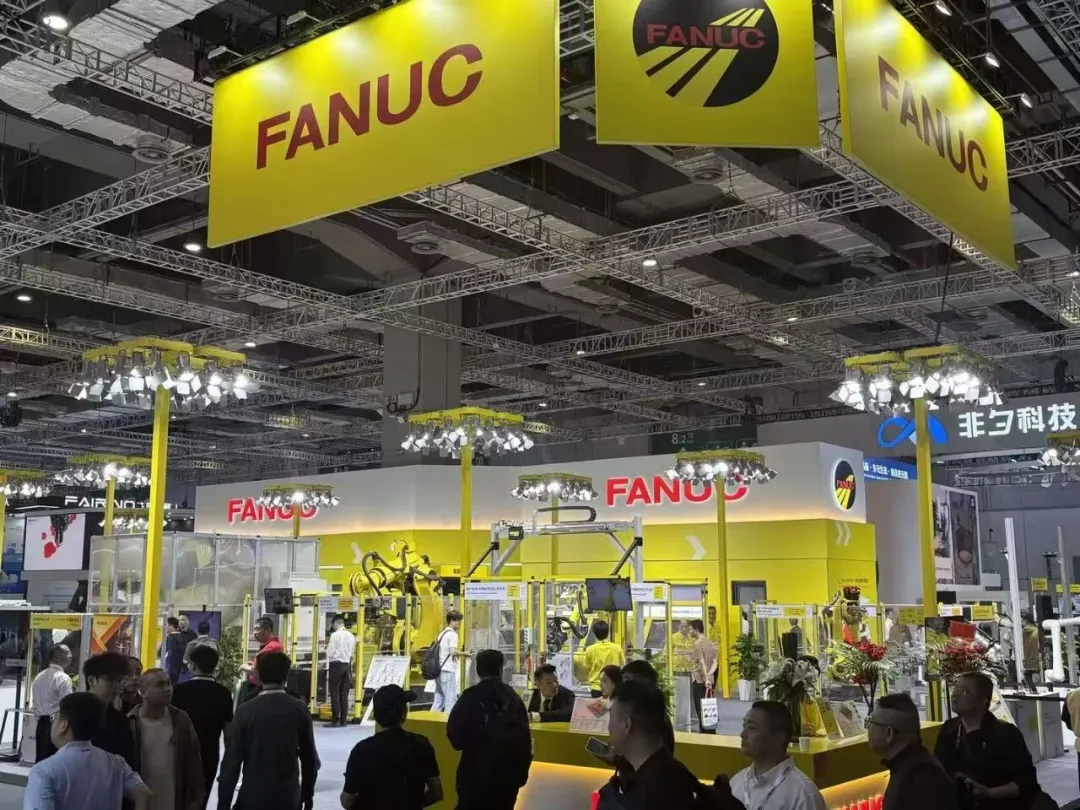
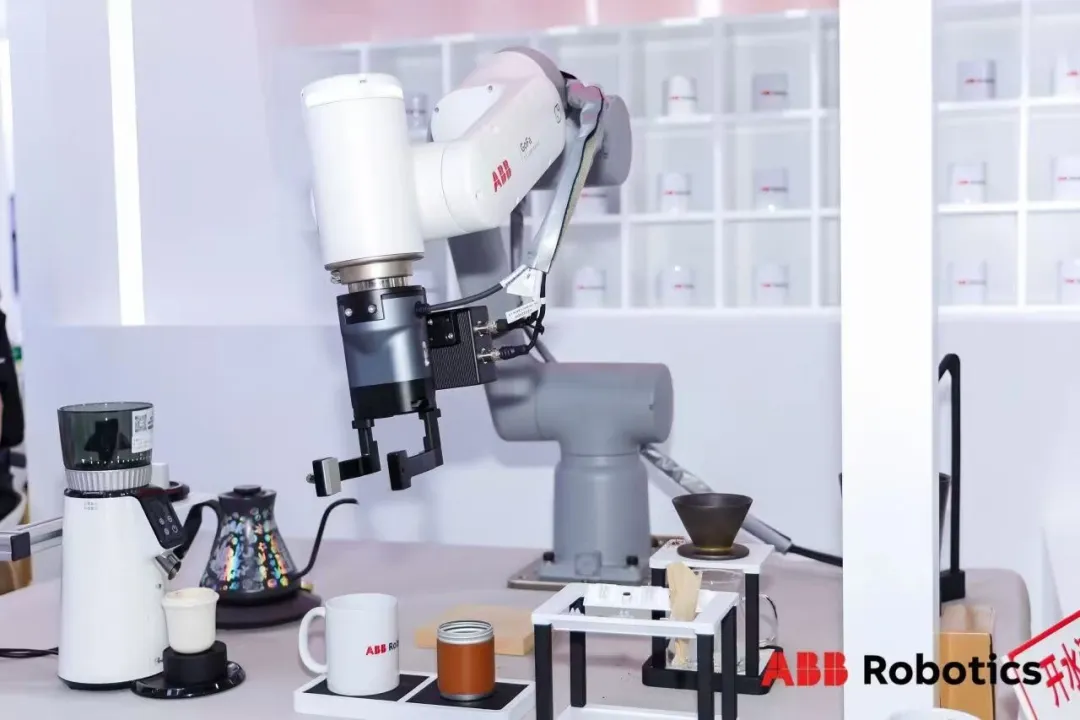
ABB focuses on industrial-scale physics, from artificial intelligence (AI) imaging technology to landing, simulation learning with hand-held coffee stations, and GoFa robots observing human movements to reproduce the trajectory and rhythm of the waterfall. At its core are RobotStudio HyperReality and OmniCore EyeMotion, a synthetic data-generating virtual verification tool that shrinks the visual deployment cycle from months to days.
Kouka released the open-air KAI platform, which incorporates the iQKA operating system itself, with AI decisions running directly on the device end without requiring further instructions to transfer data back to the cloud.
The same question was answered by state-owned manufacturers.
The Aston showcases intelligent two-armed force control robots using single-controller multi-machine synchronous, multi-modal fusion and multi-second sensing contacts to solve the problems of multi-armed force synchronous debugging, multi-machine interference avoidance, and the difficulty of controlling force consistency for random feed, high frequency production lines.
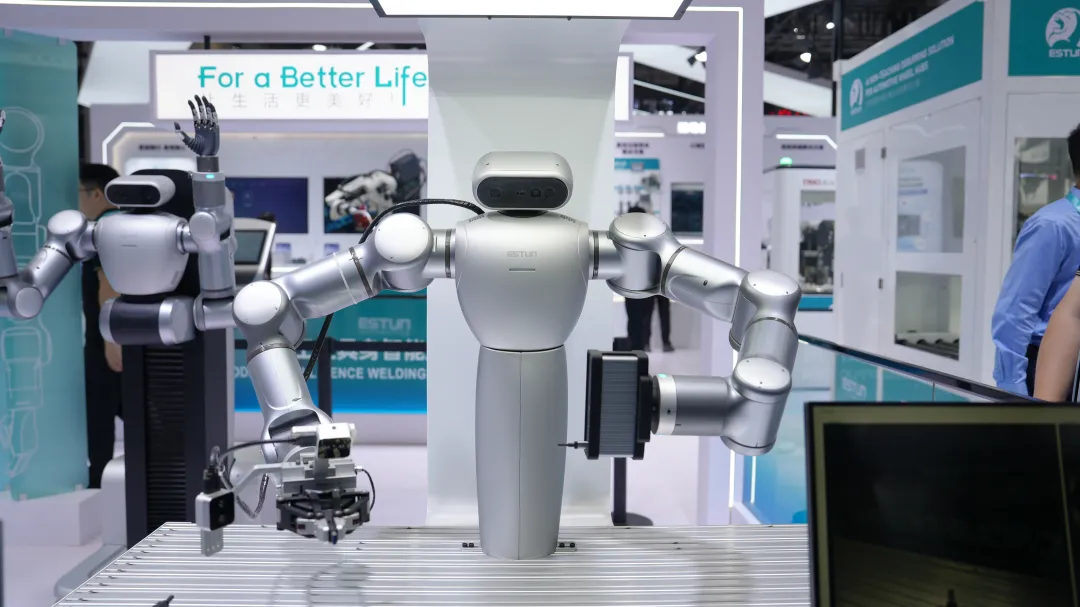
The Elite platform is a multi-brain, multi-brain, multi-brain, multi-brain, multi-brain, multi-brain, multi-brain, multi-brain multi-brain, multi-brain, multi-brain, multi-brain, multi-brain, multi-brain, multi-brain, multi-brain, multi-brain, multi-brain, multi-brain, multi-brain, multi-brain, multi-brain, multi-brain, multi-brain, multi-brain, multi-brain, multi-brain, multi-brain, multi-brain, multi-brain, multi-brain, multi-brain, multi-brain, multi-brain, multi-brain, multi-brain, multi-brain, multi-brain, multi-brain, multi-brain, multi-brain, multi-brain, multi-brain, multi-brain, multi-brain, multi-brain, multi-brain, multi-brain, multi-brain, multi-brain, multi-brain, multi-brain, multi-brain, multi-brain, multi-brain, multi-brain, multi-brain, multi-brain, multi-brain, multi-brain, multi-brain, multi-brain, multi-brain, multi-brain, multi-brain, multi-brain, multi-brain, multi-brain, multi-brain, multi-brain, multi-brain, multi-brain, multi-brain, multi-brain, multi-brain and multi-brain, multi-brain, multi-brain, multi-brain, multi-brain, multi-brain, multi-brain, multi-brain, multi-brain, multi-brain and multi-brain, multi-brain, multi-brain, multi-brain, multi-brain, multi-brain, multi-brain and multi-brain and multi-brain, multi-brain and multi-brain and multi-brain and multi-brain, all-brain and multi-brain and multi-brain, all-
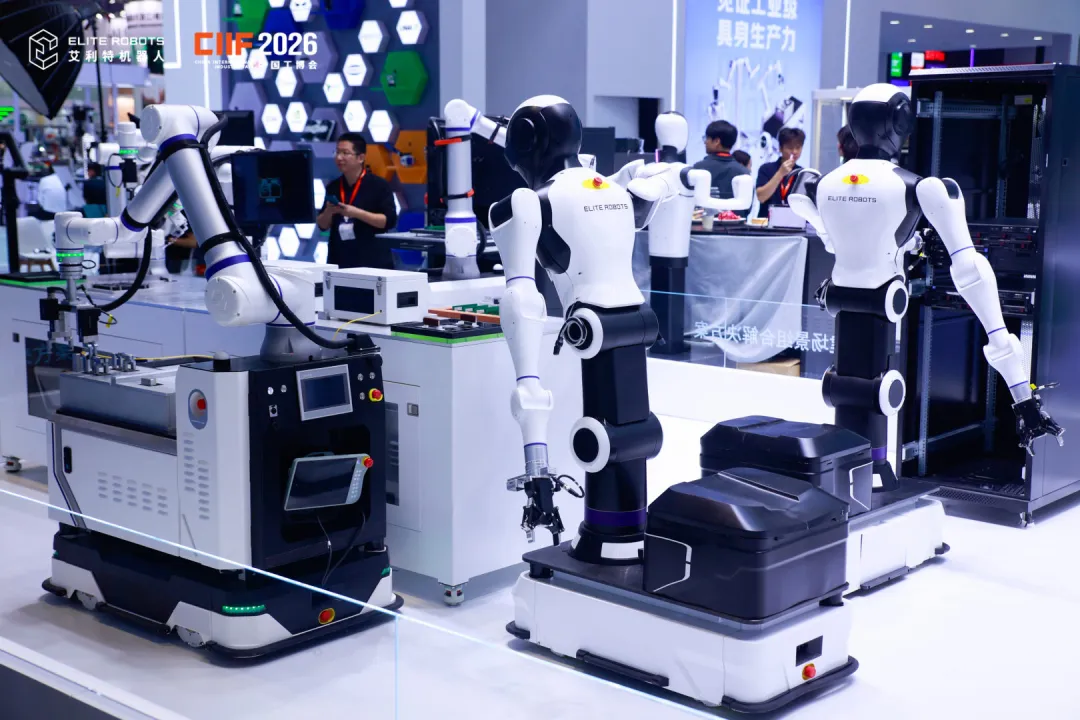
The platforms of the six enterprises are located in different corners, but one thing they all have in common is that the focus of change is on the perception + judgment layer of the hardware. This layer of the hardware kernel is almost non-existent this year, compared to the ability to allow machines to function under uncertain conditions.
02.
Controls are turning into open platforms
A customer who used to buy a certain rhythm is now buying a system to grow together. He is not opposed to AI, he is opposed to having a brain for each process.
But before we can talk about this debate, we have to look at the real downside of this round of change, the control cabinet.
In the past, the control cabinet was the domain of the manufacturer. In the manufacturer's proprietary language and development environment, customers want to change a process, have to find the manufacturer or its authorized integrator.
ANKAWA'sYNX1000 supports general-language development robot applications such as C++ and Python, without the need to learn the manufacturer's specialized language, visual, AI, cognitive, path-planning services, and SDKs, development kits and simulators that can be developed and verified without a computer, as well as a digital interface with NVIDIA Isaac Sim.
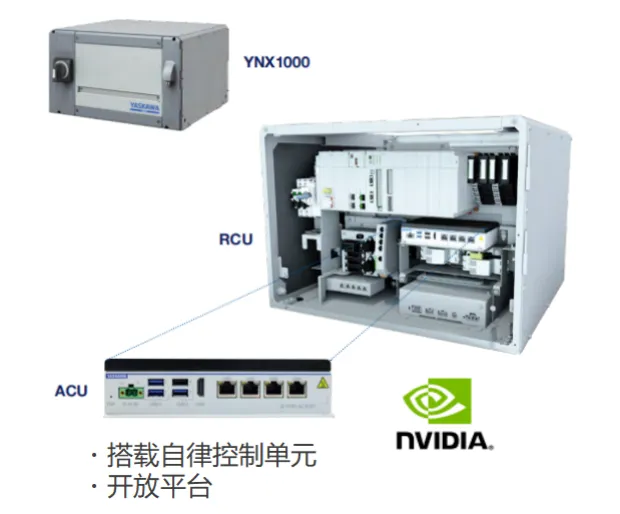
In addition, the open platform of Enrico uses ROS 2 and Python as inputs, ABB brings E-Device programming tools, and Kuca releases the Chinese version of Visual Components.
For customers, this directly corresponds to one of the most expensive hidden costs of industrial robot integration and debugging. The real selling point of an open platform is not technological advancement, but the fact that it can only be delivered to manufacturers and turned into work that can be taken over by customers and third parties.
The brain is a decades-old friend who controls the servo drive in the cabinet; the brain is just entering this year, with computing power, models and a series of unresolved costs.
An engineer who controls the movement told me that living on the car lines is standard, the gaps, the gear, the beat is dead, the pre-programmed trajectory runs for years. But there are always some processes in the garage that don't go according to the standard, each batch is different, the gear will wear out, the room temperature in summer and winter is not the same, these living brains can't keep up, because it only knows the trajectory.
His judgment was that the higher the precision requirement, the more confused the brain can't hide. Another layer he thinks is more tight. Industrial robots have been working for thirty years, the scene is basically locked in cars and electronics, other industries are not unnecessary, are too scattered, please don't integrate.
The other party doesn't take this word for it. The number of people in the workshops, most of them living or repeating work, the trajectory is running faster and steady, bad and repaired quickly. Not to give these processes a brain, calculation is money, data is money, the most expensive is debugging, models are problems, engineers have to be present.
It's not the brains that are fighting on the podium, it's where they go first, up and down. On the other side of the spectrum, more people are asking about AI capabilities, and more people are still asking about exports.
03.
Cost: up and down pressures, being hedged
One of the engineers in the manufacturing company responsible for the conversion of the production line said that they had a red line inside and couldn't get past the pilot.
Physical AI is not a free lunch. Calculation must be added, perceptual sensors must be added, vision must be added, hardware material is just going up and down.
The panels of the robot exhibition constitute the clearest evidence. 108 industrial robot integrated machines, 169 core components, upstream and downstream are thicker. Green waves, incoming waves, rotational technology, Tokugawa, and welling robot components. These decelerators and joint module manufacturers are gathered in two exhibition halls.
In addition, the density of the industrial chain is not only reflected in the horizontal accumulation. Along China, robots are based on 20+ years of core technology, with the ability to autonomously control and self-sufficient core motor components such as motors, servo drives, and joint modules, while also being able to sell independently to others.
The result of the hedge falls on two sets of digits.
One is the share, according to MIRRIO Industrial Statistics, of the domestic industrial robot in-house brand market share of 55% in the first quarter of 2026. The second is the gross margin, the first half of the year at the total gross margin of 31.81%, an increase of 4.17 percentage points compared to the first half of the year, which the company attributed to the reduction of capital gains such as changes in the structure of products and the substitution of raw materials for domestic products in the half of the year.
But shares and gross profits are the business of the head, and the industry as a whole has not yet made money.
Similarly, in the first half of the year, the company generated revenues of 1451 million yuan, a decrease of 12.57%, a net loss of 1.89 million yuan, a scale contraction and a profit burden that occurred simultaneously. In Vietnam, revenues of 316 million yuan were doubled, but expenses were simultaneously increased.
The three of them together illustrate the same thing, in this cycle, it is not difficult to sell goods out and the account is becoming increasingly difficult.
When asked about the bill in front of the stand, the person who handled the equipment was more qualified than the manufacturer. Or the engineer who was in charge of converting the production line, he told us: the pump robot is to replace the production power, the production line will be upgraded once every three to five years, 36 months is hardcore, pressed to 24 months, and buy is willing to let go.
One of the project managers said: "When a customer asks the robot how much it costs, the real cost is three: hardware, debugging, maintenance. Hardware is paid once, debugging per person, and the most expensive is on-site; the model is not typed after delivery, so the cost is to retrieve data, re-adapt. If he has seen too many projects, when purchasing according to the price of a device, when accepting according to the demand for a set of systems, the average price is not recognized".
One engineer who gave the factory an intelligent conversion said: "The production line that is running now is not one that is 100 percent accurate. It's not accurate enough to replenish the force; it's not stable enough to leave a remote receiver; it's about the success rate of sitting down and talking to customers.
A few boxes together see that physical AI adds to industrial robots not only the cost on the list of materials, but also the customer returns the variables on the table. Every penny pressed upstream is a bit of a trial and error space for the downstream. But as long as it returns to this cycle and is the only hard indicator, the leader on the parameter table is temporarily not exchanged for a premium.
04.
Offshore: Physical AI is a new selling point and a new threshold
The first round of Q&A, the second round of Q&A, the third round of Q&A, and the third round of Q&A, the first round of Q&A, the first round of Q&A, the third round of Q&A, and the third round of Q&A.
Chinese companies have been doing this for over a decade, bringing machine arms into factories in Germany, Japan and the United States. This year's new variant is physical AI, which simultaneously changes both sides of the border.
At the end of the sale, it was a new opening, with customers mentioning AI capabilities in the first round; at the end of the entry, it was a new test subject, and the more robots judged themselves, the more things needed to be proven.
China's exports of collaborative robots exceeded 10,000 units for the first time last year, with a customs capacity of 10,872 units, of which Germany purchased 2,360 units. In the first half of this year, industrial robots were exported for 6,290 million yuan, an increase of 18.6% in sales to 141 countries and regions.
With physical AI capabilities going out, the overseas deployment of several companies has accelerated significantly this year, from simply selling equipment, to building bases, making money, and laying product lines.
In the first half of 2026, Vietnam's total revenue was about 316 million yuan, more than double that of 106.6%, of which overseas revenue was about 155 million yuan, accounting for 48.36%. CEO Liu Bei revealed that about 60% of the company's revenue is from overseas, and products have been exported to more than 100 countries and regions.
But after the robot is sold to 141 countries, the next step in exporting is not ordering, but service. Where the spare parts are placed, engineers can arrive in a few days to verify who is doing it locally, which directly affects repurchases.
New EU machinery regulations will be fully enforced in January 2027, with industry measurements pushing higher compliance costs; the safety requirements for collaborative robots have been integrated into the new ISO 10218:2025 standard; new regulations such as force limits and speed monitoring will further increase access to technology.
While physical AI makes robots smarter, it also has to prove that their judgments are reliable, their responsibilities are clear, and data stays and goes.
05.
Three unanswered questions
In addition to the trends, the exhibition's really valuable information is in the issues.
One is that the data link has not yet been completed.
Models need to be smart, relying on real machine data, but real machine data collection is not yet universal. On the ground, some manufacturers have even made this into a product. Bee Technologies first showcased the Mego series of no-body data collection terminals and physical AI data packing platforms, trying to temporarily separate data collection from the robot's body, and allowing data to enter the model through governance and mapping.
These schemes represent an understanding of the subject direction, but the adoption end is still dependent on dedicated hardware and man-made organizations, and it is difficult to scale; and there is currently no public quantitative verification of whether data can be effectively migrated across different nationalities after the adoption.
The second question is how long is the most frequently asked question in front of the stage.
Manufacturers are talking about calculation, model, and frequency, and customers are talking about rhythm, good times and downtime.
Third, there is a gap between samples and industrialized products.
Stable and correct robots on the stand, dust, high temperature, high vibration workshops are easily waterproof. The life of the parts, heat drift, anti-interference capabilities are the short boards mentioned repeatedly in the field; RV reducers, high-precision power sensors, encoders, the verification cycle of high-end scenarios is still long, and in high-end applications such as automotive production lines, the reducers used by large-load machines are still relatively proportionate to dependent on the input.
Data, reliability, reliability, these three things are not based on a technology upgrade that can be passed over, they only take time and hours.
The transformation of physical AI into industrial robots is currently taking place at two levels: operating mode, from demonstration reproduction to autonomous judgement; development mode, from closed control cabinets to open platforms.
The corridor between 7.1H and 8.1H has gone from domestic to international over the past year, and both sides are saying the same words this year.