The video-generation model Sora, which has been abandoned by OpenAI, is now back in the public domain.
According to The Information exclusive, OpenAI is discussing a project that could bring the defunct Sora "back to life".
More interestingly, the team that is preparing to take over Sora has been quite large. They include well-known Hollywood producers, Dreamworks animation co-founder Jeffrey Katzenberg, former Sora research head Bill Peebles, and Dropbox's former chief financial officer Sujay Jaswa. The three co-founded a startup focused on AI video that plans to leverage Sora's technology to develop and sell software and related services for filmmakers.
If the partnership is finally reached, OpenAI will also acquire a share in the new company.
A few months ago, OpenAI decided to cut out Sora, but now it is possible to re-commercialise the video model through a new company started by the original core developers.
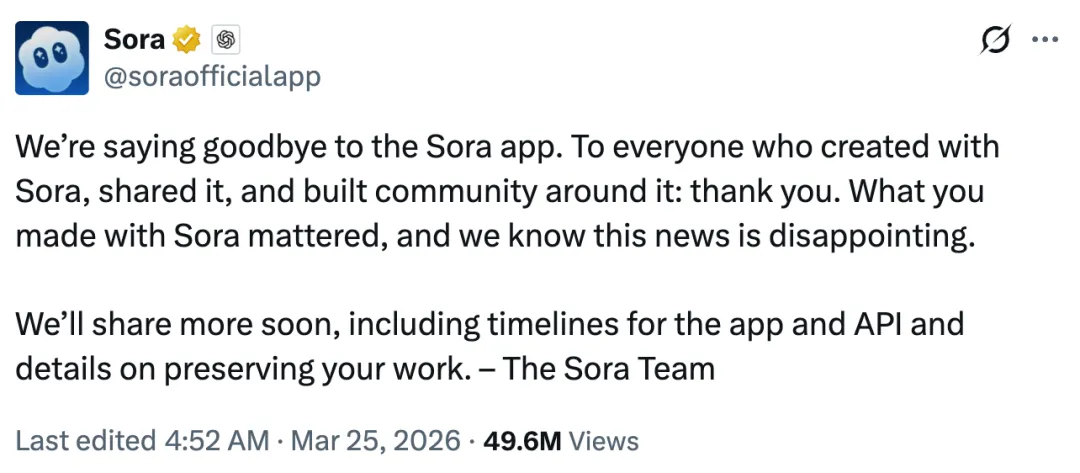
However, the two sides are still in the negotiating stages and the deal has not been finalized.
Sora will be resurrected?
It's the first time I've ever been in a relationship with a woman.
According to The Information, the startup is developing AI video technology for filmmakers, hoping to gain access to Sora and launch commercial software and other services based on it. Currently, the name of the company is unknown and it is unclear to what extent OpenAI will eventually open model access rights.
The most notable of these is whether OpenAI will allow the company to access Sora's model weight. The model weight includes parameters learned during model training and is directly related to the model's operational capabilities. For AI companies such as OpenAI, this is usually a strictly protected core asset.
According to the report, the two sides have not yet decided whether they will share weight or open enough settings to influence model behavior.
However, people familiar with the deal said that once the deal is reached, the startup will have access to enough depth to be able to greatly customize Sora. In other words, the company could gain the ability to use and adjust models that call for far more than ordinary APIs.
This is also closely related to the background of the team members. Bill Peebles, who was the head of Sora research, was familiar with the technical architecture and training process of the model. He was involved in its subsequent development and was able to leverage his previous technical experience.
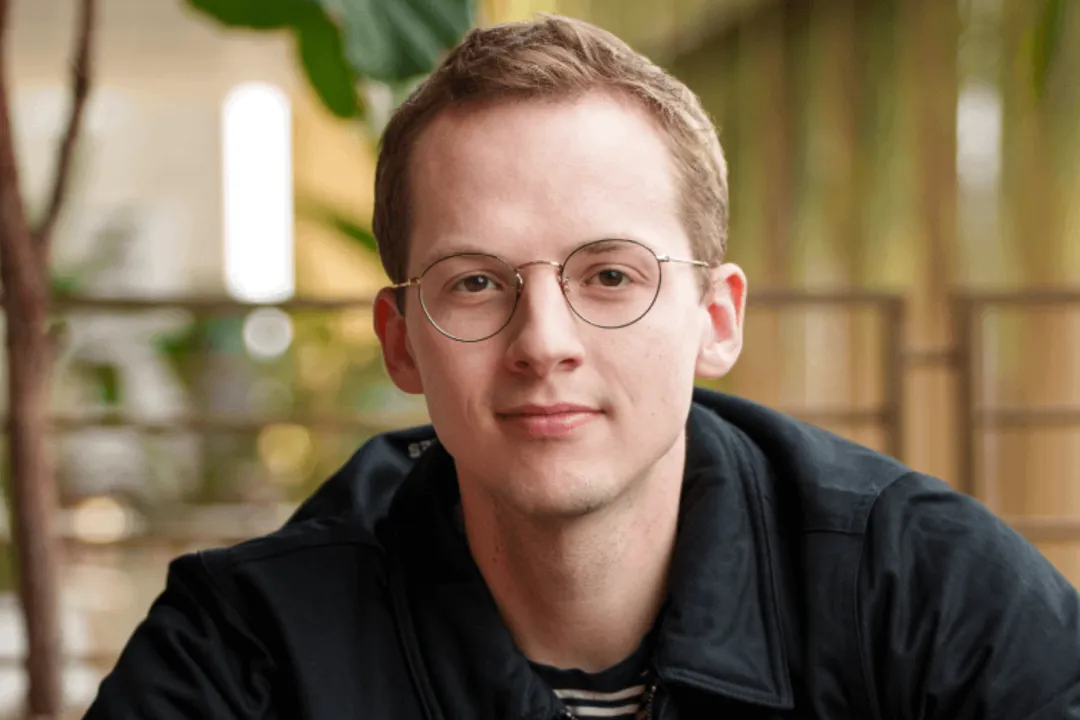
Bill Peebles
Jeffrey Katzenberg has a wealth of experience in the Hollywood film industry. He is a former Disney film executive and co-founder of Dreamworks Animation, with a deep understanding of the filmmaking and entertainment industries.
Another co-founder, Sujay Jaswa, served as Chief Financial Officer of Dropbox. Katzenberg and Jaswa also co-founded the technology investment firm WndrCo.
The team combines the experience of AI video model research and development, the resources of the film industry and the background of commercial operations. According to the current plans, the new company will be primarily focused on filmmakers. This means that if re-commissioned, Sora's commercial direction may shift from mass-produced video production products to the professional video production market.
As for the specific product form, release date and customer range, no confirmation has been made at this time.
Closed for less than six months
Why did OpenAI think of Sora?
In retrospect, Sora's past fortunes could be said to have been turned upside down. In February 2024, OpenAI presented Sora for the first time, attracting widespread attention with its ability to generate high-quality video with text. In December of the same year, Sora was officially launched to users.
In 2025, OpenAI also launched Sora 2 and built independent applications around AI video generation and sharing in an attempt to bring AI video to a broader consumer landscape.
However, in March of this year, OpenAI announced the sudden shutdown of Sora. According to OpenAI's official information, the Sora web terminal and App were shut down on April 26, 2026, and the respective APIs were shut down on September 24, 2026.
The most realistic issue behind this decision is cost. Sora requires a large amount of computational resources. Both model development and user-generated video require continuous investment in expensive computing. For OpenAI at the time, continuing to operate Sora meant investing a large amount of resources in the video generation business, which could also be used for ChatGPT, programming tools and enterprise-grade AI products.
As competitors such as Anthropic continue to dominate the programming and enterprise markets, OpenAI has begun to shrink some non-core projects, focusing more resources on businesses with more commercial certainty.
According to Reuters, the closure of Sora also led to the termination of OpenAI's previously announced partnership with Disney, which included an arrangement for Disney to invest $1 billion in OpenAI.
Today, Sora may return in another way. The Information notes that OpenAI has already invested a lot of money and time in research and development for Sora. If a new deal is reached, OpenAI can get a potential return on its previous research and development investment by holding a stake in the startup company.
This arrangement has a certain appeal to OpenAI. On the one hand, OpenAI can continue to put major resources into big language models, ChatGPT and enterprise-level businesses; on the other hand, the technology that Sora has accumulated still has the opportunity to continue to play a role in the professional video market.
Of course, the actual gains are still dependent on the terms of the partnership, the costs of further R&D and commercial performance.
From mass-produced video to Hollywood
Is Sora still able to play?
From the current information, Sora may not be able to recover the product form that was previously aimed at ordinary users even if it returns successfully. The new team chose the direction of video production. Professional video production has more specific requirements for AI video workers than ordinary users.
Producing a good-looking video is just one of them. How to get the results into the real production process, and support repeated modification and team collaboration, is also relevant to whether the product can land. This is also where the new company deserves attention.
Bill Peebles has research and development experience with Sora, and Jeffrey Katzenberg is familiar with Hollywood's production processes and industry needs. The collaboration between the two provides favorable conditions for converting video production models into video production tools. However, this does not mean that Sora has solved all the problems facing professional video production.
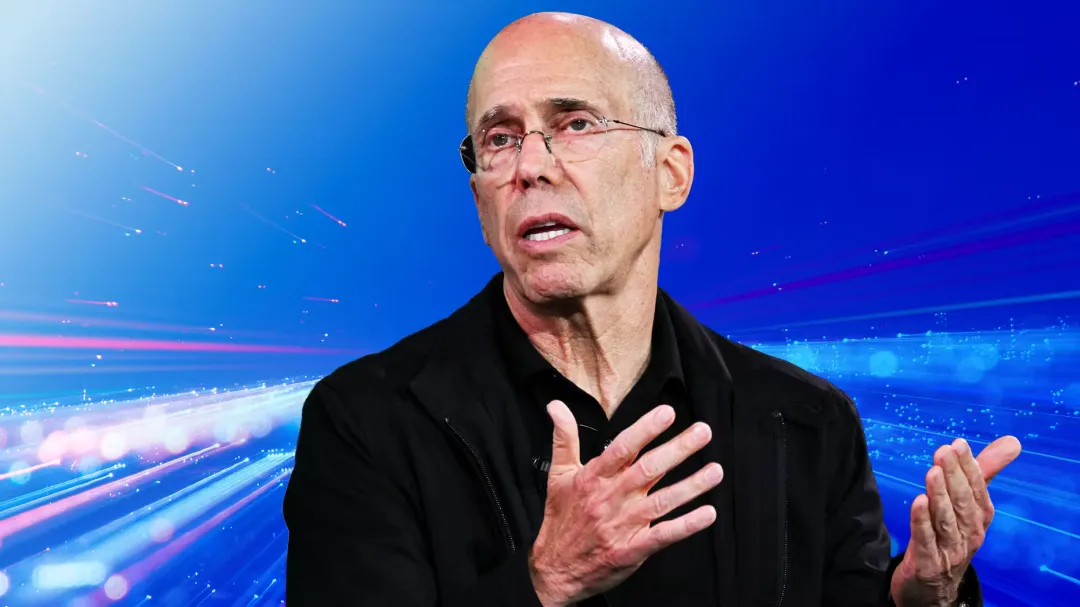
Jeffrey Katzenberg
There is currently no public information to prove the quality, control accuracy and commercialization of the products that the new team plans to launch. At the same time, competition in the field of AI video generation continues. Companies such as Google continue to promote video model research and development, and Sora even returns to the changing market.
It is noteworthy that OpenAI has also begun to redevelop some of its previously shrinking business lines in recent months, including robotics and creator products. This shows that while its business focus remains on ChatGPT and enterprise-level AI, OpenAI has not completely abandoned exploration for other areas of long-term value.
For OpenAI, allowing an external team to take over some product development and share subsequent profits through equity could be a way to continue to leverage existing technical assets.
For the AI video industry, this collaboration will also provide a case worth considering if it ends up landing: Is a cutting edge model that is out of the field due to cost and business prioritization adjustments able to find new business opportunities in more vertical professional markets?
The question of whether Sora will be resurrected remains unanswered. But at least the video model, which once rocked AI circles, has the potential to return to the market.
The original link: