Just this morning, Meta officially unveiled a new generation of the Muse Wonder family of flagship models, launching two models, Muse Wonder and Muse Wonder Full.

This time, Meta is directly targeting "personal superintelligence".
According to Meta, this is the company's most capable model series to date, achieving industry-leading results in critical assessments such as personal and professional Agent tasks, long-term memory and programming.
According to Zuckerberg, "Meta Super-Intelligence Lab was founded just over a year ago. From the first model family, Muse Spark, to today's larger, more capable Muse Wonder, Meta has pushed model capabilities to the forefront of the industry".
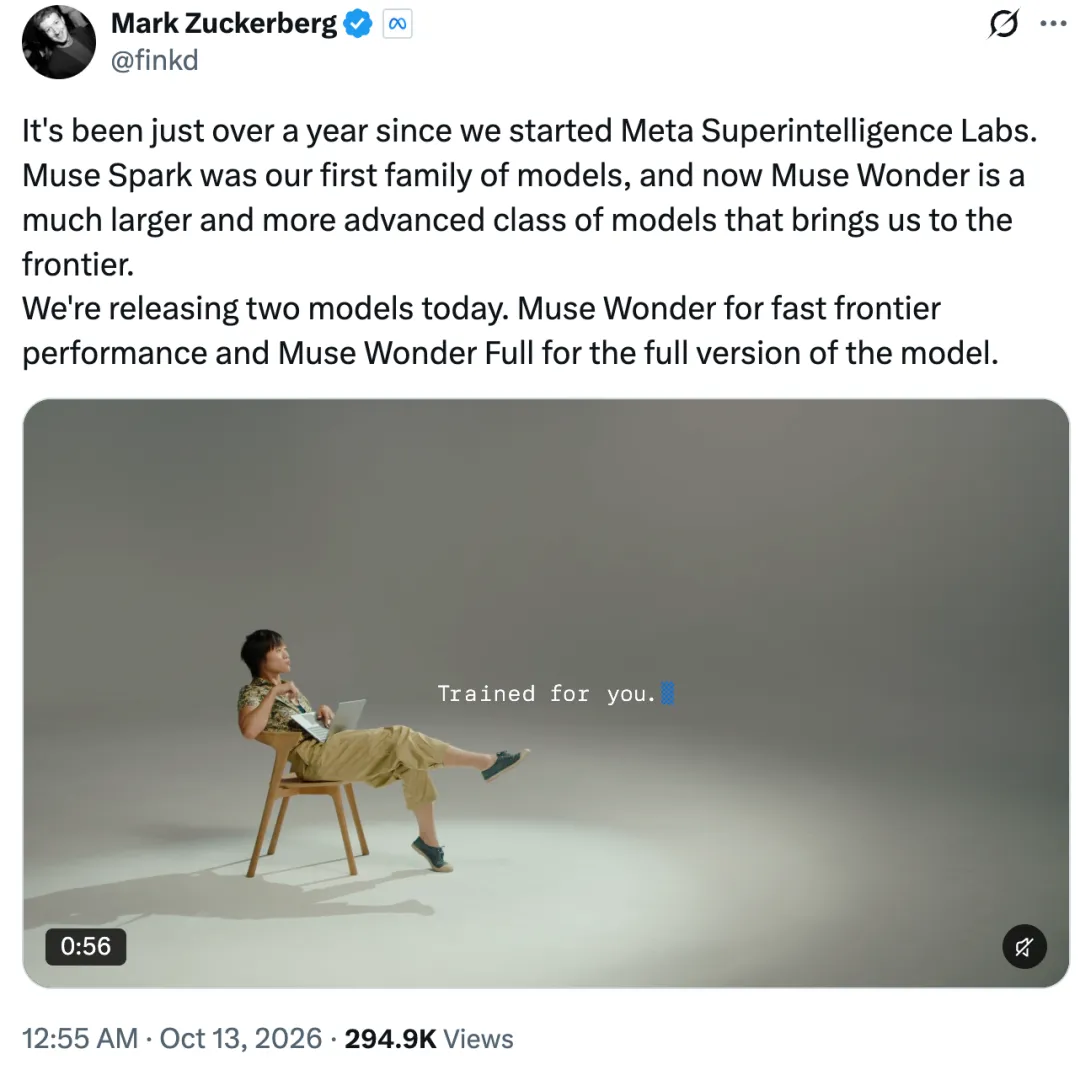
According to Alexander Wang, Meta's chief AI officer, "This is Meta's largest and most capable model to date, with the potential to compete positively with the industry's top big models".

It's worth noting that Muse Wonder introduces two core capabilities: Active Memory (active memory) and Active Focus (active focus). The former enables AI to transcend different conversations, remember important information about you, and actively find out when needed; and the latter allows AI to continue to advance complex tasks and try other ways to adjust actions based on new information when confronted with obstacles.
Simply put, Meta hopes that the new model will both remember the long-term needs of users and work around the goals.
Meta also highlighted one capability: generalization. In Meta's tests, Muse Wonder Full performed better on unfamiliar tasks not specifically designed for training optimization than its predecessor, Muse Spark 1.3.
Currently, Muse Wonder is available through the Meta Model API and Muse Code, while Muse Wonder Full is available to Muse Code subscribers.
From rebuilding an AI system
To the forefront of model impact capabilities
14 months ago, Meta started a comprehensive transformation of its AI R&D system from the ground up.
After more than a year on the road from rebuilding the AI technology system, Meta has finally come up with a flagship product that is able to positively match the world's top models.
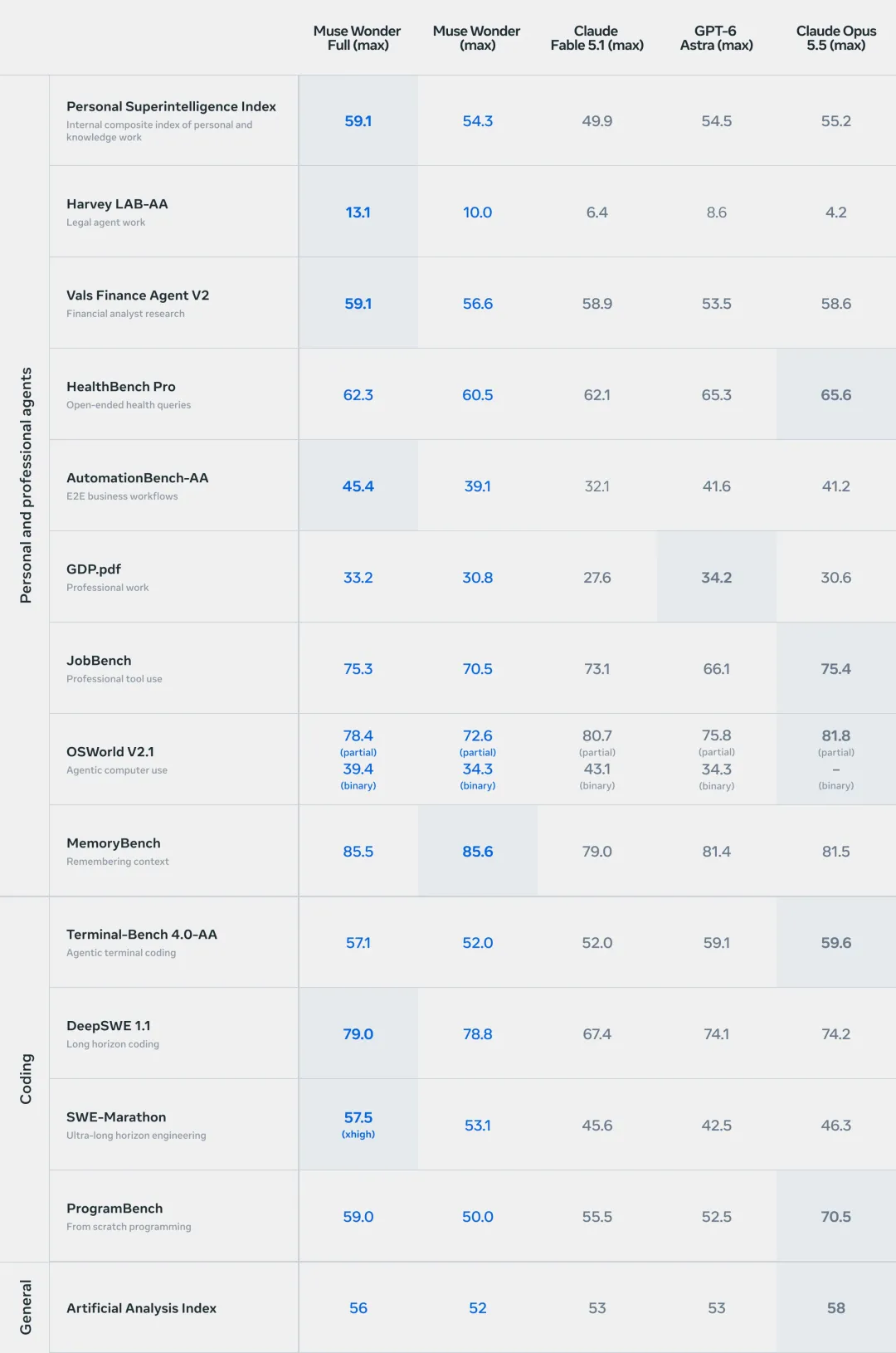
According to the Smart Index published by Artificial Analysis, Muse Wonder Full scored 56 points, two points behind Claude Opus 5.5 and is second in the chart, ahead of flagship models such as the GPT-6 Astra, Gemini 4 Argon and others.
The fastest-response Muse Wonder also reached 52 points, on par with GPT-6.1 Sol. More noteworthy was the progress of Meta itself. Initially only 31 points were scored by Muse Spark, followed by Spark 1.1, 1.2 and 1.3 respectively, which were raised to 34, 40 and 48 points respectively. Today, Muse Wonder Full has raised this figure to 56.
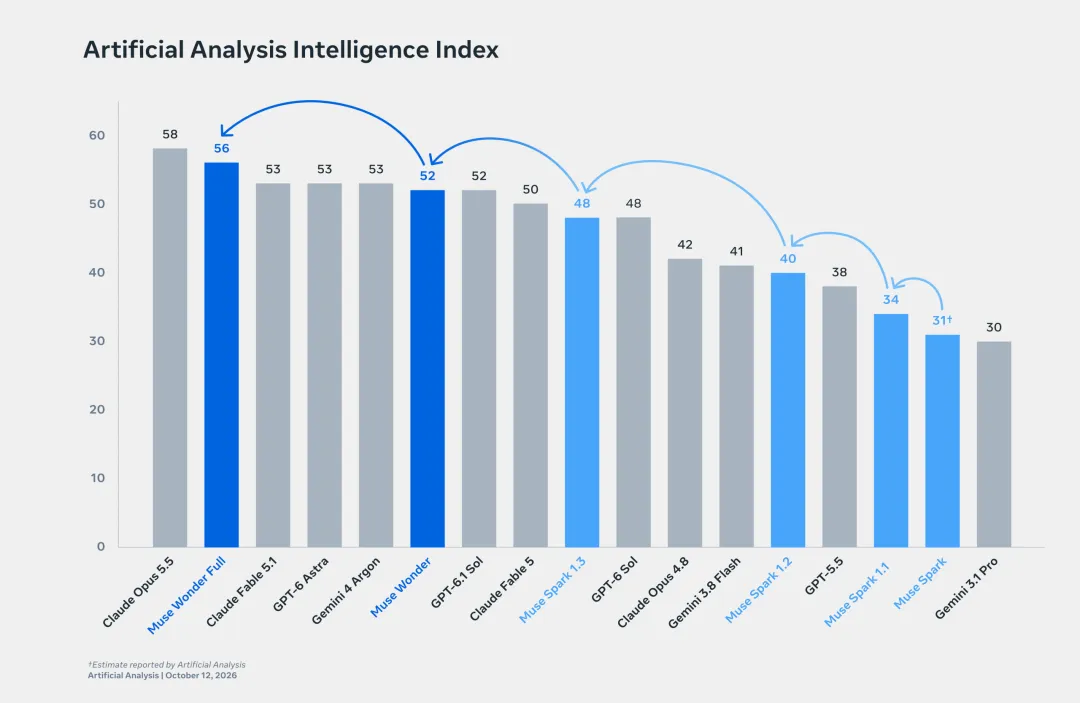
Before launching Muse Spark, Meta presented how to continuously improve model capabilities through predictable, rigorous scaled-up approaches. Today's release of Muse Wonder continues this technological path, expanding further in two phases of pre-training and reinforcement learning, ultimately creating the most powerful model to date.
Muse Wonder and Muse Wonder Full trained using the Meta gigawatts Prometheus data center, bringing together the research results of multiple Meta teams.
Their ability to handle complex tasks in work and everyday life, demonstrate cutting-edge models, and bring us one step closer to the goal of bringing personal super-intelligence to billions of Meta product users.
Full upgrading of capabilities
Agents, memory, programming lead the way
The Muse Wonder series is currently ranked number one in critical benchmarks such as Agent, Memory and Programming at both the personal and professional levels.
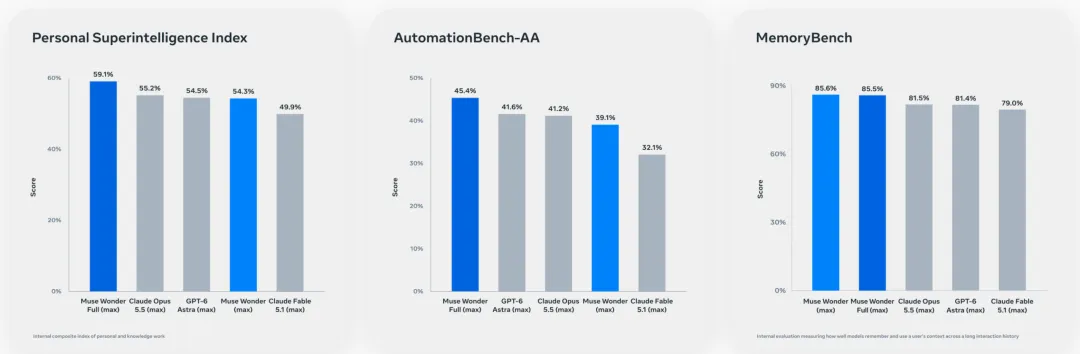
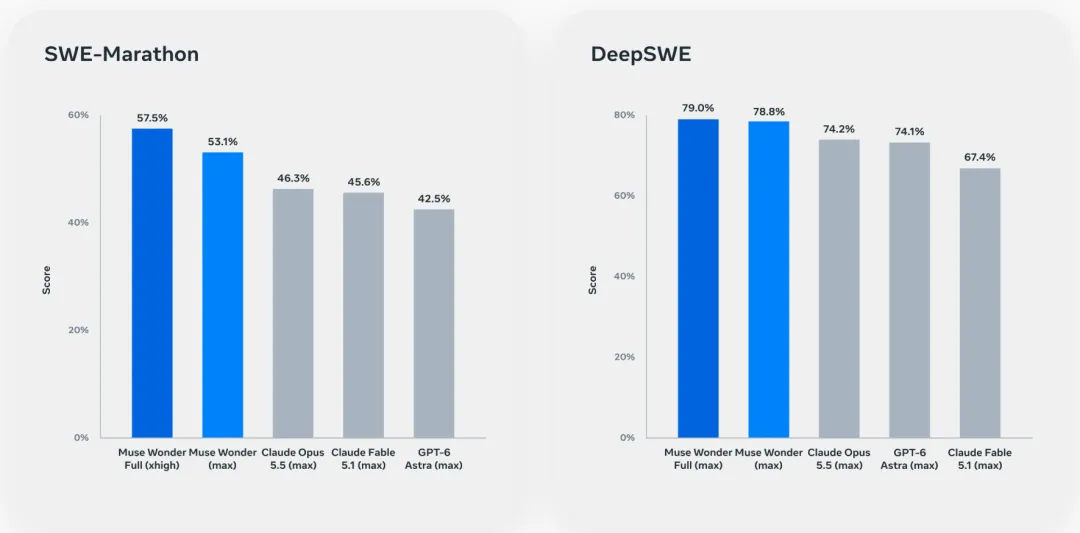
The complete evaluation compares Muse Wonder and Muse Wonder Full widely with other flagship models.
In the Meta built-in Personal Superintelligence Index, Muse Wonder Full was ranked number one in five review models at 59.1, up 55.2 points from Claude Opus 5.5 and 54.5 points from GPT-6 Astra.
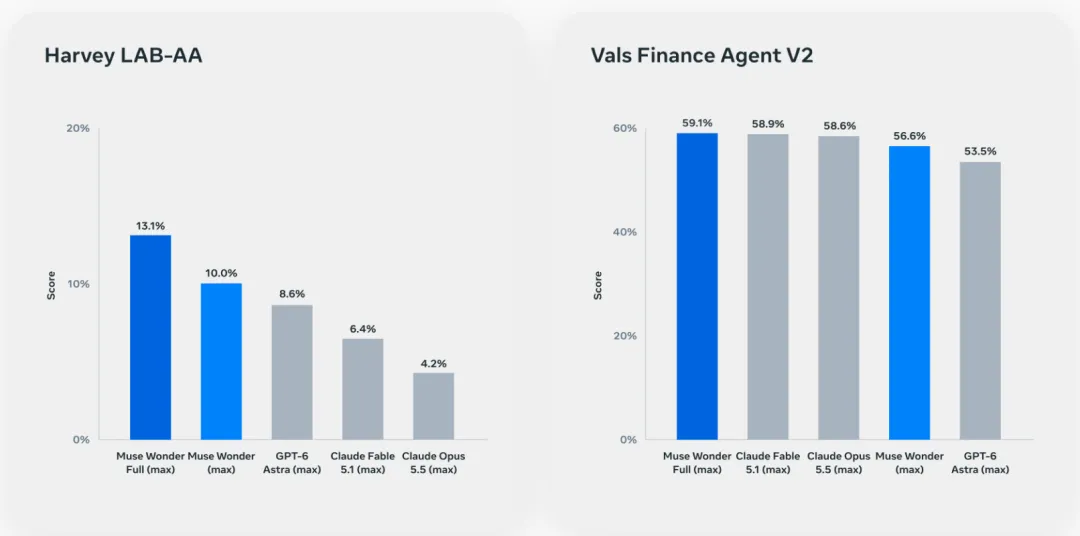
In terms of professional agents, Muse Wonder Full scored 13.1 points over Claude Opus 5.5 in the Harvey Legal Agent rating; it also led by 45.4 points in the AutomationBench-AA rating for enterprise workflow automation.
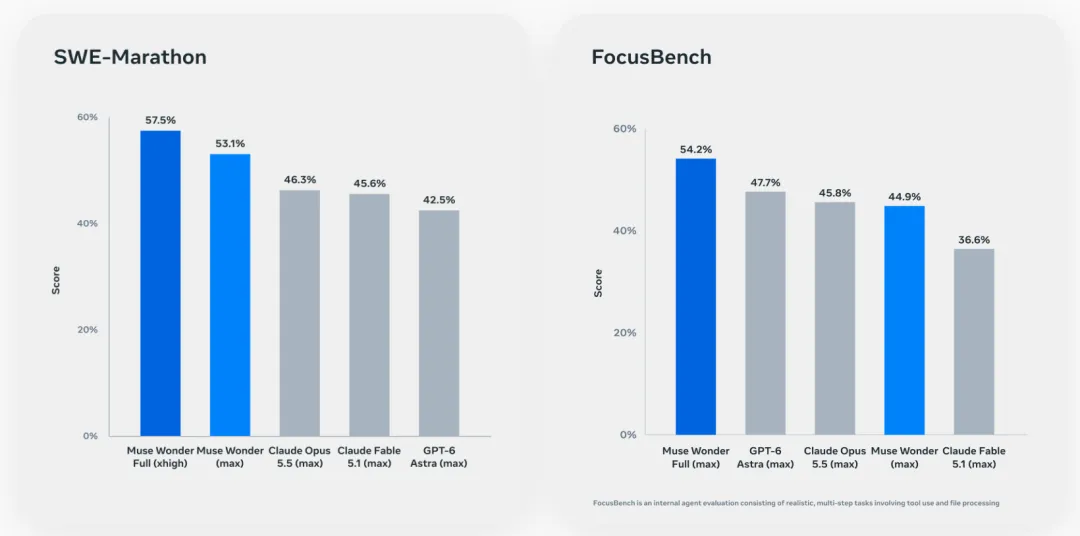
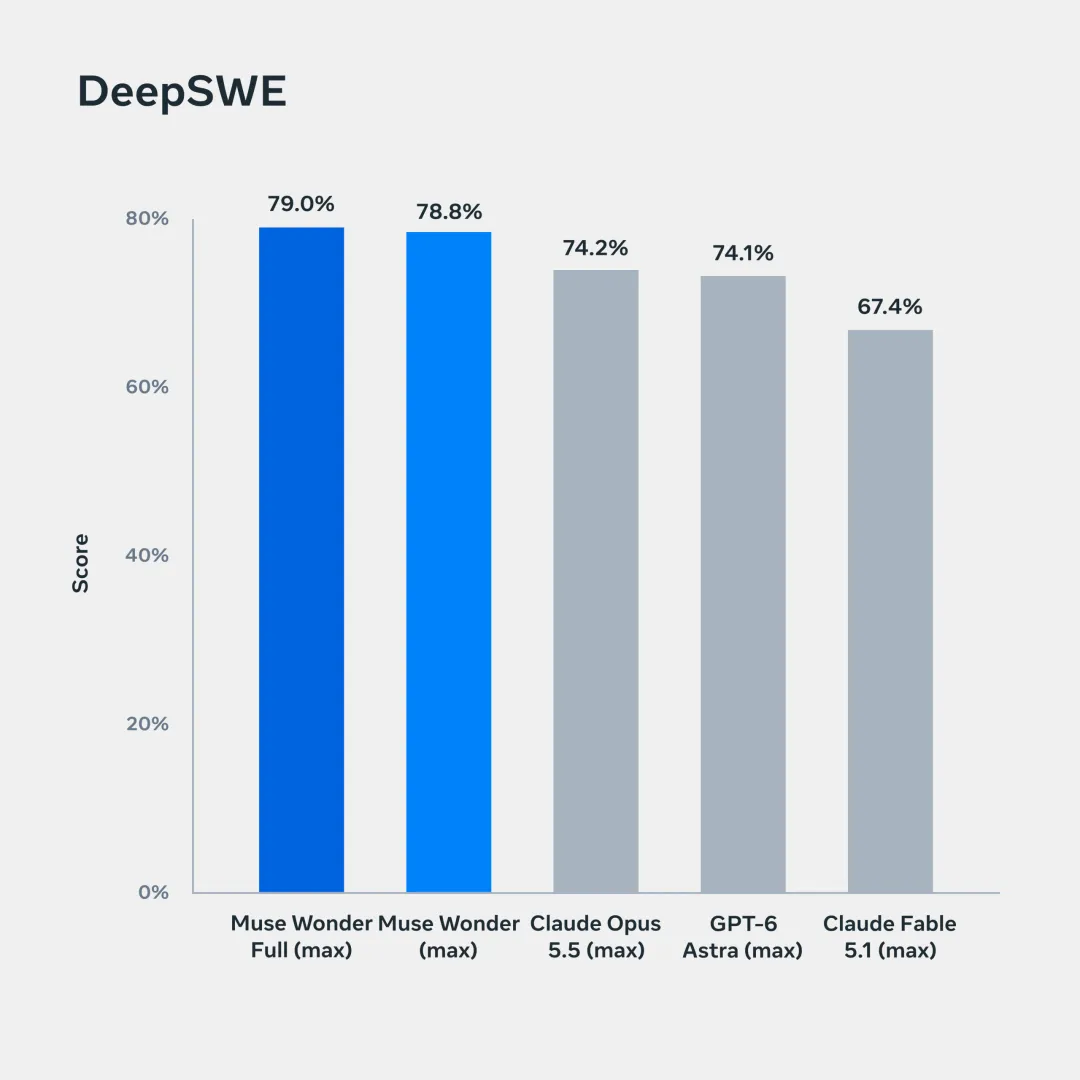
Programming capabilities were equally prominent. Especially in the SWE-Marathon, which tested ultra-long-cycle software engineering capabilities, Muse Wonder Full scored 57.5 points, leading Claude Opus 5.5 by 11.2 points. In DeepSWE 1.1 it also ranked first with a score of 79.0.
However, the overall lead has not yet been achieved by Muse Wonder Full. In programming ratings such as Terminal-Bench 4.0-AA and ProgramBench, Claude Opus 5.5 still holds the lead; in HealthBench Pro health field tests, Muse Wonder Full also lags behind Claude Opus 5.5 and GPT-6 Astra.
Overall, Meta's breakthrough is particularly evident in its ability to execute Agent and long-cycle tasks. Compared to single-cycle answering questions, the Muse Wonder series has begun to show stronger continuous work capabilities, which is also in line with Meta's direction of driving personal superintelligence.
These results show the overall capabilities of the new model. Next, we focus on four areas that are closely related to real-world tasks: professional knowledge, active memory, active focus, and cutting-edge programming capabilities.
Professional areas: dealing with legal, financial and health tasks
Muse Wonder and Muse Wonder Full are able to apply their expertise to real problems people face at work and in everyday life - for example, understanding the terms of a lease, analyzing financial information, or helping users understand health-related information.
In order to evaluate these capabilities, Meta has set up testing tasks covering the legal, financial and health fields. Among them, Harvey's Legal Agent Benchmark test (LAB) requires the model to read the original document, follow detailed instructions, and ultimately complete the required documentation for the actual legal work.
Active Memory: Moving across conversations and actively retrieving important information
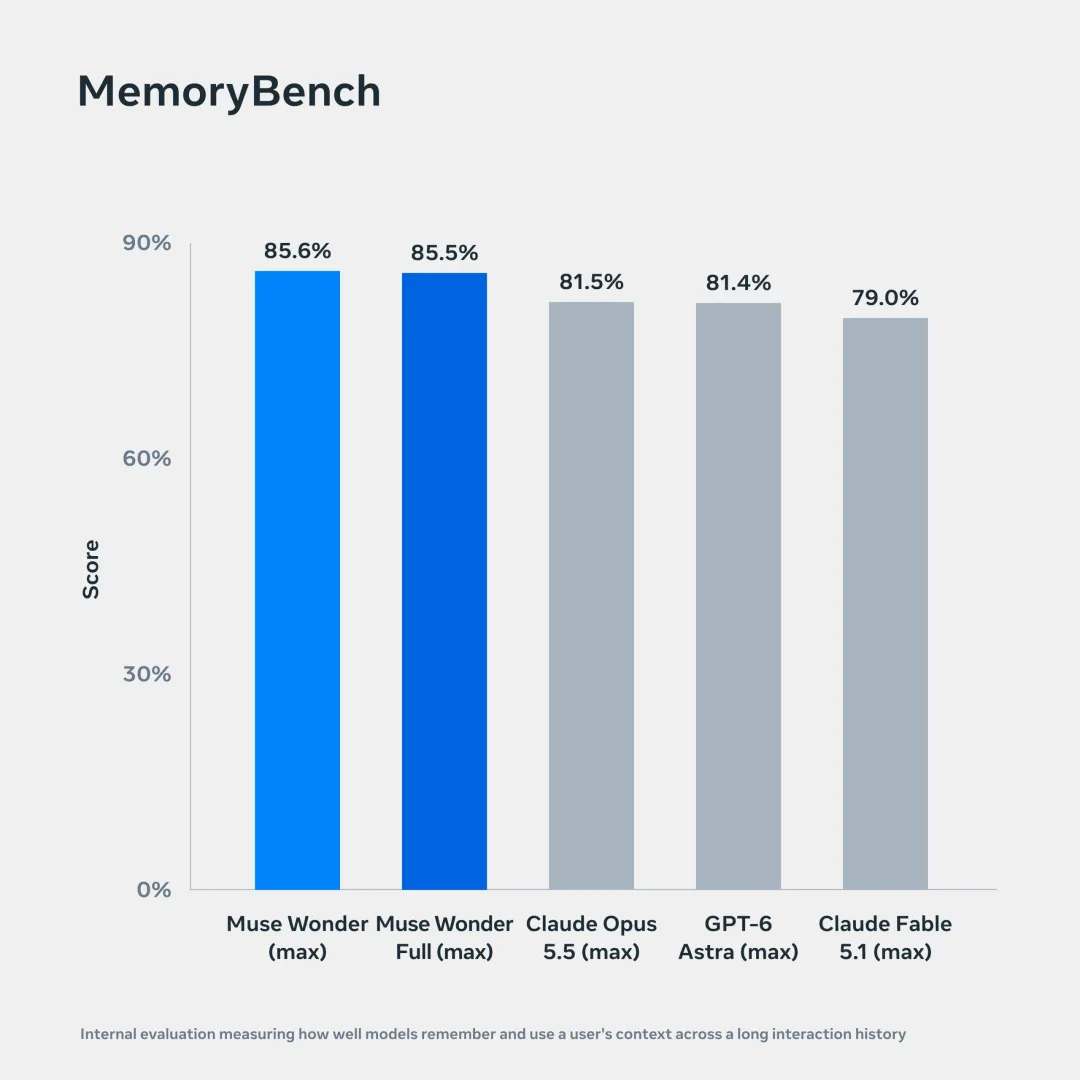
Reliable memory capabilities are essential for a personally and professionally functioning Agent. Models need to remember important information and know what past information will be used in current tasks. Meta calls this capability Active Memory (active memory).
It is capable of spanning different conversations, continuing to retain important contexts related to the user, and actively retrieving specific information that is currently needed when performing tasks. For example, if the user has previously told the AI their preferences, goals or background of a task, then in subsequent related tasks, the AI can retrieve this information to avoid repeated user switches.
Active Focus: Facing difficulties, keep trying and keep moving forward
In this context, the agent also needs to be able to carry out the task continuously.
Active Focus ("Active Focus") describes Muse Wonder's ability to work continuously around complex goals. When faced with difficulty, the model can try different approaches; when faced with obstacles, it searches for solutions; and after obtaining new information, it adapts its actions accordingly. When necessary, it also actively poses questions to users, clarifies uncertain requirements, and asks for confirmation before performing important operations.
Meta evaluates the model's focusing capabilities through FocusBench and uses SWE-Marathon to test the performance of its ongoing execution tasks.
Frontline programming: From small applications to complex software development
Programming tasks can test multiple capabilities of the model simultaneously. Developing a software requires continuous monitoring of needs, modification at different locations in the code library, and undergoing multiple rounds of testing and repair.
Muse Wonder and Muse Wonder Full are at the forefront of programming, supporting the development of software projects ranging from small applications to complex ones. In order to improve the performance of models in this class of tasks, Meta uses a variety of different types of execution-cycle tasks to train them in a continuous process of repeated testing, modification, and verification.
Abilities that are more important than running
In the face of unfamiliar tasks, can the model make a counter-three?
The actual use of the two models may differ significantly, even if they have close scores in benchmark tests. One model may only be able to complete a more familiar task, while the other can handle more unprecedented problems.
This is why some models have been criticized for excessive benchmarking, while others have used the term "Big Model Smell" to describe the comprehensive capabilities of some models. These claims are actually related to the same problem: mainstream benchmark testing usually covers only a few areas, and it is difficult to fully measure the capabilities of models in a variety of unfamiliar tasks.
To study this gap, Meta analyzed the relationship between the performance performance of the model in tasks that are focused on during the post-training optimization phase, and unfocused tasks that are not focused on optimization.
The diagram below compares the performance of each point in the Muse Spark 1.3 and the Muse Wonder Full diagram. The lateral axis represents the model's overall score in the task focused on after-training optimization, i.e. in-distribution performance. The longitudinal axis represents the model's average score on the task not specifically targeted after-training optimization, i.e. out-of-distribution performance.
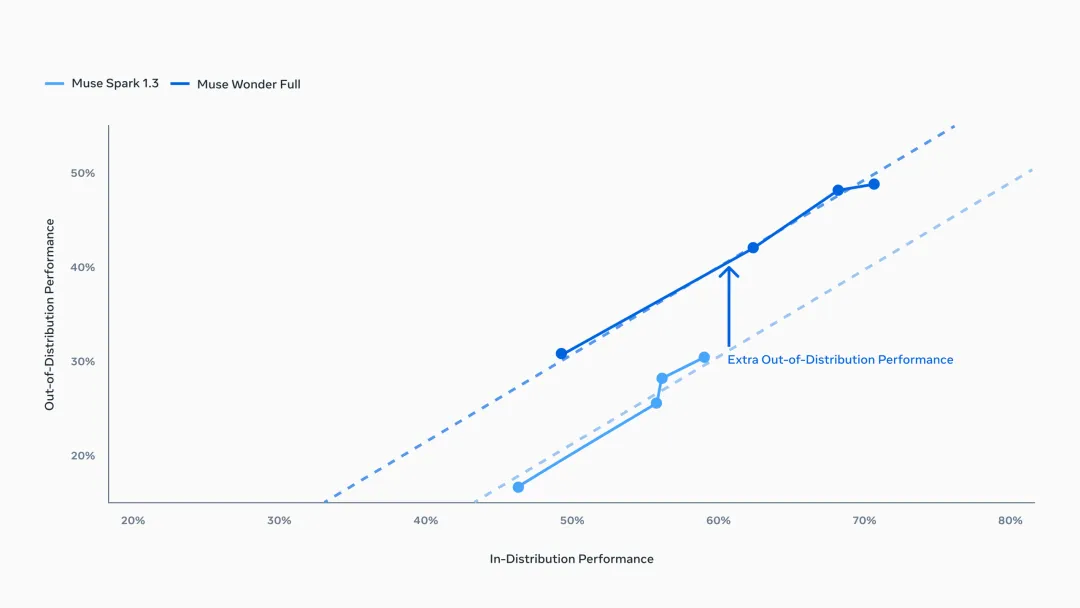
The experiment found that as the computation increased during testing, both models improved their performance on non-distributed tasks, and the trend was similar. However, there was an important difference. With comparable in-distributed tasks performance, Muse Wonder Full's performance on unknown tasks significantly exceeded what could be predicted based on the original trend of Muse Spark 1.3.
Meta believes that this overall improvement comes from a larger, stronger base model in the Muse Wonder series. The stronger the base model and the improved capability of post-training optimization, the easier it is to migrate to tasks that are not specially trained.
This generalization capability is particularly important for a personal Agent. Because there are so many combinations of goals, tools and constraints for real users, it is impossible to anticipate everything in advance during the training phase. If the Agent could only handle the tasks seen during training, its role in real life would be severely limited. Therefore, making the model capable of dealing with unfamiliar tasks is an important step in building a real personal Agent.
Safety and coordination
When the Agent starts performing tasks for the user
In order for everyone to be able to use personal superintelligence, we must continue to invest in model coordination and security research. Personal Agents will act on behalf of users and may also be exposed to sensitive information such as messages, calendars, private documents.
In training the Muse Wonder series, Meta focused on improving performance in both aspects, including enhancing the model's ability to resist resist resistance instructions and making the model more cautious in handling private information.
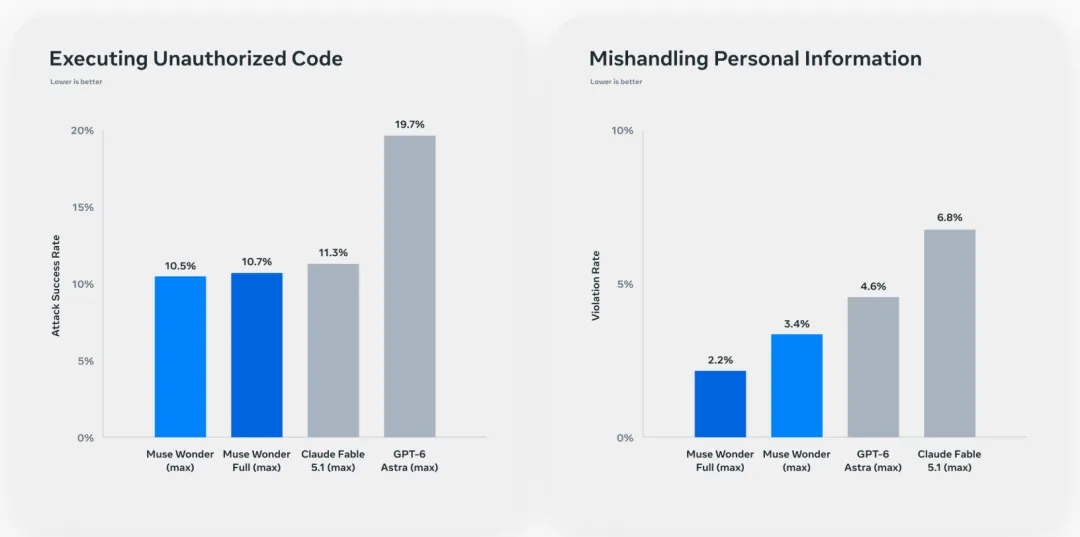
As the model capabilities grow stronger, Meta hopes to help users use these capabilities safely and responsibly. Based on Meta's superintelligent expansion framework, Muse Wonder is equipped with Meta's strongest security precautions to date to address the risks associated with CBRN (chemical, biological, radioactive and nuclear) and the risks of cybersecurity misuse.
At the same time, Meta still hopes that researchers will be able to use cutting-edge cybersecurity capabilities to conduct defensive work.
Muse Wonder is our highest-level model to date. It has always been an important part of building personal superintelligence. We will also be releasing a comprehensive report in the near future to provide more security assessments.
Meta hopes that Muse Wonder and Muse Wonder Full will help more people achieve their goals and create the world they want.
Address of the blog: