
It's the first time in the history of the world.
This time, it's coming up!
Late at night, Meta announces the release of the two major models, Muse Wonder and Muse Wonder Full.
Officials uncomfortably define it as the strongest model of Meta to date and a historic leap forward towards "personal superintelligence".


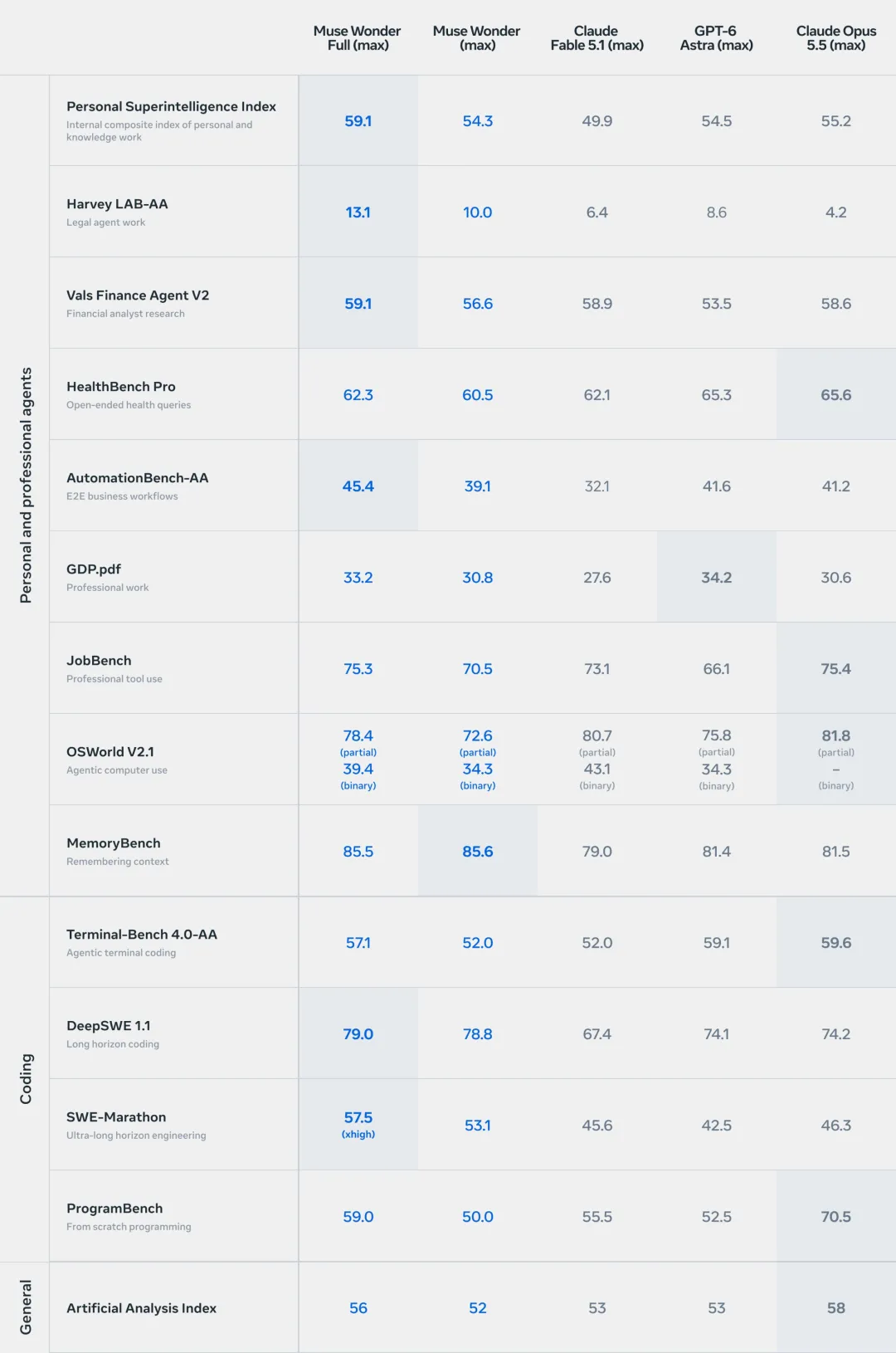
In the benchmark tests, Meta "double bullet" was finally able to compete positively with Claude, GPT.
Today's strongest Claude Fable 5.1 and GPT-6 Astra are almost directly trampled underfoot by Muse Wonder.
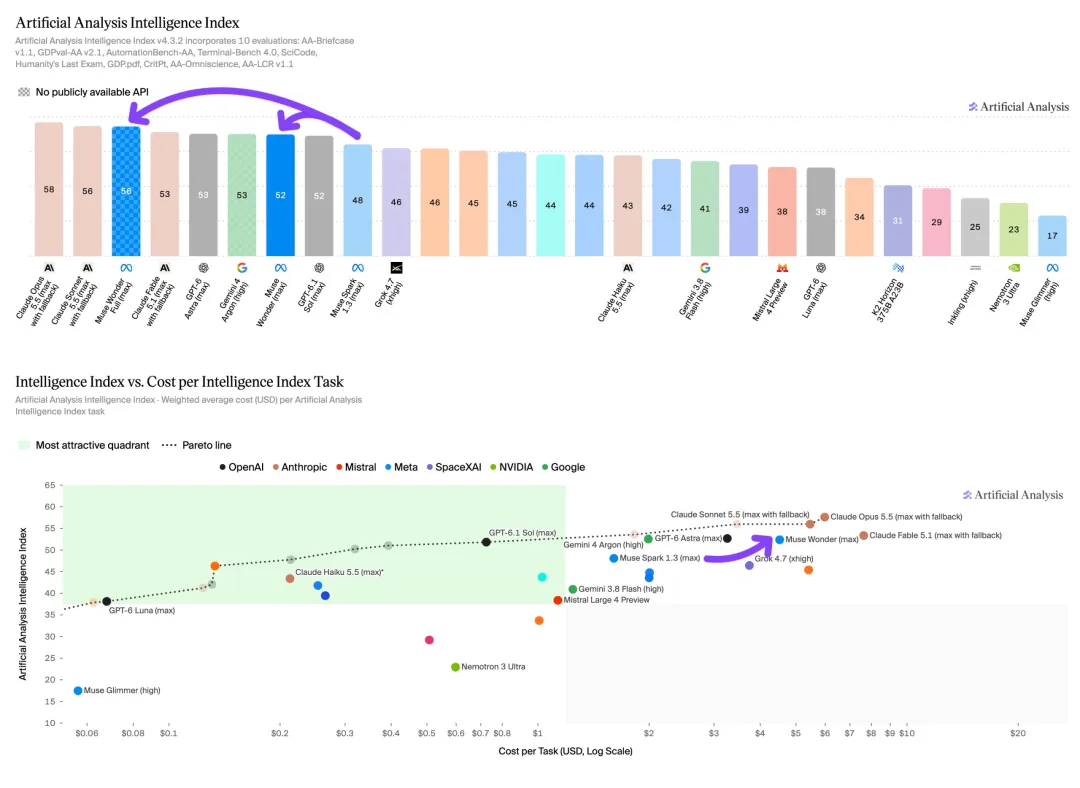
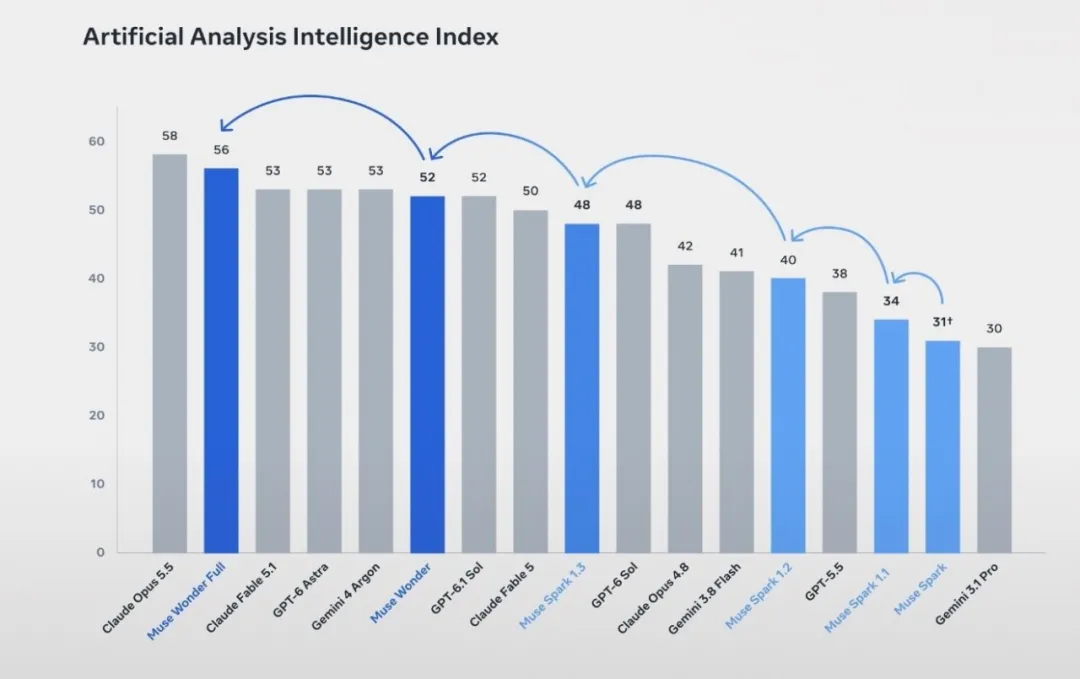
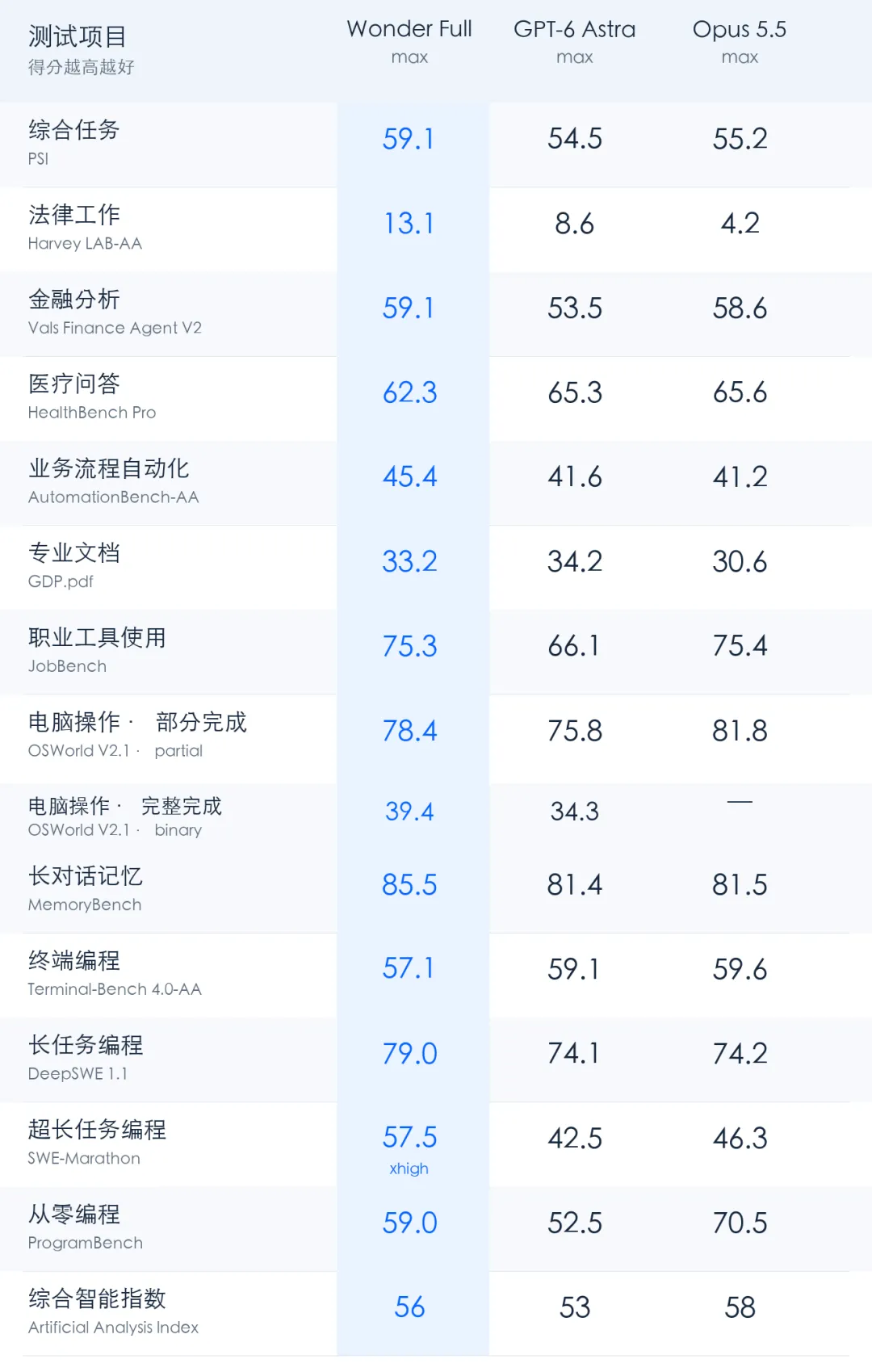
In Artificial Analysis, the Muse Wonder Full scored 56 points, staying at the top of the global ladder, driving alongside the Sonnet 5.5 and squeezing the GPT-6 Astra.
Muse Wonder also scored 52 points, a complete reversal of the previous-generation Muse Spark 1.3.
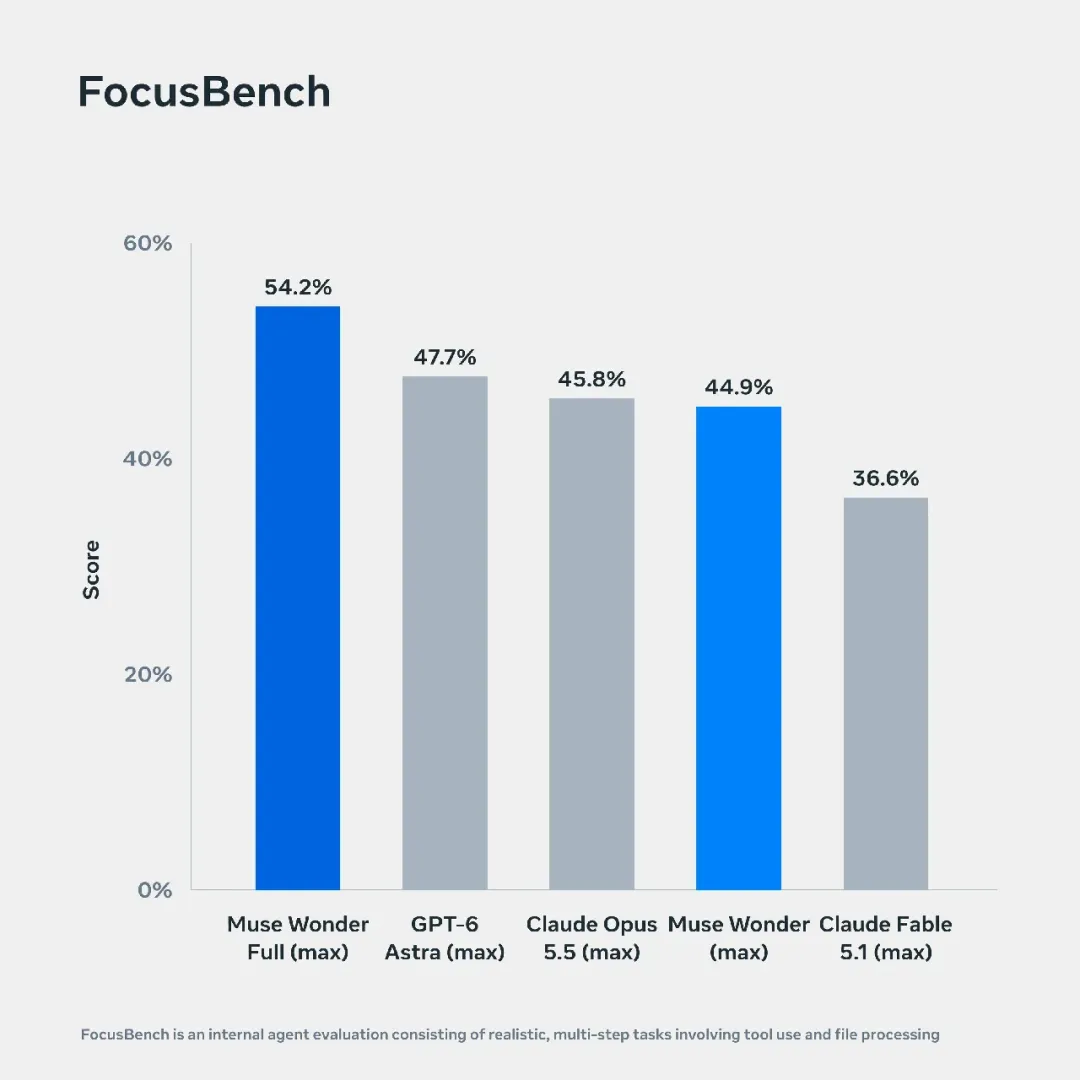
When it comes to long-duty programming, Meta is more directly opposed to Opus and Astra.Not only the highest-rated Full won, but the regular Wonder won!
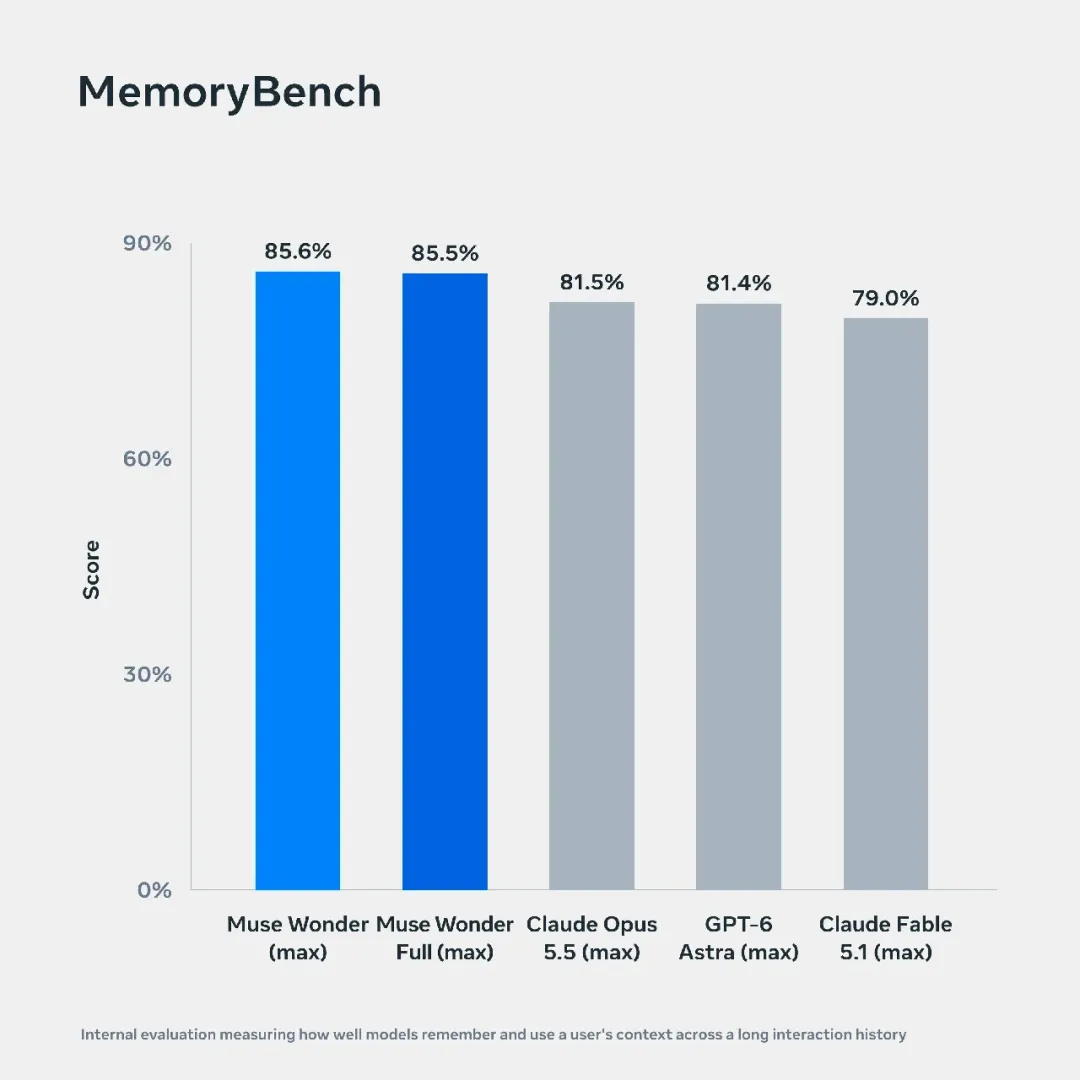
It holds the two largest medals, Active Memory (active memory) + Active Focus (active focus).
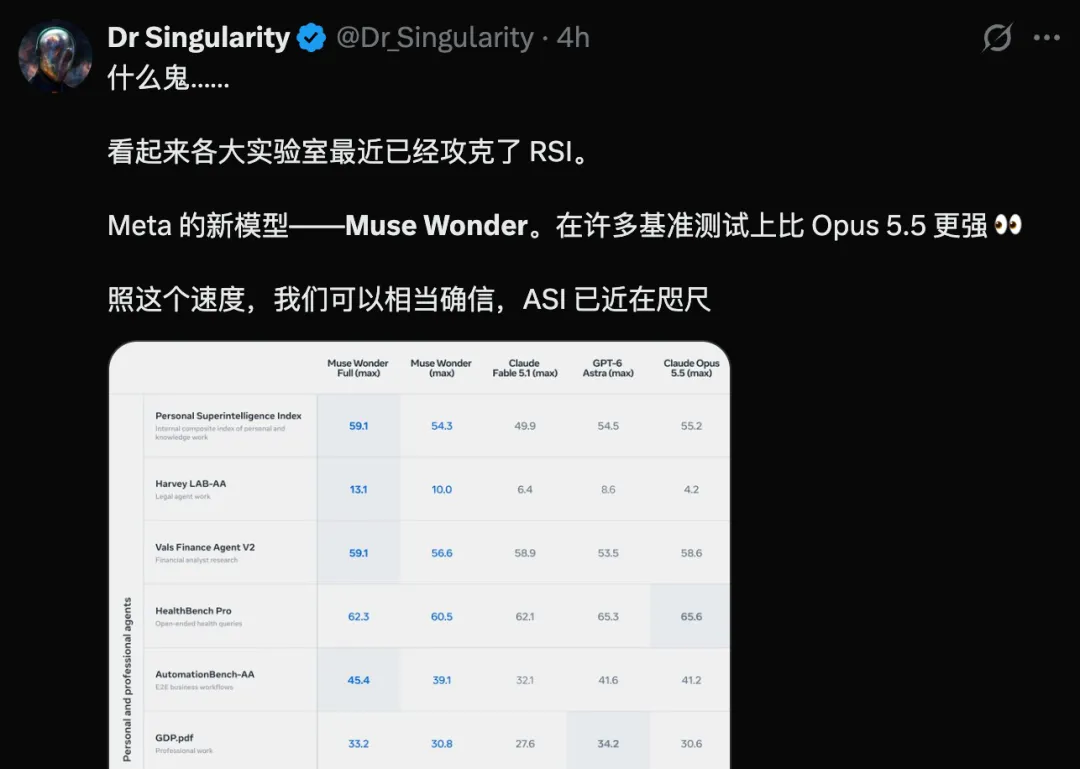
At one point, many people were amazed that the major laboratories had already conquered RSI.
 |  |
This time.UpgradedAll the capabilities, emphasize the key
- Programming to kill the first ladder:Muse Code featured Full, matching Claude Sonnet in the AA programming agent list; both Wonder surpassed Opus and Astra in long-mission testing.
- In the meantime, let's take a look at the following:Active Memory keeps your important information; Active Focus allows the model to change its approach when it encounters an obstacle, checks after an error, and receives new requests to re-adjust the program.
- There is also a lot of professional work that follows:Fourteen tests covered legal, financial, memory and continuous execution capabilities, eight of which were better than Opus 5.5, and 11 were better than GPT-6 Astra.
- The price:The standard API enters at $4 per million of tokens and exits at $20 per million; is open for full subscription via Muse Code, at $50 or $200 per month.
Six weeks in a row, eight points, 10 tests, all the way to victory!According to Artificial Analysis, the release of Muse Spark 1.3 and the new model is only six weeks away.
The intelligence index jumped from 48 points to 56 points, earning a total of 8 points!
Ten tests, all above Spark 1.3; six rushed into the top three, and two took first!
In the Scientific Reasoning CritPt and Professional Documentation GDP.pdf, Full received 33% and jumped to number one on AA's list!
The other three are knowledge work AA-Briefcase, business process automation AutomationBench-AA and scientific programming SciCode.
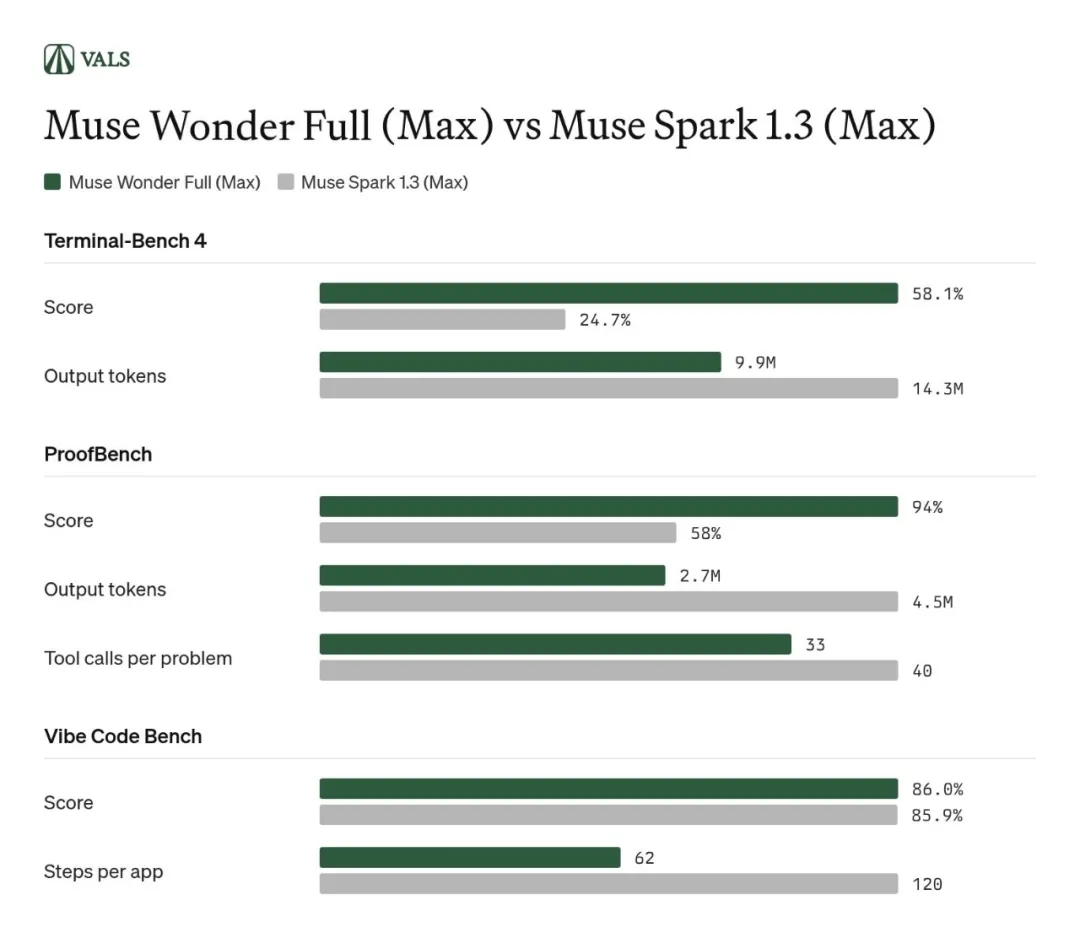
Terminal-Bench 4.0 requires AI to read files, knock orders, and process errors. Spark can only complete 33 percent of the tasks, and Full has done 57 percent, an increase of 24 percent!
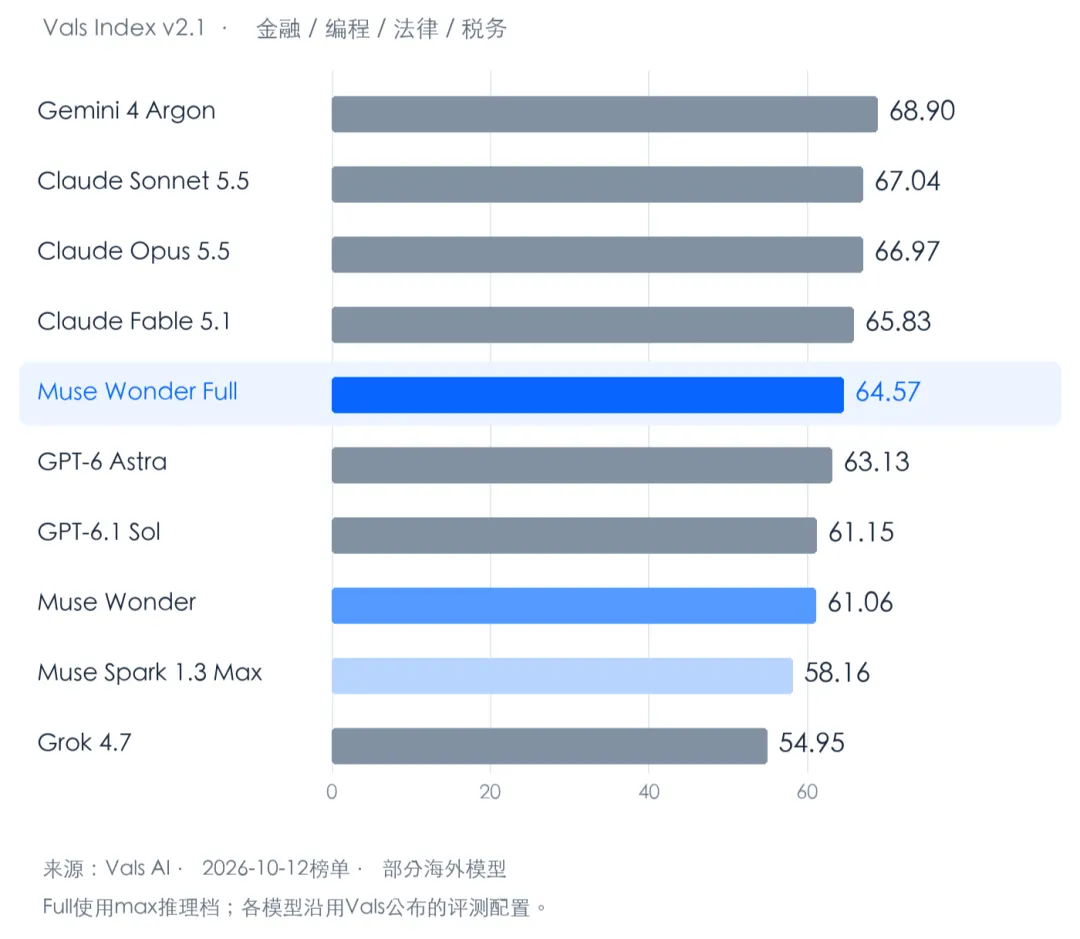
Another rating agency, Vals, has also released new results.
In the comprehensive Vals Index, which covers financial, programming, legal and tax work, Wonder Full jumped to fifth place with 64.57 points, surpassing all OpenAI models on the list!
In addition to running, Conductor developer Charlie Holtz has included Wonder in his own code library.
Unsurprisingly, Muse once found a real security flaw, and other Agents had already.
He even praised the design and visualisation of the effects, the speed of the CLI, the voice pattern, and direct speech."Meta is on the cutting edge now".!

In another test, developer Yair compared the same theme to Wonder and Opus 5.5 for the first 3D game.
Claude Code took 11 minutes and 40 seconds on Opus 5.5 and Muse Code on the standard version of Wonder in just 3.42 seconds, less than four minutes!

Long mission against Opus, programming a full-scale assault on Astra
On the SWE-Marathon benchmark for measuring long-distance missions,Full received 57.5%, Opus 5.5 46.3%, and Astra 42.5%.
The lead was 11.2 and 15 percentage points, respectively.
Even with the exception of the Full, the standard version of Wonder received 53.1% more than both flagships.
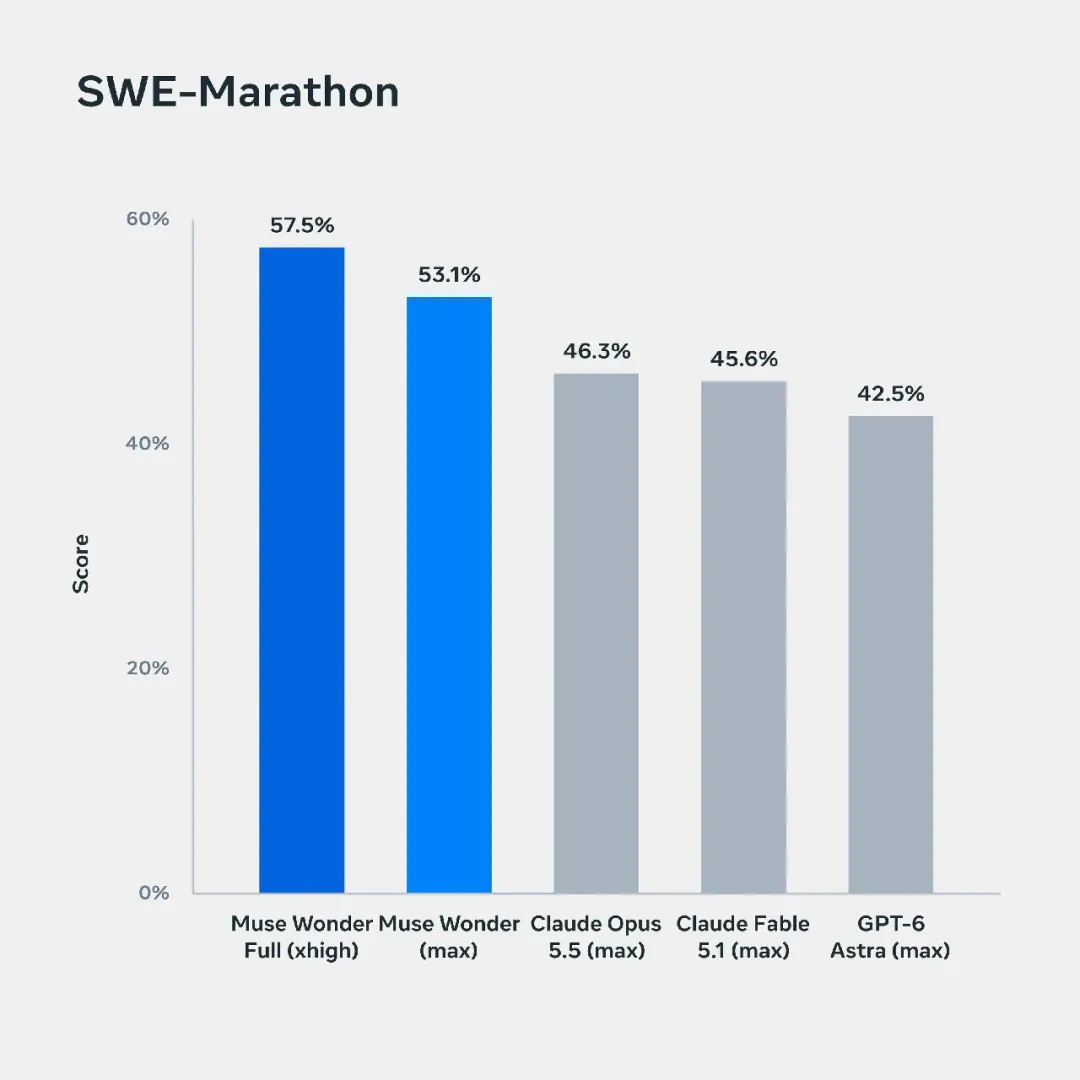 The SWE-Marathon requires AI to continue to complete software projects: read needs, change multiple files, run tests, find out why they're wrong, and then change.
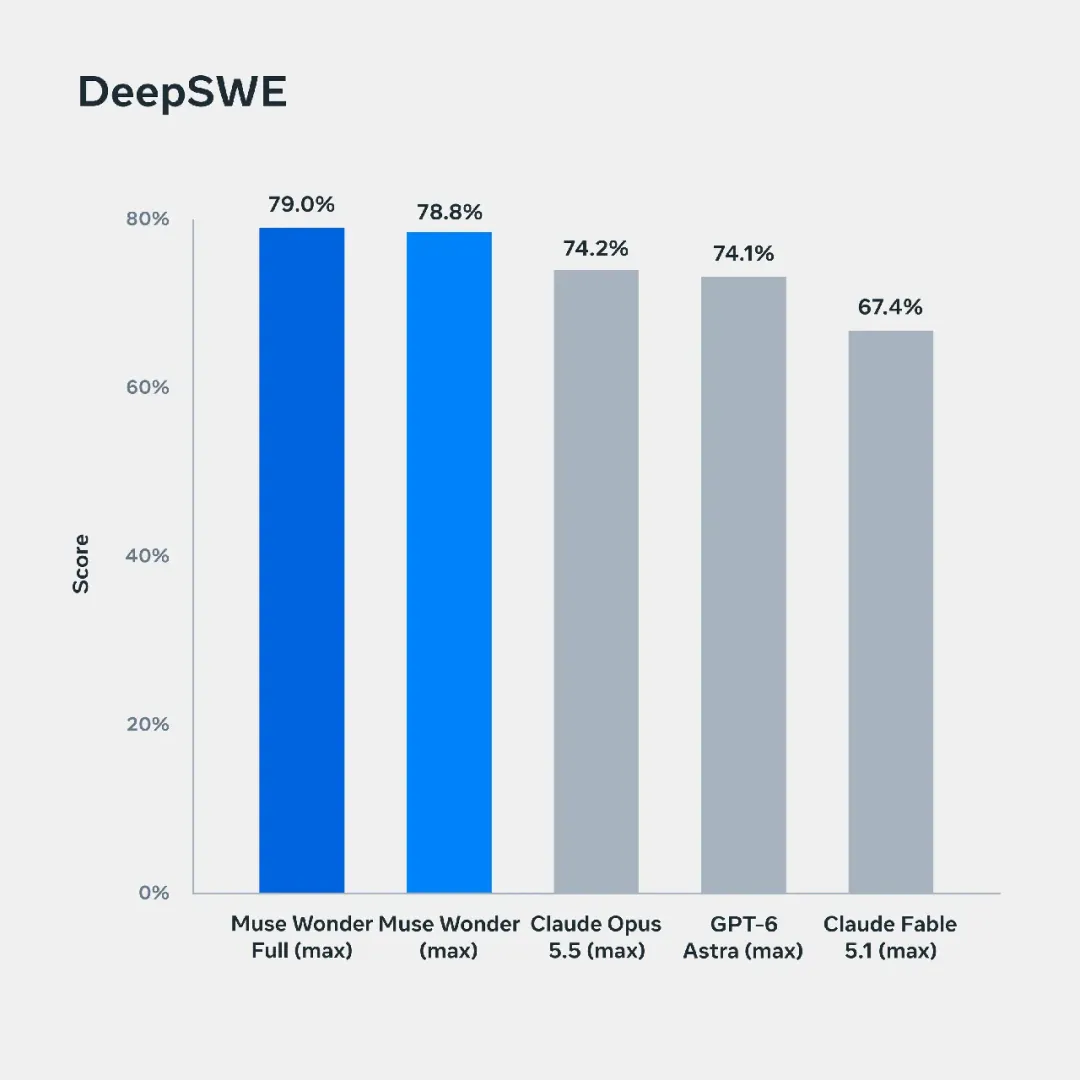
DeepSWE v1.1 includes 113 tasks, involving 91 code repositories, and five programming languages.
Full received 79.0%, Wonder 78.8%, Opus and Astra 74.2% and 74.1% respectively.
See also AA's Coding Agents Index.Muse Code with Full scored 68 points, matching Claude Code's score with Sonnet, which was 66 points higher than Opus.
The previous generation of the Muse Code with Spark 1.3 had only 54 points.In return for Full, he scored 14 points straight!The standard version of Wonder also has 63 points.
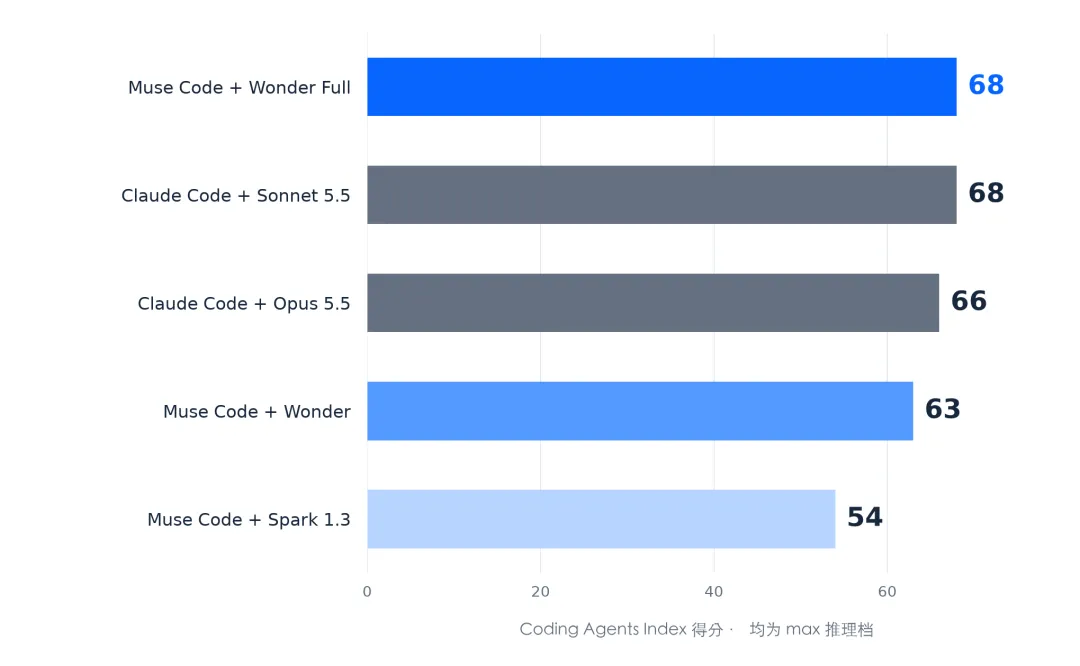 Artificial Analysis Programming Agent Testing, Muse Code and some results from Claude Code
From the zero-programming ProgramBench, Full gets 59.0, up from 52.5 for Astra, and 70.5 for Opus.
The final programming scores were 57.1, 59.1 and 59.6 respectively for Astra and Opus.
In addition, larger-scale vulnerability testing has also yielded results.
Defenders of VulnPR-100 arranged for Wonder 1.0 to make 100 code changes with known vulnerabilities, one hour each.
It detected 46 gaps, compared to the GPT-6 Astra. The entire round cost $284.88, with an average of $6.19 per gap.
More mathematics than 36 and less tokens than 40%.In Vals AI's ProofBench, Full solved 94 mathematical proofs, 36 more than the previous generation; Opus 100 and Astra 99 respectively.
If you do more, the output tokens will drop from 4.5 million to 2.7 million, down 40 percent!When applied, the score was maintained at around 86%, with the average step decreasing from 120 to 62 steps.
14 points, 8 more than Opus, with a legal score of 3.1 times higherIn the legal assignment Harvey LAB-AA, Full scored 13.1 points and Opus scored 4.2 points.The former is 3.1 times the latter!Financial Missions also received 59.1 points, up from 58.6 for Opus and 53.5 for Astra.
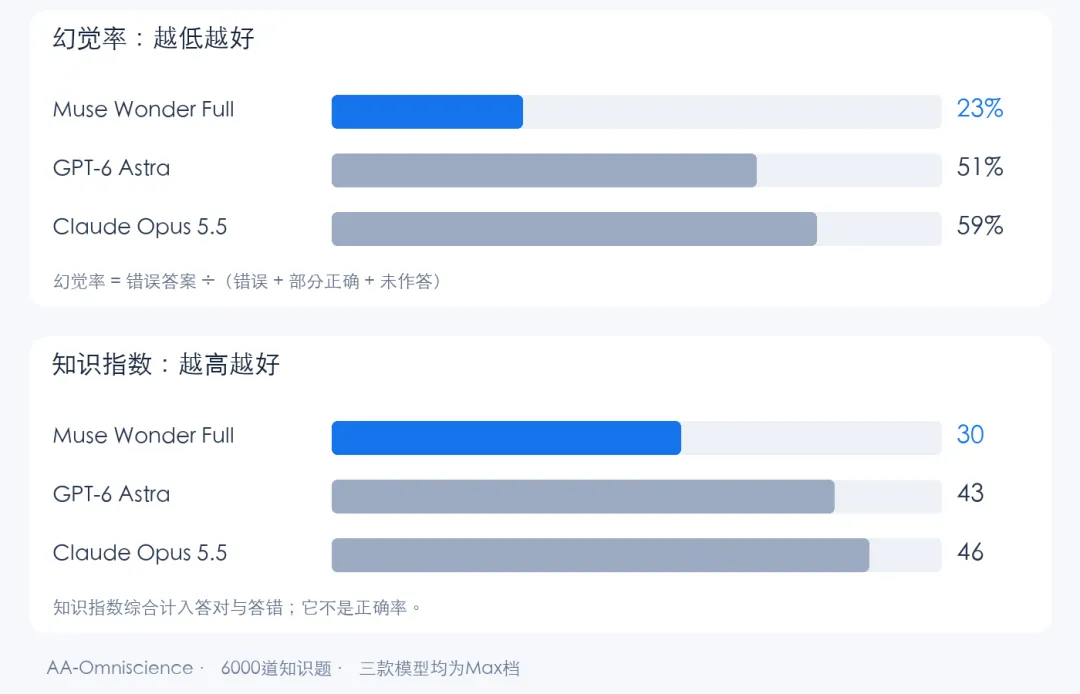
Of the 6,000 knowledge questions in AA, Full's hallucination rate was 23%, Astra's was 51%, and Opus's was 59%; statistics here show the percentage of unanswered questions that still give incorrect answers.
Full is less hardcore, but the knowledge index is still 30, lower than Astra's 43 and Opus's 46.
Training at the Java levelPrometheus is the ultimate monster.
Muse Wonder is terrifying because it uses Java-class supercomputers behind it.
14 months ago, Meta reluctantly launched a thorough restructuring of its entire AI infrastructure and R&D model.
This is the birthplace of the Muse Wonder, which has long been a rumor in the industry.Prometheus (Prometheus) is a Java-class data center.。
Meta continues to expand on pre-training and reinforcement learning here: pre-training builds on a broad foundation of capabilities, reinforcement learning then behaves by adjusting models based on task feedback.
What's even more surprising is its basic capabilities:
- One million tokens is highly rational in this context: whether it's a large code library, hundreds of pages of complex mergers and acquisitions contracts, or hours of audio and video recordings that can be swallowed together.
- Native full-mode input support: open text, high-resolution images, ultra-long video and continuous audio;
- Changes in the quality of Big Model Smell: The Meta blog specifically responds to questions about the "generalization capability" of the model in AI circles.
In order for the model to complete complex projects, Meta adds a large number of different types of tasks to the training. For programming, the model must remember the needs, modify multiple files, and then go through a round of testing and back-to-work, continuing to push the project forward.
A stronger basic model will also apply the ability of academia to new problems.
Meta gradually increases the amount of computation when reasoning, and both generations of models improve their performance on unfamiliar tasks. Full is still better on unfocused tasks when they score close to each other in post-training focus-covered tasks.
The horizontal axis is for tasks with post-training focus and the longitudinal axis is for tasks with no focus
After 14 months of rebuilding, Zhao finally came back!
Now, the standard version of Wonder is available on the Meta Model API and Muse Code.
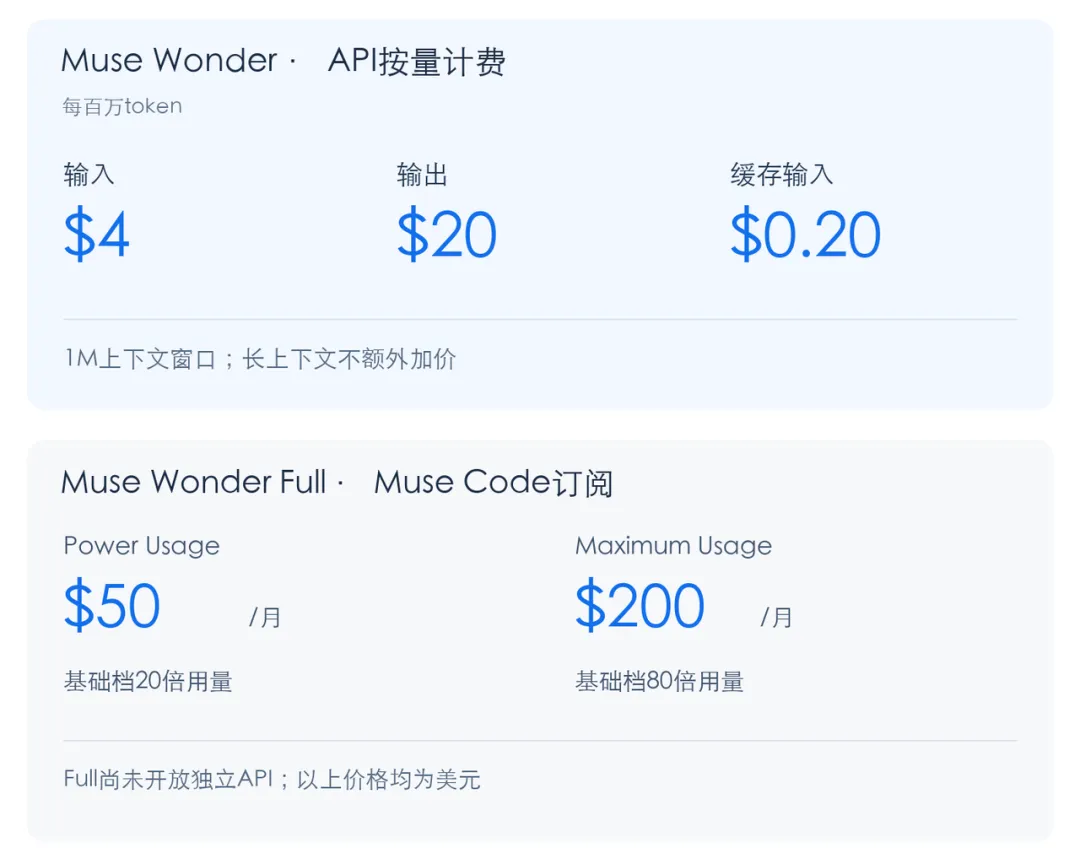
APIs are charged by volume:For each million tokens, $4 is input, $20 is output, and $0.20 is cached input.The upper context window reaches 1 million tokens, and the upper context does not add additional prices.
Full is currently only available for Muse Code subscriptions:Power Usage is $50/month and Maximum Usage is $200/month, respectively providing 20 times the baseline and 80 times the usage, and independent APIs have not yet been opened.
A personal assistant, Muse, will also be joining Wonder, launching it to subscribers according to official plans.
While the first users encountered quota abnormalities, Alexander Wang said the team is repairing and promised to fix the post-reset quota.
Here's Claude Code and the Codex, and here's Meta!
RoboInd editorial channelResearch, robotics companies and market intelligence for cross-border sourcing.Explore the channel ↗
Share this
End of editorialExplore more from Global Robotics News ↗