
It's the first time in the history of the world.
GPT-6.1 Sol, by default direct to context500k!OpenAI Day 7 updates extend the default window in Codex and ChatGPT Work from 272k to 500k, saving about 80%.
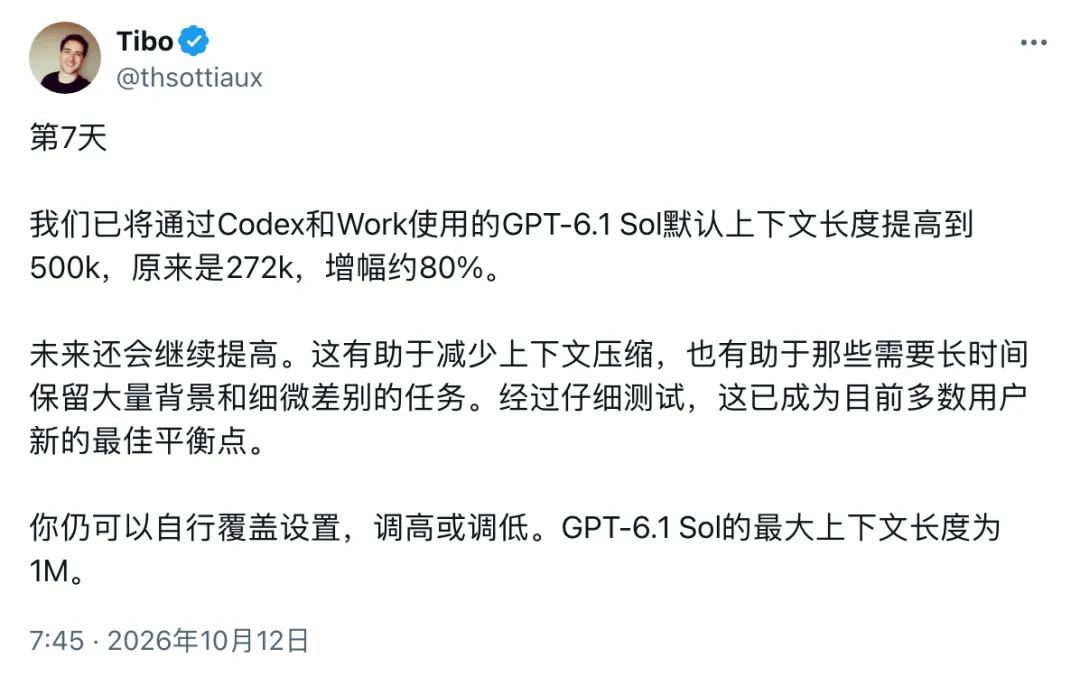
Then Tibo added another knife:GPT-6.1 Sol runs on a subscription limit, with no additional charge.

The task normally consumes subscription quantities, but no longer receives an additional fee due to changes in context.
Calls through the API are still charged according to the API price schedule.
However, in the comments section, the developer, Mhmd Hammoud, asked: "Is it a real upgrade to change the configuration now?"

GPT-6.1 Sol Madness 500kWishing you success
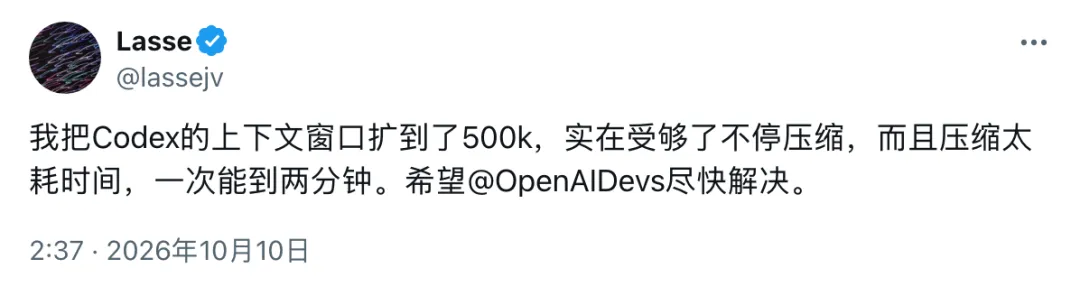
Before the default 500k release, the developer Lasse was already sufficiently compressed.
He spat out,Codex compresses the context once, allowing him to wait two minutes at most.
Two days before this update, he had simply changed the window to 500k, posted a status snapshot, and shouted OpenAI hurry up to solve the problem of compression being too slow.

The codex will look at files, change the code, run tests, read the code and report errors in the context.
When it's full, it has to rearrange the dialogue and work progress before it can be filled and make room for the next step.
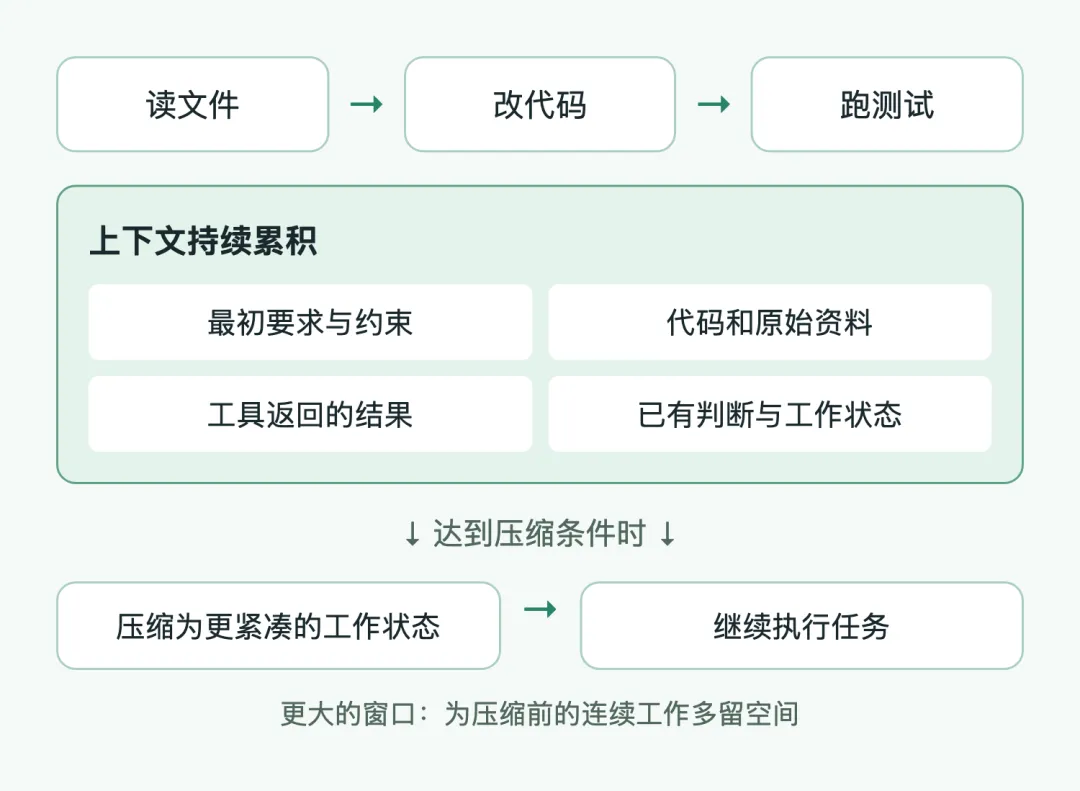
After the compression is completed, it is necessary to check if it misses the original requirements.
For example, when it opened, it was clear that "the interface should be compatible with the old version". If you change dozens of files, the new function runs and the old interface is broken, then you have to repair it yourself.
Tibo said the expansion would reduce compression and allow the model to retain more detail in longer tasks.
A few compression attempts, a few repetitions of the same request, and 500k helped.
Free of charge and equal deductions
I'm afraid the pressure is less, but the quantity is falling faster.
In July, OpenAI upgraded the content of the product from 272k to 372k for GPT-5.6 Sol.
As a result, subscription usage decreased more than expected, and the team returned 272k.

The developer Theo guessed at the time that it was doubled in price after more than 272k of content.
Tibo corrected that subscriptions at the time also did not charge a subscription fee. The use of multiple buttons came from repeatedly reading more cache content.
You just hit "continue" and the agent will change the code and still have to bring the files, test results and requests that you've read before.

It is also possible that the content will be read over and over again when the tools are used later.
Caching can replicate content that has already been processed, and the cost of reading is lower, but each reading still accounts for the amount of use.
Free of any additional charge, it does not mean that the same task must be saved.
Developers want to wait a few times less for compression, but they don't want the project to be finished before the quota is used.
Claude has already defaulted on a million.However, 500k is not enough to draw Claude from a comparison.
From Claude CodeOpus 5.5 and Sonnet 5.5, the default context is 1MThis is equivalent to twice the codex's new default value.
In fact, the GPT-6.1 Sol's upper limit is also up to 1M, and users can manually upgrade.
However, OpenAI defaulted to 500k this time, because testing found the setting more suitable for the majority of users.
In terms of cost, the two Claude models called the API within 1M at a standard Token single-price charge.
OpenAI is exempt from the long-term context charge in the subscription limit, while the price of the API is calculated differently.
When the window opens to 1M, it's also full. Claude Code uses both models, and the default automatic compression point is about 967k.
When it approaches the upper limit, it first removes the output of earlier tools in the context, such as reading files, running commands and records.
If there is not enough space, put the dialogue in a summary, keeping current needs and key code, and let the task go on.
This type of subtask can also be assigned to the subagent. It has its own context and returns the result summary.
In this way, the master agent gets the results and can proceed without having to get stuck in the entire search process in the main dialogue.
According to OpenAI, the default window will continue to increase.
Windows will get bigger, but the developers' patience can't keep up with the expansion. Once the code is given to AI, they should always wait a few times, and say a few times, "This is a requirement I've talked about before".
RoboInd editorial channelResearch, robotics companies and market intelligence for cross-border sourcing.Explore the channel ↗
Share this
End of editorialExplore more from Global Robotics News ↗