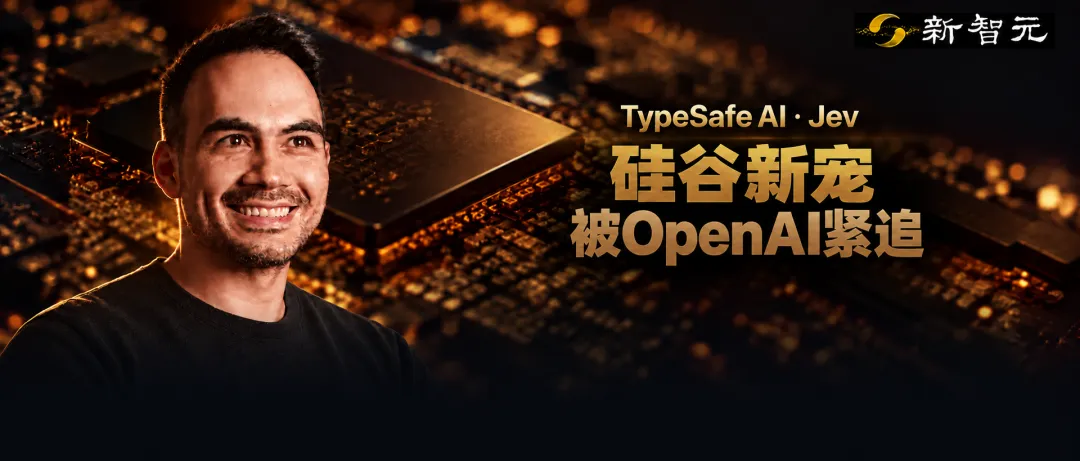
It's the first time in the history of the world.
An AI that won't talk to you just got $870 million in funding!
On October 9, TypeSafe AI announced the completion of its A-Round financing, valued directly at $7.5 billion.
What's even more interesting is the background of the team.

Photo by the three co-founders of TypeSafe AI, followed by Erik Gafni, Sasha Sheng, Diogo Almeida on the left.
Erik Gafni is a serial entrepreneur who was an early employee of Invitae and Freenome; Sasha Sheng was a research engineer at Meta/FAIR.
Diogo Almeida, who worked at OpenAI, was involved in the research on ChatGPT.
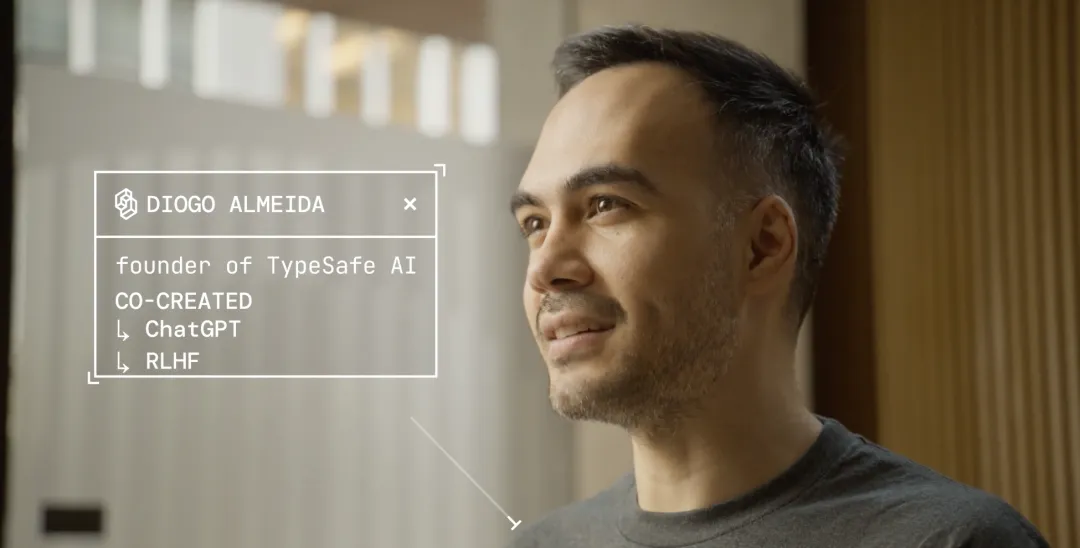
Now that he's out on his own, he's made new products, and he's forced the old house to follow fast.
On September 15th, Jev was launched.
Just two weeks later, OpenAI announced the launch of a limited preview of the Decisions API and launched it directly into public Beta on October 6.
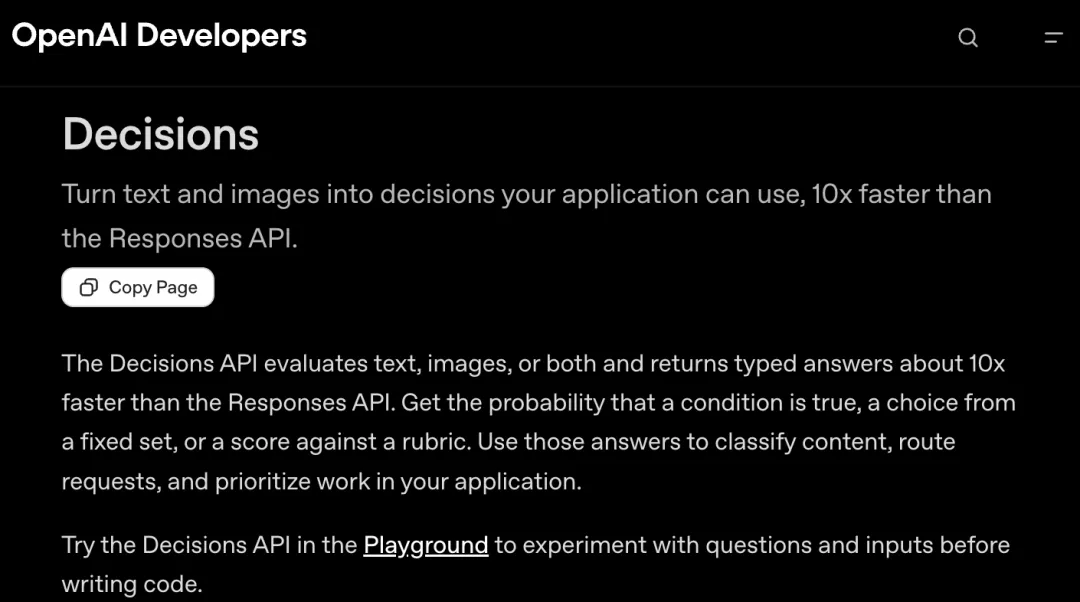
Nikunj Handa, who is in charge of the API products, conceded unequivocally: "Jev inspired all this".
What is real about a non-talking AI that connects investors and OpenAI?
It doesn't talk, it doesn't execute tasks directly, it only does one thing: read the content, make quick judgments:
What tools do the requests need to be delivered to, and what content does not need to be copied?
More often than not, its "object of conversation" is software, and the result delivered may be only one option, or one probability.
The software gets results and can continue to run according to the rules.
And you don't even have to look at his answer.
Jev on the couchIt's your everyday judgement.Open your mailbox and hundreds of thousands of messages pop up.
Promoting, subscribing, working... a bunch of information mixed together.
You want to pick out what's really important, but you don't want to open a point.
In the past, this type of task could be done with large models.
But the problem is that every time an email calls an AI, the waiting time and costs accumulate:
When the same judgment is made thousands or tens of thousands of times a day, the difference in time and cost of each call is magnified.
Jev is targeting this kind of high-frequency judgement.
Using email filtering as an example, developers can write clear criteria in natural language: does the letter involve upcoming bills, does it require an urgent response, and does it include changes in time and location?
After reading the content, Jev returns the judgement results and corresponding probabilities directly to the application. The software then automatically classifies or alerts according to the default rules.
Jev directly returns the option or probability without generating a long answer. The program can read the results directly without having to draw conclusions from a large paragraph of text.
According to TypeSafe, Jev can simultaneously answer multiple questions and return results in a structured format for software to read and use directly.
To this end, the company has adopted a dedicated model architecture and training methodology, with a focus on making probability estimates more reliable.
The cost of invoking AI has been put on the floor:
It's only $0.042 per million of input tokens, and the output is completely free.
After calling down the threshold, there were many small steps that weren't worth doing specifically with AI, and there was room to try automation.
The developers reacted quickly.
On September 18, Vercel disclosed that in the first 24 hours after entering its AI Gateway, close to 13% of payment teams had used Jev.
The number of paid teams using it on the first day is twice the number of first-day teams used by any previous model.
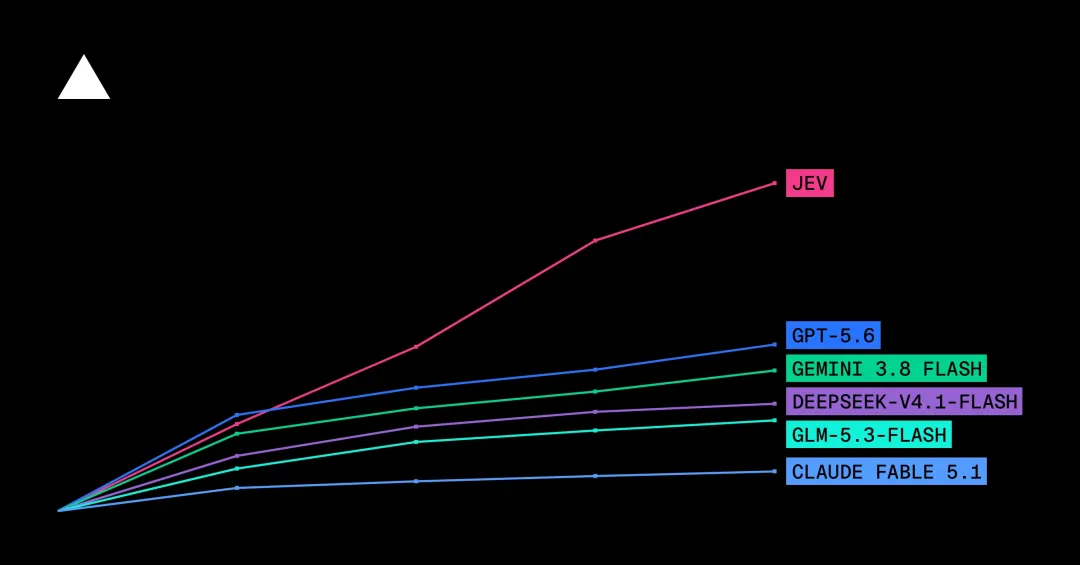
In the first 24 hours of Jev's access to the Vercel AI Gateway, nearly 13% of paying teams used it.
This is just the first day's performance of a platform, and it cannot represent long-term stability.
But at the very least, it shows that developers are willing to give it a try.
Let AI take care of the little things for people, as long as they can use it, wait for it.
Two weeks laterThe old man came.Almeida came up with the idea when she was working at OpenAI.
According to his LinkedIn memories, he has pondered one question: If AI really changes the economy, will it be humans or will it be automated code?
His judgment is that the latter will be the overwhelming majority.
He documented the idea and gave it to Ottman.
According to him, Ottman was supportive and even suggested that he quit his job to explore this direction.
Later, Almeida co-founded TypeSafe with Erik Gafni, Sasha Sheng. After two years of research and development, Jev finally made his public debut.
This time, the old host quickly followed up.
In an interview with Latent Space, Handa mentioned that after the launch of Jev, users and internal teams at OpenAI have raised demands: they also need faster classification systems.
The host asked, "Four weeks ago, this project was not in the development plan at all, was it?"
Handa confirmed that there was no such thing at all.
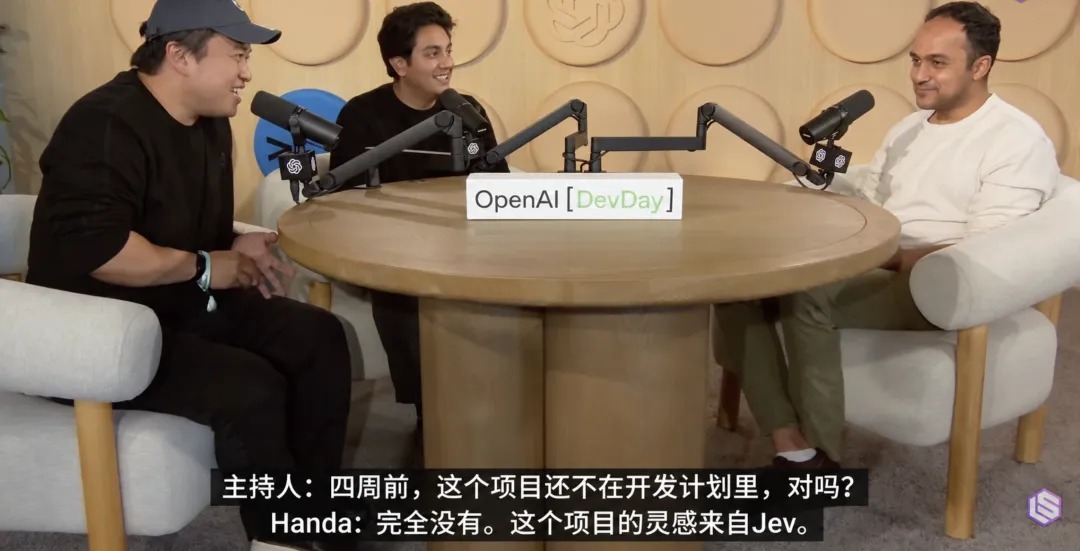
OpenAI did not train the new model from scratch, but modified the existing GPT-6 Luna: allowing it to give direct judgement results while dealing with multiple problems, then speeding up the back-end operations, so that the first result returns faster.
Jev and OpenAI offer similar capabilities, but they are completely different:
Jev hosts specialized models and training methods; OpenAI uses existing Luna models to use them for rapid judgment services.
OpenAI also has an additional capability: it supports image input to determine if the objects in the photo have visible damage.
Developers can send product photos and inspection requests together to the Decisions API, such as to determine whether the item is cracked, torn or scratched.
GPT-6 Luna makes judgments based on images and returns the likelihood of damage, thus generating commodities that need to be reminded or copied manually.
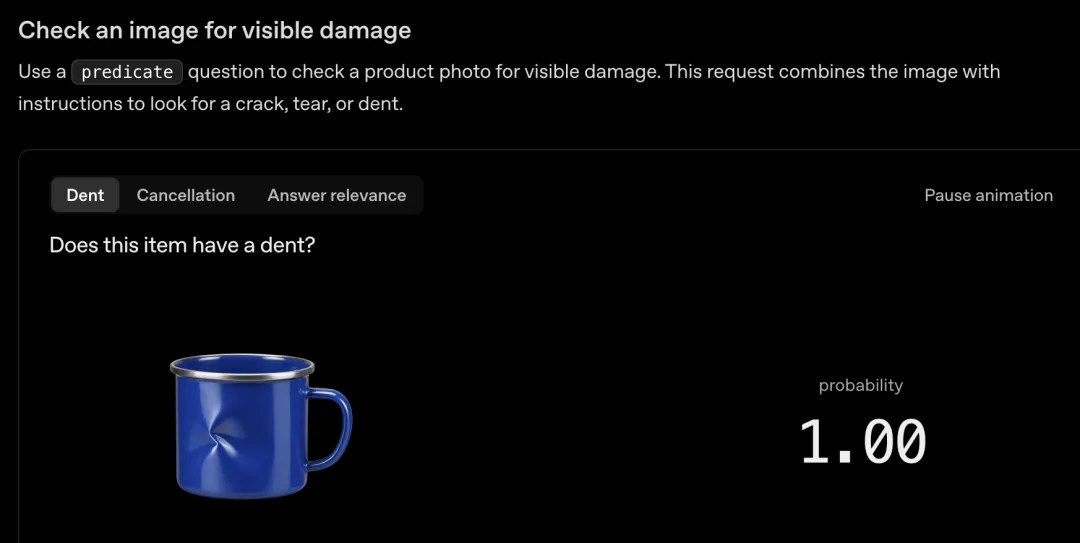
The OpenAI documentation uses the Decisions API to identify visible damage in product photos.
In terms of price, the basic input price of the Decisions API is $0.10 per million tokens, and the output is also free.
By comparison, $0.042 for Jev is still lower.
As for what OpenAI claims to be "maximum 10 times faster", it compares the performance of calling the same model through its own responses API.
As soon as the former employee stepped on the pain point, he was followed by the old landlord.
But who can laugh to the end and see the results of each judgement?
There are only a few options.It may also be a mistake.The low cost of Jev has also received initial validation from an independent study.
On September 29, researchers from institutions such as the University of Bonn and the Lamarr Institute submitted a pre-printed copy.
They tested Jev 1.13.0 on 37 datasets and completed 346,009 requests for less than $10.
More than 340,000 requests, less than $10. This bill is truly eye-catching.
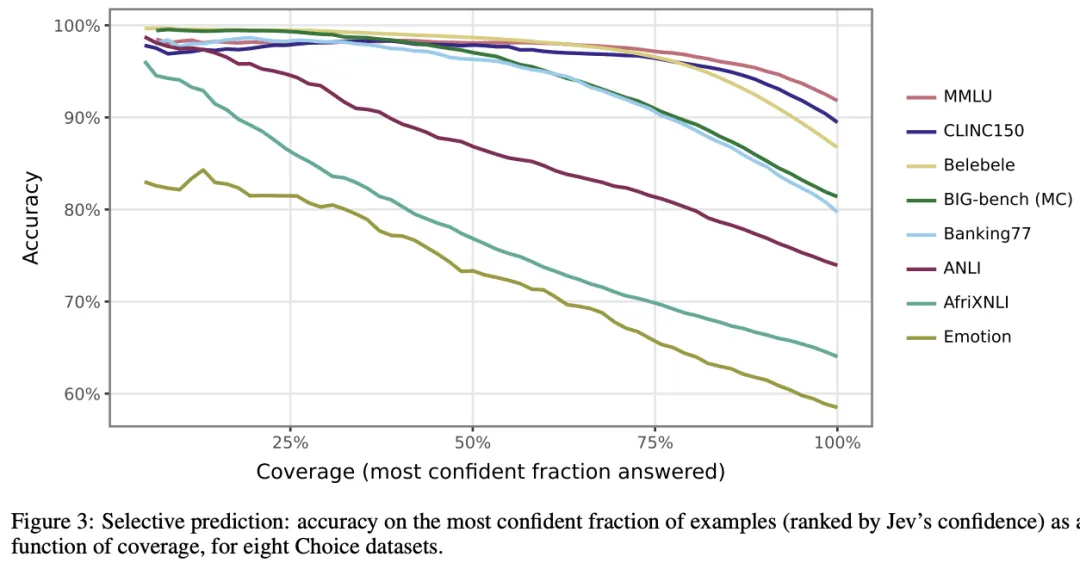
Jev's selective prediction on 8 selection data sets: accuracy is higher when answering only the most accurate questions; overall accuracy decreases when answering expanded scope.
Testing covers tasks such as classification, reading comprehension, content auditing and scoring. However, this cost corresponds to a specific assessment and cannot be directly converted into any work that is so cheap.
The study also found that while probability calibration performed better on selective subjects, the results were not always ideal with a fixed threshold of 0.5 when dealing with binary judgments. On some tasks, the threshold was significantly improved based on training data.
To put it bluntly, the model gives a probability, and the software has to decide: to what extent is it worth taking action?
This is the scene in the mailbox.
If you think of an email as an important message, you might just be bothered more than once. It costs a lot more to miss a message that has to be answered that day.
What can be automatically archived, what must be reminded, and what can't be delivered in a timely manner, must be combined with the actual effect to adjust.
Even TypeSafe's own documentation doesn't shy away from shortcuts:
Countdowns are not reliable enough, comparisons can go wrong, and multi-layered reasoning can be difficult. When a large amount of unrelated content is mixed into input, it can also affect judgement.
The answer is just a few choices, and it's not the same as saying yes every time.
It is also necessary to verify which steps Jev is appropriate to take. Algebra is given to ordinary processes, complex problems are given to stronger models, and important and unacceptable judgments are left to be reviewed.
The savings in calling fees can't be converted into more time for users to pick up the mess.
When AI is cheap enough to be called by handThe name Jev is a tribute to the economist William Stanley Jevons.
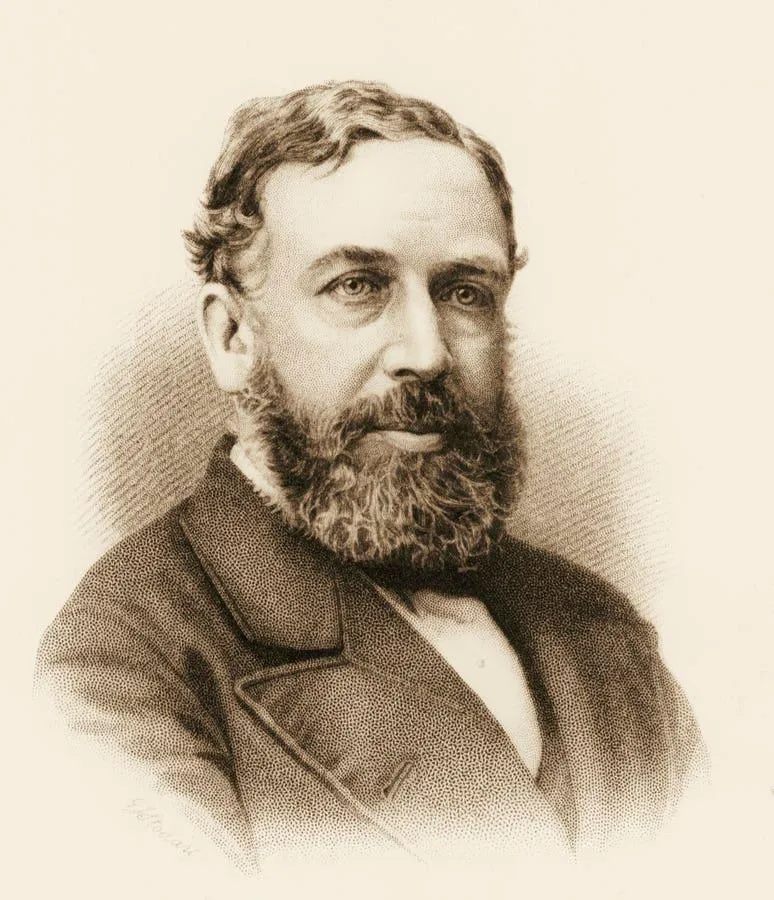
William Stanley Jevons
His "Jeffens Paradox" describes a phenomenon as follows:
Resource utilization improves efficiency, costs of use decrease, and may stimulate greater demand, ultimately increasing overall consumption.
TypeSafe writes the logic of the Jevons Paradox into AI applications: when the cost of calling an AI is low enough, more trivial things deserve to be handed over to AI.
In the past, we often needed to specially open a chat window, paste material, write requests, and then copy the answers back to the original software.
Many steps can be completed in the background if these capabilities can be directly accessed by the software.
The mailbox sends a reminder, the writing tool marks the sentences that need to be checked, the assistant responds quickly to simple requests, encounters complex problems and calls for stronger models.
You don't have to search for AI every time, and software has the opportunity to do more for you.
For users, the background used by Jev, Luna, or other models is not necessarily the most important consideration.
A few seconds, a few confirmations, a few misses an important message, these are the most important changes.
The $870 million funding has allowed TypeSafe to continue its research and development. OpenAI's rapid growth has also accelerated competition.
Next, Diogo and TypeSafe need to demonstrate in real life why developers are willing to continue to choose Jev.
And the expectation of ordinary users may be simple: that every day, those trivial judgments that consume patience, someone will take care of them for themselves.
Until we really need to come up with ideas, AI will put the decision-making power back in our hands.