The dolls are too high, and the robot can't reach them.
In the footage, it moves up the stairs, stands up, and takes the doll down.
It looks like it's just a little steep. But moving the stairs, stepping on the heights, reaching out for things, every step is changing the supporting conditions of the body.

From the introduction of the Whole-Body Intelligence (WBI) technology pathway in the previous technology blog, to the first systematically publicised results of the lab today, and the creation of a half-year-long source strategy for the future, this idea is gradually being brought to the real world.
The uplift is only open. Next are low-level bottle picking, cleaning tables, operating dishwashers, and mission verification on the U-tree G1 and accelerated evolution T2.
This time, the whole-body smart shoe has a specific form: the body is not only responsible for sending hands to the scene, but also for doing it together.
It's not just about lifting your feet.
A staircase at the entrance to the kitchen is a step for a person and a turn for a robot: one foot is lifted up, the other is held up, and after falling, the focus is shifted.
If the two feet are not at the same height, the body cannot continue to reflect the posture on the flat ground. Lifting the feet is only a visible part, and it is difficult for the whole body to adapt to the changes underneath.

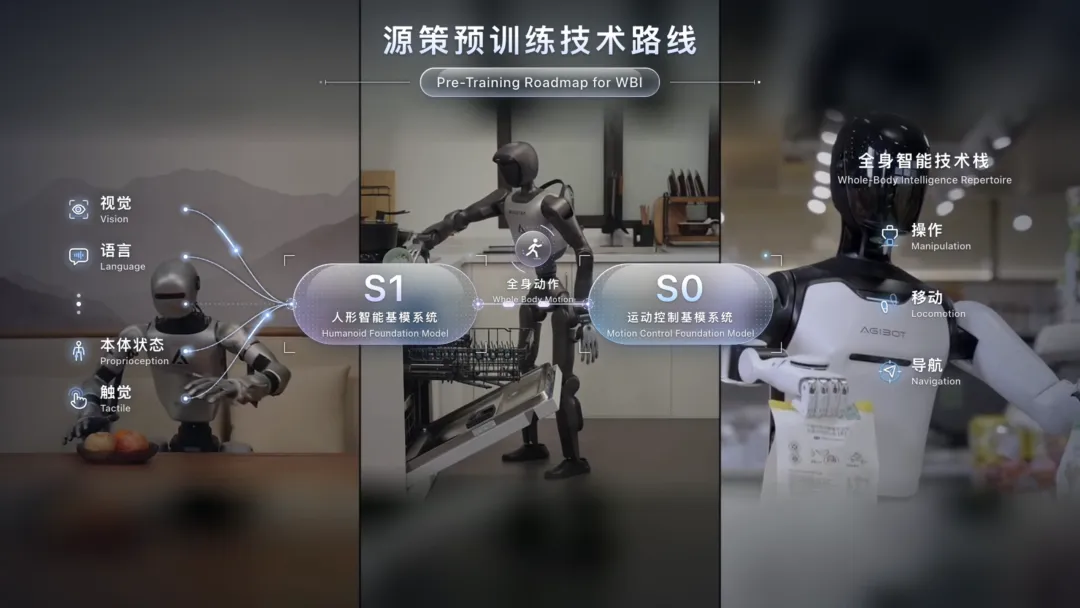
The original idea was to develop the S0 whole-body control system, coordinating the trajectory of the foot, dry posture and weight transfer.
After climbing high enough to get to the doll, it is a further benefit. The first thing to solve is that the feet have changed, and the body can still stabilize its movements.
A water bottle fell to his feet, the robot knelt down, grabbed it, and got up with the object. The body changed in height, and the target in his hand couldn't keep up.
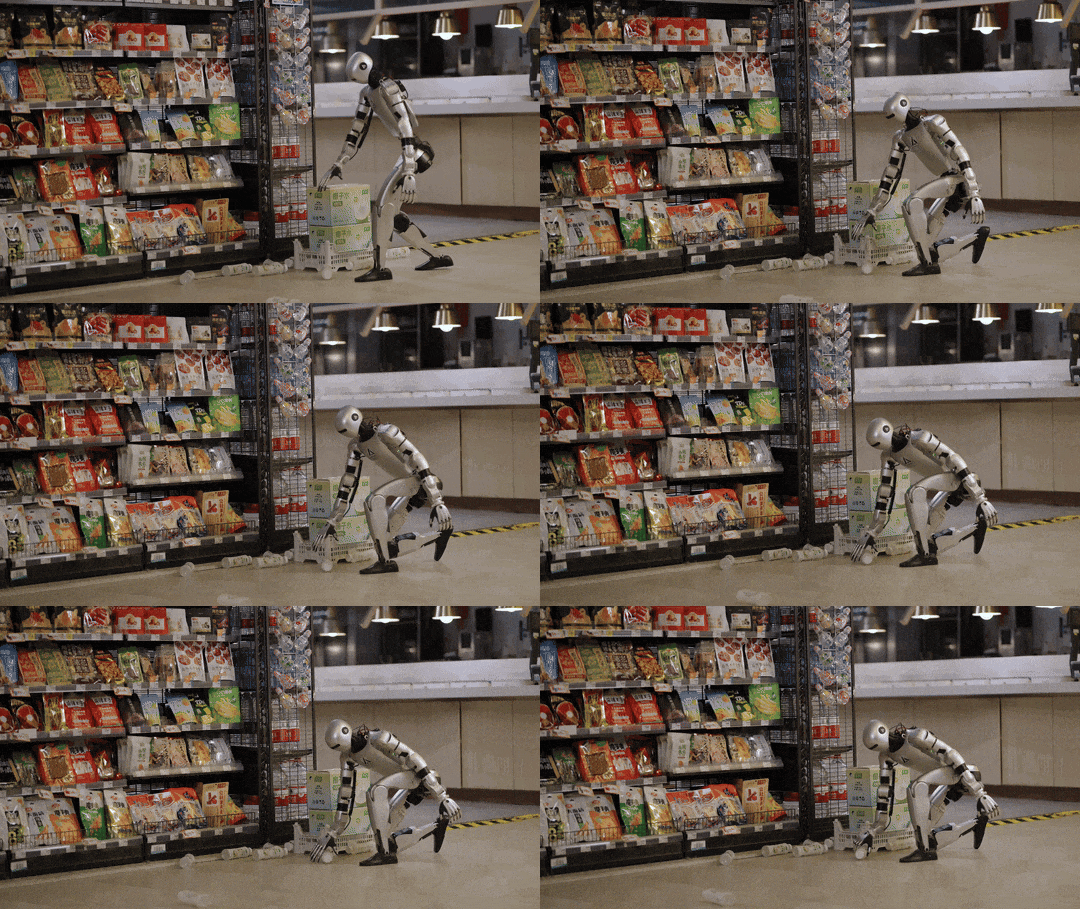
The low-pitched catch
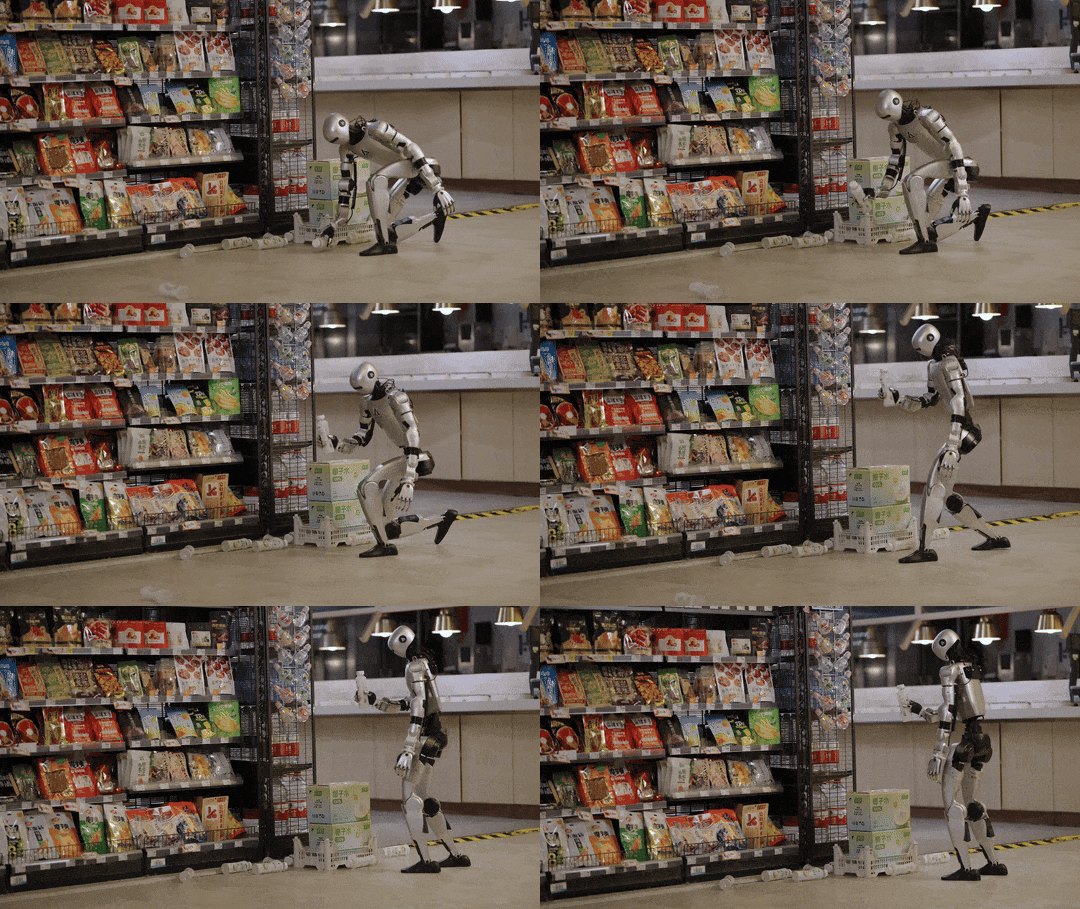
The Holders Rise
High enough to get, low enough to get. Real space doesn't put all the work on the same table.
If you can ride a bicycle, you have to press a button.
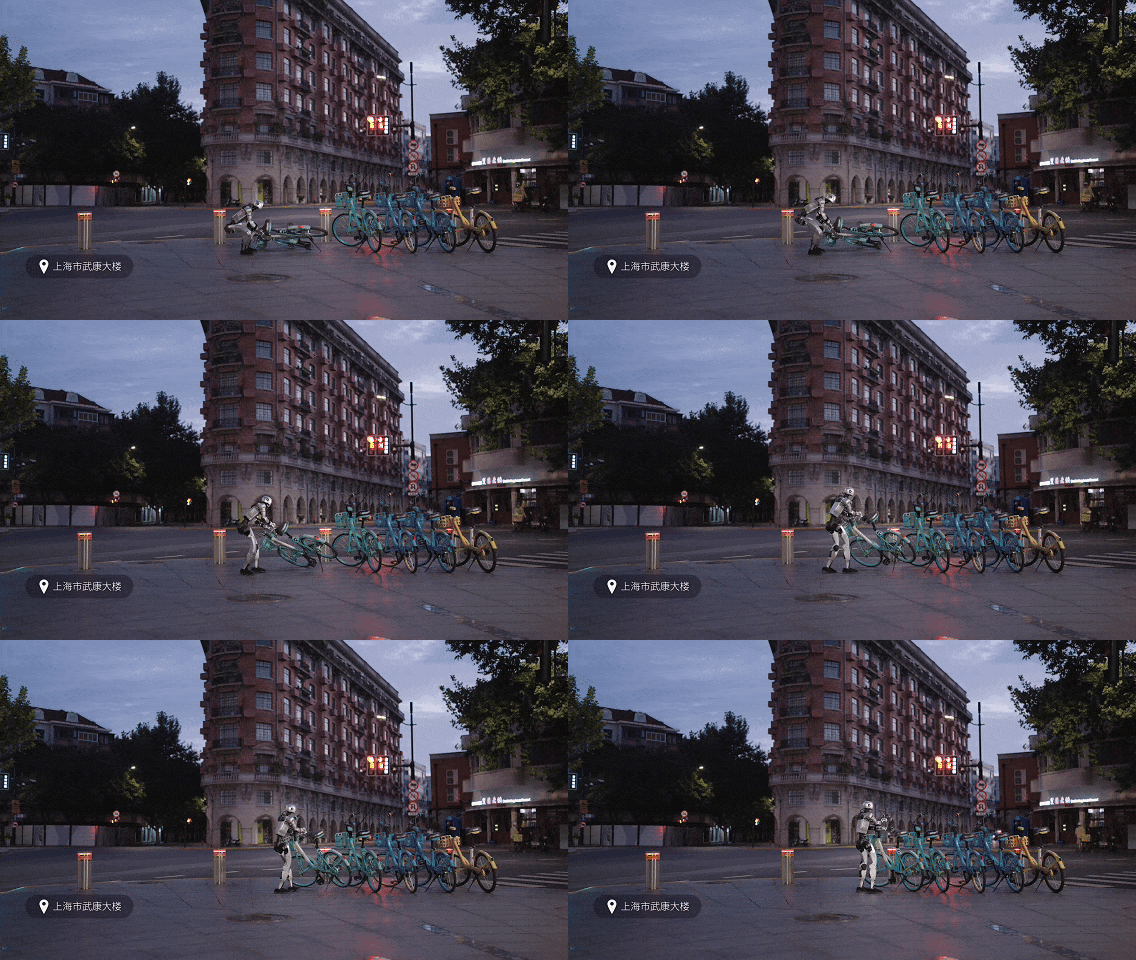
A bicycle collapsed on the side of the road. The robot bowed down and grabbed the car and lifted it up. As the car left the ground, the load on the hands and the body support changed.
From holding the body of the box to putting it on the shelf, the weight is transferred from the hands to the shelf, and the arms, waist and legs must be accompanied to complete this process.
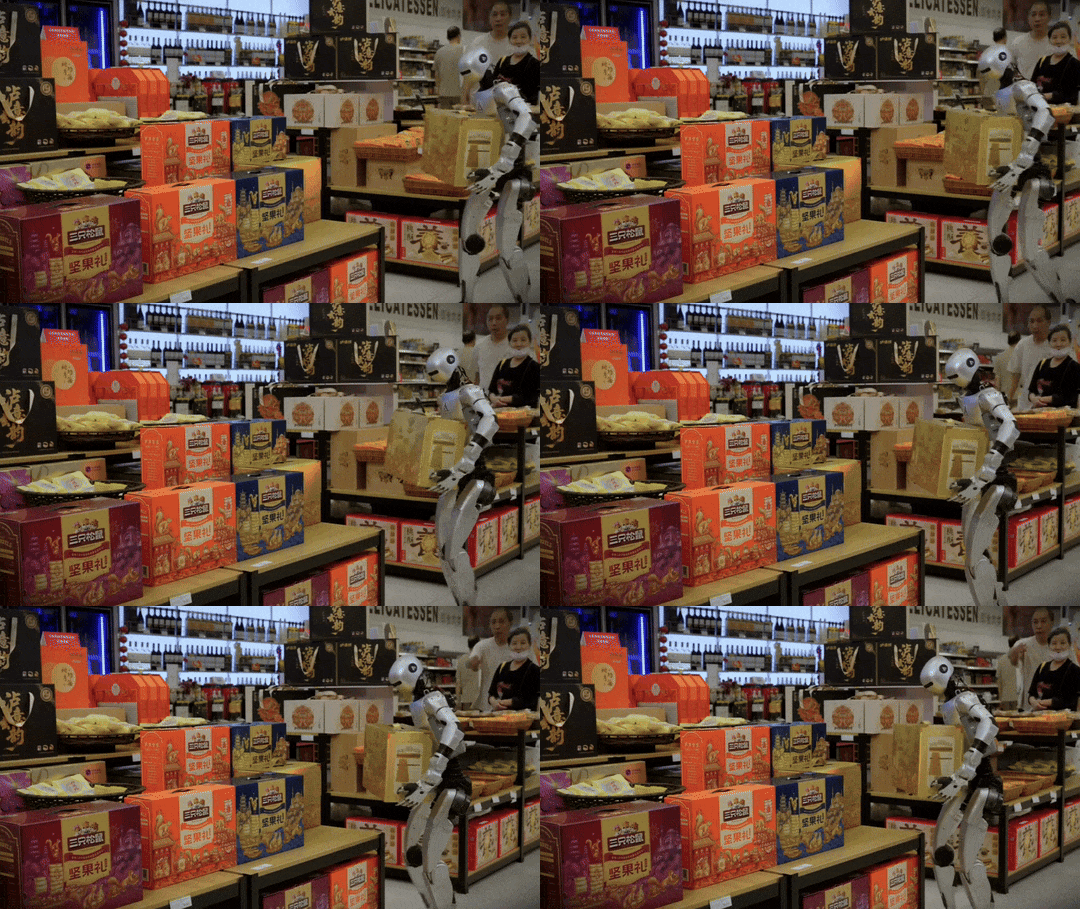
Hands are heavy.

Put it on the shelf.
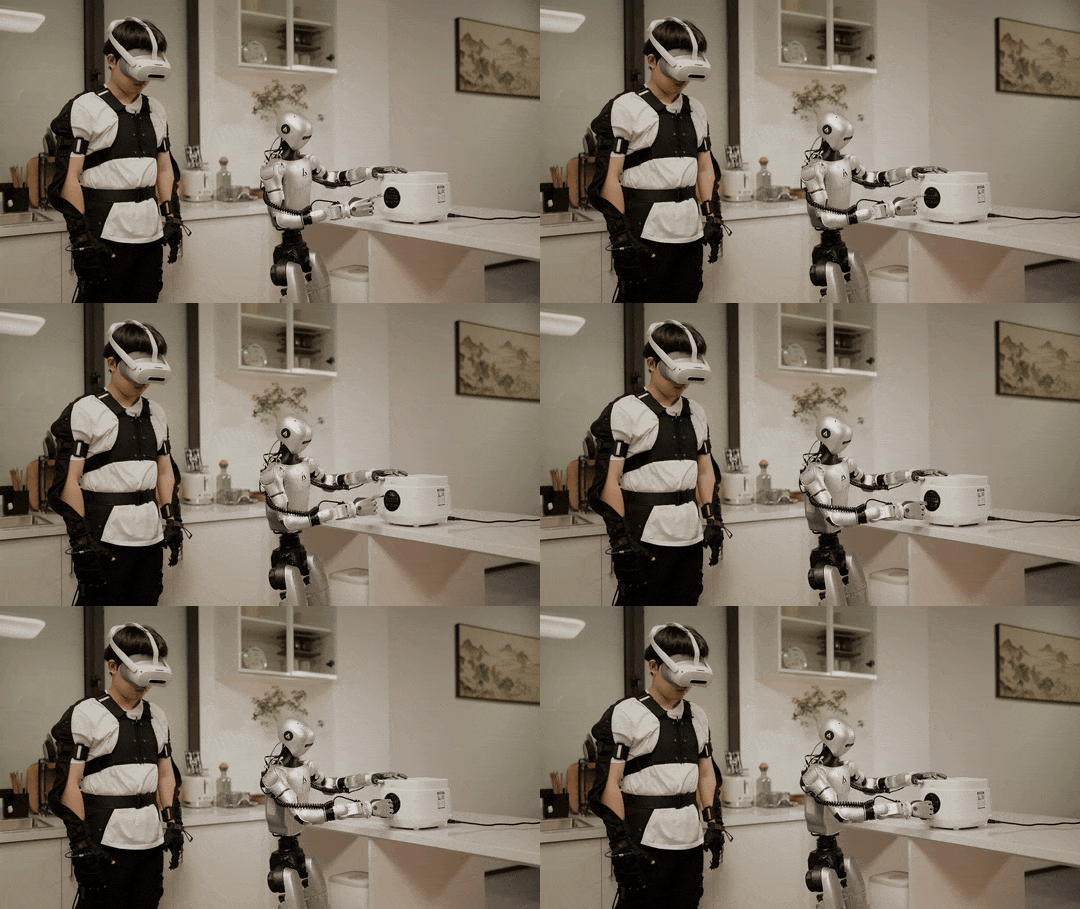
The camera was cut back into the kitchen, and the target was reduced to a button on the cooking stove. This time, no significant movement was required, but once the body was pulled, the fingertips could have missed the point of contact.
Movements vary in size, but the requirements are linked: if the body has enough range of activity, the key operating position cannot be reached with the movement displaced.
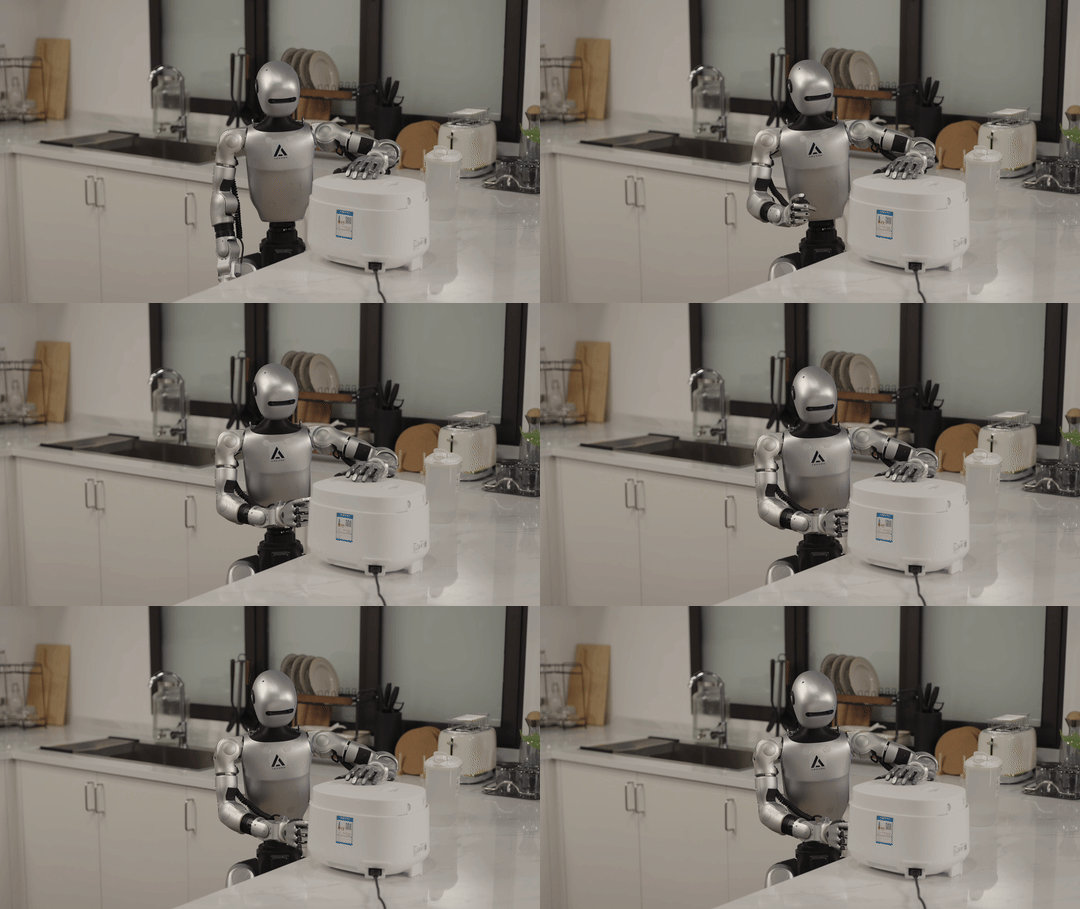
The button is small, participating in pressing it, but not just the finger.
The table is empty and the task is not over.
The items on the table were packed, and G1 didn't stop there. It picked up the blanket and kept wiping the table.
When grabbing, the hands should be picked up, loosened; when wiping, the tools should be glued to the table moving.
The dishwasher is more dense: the door rotates around the chain, the dishwasher runs along the slide, and the dishes must be placed in the correct position. T2 cannot handle the same pulling action from start to finish.

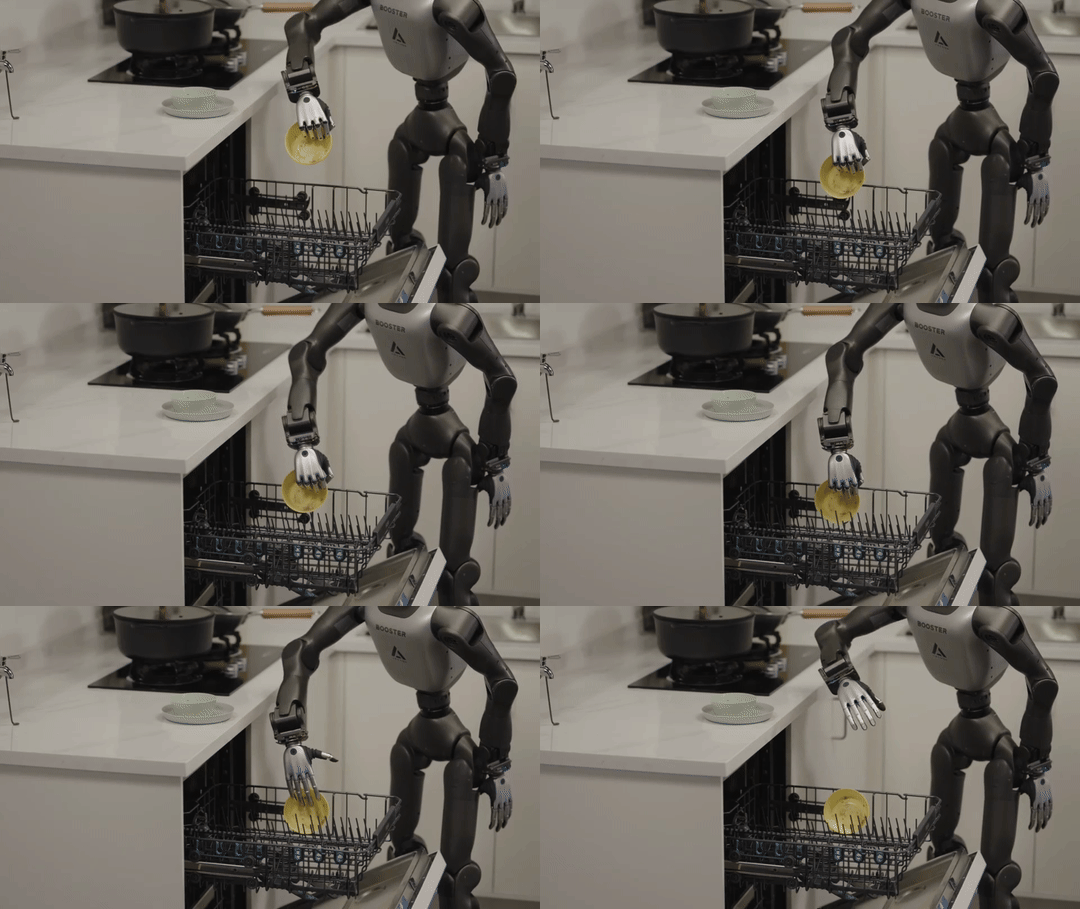
Cleaning tables and operating dishwashers: the task continues, the approach is changing.
S1 is responsible for coordinating and stably executing tasks according to the on-site status of the organization. The first step is to change the position of the object and the next step is to change where to start.
Once you've done it, and once you've done it, there's a chain of links in the middle.
Prior to the refrigerator, G1 and T2 were involved in the same organizing task. In addition to the two main table and dishwasher demonstrations, this technical route has entered the actual operation of different bodies.
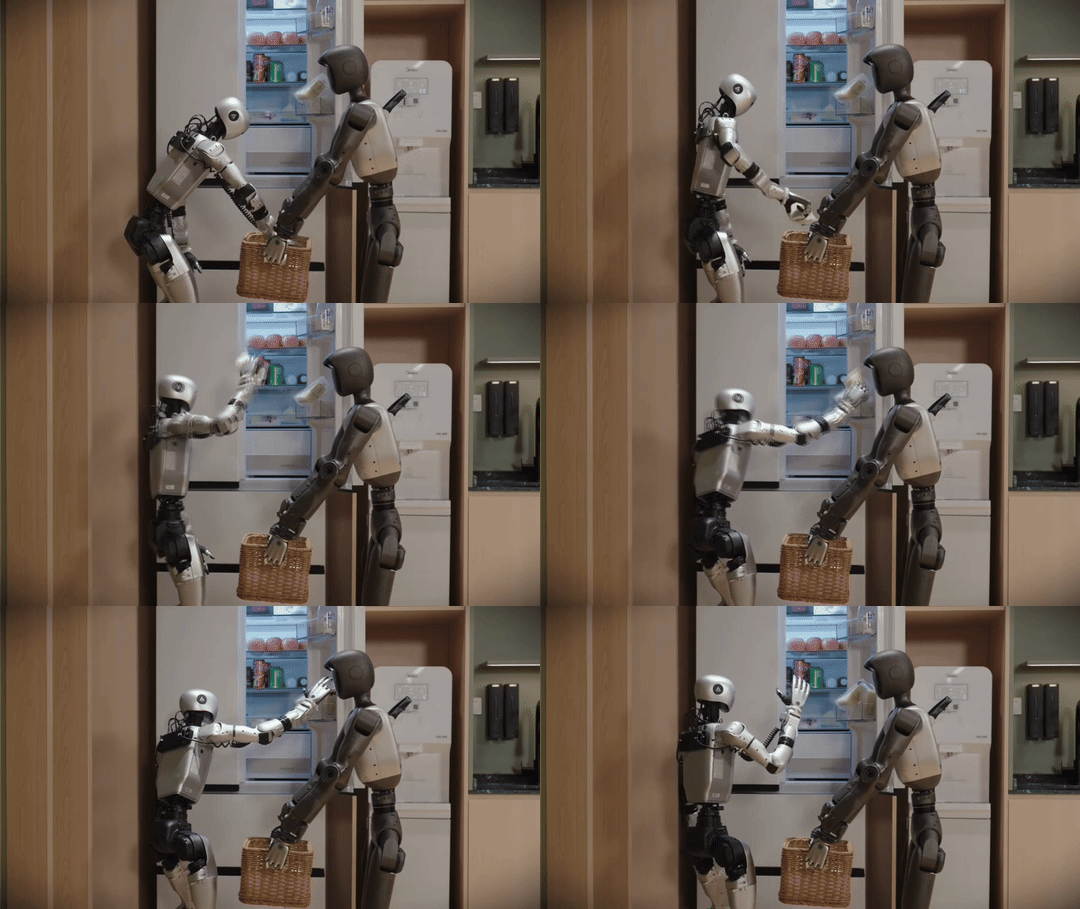
The G1 and T2 co-frames participate in the refrigerator sorting, and cross-experimental verification into the actual task.
Body proportions, joint configurations, reach range vary. The cross-body meaning is to implement the task requirements into the respective actions that can be performed, rather than allowing the robot to just change a blanket.
It's all about learning from people's everyday lives.
People take things from the locker, often take half a step, then lower their heads, bend their backs, stretch their hands. It's easy to miss why it's important to just keep your hands on the track.
EgoBody records exactly this kind of whole-body experience: the first point of view is left, the mouse sees what it looks like, the simultaneous physical movement is left, how the mouse stands, how it stretches, how it works with the mouse.

The first point of view of a person, along with physical movement, becomes a learning material.
The source strategy's internal design tasks are distributed to different cities across the country to collect and retrieve quality checks. Different scenarios, objects and skills enter the same set of data flows, giving models access to a richer interactive experience.
S1 first learns from human data and then trains through real machines to adapt to specific bodies and tasks. The human experience is the starting point.
Human full-body data → S1 pre-training → Real post-machine training → autonomous tasks
S0 supports demonstration collection and deployment; DAgger corrects experience backflow follow-up training.
Exercises can also be limited to successful demonstrations. When a deviation occurs in the execution, DAgger introduces artificial correction, which also leads to subsequent training on how to adjust the deviation.
The model of reasoning

Artificial correction
S0 runs through acquisition and deployment: on the one hand, it enables humans to execute demonstrations on robots, and on the other hand, it enables models to realise the actions they learn.
From a ladder to a real job
Founded jointly by Li Zhuan, Li Tian, Chen Li, and Chen Li, it focuses on a general-purpose humanoid base model. The team's technology accumulation spans end-to-end intelligence, robotic learning, world models and mass-produced autonomous driving.
The founding team has led several core projects such as end-to-end self-driving UniAD, port-to-chip super-large body-operated AgiBot World, byte version of UMI upper-body-operated Egonomy, and Huawei's mass-produced self-driving ADS 4.0 World Engine, among which UniAD won the CVPR 2023 Best Paper Award, Agibot World was nominated for the IROS 2025 Best Paper Award.
In July, Source suggested a path to full-body intelligence in a technology blog; now the lens has complex topological controls, autonomous tasks and cross-experimental verification.
The long-term goal is to make one experience accumulate into a replicable ability, without having to start from scratch every time you change a job.
The value of all-body intelligence is that, in the end, not so much the robot moves as the mouse, but so much the work that had to be done by the human hand can be gradually handed over to the robot mouse to perform the mouse.
For more details, please see the official website: