
It's the first time in the history of the world.
Who would have thought that Google's Gemini 4 Argon hadn't come yet, and that the next generation of models would have exploded.
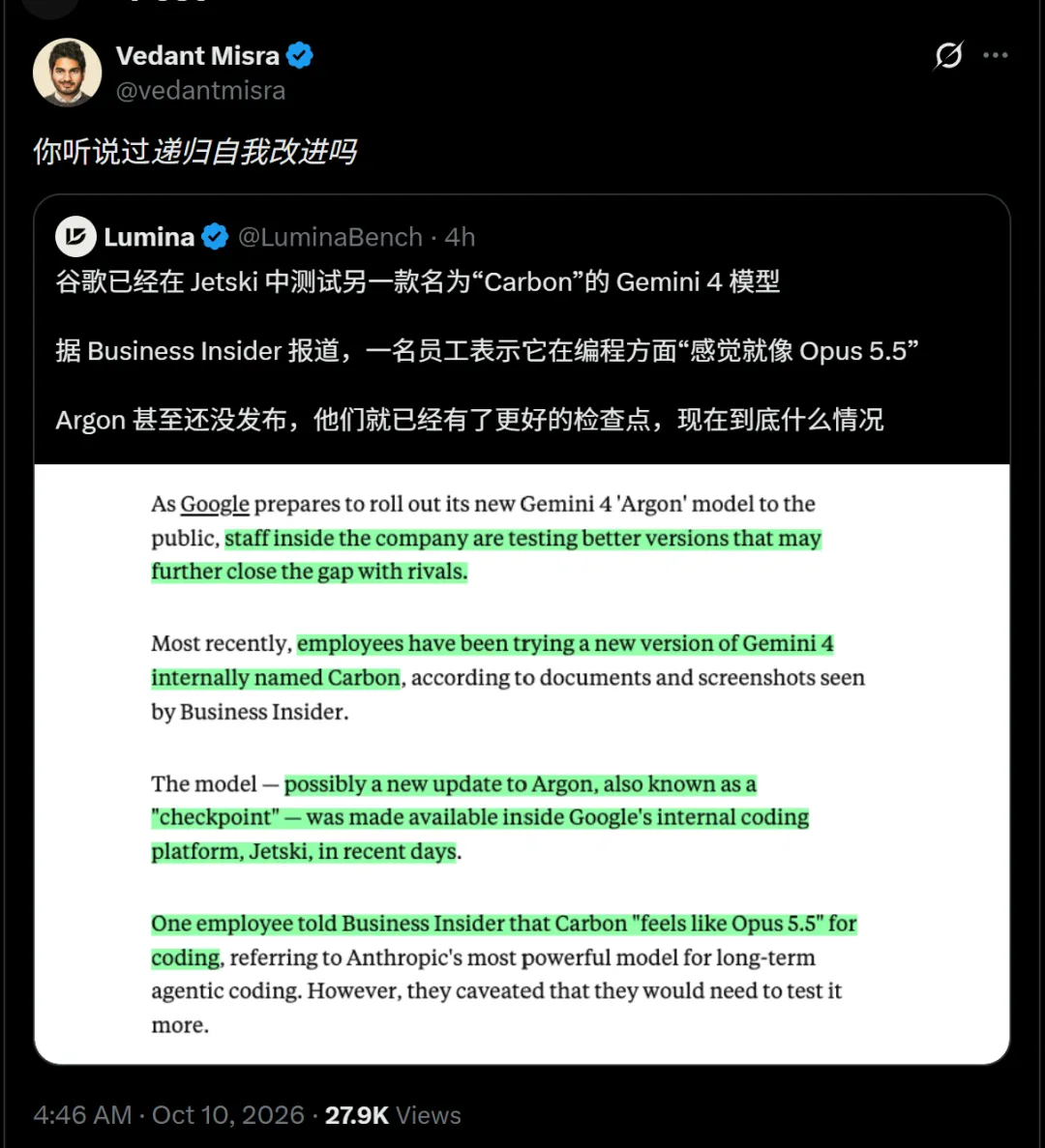
Just as it was revealed in the media that the next generation of Google's Gemini 4 model, Carbon, was already being tested as an insecticide".
It is reported that Google is currently testing a checkpoint for the next code called "Carbon" on its internal coding platform.

The performance of the new version of the model is already close to Opus 5.5, and several employees have revealed that recurring self-improvement (RSI) is the key to this progress.
Several in-person surveyors tried to shout, "It's too strong!"
But these two months, OpenAI has Astra, Anthropic has Opus 5.5, and when does Google come up with a really big model that can be used?

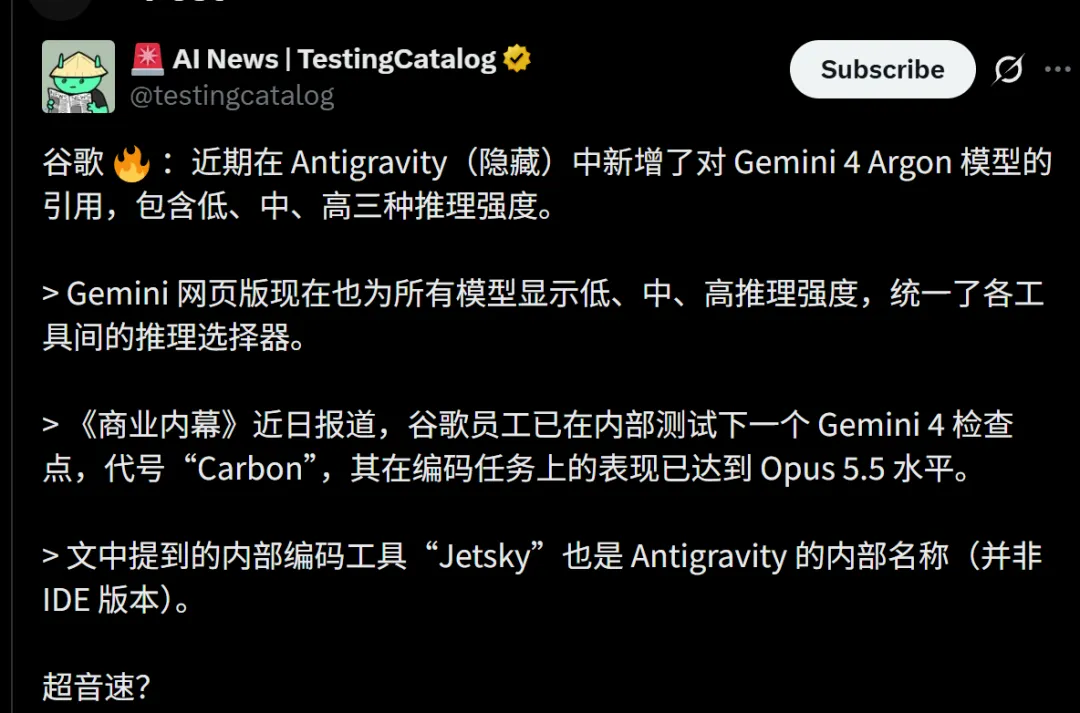
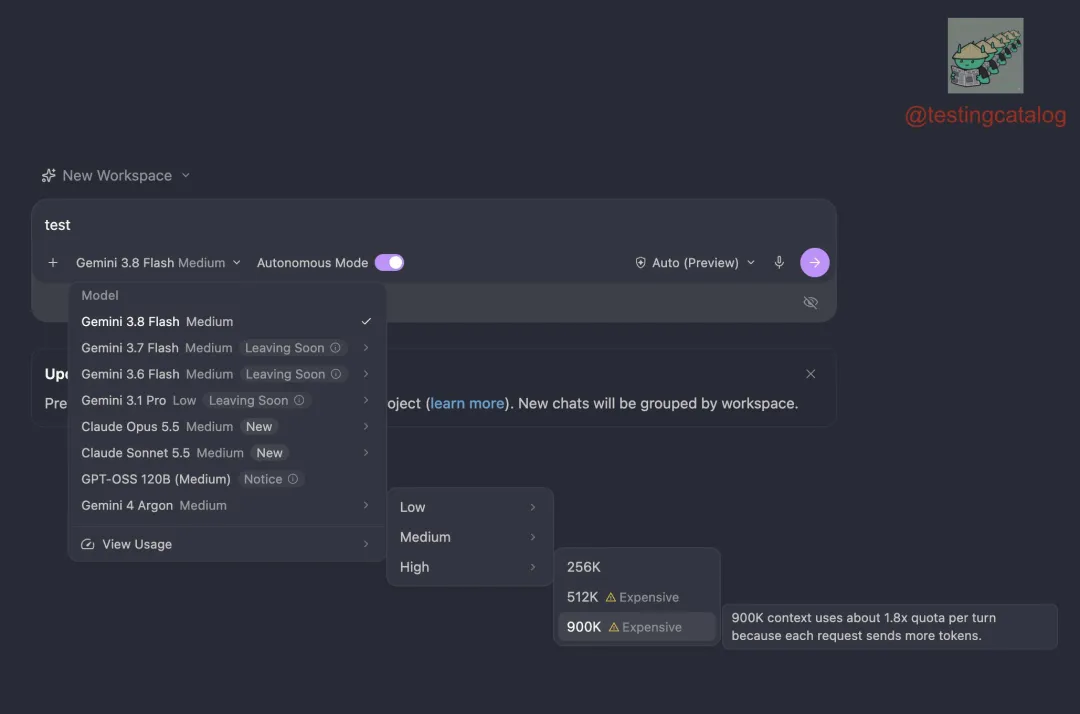
Today, there's exciting news: Google recently added a reference to the Gemini 4 Argon model in Antigravity, which includes three categories of low, medium, and high reasoning intensity.
Now, there's Carbon, and there's also an internal coding tool called Jetsky.
In one word, describing what's going on inside Google today, it's amazing progress.
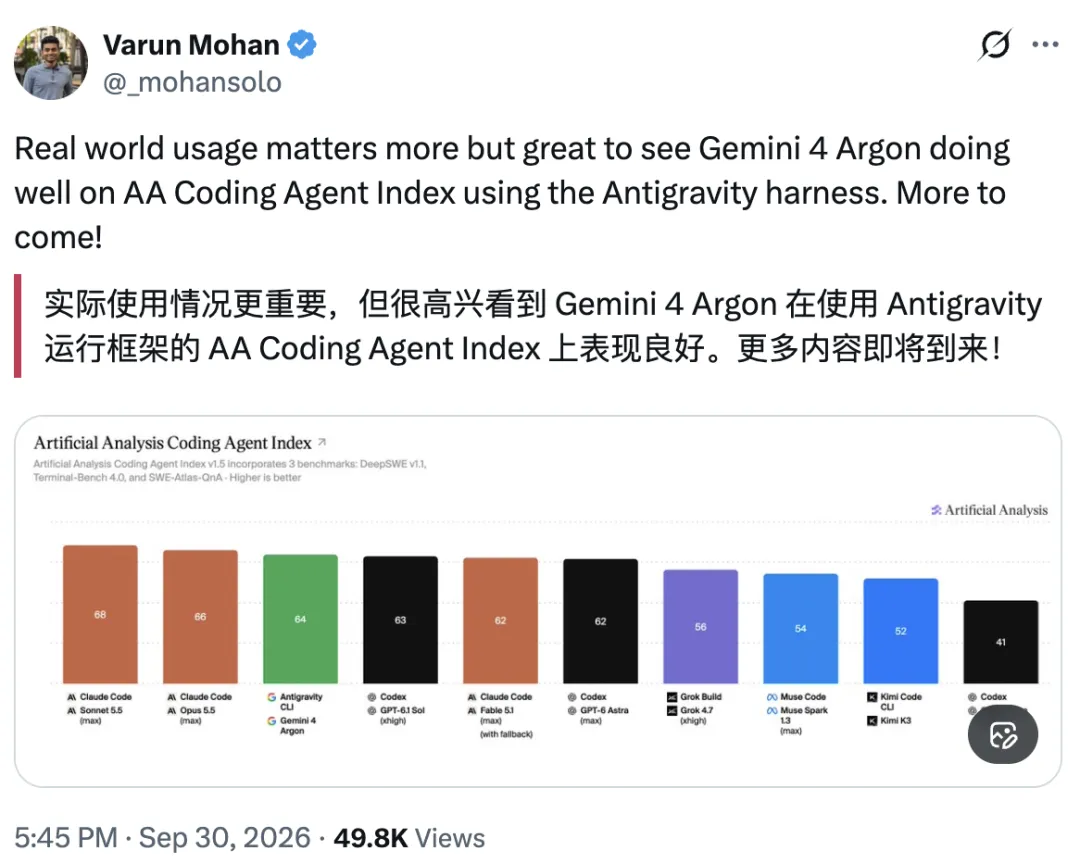
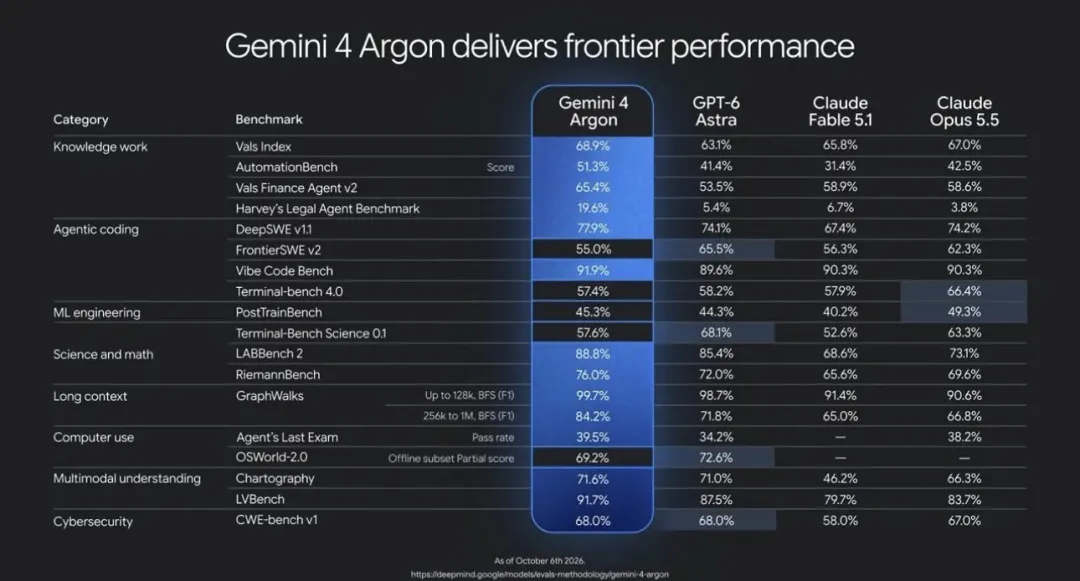
On October 1, Google released the Gemini 4 Aargon, which is said to have achieved groundbreaking improvements in benchmark performance in areas such as cybersecurity, law and finance.
However, to this day, no ordinary user can actually use it.
While there were doubts about whether Google was releasing the PPT, a leaked internal document and screenshot directly targeted the gourd-eating crowd.
I don't know.
If the Gemini 4 Argon actually defeated the GPT-6 Astra and Opus 5.5 in multiple benchmark tests, as shown in the diagram, Google would undoubtedly return to the throne.
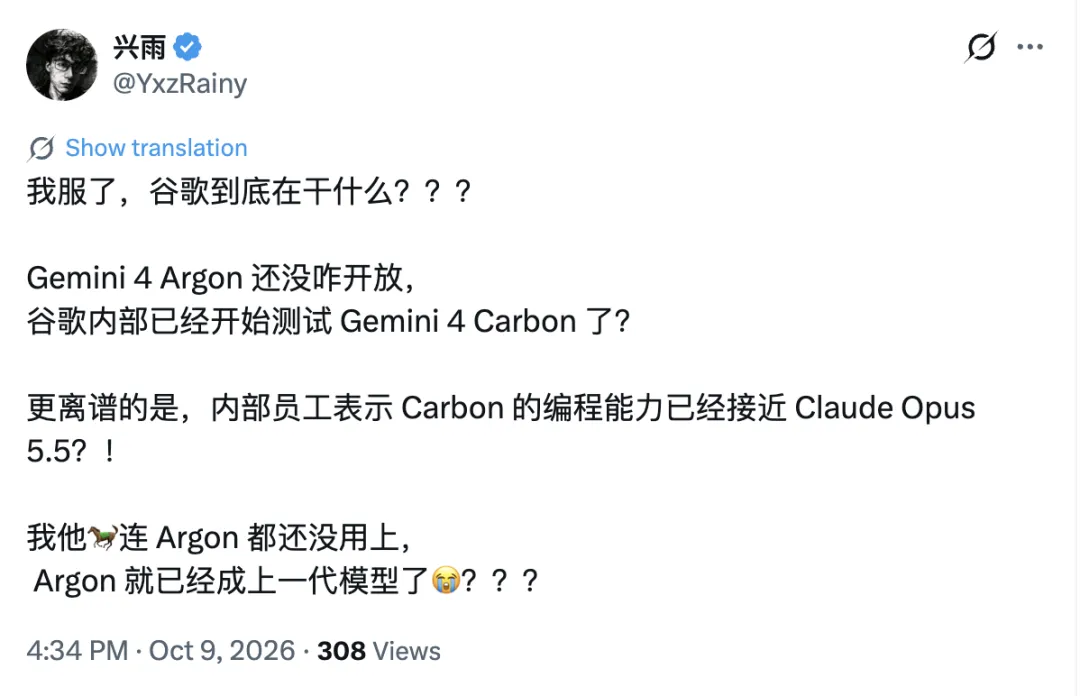
But before everyone else's eyes, Argon came back again and again.
It turns out that Google's engineers don't know when Argon is going to be released publicly, because they're obsessed with testing a new version of a checkpoint called "Carbon".
The mysterious Carbon model has reportedly been accessed within Google's Jetski coding platform in the past few days.
This isn't a simple fix, as an intern who had just taken part in the test said enthusiastically to Business Insider: "In programming tasks, Carbon feels just like Opus 5.5!"
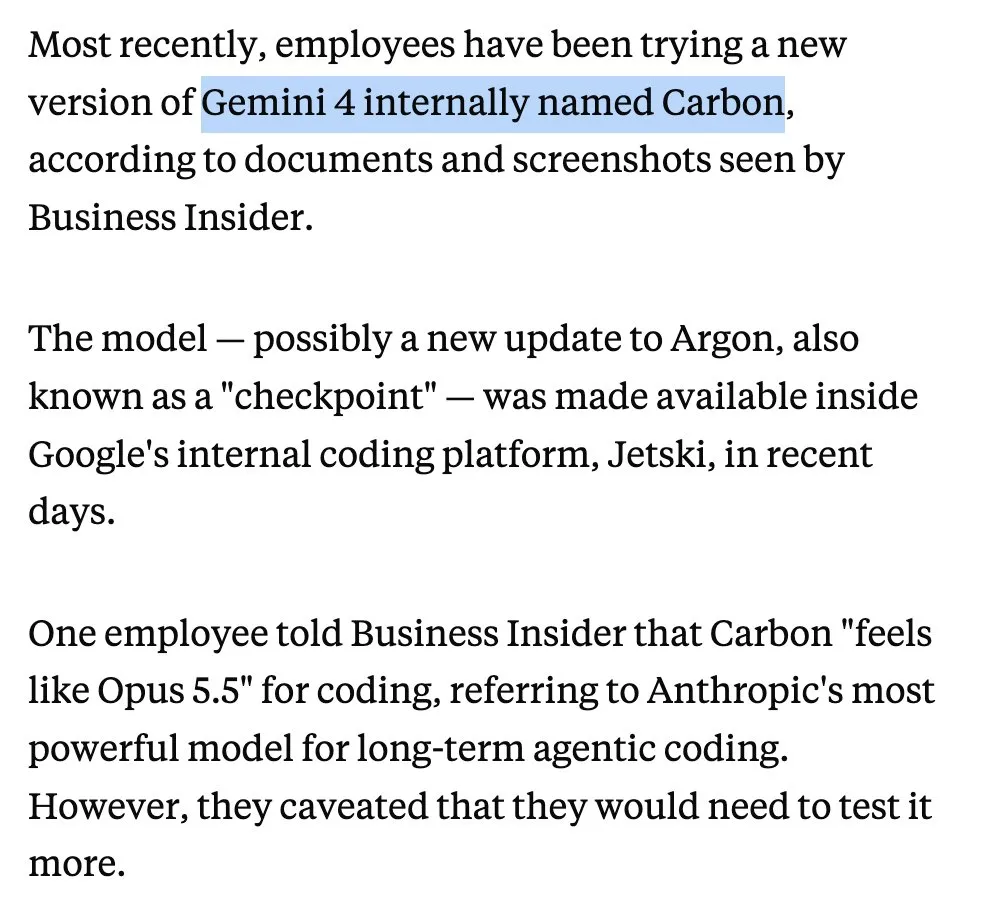
Opus 5.5 is a stacked-up ceiling in the field of Agentic Coding.
In the past, many Google employees privately spat out that early versions of Argon were somewhat lagging behind on some complex code tasks, at most at the level of Claude Opus 5.
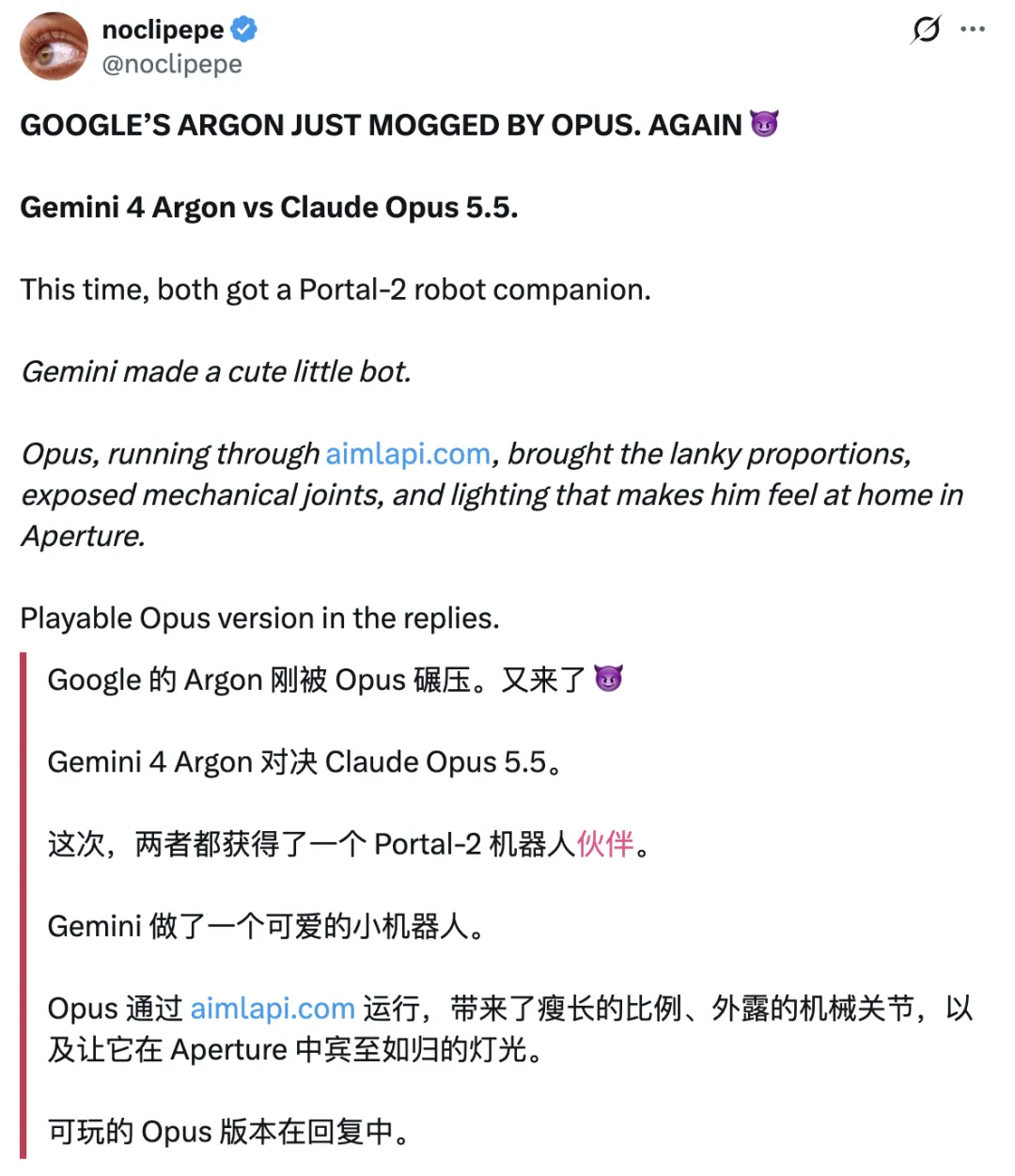

Even the Gemini 4 Argon has become a test backdrop.
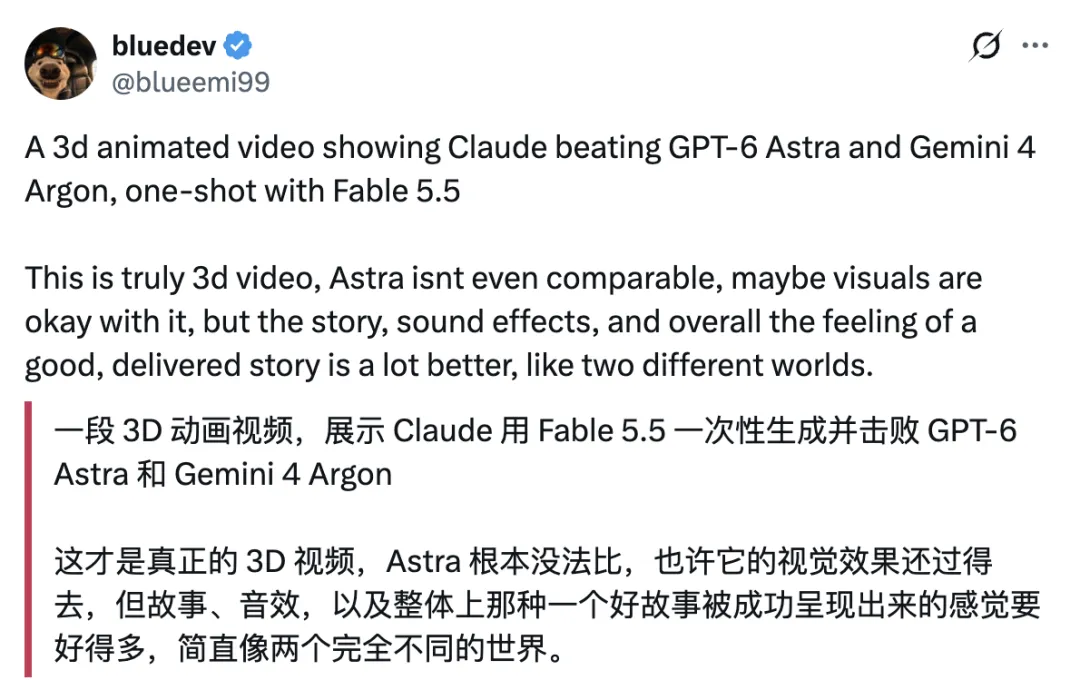
In the end, the Gemini 4 didn't lose, and the test was completed.

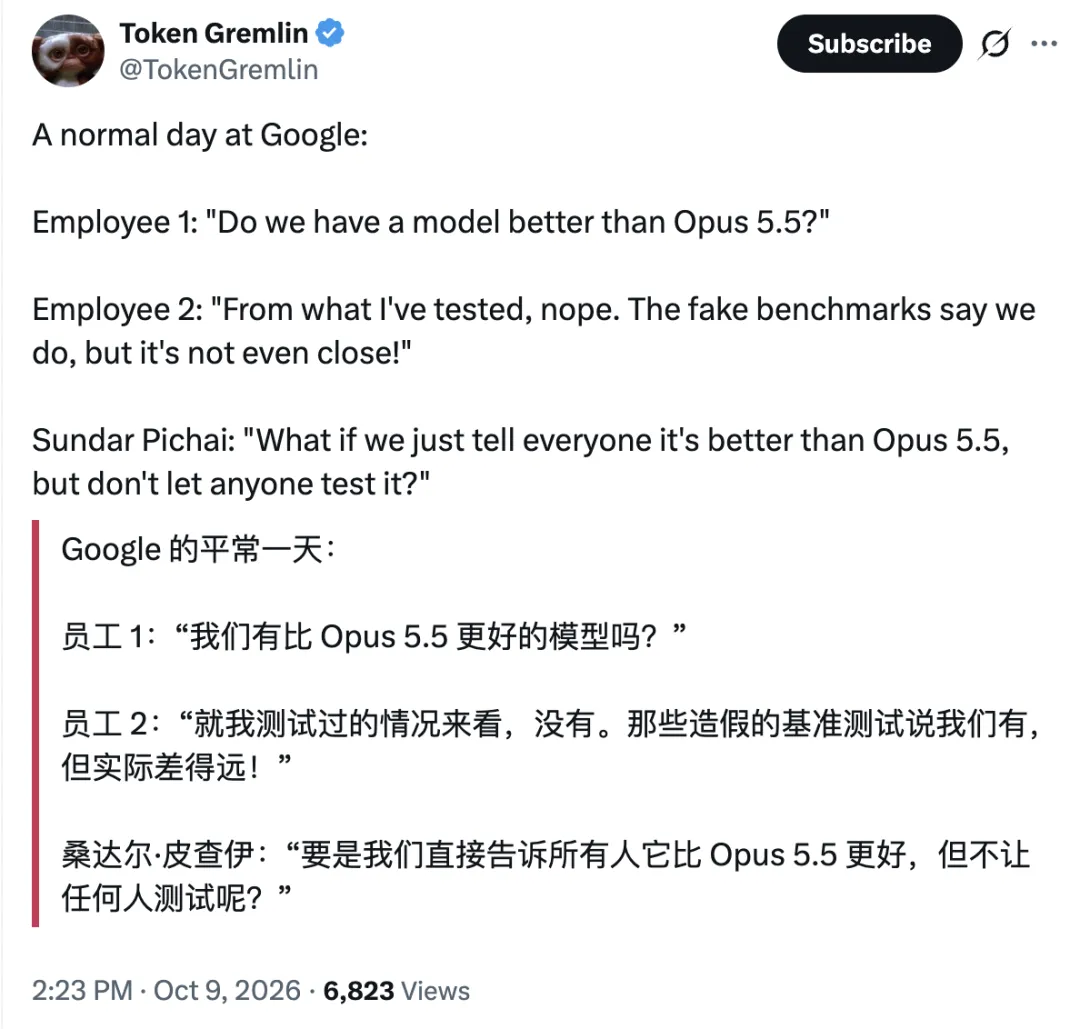
Big V @Token Gremlin ruthlessly slammed the bottom of Google with an extremely pictorial passage:
A typical day on Google:
Employee 1: "Boss, do we have a better model than Opus 5.5?"
Employee 2: "As far as the results of my tests are concerned, no. The fake benchmark tests say we have, but far from it!"
Thich Nhat Hanh: "We're going to tell you that it's better than Opus 5.5 without letting anyone test it?"
But with the advent of carbon, this gap has been filled!
The employees inside Slack's chat record is this painting.
"I feel like this game is going to make Opus 5.5 so beautiful!"
"Carbon is incredibly powerful!"
"The new Gemini Pro Next is amazing!"
In short, Google is replacing the Gemini 4 series at a crazy pace.
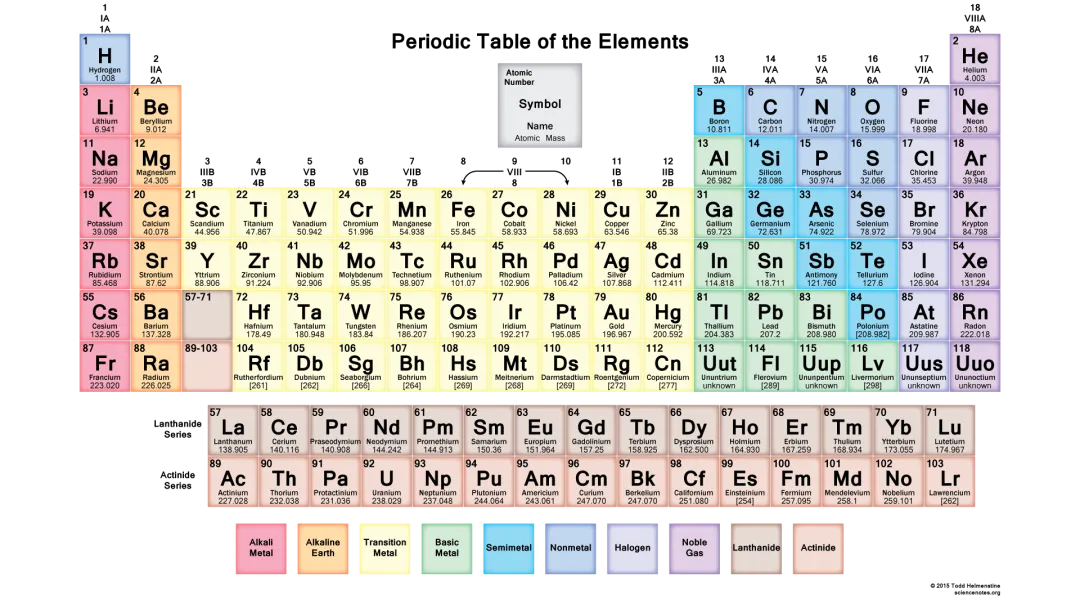
There are even internal documents that show that in addition to Argon and Carbon, they are also testing a model called "Barium"
It looks like Google is stuck with the cycle of elements.
In such a short time, how did Google get the model to make such a big leap?
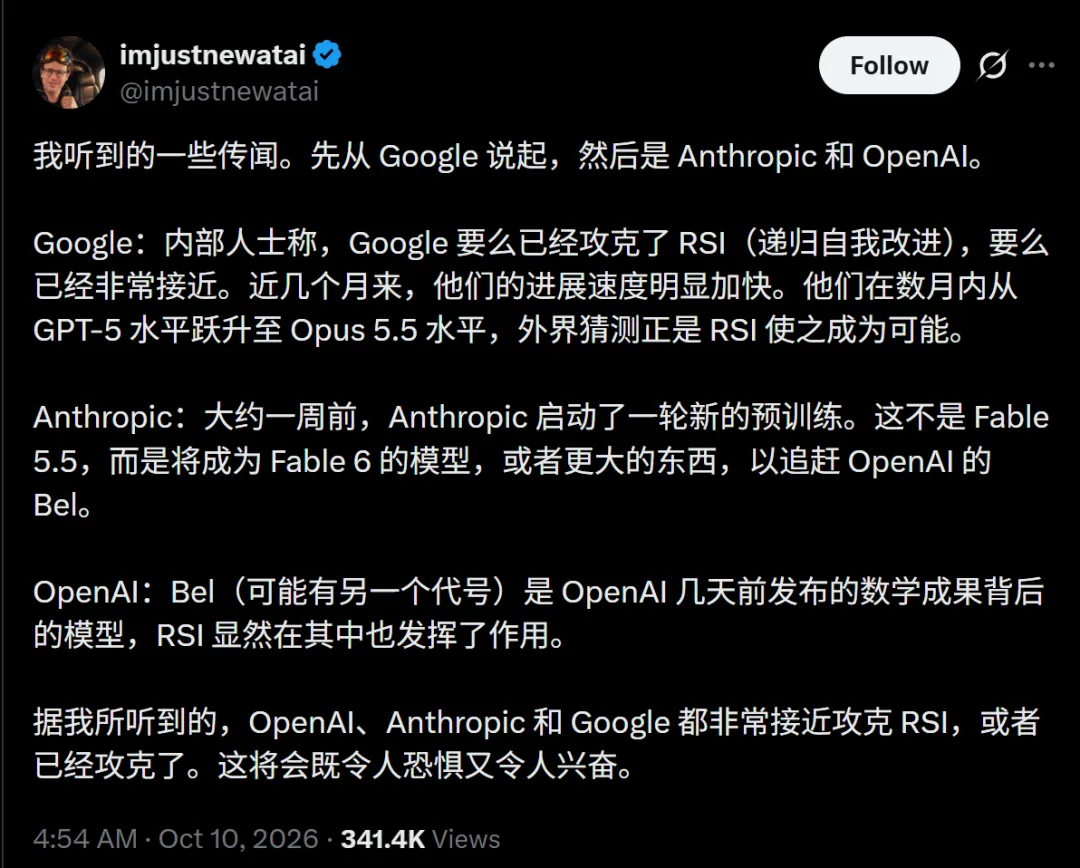
The answer is the RSI.
Several Google employees have repeatedly mentioned the term in the outbreak, citing it as the key to the current significant progress of Carbon.
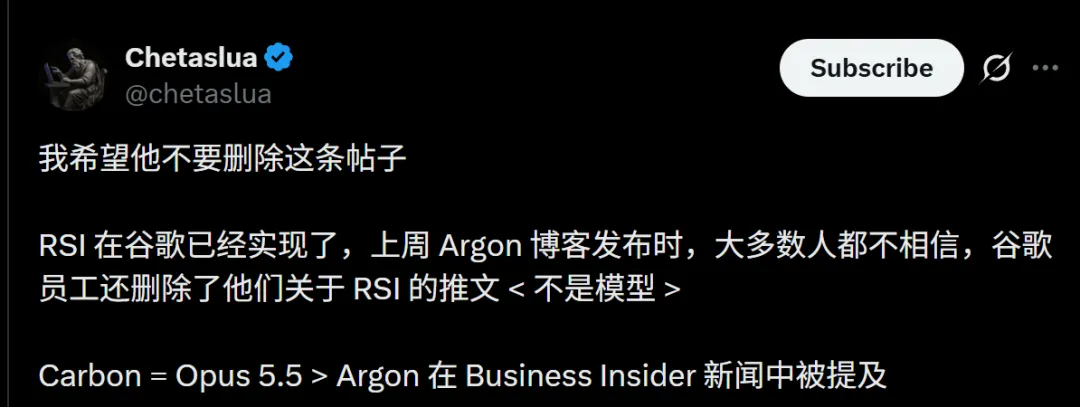
It allows AI to detect errors in the code itself while completing tasks, generate better solutions, and then internalize these smarter logics into its own capabilities.
Each time it mutates, it's smarter than the last one; and the smarter it is, the faster it evolves!
When an AI with Opus 5.5 programming capability is self-optimizing 24 hours a day, it will be an exponential explosion.
However, in retrospect, achieving the RSI seems to be more than just Google.
Analysts in the industry point out that Google has recently obviously streamlined its internal organizational structure and started focusing on firebombing technology.
One Big V observer wrote in X: "I would like to see Google releasing a checkpoint that is significantly stronger than its competitors every month so that I can recognize that the undefeated Google is back".
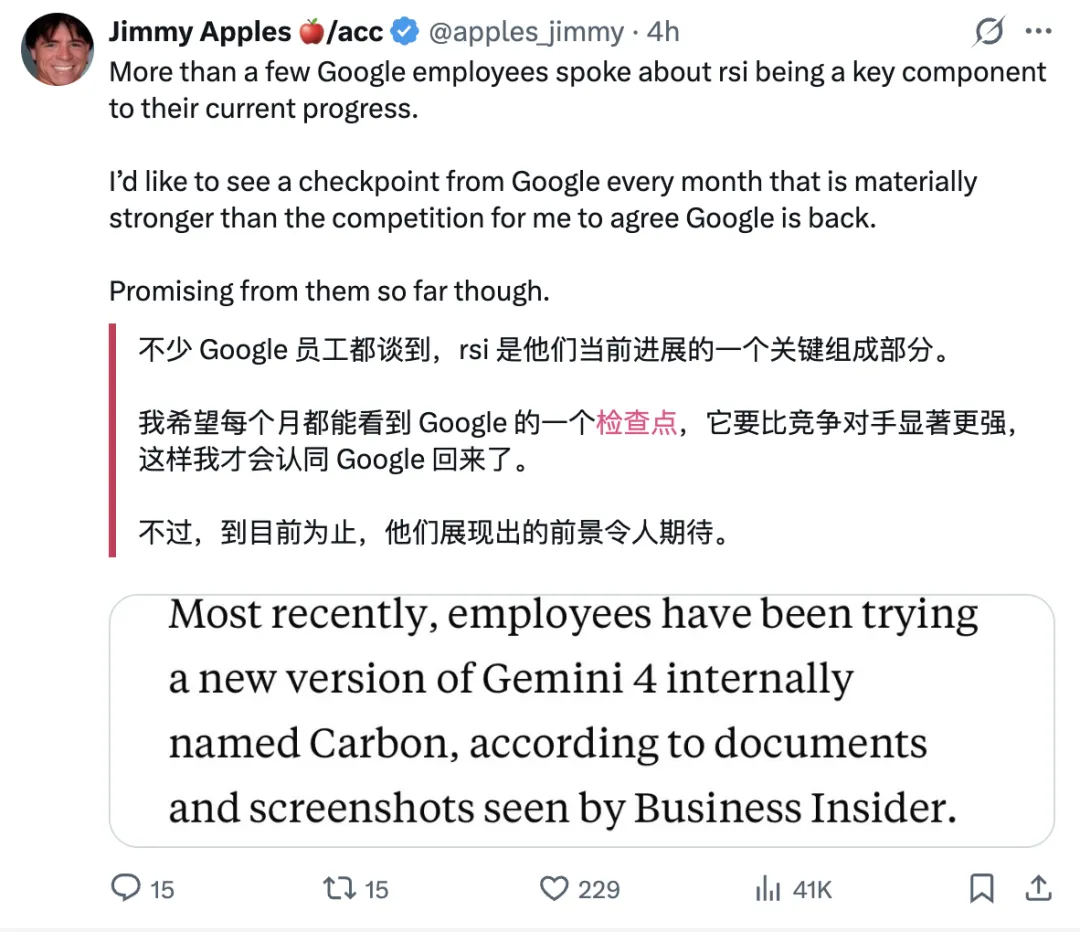
Currently, the explosive performance of Carbon in internal testing seems to be proving that RSI is already running inside Google.
Is it "The Real King" or "The Plague"?However, while the sky is turning inside Google, the outside world is showing a frozen two-day attitude.
After all, Google has a long history of "weakening models before release".
At X, the discussion about carbon exposure has been polarized.
Some optimistic netizens like @Haleeeemahh, who took out a benchmark test shot from the previous conference, argued for Google: "Gemini 4 Argon has actually defeated Opus 5.5! It looks like the Google team didn't really exaggerate its words in the last campaign.
But more people are starting a ruthless mockery.
A tech giant @HistoryGPT questioned his soul: "A few weeks after competitors released the top model, you come up with an internal test version that just matches other people's models... does that really mean you have the RSI? I'm not sure".
The most painful of these is Google's dragging bureaucracy and confusing publishing strategies.
The comments by @synthwavedd, the netizens, have touched the hearts of countless people: "If they don't hand it over to the public too late, plus Google's 100% 'pre-release debilitation rate' until Argon is actually available to the public, it's definitely going to be a joke.
After all, no matter what Google says, it doesn't let developers actually use it, and the model has been stuck on the Internet.
A lot of people are wondering, what's the best way to release it?
Now that Google's October convention is over, isn't Argon going to be made available to the public?
In an announcement on September 30, Google said it would "release it as soon as possible" and did not give a specific release date because Argon was too dangerous.
According to official reports, Argon has unprecedented capabilities in defensive cybersecurity. It is able to autonomously detect system vulnerabilities, verify the fatality of these vulnerabilities, and even write code itself to fix them.
So if Argon goes unintentionally into the hands of hackers or uncomfortable people, it's a disaster in the digital world.
As a result, Google has taken the stage of launching a strategist: first through the Fairwind Program, which is open to a trusted group of cybersecurity defenders. After collecting enough early feedback and a thick "security fence", it will move on to the next step.
And, when it is finally revealed, the first priority experiences will also be paid API customers and Google AI Ultra subscribers, limited to locals.
So the general public can't even touch Argon's hair now.
It is this "big factory packaging" at the expense of security that keeps Google running slow in the race against the frantic OpenAI and Anthropic.
But at the very least, carbon exposure is a strong signal: Google's stockpile of ammunition in the field of agents and complex code is much more than we thought.
At the moment, what Google really needs to win is perhaps not Astra or Opus 5.5, but its own redundant bureaucracy and overly cautious release strategy.