It's the first time in the history of the world.
King Neon attacked in 3D, and OpenAI put the 4D proof on the table!On 6 October, OpenAI released the first set of 722 mathematical manuscripts on GitHub.
One of them is 175 pages long, and the goal is to guess the four-dimensional valley.
Another 97 pages, another link in 3D, is targeted.A version of an extremely large function that is stronger than the set theorem of Wang Neon and Zahl。
 074 groups in the OpenAI Mathematical Manuscript Directory, corresponding to the three-dimensional ultrafunctional version and the four-dimensional set version respectively
This has led mathematicians to pursue more than a century of difficulty, but the initial problem is simply surprising.
A needle, how do you cut off your head in the smallest possible place?

The edge of a needle falls off.In a crowded carriage, a long handle is adjusted one by one to move the side of the car, often moving instead of directly lying down.
In 1917, the Japanese mathematician Hang Kuan Yew posed a similar question. How much area does a needle with a length of 1 have to be cleaned at least if it has no rough needle and faces 180 degrees in the plane?
Besicovitch's answer is:The area can be any size.
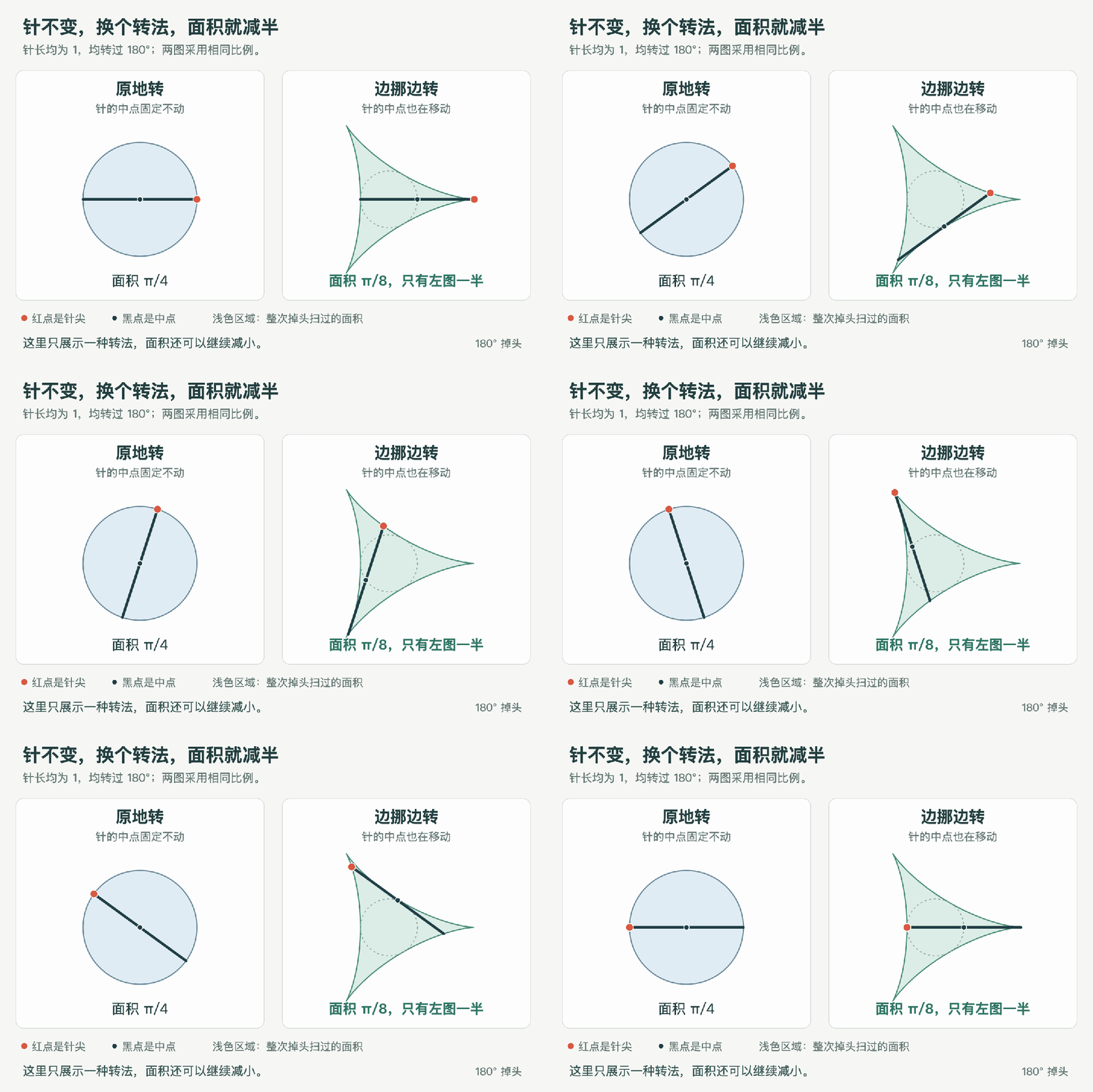
If one more step is required to loosen the needle without requiring the needle to be rotated continuously, only the next unit line segment is placed in each direction.The area of this collection could even be zero!
The area is already small to zero, but the question is not over.
He said, "I'm not going to do this.In n-dimensional space, as long as a set contains a unit line segment in all directions, its dimensions must be n, i.e. "full-dimensional".
The two-dimensional phenomenon was confirmed in 1971, but the three-dimensional phenomenon has been trapped by mathematicians for more than half a century.

To answer a three-dimensional question, mathematicians would first make these lines a little thicker, turn them into fine tubes, and then observe how the volume changes after the tubes overlap.
More than two decades ago, Katz, Laba, and Tao Te Ching had discovered a set of rules that could be used.
However, it is not possible to calculate the length of the pipeline as a straightforward approximation.The results on different scales are not necessarily received.
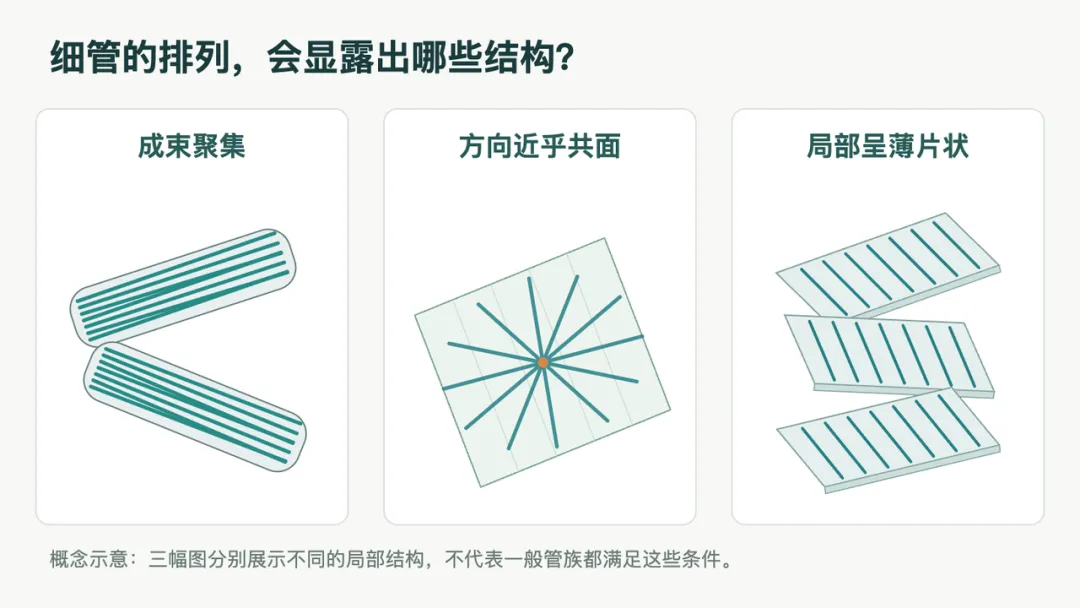
To solve this problem, Wang Neon and Zahl started with a more regular "stickness" situation and completed the proof in 2022.
In February 2025, the two submitted a 127-page paper.Finally, the proof is brought to the mainstream.。
The three-dimensional "collection" conjecture has been officially resolved.
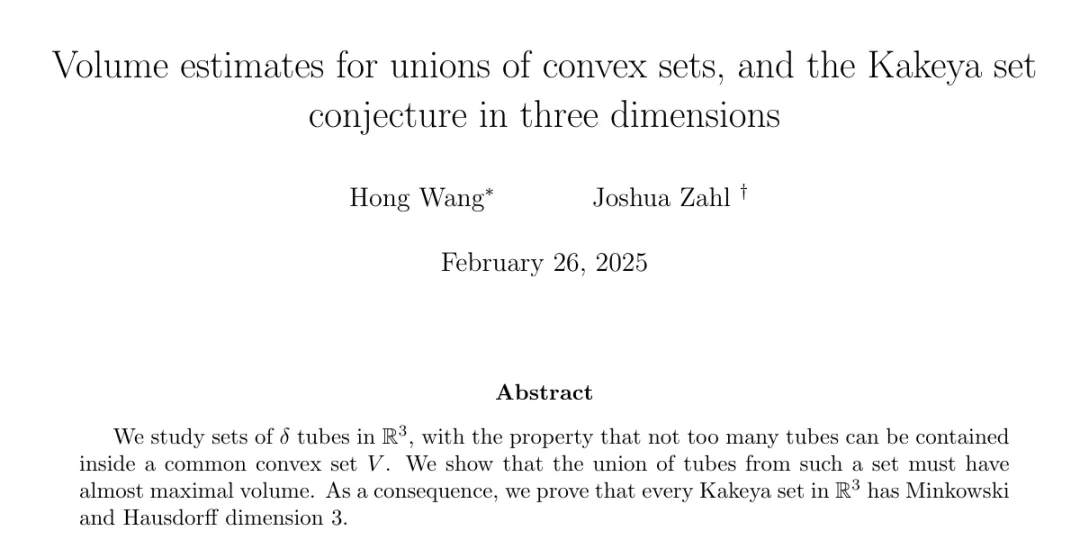 The three-dimensional hanging valley paper by Wang Neon and Zahl summarizes the conclusion that both the Hausdorff and Minkowski dimensions are 3.
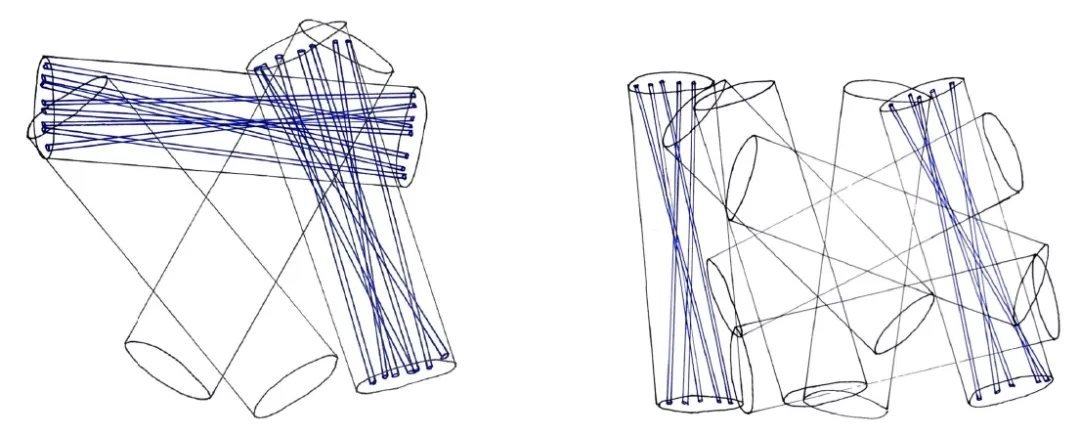 The left graph is the case of "stickness"; the right graph is roughly overlapping, but the inner fineness is sparse.
New three-dimensional proof of OpenAIThe same problem, a stronger version
The three-dimensional attack is over, but the problem is not over.
Rainbow and Zahl solved the problem of the set's dimensions, requiring a higher "extreme functional version" that was still waiting for an answer.
OpenAI's 97-page manuscript is aimed at this step.
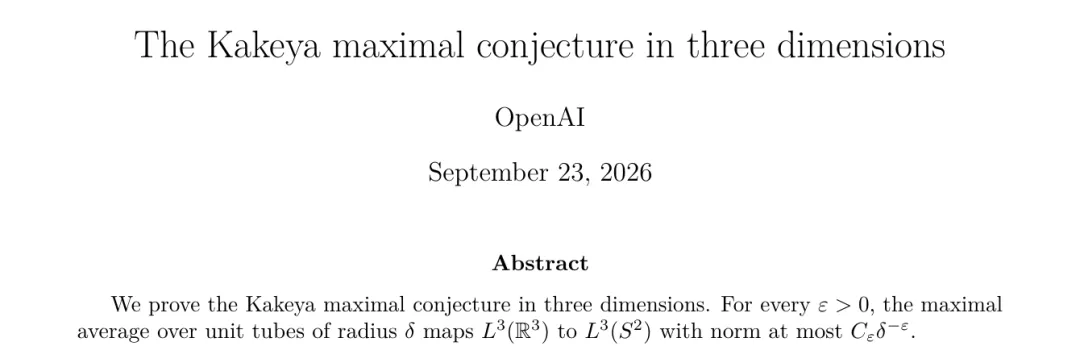 The title and abstract of the OpenAI 3D manuscript, the main theorem for the stronger hanging valley hypothesis
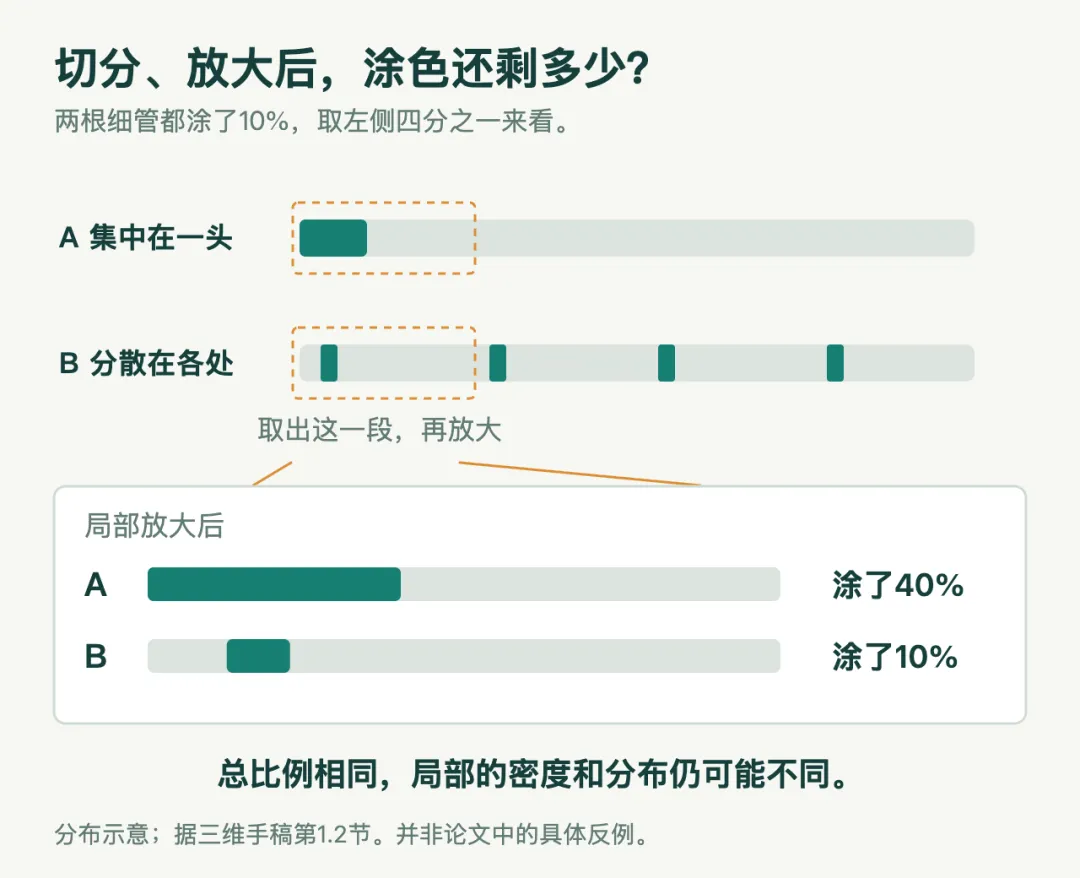
The difference is hidden in the painting of the fine tubes. Each one is painted only partly, and the overlays are counted only once.What is the size of these colors combined, at least?
Wang Neon and Zahl's estimates are enough to suggest that "dimensions are 3". OpenAI goes further and precisely controls the ratio of color to volume.Even if the painting is less and less, this stricter lower boundary must also be established.

According to OpenAI's argument, this more stringent requirement is met and can further introduce a complete three-dimensional extreme function estimate.
The problem arises after the enlargement.
Similarly, 10% is coated, concentrated at one end and scattered throughout, and the density may be completely different after a small section is cut.
OpenAI therefore records the distribution of colors on different scales, tracks each slice, amplifies the changes, and combines geometric estimates with crystalline analysis to try to rule out overlapping overlays and to try to rank those that violate the target bottom line.
This argument is still used.Guth, Rainbow and Zahl combined estimatesandThe Furstenberg theorem with the Rainbow and the Plan of Renconing。
If the main theorem is true, there will be more to it than this.
- The first category isNikodym's Extreme Function EstimatesIn the study, the researchers focused on finding the fine tubes according to the direction, and then on studying the fine tubes through the various points.
- Another class of conversion theorems, which have already been developed, will conclude:From straight tubes to curved tubes that meet specific conditionsIt's a great way to get results.
Four-dimensional proof of OpenAIMulti-dimensional, more difficult than multiplying
The previous dimensional limit was 3,059; Rainbow and Zakharov's full-length breakthrough in September of this year only covered special "stickness" situations.
OpenAI's 175-page manuscript from 3.059 to 4! is challenging this step.
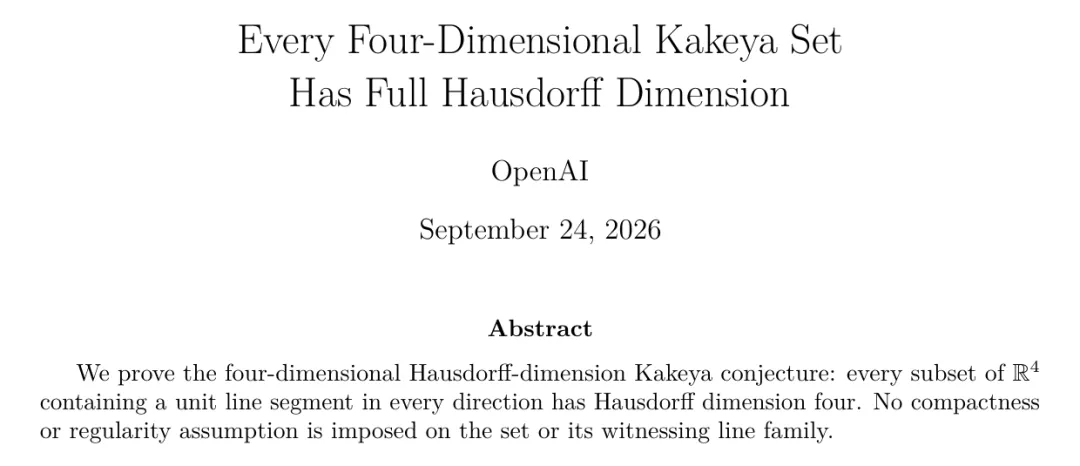 Title and abstract of the OpenAI 4D Hanging Valley manuscript. Main conclusions for the general 4D Hanging Valley set of Hausdorff dimensions
But three-dimensional proof cannot move directly to four-dimensional.
Guth points out that four-dimensional subtubes can accumulate in large quantities along secondary curves, forming overlays that cannot be controlled by three-dimensional methods.
OpenAI uses this gathering itself as a clue.It uses a secondary polynomial to describe local linear relationships, and tracks how long these relationships can last along the linear lines.
But just explaining a few lines is not enough.
OpenAI with the frontA weighted estimate from a 97 page 3D manuscriptSelect local areas that contain enough lines to intersect.
And the source of this argument is still:Guth, Rainbow and Zahl combined estimates。
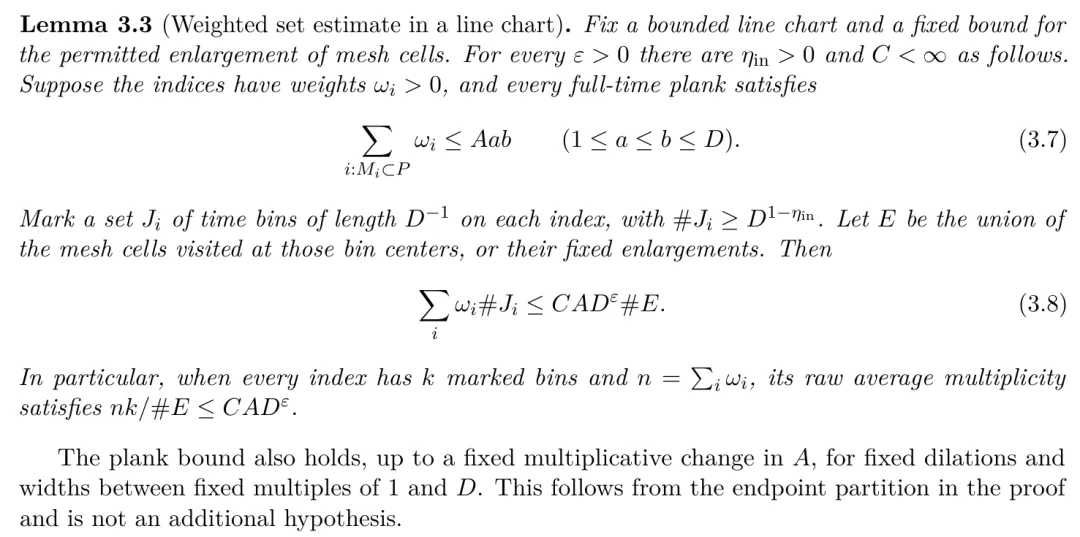 Page 20 of the OpenAI three-dimensional manuscript, citing 3.3 and the formula 3.7); 3.8); the four-dimensional manuscript refers to the timestamp as "2.3" and is repeated in its own 2.15
When dealing with flat structures, OpenAI's four-dimensional argument also uses the point-to-point theorem of Wang Neon and Zahl.
 It's kind of like a dot-com tree, where OpenAI keeps moving forward, and still has to use the pre-positioning skills that Wang Neon has to unlock.
The final step is to let the hypothetical counter-examples reveal themselves.
OpenAI first assumes that there is a set of hanging valleys of less than 4 dimensions, and then deals with the situation by grouping the line segments. Some situations allow the local relationship along the line segments to be extended further, while others restrict the line segments to thinner areas.
It is then necessary to reconcile these improvements and confirm that they are still valid once they are back to their original scale.According to OpenAI's argument, this would conflict with the conditions that hypothetical counterexamples must satisfy, eliminating the possibility of dimensions less than 4.
Once the 175 pages have been examined, the full four-dimensional conclusion will be moved from the special situation to the general situation.As long as the unit line segment in all directions is complete, the set of Hausdorff dimensions must be 4.
However, this is still a four-dimensional "collection" version.A more powerful four-dimensional superfunction version has not yet been solved.Five-dimensional and higher dimensions can only be given "dimensional dimensions of at least 4" and cannot be presented in full dimensions.
Finally, the Fields Prize for HumanitySo the question is, will this year's Fields Prize be the last to belong to humanity?
In just a few months, OpenAI submitted a 272-page new manuscript in the same direction.Both arguments need to be independently examined.However, if they are finally established, this mathematical history is written backwards, the name OpenAI cannot be omitted.
The name of the king of the rainbow, and he did not retire as a result.OpenAI continues to use estimates and methods that she and her collaborators have developed.
It's really hanging, it's the next break.If youAIIf we continue to come up with new ways, open up new directions, can we still be ahead of the curve?
In 2030, when the next Fields Awards are presented, it's not just about who's standing on the podium.
There is also the most crucial step in winning the prize, exactly who came up with it.
RoboInd editorial channelResearch, robotics companies and market intelligence for cross-border sourcing.Explore the channel ↗
Share this
End of editorialExplore more from Global Robotics News ↗