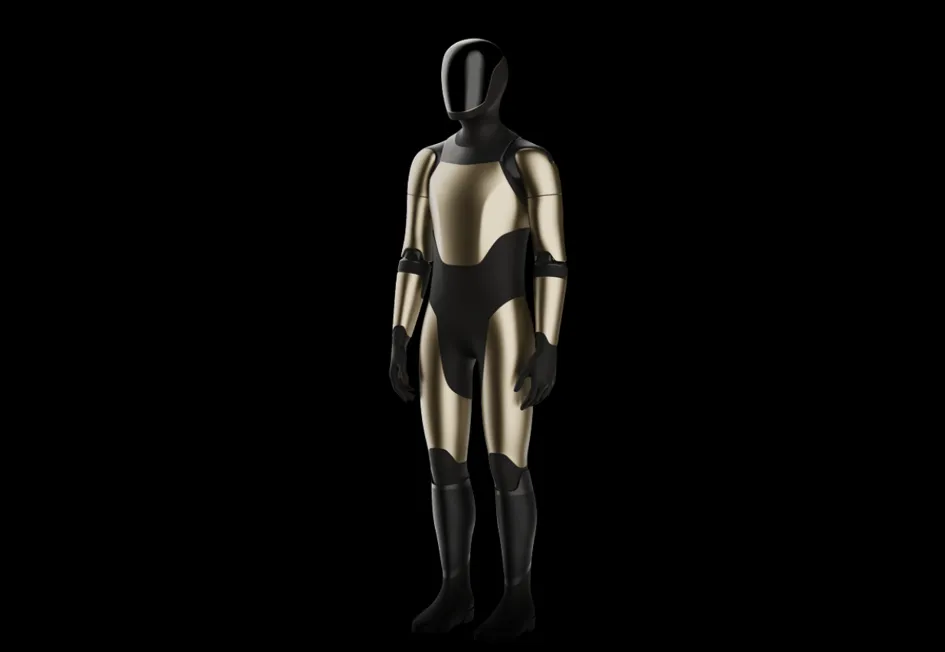
“ It's no longer a problem to create, it's a problem to get back.
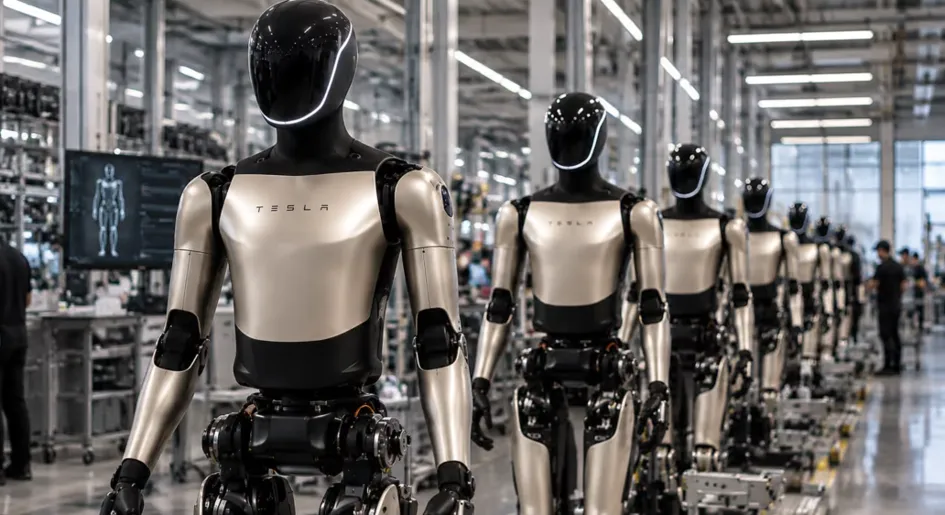
At the end of June 2026, Musk hosted an executive review meeting that approved the latest version of the third-generation Optimus. Following the review, Tesla issued clear guidance to the supply chain to produce 1,000 units in September, 2,000 to 2,500 units by the end of the year, and to have a supply capacity of 100,000 units per year by the end of the year.
At the end of September, the team opened a new round of mass production audits for the Chinese supply chain, focusing on the consistency of robotic parts and quantity delivery capabilities.
This issue of capacity, starting in the second half of 2026, is no longer a Tesla issue.
The problem with Tesla Optimus is that it can't be made.
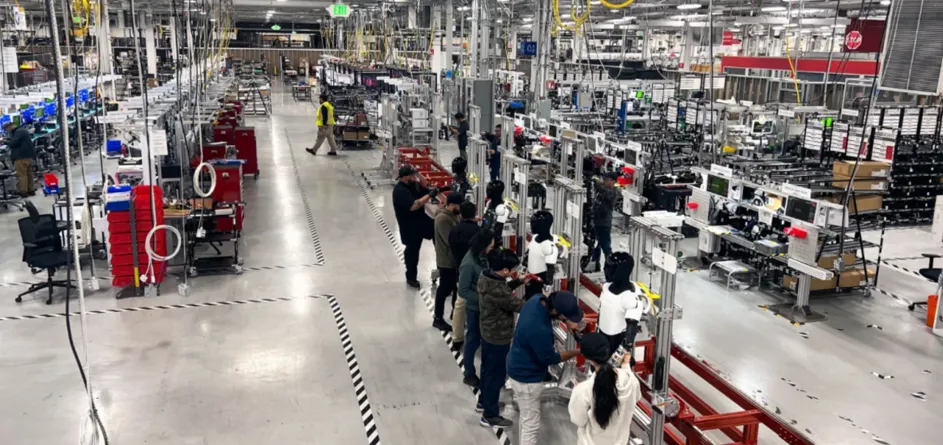
Fremont's production line was completed in 2026, with Model S and Model X being phased out for 46 days, and a new plant in Texas under construction, with a long-term design capacity target of 10 million units per year.
The question is, where did these robots go after the downline?
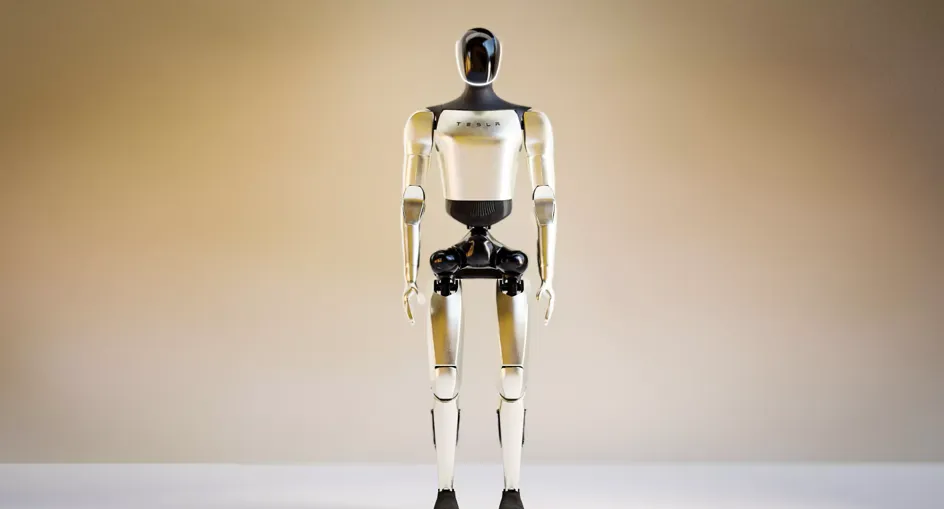
01.
The bottom line is not equal to income
Tesla has not publicly disclosed Optimus' performance indicators - online rates, beat times, error rates, throughput - which are industry-standard disclosures for industrial equipment, a company that has been making cars for decades and has been silent on all four.
In addition to these four, there is a more critical quality, which is not that it is not disclosed, but the way it is disclosed explains the problem itself.
There is a very straightforward description of Optimus' business status in the public domain, and there are currently no clear outsourcing plans, with each output accounting for capital expenditures rather than immediate revenue generation.
We looked at Tesla's financial statements and found that Tesla's capital expenditures and operating income were two completely different lines in accounting.
A robot that went down the line and went into Tesla's fixed-asset business, it didn't generate a penny of revenue, it just depreciated.
Depreciation eats up profits, accounts for costs, and leads to more depreciation on financial statements.
It's not a product, it's an asset in the reporting.
So the production red line is drawn to 2,000 units a week, and it's drawing fixed assets, not product lines.
This distinction cannot be seen separately in Tesla's financial statements, as Optimus's spending has never been disclosed separately.
In fact, it's buried in research and development costs or dumped into plant equipment costs.
The outside world can only infer the scale of production and cannot judge what these assets are doing from the profits.
This is why the more production data, the more ambiguous the judgments about Optimus.
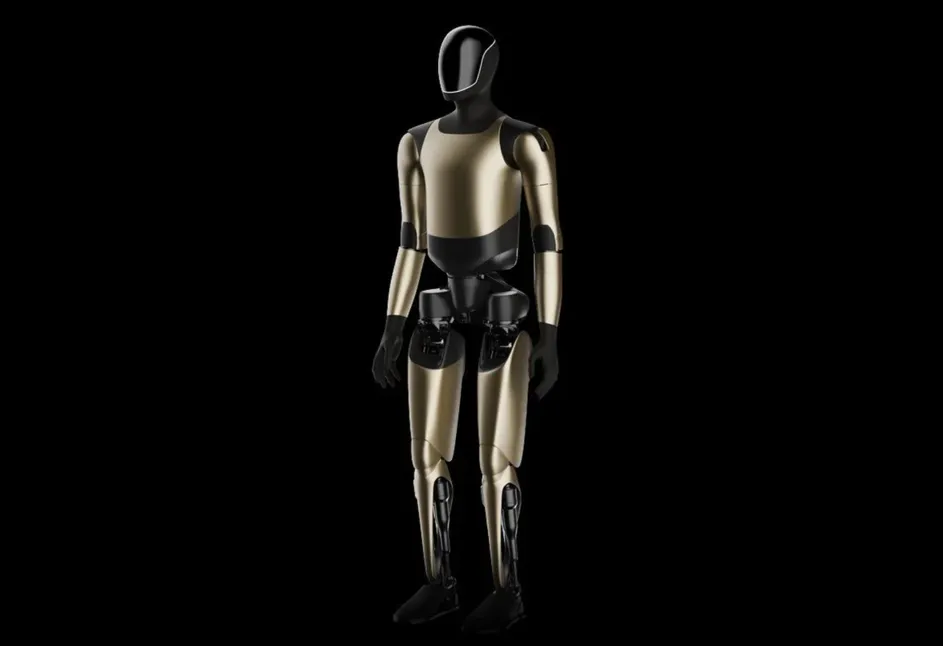
02.
China's bottom line has become revenue
Cutting the lens to Chinese counterparts, if Tesla's operation had already been abandoned by capital, but at the same time the contrast would reveal that what they did was redefine the two words downline.
By the end of March 2026, more than 10,000 general-purpose robots had accumulated. This figure was cited by several brokers in their follow-up report in September as evidence of the industry's acceleration in volume production.
In 2025, the company had more than 6,500 subscribers, with more than 5,500 human-robot shipments, a revenue of 17.08 billion yuan, a net profit of 600 million yuan, and a market value of 609.93 billion yuan on the day of its listing on August 19, 2026.
After the two Chinese robots went offline, it was the customer's production line, receiving the goods, counting in the operating income, which was clearly written in the financial statements.
But Tesla's more than 1,000 Optimus are on its own production line, the mission is its own, the data is its own, the acceptance is its own.
There is currently no external client that Optimus discloses.
This is the result of Tesla's financial statements.
The demolition of Morgan Stanley in February 2026 yielded a figure of $46,000 in material costs for Optimus Gen2, which would add up to $13,000,000 if the Chinese part of the supply chain were removed. Musk said that there was no supply chain at his second-quarter earnings call on July 22, 2026.
On August 25, 2026, Bernstein released an economical measurement of human-robot application scenarios, which for the first time systematically quantified the recycling time of four types of scenarios.
The results differed considerably from what the industry expected. The simple understanding is that Tesla's Optimus did not sell out at all in the short term.
For example, urban and industrial patrol scenes, U.S. 1.0 year, China 1.5 year. Warehouse selection and transportation, U.S. 2.9 year, China 4.3 year. Factory material transportation and patrol, U.S. 2.7 year, China 6.7 year. Last km distribution, U.S. 5.0 year, China 4.2 year.
The biggest difference is not the difficulty of the scene, but the wages. According to Bernstein, the longest recycling period in China is due to the fact that local manufacturing wages are only 23% in the United States, while the sales price of robots is close to that of the United States.
Bernstein therefore proposes a 2.5 year threshold, whereby the recycling period falls below this line, and the logic of purchasing decisions is never to try to change into nothing to buy. To cross this line, the price of robots in the Chinese market would have to drop by 30% to 50% and the U.S. market would have to drop by 5% to 40%.
In the same month, another measurement from IDTechEx gave a more extreme figure. Under the conditions of high utilization, the recycling period of human robots can now be squeezed to 6 months, while the average utilization takes 15 months.
The same robot, with two operating intensities, lasted almost nine months, and the nine-month gap was caused by the way it was deployed, not the hardware.
The two measurements point to the same conclusion. Deciding back is not the robot's sales price, but the robot's utilization rate.
If Optimus materials cost $46,000, the long-term retail price target is $20,000 to $30,000. The middle is negative gross profit.
The factory itself, as the first customer, is the only way that Tesla is currently able to settle bills. The cost of these Optimus robots is that it is difficult to get external acceptance standards in the short term.
03.
The utilization rate is determined by the list of materials
Any normal operating factory in the world decides not to buy, and the list of costs is not a robot, but a list.
Robots, production line conversion, security fences, charging facilities, deployment integration, operation of spare parts, software subscriptions. Any loss of control on this list will turn the previous six months into 15 months.
The most easily overlooked of these is integration. An industry forecast for 2026 suggests that the cost of an enterprise-grade deployment could range from $100,000 to $500,000, with an additional $50,000 to $200,000 for site upgrades per site.
So look at the commercialization capabilities of a robot company, see if the prices it reports are useless, see if its list of materials can be squeezed.
The industry's hottest downsizing story of the past two years has been Planetary Rolling Stones Silk, a high-processing precision, long-life, and high-price component that was once considered a major driver of human robot costs.
Tesla is moving in that direction.
The report in the September 21, 2026, robotics industry weekly of Warford Securities stated that with the continued optimisation of Tesla's robotics program, the use of low-cost, easy-to-maintain roller silks is expected to increase, and the number of roller silks on the wrists may increase further.
According to Counterpoint, the cost of materials for the second half of 2026 is still more than $60,000, with 22 of the free-range coins accounting for about 20 percent. Musk's $20,000 to $30,000 long-term retail price is a common target for the entire industry, and Counterpoint believes that to reach this price, annual production will need well over 100,000 units.
A follow-up report from Open Source Securities mentioned that Optimus's hand-held motor scheme might move from a more expensive vacuum cup motor to a micro-frameless rectangular motor. The third-generation sleek hand-held propulsion scheme is the composite structure of the planetary gearbox with a micro-roller silk-reinforced cords, replacing the crankshaft with silk, and the torque spring with cords.
These changes are in the same direction, replacing high-cost parts with low-cost ones. Tesla is not incapable of reducing costs, it is actively reducing costs. At this point, the location of the supply chain is more important than the overall design.
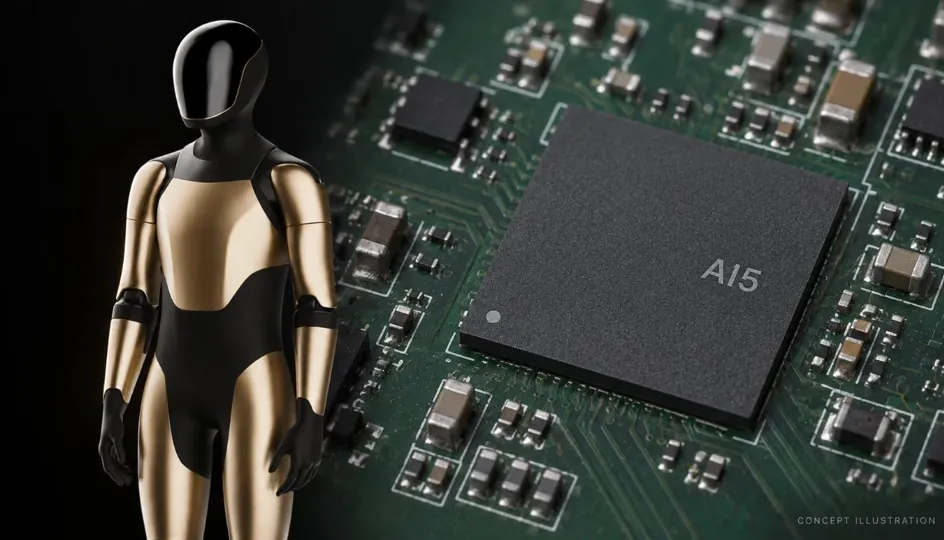
On October 1, 2026, Musk announced on social media that he had cut the memory of the AI5 chip from 72GB to half and changed it back to 96GB the next day.
According to data from SemiAnalysis, in early 2026, the LPDDR5 contract price was around $10 per GB, three times higher than the long-term contract price limit at the beginning of 2025.
A robot saves $500 to $1000, which is 1% to 2% of the cost of materials.
This is better than nothing, but it shows one thing: Tesla is still struggling with performance and cost, not with missing parts.
04.
Supply Chain is No Longer
Standing at the expense of the overseas supply chain, the fact is that they have been able to meet the demand, and even Chinese factories have killed the acceptable red line of ROI.
In the first quarter of 2026, the cost of a single Chinese humanoid robot fell to 100,000 yuan, down 33% from 150,000 yuan in 2025.
The domesticalisation trajectory of pump accelerators is the clearest indication of this curve. China-U.S. Comparison Study on 20 September 2026 provided data for four years, with domesticalisation in 2017 at 16.41%, rising to 55.15% for the first time in 2021, ahead of foreign investment, and further rising to 75.11% in 2024.
The increase in domestic and foreign investment indicates that domestic substitution is not a simple alternative, but a market expansion that can generate economies of scale.
Tesla's Chinese supply chain testing facility, which launched in September, is here to land. It needs to be audited not for feasibility, but for consistency. Once the testing facility is approved, only those components that have just surpassed 75% GDP in 2024 will be able to enter its list of materials.
On September 14, 2026, Optimus's executors accounted for about 39% of total machine BOM costs, of which silk accounted for about 13% of total machine BOM costs, reducers accounted for about 9% of total machine BOM costs, and machines accounted for about 17% of total machine BOM costs, while sensors, bearings, and other components accounted for about 31% of total machine BOM costs.
The two brokers differed in caliber and patterns, but pointed in the same direction, and the executors combined with their clever hands accounted for the bulk of the overall material cost.
This is the main battlefield of the decline. It's also what's really going on at Tesla. Interface News cited industry estimates that Optimus's material cost fell to $46,000 when it wasn't dependent on the Chinese supply chain.
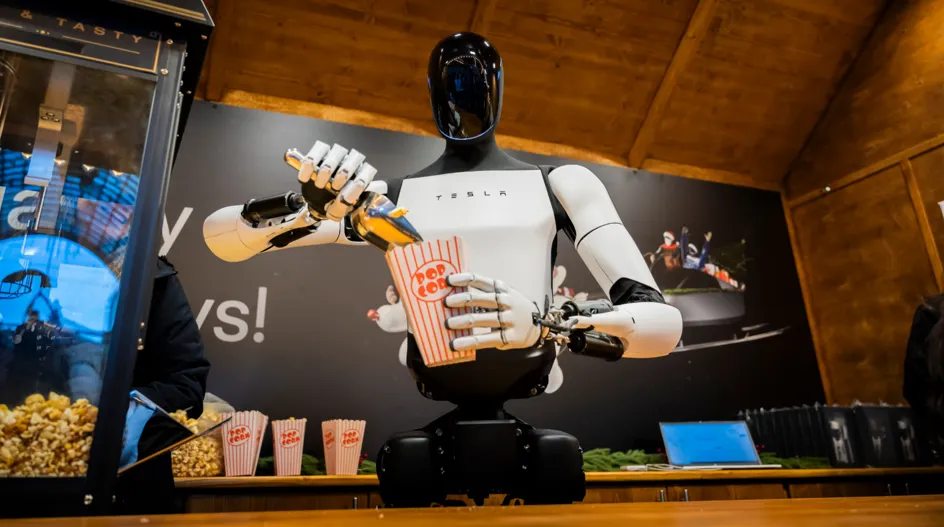
However, the pace of domestic production varies from component to component. The domestic production rate of pump speed reducers has surpassed 72%, the single unit purchase price has dropped from 1280 yuan in 2023 to 410 yuan, a decrease of about 68%. The domestic production rate of dedicated servo motors has increased from 23.1% to 69.5%, the single unit price is about one-third of the Japanese equivalent products.
It has the world's most complete electric vehicle supply chain, but the supply chain for humanoid robots is a different one. Bernstein uses an industry-repeated rule of thumb to double production, reduce costs by 15% to 18%, and change curves in small batch phases.
This means that the initial phases of mass production dependent on the self-supply chain, in theory, have more room for reduction. Assuming quantity increases. This is why its long-term capacity goals are discussed repeatedly.
In this context, the logic behind Tesla's choice is clear: it deploys more than a thousand Optimus units in its own factory and does not sell them abroad. Its material costs are squeezed to $20,000 to $30,000, depending not on external orders, but on its own factory as its first customer.
This road can be used, provided that it is large enough to be used on its own. It is also the premise that everyone is waiting for something that the factory will not want to use.
05.
Who is paying for this mass production?
To bring the time axis closer, Musk adjusted the chip's memory schemes for the two days of October 1-2. He set a long-term goal of 20,000 Optimus per week.
Twenty thousand a week, ten million a year. This is the line he drew in 2024, and it's still there.
From the actual red line of 2,000 to 2,500 units per week to the long-term goal of 20,000 units per week, the gap is fourfold. This fourfold will not be accomplished by capacity expansion, but only by the thickness of the material list.
So the real beneficiary of Optimus' mass production acceleration is not entirely Tesla. The process of testing, certification, expansion, and price reduction started with the first benefit to the parts manufacturers, the first to be compressed by the gross cost of the parts, and the end result is the unpublished material cost table.
Twenty thousand Tesla-built robots already have capacity, but after twenty thousand are offline, each is a capital expenditure, not an income.
From zero to 10,000, Chinese companies spent three years selling each of these three years. From 1,000 to 2,000, Tesla spent half a year on each of these half years on depreciation.
The two curves appear to be in a race, but they are not on the same track.
The next thing that's really worth seeing is not the output, but the date when the first Optimus for fixed asset items will be listed in operating income rather than fixed asset items.
Until that day, the production numbers were just an announcement of production, not the beginning of the product.
We think there are three indicators that can be traced.
First, Optimus officially announces operational indicators. Online rates, beat rates, error rates, any disclosures mean it moves from an internal R&D project to a deliverable product.
Second, the question of whether the domestic replacement for the core components is clearly entering Tesla's supply chain. This determines whether the $60,000 can actually be squeezed to $20,000.
Third, the first external sale. Any Optimus sold to a non-Tesla entity, whether for sale, lease or hourly billing, will prove that its inventory of supplies is covered by an external contract.
The industry has already written down the acceptance criteria. According to Bernstein, if the recycling period is reduced to less than 2.5 years, procurement decisions will never be made without trying to become what you don't buy.
For Optimus, the answer to this threshold is not a capacity number, but how much water is left on the list of materials.