“ The next entrance is the body?
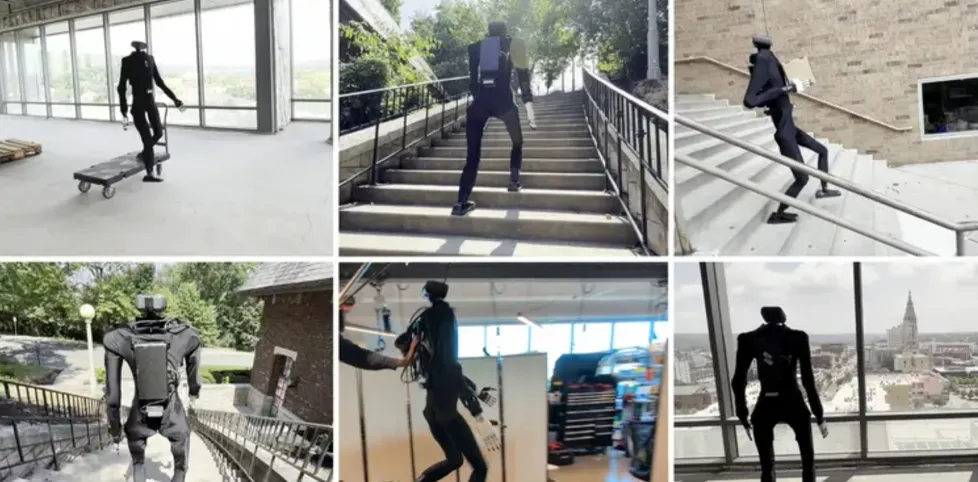
On September 15, arXiv published a paper titled BRIDGE: An Open-Source Humanoid Platform via Morphology-Control Co-Design for Physical AI. Skild AI's two founders co-created an 88 cm (13 kg) open-source humanoid platform.
A body-smart company that sells brains has released an open-source body that is meant to be enjoyed by the patient.
01.
What's Skild up to?
It's a very slow pace to pull out the capital curve of Skild AI.
Established in 2023, Round B was valued at $4.7 billion in November 2024. In June 2025, Round B was valued at $4.7 billion. In January 2026, Round C was valued at $14 billion, with SoftBank and Great Britain receiving $1.4 billion in financing. From $4.7 billion to $14 billion, it tripled in less than a year.
SoftBank's robotic brain+body strategy is to infuse AI capabilities into the physical world, and Skild's Skild Brain is the closest product to the general brain in this strategy.
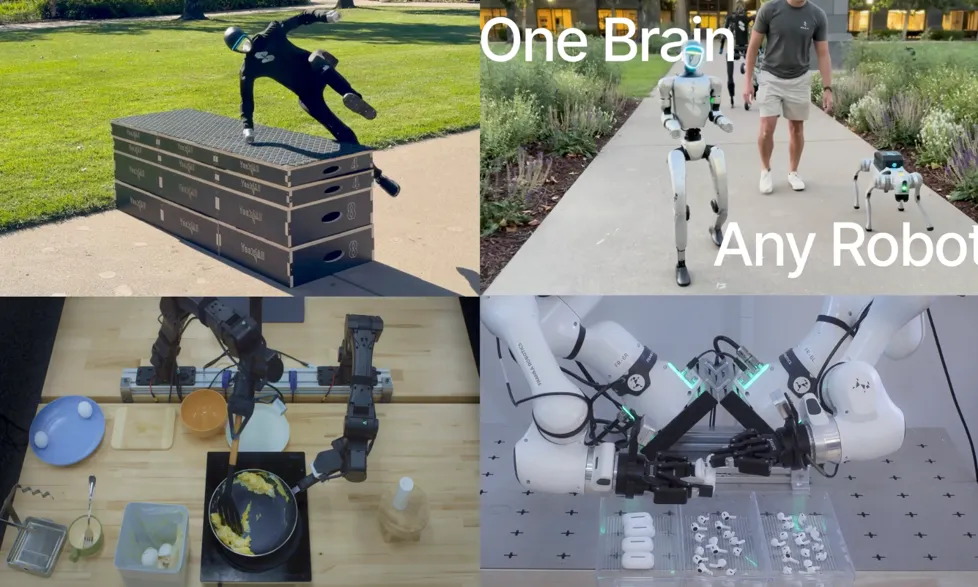
Skild AI was originally created as an omni-bodied general robot brain, a model that drives all quadrupeds, humanoids, desktop mechanical arms, mobile mechanical arms, almost all robot bodies, without reprogramming tasks. In March 2026, Skild AI and ABB Robotics, Universal Robots, and Great Britain signed a partnership to deploy Skild Brain into the industrial mechanical arm production line, and in the same year to deploy the Foxconn production line.
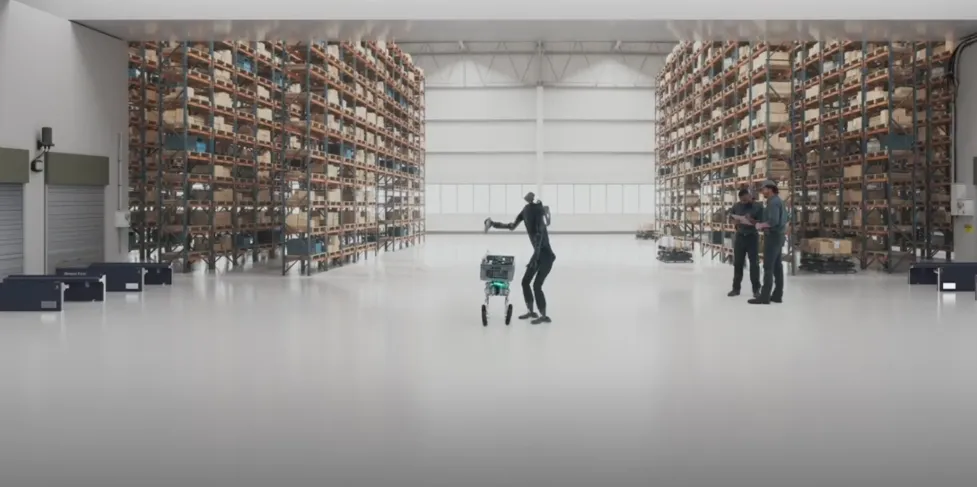
What these deployments have in common is that Skild doesn't build a complete robot to sell, it gives brains to other robots.
The brain is embedded in ABB's mechanical arm, embedded in the collaborative arm of Universal Robots, embedded in Foxconn's streamline, receiving ARR by deployment.
So why would it make a body of its own?
After reading the paper, we found that this 88-cm open-source robot, not an official product, was Skild AI's attempt to provide an industry-wide reference interface between the brain and body.
Skild AI believes that the interface between the brain and the body may be more valuable than the brain itself.
02.
Why do brain companies touch the body?
Because the companies that make brains rely heavily on physical carriers, Skild Brain requires a unified interface to be deployed across the robot.
But now, hundreds of robot companies, each robot manufacturer's motor is different, the joints are different, the frequency is different, and the brain has to re-adapt every new body.
ABB's mechanical arm is fitted to a set, Universal Robots' collaborative arm is fitted to a set, and Foxconn's power lines are fitted to a set.
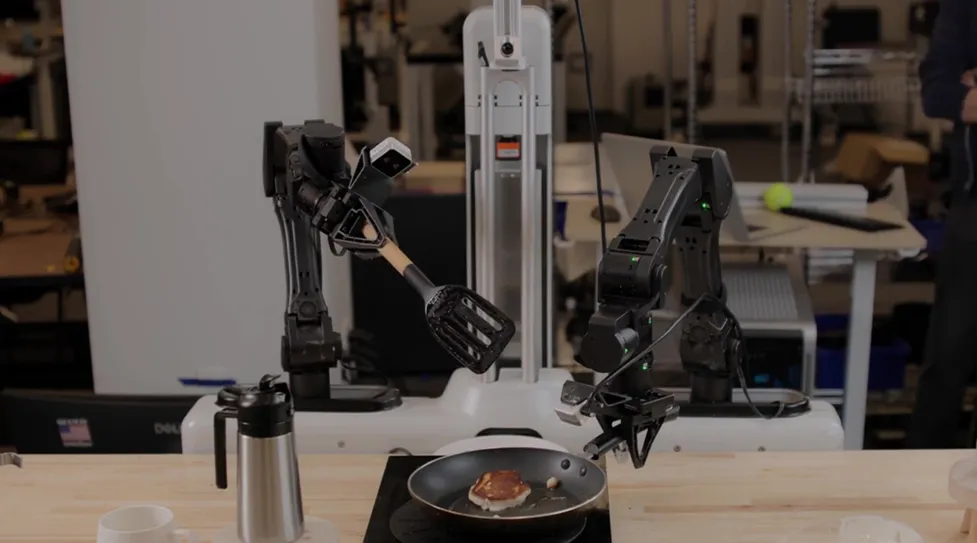
Skild is building BRIDGE, not its own, in hopes of providing an open-source reference body to the entire industry, giving the $14 billion brain a place to run, ultimately reducing the cost of adaptation from one set of manufacturers to one reference set.
Bridge's hardware drawings, control strategies, and training scripts are all public, with a height of 88 cm, 13 kg, 1.5 m and a half smaller than the U-tree G1, 35 kg, and 1.7 m smaller than the Walker X. The main focus is on a robot that can be placed on the laboratory floor, and its core purpose is to help developers who want to help the algorithm team run faster.
Simply put, it's the equivalent of Skild AI giving the entire Physical AI industry the minimum body available. You don't need to build a 1.7m human-shaped robot, you just need an 88cm, open-source, Skild Brain reference platform to lower the brain deployment threshold.
Skild AI hopes that any team that gets this open-source robot will be able to replicate Skild Brain's deployment process in their lab.
In order to achieve this goal, the paper focuses on the architectural design of form-control collaborations.
Because in the traditional practice, the hardware team first draws the body, the algorithm team then goes over the control strategy, the two lines do each, and finally coordinate, finding that the body's junction angle limits the algorithm's operating space, delaying the algorithm's response and forcing the hardware to rearrange the parameters.
BRIDGE combines the two lines into a design cycle. The configuration of the body's joints changes with the needs of the algorithm's movements, and the training data of the algorithm changes with the actual response of the body. In turn, the body is the reference implementation of the algorithm, and the algorithm is the soul specification of the body, which means that the next competitive barrier of the robot manufacturer is not the more flexible joints, but the ability of the brain and body to co-evolve in the same cycle.
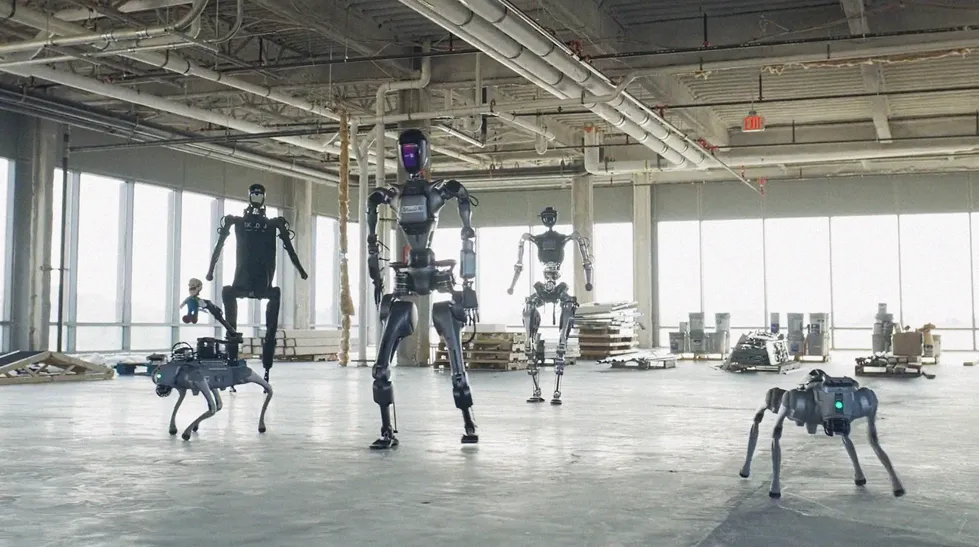
Interestingly, we found that Skild AI used H1 as a brain carrier in the past, whereas UnifoLM-WMA-0, the cross-body world model that Skild AI released this year, is very similar to what Skild AI does.
Similarly, in March 2025, the Intelligent RoboOS, a cross-body-sized brain collaboration framework that supports the open-source body brain RoboBrain, was released by the Intelligent Research Institute at the Tsinghua Forum. Intelligent RoboOS solves the same problem, cross-body collaboration, but it mainly follows the path of a framework. However, these paths are essentially the same.
03.
What does it mean to refer to the body?
Compared to the chip industry, Intel doesn't make money from selling development boards, development boards mean that software across the industry is modeled, tested, and optimized on the Intel platform. When the software ecosystem runs on the Intel platform, it needs to be rewritten to other platforms.
Skild BRIDGE is the same logic. When the entire industry's robotic brains are adapted to BRIDGE, it's time for another reference body to re-adapt. The cost of adaptation decreases, but assuming that the reference body you're using is BRIDGE.
Companies that sell brains build bodies instead of entering the real world are lowering the cost of brain deployment. The cost of adaptation is lower, and the ARR of all brain companies accelerates.
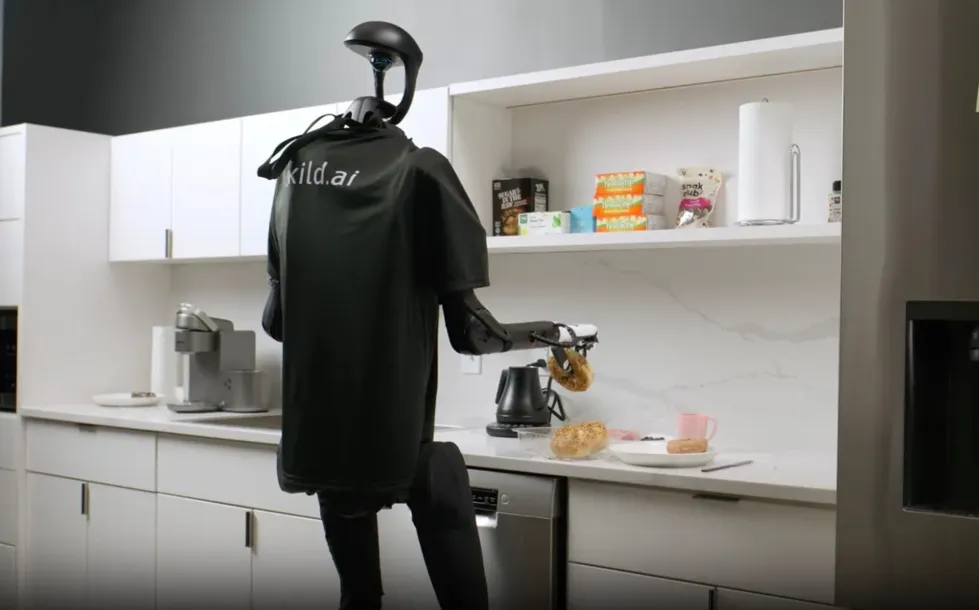
But a secret premise here is that this path is a premise for simulation ecology to take precedence.
The country's simulation ecosystem is now fragmented, with Isaac Sim, MuJoCo, Gazebo all in one corner, with no factual standards. Skild has clearly chosen Isaac Sim for investment reasons.
Skild's S1 model, which runs entirely on the Isaac Sim, was unveiled on September 22, 2026, with a demonstration of self-training to play the game and then transferring the skills to the real world. It is indeed very smooth, but the system is undoubtedly the same as helping Great Britain to reinforce the reality standards of simulation.
Because of the importance of the reference platform, it is not about how many units it sells, but how many people use it as a benchmark.
In the future, the boundaries between the brain and the body will sooner or later be broken, so who defines this interface first, who defines the standards of the next robot industry?