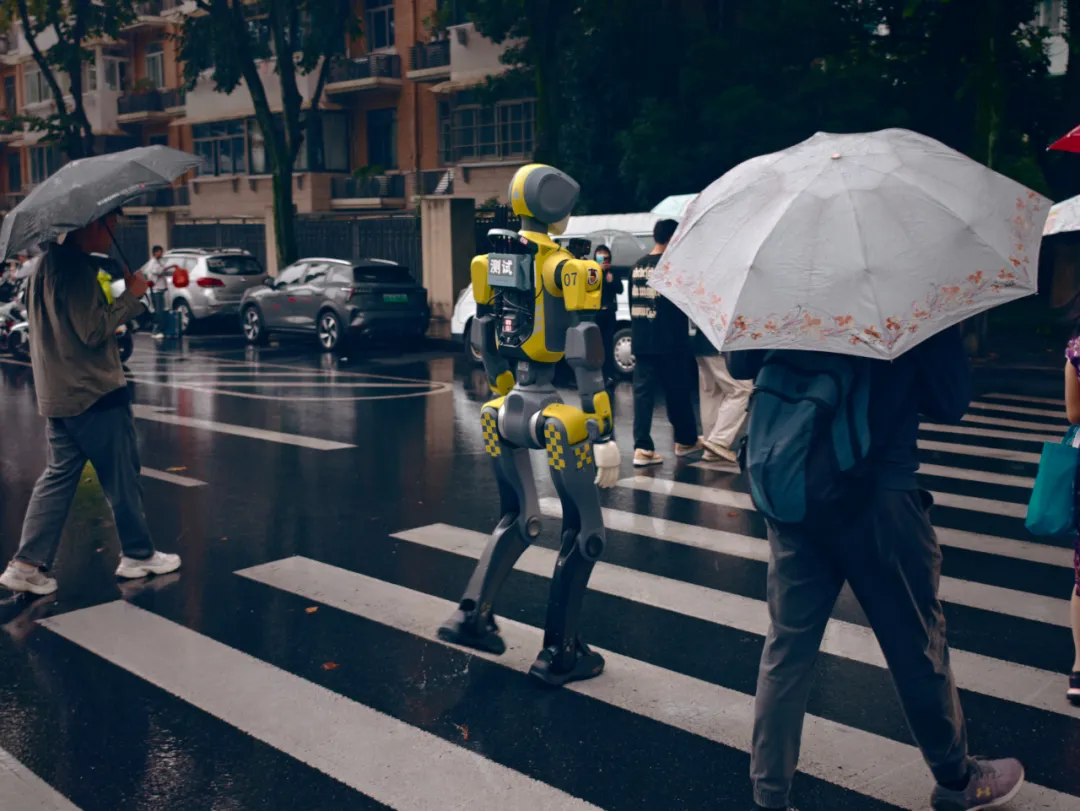
“ Others are shaping robots like sunshine, DR02 like rain in the West Lake District.
In the West Lake district of Hangzhou, it rains a lot, but it doesn't mean to stop.
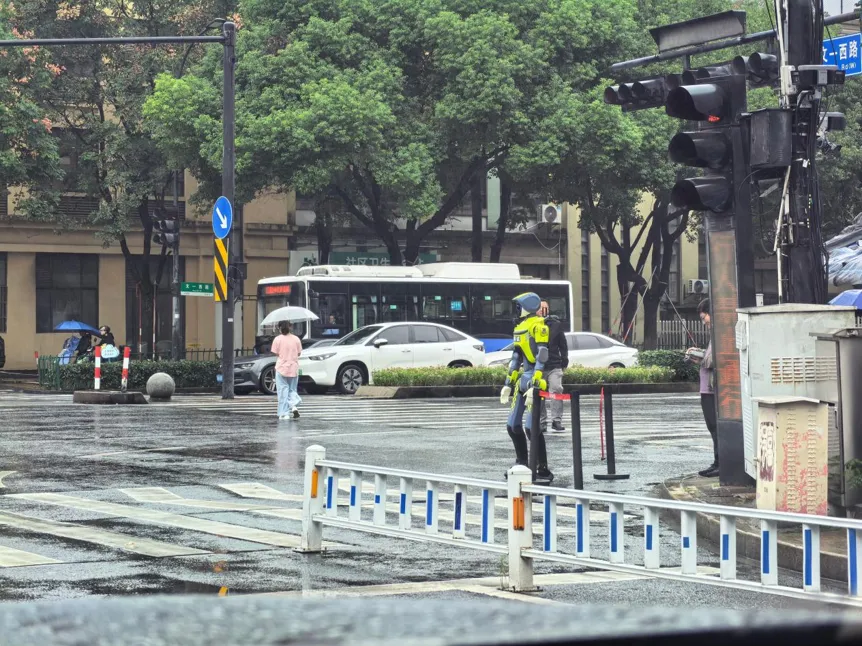
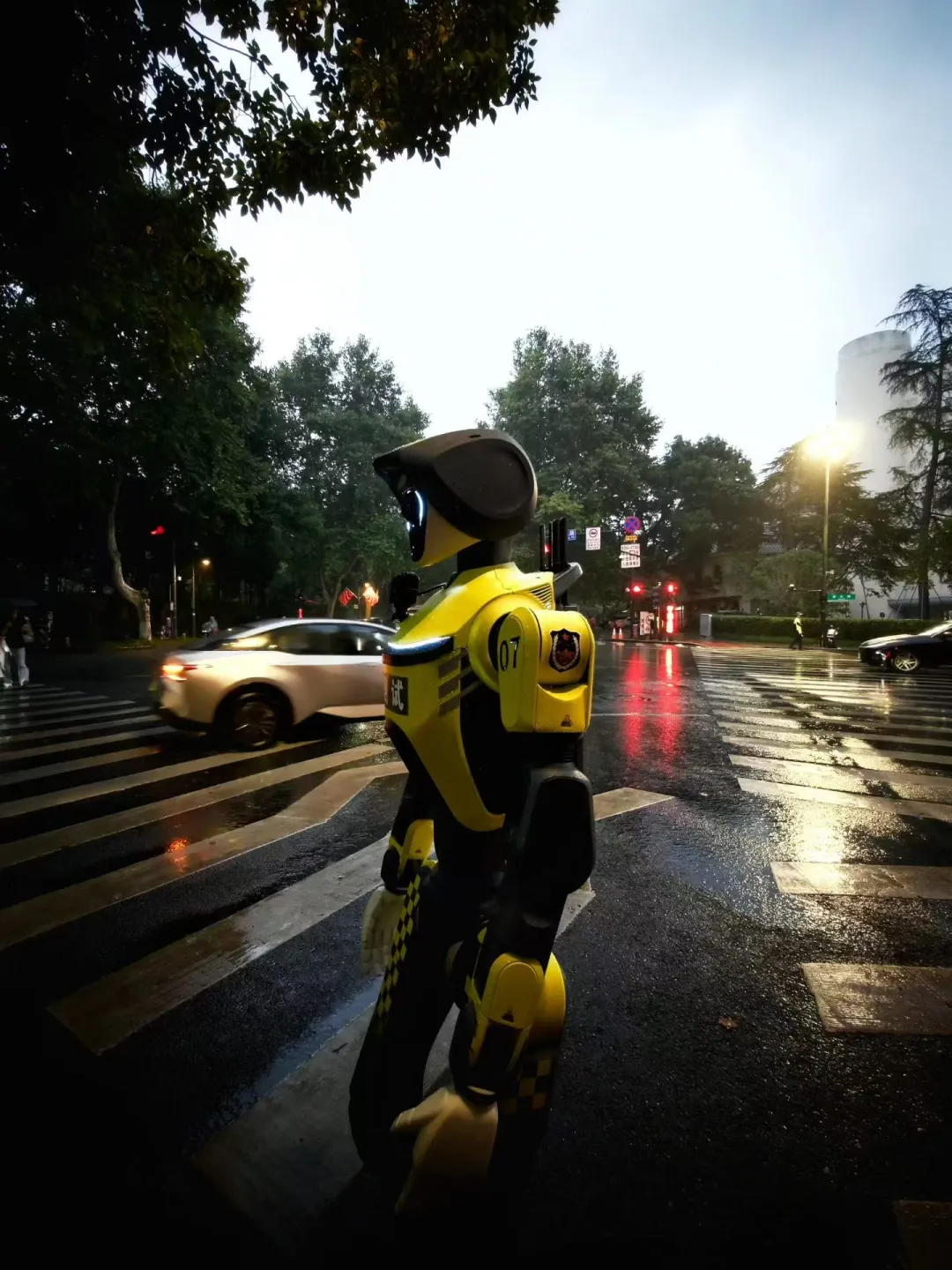
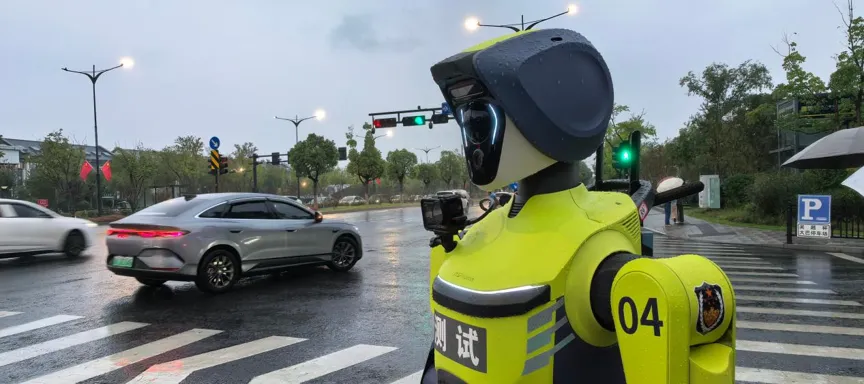
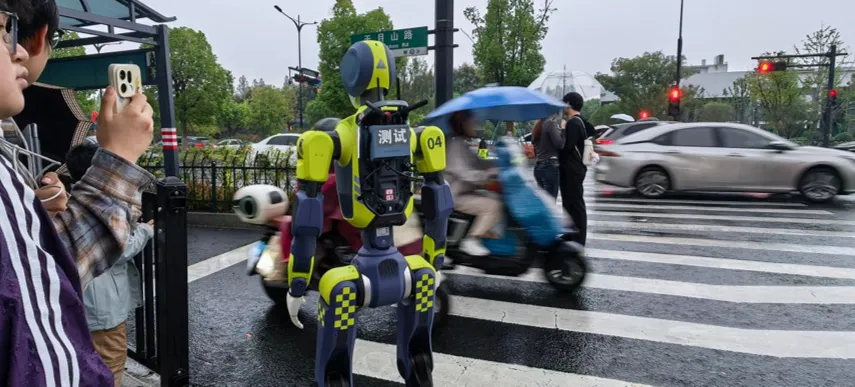
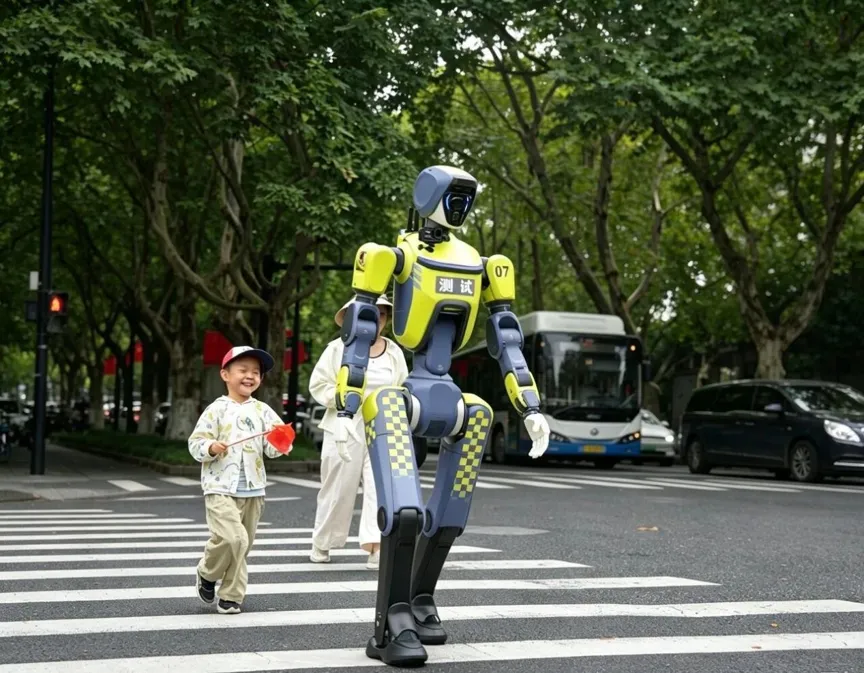
The streets are flooded with water lights, tourists gather at the roadside, traffic is slowly shaking under the lights, and a one-eighth-meter-high special-service humanoid robot is standing in the rain, lifting its arms, turning, and steady as standard.
If this is a promotional film from any ordinary company, it should be shot in a clear day, the crowd is orderly, robots are clean, the camera is soft.
But this is a real test window for the proactive choice of deep cloud technology.
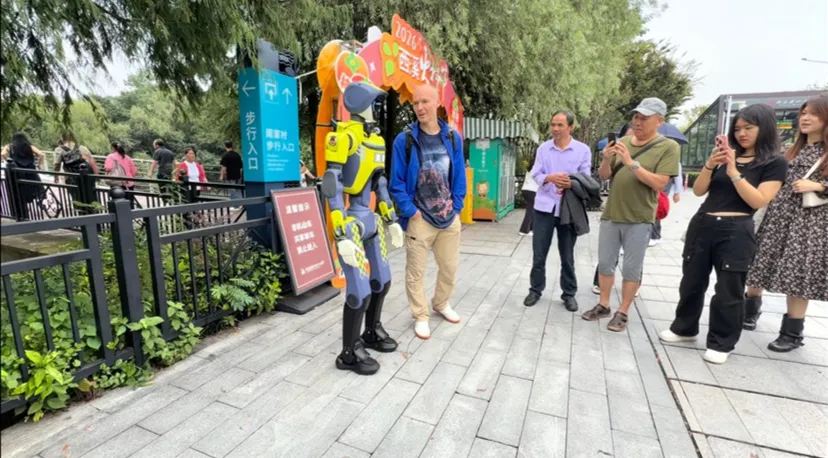
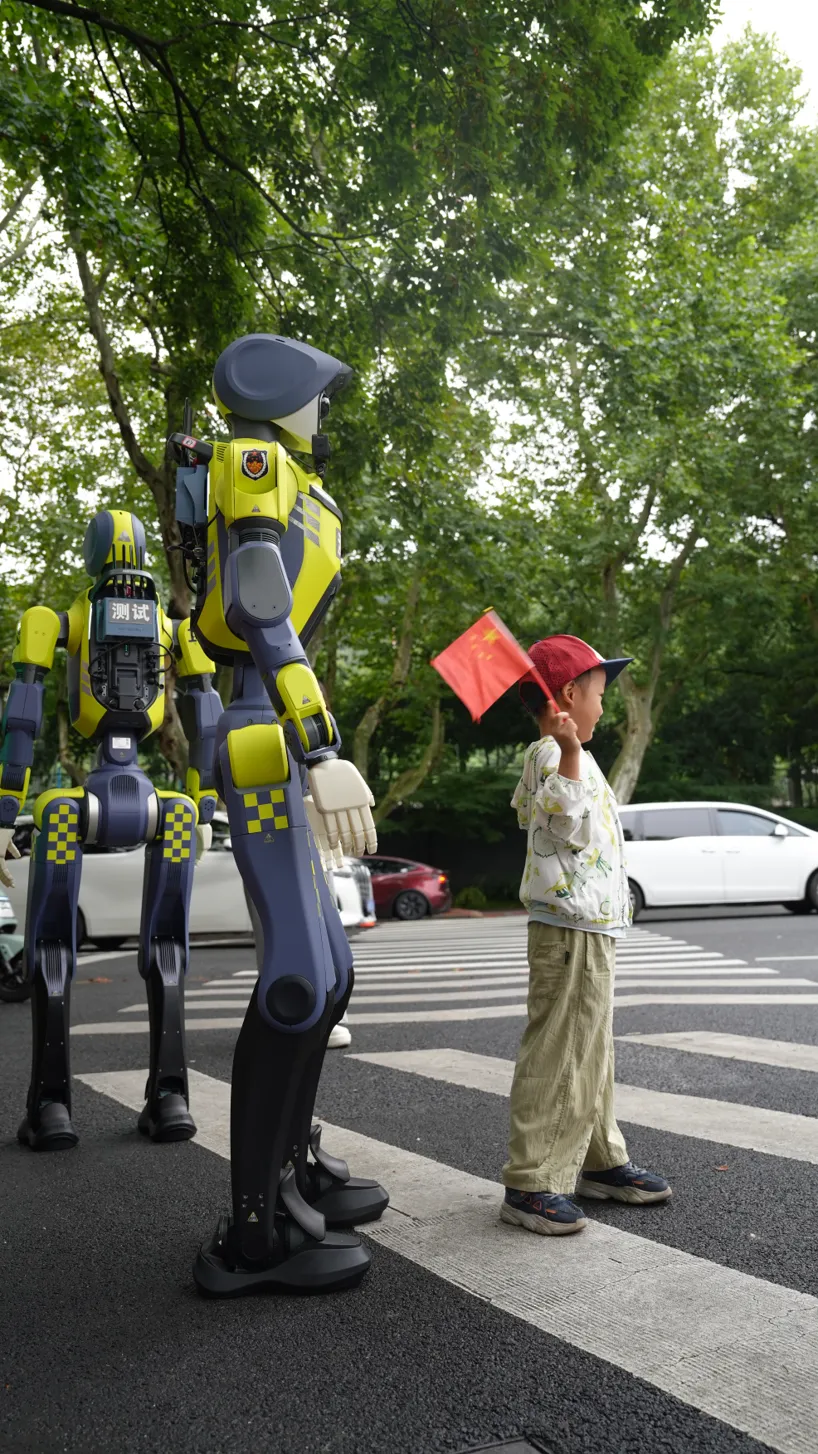
During this rainy, crowded, and congested holiday, a group of DR02 humanoid robots were deployed to key traffic intersections and sightseeing areas in the West Lake area, such as the Westlake National Wetlands Park, the Linkin Park Road, and the Winnipeg Road, to do some amazing things: guarding roadblocks, guiding tourists by voice, identifying electric cars that crossed stop-lines, and alerting unhelmed riders.
The action is not cool, the scenery is not decent, even the weather is not compatible.
But it is exactly this dish that is disrespectful and deserves to be taken seriously by the industry.
Because when most companies are discussing when a humanoid robot can actually work with a mouse, the depths of the cloud are already teaching mouse robots how to work with real-world scenarios.
In one of the most extreme windows of the year-round traffic pressure during the Holidays, in a fateful chaotic, humid, colourless real-world scenario, the Clouds let robots themselves crash, bring the problem back, and change the product. This is both an open-ended experiment on how to overturn the technological transformation of real-world scenarios, as well as yet another round-trip test of the technology to attract real-world scenarios, real-world products, and the logical closure of products that empower the industry.
01.
Testing is a more serious industry language than demonstration.
The West Lake District in Guangzhou is an extremely complex real test site.
Continuous rainfall, wet surfaces, reduced visibility. This is almost the most unfriendly test condition for humanoids. Rainfall interferes with sensors, wet surfaces change friction coefficients, and low visibility compresses sensing distances.
But deep in the clouds, this window was chosen precisely because it only makes sense for humanoid robots to stand, move, answer correctly, and talk about landing cracks in this real-life scenario.
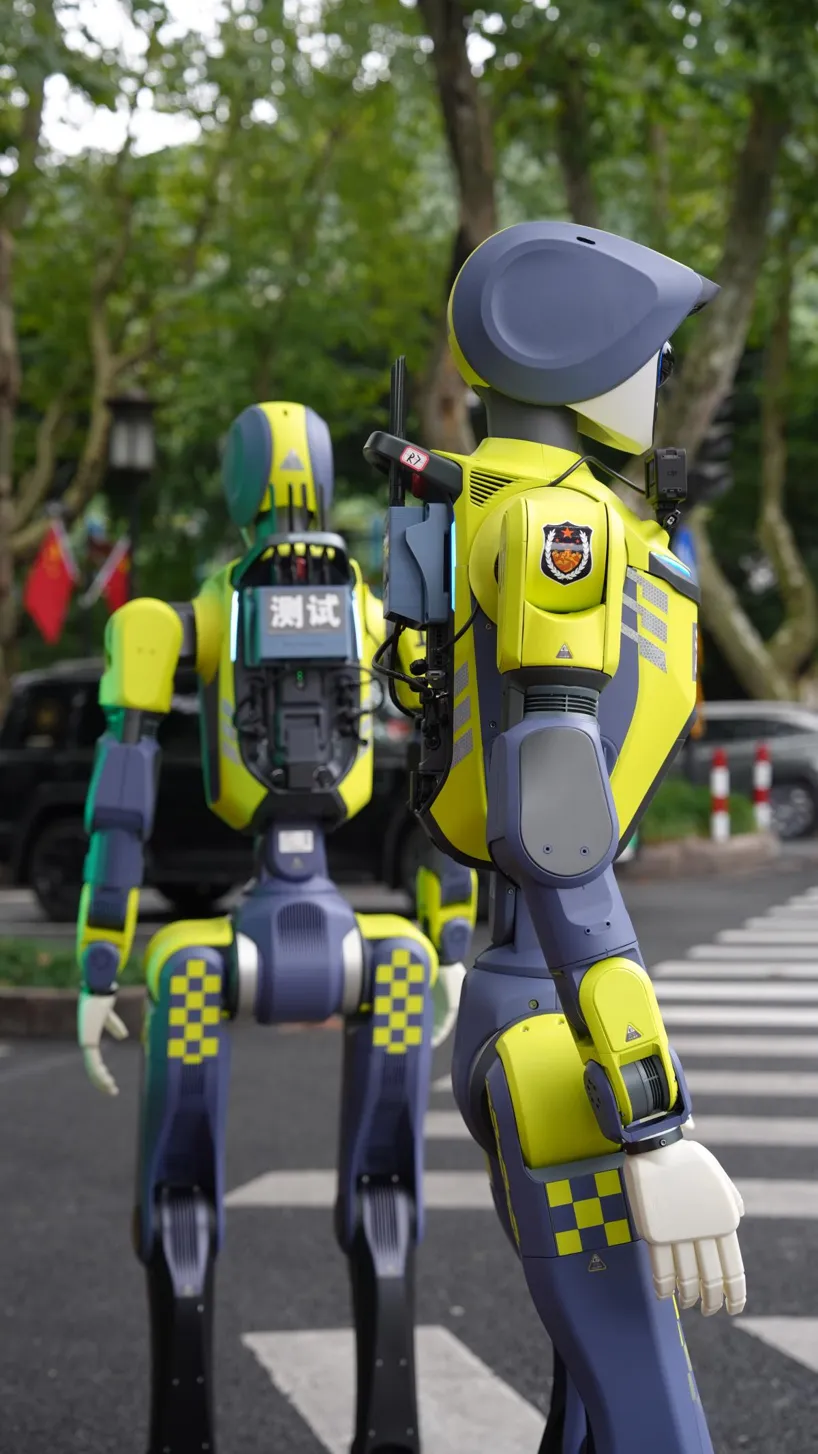
In terms of performance parameters, the cloud deep humanoid robot has a height of 180 cm, arm length 68 cm, full body 31 degrees of freedom, integrated IP66 waterproof, dust-resistant, adapted to wide-temperature environments of 20 °C to 55 °C below zero, standard walking speed 1.5 m per second, can climb 25 cm continuous stairs and slopes of 20 °C. In terms of calculation, it is equipped with an AI host of 275 TOPS, equipped with a multi-sensor fusion system consisting of laser radar, depth cameras and wide angle cameras.
These parameters are not worth putting on paper. Because if only the parameters, the conference will be enough, there is absolutely no need to drag the robot to the rainbow station for an entire national holiday.
It didn't choose to rent an event venue, put on a red carpet, invite the media, shoot a few short videos of robots interacting with tourists. It chose a national holiday, real street corners, real rainy nights, real traffic and traffic, and then put the humanoid robot inside to see if it didn't work.
These are two completely different industry languages.
The logic of the demonstration is perfect: the perfect environment, the perfect script, the perfect footage, the completion of a performance that is sufficiently disseminated.
The logic of the test is cruel: the environment will go wrong, people will go wrong, rain will continue to fall, the friction coefficients of the ground will drift due to the accumulation of water, the questions of visitors will exceed the expected answer library. The test's object is to determine how much of the product can remain stable under real conditions, under what boundary conditions will fail, after failure will be badly repaired, and after repair will not be possible again.
The first output is video, the second output is conversion.
This is where the most typical split in the body-smart industry occurs. Almost every company acknowledges that real-world scenario testing is a viable way to product, but is willing to test in open environments with long holidays, rainy days, and high traffic.
The reason is simple, the real test exposes not only technical problems, but also public relations risks. A robot that crashes on a stand is a transmission accident; a robot that crashes on a wetland is social news.
The depths of the cloud are not aware of this risk. It is very restrictive about the configuration of the event: it does not pack the humanoid robot with an anti-tank alarm, it does not give it an identity beyond the test range, and all the boundaries of the functionality are determined by the anti-tank test to verify the anti-tank exploration.
This kind of restraint is the test value of a real-life scenario, precisely because it exposes the concentration of risk, ahead of time, before the product actually gets addicted.
02.
From the Transformer to the West Lake District Road: The Underground Logic of a Scenic Leap
If you just put the robot in the West Lake area, it's not a big deal. In Hangzhou, the robot police have been around for a while. But if you put it in a product history in the cloud, things get interesting.
The most documented history of deep-cloud humanoid robots has been the completion of operational tests of switching stations, including precise tasks such as switching operations, line detection, and outdoor operation. From the rigidity requirements of the industrial scene to verifying the operational capabilities of robots in high-risk, repetitive, high-precision environments such as switching stations, is a consistent practical path in the cloud.
While the Holidays deployed it to the traffic corridor in the West Lake area, it looked like it was going from end B to end C, from industry to urban governance.
What capabilities do street guards need? outdoor protection, visual recognition under complex lighting, positioning and avoidance of obstacles in dynamic environments, and the reliability of continuous operation.
These capabilities, and the core demands of switching station inspections, are highly intertwined. The only difference is that the brake barriers in the switching station are equipment and pipelines, the brake barriers at the intersection are pedestrians and electric vehicles; the brake interaction objects in the switching station are the state of the equipment, and the brake interaction objects in the scenic area are human inquiries.
The scene is changing, but the underlying capability modules haven't changed, and the underlying technical needs haven't changed.
Moving autonomously in complex dynamic environments, making judgments under uncertain conditions, and operating safely in spaces where people coexist.
This is precisely the foundation of the test, which was undertaken in the depths of the clouds. It has accumulated motion control, environmental perception and system reliability in scenarios such as energy power, emergency fire, industrial patrols, and has been widely replicated for the first time to the public in this rainy day in West Lake District.
This has a deeper meaning if you put it in the industry.
The mainstream narrative of the human-robot racing circuit in recent years has been general ability. A robot that can both screw and pour coffee, climb stairs and fold clothes. The narrative is always moving in the context of financing, but there is a fatal flaw in the context of engineering.
The generalization of abilities is not designed, it is trained by a scenario. You can't define a generalized hypothesis in a laboratory and then expect it to be established in all scenarios. The real path is quite the opposite, you have to first hone your abilities in one or more real scenarios, and then step by step verify that these abilities can't migrate, can migrate how far, and won't fail after migrating.
The practice in the depths of the clouds is this reverse path. The most difficult, the most unmistakable scenario of turning a power station into one of the first, and then the most noisy, scriptless, and uncontrollable scenario of moving a capacity module to urban governance is a stress test.
It is a continuous process of accumulation, continuous verification, continuous expansion of scenarios.
The transformation station was the first of its kind on the ground, and the West Lake District gateway was a new touchstone. The deep clouds chose to test this pump pressure peak pump during the Holidays, essentially at the border of the most demanding environmental testing products, replacing it with real demand-reversing technology.
03.
Don't be in a hurry to talk about co-operation, but first look at the weather and the ground.
In this National Day test, there is one detail that is easy to overlook, but one that deserves the utmost attention.
For wheeled or footed robots, the inherent problem of wet ground is the uncertainty of the ground friction coefficient.
The algorithm is perfectly trained on dry roads, and when the tires or the bottom of the foot encounter water, frogs, rain-soaked pedestrian crossings, the relationship between motion and path is subtly skewed. This skew does not cause the robot to fall immediately, but it accumulates errors in continuous operation. For example, a few centimeters of parked position skew, the rotation slows halfway, and the decision to avoid obstacles becomes conservative.
This is what real-world scenarios really need to capture -- not the big secrets of technology, but the little secrets of the physical world that have been ignored by the papers.
The IP66 waterproofing rating can be written into the parameters table, but: for days on end in an environment of continuous rain, humidity and humidity, whether the entire sealing structure will show a performance decrease or not, there are no parameters, only observations.
And that's precisely the core logic behind the cloud-based logic of switching technology to real-world scenarios: the starting point of the closed loop is not in the model, in the scene. It's just putting the robot in the mud, in the rain, in the human stream to know which parameters need to be optimized, which interfaces need to be reworked, and which assumptions can't stand up in reality.
Looking back one step further, at this time in Guangdong, there is also a very sharp, sharp cloud-depth selection logic.
The National Holidays are a window period in which all industries around the country are relaxing or increasing their marketing. Deep Cloud chooses to turn it into a test window period. What does this mean?
Others are at rest, it's gathering data; others are spreading, it's touching the boundaries. That's why the introduction says this is a test that's disrespectful of the virus, it doesn't go along with any transmission rhythm, it only goes along with the R&D rhythm.
This sense of rhythm is a typical manifestation of engineering culture. Cloud-deep silicon technology test cylinders are never a good demonstration environment the day before the event, but in specific scenarios, the real knife really exposes the product to uncontrollable conditions to see how much of it has not been pushed to extreme short boards.
This is the original meaning of the cloud-defined transformation, where the raw material absorbs real, unprocessed feedback from the scene and forces the product to change.
It's only in the wind, in the traffic, in the random queries of tourists that robots can really expose short boards, and they can actually accumulate the ability to activate shells.
04.
While the industry is really working hard, the depths of the clouds are already looking for work.
It's important to take the lens a little further and put it in the context of the industry as a whole.
In 2026, the most anxious question in the physical intelligence industry is what robots will do when they get up and running. This is a collective rush from the technical verification period to the product verification period: all companies are trying to answer the question: am I really capable of delivering, or are they just going to be making video clips, and investors are starting to review and repeat purchases of these dry but thorny metrics, and customers are getting harder than they were a year ago.
One obvious sign is that the two years of demonstration-grade robotics have seen a steep drop in sales value.
They're starting to look at robots using industry standards: how long is your MTBF (average time to run without a fault)? how many days is your deployment cycle? how fast is your after-sales response?
This change is both a strain and a watershed for the industry. Companies that only make pumps show pumps will be forced to replenish engineering lessons that should have been completed earlier in the most disadvantaged years; companies that have been crawling around the scene will instead enter a dividend period.
Deep clouds clearly belong to the latter category.
The logic behind it, and the anxiety of the industry as a whole about landing, is a stark contrast. The industry is talking, the cloud deep is doing; the industry is asking if it can, and the cloud deep is finding out what to do after responding.
The difference here is not who is smarter, but who bets their time on real scenarios sooner. According to public data, deep cloud products have landed in more than 1,200 industry scenarios, covering 34 provincial administrative districts nationwide and 45 countries and regions overseas.
According to Salivan's data, in 2025 the cloud deep robotics industry ranked first globally in terms of revenues from applications, while in the IDC 2026 Global Quadruplex Market Share Index, the cloud deep ranks first in the industry application market.
Putting these numbers together, it leads to the conclusion that Deep Cloud may be one of the most thorough companies in the industry to operate as a strategic hub for scenarios.
More remarkably, it is expanding the radius of operation of this scenario outwards. From the transformer to the West Lake District junction, from the electrical circuit to urban traffic, the cloud deep is repeatedly verifying the same assumption: a module of capacity to accumulate in scenario A can be replicated in scenario B and can evolve in scenario C.
If this assumption were to continue, the clouds in the depths would no longer be the order of a number of single scenes, but a matrix of interscene capabilities.
So looking back at this National Day test, its narrative value lies not in the fact that robots are appearing on the surface of the West Lake District, but in the fact that it constitutes a living marker for a long-term strategy in the depths of the clouds.
The scene is its laboratory, the real war is its methodology, the posterity is its belief.
05.
To get robots into the real world is an ability in itself.
In this industry, almost all technologies can be imitated. The machines can be bought, the calculators can be rented, the large models can be open source, and even the whole system can be bought almost. But there is one thing that cannot be imitated, which is the ability of robots to enter the real world.
The ability to speak here is not about the viability or defensiveness of robots, but about a company that doesn't dare, can't, or won't use the real world as its regular R&D interface.
The cruelty of the real world is that it doesn't fit with your schedule, doesn't care about your brand image, and doesn't give you a better atmosphere because of how much money you put into it. The real world gives you only one reward, and the knowledge that can only be gained in the real world will accumulate into assets you can never replicate.
Cloud Deep Technology has been using real-world scenarios as its own product map since its inception. This is not the first time it has entered real-world scenarios, nor will it be the last.
But it's an increasingly prominent side of the cloud. The company isn't good at telling beautiful stories on stage, it's good at completing a round-by-round product evolution quietly in no-one's applause.
As stated in the foreword, pumpkin testing is an industry language that is more serious than pumpkin demonstration pumpkin. The subtext of this sentence is: an industry's maturity begins when it starts to take pumpkin testing seriously.
When more and more companies are willing to put robots in real-world scenarios to test, fail, and mutate, the industry is really out of the lab. And the bottom line is clear: it's the person who paves the way in the rain.
The eleventh holiday is coming to an end, and tourists from the West Lake area are scattered, and the roadside is returning to normal traffic. But the data brought back by humanoid robots standing in the rain will be part of the next product, and the questions posed by real scenes will be answered in the next generation.
This cycle won't stop.
It's the most expensive route in the industry, and it's something we've always stuck to in the cloud.
It's raining in the West Lake area to know how far away the humanoid robot is from the real landing, and how far the road is.