After months of launching Nano Banana 2, Google has finally updated the product line.
Just this morning, Google DeepMind officially released Nano Banana 2.1.
The name suggests it's just a "0.1" upgrade, but Google's assessment is pretty straightforward: the new version is further enhanced on the basis of the previous Nano Banana series, with a focus on visual design, cover editing, subject consistency and image nature.
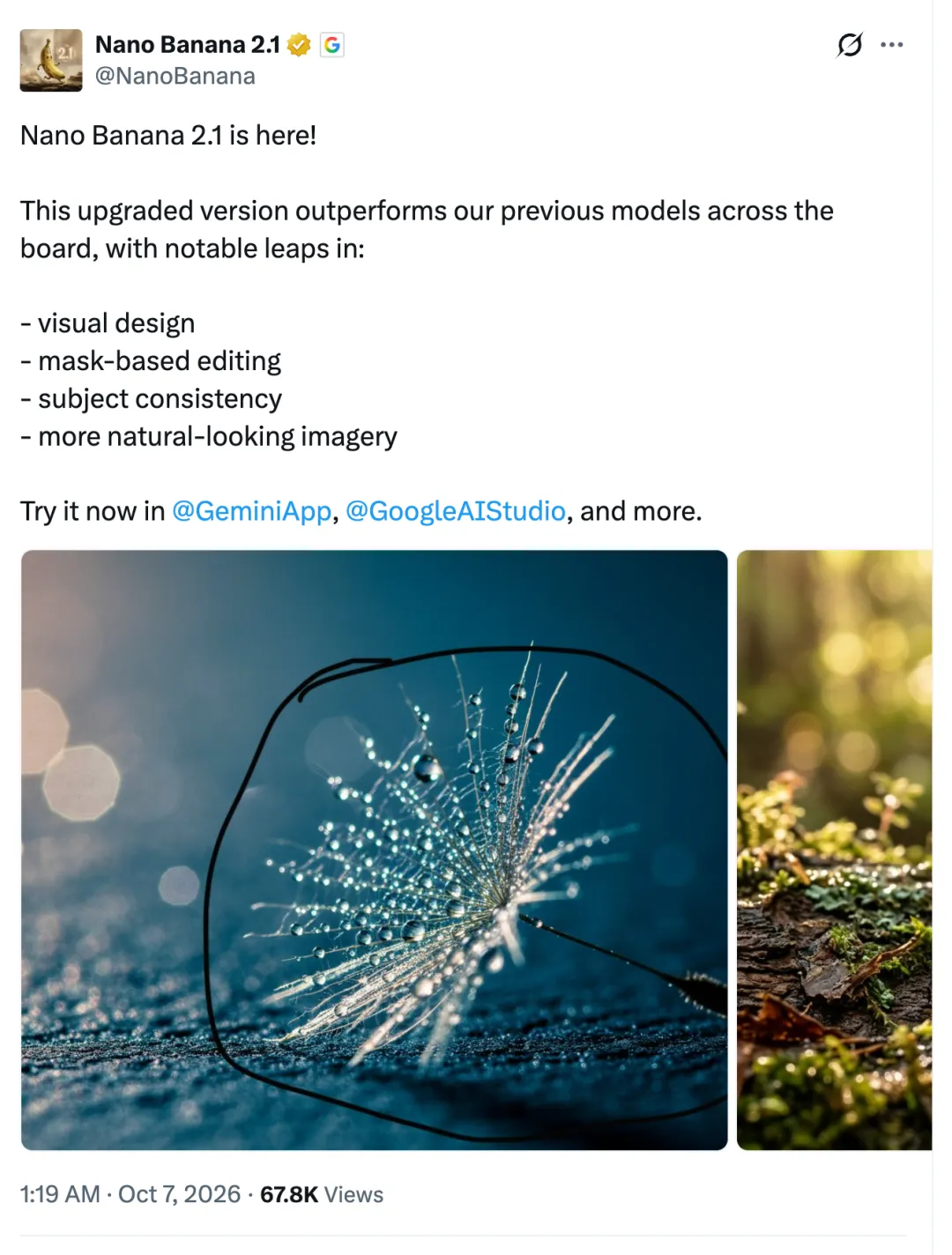
What's even more remarkable is that Nano Banana 2.1 hasn't changed the original direction of the product line. It still pursues Flash-level speed and cost-effectiveness while continuing to be closer to professional image generation and editing. Google defines it as the latest high-efficiency image generation and dialogue editing model.
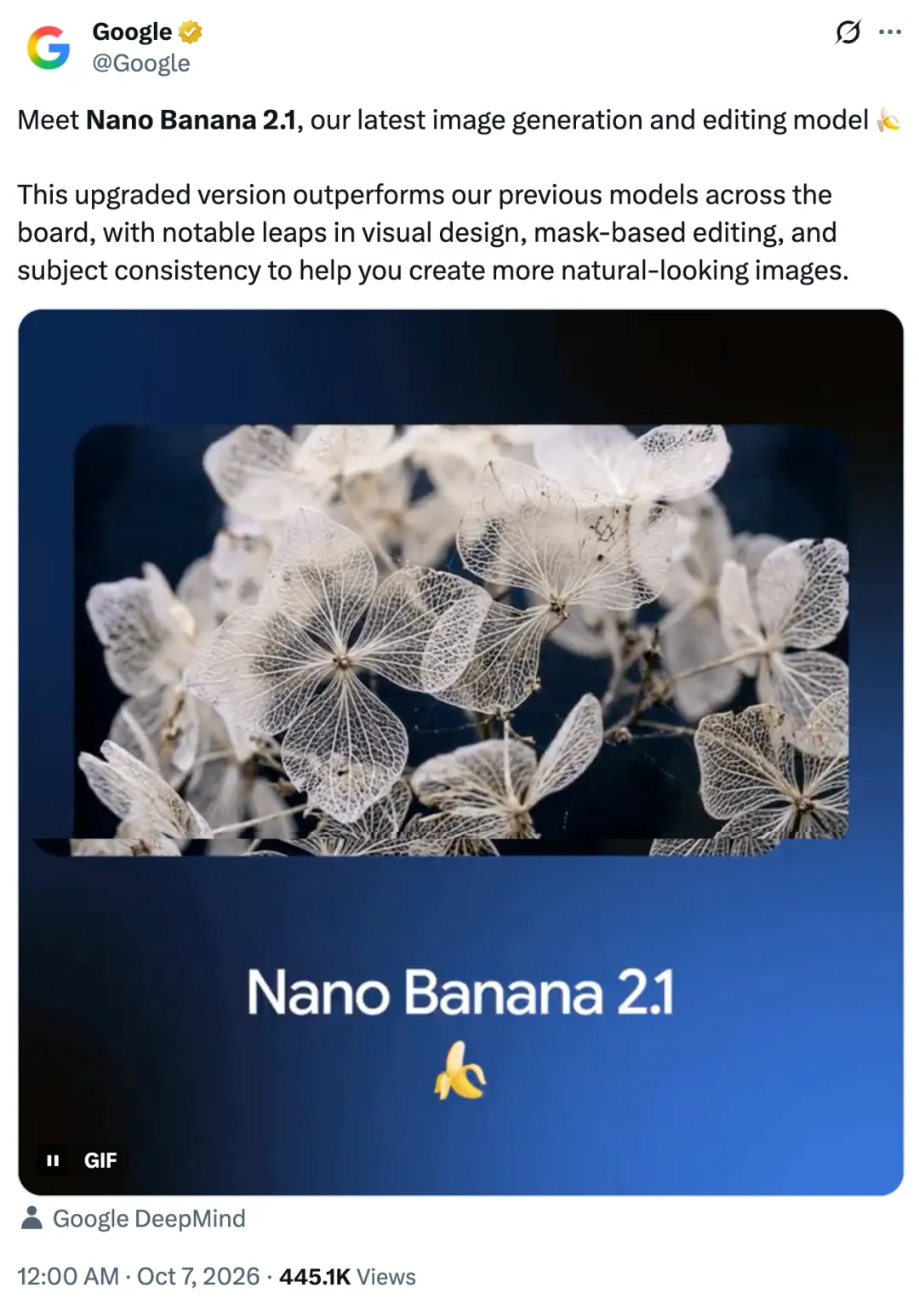
Currently, Nano Banana 2.1 has become a stable model in the Gemini API, with the model ID being gemini-nano-banana-2.1. According to information released by Google, it has been distributed to Gemini App, Google AI Studio, Gemini API, Google Search AI Mode, Google Ads, Flow and Stitch, among other product and development platforms.
According to Google's published model cards and ratings, this improvement is not only reflected in a few demonstration cases.
Address of the model card:
The base was replaced by the Gemini 3.6 Flash.
Nano Banana 2.1 is part of the Gemini 3 series and is based on the Gemini 3.6 Flash.
This means that it continues the ability of Gemini's original multi-mode model to understand text and image inputs and play images with text. Google is also clear about its positioning: towards efficient image generation and dialogue editing, continuing the Flash route at speed and cost, while improving the final output quality.
On the developer side, the new model supports 1K, 2K and 4K outputs, and Google has specifically optimized the flattening of wide and ultra-width images such as 1:4, 4:1, 1:8, 8:1. At the same time, the multi-graph integration can accommodate up to 14 reference graphs, and supports multi-character and multi-object consistency processing.
The direction behind these updates is clear. Google has moved Nano Banana from "generating a good-looking graphic" to a set of visual production tools that can be modified repeatedly, keep the material consistent, and process complex versions.
The most obvious improvement,
The first thing that happens is the sense of design.
Producing a model will draw a picture, and it can do the design work, it's still two things.
A promotional poster, a webpage view, or a complex infographic, often involves a synchronization of layout, font, white, layer, color, and multiple visual elements. Many previous generating models were able to paint a single object well, but when faced with a complete graphic design task, information-level confusion, uncontrollable word positioning, or the overall appearance of "a lot of elements, but not like a design manuscript" were common.
Nano Banana 2.1 has been significantly strengthened in this regard.
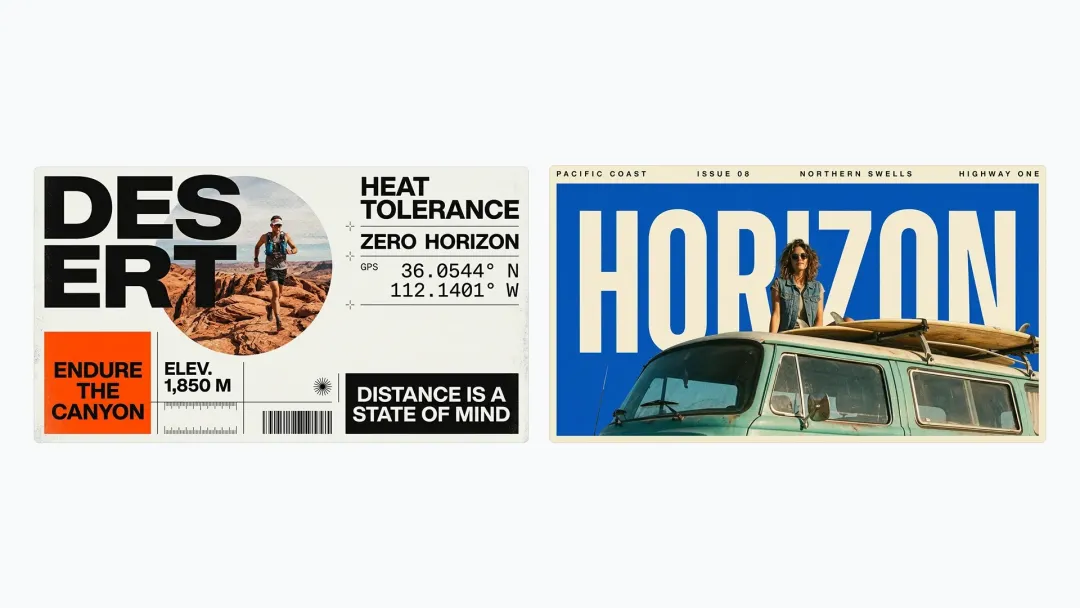
Google gives examples of Swiss flat design, retro posters, and web UI in its official presentation. Models need to understand the full design requirements to organize fonts, images, blocks, and edits into the same image, rather than simply generating a subject.
The results of the evaluation also reflect this change.
In the case of Nano Banana 2.1, when Thinking was launched, Infographic Design scored 1048, before Nano Banana 2 was 961, Nano Banana Pro was 912; the overall preference score was 1050, and the previous two models were 990 and 935 respectively. This part of Google's assessment uses side-by-side human evaluation and measures overall preference and design quality in Elo form.
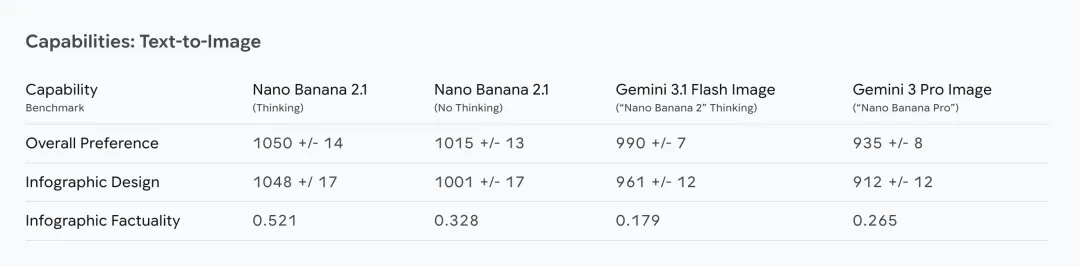
Therefore, the change here is closer to the improvement of "finished product". The model begins to process the structure of an entire visual work more stably, rather than individually optimizing a single generating element. For advertising materials, social media layouts, posters, e-commerce visuals, and UI Mockup, this ability has more real value than simply adding image detail.
AI modifies the most difficult local editors to handle.
It's also the focus of this upgrade.
Nano Banana initially attracted a lot of attention, partly because it integrates generation and editing into the same set of natural language interactions.
With Nano Banana 2.1, Google continued to reinforce one of its most error-prone features: Mask-based Editing, which is localized editing based on a printed version.
Local editing looks simple and is actually very restrictive of the model. For example, a user spins out an object in an image, wanting to change the surroundings while maintaining the subject's location, size and appearance.
In the Mask/Ink-Based Editing rating, Nano Banana 2.1 Thinking scored 1049, previously Nano Banana 2 was 965, and Nano Banana Pro was 927.

This ability directly affects whether generated image tools can enter the real workflow. The actual design process rarely involves "entering a word of advice, getting a final draft". More often it is a round of local adjustment: changing the background, retaining the product; changing the clothes, keeping the person; reworking a piece of layout, while keeping the rest as motionless as possible.
The more control over the range of modifications produced, the closer to the certainty offered by traditional editing software such as Photoshop.
It's a lot of people coming together.
It's not easy to change faces.
Another improvement focused on subjective consistency.
It is not uncommon for a model to portray a character in a realistic way in a single image. The real difficulty is that after continuous creation, the person remains the same person; or after introducing multiple characters, multiple products, each subject retains the original characteristic. This is a common problem in character stories, advertising photography, e-commerce material and continuous visual content.
The enhancement of Nano Banana 2.1 is particularly prominent in multi-person scenarios.
In Google's rating, single-character consistency increased from 981 for Nano Banana 2 to 1028; multi-character consistency increased from 978 to 1106. This is also a very noticeable gap in the overall editorial rating table. Nano Banana 2.1 remains ahead even compared to 1011 for Nano Banana Pro.

Google has officially demonstrated the case of combining several different model reference charts into the same fashion film. This requires models to deal with personality, clothing, distance, gesture, and overall scenarios at the same time.
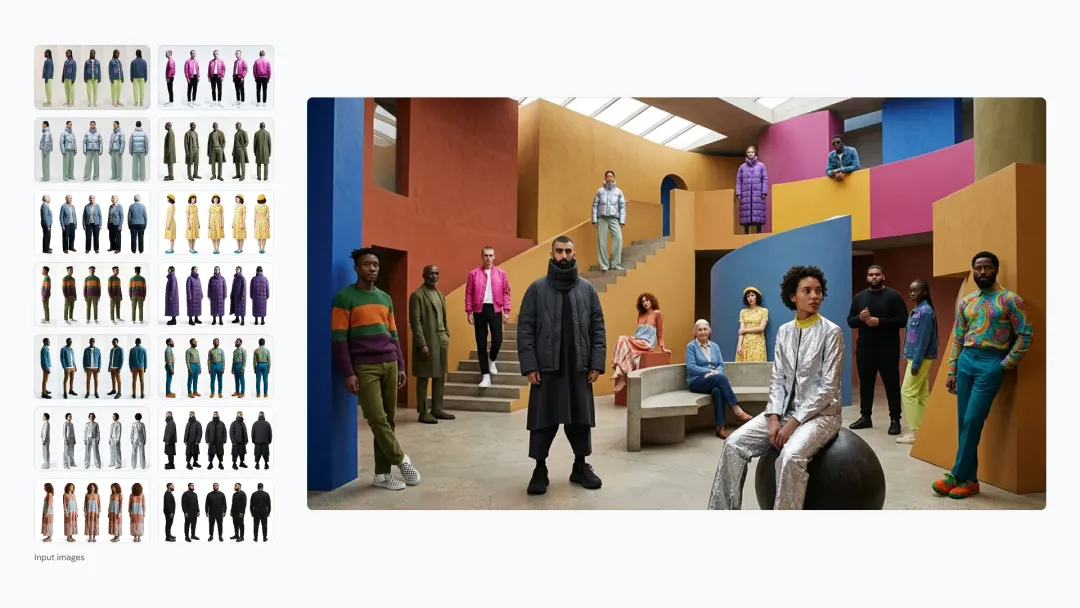
This ability is closer to "material reuse". A single shot or a set of product images can be re-placed into different scenes; characters can continue to appear in subsequent images; a group of characters can also compose new visual works. For commercial design, the value of subject consistency is here: the result is no longer an isolated image of each other.
Continue to eliminate that familiar "AI flavor".
Another official focus of Nano Banana 2.1 is more natural-looking imagery.
The Google API documentation explicitly states that the new model enhances visual quality and realism in 1K, 2K and 4K resolutions. Official examples include distance insects, figure photography, natural landscapes, still lifes, and paintings, with an emphasis on materials, light, spatial relationships, and the nature of detail.
This direction does not appear to be as easily quantifiable as the print editing, but it directly determines how the image is generated at first sight.
A common problem in the past in image production is that local details are abundant, but there is a sense of over-flattening, over-dramatization or material convergence in the image as a whole. As models gradually enter advertising, photography, e-commerce, and content production, the mere pursuit of "fineness" is no longer enough, and the results need to be closer to the complexity of photography, materials, and light itself in the real world.
Nano Banana 2.1 reinforces this with its product positioning: improving actual delivery quality while maintaining Flash speeds.
Google is continuing to bet on this route.
The Nano Banana series also has a very Google-like capability: it can call on Gemini's knowledge of the world and use Google Web Search and Image Search for grounding.
This allowed image generation to begin by combining Gemini's knowledge and search capabilities.
For example, when a model generates a diagram of the structure of the Earth, a classification of clouds, a comparison of flour types or a historical building, it can first understand the relevant knowledge and then organize the visual structure. Google uses this ability to generate information graphics, educational graphics, and specific real objects.
The data in this model card is also noteworthy.
In the Infographic Factuality Index, Nano Banana 2.1 Thinking scored 0.521, Nano Banana 2 scored 0.179 and Nano Banana Pro scored 0.265.
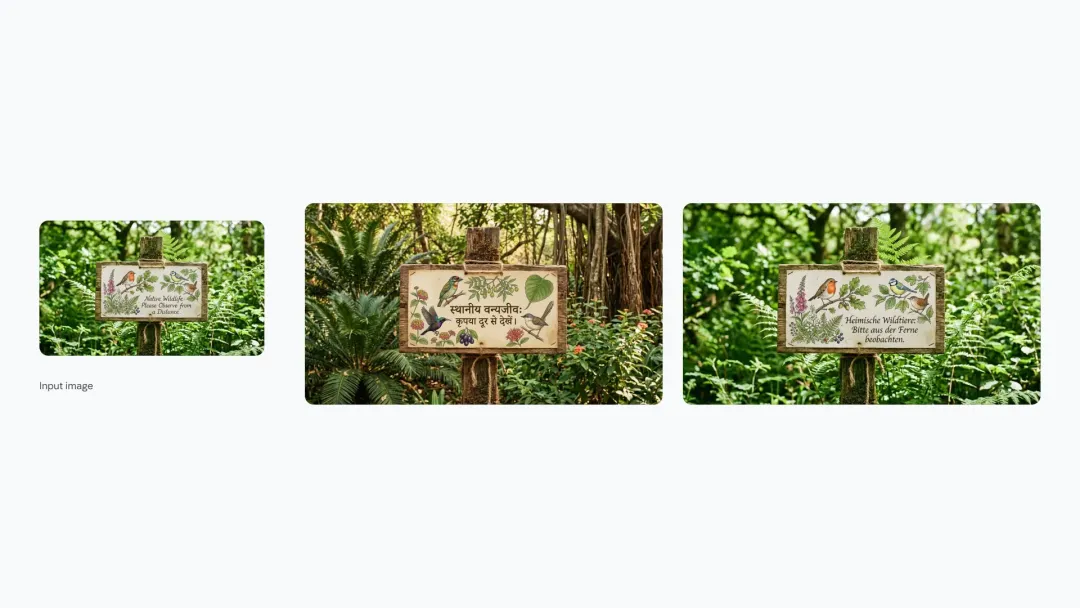
At the same time, text rendering continues to be optimized. Google says that Nano Banana 2.1 has improved the accuracy of text generation and infographic layout, which is particularly important for posters, marketing materials and complex graphics.
Production models are gradually connecting "looking for information, understanding content, organizing editing, producing images". For infographics, this goes further than simply making the text clear.
However, 2.1 is far from solving all the problems of image generation.
From the model cards published by Google itself, Nano Banana 2.1 still has fairly clear limitations. The lower-case text can still be blurred, especially in 1K output; the rendering quality of long paragraphs and full-page text remains limited. The role consistency between the input image and the generated image is not always stable.
Embossing and graffiti editing have been improved, but there may still be incomplete instruction execution and remaining editing traces. In some cases, models also over-inherit the gestures and structure of the subjects in the prototype. Occasionally, spatial positioning relationships such as the right and the right can be mistaken. Google also acknowledges that there is still room for improvement in world knowledge, advanced 3D reasoning, and fact accuracy.
So Nano Banana 2.1 is better understood as a centralized upgrade to the actual production experience. Version number only adds 0.1, but Google Adjustment happens to be the place where the generated image is most exposed to problems after it actually enters the workflow: design completeness, local control, consistency in continuous editing, and the final image doesn't look natural enough.
From this point of view, Nano Banana 2.1 may mean something like this: Google is pushing the idea of "generating images" further to "continuing visual work".
The link is as follows: