The Nobel Prize in Physics 2026 has just been announced for the Belgian particle physicist Francis Halzen.
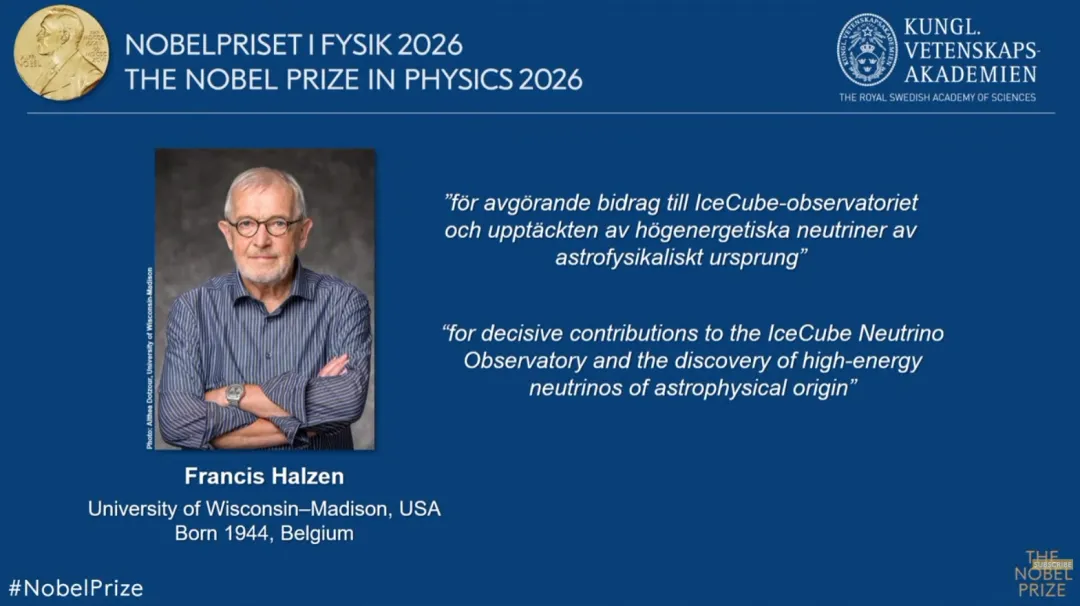
According to the Royal Swedish Academy of Sciences, the award recognizes Francis Halzen's decisive contributions to the IceCube Neutrino Observatory and the discovery of high-energy neutrons from the physical processes of the celestial body.
He is the only physics prize winner this year.
Francis Halzen laid the groundwork for a whole new method of astronomical observation. His idea was to use the ice sheet of Antarctic glaciers to capture an extremely hard-to-detect particle: the neutron.
This idea eventually gave rise to the IceCube micron observatory. With this facility, scientists were able to track neutrons from distant universes and observe the universe in a whole new way.
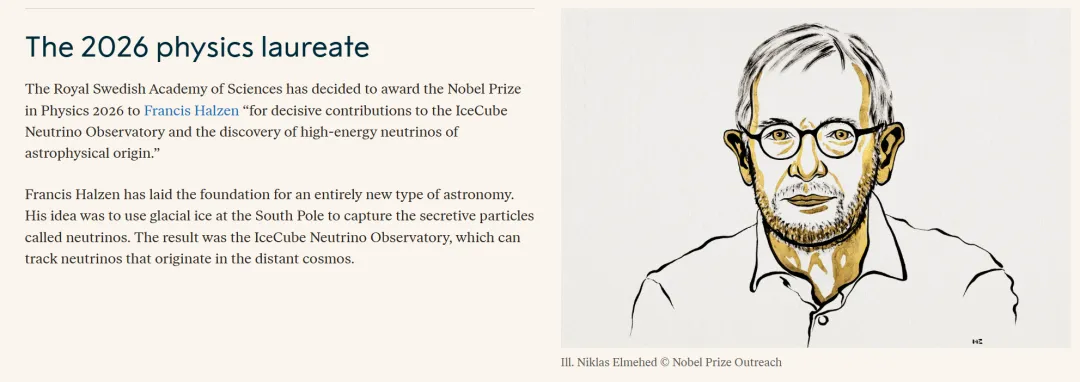
Francis Halzen, who earned his master's and doctoral degrees from what is now the University of Leuven (KU Leuven), was born in Belgium and began teaching at the University of Wisconsin-Madison in 1972. He was a theoretical physicist and the particle physics textbook Quarks and Leptons is still widely used in universities today. According to him, he never intended to do such an experiment, and some of it was accidental.
In the mid-1980s, he began studying the possibility of building a neutron microscope with Dr. Enrique Zas, and his key insight was that the Antarctic ice sheet itself could be used to track the neutron.
The ghost particle.
The largest and most difficult particles of matter in the universe.
In the 1920s, physicists studied the β decay of the atomic nucleus and discovered that the electron energy emitted by the decay was unstable, that a portion of the energy "disappeared" in space, and that the law of conservation of energy seemed to be endangered.
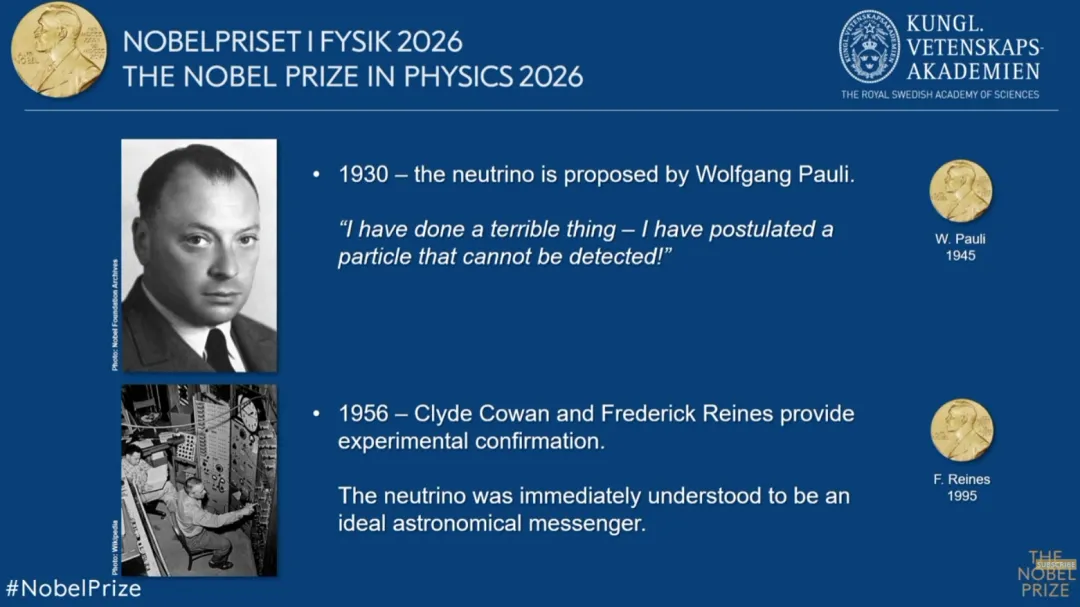
In 1930, Bublé proposed a bold remedy: in decay, a particle with very little mass and no electricity was emitted.
Several years later, Fermi established the theory of β decay on this basis and named the particle "neutrino", which means "little guy of neutrality" in Italian.
This prediction was not confirmed until more than two decades later. In 1956, Clyde Cowan and Frederick Reines, alongside the Savannah River nuclear reactor in the United States, first directly detected neutrons from the reactor's source, for which Reines shared the 1995 Nobel Prize in Physics.
Since then, it has been increasingly recognised that the neutrons have three electron neutrons, μ neutrons and τ neutrons, which translate into each other in flight, which is called "neutron micron oscillation". The existence of oscillation means that the neutrons have a tiny but non-zero mass, and Takaaki Kajita and Arthur McDonald won the 2015 Nobel Prize in Physics for this discovery.
The neutron is the most abundant particle in the universe. The neutron produced by the fusion of the solar nucleus alone is about 600 to 300 billion per square centimetre per second that pass through the Earth. At this point, trillions of neutrons are passing through your body, which you do not notice. The reason is that neutron particles do not carry electrical charges, do not participate in electromagnetic interactions and interact strongly, and interact almost only through weak interactions with other matter. For such low-energy neutron particles in the Sun, it takes an average of about one light-year thick to be blocked once.
This is where the name "ghost particle" comes from.
Why look at the universe with a neutron?
It is this "character" that has almost nothing to do with anything that makes the microbe the dream messenger of astronomers.
The traditional means of human observation of the universe is light, which extends from visible light to radiation, X-rays, and gamma rays. But light has its limitations. It is obscured by interstellar dust and the dense matter of the celestial body itself, and we can often only see the "surface" of the celestial body and not see the most intense core region inside. The higher the energy of gamma rays, the easier it is to be extinguished by the collision of photons in the cosmic background radiation in long-distance flight, making the highest energy processes in the distant universe difficult to see with light.
Another type of high-energy messenger is the cosmic rays, which are high-energy protons and atomic nuclei that fly from space. They were discovered over a century ago, but because of the electricity they carry, the cosmic rays are repeatedly deflected in the magnetic field of galaxies, and when they reach Earth, the direction has been distorted for a long time, with no way to determine where they came from. The origin of cosmic rays has thus become one of the longest-standing puzzles in astrophysics.
The neutron perfectly compensates for both. It carries no electricity and is not deflected by the magnetic field; it is almost unabsorbed, and can fly straight from the depths of the cosmos, from the core of a celestial body wrapped in thick matter, to the Earth, loyal to its birthplace. More importantly, the high-energy neutron and the cosmic rays are a pair: when protons in the cosmic rays collide with matter or photons near the source, it produces a π-intercept, which causes the decay of the pi-rays to release high-energy microns. Therefore, finding the source of high-energy neutron is almost equivalent to finding the accelerator for the cosmic rays.
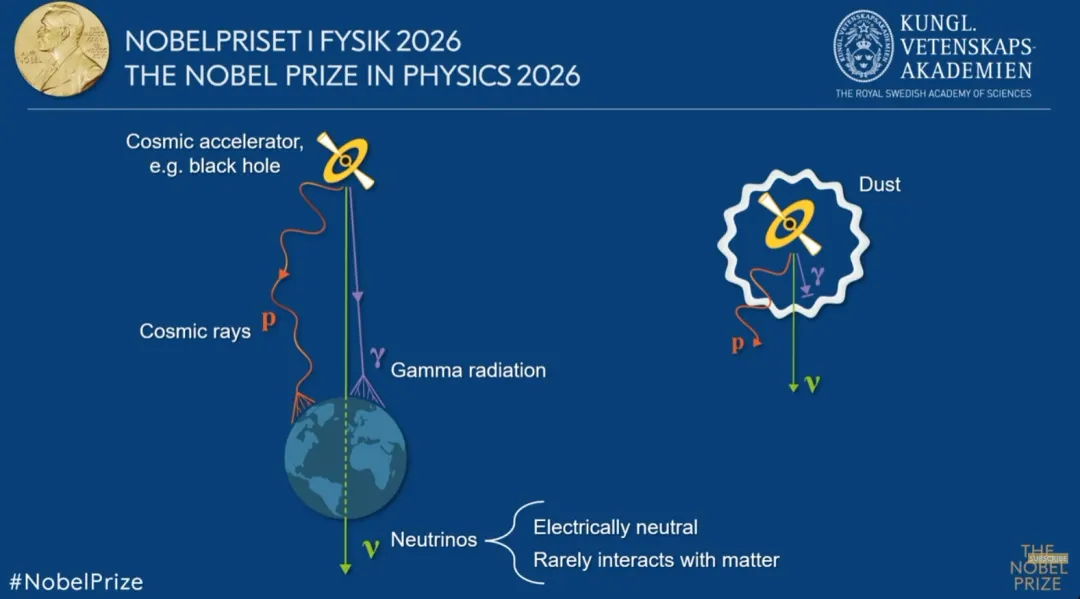
The problem is that a messenger with little to no interaction with matter is also very difficult to capture. The only way to defeat a phantom crossing a wall is to prepare a large enough detection medium and wait patiently for a small number of neutrons to hit the atomic nucleus.
It's hard to find: Catching a few flashes of lightning in a massive background
Even if a neutron actually hits an atomic nucleus, the detector cannot see the neutron itself, but it can only see the "case mark" left by it. The collision produces charge-carrying sub-particles, such as μs converted by the neutron, or a group of particles emitted. When these charge-carrying particles travel faster in water or ice than the speed of light in the medium (about three-quarters of the speed of light in the vacuum in ice), a circle of pale blue light is emitted along the path, which is called Renkov radiation, the principle of which is similar to the sound of a high-speed aircraft exploding.
This is at least triple the difficulty.
The first is the scale. Theoretical estimates have long suggested that detectors need to be measured in cubic kilometers to capture them at a meaningful rate. This is far greater than the size of any tank or underground laboratory.
The second is the background. When the cosmic rays hit the Earth's atmosphere, a large number of μ particles are released from the top of the earth's atmosphere, which is about a million times higher than the number of neutrons; the atmosphere also produces the so-called "atmospheric microns", which are real-world microns, but born near Earth and mixed with signals from the depths of the universe. For this reason, neutron telescopes are usually built in the depths of the earth or deep water, with rocks, seawater or ice above them as a shield. Ice Cube also pays special attention to the traces of those "from below" that pass through the detector, because they can pass through the entire Earth from the other side of the Earth, but only the microns, which the Earth itself is a natural transformer.
The third dimension is the medium. The detection medium must not only be large, but also transparent, dark and stable enough for Chelenkov's light to be transmitted far enough and recorded by the sensors that are placed sparingly. Previously, teams have tried to place detectors in the deep sea and lakes, but the construction of thousands of sensors in the depths of the ocean, maintenance and engineering difficulty is imaginable.
Halzen focuses on the South Pole. The ice sheet below the South Pole is nearly 3,000 meters thick, dark at the end of the year, and the ice sheet is pure and stable, which is itself an endless detection medium.
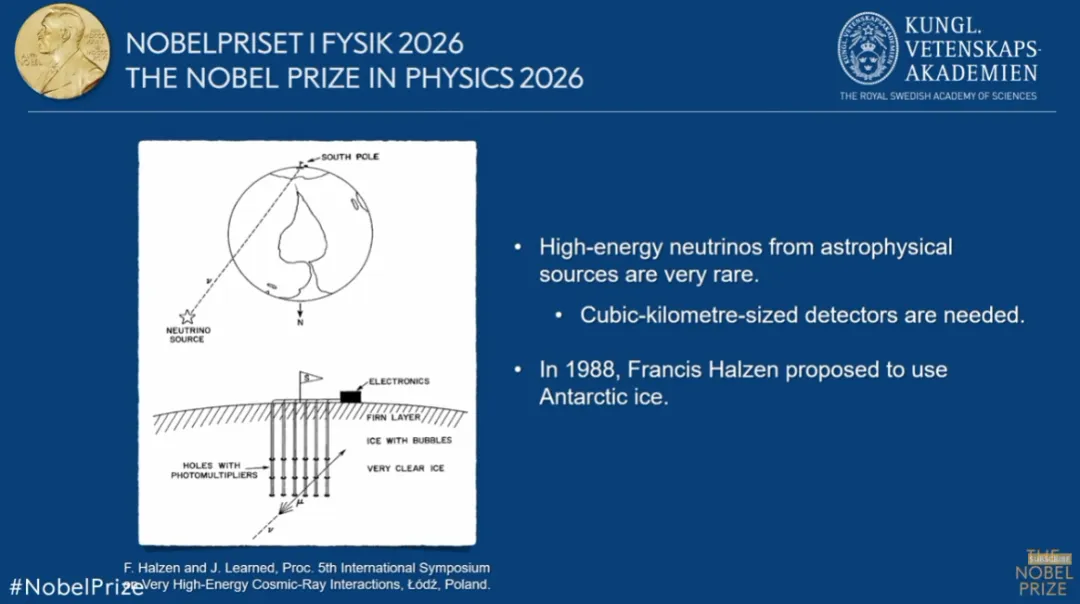
In the Antarctic ice, microorganisms are known as "melt".
Halzen's plan was to directly turn the Antarctic ice cap into a detector: drill holes in the ice, bury it in optical sensors, and capture the weak Chelenkov light produced by neutrons and ice.
In the 1990s, the team built the first generation of AMANDA detectors in Antarctic ice, but the initial results were disappointing: bubbles left in the shallow ice would scatter Cherenkov's light heavily, leaving the signal almost indistinguishable. Later, the team lowered the detector deeper and found that the ice transparency was far beyond expectation.
It took nearly a decade to develop and build the AMANDA prototype detector to verify its feasibility, followed by five years to fund the IceCube and another decade to build.
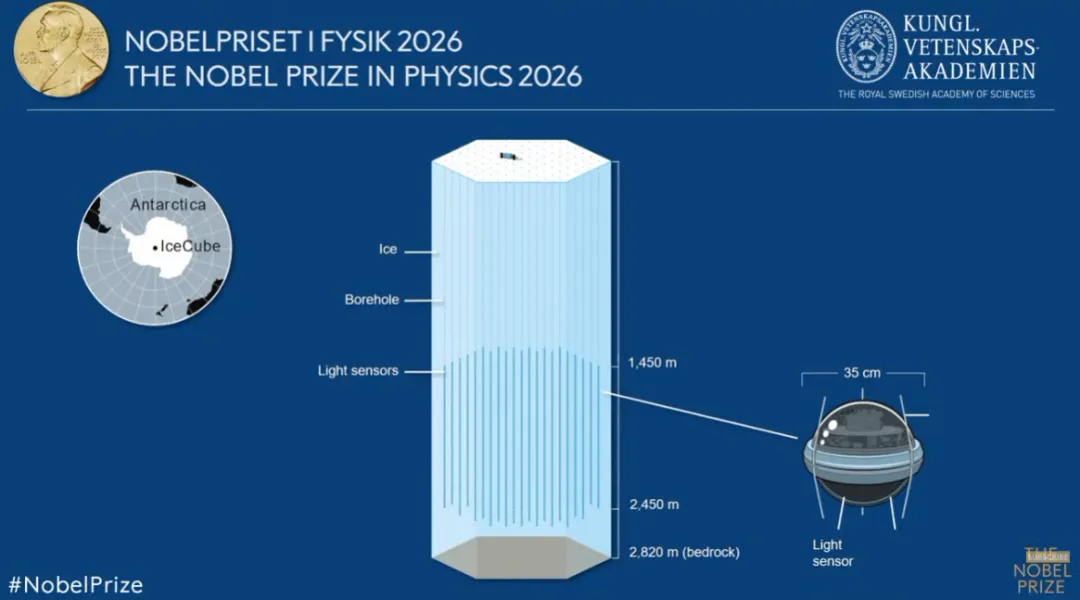
Eventually, a cubic kilometer of natural ice beneath the Antarctic Research Station was converted into a particle detector that detected depths of 1.5 kilometers below the ice surface, the world's first Giant-class micron detector.
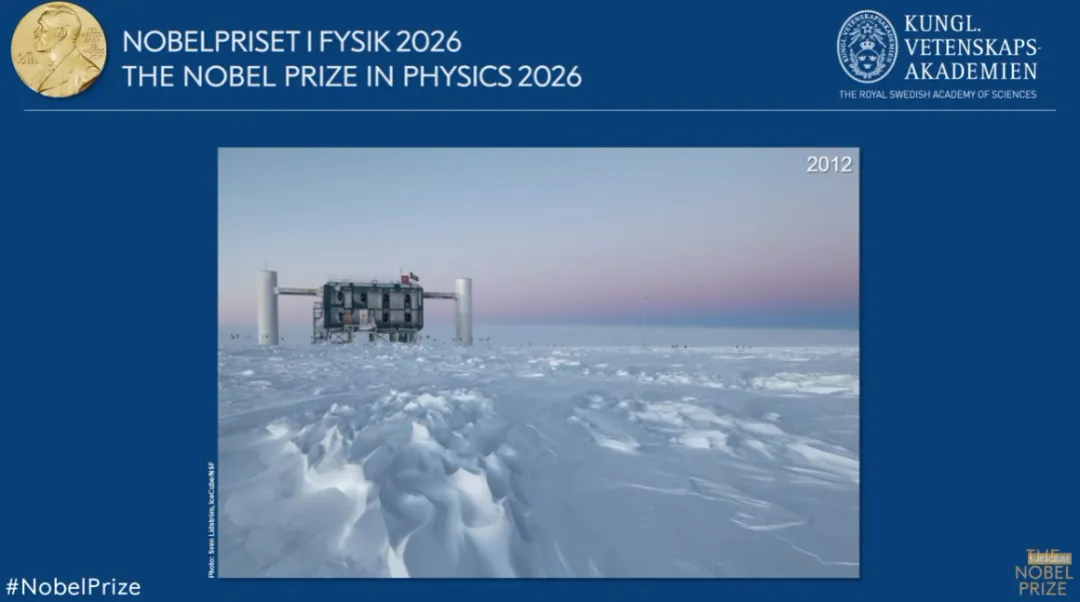
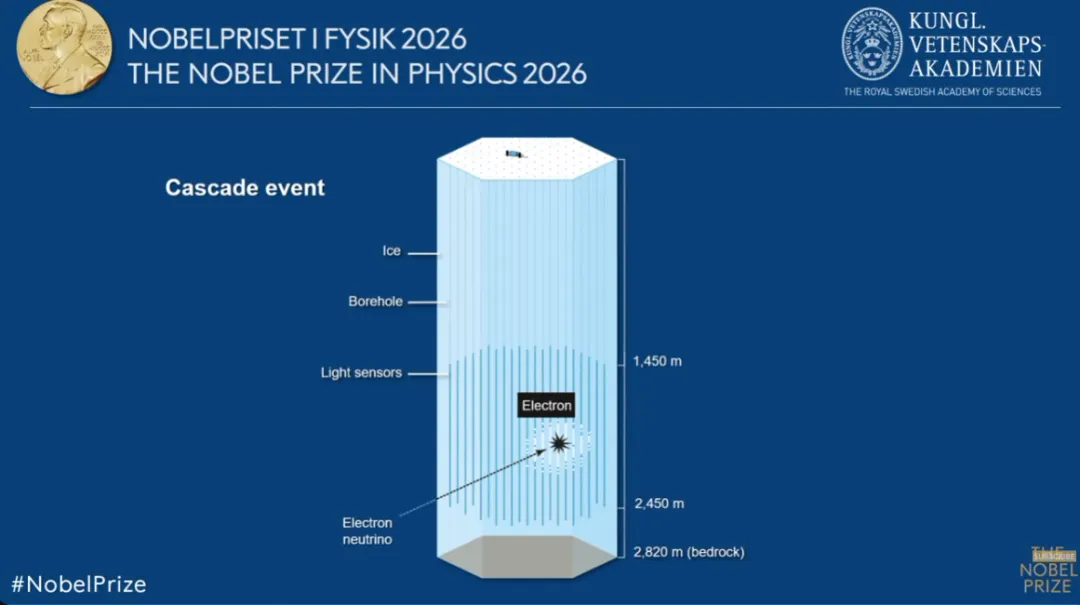
In December 2010, the last detection string of the IceCube was put into ice; in May 2011, the entire array began to run physically. The entire array consists of 86 detection strings and digital optical modules the size of more than 5,000 basketballs, with sensors distributed between about 1,450 and 2,450 meters below the ice surface.
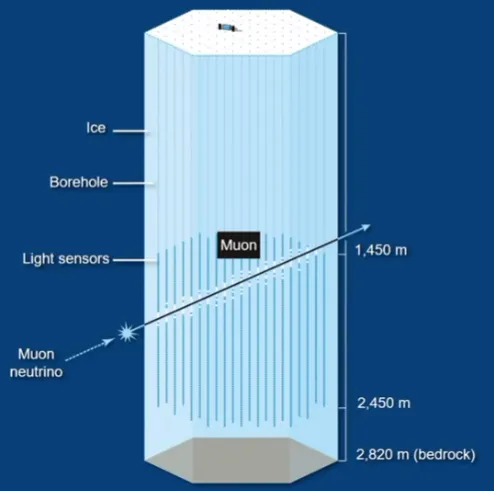
Different types of neutrons leave different "fingerprints" in the ice.
The resulting μ microns can travel a long distance in the ice, leaving a long trail of paths in a more precise direction; electron microns and τ microns are more likely to emit nearly spherical particles, and the energy is measured more accurately, but the direction is relatively blurred. The two types of signals complement each other, the former for "direction" and the latter for "weighting".
"Neutron microscopic astronomy exists".
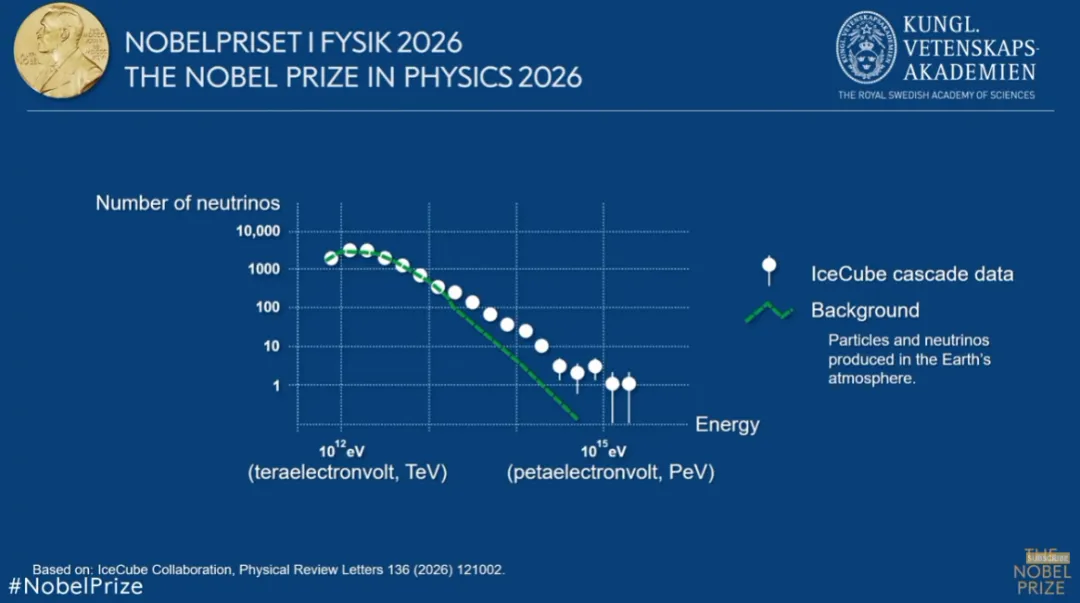
At the heart of the award-winning results is IceCube's confirmation of the existence of high-energy neutrons from celestial physics sources in the universe.
After two years of collecting data from the entire array, IceCube discovered high-energy microns from beyond the galaxy, a breakthrough that was hailed as a breakthrough in the 2013 Earth Physical Year. At the time, the team selected 28 high-energy cases from the context of the mass atmosphere, two of which were about 1 PeV (thousand trillion electron volts) and were referred to by researchers as "Bert and "Ernie Halzen" to summarize their meaning in a phrase often used in speeches: "Neutron astronomy exists".
In September 2017, the IceCube detected a high-energy neutron from the direction of the luminous variant TXS 0506+056, the first evidence of a high-energy cosmic ray source, and a typical multi-messenger astronomical observation: the IceCube rapidly alerted the world after detecting the case, and the gamma-ray telescope immediately discovered that the luminous variant in that direction was in an active state.
These results provide clues to the location of the so-called "cosmic accelerators", which are also thought to be the source of the cosmic lines discovered more than a century ago, giving substantial progress to the mystery of the origin of the cosmic lines that has plagued the physicist for centuries.
In addition to astronomy, IceCube is also doing basic particle physics research. For example, it captured the phenomenon of an off-river antiparticle interacting with ice through "Glassho resonance", predicted by Sheldon Glashow as early as 1960.
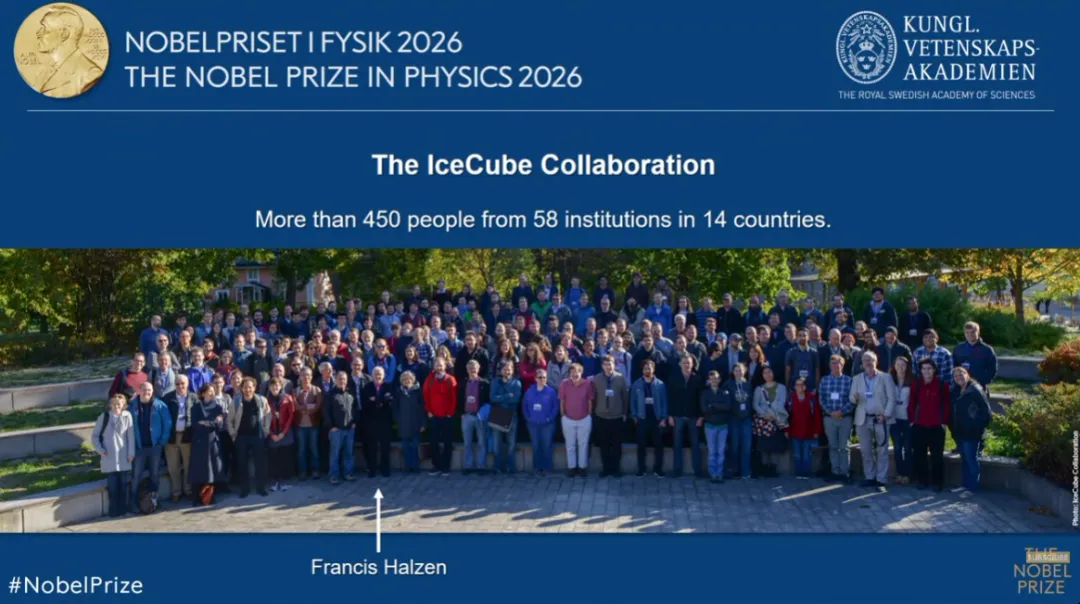
These discoveries, of course, are not the work of Halzen alone, but rather the collaborative efforts of many national and institutional researchers. The IceCube collaborative group has reportedly included more than 450 researchers from 14 countries and 58 institutions.
The next step is to put a neutron net on the Earth.
And a global micron observation network is also in the planning stages.
The IceCube itself is still being upgraded, while the single-piece telescope's visibility is limited by its geographical location, the rate at which microns are captured in the universe is still low, and many problems are still plagued by insufficient statistics.
To this end, observations at the edge of Baikal-GVD in the Northern Hemisphere, the Mediterranean Sea, KM3NeT and Lake Baikal are under construction, in which KM3NeT has reported the first instance of a particle in astrophysics with an energy greater than 100 PeV; P-ONE in the Cascadia Basin in the Canadian Pacific and the next-generation IceCube-Gen2 probe at the South Pole, scheduled to enter service in the 2030s; and TRIDENT's NEBON in the South China Sea, and HUNT's HUNT in Lake Baikal, aimed at 2040.
It took almost a century for the microwave to move from the corners of physics to a new window into the universe. Halzen had said that if we could tell you what we're going to learn now, it would be disappointing.