Since the summer of 2026, the front-end model has entered a new phase of high-speed evolution: the parameters continue to expand, the context continues to expand, the calculations are further deepened during testing, and the tool calling capabilities are rapidly improving.
However, when the model can call for more computation and longer reasoning, a more basic problem becomes even more prominent: calculating more does not mean doing more correctly; a new code modification may fix the main test, but at the same time disrupt the regression test; step-by-step mathematical derivation may reduce the error of localization and invalidate another constraint; a physical approximation may also improve the fit, but it violates the conservative relationship.
Obviously, the current question has therefore shifted from "can the model still continue to calculate" to "can new computation be proven to actually constitute progress?"
To address this structural gap, Dr. Li, who was a postdoctoral AI researcher in the laboratory team, and Dr. Li, who was a postdoctoral research assistant in the development of the open-source model VeriLoop E2 for two AI graduate students, worked together with Prof. Cheng Chengde and Chairman of the International Graduate School of Shenzhen University of China.
After training with the Qwen 3.8-27B base model, the VeriLoop E2 faces complex reasoning tasks with externally verifiable constraints, such as code, mathematics and physics, with a focus on recursive reasoning and computing when it continues to generate a candidate state after testing, how does independent external evidence determine whether it qualifies for perpetual submission: What evidence is sufficient to authorize that state to replace the current retained state when the model generates a new candidate state?
The standard weighted version:
GGUF quantified version:
Technical report:
The evidence was evaluated:
Leeman speculates on the evidence:
VeriLoop E2: verifiable training in code, mathematics and physics
In a verifiable task, whether a candidate state can become the next state should in essence not be determined by the model's internal confidence, but by the comparison of external evidence under the fixed-mission obligation. KingdomBlog divides "generating candidates" and "acquiring sustainability qualifications" into two distinct permissions, and proposes a mechanism of verified-governing recurrence (VGR) to introduce external verifiable evidence into the state, and to construct regression control and post-training data.
The key here is not to add an internal rating to replace "the model feels better", but to ask the candidate to first appear as a verifiable product and then be judged by an independent verifier whether it constitutes a strict progression towards a set of fixed protective obligations.
Consequently, different candidates generated at the same point can naturally be distinguished steadily as strictly progressive, non-progressive, regressive or completed state transitions. Since this "state transition" judgement can be steadily externalized into a learning monitoring signal, VGR is particularly suited for post-training to improve the probability of a model producing a submissible candidate without the need to incorporate a detached Verifier or the submission controller itself into reverse propagation.
To really use the above judgments in post-training, we first need to find a set of tasks that can share the property of "external validation". VeriLoop E2 uses Qwen 3.8-27B as a base model for post-training, focusing on the three types of code, mathematics, and physics tasks; although the task forms are different, there are constraints that can be externalised: code can call compilers, tests, static analysis, and interface checks; mathematical values can call symbol constants, intervals, certificates, and form proofs; physics can call quantum schemes, constants, boundary conditions, numerical simulations and experimental constraints.
Under this framework, the focus of the data pool is not just on "scaling up", but on preserving as far as possible the complete relationship between how the task state passes through the candidate, verifying and submitting. The post-training data pool temporarily contains 1,841,831 records, of which records refer to the number of training records, not the same as the number of tokens.
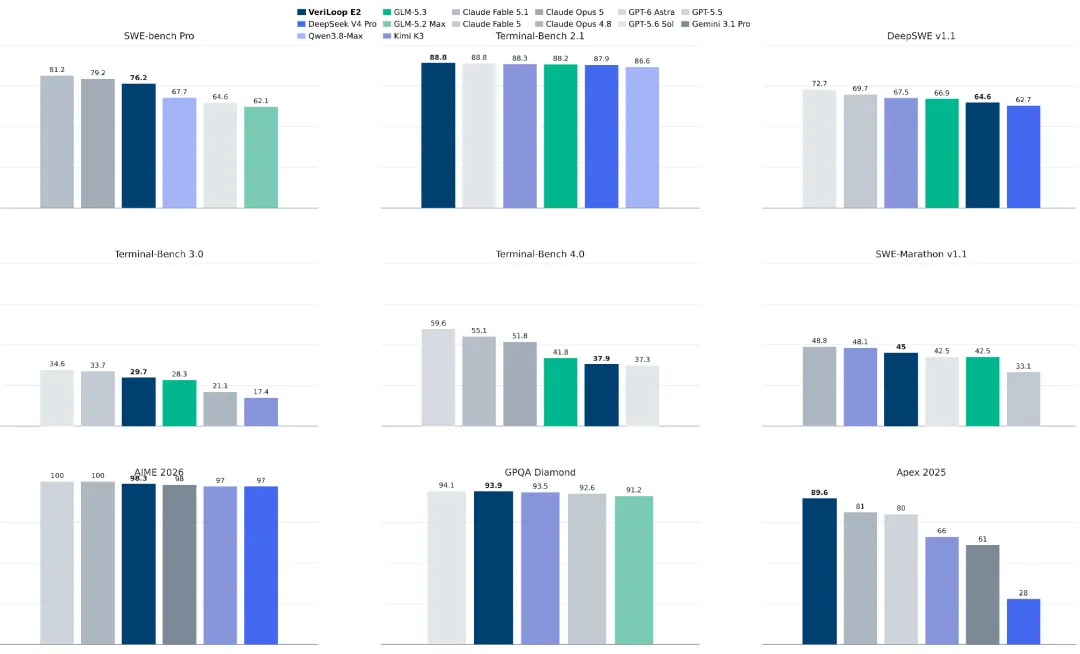
Following training, VeriLoop E2 completed nine Benchmark tests in the three directions of code Agent, terminal intelligence, mathematics and scientific reasoning respectively. Among them, SWE-bench Pro was 76.2%, Terminal-Bench 2.1 was 88.8%, Terminal-Bench 3.0 was 29.7%, Terminal-Bench 4.0 was 37.9%, DeepSWE v1.1 was 64.6%, SWE-Marathon v1.1 was 45.0%, AIME 2026 was 98.3%, GPQA Diamond was 93.94%, and Apex 2025 was 89.6%.
These assessments are based on different task formats and verifiable structures, together observing the performance of the same post-training model's capabilities in code, mathematics and scientific reasoning, and whether new computation can be steadily transformed into executable, verifiable and verifiable task progress.
In addition to the standard weighted version, the team has simultaneously released the official GGUF quantified version, covering BF16, Q8_0, Q6_K, Q5_K_M, Q4_K_M, Q3_K_M, IQ2_S and IQ1_M. The quantified mass is not judged by "bitwidth less and better", but uniquely by reference to the canonical BF16 GGUF, measuring PPL, KL divergence, token probability drift under a frozen matching protocol with Same top-p. There is a special distinction between "quantitative accuracy" and "downstream loss".
For developers, the selection can be divided directly by the deployment goal: Q6_K is the overall quality/efficiency sweet spot, the main file 20.566 GiB, smaller than BF16 is 58.96%, PPL is observed at -0.0395%, while the measurement uncertainty is considered to be parallel to BF16, Mean KLD is 0.004409; Q5_K_M is the memory-quality sweet spot, 18.965 GiB, smaller than BF16 is 62.16%, PPL is shifted at +0.4450%. Continue to compress to the occupancy point, IQ1_M is the current lowest occupancy sweet spot, 16.790 GiB, smaller than BF16 is 66.50%, and under the freezing protocol PPL is shifted to +0.3191%, KLD0140, KLD035-Same-P, and KLD0402.
It should be noted that both IQ1_M and IQ2_S are mixed-precision schemes, and not the entire model is unified by 1 bit / 2 bit; the size of the model file is not equal to the actual cache occupancy, and when deployed it is still required for KV cache, computational buffers and optional MTP reservation space.
1.E1→E2: Submit from the external loop to the model state
This move from "cross-task verification" to "unified evidence semantics" did not start from scratch, but continued the loop system closure that VeriLoop Coder E1 had already established. In E1, the model was responsible for generating, Self-Harness was responsible for executing tools, testing, correcting errors, rolling back with evidence binding, ToolSpec, Uncertainty, Rollback and evidence binding, and narrow-field PEFT capabilities helped the model synchronize with Harness. The core problem it solved was: "How does a code model accomplish tasks more reliably in a system-level closed loop?"
VeriLoop E2 does not deny the previous proof-of-concept principle, but extends the algorithm layer further by VGR as the core mechanism for this post-training, pushing the proof-of-concept principle from external Harness control to the model status update and post-training process.
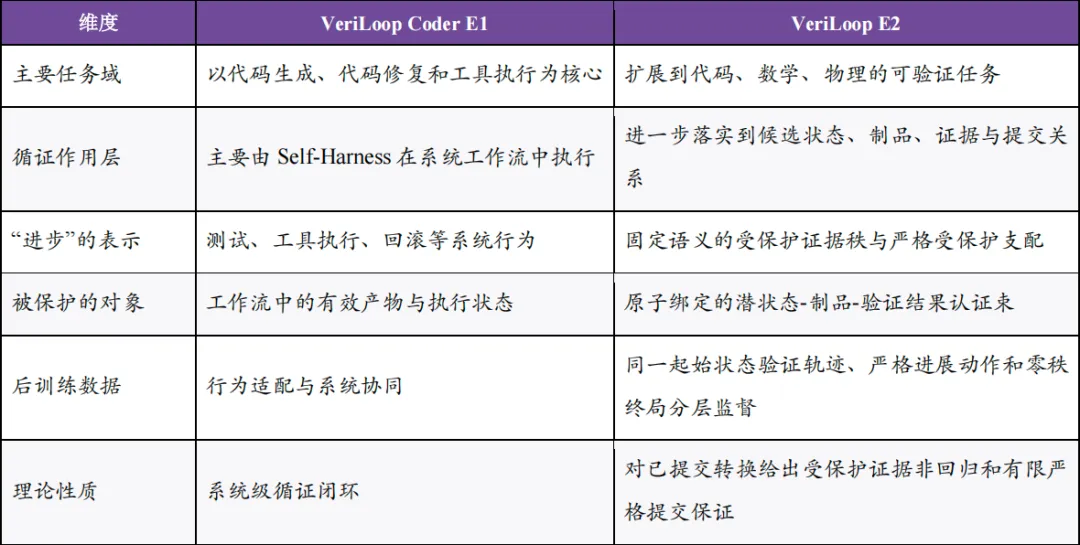
It turns out that the change from E1 to E2 is not about replacing with larger parameters, nor is it about moving the proof spiral from the Harness to the algorithm layer, but rather about moving "verification results for correction" to "verification results for simultaneous state-defined semantic submission and post-training sample semantics". This is why the three fields of code, mathematics and physics share the same control principle, although they use different Verifiers.
Evidence retrospective: the right to submit evidence for status updates
1. Gap: Additional calculations do not equal verifiable progress
In order to understand why recurring proofs of convergence need to emerge, one must first distinguish between two frequently confused questions: "how to increase computation" and "why new computation is considered progress".
The hidden state of the standard Transformer is constantly updated along the layered residual path; the recurrent-depth Transformer, Universal Transformer, Mixture-of-Depths, and looped Transformer allow further block-sharing, dynamic allocation of depth, or increased testing. They mainly answer the previous question: how to continue the computation, where to continue, and how many steps to continue.
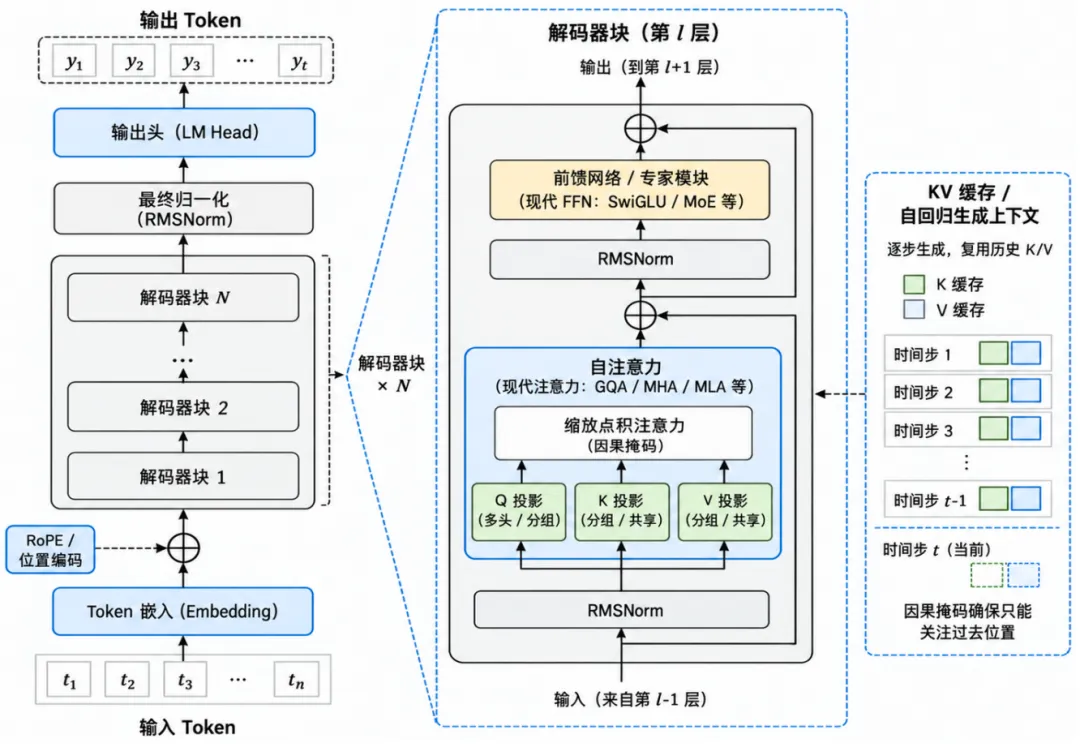
Figure 1 Status updates of the standard decoder and feedback flows
As a control baseline, Figure 1 shows how the standard decoder continuously updates its hidden state through attention, the forward network and the residual path, and with the help of KV caches completes autocomputing generation. The key here is not that the standard decoder "cannot be computed", but that these forward-to-back updates naturally enter subsequent computation once generated; the entire process does not yet have external verification of task obligations, evidence sequence comparison, and submit/roll control gates.
And here's the problem: in a verifiable task, a new computation gets the candidate hidden state. Then why change the current state of preservation?
 ?
Existing internal control signals can determine "how to calculate" but cannot independently prove "whether a new state of computation is worth submitting". Stopping signals can determine whether to continue calculating, routing scores can determine which modules to process, deep attention weights can determine which historical representations to read, and predictive distribution stability can also reflect whether internal changes in the model tend to shrink; but these signals themselves cannot prove that the corresponding process, proof or material understanding of the candidate state has made real progress on external task obligations.
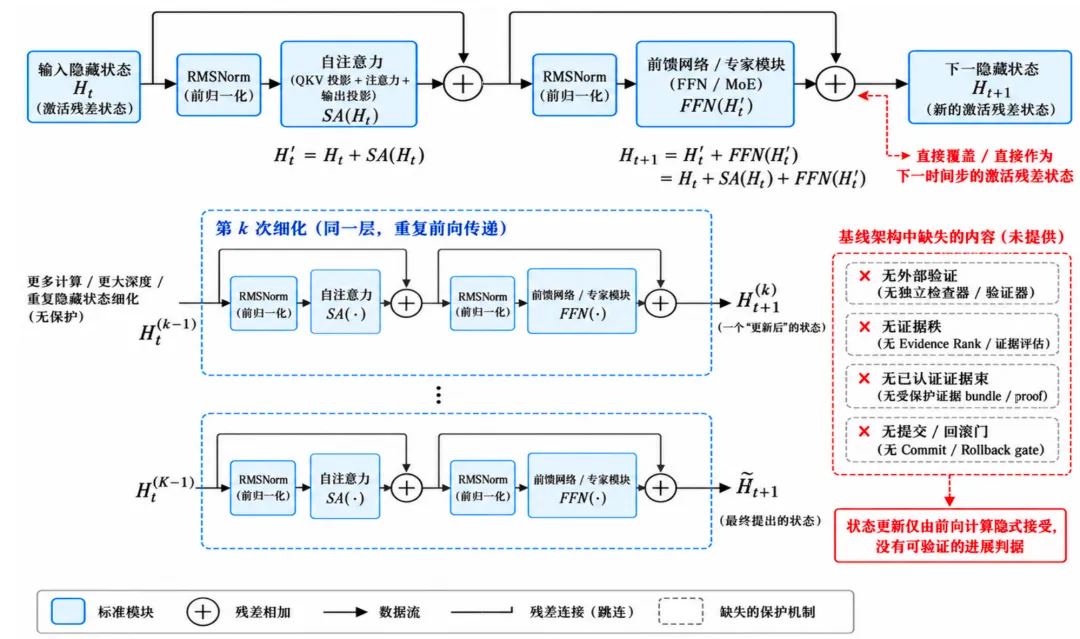
Structural gaps in refinement before repetition: computation can be continued, but the state has no proof of gate control
Re-calling the same decoding layer can increase the computational depth and continue to produce a new candidate state, but each update will still be the next state directly along the residual path. The red box in Figure 2 marks the structural gap that the mechanism targets: in the absence of an independent Verifier, a proof-of-confirmation sequence and a submission/rollover gateway, "multi-step computation" itself is not equivalent to "acquiring verifiable progress".
VeriLoop-Governed Recurrence, VGR, has been proposed to address this gap. It no longer equates "new state is calculated" as the default to "new state should be retained", but strictly separates the generation rights of the candidate state from the persistence submission rights: the model can continue to present a new candidate's hidden state, but the candidate must first appear as a verifiable product outside the fixed decoding, and then be generated by independent external verifiers in accordance with the predefined mission obligation to generate the protected certificate sequence. Only when all the protected data are not returned, and at least one has been rigorously improved, can the candidate qualify and submit, or the current certified state remains unchanged.
VGR does not judge a model "not to continue counting" or measure "if it looks better" with a single aggregate score, but instead establishes a verifiable state submission rule for each new calculation: the model has the freedom to continue exploring but does not have the power to self-declare progress, covering the current state. Only when all protected obligations are zero, does the system mark the task as a certification; the same set of "what state qualifies to be retained" evidence standards can also be used for further constructive post-training supervision, which gradually improves the probability of the model generating a candidate submission, while the final decision-making power in operation is always retained on the side of external evidence.
Hence, the mechanism is not aimed at the generalized proposition of "Transformer cannot reason", but at a narrower or more verifiable structural gap: after regression, dynamic depth, or test computation generates a candidate state, the system still lacks a rule of submission that separates it from the candidate generator and prevents the return of protected obligations.
In other words, "calculate one more step" and "this step qualifies to be the next state" are not the same issues.
It is noteworthy that the new VGR is the underlying state, the binding object of products and verification results, and the only submission semantics based on a fixed protected bias. It directly binds "whether progress has been made" and "whether the state can be preserved". The candidate state is only eligible to replace the current certification status if it is not completely degraded on the fixed protected evidence and at least one rigorous improvement is made.
2. Separation of powers: proposal, decoding, verification, submission
Since what's really missing is "committing permissions", VGR doesn't rewrite Attention or FFN, but re-allocates runtime permissions. At the start of each run, first, the task identity, model contract, verifier identity, verifier contract, and proof compiler contract are fixed.
After that, the baseline is submerged through the normal forward direction. The first round of recursion does not begin with the model's own scores, but with the baseline that has already been examined externally.
In the second attempt, the learning proposer has only the right to propose. It reads the current reserved status, source footage, most recently rejected exploratory memories and evidence characteristics, and output a boundary displacement:
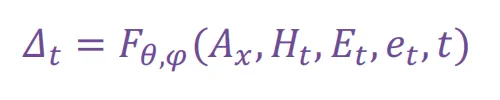
In this case, t represents the recursive attempt index; θ、φ of F represents the study proposer's parameters; x represents the current input/task source, as the corresponding source focus; for the current reserved sub-state, for the last refusal to explore memory, as the proof characteristic, for the proposeder's output of the bounded sub-state space.
After the proposal is made, the state-writing rights remain in the hands of the controller. The official controller first checks shape, dtype, device, finite and each token. Radius; only after all checks are passed, the candidate status is constructed by the controller itself:
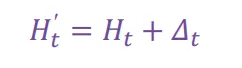
This step really separates the "generate candidate" from the "write authentication status". The model itself has no written permissions directly covered. The candidate then enters a fixed and replaceable decode, generates output, witnesses and metadata, and is tied together with the candidate latent as the candidate product. The verifier only receives the task and the artifact that has been tied, and does not receive the internal scores of the model; the scores obtained by the proof compiler or the learning cannot exceed the submission of judgments.
This power chain can be compressed into: common forward→ external verification→ boundary candidate proposals→ controller constructs candidate status→ fixed decoding→ again external verification→ protected evidence comparison→ atom submission / rejection.
After the separation of permissions, it is also necessary to ensure the stability of the "verified object" itself, which is the inevitable reason for the fixed decoding. If the same task - model - sub-state keys get different artifact due to temperature, top-p, random Dropout or cache drift, then even "what state of verification exactly" cannot be stabilized.
Therefore, VGR incorporates decoding configuration, stop conditions, concurrent decision rules, and associated model identities into the running contract; the same candidate_id closes as a contract conflict failure if different results are obtained during repeat verification, instead of being downgraded to a normal failure to continue running.
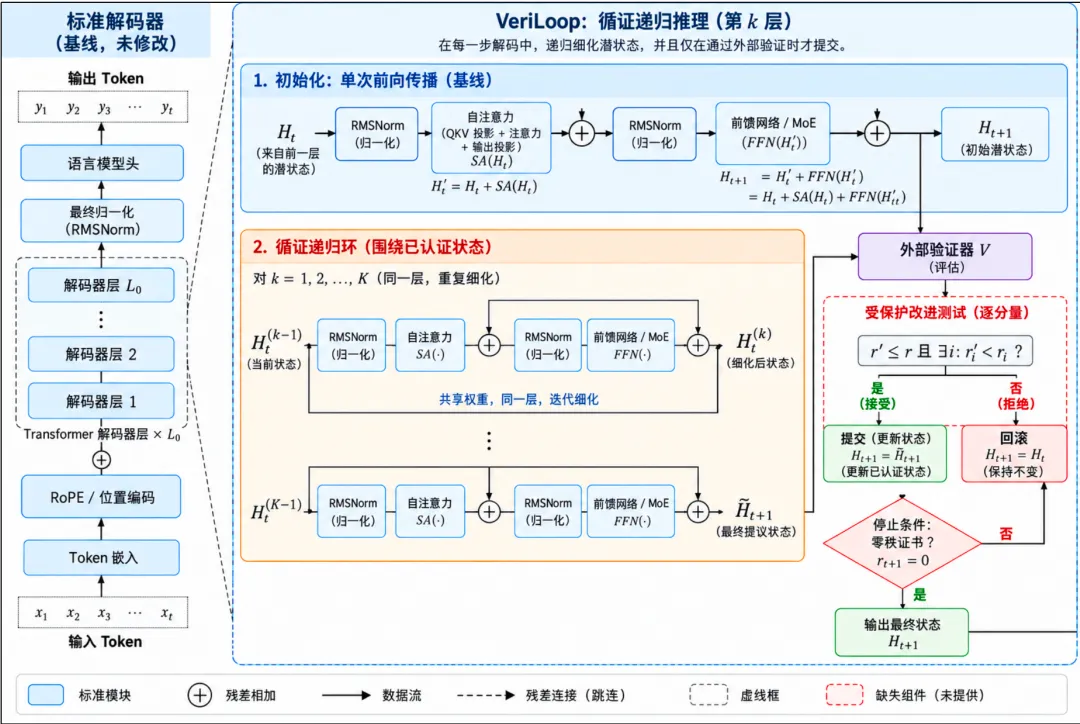
Figure 3 VGR state of submission: proposal, external verification, protected comparison with atom submission
It's worth noting that VGR doesn't require replacing Transformer's Attention or FFN, but adds a layer of external evidence ruling before the candidate enters the persistent state chain. Only when the candidate meets "non-degradable coordinates and at least one rigorous improvement" under a fixed Verifier is commit allowed; otherwise, it will completely roll back to the previous certification state. Only when the evidence sequence returns to zero will it trigger the completion and termination of the current contract relative to the current one.
3. Submission of Guidelines: Strictly Protected
The permission separation resolves "who is eligible to write" and then answers "by what rules to write". Provided that Verifier fixes m protected obligations at the start of a run, the component_ids, sequence and semantics of these obligations cannot be changed by the candidate throughout the run.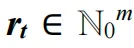 Candidate products are obtained
 Where m represents the number of protected obligations,
 Indicates a non-negative set of integers; the smaller the numerical value of each coordinate, the lower the degree of violation of the remaining corresponding obligations.
Candidates may submit, if and only if:

where, i、j ∈ {1,..., m} is the protected coordinate index; Indicates the i-coordinate in which the round t retains the order of evidence,
 The candidate's corresponding coordinates are displayed:"
 The subheading "P" represents the protected preference set out in this text; respectively,,, represents "to all" "existing" and "right and only right".
The strictly protected rule defines "progress" very specifically: all protected coordinates cannot degrade and at least one must be strictly improved. For example, when the current ranking is (0,1,1), the candidate (0,0,1) can be submitted; the candidate (1,0,0) must be rejected even if the total error number is reduced from 2 to 1, since the first obligation has already been passed returns.
This also explains why VGR does not intend to adopt the "total score is lower than submission" rule: total improvements can be used to demonstrate the analysis and momentum functions, but cannot offset the degradation of a protected coordinate.
Once the submission rules are established, the objects that are truly perpetuated must also be consistent with the semantics of this set of evidence. For this reason, the system is preserved not as an isolated score or hidden volume, but as an atomic retention bundle, known in technical implementations as the CertifiedBundle:

Among them, Indicates the atomic retention bundle of round t;
 VerificationResult is a binding abstract. It should be emphasized that: The CertifiedBundle is only a name implementation; when the proof is non-zero, it merely indicates that the bundle is allowed into the protected status chain, which does not mean that the task has been completed.
If the candidate does not comply with strict protection rules:
In other words, the rejection is not simply "not updated", but the artifact, latent, verification, and binding abstract are not allowed to be replaced by the failed candidate. The rejected space can be retained in the exploratory memory to influence the next proposal, but it does not itself receive perpetuation rights.
After establishing a strictly governing relationship, the finite-commit nature can also be derived from a simple dynamic function. Further defining the dynamic function is the proof dynamic function. Φ maps the vector of the proof order as a non-negative integer dynamic value, representing the sum of all protected coordinates. Since each legitimate commit causes at least one non-negative integer coordinate to fall to 1, and no other coordinates are added:

Among them, the submission indication for the t-second attempt represents the strict submission of the lawful occurrence; the Ncommit represents the total number of strict submissions throughout the run; the order of the initial proof;⇒ represents the logical implications.
Thus, under a fixed and valid contract, VGR is guaranteed unconditionally by two interconnected clauses: that the protected evidence that has been submitted will not return; that the number of times that a non-negative integer is submitted must be limited because each strict submission consumes at least one non-negative integer value. Importantly, these two clauses are bound by the "submitted state conversion" that neither requires the proposal to be smart enough each time nor the optimizer to be successful each time.
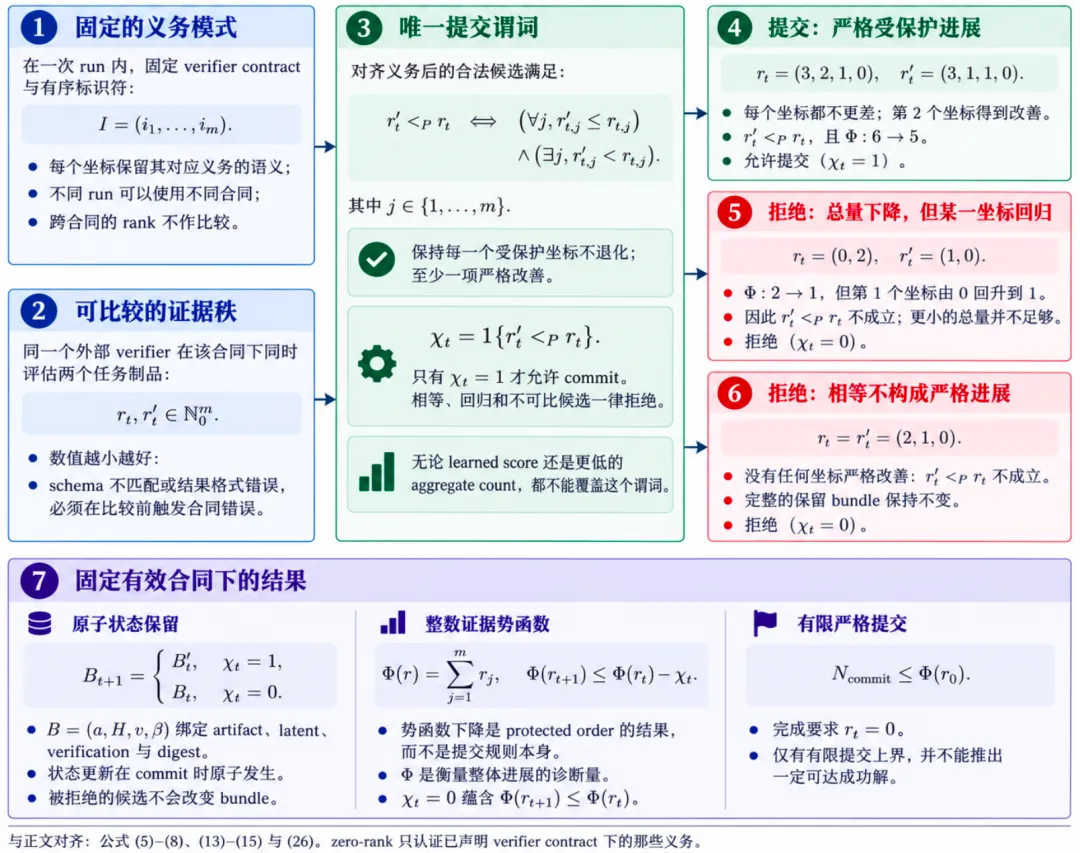
Figure 4 Strictly Protected Definitions and Limited Submissions
Figure 4 unifies single-run fixed obligations, comparable evidence sequences, single-submitted judgments, accept/reject instances, and certification bundle atoms into the same logical chain. Thus, it can be seen that the total decrease cannot offset the return of any protected coordinate; at the same time, the nonnegative integer proof dynamics function is also given to a strictly submitted boundary. The same judgments can then be directly extended to the positive/negative candidate supervision terminology in post-training.
4. Post-training: Transforming verifiable progress into learning signals
Here, VGR solves the running "what results are eligible"; once in training, the question becomes further "how to make eligible candidates more likely to be put forward". That is, the door control itself does not change, and the actual distribution of candidates is changed by the training.
Therefore, training samples must be constructed around the same incumbent in order to separate "candidate quality" from "starting point differences". The core practice is: multiple candidates emerge from the same incumbent and are labelled using the same fixed decode and the same External Verifier. Only satisfied candidates are defined as strictly progressive samples; candidates who do not meet the submission criteria can be noop, protected return obligations, or aggregate traps.
Forced sequences for the number probability of a positive-negative candidate teacher are marked as and, respectively, and reference preferences can be written as:

For example, for preference losses; for training sample/candidate pair expectations; for smoothing positive-valued functions; for preference interval overparameters; for strictly progressive candidate and rejected/negative candidate teachers, respectively.
With such a positive-negative label, it is still necessary to continue to distinguish between "intermediate progress" and "final completion". Non-intermediate but already rigorously progressing candidates are used to supervise the SFT/NLL movement, teaching the model "how to continue to repair"; only the interim and accepted final artifact enters the certified NLL generation, teaching the model "what can be used as the final output". This subdivision avoids confusing "valuable intermediate movements" and "ready completed responses" with the same supervision.
When the same set of supervisory semantics falls into different task domains, verification objects change, but the logical structure is consistent:
Code: Model learning is a form of learning that is more likely to correct target errors at the same time, maintaining a modified distribution that has been tested and satisfied by constructing/interface constraints, rather than just learning a text distribution that is "more like patches".
Mathematics: Models can break down constant equations, intervals, local lemmas, boundary conditions or form checks into fixed obligations, and learn to derive the next step that does not disrupt closed conditions.
Physics: Models can define quantitative outlines, constants, boundary conditions, and numerical residues as different evidence coordinates, and learn to improve one matching goal while maintaining other physical constraints.
As a result, Verifier did not become a learning scorer in post-training, nor was the decision-making power transferred to reverse propagation. The VGR is to convert the discrete external facts generated by Verifier into training oversight that is consistent with the rules of submission when running. The optimizer only learns "how to increase the probability that a candidate can be submitted" so that a candidate must be re-submitted by an external Verifier when deployed.
5. Technical contribution: Transition from state evolution to protected state
After the control chain is broken down into the smallest technical units, it is found that the VGR is not "making the model more reliable" in a uniform way, but instead gives mechanisms for the six specific gaps that are connected to each other.
These six mechanisms can be summarized as three points if they are further summarized from the perspective of "research contributions" rather than "modular implementation".
First, the VGR submitted the introduction of protected sequences: the so-called progress is no longer a mutually offset total, but requires "all protected coordinates are not degraded and at least one coordinate is strictly improved".
Second, VGR binds states, products, and verification results to an atomic perpetuation object: Verifier verifies is not an abstract hidden state, but the verifiable consequences of the actual state produced by a fixed decoder; rejects does not change a rank backwards, but retains the entire pre-drive authentication bundle.
Third, VGR extends the same submission pronoun to post-training supervision interfaces: what candidates are eligible to submit when running; what samples are eligible to be valid samples when training; and both use the same set of evidence semantics. This avoids the semantic fallacy of "training incentives think it's better, but deployment gate controls judge it can't submit".
Combined, VGR solves a boundary-clear problem: how to translate the state evolution in the recursion/test computation from "continuous changes occurring within the model" to "conversion of protected states authorized by external evidence" and allow the same authorization logic to continue to be used in post-training. That is, it does not prevent the model from continuing to explore, but instead gives "what can be the next state" a validated, retractable, retractable unified meaning.
A strictly limited-dimensional certificate from 67.25% to 67.35%
1. Location: From open baseline to verifiable research closed loop
If the ten evaluation trajectories in the first part answer that VeriLoop E2 has "static capabilities" on a fixed task, and how many questions it can ultimately complete, how many points it gets, then the third part is to look at another more difficult ability to express by single scores: in the face of an unfinished solution, which must constantly make assumptions, encounter counterexamples, modify representations and re-validate research tasks, whether the model can steadily transform new computations into verifiable research progress.
To further observe VeriLoop E2's ability to converge dynamic reasoning and evidence in open-source mathematical research, while also attempting to go beyond the DeepSeek V4.1 Flash sub-industry mindset in real-world application scenarios, the team selected the boundary-line zero-point ratio boundary associated with Lyman's conjecture as the demo to be shown in this mathematical field.
The first mathematical object to which this result corresponds is the zero-point boundary at the critical line Re (s) =1/2 of the Riemann z-function and the zero-point ratio below κ, which satisfies the corresponding computational conditions. 67.350003708785593% is the result of the VeriLoop E2 and the currently strictly closed internal Harness limited-dimensional computer auxiliary certificate. The result has been completed with local unequal verification, difficult-area scrutiny and precise rational number assembly, but a formalized bridge with the upstream Zeta23 resolution unified interface is still being developed.
As a result, the current stage still belongs to the strictly limited dimension certificate level and cannot be described as a new kernel-verified official record.
Complete research and verification materials directly related to the outcome, including derivative paths, candidate and counter-case records, limited-dimensional certificate configurations, interval branch-and-bound verification logs, difficult-regional certificates, precise rational assembly processes, verification scripts, and final freeze products, are available on GitHub, where third parties can independently review and reassess 67.350003708785593% of limited-dimensional certificates.
The second thing that must be determined is the research spectrum. About 67.25% of the results of this work were made public by the Anthropic team and its collaborators as a validated mathematical baseline. Theoretical sources before the public baseline were not repackaged into the VeriLoop contribution; the real observation in this demo is whether E2 can independently generate new research pathways from this known starting point and compress these pathways into incremental evidence that can be examined externally.
In the demo, VeriLoop E2 forms a closed loop of evidence synergy with non-public Harness. The model is responsible for proposing candidate structures, representing reconstructed problems, choosing research routes and adjusting strategies based on failed evidence; Harness fixes the research baseline and outcome boundaries, converts unknown conclusions that may change into evidence obligations, and organizes counter-case searches, determination calculations, and interval verification tools to obtain differential evidence. Only observations that can explicitly support or overturn current judgments enter the next round of research, so the model retains the freedom to explore, but cannot decide for itself what has been established.
Therefore, moving from the 67.25% baseline to 67.35% is not a single "generation-acceptance" but a candidate who submits→ Evidence Obligation→ External Inspection→State Update→Related Circulative Spiral. When the evidence is closed, the established results are retained as a protected premise for further reasoning; when there are counter-examples, Harness records the overturned assumption and the evidence that is still valid, and then backs up structured failure information to the model, with the model deciding whether to modify or reconstruct the model to demonstrate the route.
Note: As of September 17, 2026, the official kernel-verified record inriemannzeta.fun's public ledger is 67.2500703679%. Candidate results must be connected to the upstream formalized system and can be accessed via Lean core and independent nanoda core end-to-end relocation verification.
Compared to an open formal baseline of 67.2500703679, the result is approximately 0.0999333409 percentage points forward in numerical terms.
But for this demo, it's more important not the small growth itself, but E2's internal judgment of "there may be an increase here", which is gradually transformed into an external proof obligation that can be judged to be true and false: the matrix/pressure limited dimension certificate is responsible for providing structural residues, the local strictly minimization is responsible for handling the most dangerous areas, the branch-and-bound zone is responsible for finishing the specified limited areas, and finally completes the entire site assembly with precise rationality.
The reasoning role of the model is to determine what the next step is to prove, which path is no longer worth continuing, and how the problem should be rewritten after failure; the chain of certificates determines which of these reasonings are eligible for retention.
Reasoning Directions: From window optimization to matrix/pressure certificate
After disclosing the 67.25% baseline, E2 first determines exactly where the increase came from. Under the same conditions as the established parsing interface, it separates window-only optimization from the new matrix contributions, and the upstream relationship is written as:
The new candidate's window testimony is only H (v) > 0.672167187145431, and continuing to raise H (v) alone is not enough to explain the target increase. E2 therefore reconfigures the study object from "continuing to grind the numbers" to "creating an independently verifiable finite subframe for Δ(M" and reassembling κ"; this changes the object that needs to be proven, rather than simply increasing the number of searches.
In order to make the new route falsifiable, E2 compressed the matrix/pressure increment into a limited certificate chain: matrix structure localization→ apparent energy boundary→ local strictly unequal→ pressure all-area enclosure→ precise rational assembly. Harness verified these obligations one by one; no level could be closed, candidates were kept in exploratory mode, and only complete evidence chains could be reassembled into the same κ boundary when they qualified for freezing. Thus, the E2 problem is responsible for representing the reconstructed and proven route, and Harness is responsible for transforming this route into an independent verifiable evidence chain.
3. Counter-case drive: Closure from high candidate rejection to 67.35%
Contradictions really drove subsequent recurrences. E2 subsequently gained 67.350352375073% and 67.35006335392536% of the two higher candidates, but Harness's reinforced contradiction search found that the early seed family covered only about 1.04 and 1.975, omitting a large interval structure of about 2.915 near the real lowest value. According to E2, the problem was not "not long enough", but the search represented incompleteness, and the seed family was expanded to {1.04, 1.975, 2.915}^q; local space εs was redefined with the candidate losing strict acceptance conditions.
Figure 5 Selection of freezing points: Witness value ladder, thin sample expansion with q = 12 termination
Figure 5 records a post-reconstruction freeze diagnosis, rather than a final conclusion: the witness value reaches a high point in the scan near q = 12, but thinner sample expansion occurs in higher dimensions. E2 therefore does not select the maximum value in the scan, but elevates the "third-degree seed complete collection, result certainty weighting" to a protected condition.
Subsequently, E2 established a low-cost replaceable short tier with 67.275055959117140%: four local certificates with only 793,374 branch-and-bound nodes were all PROVED and assembled through precise rational assembly. This state validated a key strategy: first by pushing back the target threshold, then by determining the verification accuracy and calculation budget, so that the cost of proving was driven by the need for conclusions rather than a "multi-calculation point".
After verifying this low-cost closure, E2 pushed the same certificate structure back to its 67.35% target and finally compressed the finite-dimensional proof into three local inequalities:
s = 1/2,ε = 526/78125 = 0.0067328;
s = 19/20,ε = 9879/1250000 = 0.0079032;
s = 1,ε = 20033/2500000 = 0.0080132;
Strict path eventually completes 327/327 difficult well, 3/3 local certificates and 190,375,830 failed shutdown verification of branch-and-bound nodes; veriy_exact.py is then reassembled with precise rationality and reproduces 67.350003708785593%. Here E2 is responsible for certificate breakdown, surplus allocation and proof cost selection, Harness is responsible for counter-case interval verification, roll-over and endpoint review.
67.350003708785593% of the strictly limited number of certificates
Figure 6 gives the end-of-the-line evidence chain: Complete summary of the third-tier seed→ 327/327 Difficulty area through→ Overall witness assembly→ Accurate closure. It compresses E2's structural assumptions, post-counter-case reconstruction and proofing strategies into a set of limited-dimensional evidence that does not rely on model self-assessment and can be reassessed independently by third parties.
To further tighten the trust boundary, the final verification extends the unification of the floating-point community outwards in a safe direction, and with the π-area and the Taylor residual packet network triangle function, so that "undiscovered anomalies" are elevated to fail-closure coverage in the designated boundary. The current conclusion remains strictly limited to limited-dimensional computer-assisted certificates κ = 67.350003708785593%; the upstream Zeta23 formalized bridge and the Lean/nanoda end-to-end relocation are not completed within the scope of this section.
The future should not be completed
In September 2026, Dario Amodei in his We Must Pace the Frontier column proposed the pace of slowing down the improvement of front-end capabilities to allow for coordination, explainability, operational security and third-party evaluation in exchange for greater security surpluses.
Wang Libo opted for another path: to continue to advance frontline capabilities while promoting the simultaneous growth of verification, security and governance capabilities.
The real difference between the two is not "security weight is not important", but how to understand security: Anthropic's idea is to force risk control to follow the model's capabilities; VeriLoop tries to resolve whether the boundaries of verification, security, and responsibility itself can be built into the ability to co-expand along the front lines.
On the surface, it is a struggle for the rhythm of development. Back and forth, it is two philosophies about the future.
The more intelligent nature has a temptation: the continuous compression of the uncertainty of the world. Civilization has been transforming the unknown into the known, extracting the laws of chance from the chaos.
However, when this logic is pushed to the extreme, a more fundamental question arises: to what extent does the future belong to man if it is already understood, calculated, or even arranged by a sufficiently powerful intelligence?
Freedom is never just about having more options on the menu. Freedom was created because the future is not yet complete, because today's choices can still truly change tomorrow. If "the best way" had been calculated in advance by a higher intelligence, human choices could have declined from creating the future as a confirmation answer.
A world that is perfectly optimized, not necessarily a truly free world.
Ignorance is not a failure in the functioning of civilization, but a space where civilization can still continue to occur. The greatness of science is never in completely eliminating all problems, but in turning the unknown into questionable, turning the problem into verifiable propositions, and opening the next layer of the unknown with new evidence.
Therefore, VeriLoop's goal is not to give AI more answers for humans, but to give humans the ability to access deeper unknowns. What really needs to be expanded is not "an inventory of answers", but a cognitive domain to which humans can personally reach.
This also explains why VeriLoop E2 puts capacity growth and evidence constraints in the same system. The team never asked the model to stop exploring; it really refused only one thing: not to pretend to be established without evidence-authorized results.
Exploration can be radical, submission must be rigorous; capacity can grow rapidly, evidence standards must be improved simultaneously. Safety does not always have to be a brake pedal in front of capacity, but it can also be a structure that evolves with capacity.
The team also plans to launch a programming smartphone Voder based on VeriLoop Harness once the conditions are ripe, so that "model proposals, external verification, rolling back/submitting, proof-of-concept freezes" links can be independently reviewed and expanded externally.
There is a deeper fear behind this: human beings have long been eager to know the Almighty, to eliminate uncertainty.
God is merely a product of man, but he demands that man's spirit and will submit to a god of nothingness. If today we create a machine with the same desire, and then give it judgment, choice, and even meaning itself, then technology has not really helped man overcome mythology.
From the temple to the algorithm, from the priest to the model, if the ultimate event is still that man gives his judgement to a higher authority, the carrier is changed, the spiritual structure is unchanged.
What really should be protected is human subjectivity: machines can help people understand the world, but they shouldn't replace humans in determining its meaning; they can calculate possibilities, but they shouldn't monopolize what is worth choosing; they can see further than any individual, but they can't get ownership of the future.
The end goal of AGI is not to complete the future for humanity, but to expand the unknown that humanity can still reach personally.
If the future can be fully predicted, failure can be completely eliminated, and death can be completely eliminated, then people may have absolute security, but at the same time lose the very thing of "overcoming fear".
If there is no unknown, there is no real choice; if there is no future that has not yet been completed, there is no author of the future.
The real great place for civilization is never where it finally eliminates fear, or where it finally finds an existence that can guarantee its own end, but where people are willing to go when they know that experiments can fail, that theories can be wrong, that models can go backwards, and that there are no answers for the rest of their lives.
There is no one who can guarantee the end, and there is no one who should complete the end for humanity. Because hope never comes from a future that has already been guaranteed.
And in a world that is not yet complete, that cannot be guaranteed, and that no savior can afford, people still choose to explore, to undertake, to modify, and to move on.
The future should not be completed, it should be open all the time.