It was only in June that the recruitment process began, and in October it was announced that the group would be disbanded.
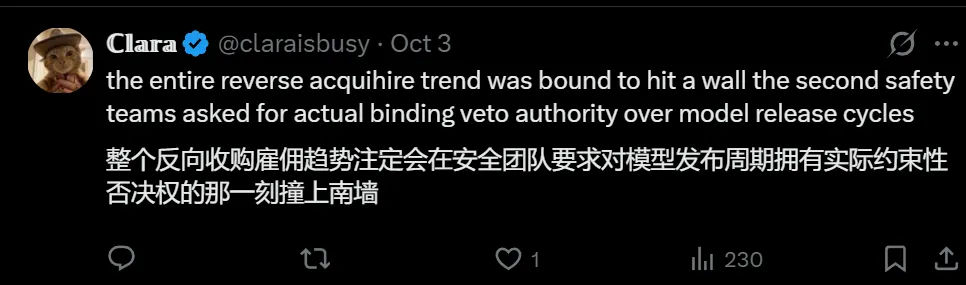
The Virtue AI team, where UC Berkeley computer professor Dawn Song lives, and Meta's collaboration are suspected of collapsing, citing "clashing work styles".
Liu Xiaoping has a high reputation in academia and industry and is one of the most influential scholars in the field of computer security and AI security globally. Her 2005 paper "Dynamic Taint Analysis" is a classic paper in the field of computer security.
In the AMiner selection list, she is the world's most cited scholar in the field of computer security.
In addition to being a professor, Liu Xiaobo is also the founder of Oasis Labs and Virtue AI. According to Virtue AI's official website, what they do includes simulating attacks, finding weaknesses in AI, and providing protection, implementing security and governance rules when the system is running.
In June this year, Liu announced on social media that he was joining Meta's superintelligence lab, Superintelligence Labs. According to media reports at the time, the two other founders of Virtue AI, Bo Li, Sanmi Koyejo, and more team members were also joining.
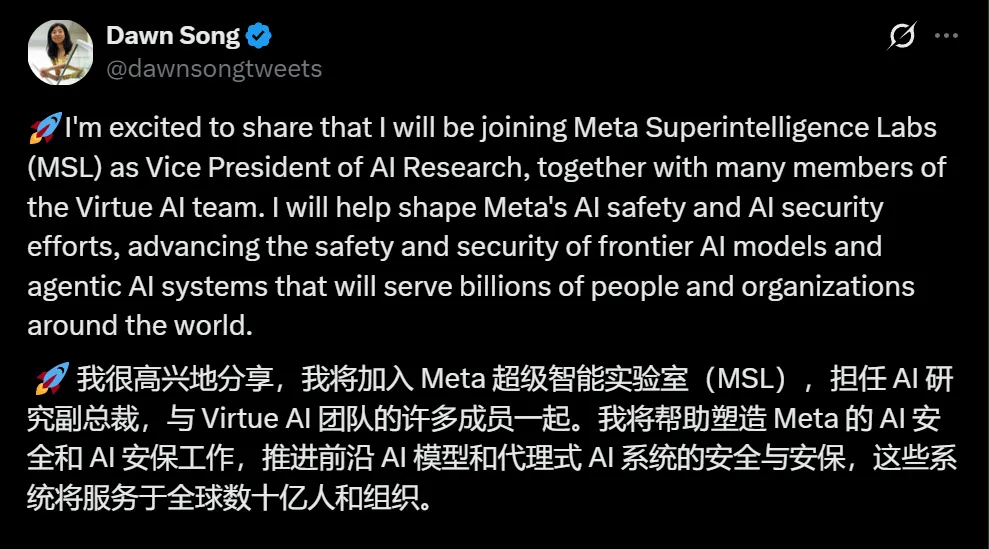
For Virtue AI's talent team, joining Meta is because they're already giving customers AI security testing, red teams, and offline defense, but the startup scene and resources are limited, and Meta is able to put these capabilities directly into products with billions of users, from "security tools" to building the security infrastructure of big platforms.
At the same time, Meta needs them, because it's pushing AI Agents and super-intelligence, and the more it fears that models will get messed up, leaked, and misled by malicious instructions, the more it has to rush to find a top team that knows how to do research and actually do security landings, and it's committed to AI security, reliability, and governance.
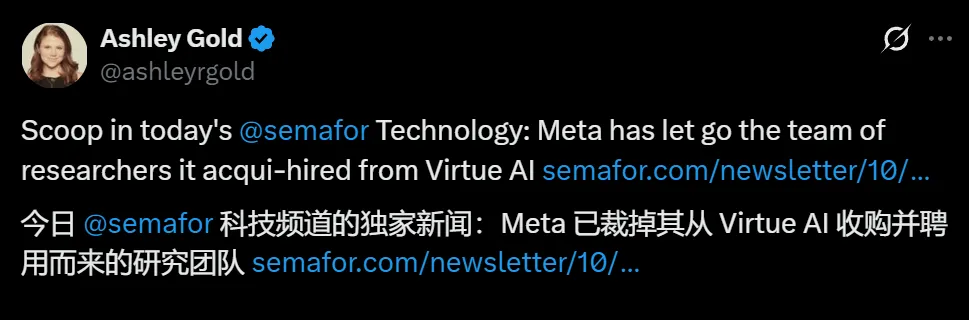
It all sounds very reasonable, but in a recent article, Semafor said, "Meta spokesman Andy Stone told Semafor that the company is cutting a group of employees who were recruited from Virtue AI, an AI security startup, and only four months into their tenure in June".
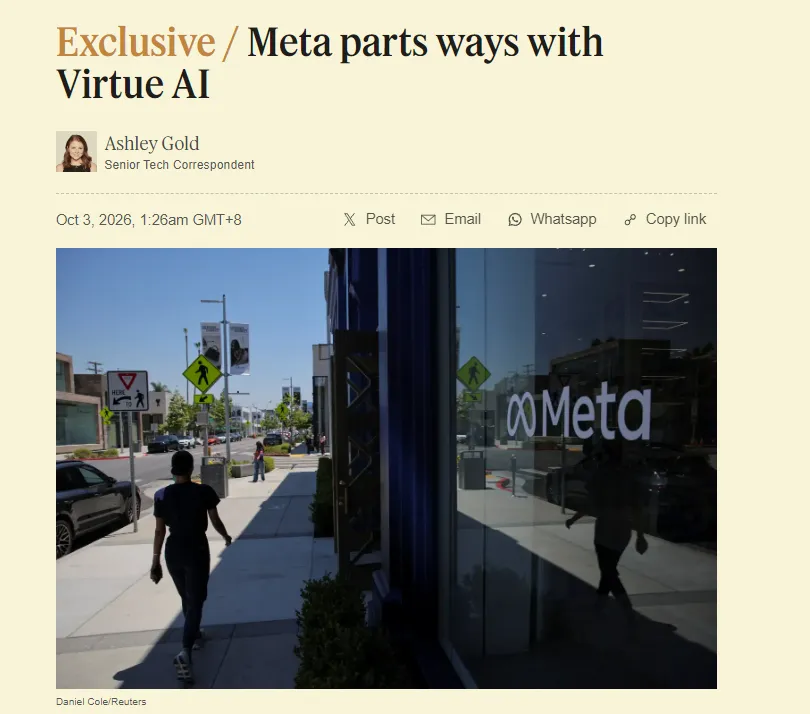
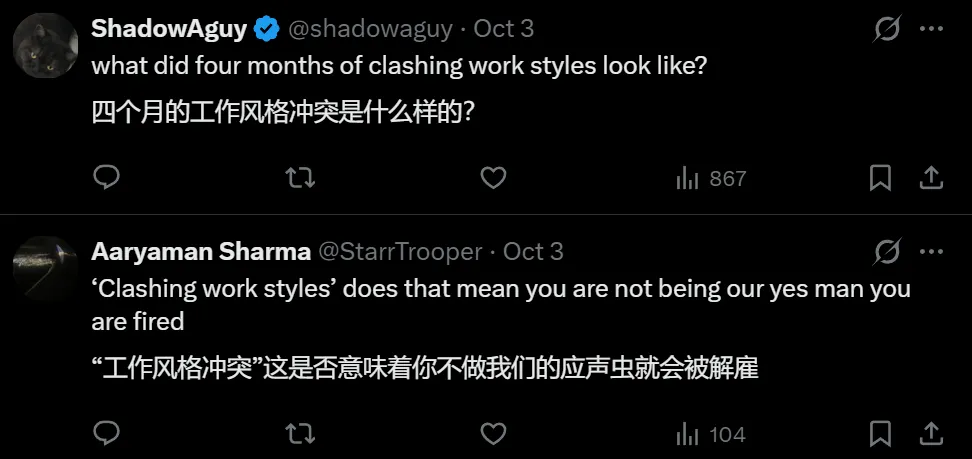
Meta explained that "the working style is not right" and that the collaboration has not developed as expected. At the same time, Meta also said that the superintelligence laboratory will still focus on AI security, alignment and cutting edge risks.

In addition, the report did not confirm whether Liu Xiaoping and others had left full-time, and the team had not responded at the time of publication.
However, the real question left by this collaborative change is still worth exploring, and at the heart of it is: how do you get good researchers to work in your organization after you invite them in?
A study published by MIT Sloan in 2019 found that 33% of acquired employees chose to leave within the first year of the acquisition, compared to 12% of regular recruiters with similar skills and work experience. While these percentages tended to be flat over time, over the three-year window they studied, acquired employees were 15% more likely to leave than new employees.
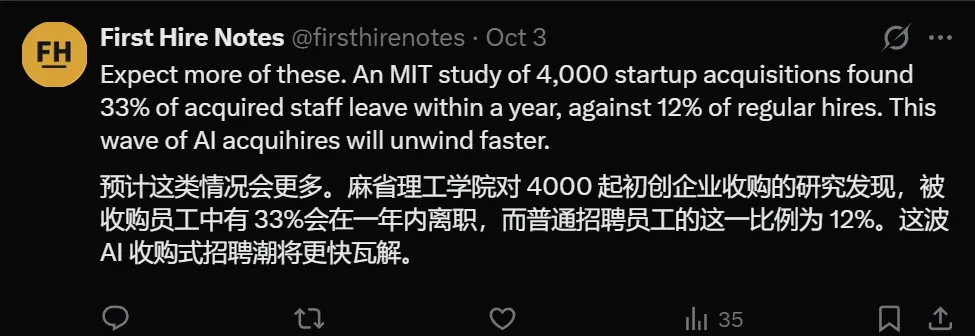
The article argues that there is a high displacement rate among acquired employees and that the main reason for this is "organization mismatch": people who initially joined startups were driven by an entrepreneurial atmosphere, autonomy, flexibility and risk-taking, but after being acquired by large companies often face more bureaucratic processes and formal corporate culture, which directly conflicts with their preferences.
Returning to the Meta incident, the explanation of "the way things work is not right" is obviously unconvincing to many. As for the depth of the differences between the two, we still need to wait for an explanation from Virtue AI.

The link is as follows: