It's the first time in the history of the world.
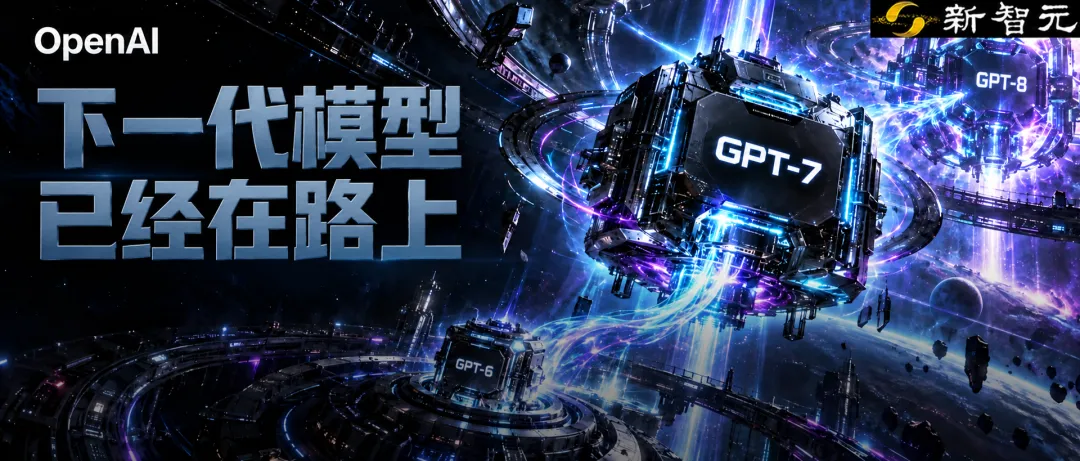
GPT-6 hasn't played yet, GPT-7 is on its way?
Recently, Boris Power, Head of Application Research at OpenAI, revealed that OpenAI is focusing on the next generation of models:
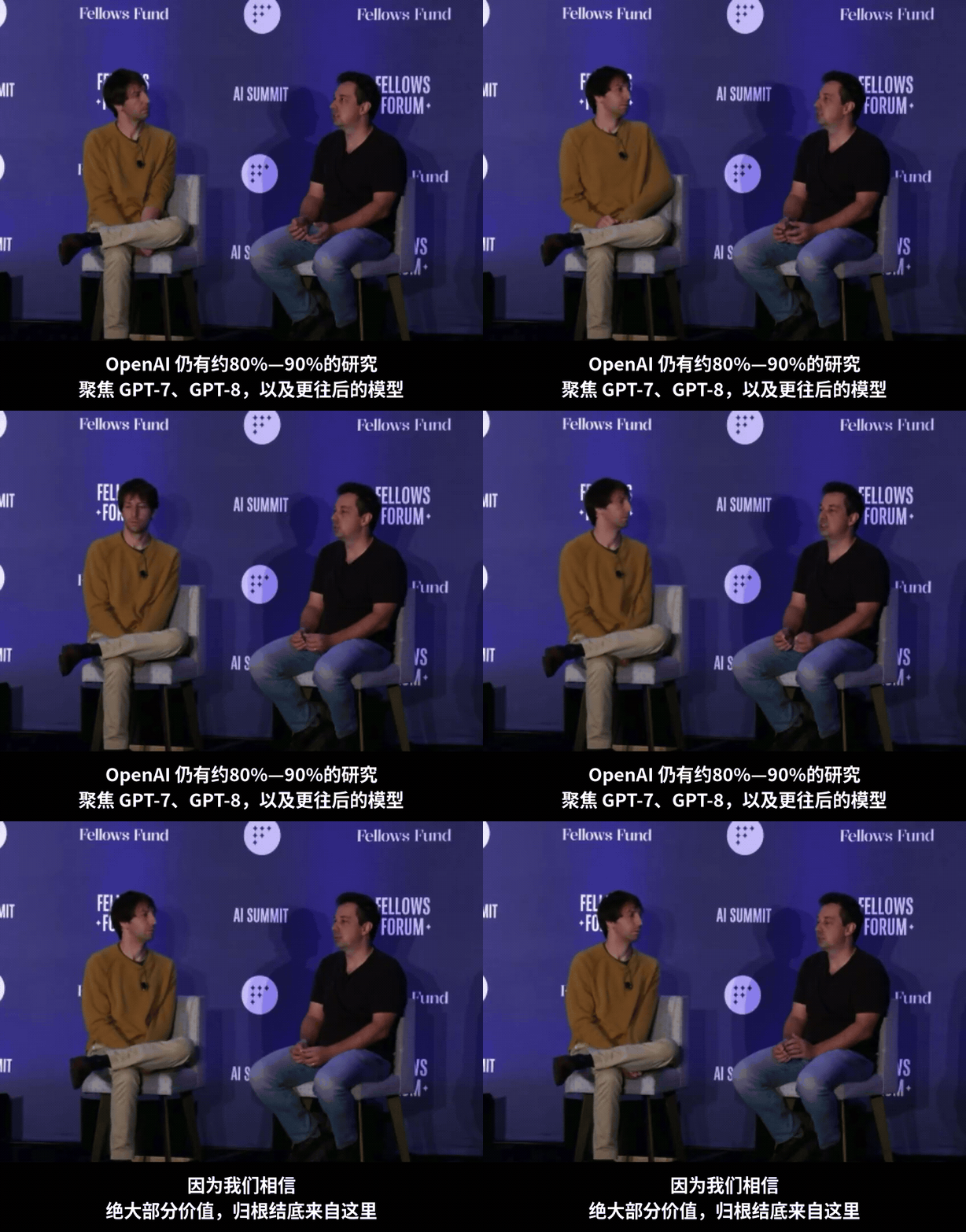
About 80% to 90% of the company's research has focused on GPT-7, GPT-8, and updated intergenerational models.
However, the current GPT-6, OpenAI, is still doing a lot of work.
Just this month, OpenAI launched the GPT-6 Astra, which has a limited mainstream capability, and launched the faster, more affordable Sol and Luna on September 22.
While most of the research has been focused on the next generation of models such as GPT-7, GPT-8, and the GPT-6 family continues to be fueled, this raises two problems:
If OpenAI is focused on research for the next generation, why keep optimizing existing models?
If you want to make bigger models more powerful, why do you want to make smaller, cheaper versions?
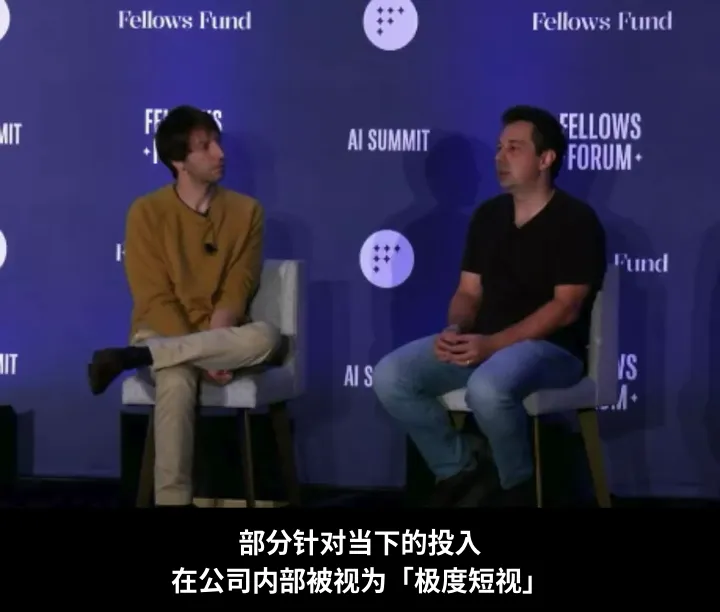
Optimizing existing modelsWhy is it called "extreme shortsightedness"?In Power's words, part of the optimization input for existing models is considered "extreme shortsightedness" within OpenAI.
These efforts can help teams evolve faster and learn faster today, but the long-term stake is still on the next generation of models.
This will make two things clear: the optimization that is worth doing today, how long is it going to last?
For example, models now call tools that are easy to miss, and the team collects data, tweaks training, and adds to the puzzle.
Every time a problem is fixed, the product gets a little better, and the team gets a little more experience, which seems necessary to Power, but he also reminds us that there's a hole in it:
In the next generation of models, the short boards that are being replaced today may no longer be a problem.
A new generation of models will make a lot of things easier. Therefore, the team also has to re-judge: What are the next problems that are worth the effort?
In other words, the faster the model evolves, the more the value of some programs needs to be re-weighted.
But tomorrow may be out of date, which doesn't mean it's not worth doing today.
OpenAI's official introduction to Astra also mentioned that the team is still focusing on practical work training models and improving the codex to make AI work faster and smoother.
For ordinary users, this also means that in order for AI to work today, you have to repeatedly change the prompts, remove the steps, delete the process, but these problems do not always exist.
The model is upgraded, old problems may be solved, and new uses need to be rediscovered.
Now that the next generation of GPT-7 and GPT-8 is here, let's try it again: the way it used to work with previous models, can it just switch targets and do it itself?
Let's start with a strong model.Then distill the small model.If you want to make a bigger model stronger, why bother with a smaller model?
In Power's logic, the two things happen to be connected.
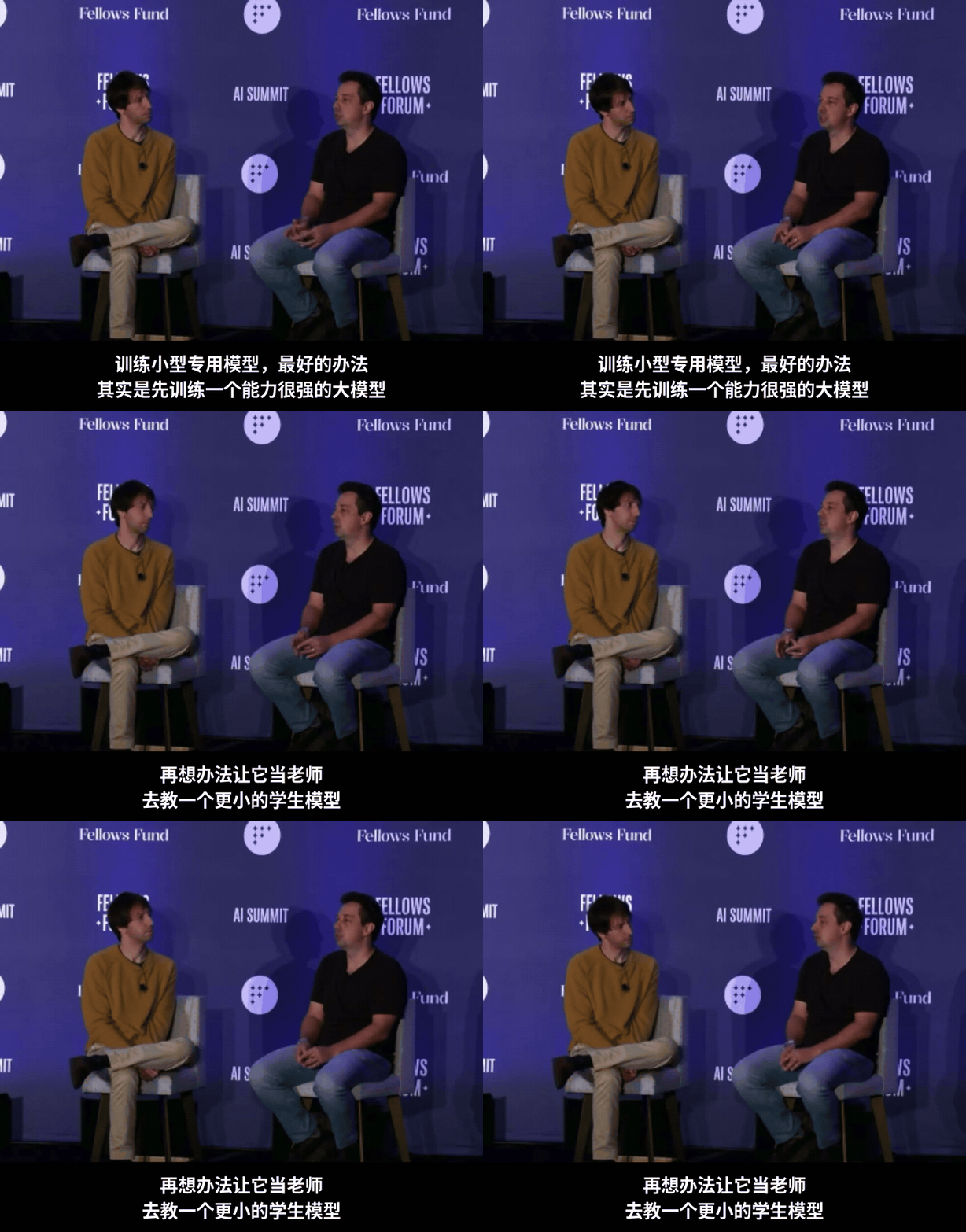
The first thing to do is to practice a general model that has a strong capacity, and then to make it a smaller, more specialized model for teachers and churches.
He used the example of Astra and Luna to chart the route of "first make strong, then distill".
This could also explain why OpenAI will shift 89% of its research to future models such as GPT-7, GPT-8.
They can both solve problems on their own and become the teachers of the next small group of models, bringing some of their capabilities into cheaper products.
Technically, a common method of model distillation is to have strong models generate samples, filter out high-quality output, and then use these data to train lighter models.
And this is a method that OpenAI itself has mastered.
When OpenAI released a new generation of audio models in March 2025, it made clear:
The team distilled the knowledge of their own large audio models into smaller, more efficient models, and used data to simulate real-world conversations to improve the quality and response performance of small models.
Officials also gave a more intuitive teaching example: let GPT-4o as a teacher, train GPT-4o mini to judge grape varieties based on wine information.
On 300 verification data from this example, the accuracy of the GPT-4o mini increased from 64.67% to 79.33%, approaching 79.67% of the GPT-4o.
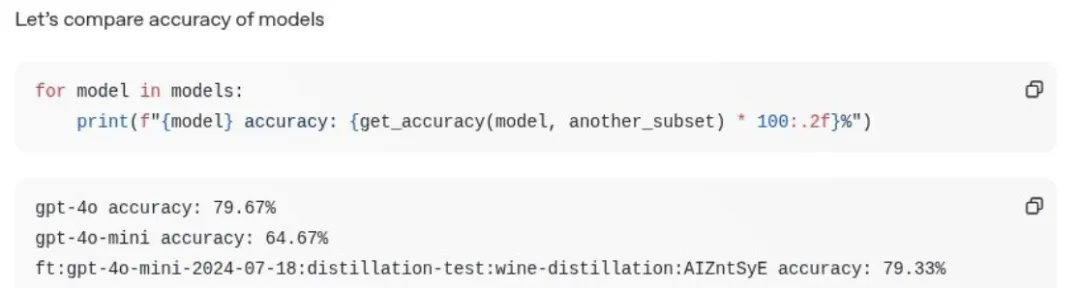
In grape variety judgement tasks, the GPT-4o mini distillation accuracy has increased to 79.33%.
This is the result of a specific task, but it does not mean that a small model is completely on par with a large one.
However, students do not have to learn the whole truth about teachers:
As long as the required level is reached on a specific task and costs are lowered, the bill can be billed.
Returning to the GPT-6 family, similar capability migration and cost-sharing work continues.
On September 22, OpenAI launched the GPT-6 Sol and Luna, emphasizing faster, more affordable.
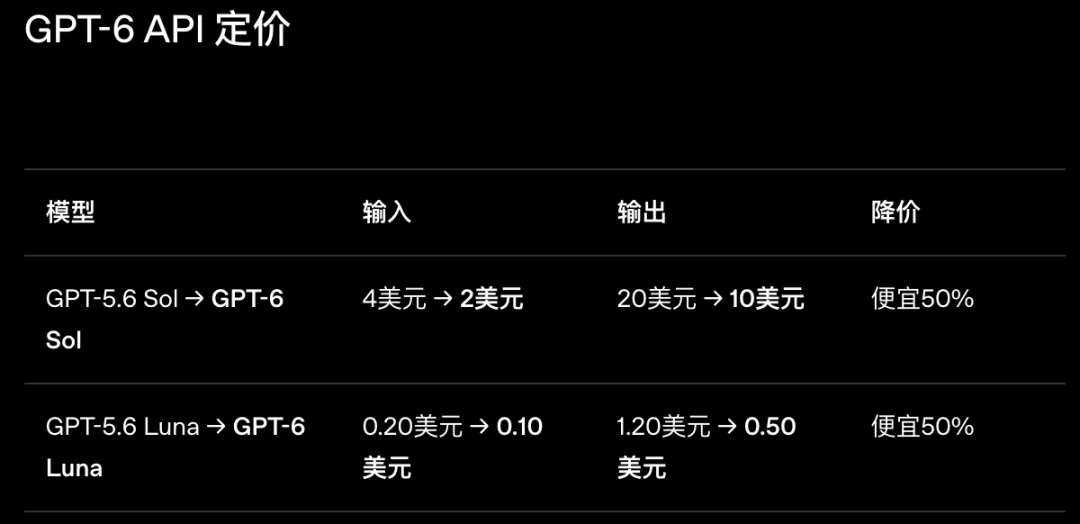
Officials said they trained in a similar way to Astra to bring the advances in related capabilities to a lower-cost model.
Although the specific training formula is not fully disclosed, and Luna cannot be directly referred to as an "Astra scaled down", the direction is clear:
Large models raise capacity limits and small models lower use thresholds.
For ordinary users, this means that even if you choose a cheaper model on a daily basis, you may receive research results from a stronger model.
Large and small modelsHow do you calculate the division of labor?Not all tasks have to be done using the best models.
In one work, some links need to be deeply judged, while others simply put in place clear requests.
Let's look at an example of a project preparedness report.
Several materials speak differently, the quality of the data is at odds with each other, and the core conclusions are unclear.
This allows a stronger model to analyze logic, identify contradictions, identify what evidence is missing, and then build a reporting framework.
Once the critical facts have been verified, the direction has been determined, later work can be attempted on small models.
Encounters with new problems that cannot be explained by the material, or needs to re-judge the conclusions and be handed over to a stronger model.
In this way, the large model is responsible for solving problems, while the small model is responsible for capturing those that require explicit, repetitive tasks.
Of course, we need to see how the model actually performs on this task.
It's inexpensive and attractive to users.
But if you had to test the model, dismantle the task, decide when to switch, make a mistake, and go back to work each time, then the cost of the model that you saved is likely to turn into extra time spent.
A reasonable division of labour is to allow small models to do their daily work at a lower cost; to allow large models to take on problems that require stronger judgment and cost more at critical moments.
The bill ultimately looks at the total cost of completing the entire project: both the cost of the model and the time spent explaining, checking and finalising it.
Cheap bills can't be exchanged for more than one "managing AI" job.
Models are evolvingPeople's roles are changing tooPower believes that changes in these generations of models are also changing people's roles.
For example, when using GPT-4, users need to carefully design prompts; when using GPT-5, although it is easier to handle, they still have to constantly retrieve feedback; and GPT-6 is more like a colleague who can follow the goal.
This is just Power's judgment, and it cannot be seen as a complete abandonment of all tasks, but OpenAI officials have already mentioned some specific changes.
In the Codex, Astra can ask users questions while continuing to handle non-response-dependent work; when faced with important decisions, it waits for user input.
Officials also said it can better remember its original goals and constraints when it receives new requirements.
These changes are not so intuitive, but directly related to whether AI can move from "tools" to "colleagues".
Behind the test is AI's ability to advance tasks autonomously, to keep living: to remember goals, to push work forward, and to know which decisions must be applauded.

The future of GPT-7, GPT-8, to what extent this collaborative capability can be advanced, and the performance of subsequent products remains to be seen.
But for users, the value of upgrading the model is a more realistic account:
How many steps do you have to take to replace a goal, how many steps do you have to take to break it down, how many steps do you have to take to make progress, how much waste do you have to pay for it?
Only if these burdens are really eased can the advancement of the model really make our work and our lives easier.
This requires large models to constantly tackle difficult problems and raise the limits of their capabilities, but it also requires smaller models to bring more capabilities into everyday life, allowing people to use them and willing to use them every day.