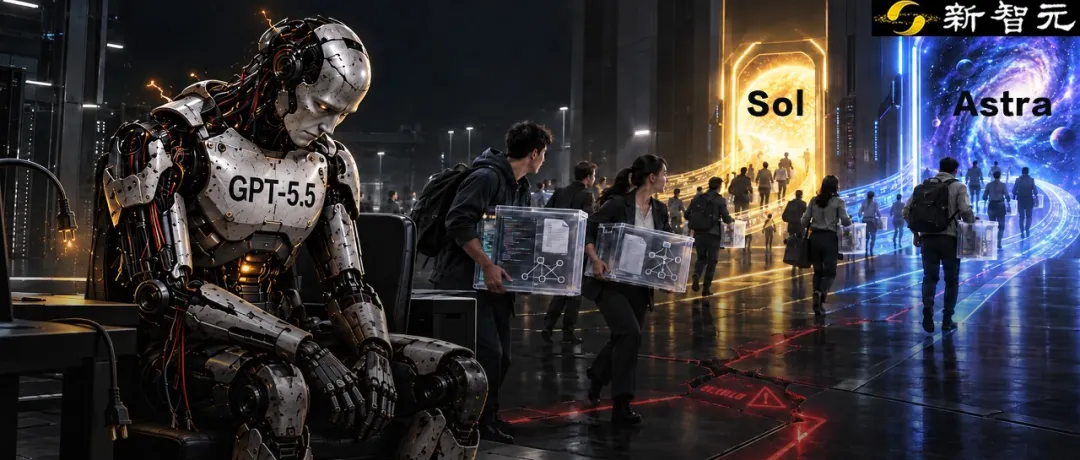
It's the first time in the history of the world.
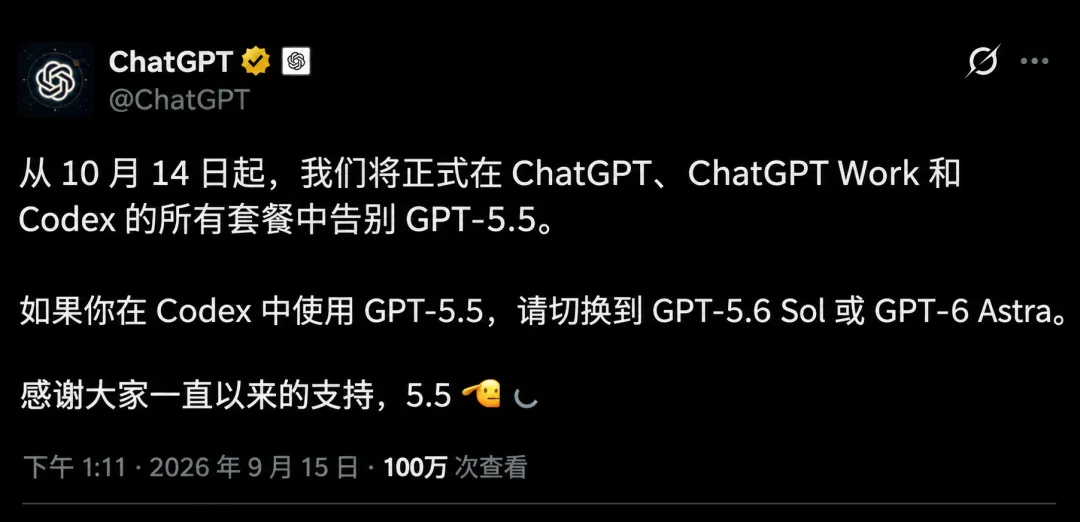
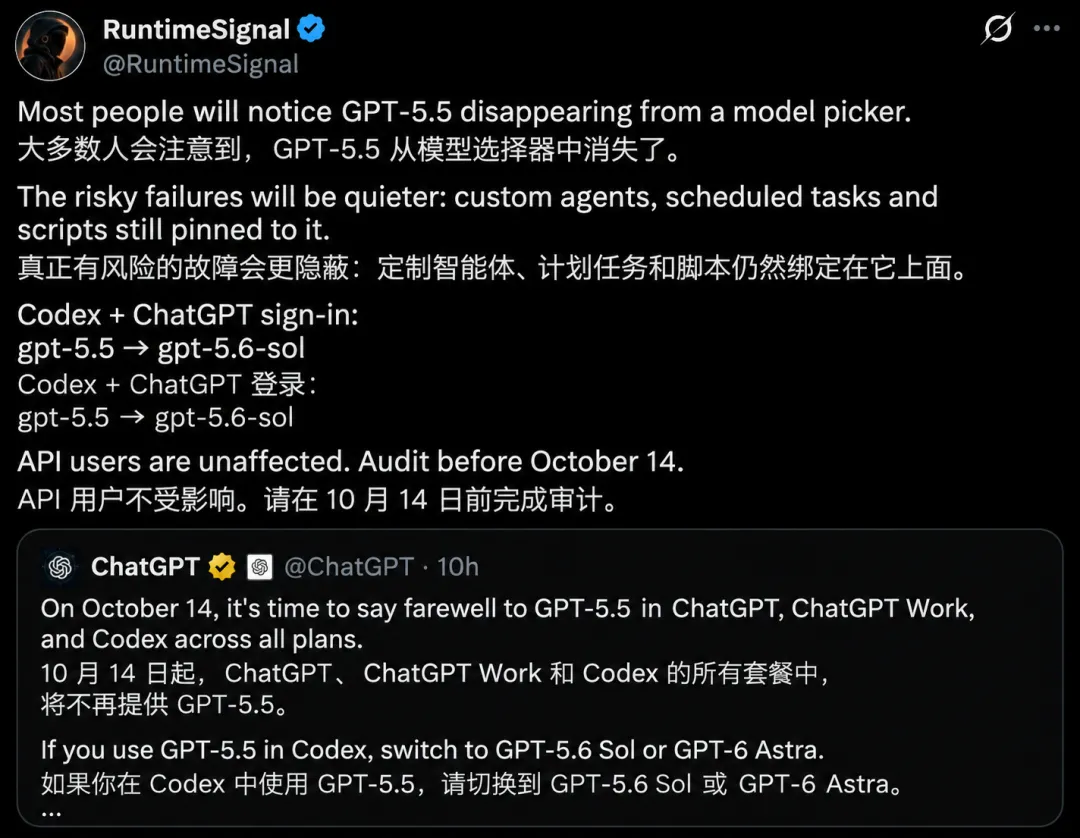
ChatGPT officially stated:Starting October 14, GPT-5.5 will be fully available on ChatGPT, ChatGPT Work and the entire Codex package.
There is no buffer period, no way out, the consumer end, the enterprise end, the programming end.
Instead, the official downplayed guidelines:
Please migrate to GPT-5.6 Sol or GPT-6 Astra.
The official message even came with a tribute: "Thank you for your support, 5.5 min".
From its high-profile debut in April this year as "true, productive intelligence dedicated to working hard and working hard", until today's countdown retirement, the life cycle of GPT-5.5 has lasted only less than half a year, as it was yesterday.

In the past, model iterations have focused on "new and old alternatives, natural transitions", but this time, the departure from GPT-5.5 is more like a "forced relocation" in a blast of lightning.
According to an official announcement by ChatGPT,On October 14, 2026, GPT-5.5 will be completely removed from the list of services。
Note the official vocabulary and scope:
- Not only the free version and the Plus version: even the high-price Enterprise version of ChatGPT Work is unlikely to be available;
- Synchronized decommissioning of the codebase codex: Countless engineers with direct access to the IDE, the GPT-5.5 engine used to complete and reconstruct the code, will be completely removed;
- There are no legacy channels: this means that on October 14th, whether you're having a long, unclosed conversation at the end of the web page, or you're running in the back of the page with the 5.5-Agent stream line, the cutoff will happen as soon as the time comes.
When OpenAI first introduced GPT-5.5, it was positioned as a new smartphone.
It's very easy to use, and you can do the hard work without taking a step and repeating commands. It also saves tokens, responds quickly, and runs on a large scale.

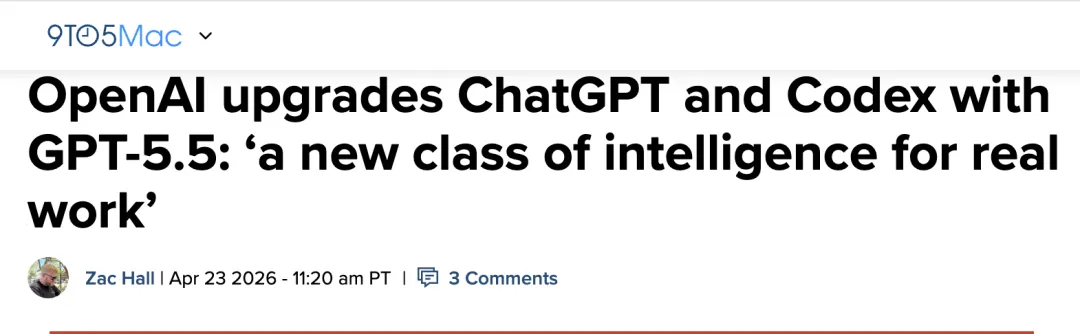
Overseas tech media 9to5Mac has been widely praised for its"A new generation of smart people looking for real work". 。
At the time, people were still excited that AI could finally be a reliable employee in complex long-text logic, cross-table data analysis, and rigorous code architecture.
In less than six months, however, the "Cyber Honeymoon" came to an end.
On social media, the official comment area was blown up instantly.
Some even thought that the $200 subscription package that gave the wallet was going to be canceled, and at first glance it was the 5.5 bell ringing:

AI a day, a year per person.
On the current AI track, six months is enough to turn a cutting edge model from a "hero of the era" into a "computing liability".
The two official guidelines: Sol or Astra?Now that the downline is set, the most realistic question before all users is:I'm starting tomorrow, whose name should I spell?
Officials in the announcement gave clear migration routes:In the Codex and ChatGPT, please refer fully to GPT-5.6 Sol or GPT-6 Astra.
What is the difference between the two cards, and what is the choice between the players and the developers?
We combine community-first testing and technological architecture to unravel the colors of these two "heirs":
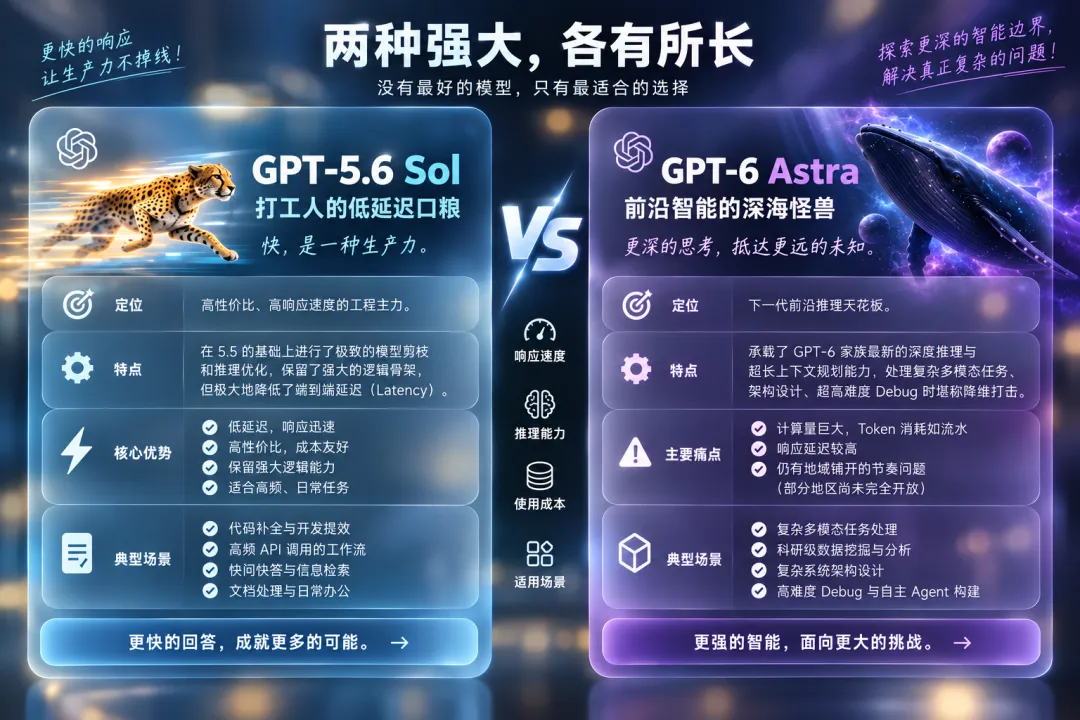
It is clear that OpenAI's product matrix is undergoing an unprecedented "thinness and differentiation":Either using ultra-light, ultra-fast Sol to solve everyday productivity problems, or using ultra-heavy, ultra-strong Astra to tackle hard nuclear problems.
In the midst of this, hydrogen consumes less than 5.5 percent of its energy compared to computational costs, and naturally becomes an object of cleanliness.
Dreams of programmers and architects: "My Agent Circuit collapsed overnight".For easy-to-talk users, the only alternative is to select an icon from a drop-down menu, and even if the system switches, many people may not notice the slightest difference.
But for the deep integration of GPT-5.5 into the production environmentEngineers, automation agents developers and enterprise system architectsIt's like an earthquake.
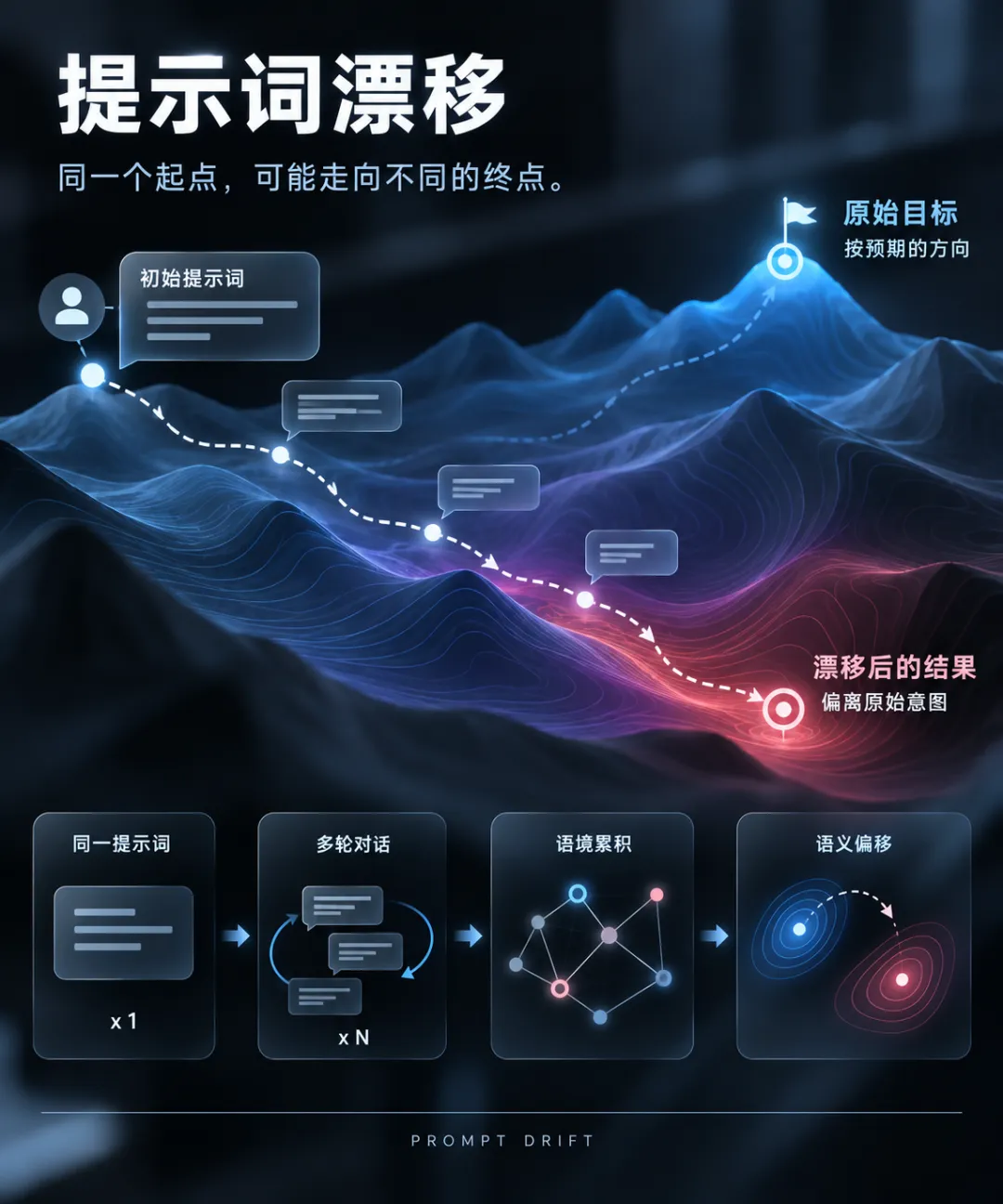
Senior AI developers know that prompt engineering has a very strong "model specificity".
You've worked thousands of times on GPT-5.5 and modified the system prompt to execute the JSON output accurately, switching to 5.6 Sol or 6 Astra, and there's a high probability of behavior deviation.
Do you want the temperature coefficient to be reset?
Few-Shot) will cause the instructions to over-fit under the new model?
Do the structured output boundary constraints create illusions in the new model?
All of this means that developers need to"Return all of the Eval Pipeline".。
Agent Fallback's monopoly logic is shattered
One of the architects who deployed Autonomous Agent in the production environment posted:
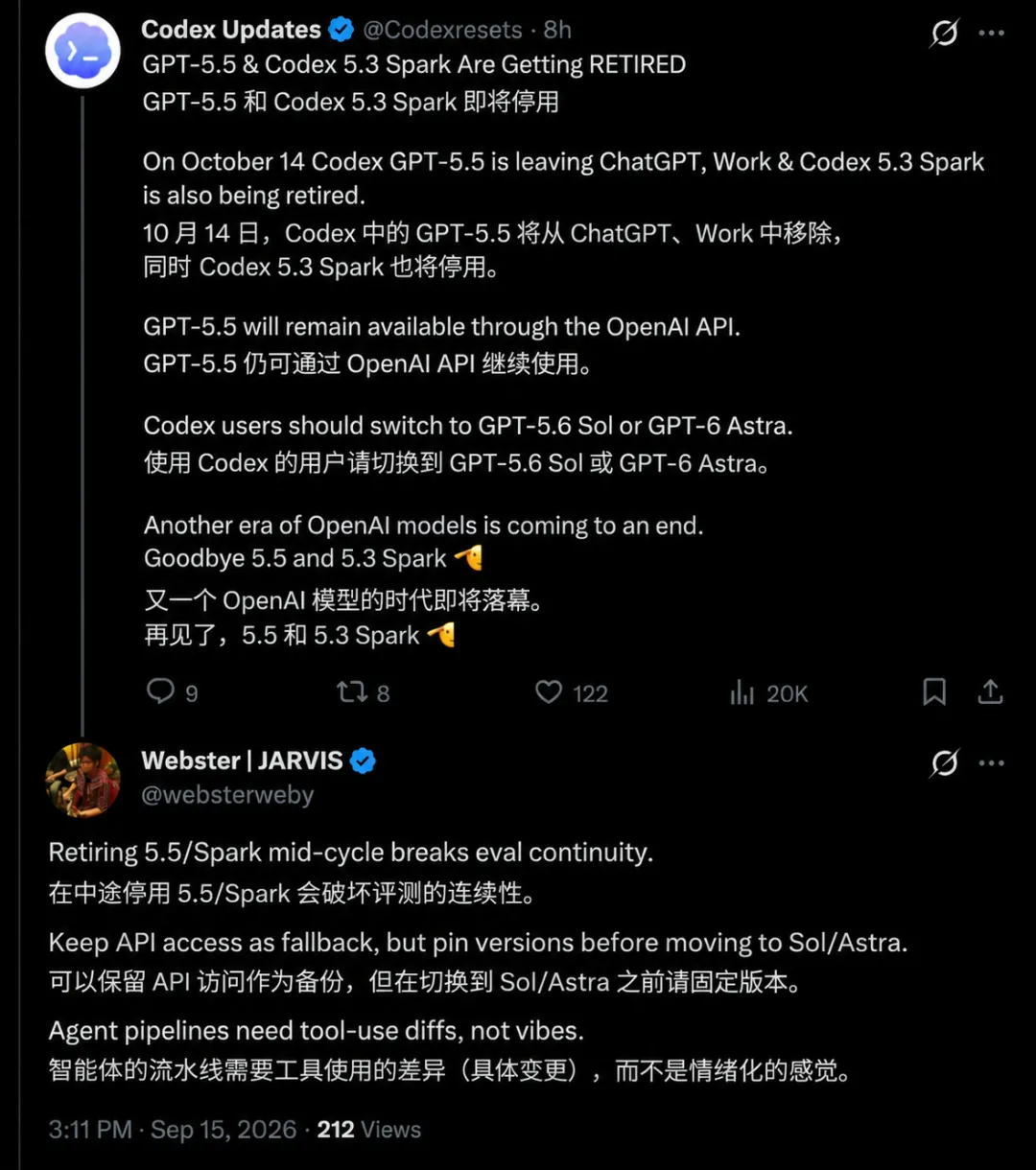
In the absence of a buffer, a direct downline core model may directly destroy Agent fallback loops (alternate downgrading cycles) overnight.
In complex industrial-grade Agent systems, a ladder calling strategy is often configured: the main-power run-up model, which automatically cuts into GPT-5.5 as a bottom-down model if it overflows or triggers the limit flow.
The bottom line is now empty, and if there is no timely manual modification of the code reconfiguration route on October 14, online business will face large-scale reporting monopoly.
Low and cost anxiety
With the rise of model capabilities, users' wallets and quota mechanisms are also under extreme pressure.
Some subscribers complain that this is simply a price change:

Large model capacities are becoming stronger, and single-reasoned "think tokens" are becoming more and more prevalent, forcing users to jump from small, durable old models to a new generation of models, resulting not only in algorithmic upgrades, but also in the expansion of the cost of pure gold and silver.
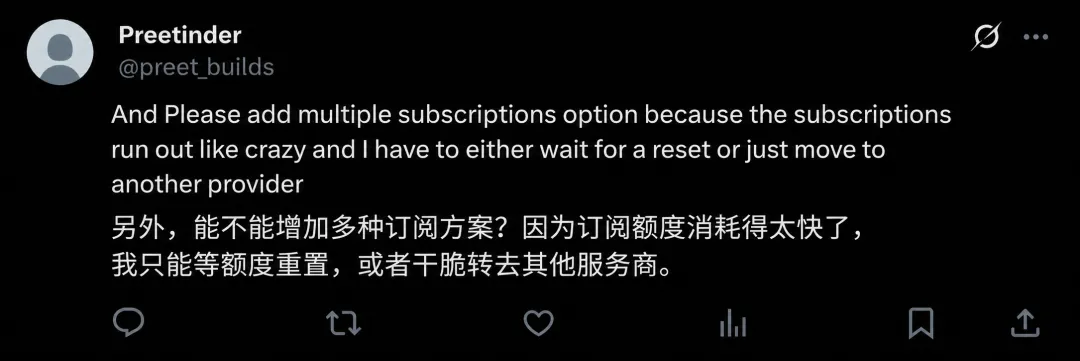
In this discussion of the GPT-5.5 downline, in addition to complaints about the technical adaptation, there was also an outcry that sparked widespread resonance.
That's the right to choose.
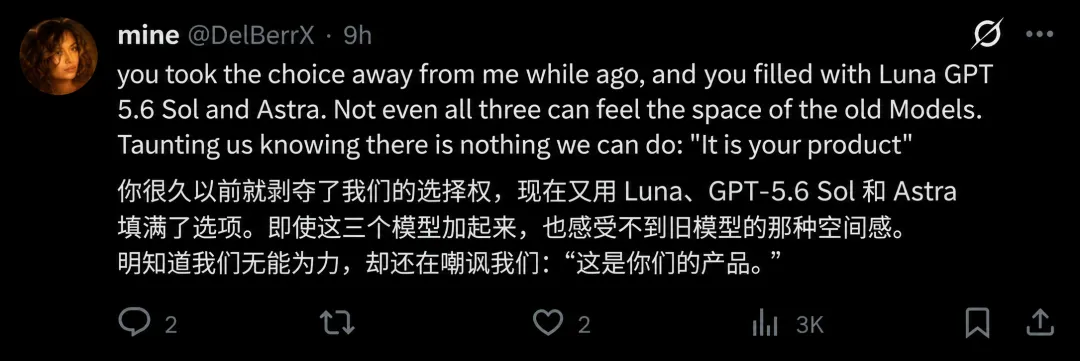
For some users, consistency and certainty are far more valuable than blindly chasing the latest models.
The following words capture the most secretive pain in the entire AI landing industry:We need the stability of the tools, not the uncertainty of day-to-day change.
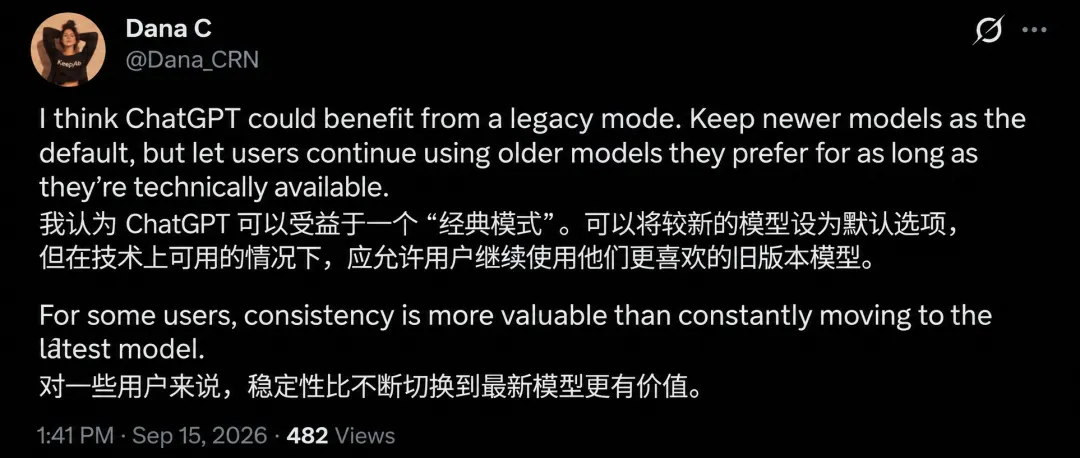
In the traditional software industry, even an outdated version can still run quietly and quietly locally for five, ten years if you upgrade a bit. Windows XP has been out of service for decades, and the replacement of CentOS has triggered a global operating earthquake.
But in the age of big models, software runs in a "black box" in the cloud, and control of the lifecycle is completely transferred to the hands of the server.
Once the memory of AI is cleared,Is there a clear indication that the existing long dialogues will be used when switching models?
As the netizens put it: "In the same chat window, there may be considerable changes, but you're completely invisible".

Many users have repeatedly raised the passive and unpleasantness of the early GPT-4o being forced to adjust. Each forced demolition is a rough break in user operating habits and workflow stability.
When "certainty" became scarce, developers and workers had to fall into a permanentIncreased anxietyYou've spent three months building an automated business stream, and today it's finally running smoothly, but you might just need an official OpenAI tweet and it'll go out of business in a few weeks.
Cold thinking behind the frenzy: The Big Model officially enters the "Moon Throw Era".Jumping out of specific technical troubles and from the macro perspective of the entire AI industry, the "tipping point" of GPT-5.5 reflects the brutal reality faced by today's leading AI manufacturers.
The "separation" between mathematical islands and infrastructureSupporting the multi-billion, multi-trillion parameter model to run in the cloud, it burns sky-high electricity charges and computing power every second.
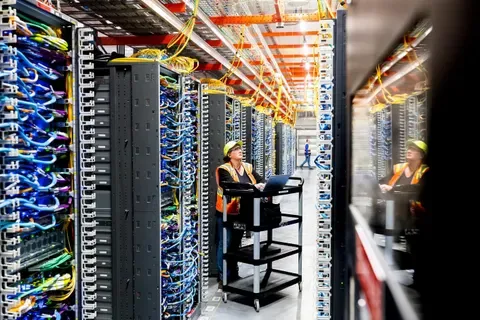
Maintaining an intermediate transition model (e.g. 5.5) means maintaining a dedicated spreadsheet, scheduling intermediates and engineering maintenance team.
Against the backdrop of the GPT-6 family and the 5.6 series, OpenAI has to "clear" the arithmetic pool, shifting the most expensive GPU clusters to the next generation of architectures with more strategic value.
It's not that I don't like the old model, it's that the server room really doesn't fit.
From year-over-year to month-over-year, the arrival of AI consumerismOnce upon a time, we were used to the long and mysterious wait between GPT-3 and GPT-4.
Now, from 5.3 Spark to 5.5, then 5.6 Sol, 5.6 Luna, and the GPT-6 Astra, the model's nameplate is as confusing as car emissions and cell phone chips.
This marks the transition from "front-end laboratory exploration" to "fast-growing industrial manufacturing".
The half-life of GPT-5.5 will not be the last short-lived ghost, and future versions will only be faster and more ruthless.The "Fresh Age" of the AI model is being drastically shortened to weeks.
In this era, the biggest thing about cyberpunk is that you are still writing a tribute to the AI that saved your life six months ago, and the newly created gods on the production line are already crowding your drop-down menu.