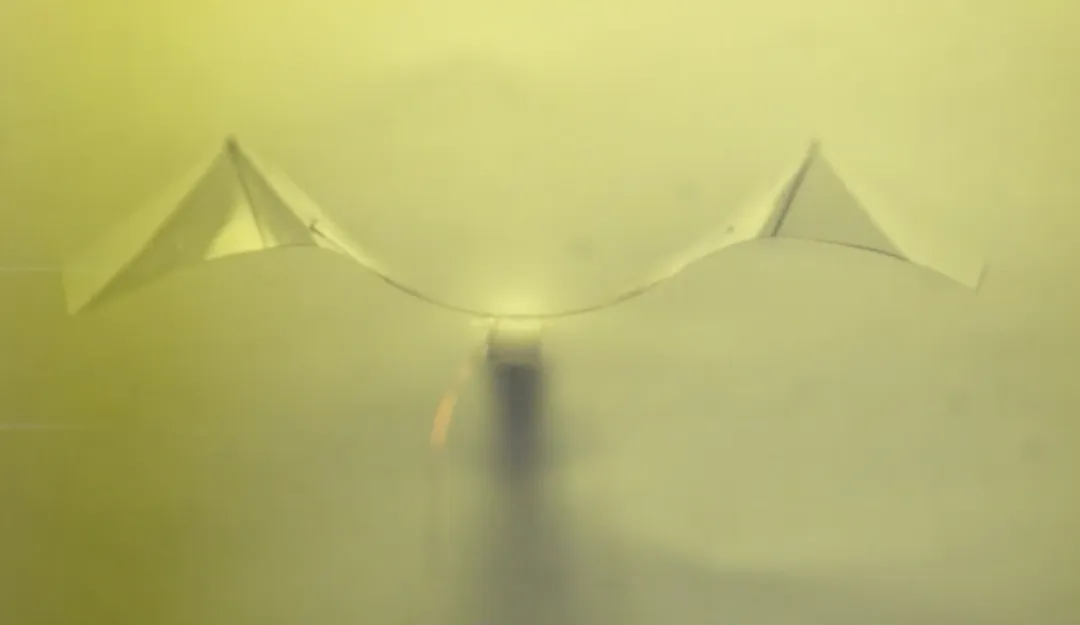
“ After being shot down, pressed down, you can still fly.
If you were flying in front of a robot weighing only 185 milligrams, you would probably realize that it's best not to touch it.
After all, in the world of micro-robots, light and brittle are often a pair of difficult siblings. Wings, propellers, and drivers are compressed to a millimeter scale, and a single collision can end the flight directly.
But this time, the researchers chose a very straightforward test method: take the pump and shoot it. It wasn't enough, and they took a total of about 2.1 kg of pumps and squeezed the whole thing, which was only 185 mg.
In return, it was pressed about 11,000 times its own weight. As a result, the weight was removed, and its wings reopened, and it flew again.
This is not a robotic anti-tank challenge, but a study of micro-flying robots from Science Robotics published on September 30. Researchers from the University of California, Los Angeles, the Massachusetts Institute of Technology and the University of California, Davis have developed a full-polymer micro-flying robot weighing just 185 milligrams.
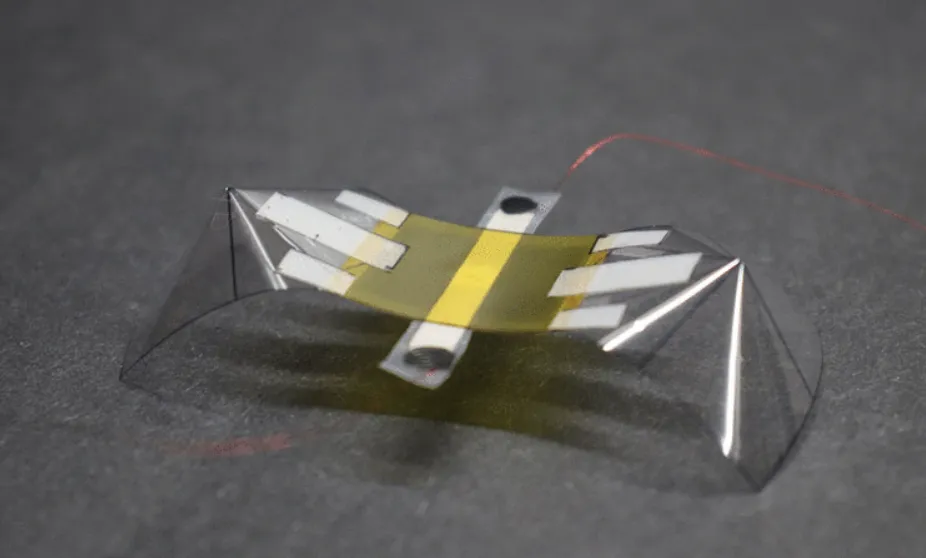

It's a really special place, not just a light one. Researchers have tried to get rid of as many hard structures as possible that are the hardest to touch on micro-flying robots.
01.
Why didn't a micro-flying robot crash?
In nature, an insect strikes leaves, walls, and even squeezes into gaps, which is not a big deal. Its wings, outer bones, and muscles themselves are flexible.
But artificial winged robots are not much alike. For hundreds of millimeters or even lighter robots to fan their wings, past designs often relied on rigid wings, mechanical propulsion structures, or rigid drives.
While these rigid components allow robots to perform precise movements, there is also a clear problem: they are less prone to clashing. When struck or squeezed, they are unlike the soft bodies of insects, which are able to disperse the impact by deformation. The force is more easily concentrated in local positions such as wings, propulsion structures or drivers, and damage or even direct failure can occur if it exceeds the tolerance range.
The team therefore came up with an idea: since insects are resistant to impact by their flexible structures, could they not simply soften the robot's power systems and wings?
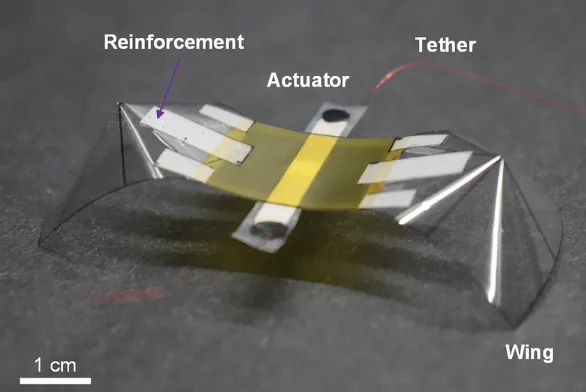
In the end, they made the APFR (All-Polymer Flying Robot, all-polymer flying robot) quite straightforward. A flexible curved drive with two flexible wings attached at both ends.
This design, on the one hand, reduces complex mechanical connections and, on the other hand, allows the entire structure to absorb external forces through transformation.
02.
How does it spread its wings without a moving device?
The robot's cylindrical muscle cylinder is an electro-extensive curve drive. The core material is called P (VDF-TrFE-CFE), a polymer of three-membered lithium-ion batteries.
The name sounds like a hard core, and the principle can be understood simply by adding hydrogen to an electric field, changing the molecular composition inside the polymer, causing the material to stretch; after the electric field is removed, it is restored.
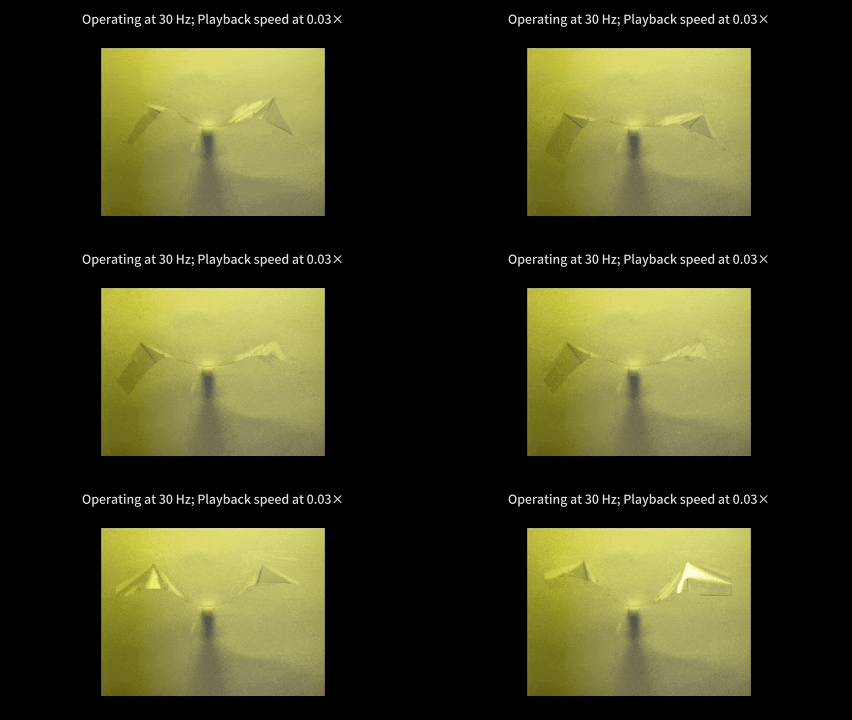
The researchers then combined the polymer film with the back layer of polyamide to form a two-layer structure. Thus, the expansion that originally occurred in the thin film plane was transformed into a distinct up-and-down curve. Thus, the electric field kept switching on and off, and the drive began to swing back and forth, like a rapidly bending piece of synthetic muscle tissue.
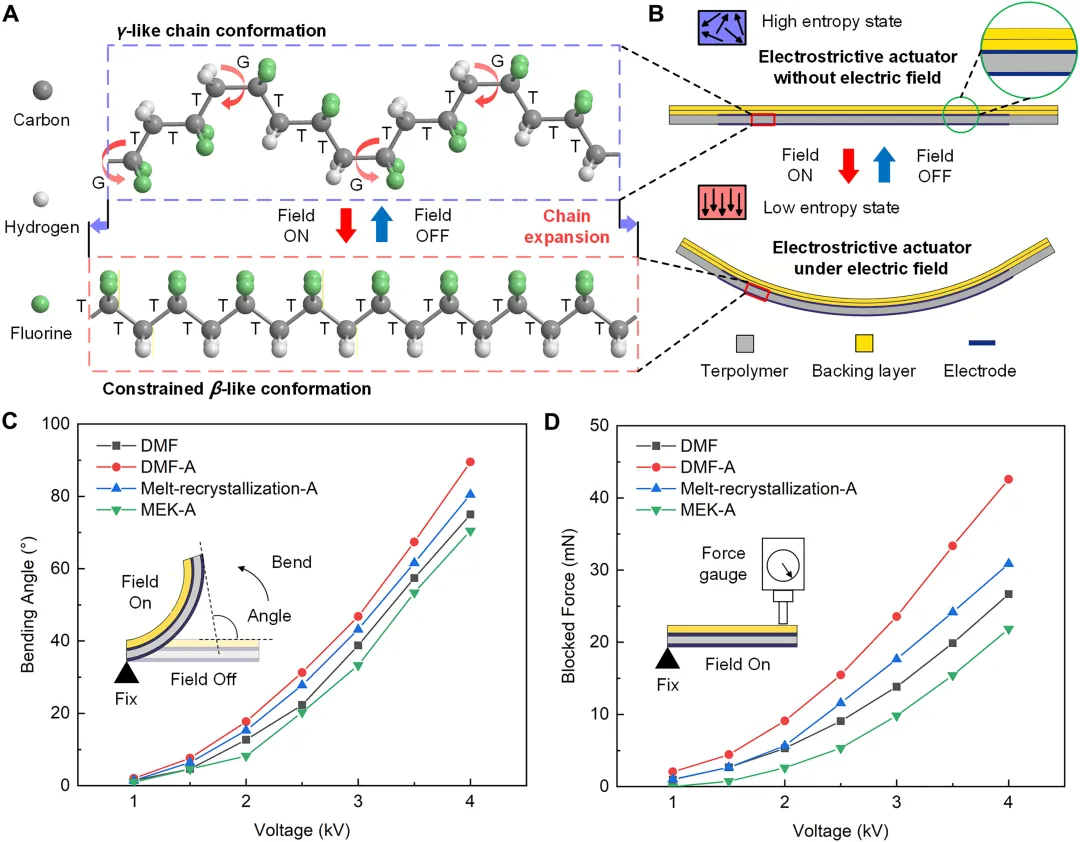
Electro-extended polymer-driven wing activator
In addition to being flexible, it is also powerful enough. At 4 kV, 110 Hz, the engine's maximum bending angle is 136°, and the researchers calculated a power density of 1,600 watts/kg.
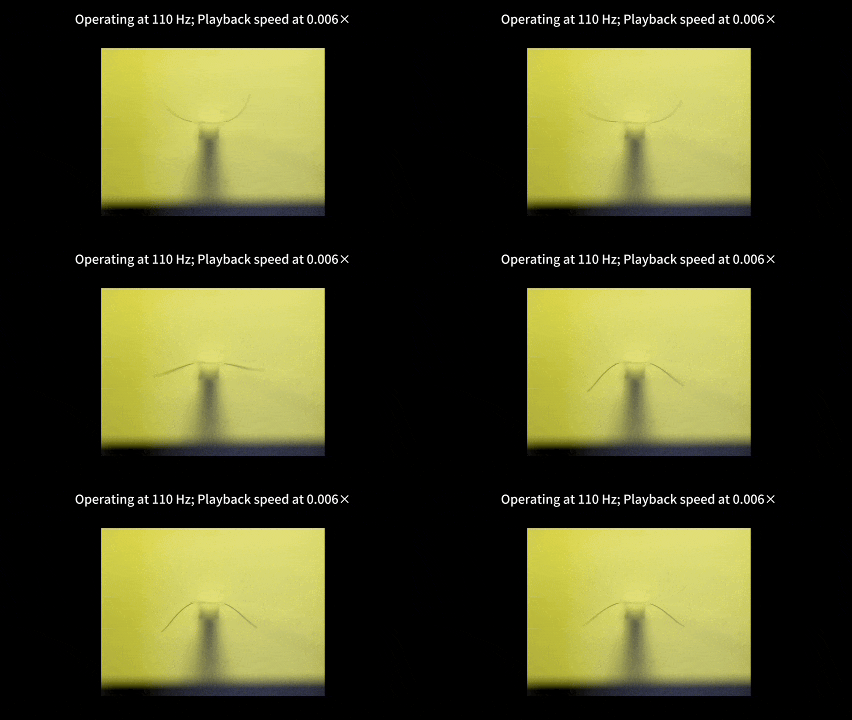
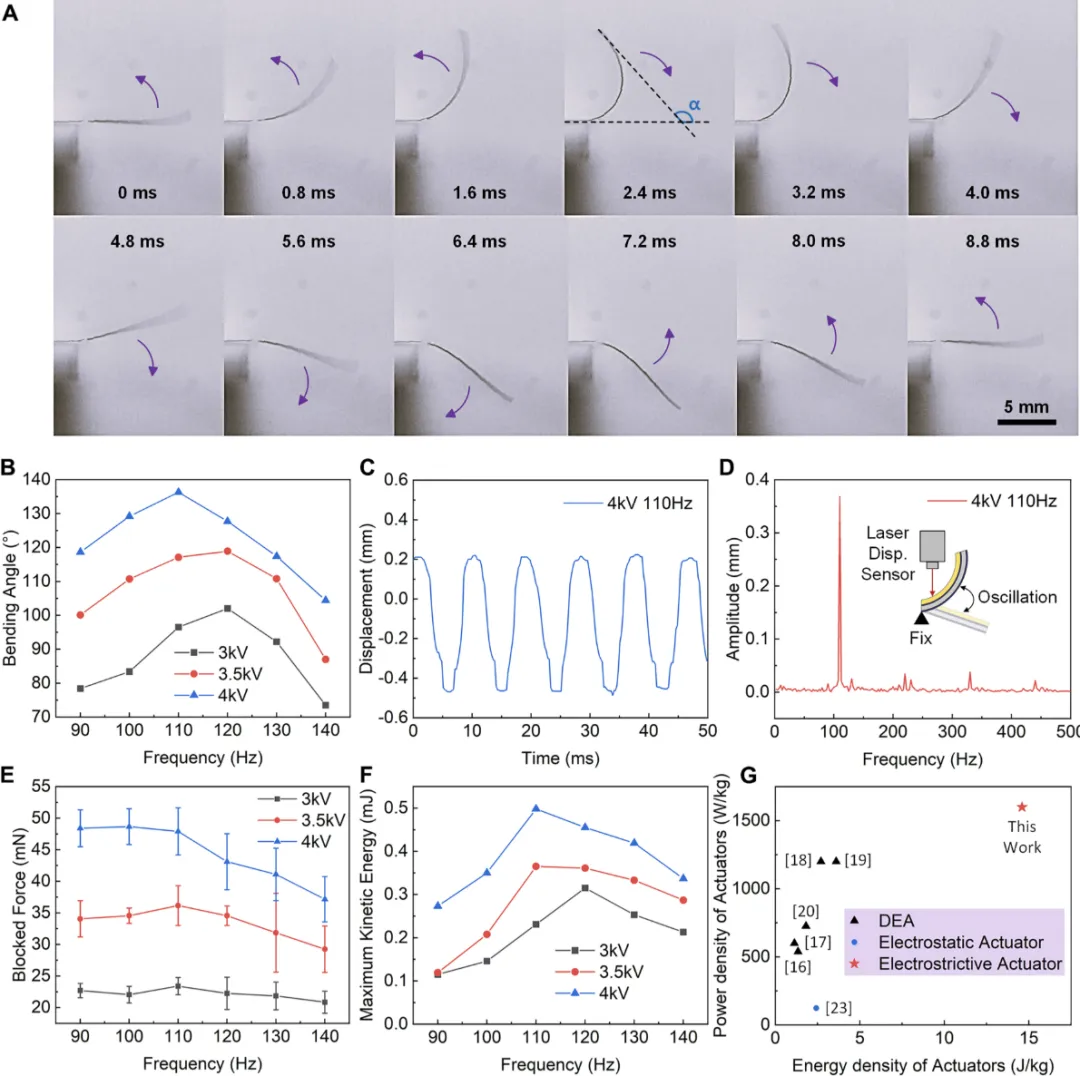
These two indicators are critical. Because the contradictions faced by micro-winged robots have always been direct: the drivers must be soft to stay in shape; they must also be fast enough, powerful enough, or they can't move their wings at all.
However, it is not enough to be strong enough to beat the air, but also to speak skills.
The two wings of the robot are folded together by a 10 micrometre thick PET film, and form a flexible structure similar to a cylinder. When the driver moves upwards, air resistance makes the cylinder shrink somewhat, reducing the resistance; at another turn, the wings are reopened with greater area and air action.
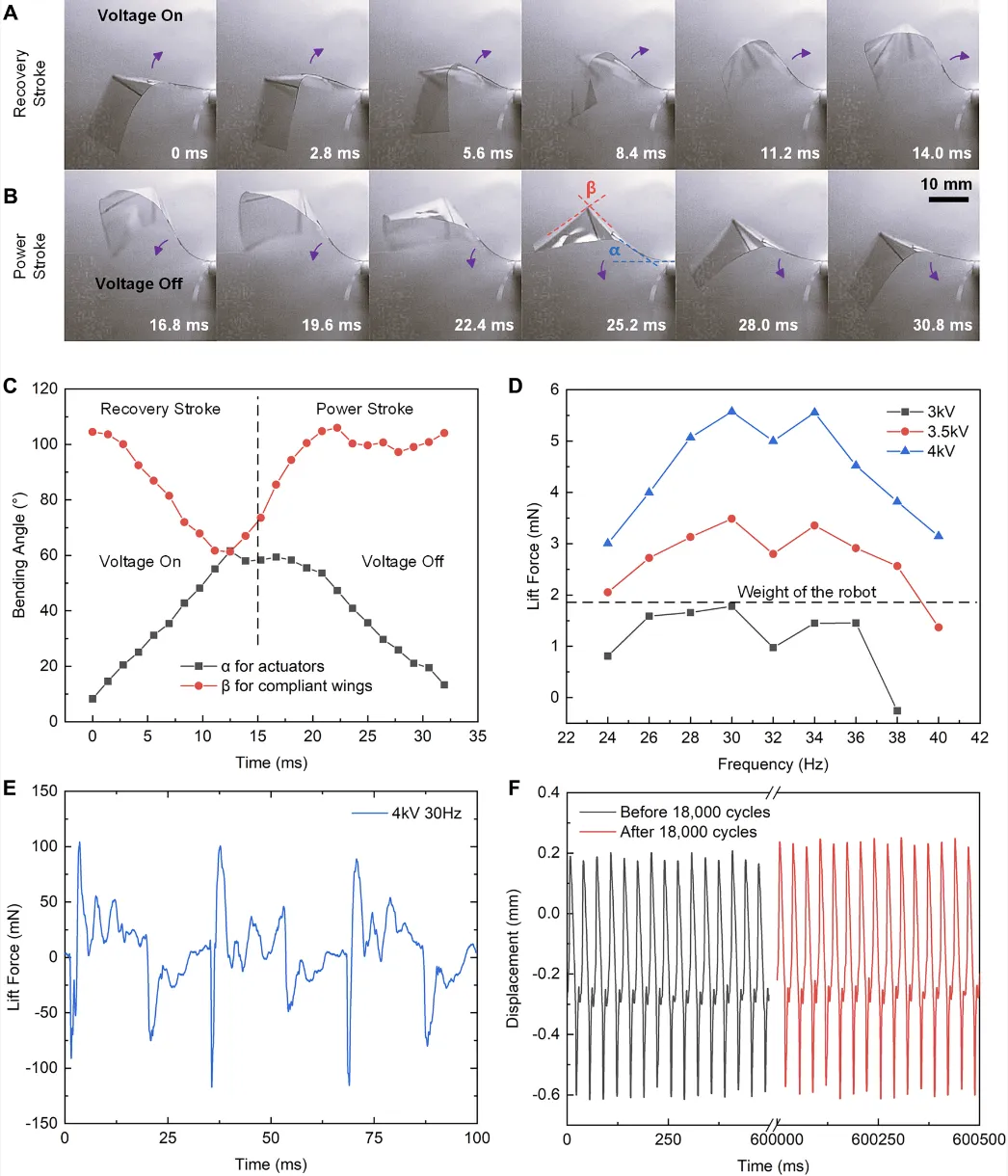
In other words, it has no additional installation of a complex set of devices to actively adjust the angle of the wing. The wings themselves become passively deformed with air resistance.
03.
From a flying kite to a real flight.
After the wings were installed, the robot's actual flight frequency was reduced to 30 Hz instead of 110 Hz in the previous driver test.
This is important: 110 Hz, 136°, 1600 watts/kg, which is the performance of the drive itself; and when a complete robot actually takes off, it uses a different set of conditions.
At 4 kV, 30 Hz, the robot generated a net gain of 5.6 milliliters of buffalo, with a weighting ratio of 3.0.[3] That is, the net gain produced was about three times its own weight.[4] At the same time, its power consumption was 0.643 watts and the corresponding gain was 8.3 milliliters of buffalo/watt.[5] According to the data in the paper, these two indicators outperformed most of the AAC-class winged robots listed in comparison.
Then it really left the ground. Not all of the flight demonstrations took off with mechanical aids, but the robot still connected the two substrate lines and was powered by external equipment.
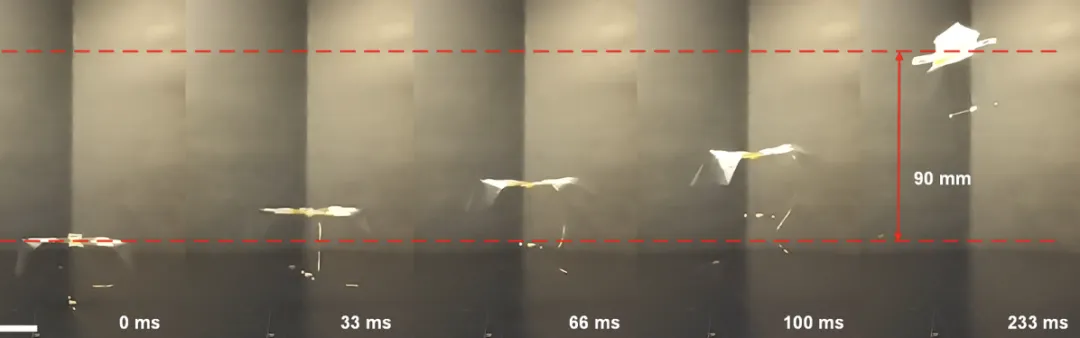
It's really interesting, it's a takeoff experiment. In the first 100 milliseconds of the robot's launch, or the first three wing cycles, it climbed up about 40 millimeters, reaching an average speed of 40 centimeters per second. After seven cycles, it has climbed about 90 millimeters.
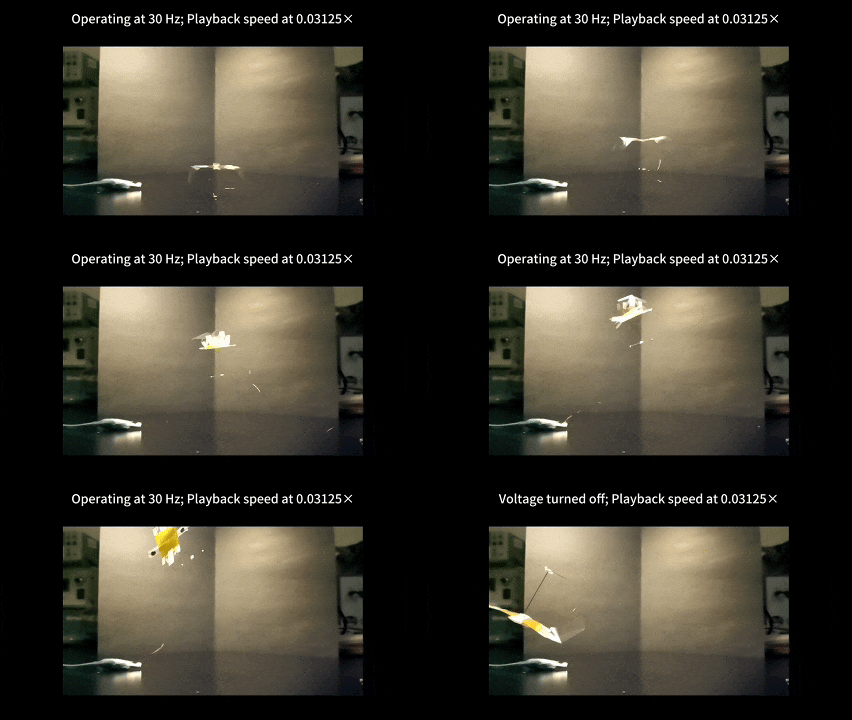
The reason is also realistic. Currently, the robot also connects external power supplies via two fine lines, and the paper argues that the imbalance in torque and air force disruption caused by the line leads to gestural instability.
So strictly speaking, it's not an insect bug that has been able to fly freely with its own batteries, sensors and control systems. It proves that this whole set of polymers, non-conductive structures, already have the ability to send themselves off the ground.
04.
He also holds 11,000 times his own weight.
I'm really testing this structure, and this is the next one.Anti-shock and anti-compression tests。
I'm not going to lie to you.
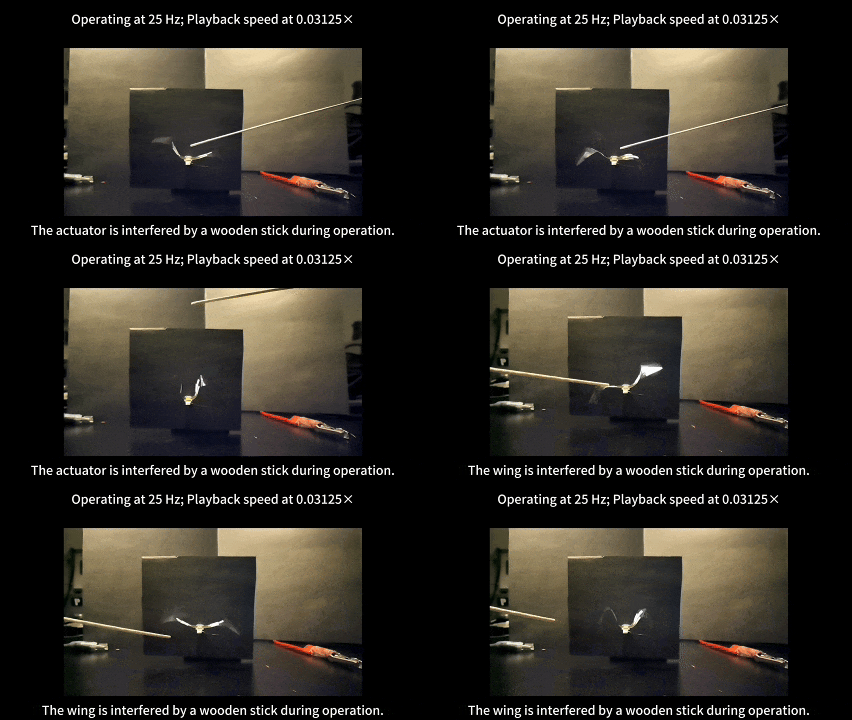
The researchers directly impacted the robot during the flight, with an impact impact of about 0.20 bulls per second.
After being hit, the robot didn't scatter. It flew back upwards, climbing about 60 millimeters in 165 milliseconds, at an average speed of about 36 cm/s, with little change compared to 40 cm/s at normal takeoff.
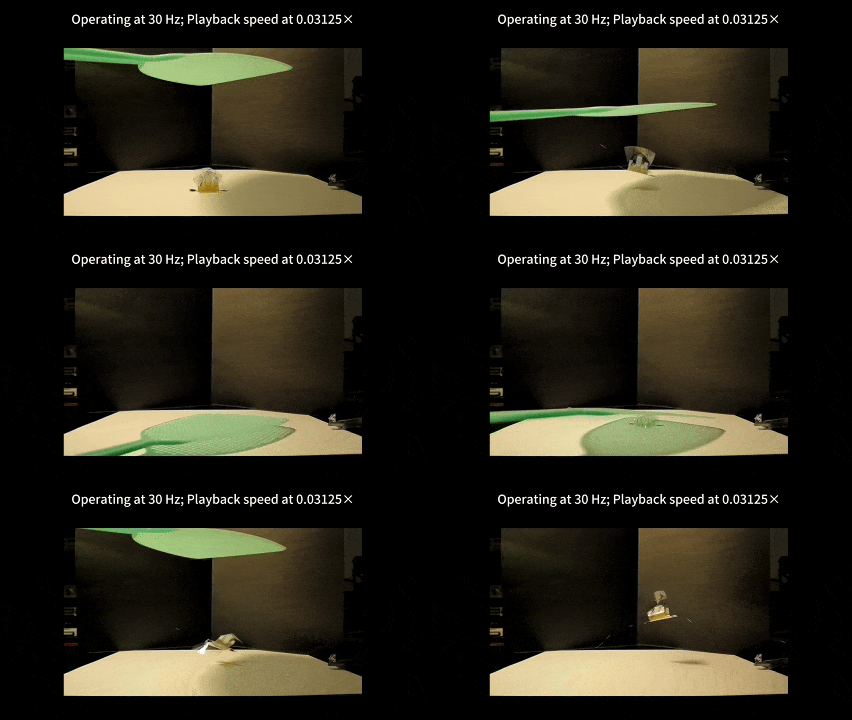
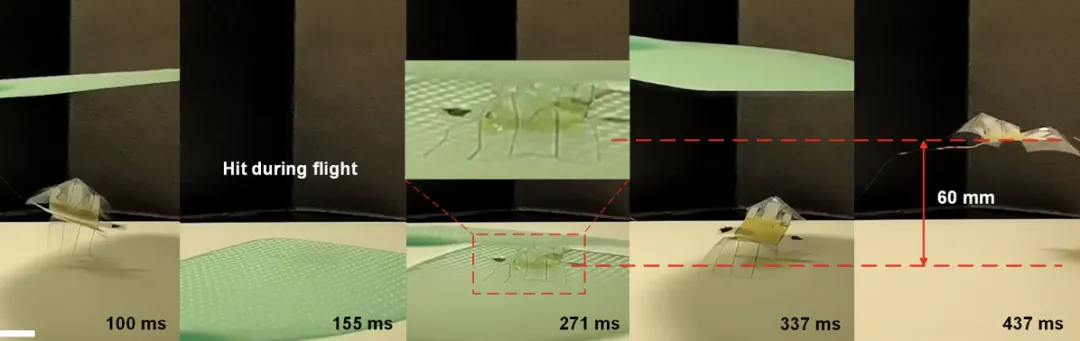
The second link is more direct: pressure.
The researchers pressed a total weight of about 2.1 kg on the robot. For a 185-millimeter robot, which is about 110,000 times its own weight, the entire flexible wing was directly pressed.
But because the wings are able to absorb loads through elastic deformation, there is no irreversible tearing. After the weight is removed, the wings regain shape and the robot climbs 42 mm upwards in 233 milliseconds.
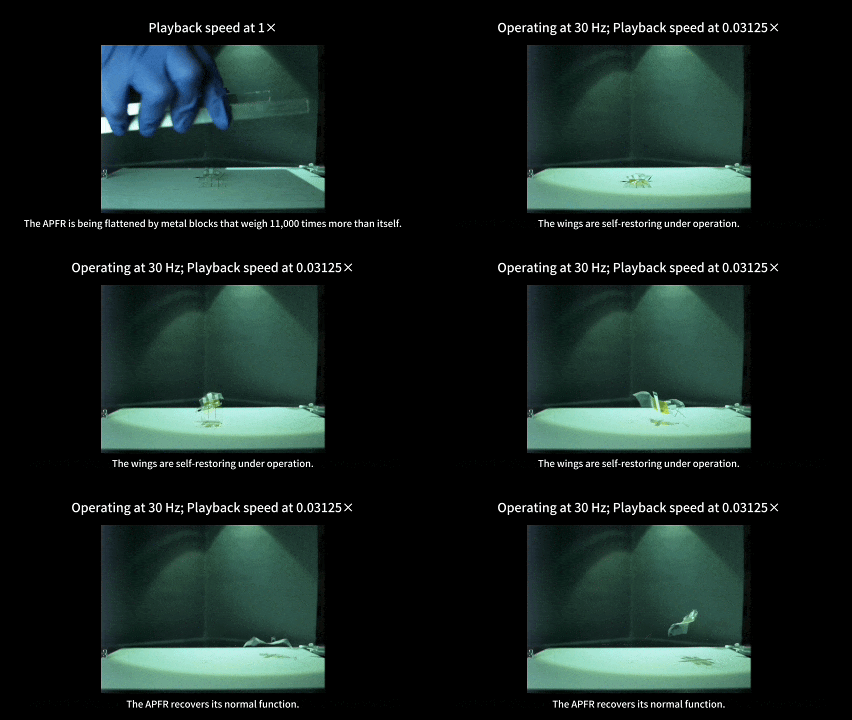
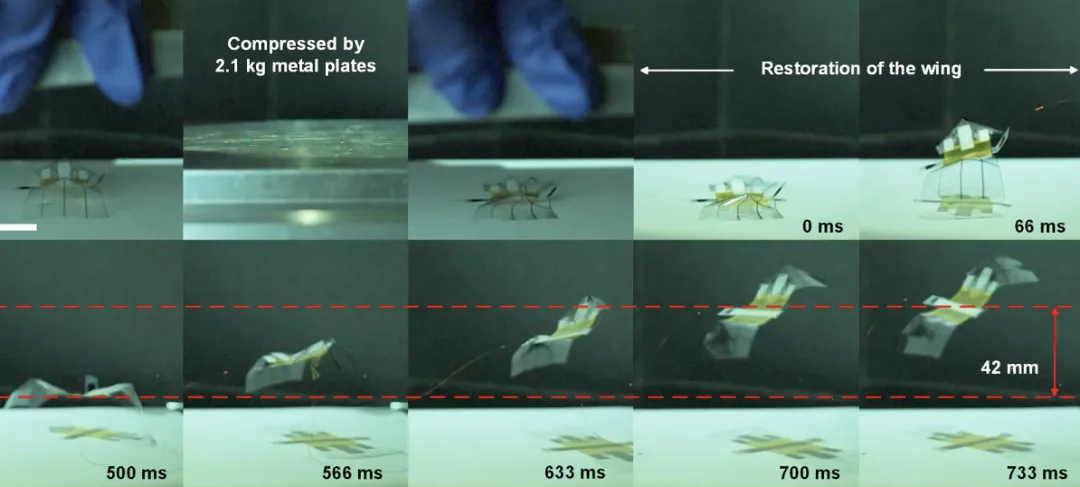
The researchers also made even more severe scars on the wings. Some scars cannot recover on their own when stationary. However, as soon as the robot begins to wing again, the air resistance in the dynamic impulse will help the wings retract the scars.
In the experiment, some scars recovered after three wing cycles. The flexible structure of flying robots restored its geometric shape through dynamic shapeshifting.
In further tests, after the robot was compressed in three directions along x, y, and z respectively, the lifting power remained the same at 98.5%, 98.0% and 97.4% respectively.
This is probably the most interesting part of the work. In the face of a fragile little robot, the researchers did not put a tougher piece of brass armor on it. They chose the opposite direction to make it soft enough to be compressed and recovered.
05.
What is the distance from a real flying machine to a flying machine?
Of course, it's too early to say that robots like this can immediately drill into the rubble.
The first very interesting problem is 4 volts.
Although the robot's size and weight have reached insect-scale, it still needs a kilowatt voltage to drive. The paper suggests that multilayer thinner three-dimensional co-polymer films can be stacked in the future, further reducing the working voltage from kilowatt to hundreds of volts.
The second issue is efficiency.
Currently, the energy efficiency of the drive is only about 5.7 percent. A large part of the energy is lost in the form of resistance dissipation and geothermal heat generated by carbon nanotube electrodes when the voltage is withdrawn. Researchers believe that by adding a charge recycling circuit, there is a theoretical opportunity to significantly reduce power consumption.
The third question is the old question that all super-light flying robots cannot solve: where is the power?
Flight experiments today still rely on external power supply. To truly achieve wireless autonomous flight, lightweight power supplies, sensors, microcontrollers, and closed-loop flight control systems are needed. These things are not small for every millimeter, for a robot with a total weight of 185 millimeters.
Its lifespan is currently unlimited. After 60,000 cycles under 3.5 volts, 30 Hz conditions, the robot's lifting power varies from about 3.4 millions of oxen at the beginning to about 3.1 millions of oxen at the end. Researchers therefore recorded a typical lifespan of about 60,000 wings under these test conditions, or about 33 minutes.
So what this study really pushes forward is a more basic question: when flying robots shrink to the A-level, can they both fly up and not be afraid of hitting, afraid of hitting, afraid of being pressured like precision glass instruments?
This time, the research team suggested a way to soften the drives, wings and mechanical structures, removing the conventional actuators directly.
In the future, if the on-board power and control systems can continue to shrink, a batch of flying robots only the size of insects, capable of colliding in narrow spaces and continuing to work after squeezing, will be able to actually enter environmental monitoring, hazardous space detection and search and rescue.
Micro-flying robots, if they want to fly into the real world, may first learn not to fly faster, but to fly after being photographed.