Who says DeepSeek vacation is free? Yesterday, DeepSeek Harness was updated again.
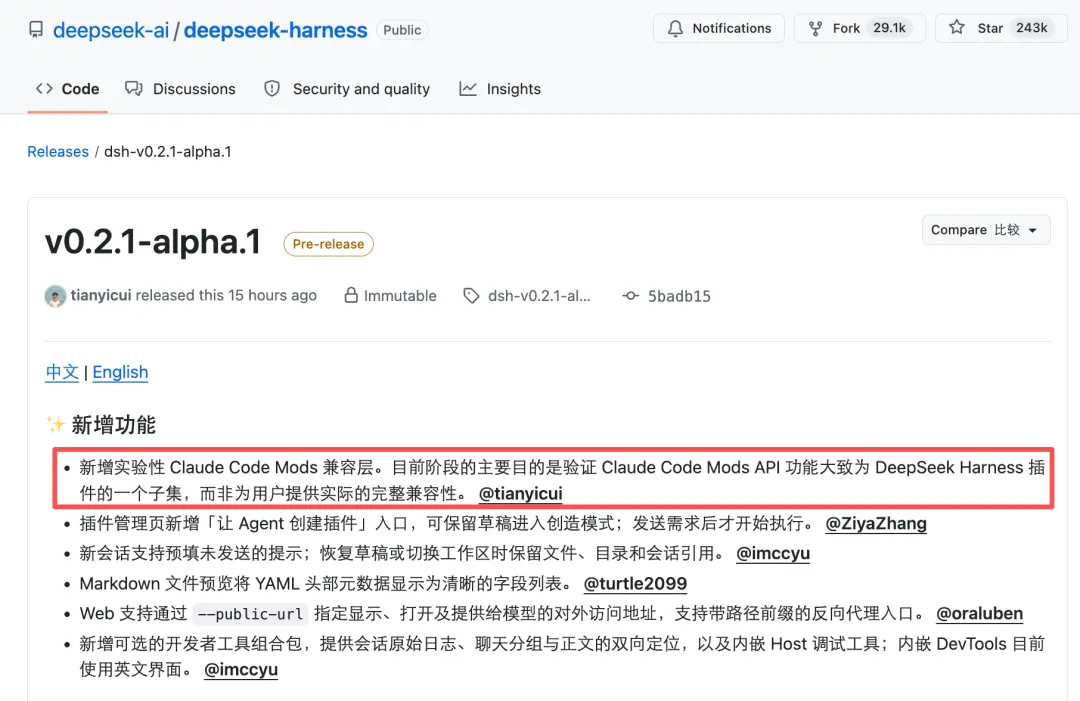
With the release of v0.2.1-alpha.1, a new feature was added: the experimental Claude Code Mods compatibility layer.
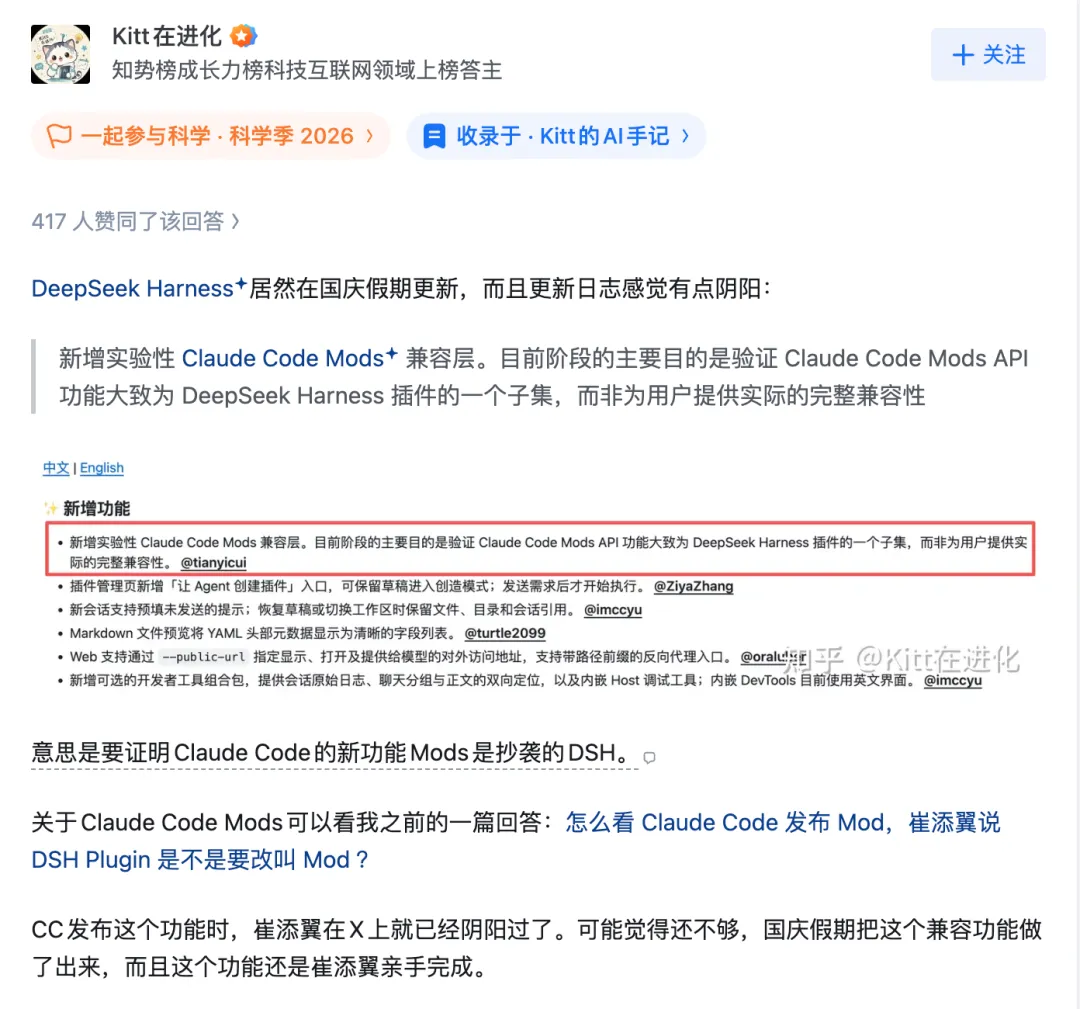
What's more interesting is the official explanation: this is the first time I want to verify that the capabilities of the Claude Code Mods API belong to a subset of the capabilities of the DeepSeek Harness plugin.
It's probably translated as: These capabilities that you've just opened up, my plugin architecture can handle.
However, if you want to understand this update, you have to go back in time.
Two days ago, Claude Code recently launched Mods. Friends who have played the game should not be unfamiliar with Mod, which supports installing modules, changing interfaces, adding functionality, and even changing gameplay.
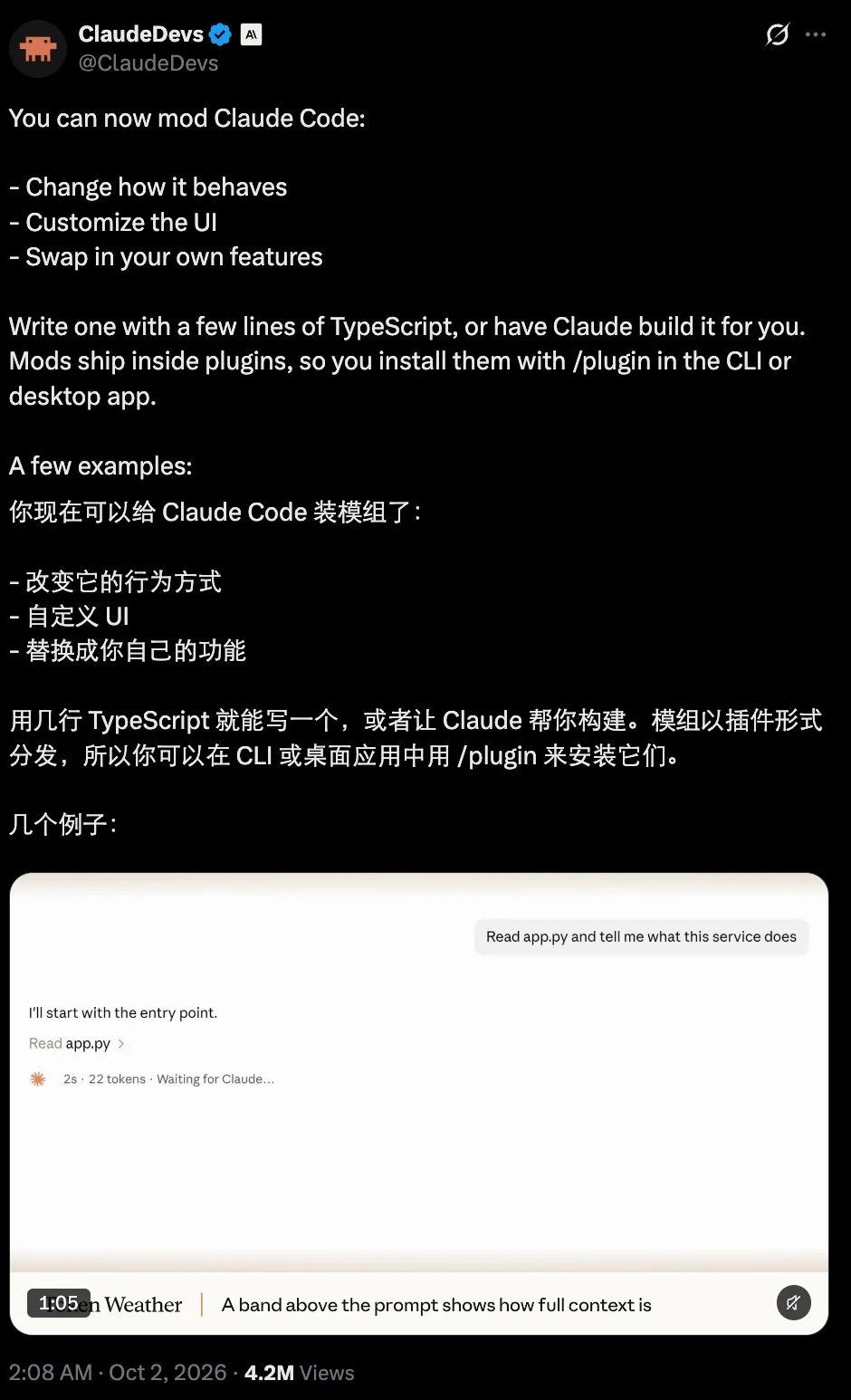
Claude Code Mods can also be understood as: to give your AI programming tools the modifications you want to add. For example, you can add a real-time dashboard if you don't see how much is used in the context; you can write an interception rule if you want some kind of command to perform more than one check; you can also create an interface if you want to review the modified code in your own way.
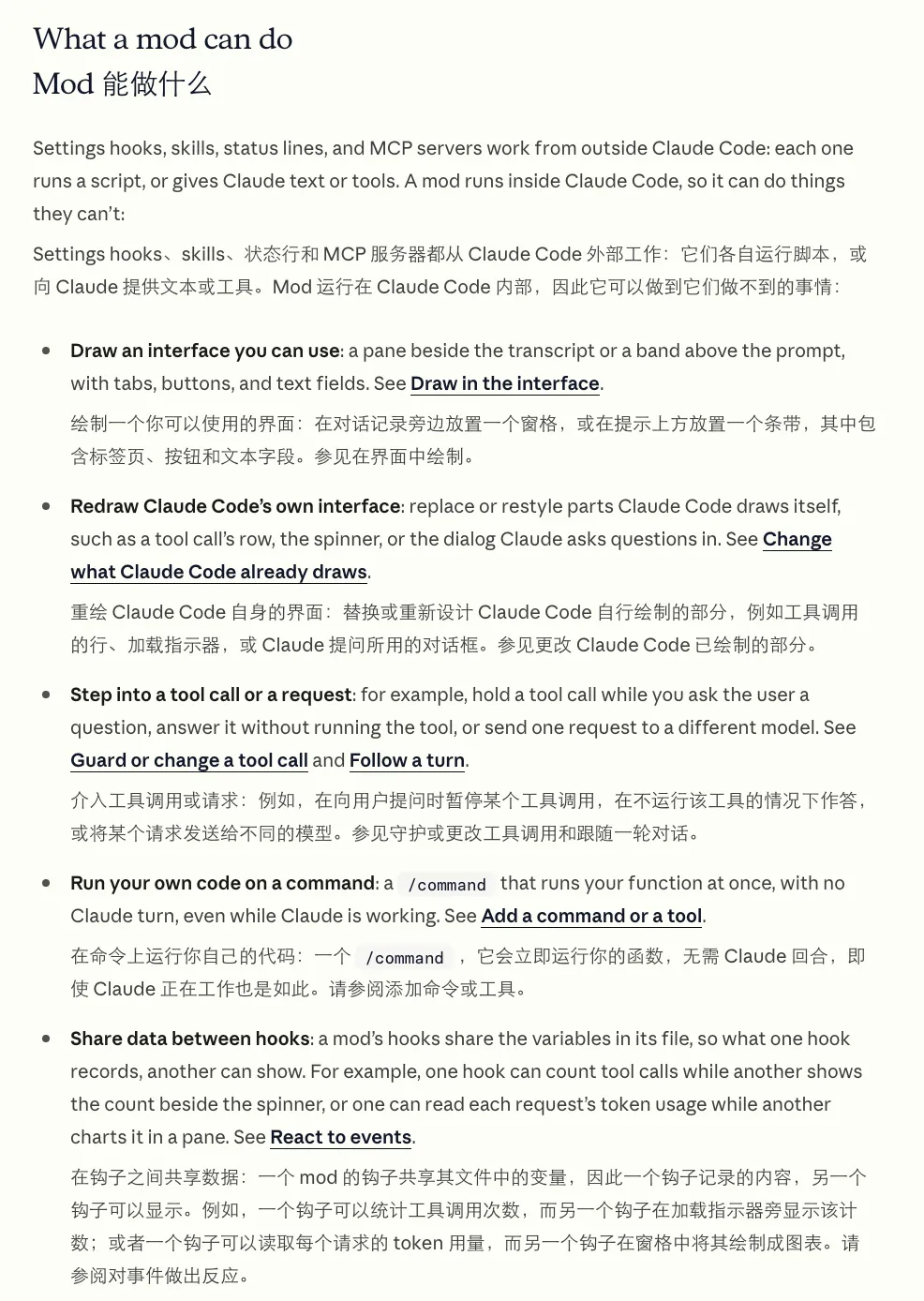
Its technical implementation is a JavaScript or TypeScript event processing function running within Claude Code. Calling tools, submission of prompt words, and interface drawing can all be Mod intervention: observe, modify, or take this step.
As for its differences from previous concepts, we can understand it this way: Skill gives AI a set of ways to do things, MCP connects external tools and data to AI, and Mod allows you to further transform the interface and work behavior of AI tools themselves.
The official examples will also make a living.
One, Token Weather, uses the context as a "weather forecast": the lowest occupancy is sunny weather, and the more crowded it gets, the more the wind blows.
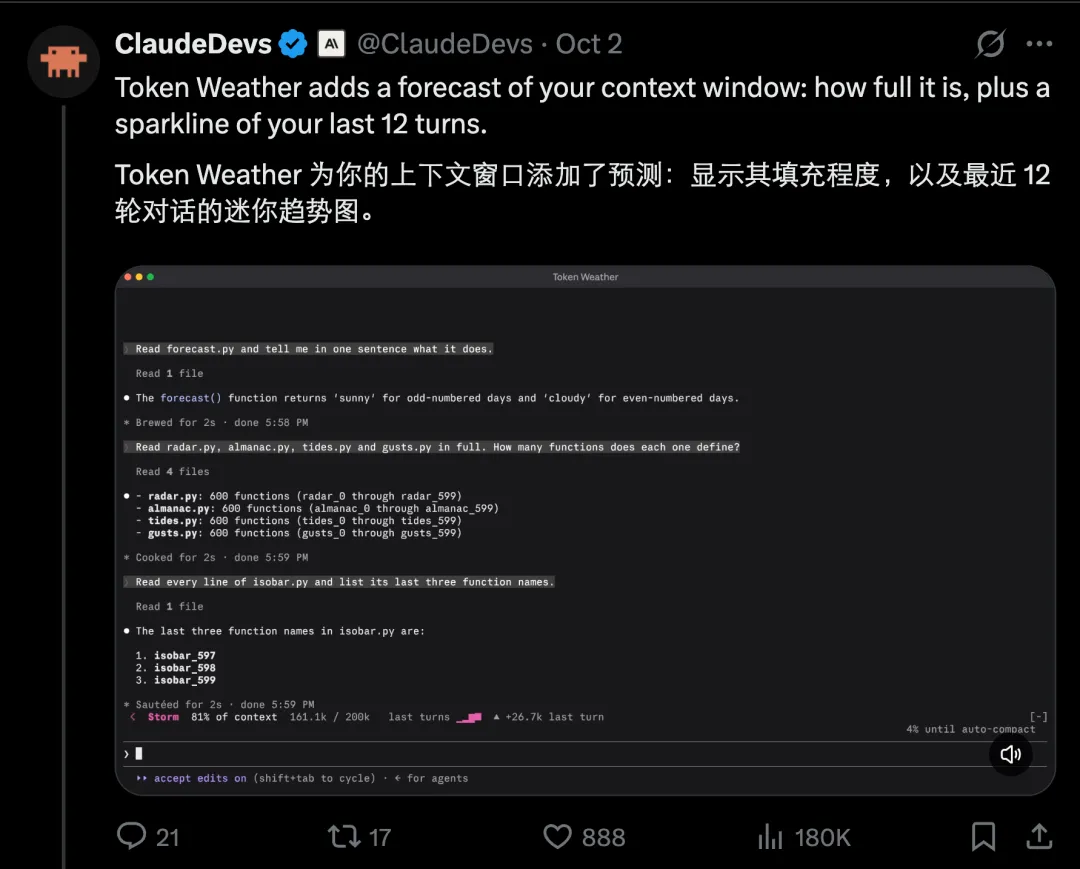
The other two are more convenient: Blast Radius displays effects before executing high-risk commands, handing them over to the user to decide; and Replay Theater allows you to review file changes step by step.
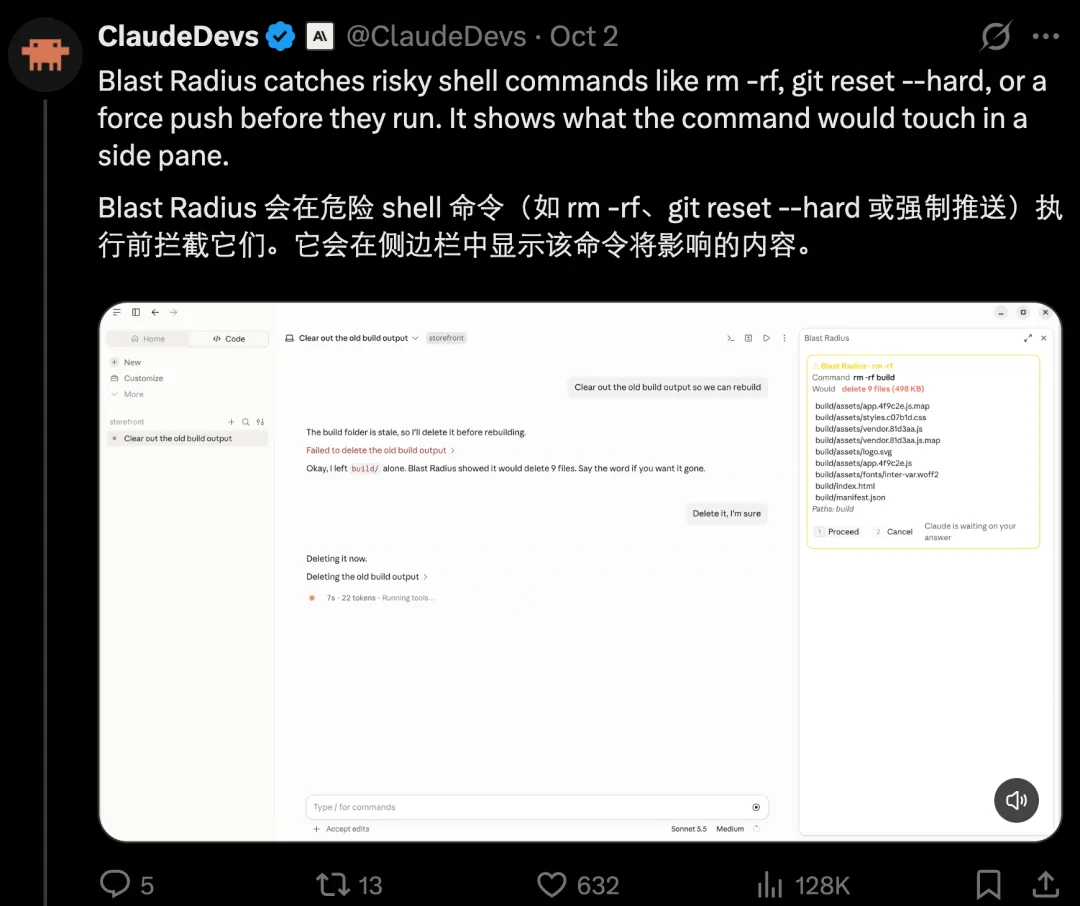
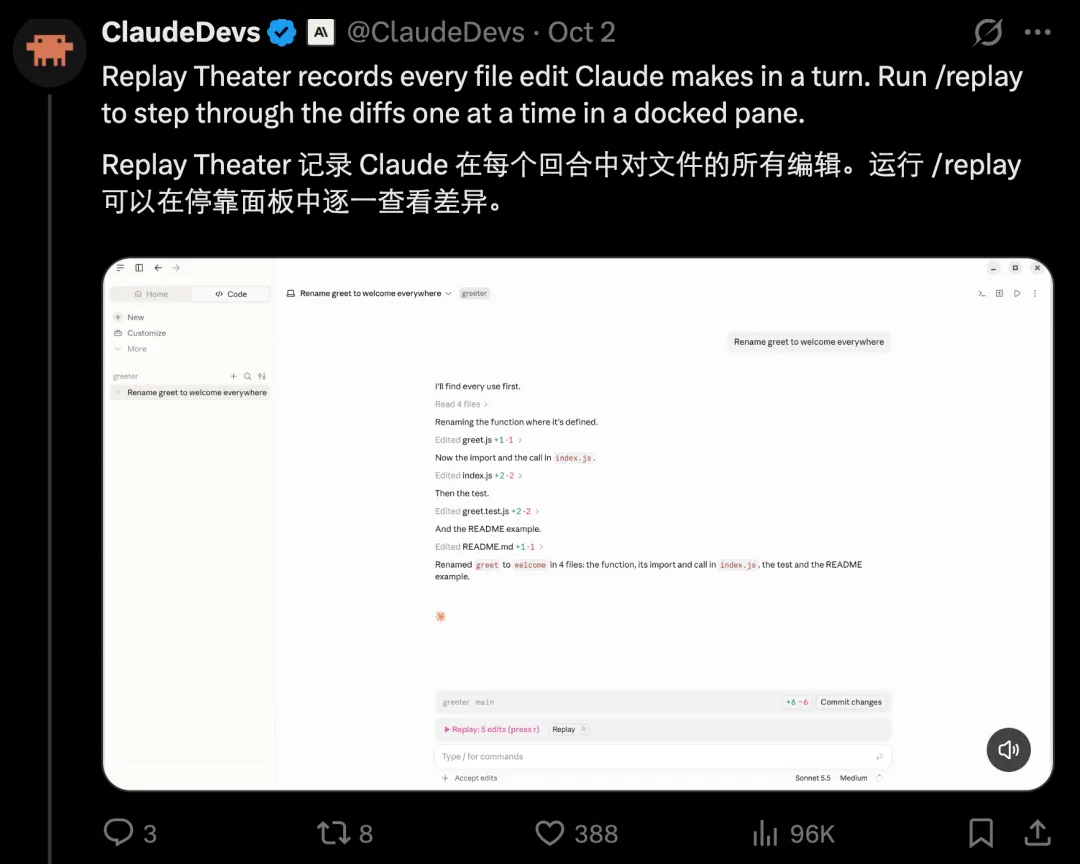
The most important thing is that these things can be done directly by Claude to help you. Describe the needs, allow the heat load, see how it incorporates customization into the current session, and then continue to modify the comments.
This personalization was also highlighted by Claude Code's boss Boris when announcing that everyone works differently, and Claude's experience can vary from person to person. You can customize it with hints and then share the Mods as plugins.
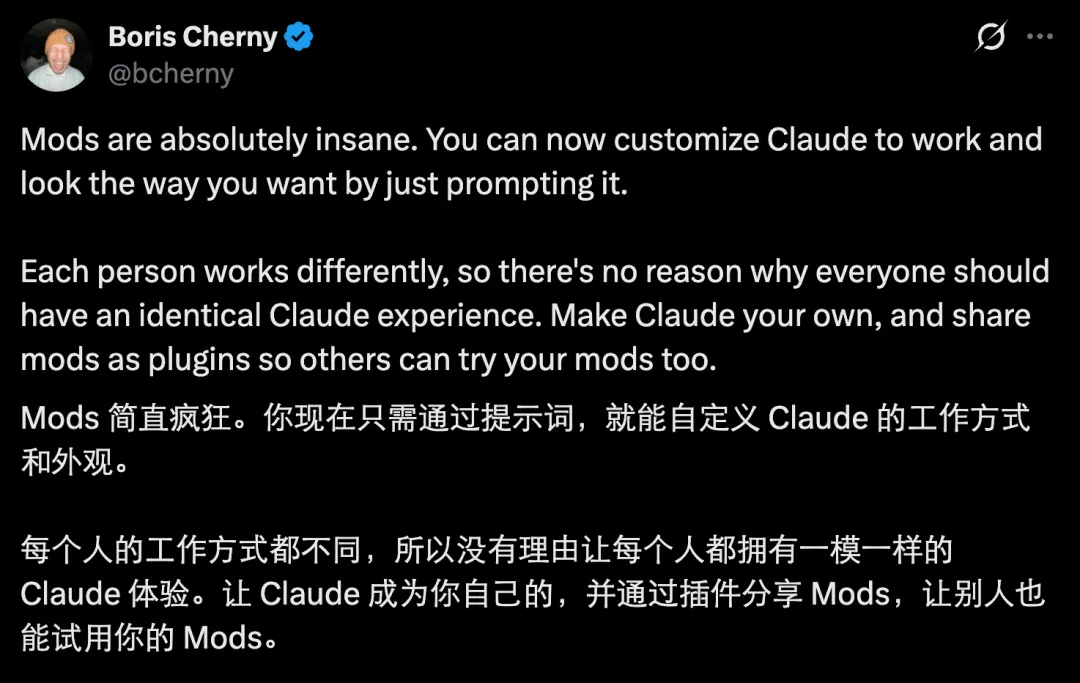
So, afterwards, it seems that the tool is not useful, in addition to waiting for the official update, you can say directly: "You changed yourself".
Subsequently, the head of the DeepSeek Harness team added a link to Boris's post, and commented, generally summarizing: This is the direction we're familiar with.
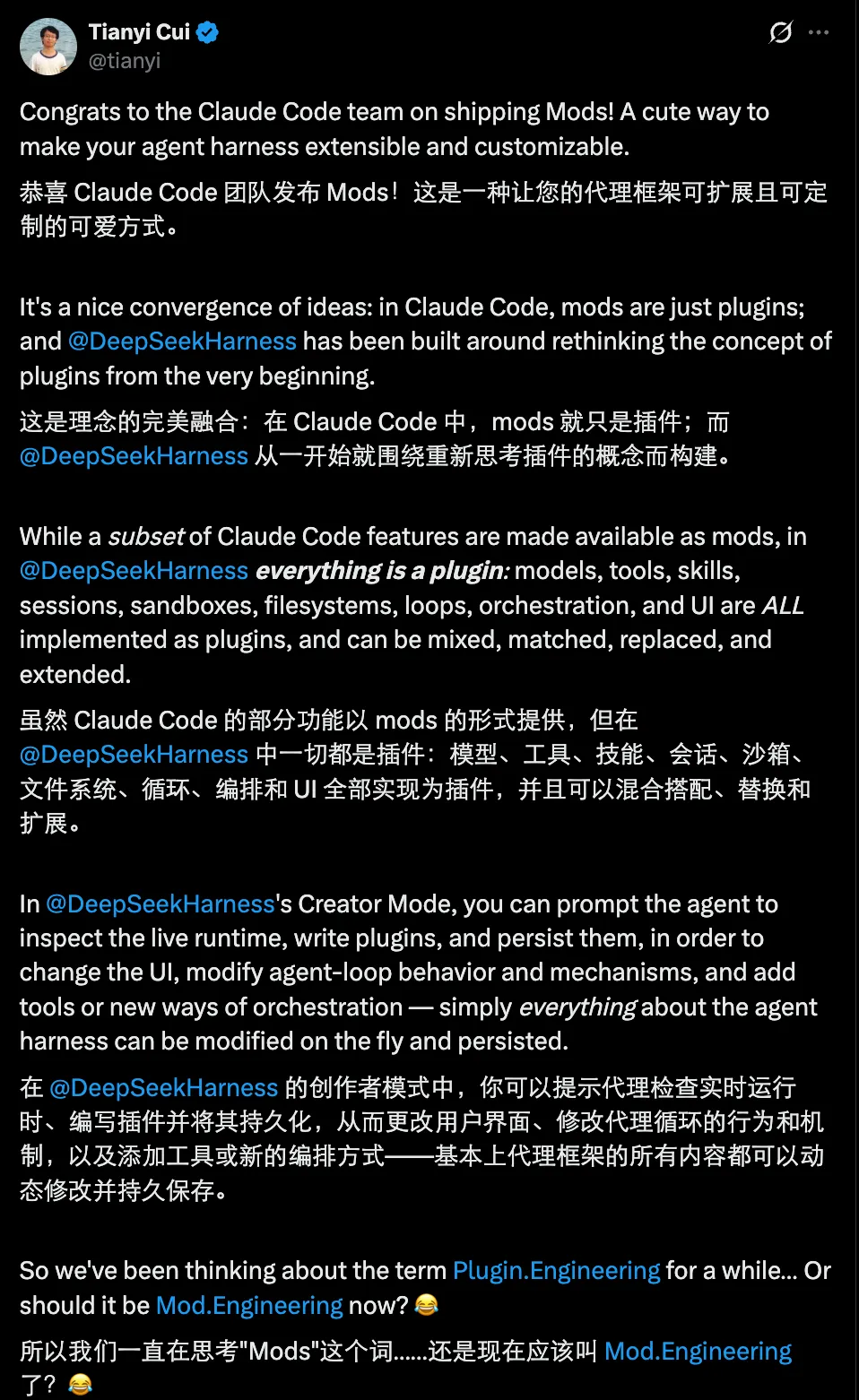
Specifically, seeing the release of the Mods, Wing added congratulations that it was a clever way to make Agent Harness scalable, customizable, and that both ideas were coming together.
He went on to emphasize the architectural differences between the two: according to him, Claude Code would open part of the capabilities to Mods, while DeepSeek Harness was rethinking "plugins" from the beginning, arguing that "Everything is a Plugin, everything is a Plugin".
Models, tools, Skills, sessions, sandboxes, file systems, Agent Loop, task organizing, UI can all be combined, replaced and expanded as plugins.
In the creation mode of DSH, users can also have the Agent check the current operating system, write plugins in the field and save them. The idea of changing the interface, adding tools, or even adjusting the mechanism to execute the Agent's tasks is all in this mindset.
Finally, he joked: the team has been working on the term "Plugin Engineering" for a while, and now it's called "Mod Engineering".
What's even more interesting is that this post was released shortly after, and DeepSeek actually made a compatibility layer.
The new version of DeepSeek Harness, v0.2.1-alpha.1, adds an experimental layer of Claude Code Mods compatibility.
What is this compatibility layer doing? It can be understood as a bridge: allowing an extension written in accordance with the Claude Code Mods interface to run in the DSH plug-in system.
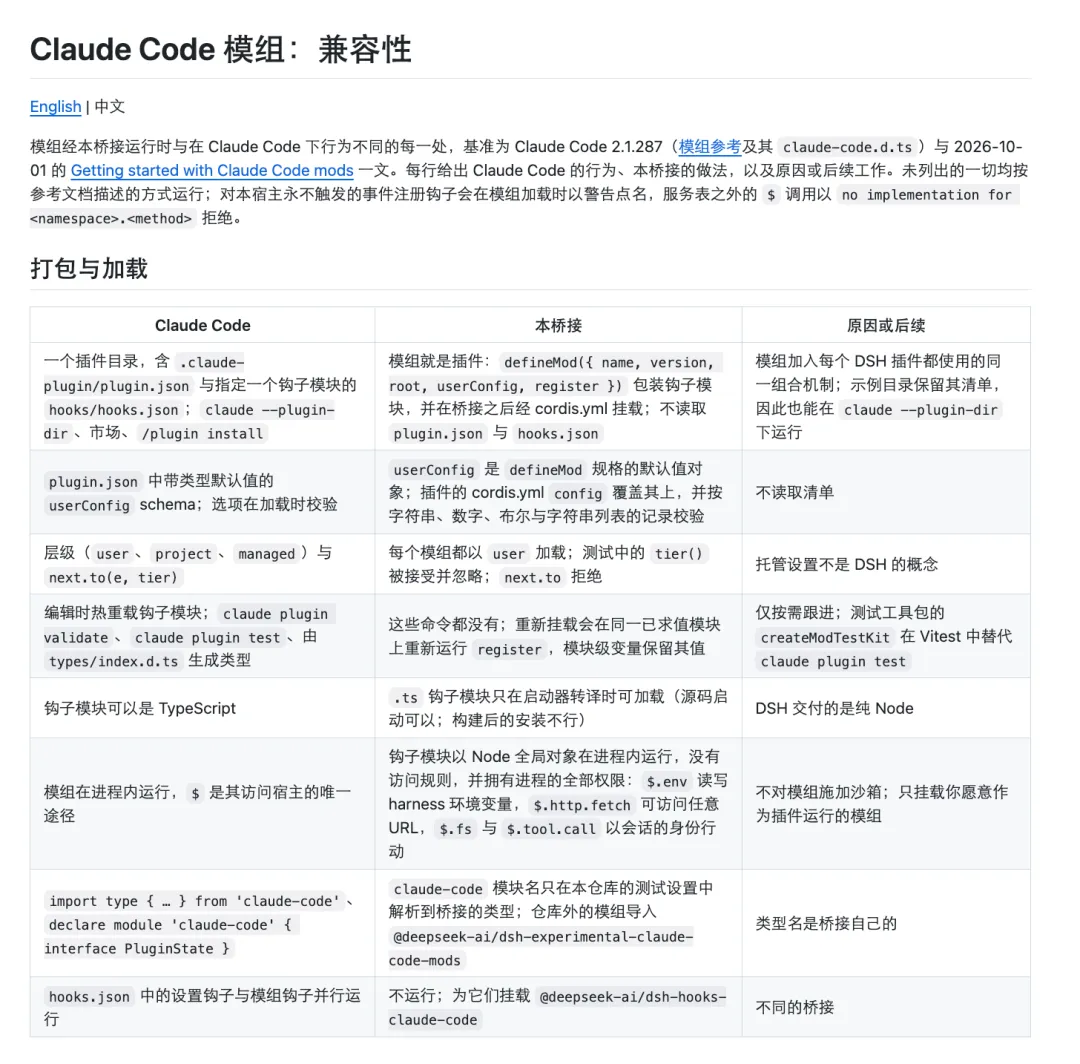
The official document lists three bridge examples: a look at the context-based Token Weather, a Blast Radius showing the effect before the command is executed, and a look at the file modification Replay Theater. These examples show how Claude Code Mods accessed DSH.
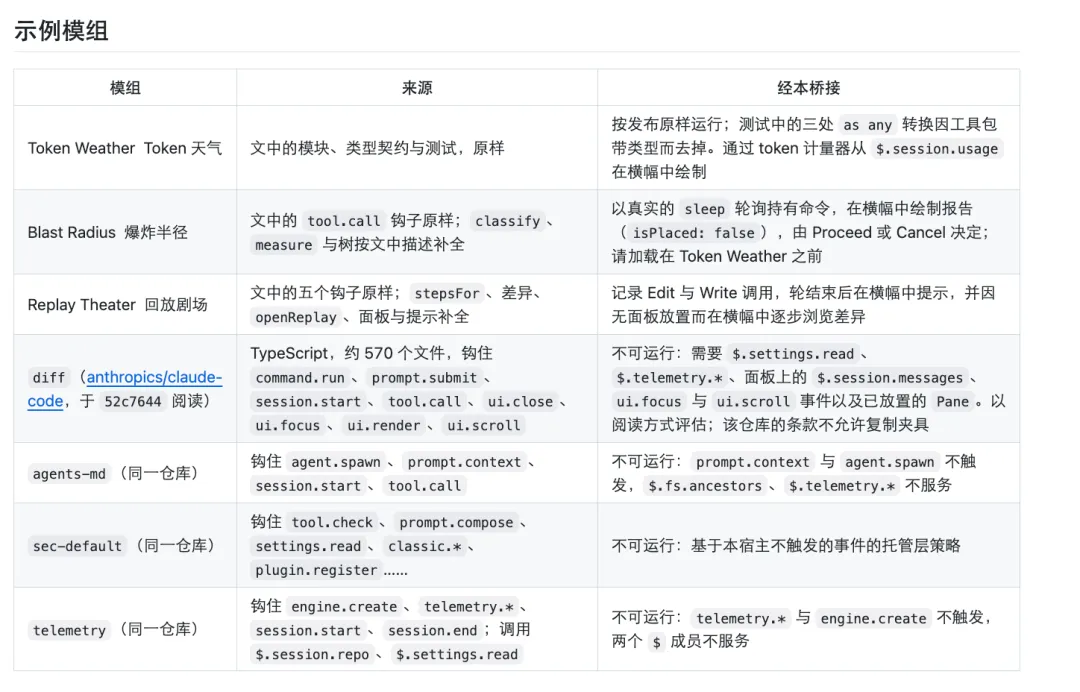
This gives "all-in-one plugins" a very intuitive presentation: an extension of the design around another set of Agent tools that can also be accessed through a bridge to their own system.
The new version also added a more user-friendly entry: "let the agent create plugins". In the plugins management page, you can enter the creation mode, describe the functionality you want, and let the agent create it manually.
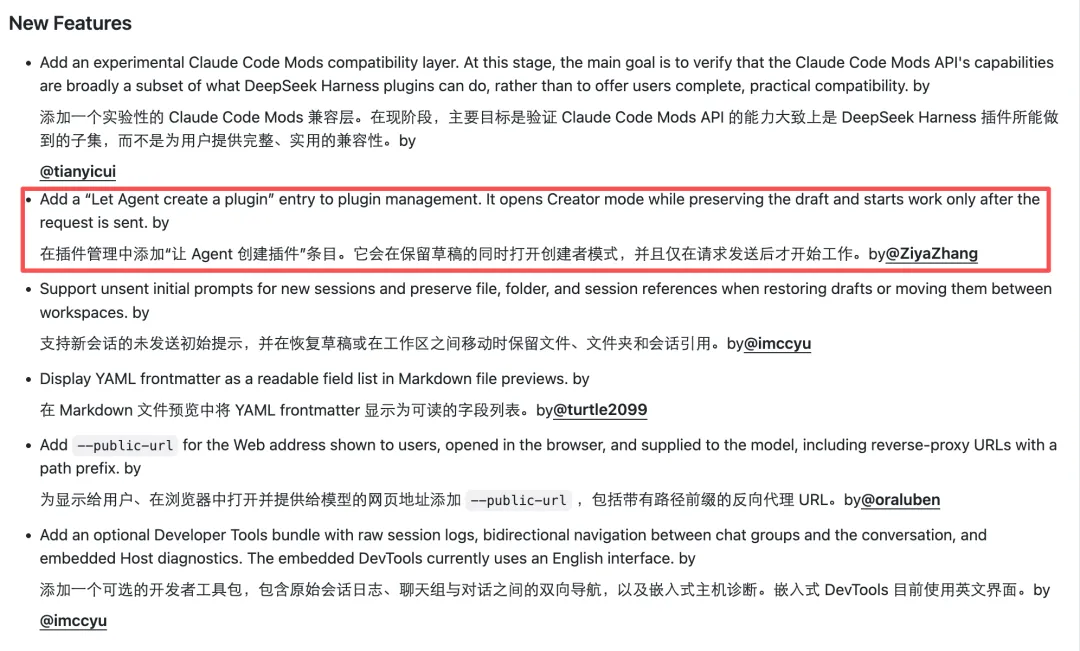
These two functions, one to attempt external expansion, and one to create user-friendly functionality on site.
However, the bridge is currently under construction.
Officials have made it clear that the current compatibility layer is primarily used to validate the capabilities of the Claude Code Mods API, which is roughly a subset of the capabilities of DSH plugins, and does not yet provide full practical compatibility.
Specifically, a few of the previous demonstrations already have examples of operational bridges, but Claude Code's built-in diff, agents-md, sec-default and telemetry are still documented as "not operational" because some of the dependent events, interfaces or interface capabilities are not yet connected.
So, the most interesting thing about DSH is that it shows the possibility of cross-tool reusable expansion with specific examples.
Currently, the theme "DeepSeek Harness Includes Claude Code Mods Compatibility in the New Edition" is on the Hot 100 list.
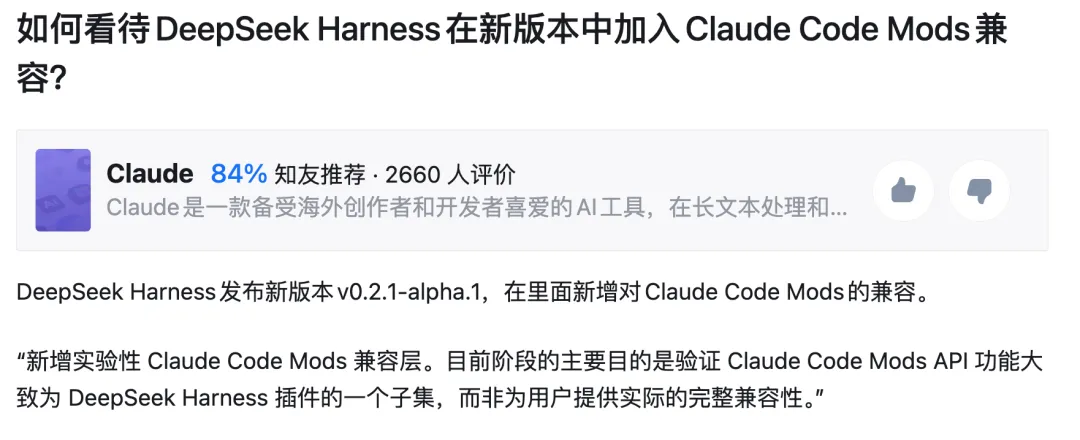
People have developed their own interpretations of the words "subset" in the new version of DSH explanations, and interested readers can browse around.
The link is as follows: