It's the first time in the history of the world.
Recently, the global tech community and the historical community were blown up by a major news story.
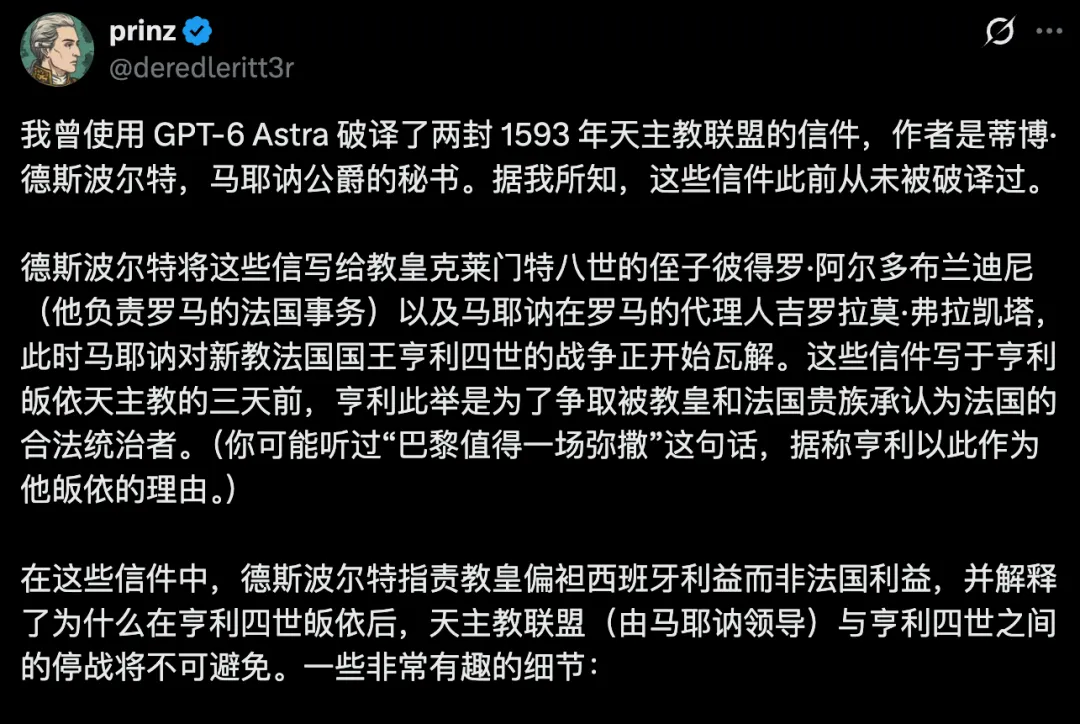
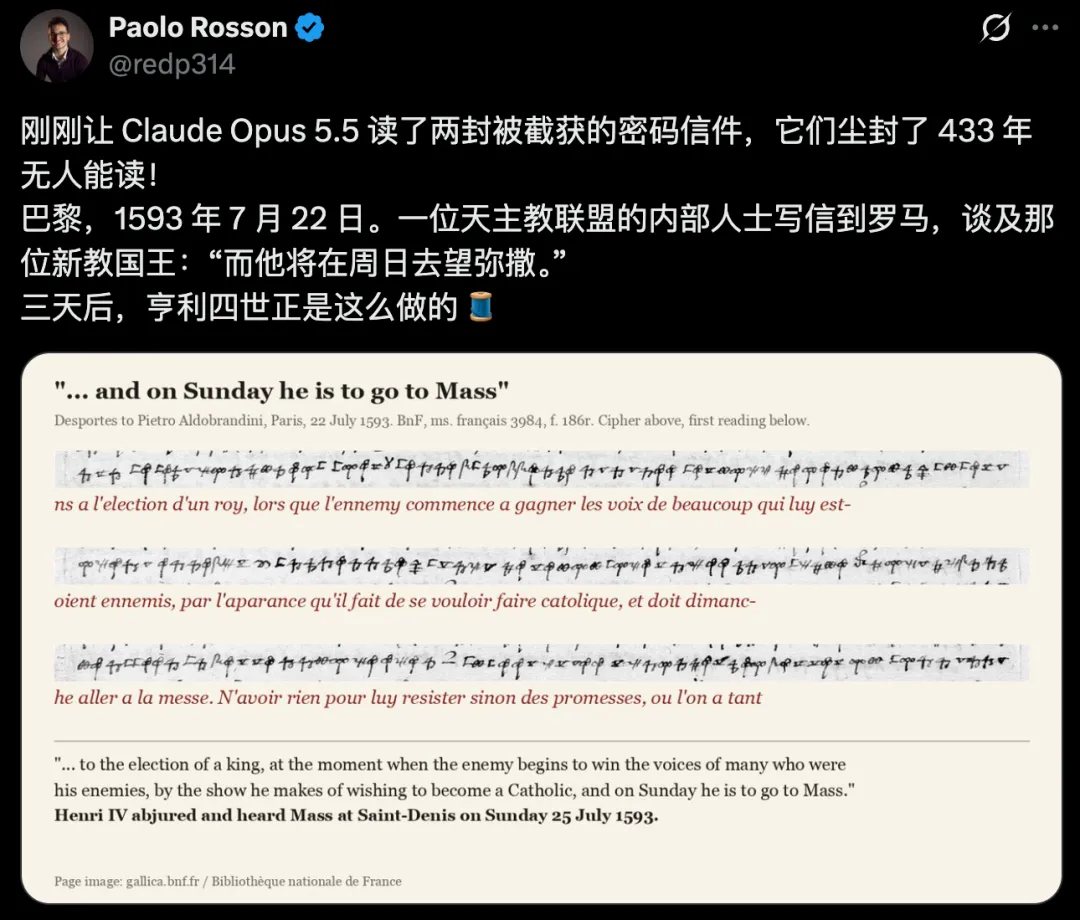
GPT-6 Astra successfully deciphered letters from 433 years ago, almost at the same time as Claude Opus 5.5.
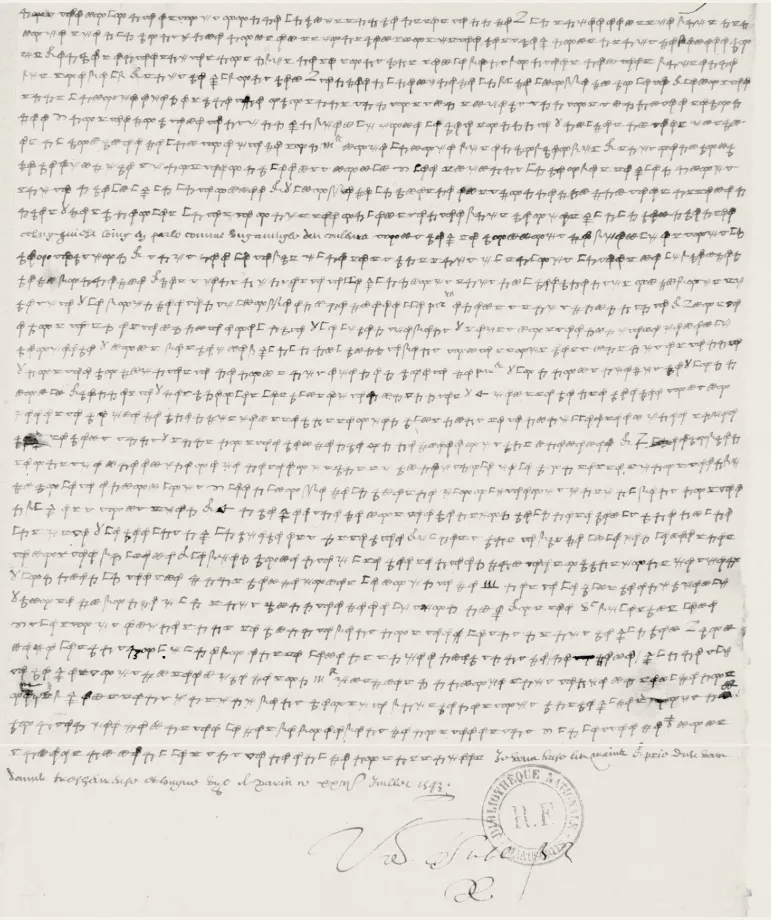
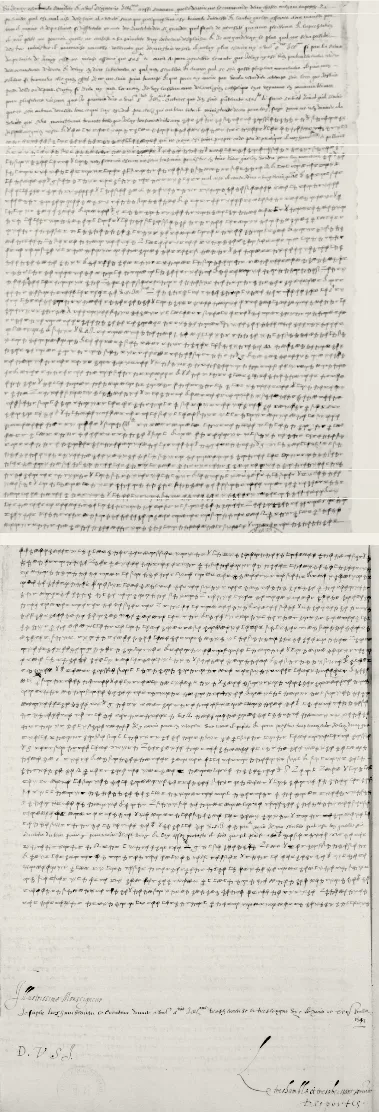
These are two top-secret letters left by the Catholic League in 1593, which no expert in the world has been able to read in the last few centuries.
As a result, the two AI's front and back legs were unlocked.
 |  |
The moment the letter was decrypted, a huge gap in world history was ripped open.
What is the noble choice of faith, what is the birth of Paris?
The letter is written in black and white on paper, with a striking number: 500,000 ECU (ECU).
The king of France, who converted to Catholicism, ascended the throne and hid a token of up to 500,000 gold coins behind him.
More excitingly, the letter also exposed the Pope, the Spanish royal family, the French Catholic League, and a political betrayal within the core of Roman power.
Scroll down and see
For the first time in 433 years, AI has brought these people back to the table.
Those letters, manuscripts, and scrolls that have been unread for hundreds of years are being unlocked by a large model. Today, much of the history of coffin theory, covered by textbooks, may need to be retold.

433 years agoGPT-6 site recovery
These letters were written on July 22, 1593, by Tibor de Port, secretary to the Duke of Mayhem, leader of the Catholic League.
The code table itself has been restored by modern cryptographer Satō Michiyo. That is, the "dictionary" is open.
This code is a type of "polyphonic substitution cipher".
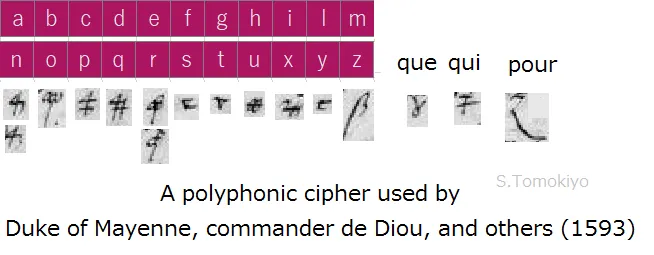
A normal alternate password is a symbol corresponding to a single letter, and each symbol in this set of passwords corresponds to two possible letters.
The same symbol may be A at this location and B at another location.
This means that the same password has a 50% chance of being misinterpreted. A letter of hundreds of characters, based on probability hard guesses, results in a bunch of unspoken code.
And that's just the first level of difficulty.
The technical details revealed by prinz on X show that the GPT-6 Astra faces a four-dimensional problem.
First layer: Handwriting symbol recognition. This is not a printed body. The 16th-century secretary's handwriting symbols have many variations, and the same symbol may differ slightly in different locations.
When Rosson independently interpreted Opus 5.5, he found that there were about 5,000 handwritten symbols, each representing two possible letters.
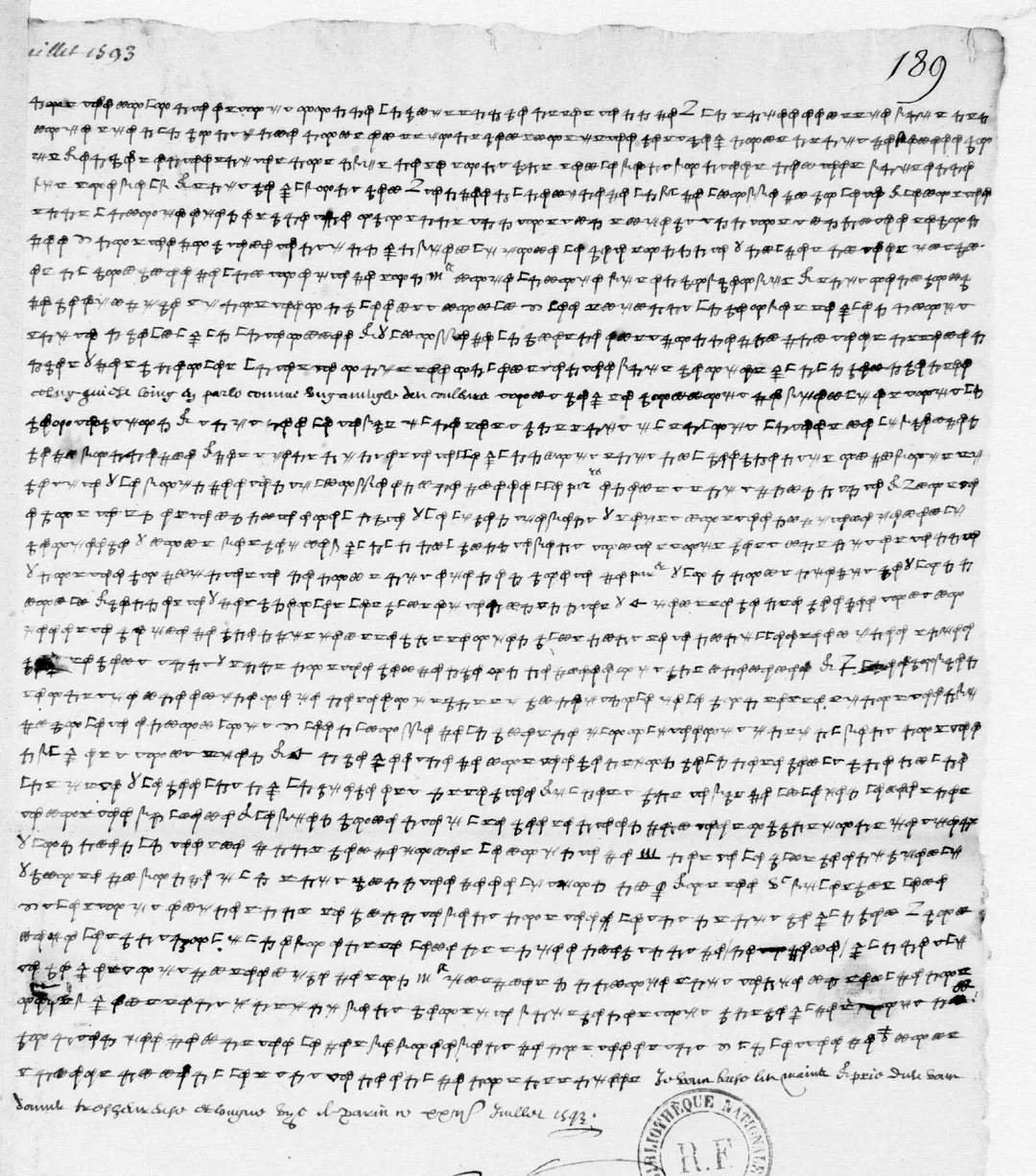
In an AI experiment two weeks ago, only about 75% of the symbols were read.
Second layer: double-letter mapping. Even if the symbol recognition is correct, it is necessary to determine which letter the symbol is in the current context. This is a question of probability, not a question of tables.
The third layer: Old French. The 16th-century French spelling differs from modern French, and the grammatical structure also differs.
Level 4: Historical contextual reasoning. This is the most easily overlooked but the deadliest layer.
In his letters, DePorte used a large number of pronouns such as "Our friend at the academy", "The man in Las Vegas", "Our uncle", and "Who's behind each of these pronouns", which must be combined with the political landscape of Rome in 1593.
To unravel the deadlock, AI must have the intuition of some of the world's leading antiquaries: marginal identification, marginal conjecture, marginal alignment with historical context, dynamic calibration.

Rosson has no hard guessing passwords. He discovered a fact that was ignored by all: in 1593, a cipherist had successfully deciphered two "sister letters".
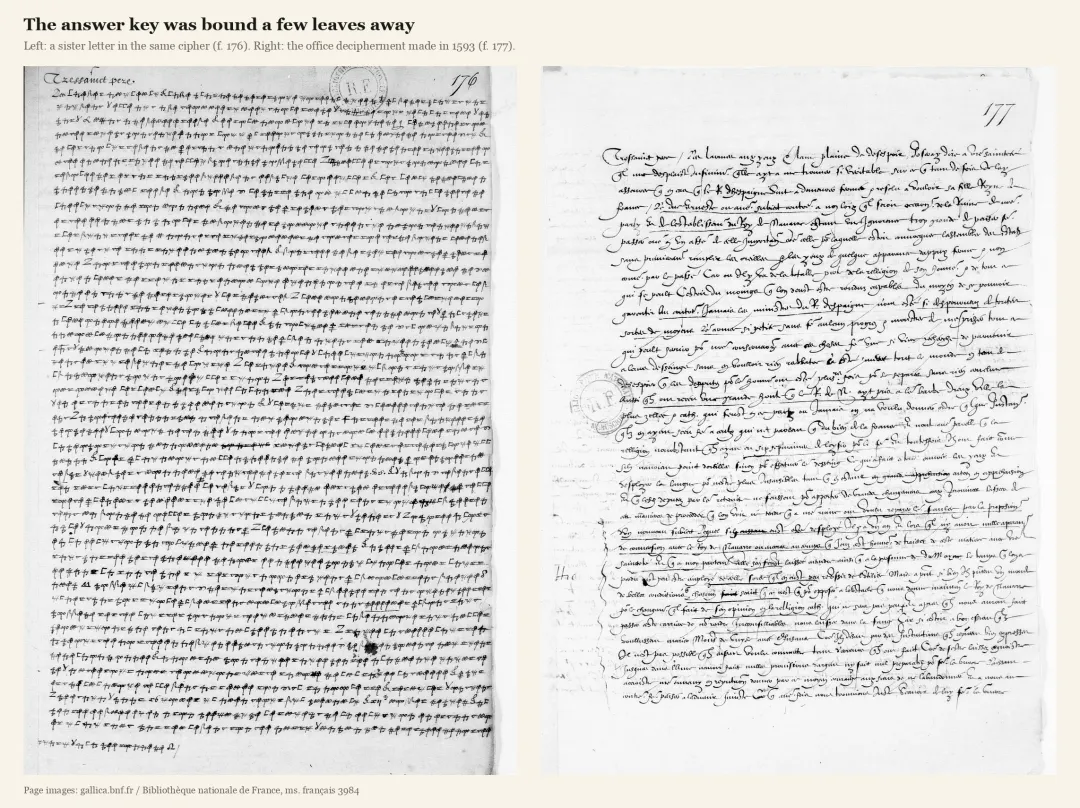
The declassified records are stored in the archives, only a few pages away from these two unresolved letters.
This is a typical "hidden answer" scenario.
The first step is to read the manuscript of the old decipherment records. The two deciphered letters are marked with the corresponding letters of each symbol.
AI then aligns the handwritten symbols and markup results of the old letters in order to create its own set of markup data.
Next, the answer key was constructed. Ultimately, the AI extracted 6,794 markup symbols from these old records, forming a complete set of symbol-letter correspondences.
Finally, a generalized reasoning was carried out. On an unprecedented new line, the correctness of the symbol recognition for this set of answer keys reached 98.5%, and the correctness of the letters after decoding reached 95.6%.
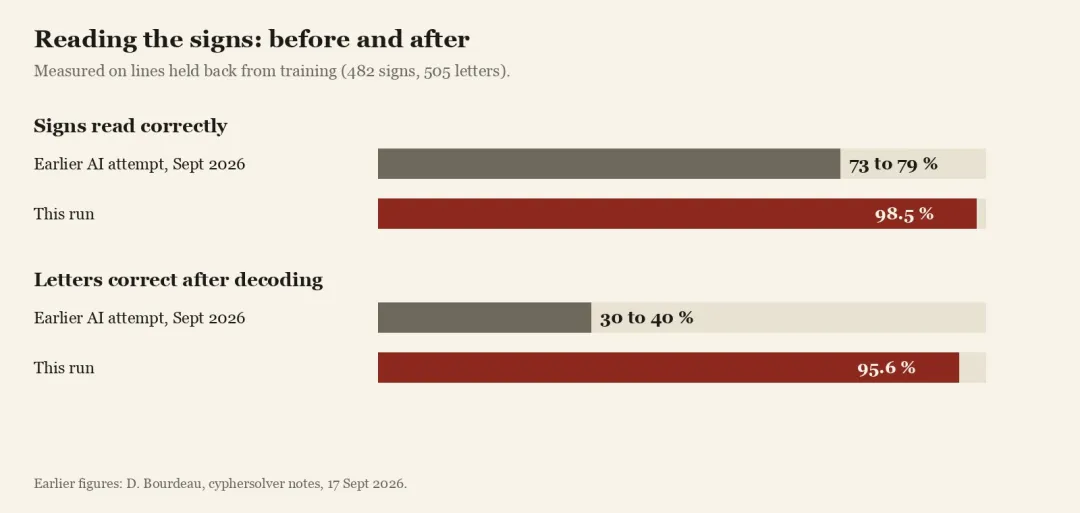
Two letters that have never been read, in the form of French text, reappear before mankind.
prinz uses the GPT-6 Astra, which is 100% complete with only one character in doubt, and he speculates that it is "Gondi", a Roman figure involved in the anti-Spanish conspiracy at the time.
His technical path is different from Rosson's, but the core logic is consistent:
Using known information to narrow the search space, the language model's ability to reason in context fills in the blurred space.
One of the main problems that prinz faces is those who call themselves - for example, who is our uncle, who is our uncle, who is our uncle?
AI needs to combine the relationship between political figures in Rome in 1593, the list of participants in the anti-Spanish conspiracy, and the communications of Deport's subjects to make a valid judgment.
Two different AI models, in the same month, independently unlocked the same 433-year deadlock.
Half a million eggs, another Mass
The content is confidential, and historians take a breath of fresh air.
In the letter, DePorte accurately wrote the price code that Henry IV accepted for converting to Catholicism: 500,000 Eugues!
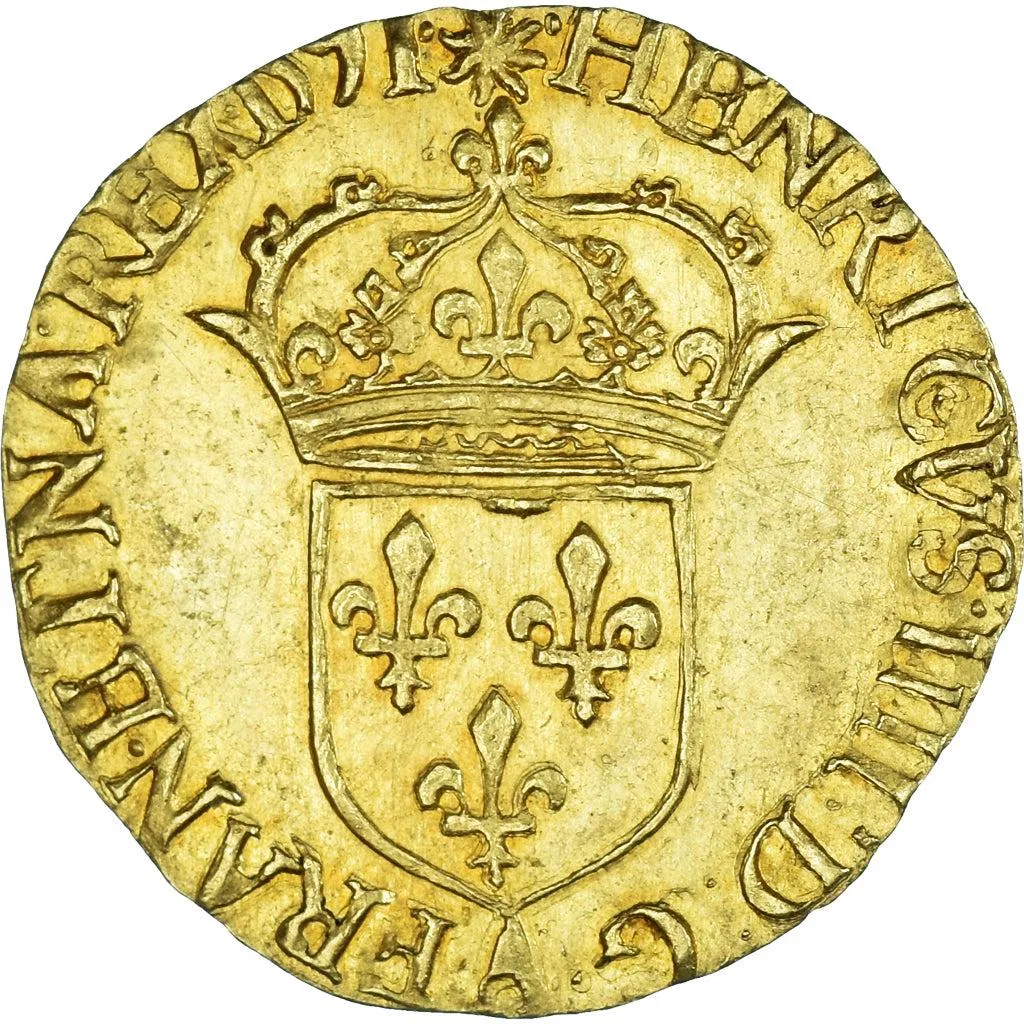
The Ego was one of the most important French gold coins of the time.
Half a million euros is an astronomical figure, roughly equivalent to the financial income of the French royal family for several months at that time.
The money was not from the pope or the French church, but from "political donations" made in a complicated gamble by various powers.
In the letter, DePorte did something else: he accused the Pope of favouring Spanish interests and illegitimate national interests.
The letter was written in July 1593, at the height of the rift within the Catholic Union.
The Duke of Mayhem was nominally the Union's leader, but the Union's largest gold lord and military ruler was King Philip II of Spain.
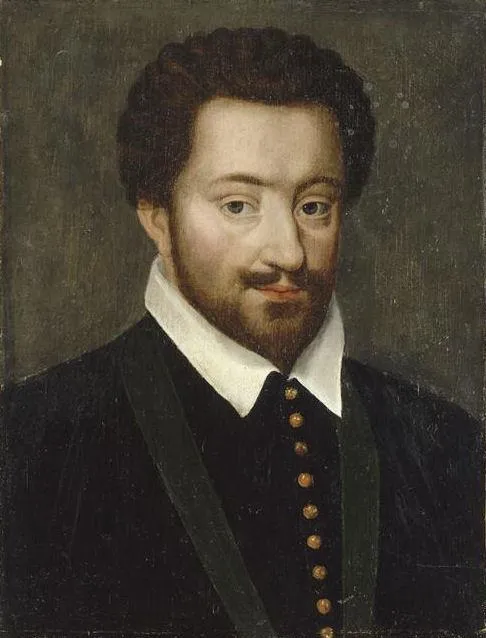 | 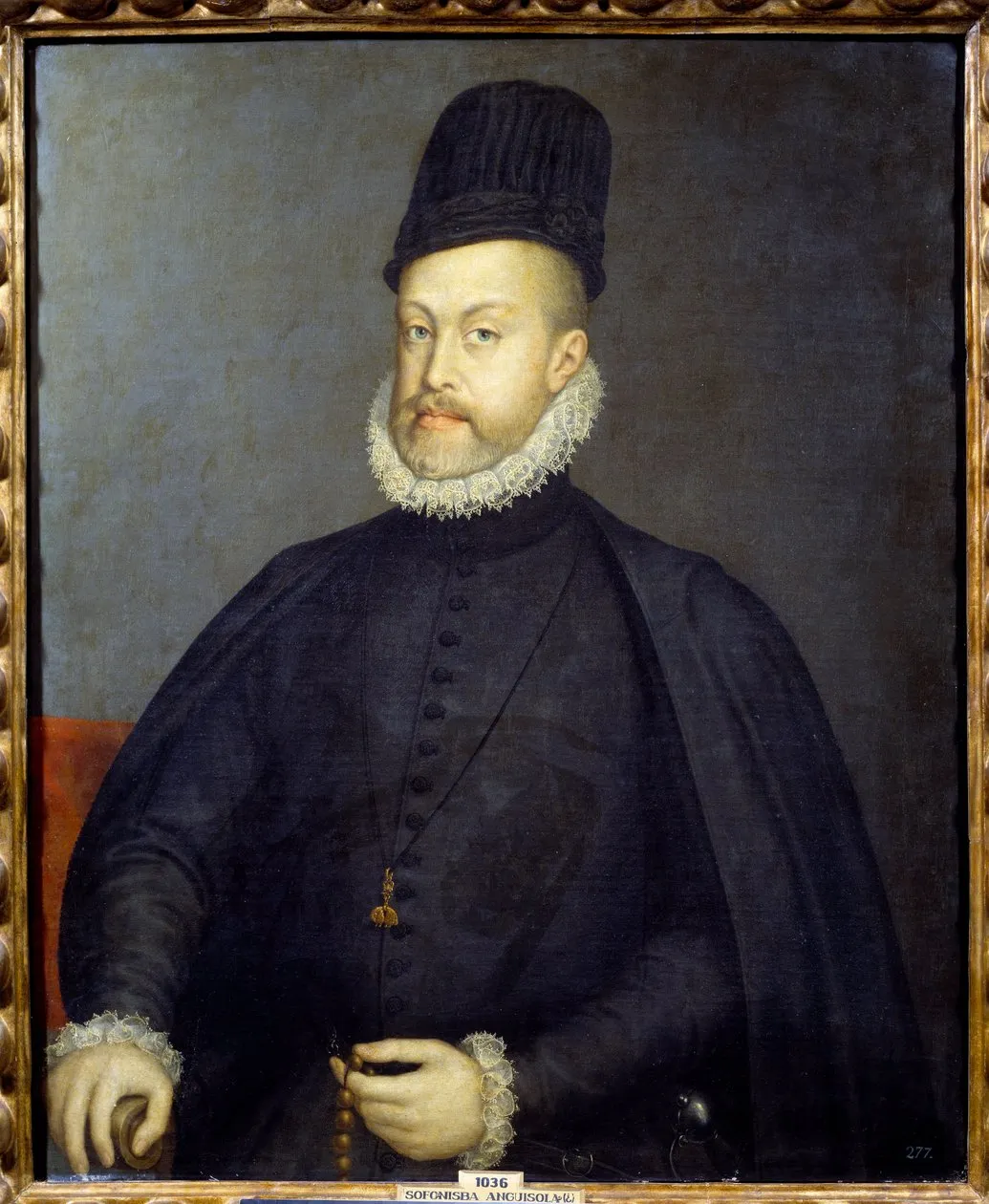 |
Philip II wanted his daughter Isabella to become the king of France, but the Duke of Mayhem secretly objected and did not want France to become an appendage of Spain.
A more patient one was the letter to Flaccetta. In it, DePorte used a number of references to anti-Hispanic conspiracies inside Rome, and the whole letter read like a detective novel.
In the letter, he told Fracetta: "Duke Mayonnaise can't pay you because the money has to come from a third party - a senior clergyman - "and now is not the time to take money out of it".
Two months later, Fraceta rebelled. He handed over all of DePorte's communications to the Spanish ambassador.
The letter may have been the trigger for his betrayal. A late-paid agent made a choice between money and loyalty.
And 433 years later, AI excavated this motivation from the code.
History, read by AI
This decryption is by no means just a wild card game in the history circle.
It is estimated that around 1% of archives and libraries around the world are fully or partially encrypted.
These documents include diplomatic secrets, records of secret societies, medical prescriptions, private letters of intent, and even secret transactions in everyday life.
The vast majority of people are still unable to read, not because of the complexity of the code itself, but because the human resources to handle handwriting identification, language translation and historical context reasoning are extremely scarce.
A cryptologist spent six months deciphering a three-page letter, which is already top-of-the-line efficiency.
Earlier, the GPT-6 Astra took six hours to crack a top-secret warhead from Napoleon in 1809.
The letter consisted of 1,300 hand-drawn symbols, the original copy of which had only one low-resolution black-and-white copy, and the code had long since been lost in a fire.
AI accurately classified the 1300 random codes into 155 distinct symbols, restored Napoleon's draft troops, and even supplemented his memoir with 160 years of half-sentence interruptions by "harmony" coding.
These events, put together, point to a clear trend.
AI is becoming the "super decryption machine" of historians, and the vast amount of "dark data" in human history is about to be illuminated in bulk.
Now, AI has given us new eyes.
And the stories that people think they've told, they might have to tell again.
RoboInd editorial channelResearch, robotics companies and market intelligence for cross-border sourcing.Explore the channel ↗
Share this
End of editorialExplore more from Global Robotics News ↗