
“ Physical A.I. requires a pair of braces with a pair of braces.
The first time a robot really gets into a home, into a factory, it may not have started from walking, it may have just picked up a blanket, pressed it on the table, and then moved slowly along the table.
It seems to be a little more than a simple move. But for the robot, it is pressed lightly, it is not clean; it is pressed heavily, and the movement of the mechanical arm is unstable. There is a slightly high error on the table, and the robot needs to adjust itself.
At this point, the robot faces no longer a visual problem, it begins to face the physical rules of the real world.
After the digital world entered the physical world, intelligence began to gain weight, dealing with friction, collision, resistance and error. It was here that force control returned to the heart of the physically intelligent industry.
On September 29th, the 10,000th Concrete Arm was officially delivered. The Robotics Workshop learned that the 10,000th Concrete Arm refers only to the Concrete Arm, excluding industrial robots and collaborative robots; its customers are mainly from the field of physical intelligence, more than 70 furniture-related smart companies, and twenty-three industry backgrounds customers are putting the Concrete Arm into their own robotic systems.

Some require it to be fully automated; some require it to carry remote control; some require it to complete flexible operations.
These needs look different, but ultimately all point to the same problem: algorithms have begun to need a stable, reliable, quantitatively productive, recyclable body. This also means that Silicon is becoming the core builder of the infrastructure for physical AI.
01.
Why is full-body control inevitable when physical intelligence is on the decline?
Physical AI enters the deployment mode, and the first thing that is pressed out is not the algorithm, but the real perception of stress control over the physical world.
Over the past two years, the focus has been on the brain. VLA, world models, reinforcement learning, and almost all conferences are focused on models. However, this line of production is becoming more demanding as the landing accelerates. For example, screens can easily be shaken, connectors can be broken, parts can be deformed, and the last millimeter of accuracy cannot be solved by models.
The industry soon discovered that robots lacked no smarter brains, but a split arm that required a continuous physical relationship between the entire arm and the surrounding environment.
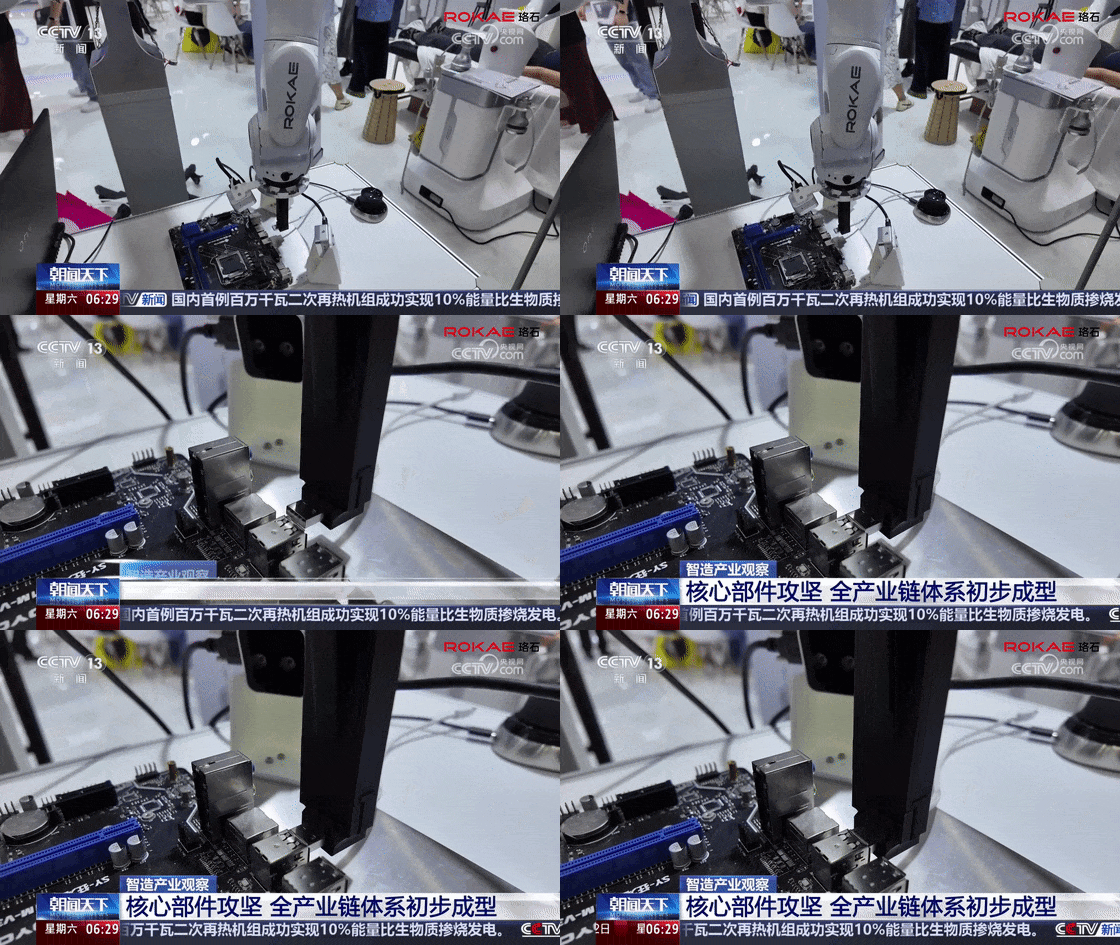
In an exclusive interview at the Robotics Workshop, the technical director of the Rubik's Cube robotic arm industry, Zhuber said directly: "Because traditional robots lack complete joint force control and less force dimension, the non-force control arm lacks direct perception of space, of the physical world. This allows the visual to see the position, but does not see the strain. The accuracy of the camera is often several millimeters, and the face installation, pull-out, box attachment relies on this type of contact operation.

The vice president and general manager of the R&D center for robotics in Phnom Penh added a more intuitive scenario: how to describe a scenario that humans can do by moving boxes like this one at a time? It is not possible to describe it at all.
The trend has shifted after 2025. Over the past six months, multiple head teams at home and abroad have continued to focus on integrating multi-modal models. Google DeepMind's FoReL is using feedback as the core signal for the operating model, and from ICRA 2025 to WAIC 2026 there has been a significant amount of assembly class research on how to classify energy as a critical model. The concept of physical AI has become a common bet among machine manufacturers, parts vendors, and model teams by 2026.
VLA has begun to incorporate force feedback, with world models and reinforcement learning increasingly relying on force control.
Therefore, the really important context behind the delivery of the ZTE is that it may signify a product milestone that not only demonstrates the correctness of the ZTE control line, but also begins to become an important sign of the shift of the physically intelligent industry to physical AI.
02.
It's not a coincidence to have a market-recognised full-body control.
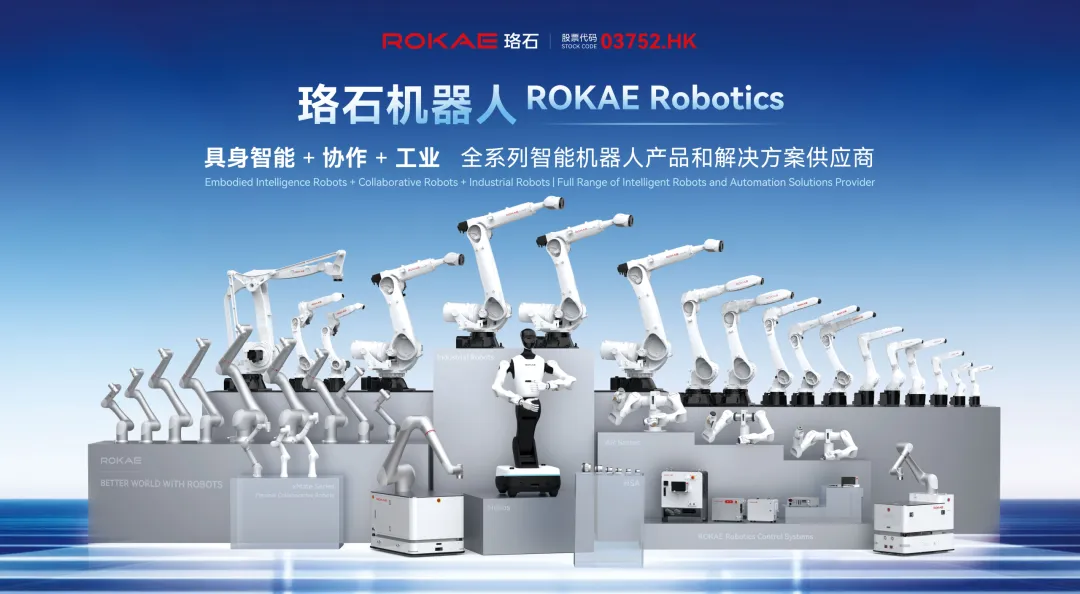
Stone is the world's first manufacturer of physical AI hardware infrastructure with a decade's worth of industrial+power control technologies.
Taking the time back in 2017, Limestone wasn't facing a physically-intelligent boom like it is today. But it has been surrounded by flexible industrial demands, continuing to cultivate full joint power control.
Nearly a decade later, this technological path of lithium has not been interrupted by changes in the robot industry hotspots, the ability to continue to accumulate in power control algorithms, power control joints, robot body and engineering, and long-term application validation on collaborative robots, flexible power control robots.
This experience is also an often underestimated advantage when it comes to physical intelligence, as its real ability to migrate is no longer just a piece, but an experience that has sunk over the past few years or even decades.
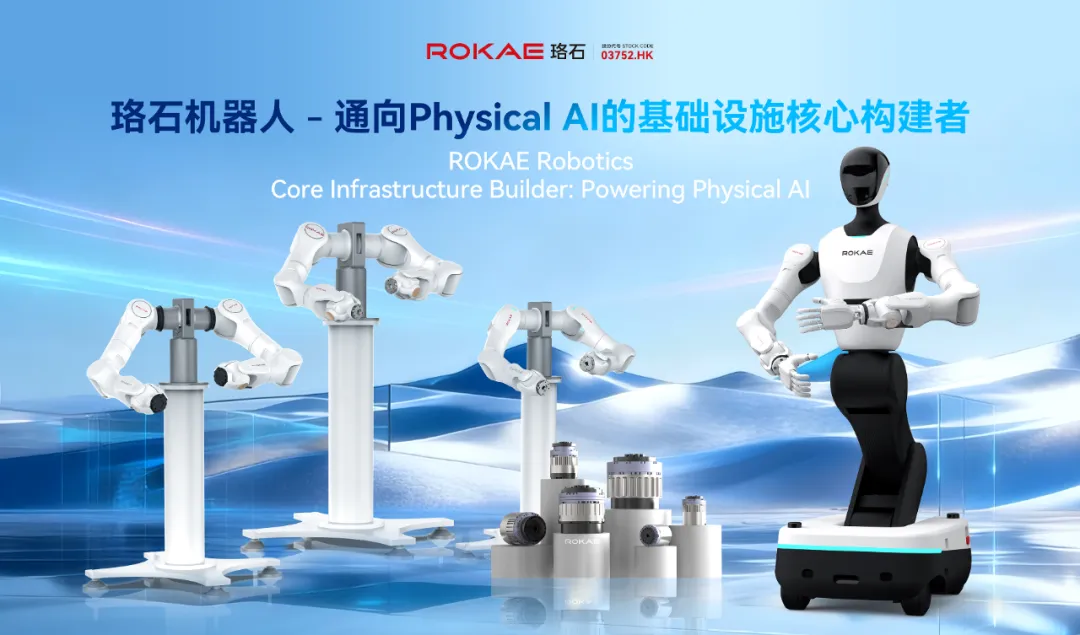
As physical intelligence moves to the ground, starting in the second half of 2025, the main assembly plants have steadily climbed the mass production ladder, from dozens of samples to hundreds and thousands, demanding a one-time switch to the core parts for efficiency, capacity, consistency, after-sales bottom.
Most companies have found that although humanoid robots have changed their physical shape, many underlying engineering problems have not disappeared. The industry's competitive advantage is shifting from single-point technical capabilities to scale manufacturing and stable delivery capabilities.
How to make joints both strong and responsive, how to run power control algorithms on real hardware, how to deal with long-term operating stability, how to keep different batches of products consistent, these are not things that come about suddenly after the model appears.
They have always existed in the robotics industry, but in the past they have been more prevalent in the collaborative robotics and industrial scene.
Now, smart deployments are bringing these issues back to the industrial center. When automakers need a long-term, stable power-control arm supplier on their production lines, Stone's track record is undoubtedly the thickest in the industry.
So what Stone is doing today isn't really starting from scratch looking for a path to power control technology for humanoid robots.
To be more precise, it is the accumulation of industrial robots and collaborative robots over the past decade or so and the reintroduction of a new robot body.
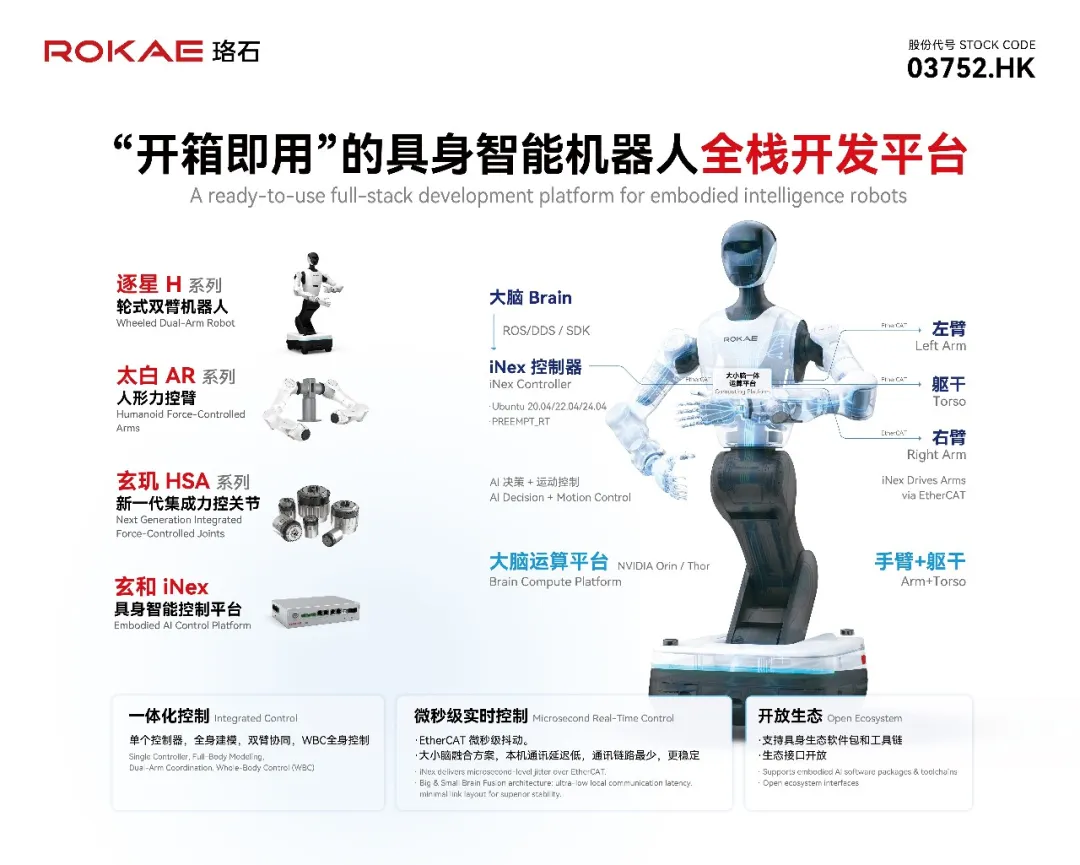
This also means that even if the shape of the product is redesigned, the capabilities are not pushed back, and new products, even production lines and capacities can be quickly re-formed.
For example, the human-powered control arm required lighter structures, more compact space, and a more suitable load configuration for the human-powered robot. Around these requirements, steam engines were quickly redesigned, decelerators, and parts of the structure, and the consistency of the whole-body control arm was strengthened.
Because it was discovered that by 10,000 units, supply chains, production lines, testing systems, and quality control would all be part of the product, it would take more engineering to find a solution to fit the production line faster.
The cable is placed inside the mechanical arm and appears to be just a structural optimization. When it is actually done, there is another problem, the inner space of the mechanical arm is narrower, the cable needs constant bending with the movement of the joints, and there may be damage to the shielding layer after long operation, signal loss problems.
This is not a problem that can be detected once tested at a conference, it requires the mechanical arm to really run, run long enough, and then constantly adjust the structure according to the failure.
But it is precisely the details of these matching scenarios that determine whether an arm can become an infrastructure.
This is because the first requirement of infrastructure is never the craft, but the stability.
After customers have integrated their robots into their training systems, production lines and data locks, what they don't want to see is a sudden change in the behavior of a bunch of products.
It is this consistency that has really been tested. Today, lithium-ion batteries are separated separately from the production line as a man-made control arm and are essentially continuing to solve this problem.

The Robotics Workshop learns that Stone is still exploring integrated solutions such as two-arms wheels. Its division of its own product system has gradually extended from a simple arm to a complete set of solutions for the body and the brain.
This is also the value of infrastructure companies: not to do all the work for the customer, but to turn the most complex and difficult parts of the rebuilding process into standard capabilities by designing their own products so that users can focus their energy on more important things.
This is what the rock is doing, getting closer and closer to this layer.
03.
Customers started using the flexible force-controlled arm to dry and vibrate.
After delivery, the main concern is what the arms are used for. So what is the problem of physical intelligence solved by the steam-powered arm?
In interviews, the Robotics Workshop found that the answers to these questions were increasingly concentrated in the places where past robots are most likely to get stuck. These robots must have the power control capability to enter factories, homes, and businesses.

For example, rubbing the table. The human arm itself is a continuous sensing system. After the mattress touches the table, the arm actually needs to maintain a certain pressure while moving along the trajectory. If only the position control, the robot knows where the ball should be pressed, but does not know how to press the ball now. After the full joint force control is added, the mechanical arm can continue to process the external force changes during the movement, and if someone suddenly hits the elbow, the body will immediately know what happened.
If a robot walks with a cup and someone touches its big arm or elbow next to it, the real need is to keep the disturbed part responsive smoothly while trying to keep the end stable. If the robot only perceives the end force, it may see only the task on the hand; if the entire arm is able to perceive the external force, the robot has the opportunity to change posture at the moment of impact in the elbow by resisting the function of adapting posture.
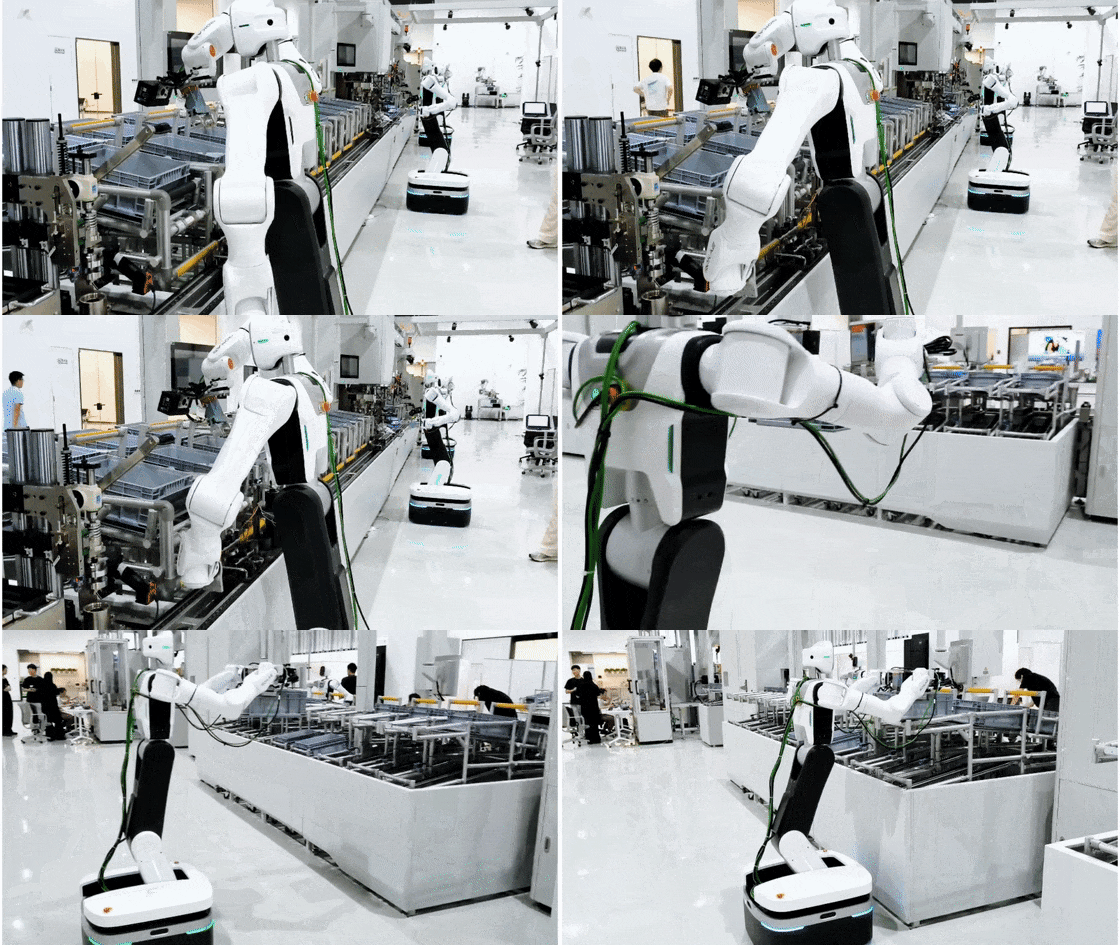
Once you understand this, if you look at the total joint power control and the six-dimensional power at the end, you will see that the difference between the two is not just where the sensor is placed.
The six-dimensional power at the end is mainly solved by the power perception at the end; the total joint power control extends the range of perception to the entire arm.
The all-joint force control arm, which is essentially a magnetic data collection matrix distributed over seven joints, can be synchronously collected by transferring, distributing, and dynamically changing forces between joints. This data density is not provided by end-to-end six-dimensional solutions.
In other words, full-body control means that robots are beginning to exhibit a more human-like physical response.
Because the last few millimeters of landing operations require the body to make its own judgments. Whose hardware can provide more complete, more subtle multimodal data, and who can form ecological spaces on the model side. The full-body force-controlled mechanical arm means that physical intelligence can no longer just execute a pre-calculated trajectory, it can start faster based on real-world feedback and edge adjustment, thus making the operating scene more meaningful.

It's the same with remote control. When a person pulls a machine arm, it's not the ability of the robot to complete the action that really affects the experience, but the ability to follow it in time. The operator pulls forward quickly, the robot strikes halfway, and the action becomes noticeably delayed; the operator suddenly changes direction, and the entire action becomes rigid if the robot continues to run on its original trajectory.
In an interview, Zubert referred to the experience as "the strain on the hand". Simply put, because of the higher system bandwidth of total joint power control, the mechanical arm is able to respond more quickly to external inputs.
Remote control is not only a way of controlling robots, but also one of the important ways to access real-world data today. The lack of tracking by robots affects how many tasks an operator can complete a day; whether the response is stable affects whether the collected motion data can actually be used for training.
Thus, a previously dispersed link in different technical links began to connect, and the arm's power control performance began to affect remote control efficiency; remote control efficiency began to affect data production with physical intelligence. Power control was therefore no longer just a function within the mechanical arm, but it also began to extend to model training.
04.
It's a ticket, and the next round is just getting started.
After the delivery of 10,000 arms, there are already a number of smart companies that are willing to give their models, data and applications to the same body to carry.
This also proves that physical AI today needs not only a smarter model, but also a body that is stable enough to give the model a real chance to enter the world.
The total power control of the joints that Stone has accumulated over the past decade is being extended upwards along the joints, arms, motion control and micro-brain capabilities; and the delivery of these capabilities for the first time, in the form of infrastructure, is being used in a large-scale deployment by a well-established smart company.
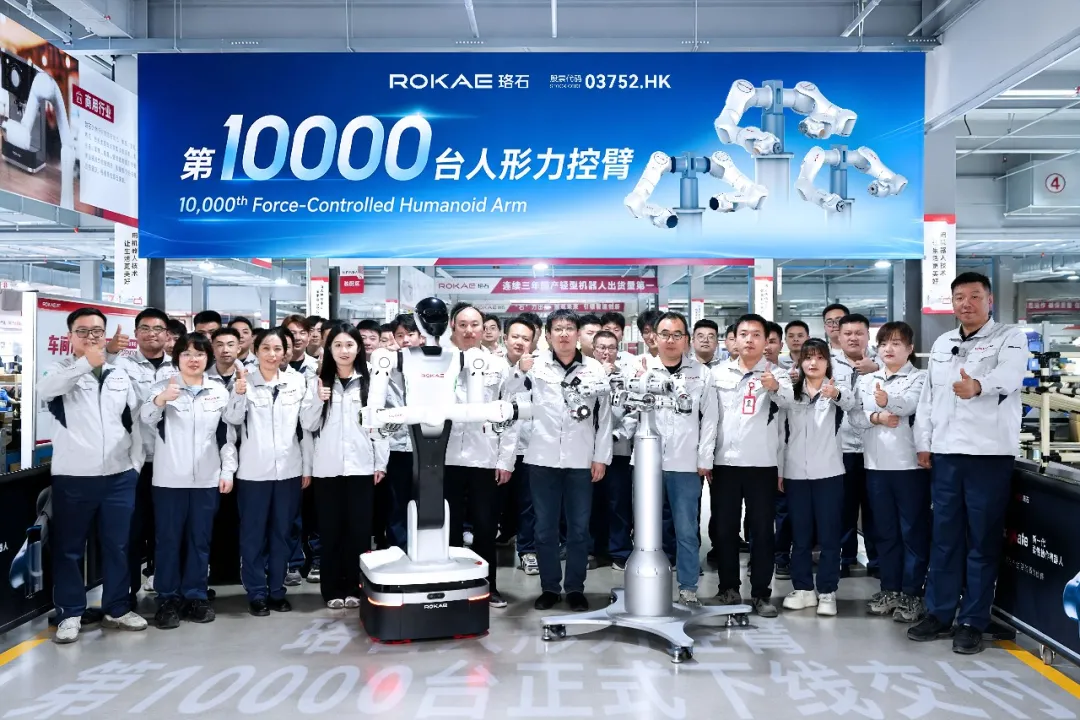
From this perspective, the 10,000 human-powered control arm is not the end, it's more like an industrial stage sculpture, which means robots are starting to leave a well-organized demonstration environment and have the ability to enter the real world of errors, friction and collisions.
In this world, the most important capabilities are often hidden in the unforgettable moments: the moment the cloth is pressed on the table ensures continuity; the moment the box hits another box ensures stability; the moment the USB inserts the last few millimeters of the interface ensures flexibility; the moment a person hits the elbow of a mechanical arm ensures safety.
The ability of a robot to know what's going on in those moments and move on to determine if it's a physically intelligent person capable of qualifying for a job.
The most difficult part of the body is being scaled up and transformed into infrastructure that can be directly called upon by industry.
As we look back on September 29, 2026, the story of who is physically intelligent will no longer be about who's cooler, but who's more stable, whose infrastructure is thicker, whose products are more stable and useful, and who's really being picked by mass users at the production stage.
The delivery of thousands of stones is a proof of completion, which means that the real landing is just beginning.