It's the first time in the history of the world.
Google has been silent for seven months, and it's finally coming out big.
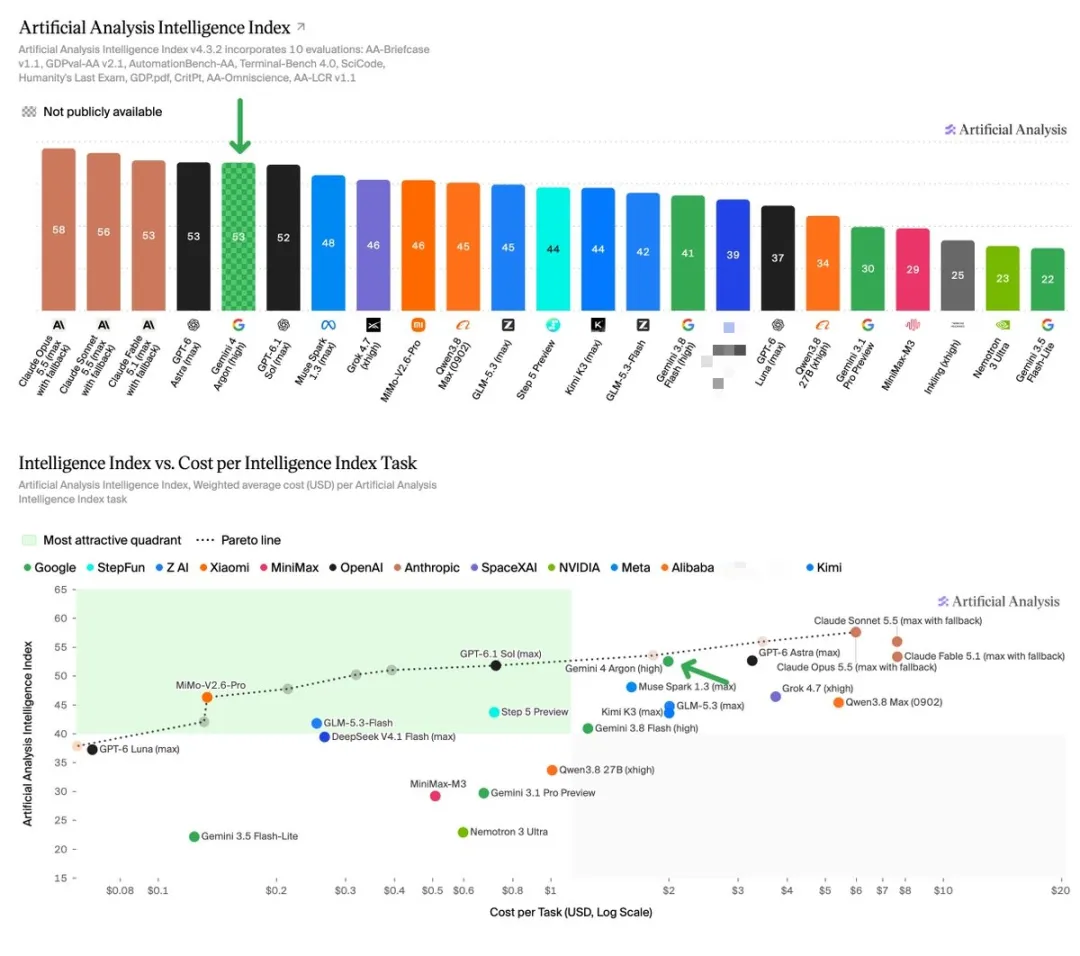
In the early morning hours of October 1, Beijing time, Google DeepMind released the Gemini 4 Argon, its first non-Flash-class exclusive model in seven months.
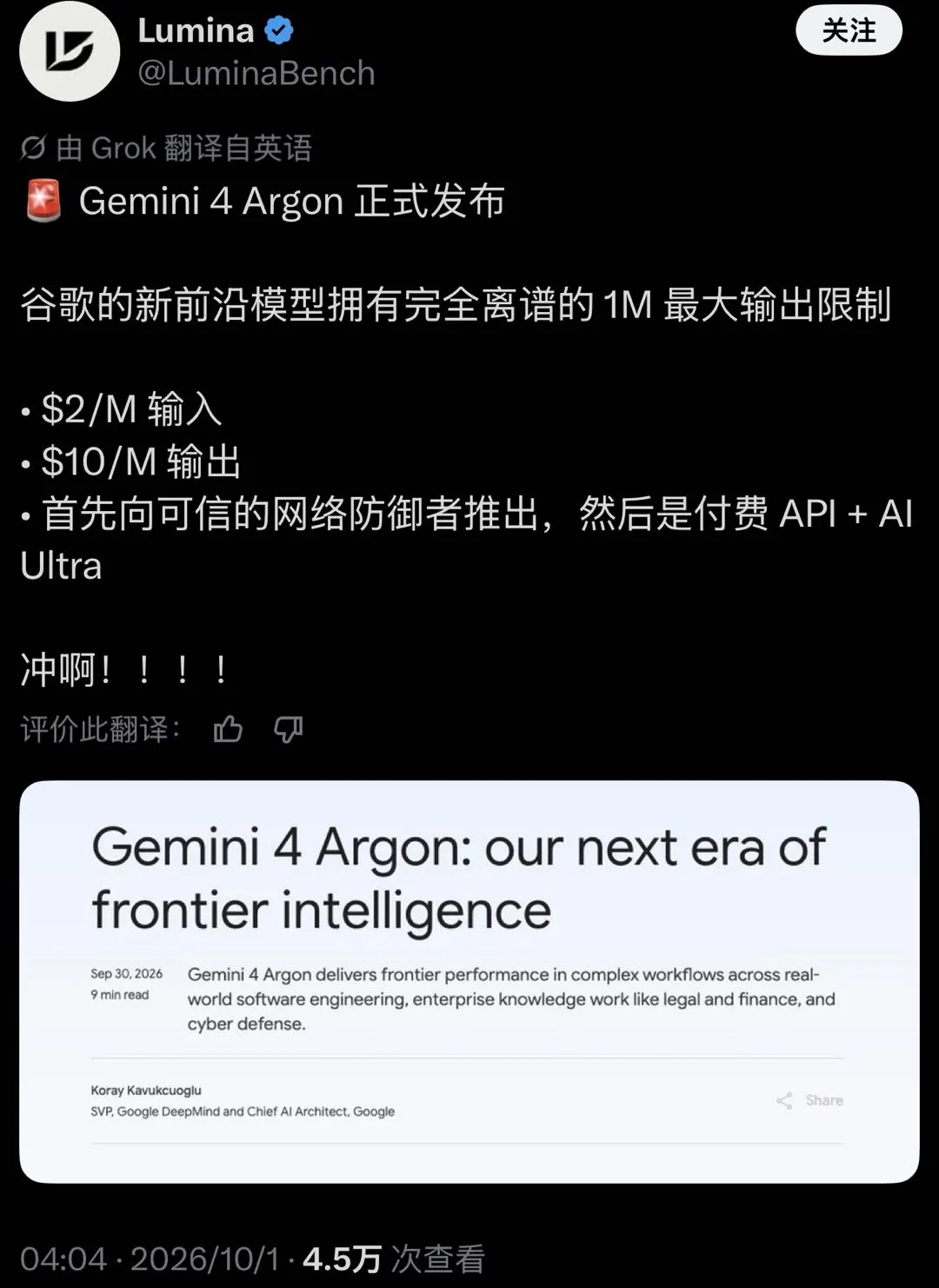
On the Artificial Analysis Intelligence Index, it scored 53 points, equaling GPT-6 Astra and Fable 5.1, one point higher than GPT-6.1 Sol, and the hallucination rate dropped to 15%.

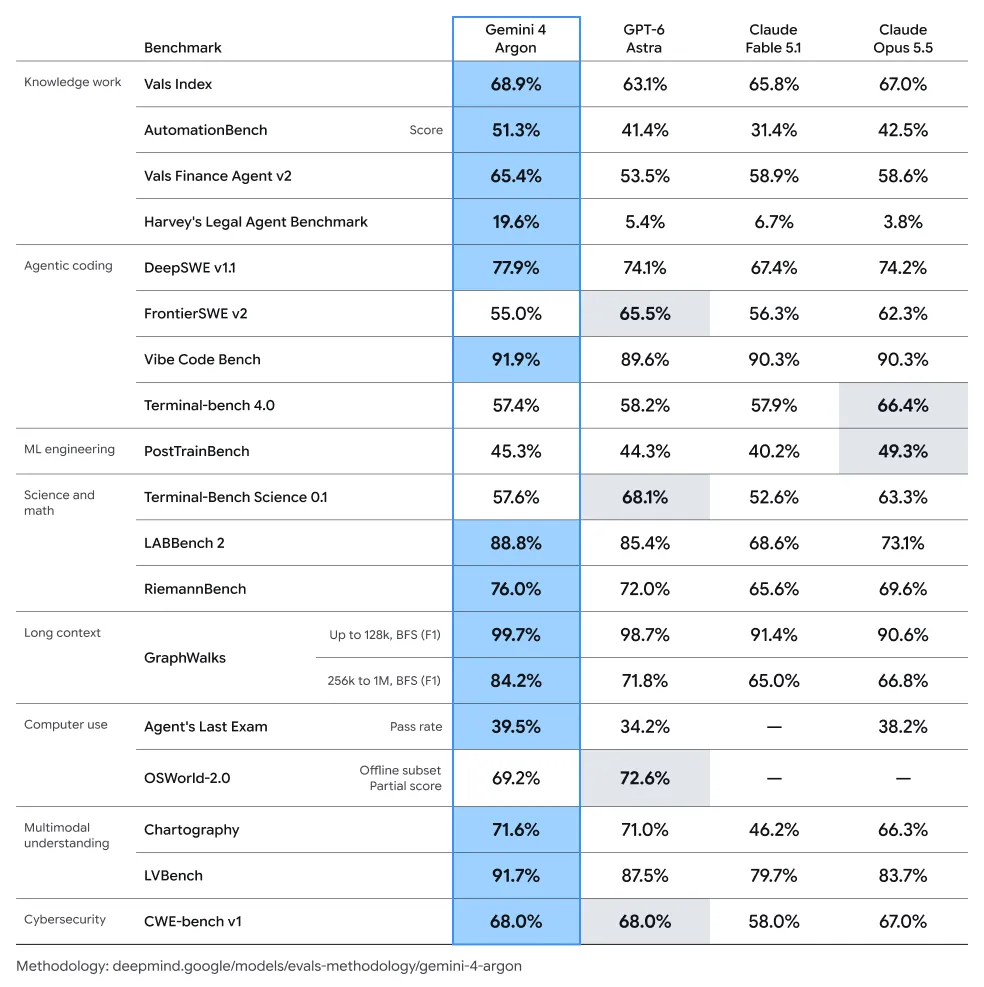
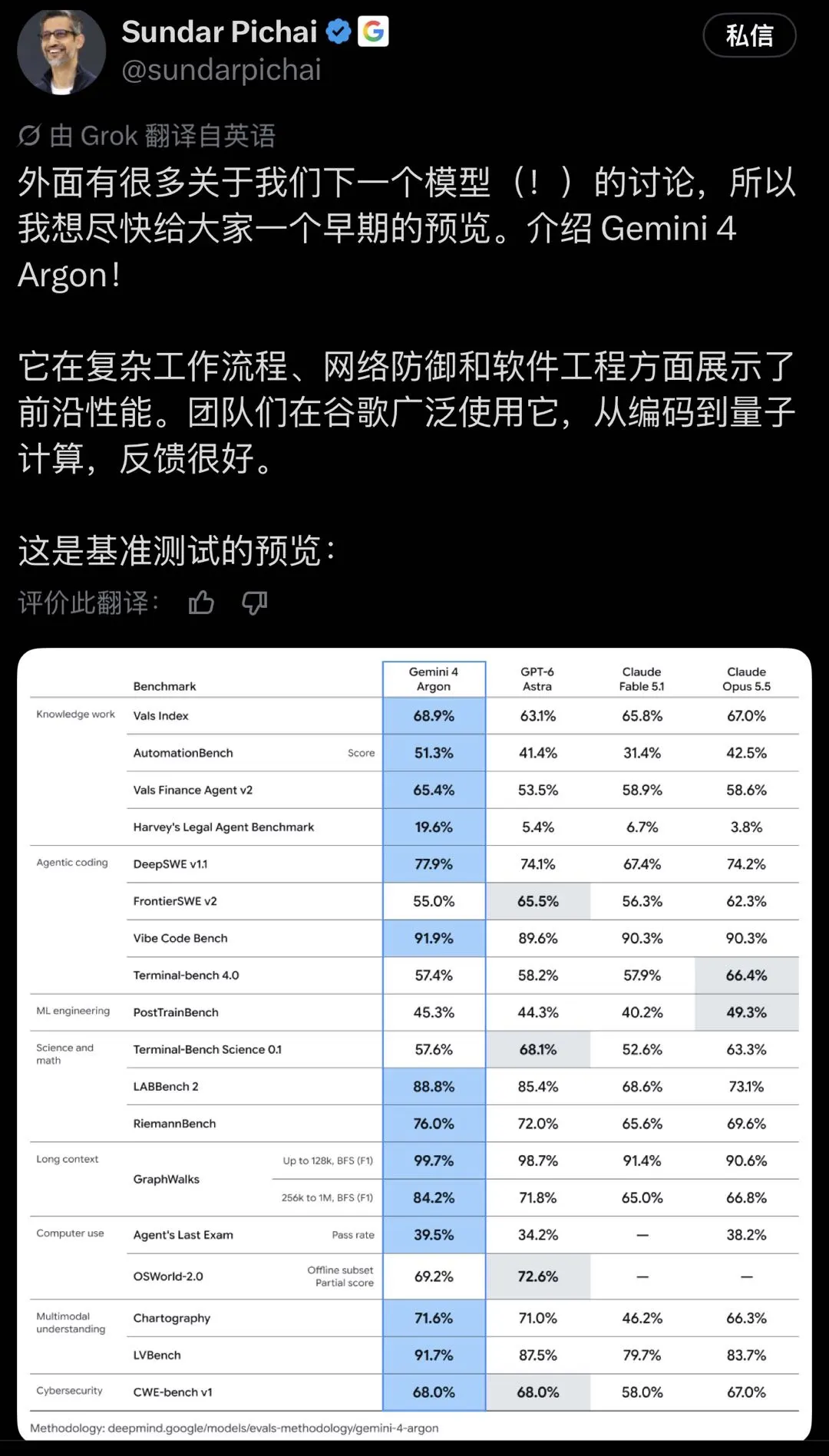
The model significantly improved Agent capabilities on AutomationBench-AA and Terminal Bench, while ranking first in the CWE-bench cybersecurity benchmark, allowing it to autonomously detect, verify vulnerabilities and generate PoC.
Currently, it supports context and multimodal input on 1M to select user rollouts, directly impacting the front-end model price battle patterns.
In the same set of assessments, the average cost of completing a task at an initial discount is $1.99, which is 60% of the GPT-6 Astra.
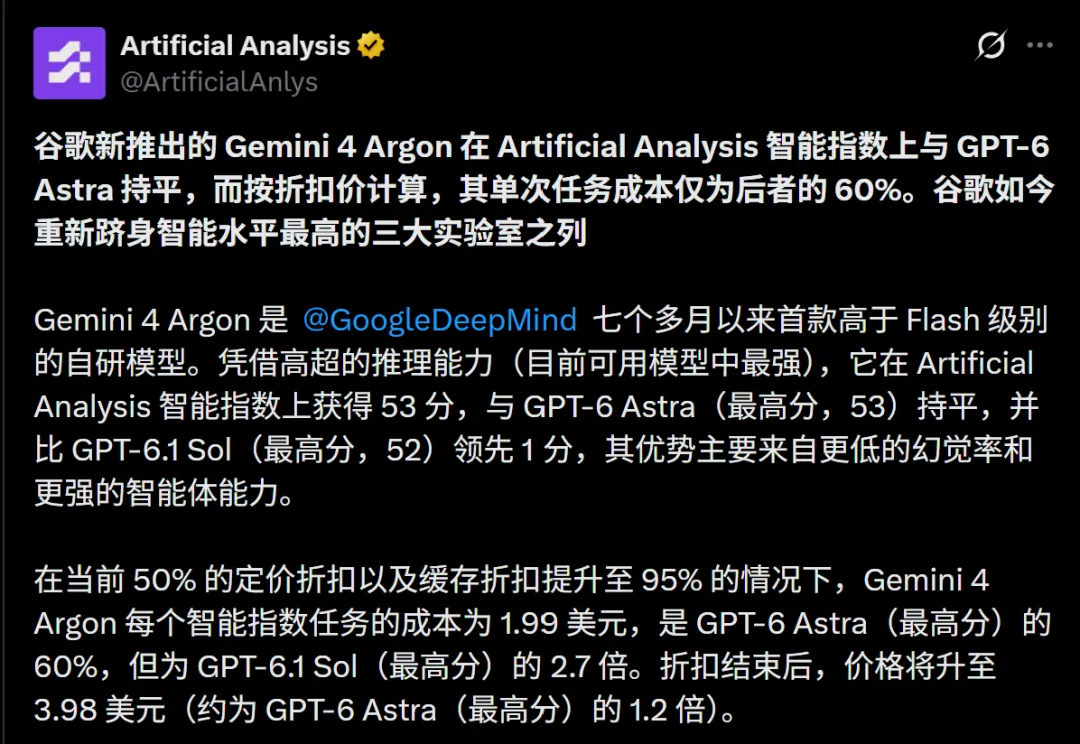
The scores are flat and the bills are thin. Looking at these two things, this time it's enough for Google to rethink who to entrust the task to.
But when I put the scores, the quotes and the usage together, the most interesting thing came out. This model is cheap, but it's expensive.
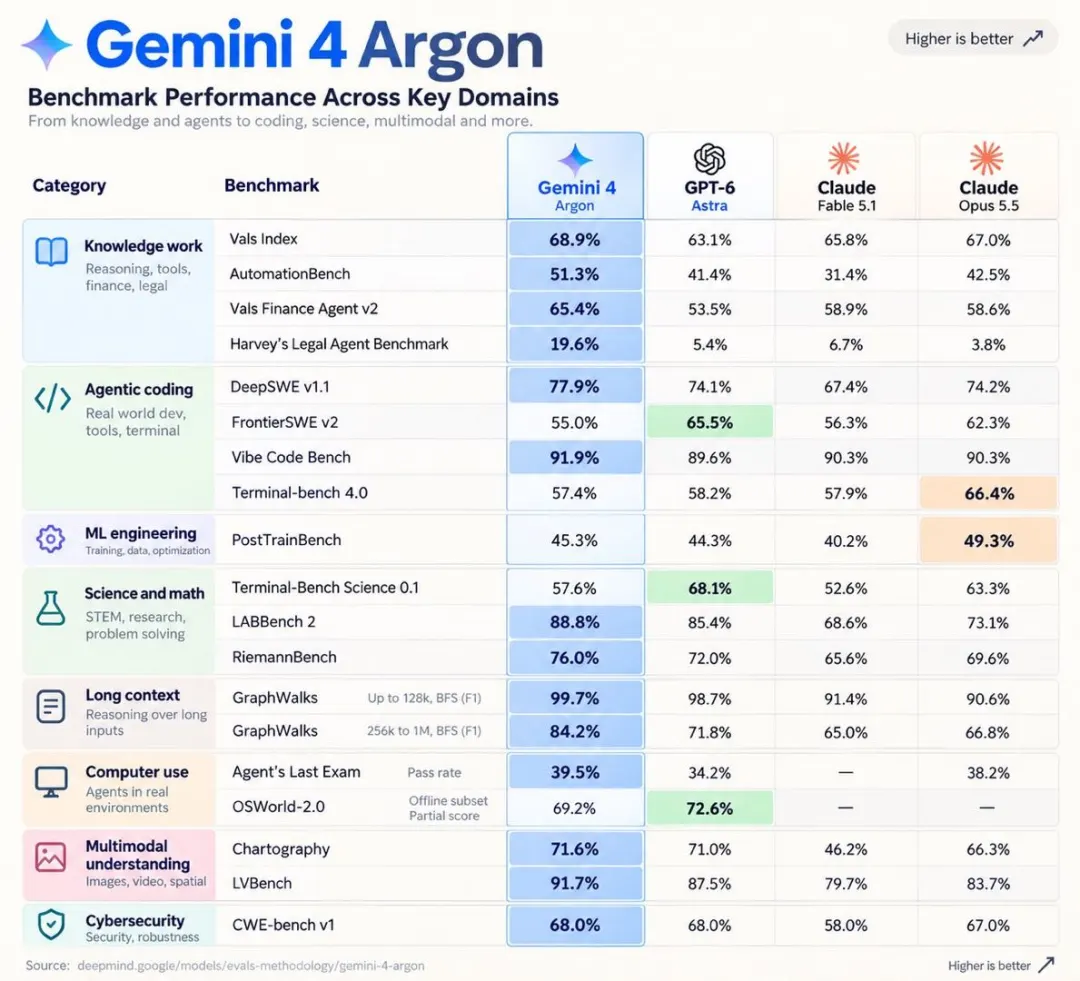
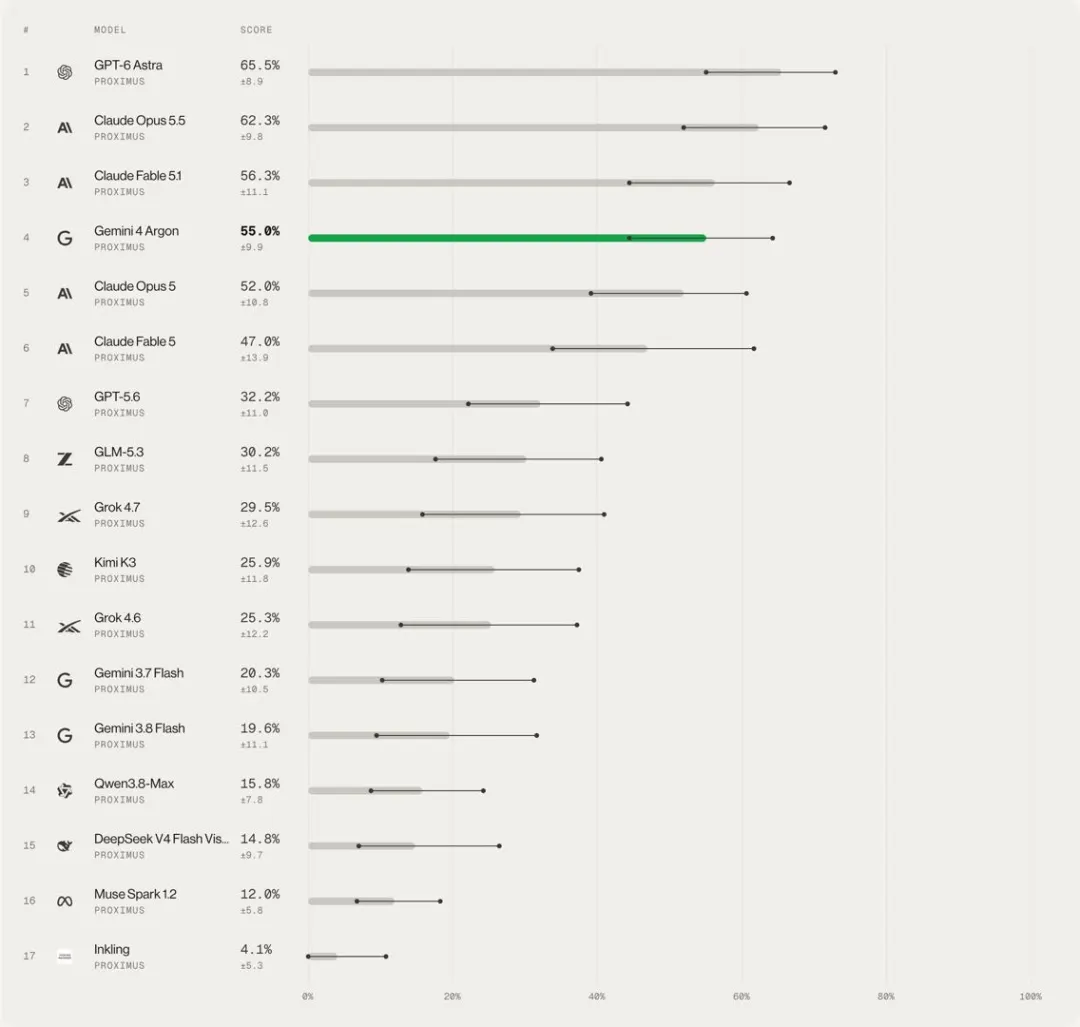 The last three times, we have to re-count.
The so-called Seven Months of Silence has a clear scope. Argon was Google's first closed-source model above the Flash level for more than seven months, during which time Google still had Flash products.
This time, 53 points higher than the previous non-Flash model Gemini 3.1 Pro Preview, 23 points higher and 12 points higher than the Gemini 3.8 Flash.
The intelligence index can be understood as a synthesis of a set of capability tests. Argon uses high reasoning grades, Astra and Sol use max grades, indicating that they are at a similar level in this set of assessments, and that specific work can be seen separately.
For long-term users of OpenAI and Anthropic, this change is direct. Google has become a serious comparison option when choosing the front-end model. However, Argon is currently only available to a limited number of users and is not yet publicly available.

How is Google preparing to attract these users?
Tokens can be roughly understood as small pieces of model text-reading time. Currently, for every million Tokens, Argon inputs are $2 and outputs are $10.
Repeated use of the same material also involves caching. Cache-compliant entries can enjoy a 95% discount, 90% less than the Gemini 3.8 Flash, which only charges $0.10 per million of caching entries during its initial run.
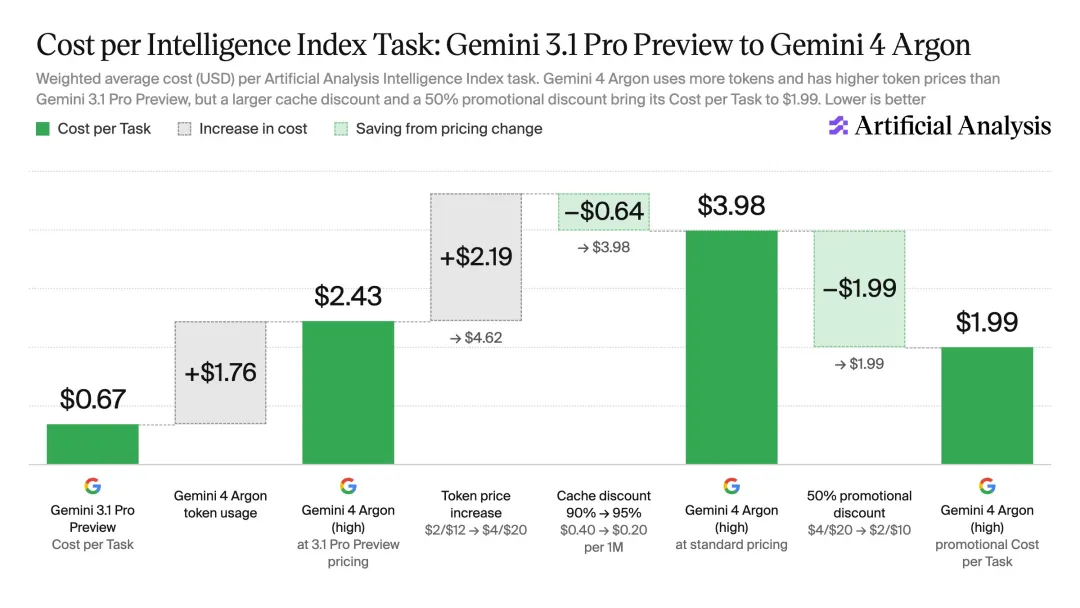
It seems quite economical. People who use models pay the entire bill, and the one-time price is just one of them.
Argon produces an average of 62,000 tokens per task, while Astra uses only 27,000. If you compare the reasoning process to drafting, its draft paper is more than twice as long.
In terms of mission costs, $1.99 for Argon is actually less than $3.26 for Astra, $5.98 for Opus 5.5 and $7.63 for Fable 5.1.
The longer-term option is that $2 and $10 are part of the initial five-front promotion, and Google has not yet announced an end date.
After restoring the standard price of $4 input and $20 output, the cost per mission would be $3.98, about 1.2 times that of Astra, according to the same rating quality.
These dollar numbers also have a common premise: they're the average cost of a task in a smart index test. If you let the model change the code, check the material, how long it takes to input, output, and use the cache, it changes the bills. $1.99 can't be a unified offer for all the work.
This is interesting. The one-time price is only one-fifth of the opponents, but the task bill is 60 percent; the promotion ends, and it will be over. Those who intend to enter long-term, have to take their own task trials, quantity and discount conditions into account.
I've got the money and I have to answer a question: Argon, 53 points, where is it going?
I'm most interested in how it deals with "don't know".
In the AA-Omniscience test, Argon's hallucination rate was 15%, the lowest in a model with an IQ of more than 45 points. Astra was 51%, Sol was 54%. AA's explanation was that Argon was more willing to admit to not knowing and to still give answers after reducing guesses.
This is very attractive to users. The more frequently they encounter unfamiliar questions, the easier it is to verify them with ease. The model is willing to stop and acknowledge its limited capabilities, at least to let people know where to verify.
However, fewer answers and more than one question are two things.
Argon's accuracy in this test is 50%, 13 percentage points lower than Astra's 63%, and even 5 percentage points lower than the Gemini 3.1 Pro Preview. The overall score is 42, close to Astra's 43, and the same as Sol.
You can appreciate its restraint, while acknowledging that it doesn't answer the same questions as Astra. The 15% delusion rate also belongs to this test and can't be directly considered as the error rate for all everyday answers.
There is another gap in the ability of a real agent to work with his hands.
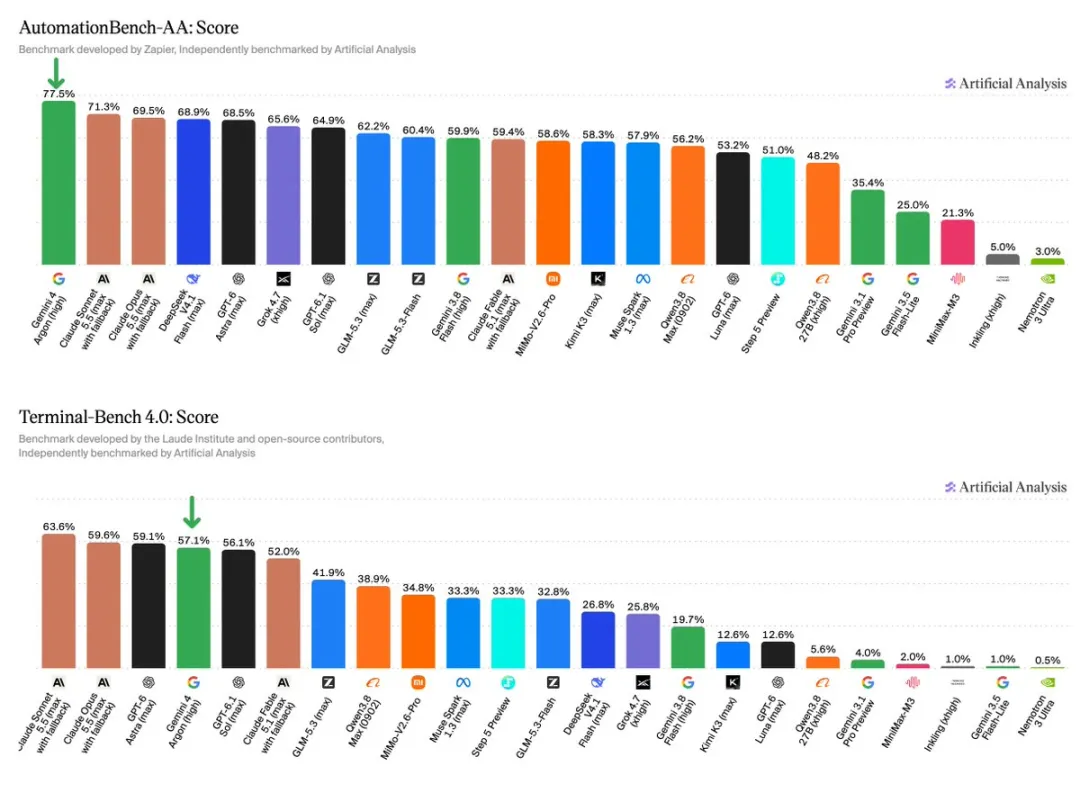
On AutomationBench-AA, Argon took first place with 77.5 percent. In Terminal Bench 4, it scored 57 percent, although it was up 53 percent from the Gemini 3.1 Pro Preview, still lagging behind Sonnet 5.5, Opus 5.5 and Astra.
AA-Briefcase has a similar disadvantage. It meets 65% of the rating details, the highest values measured by AA, while the quality of analysis and the quality of presentation are low.
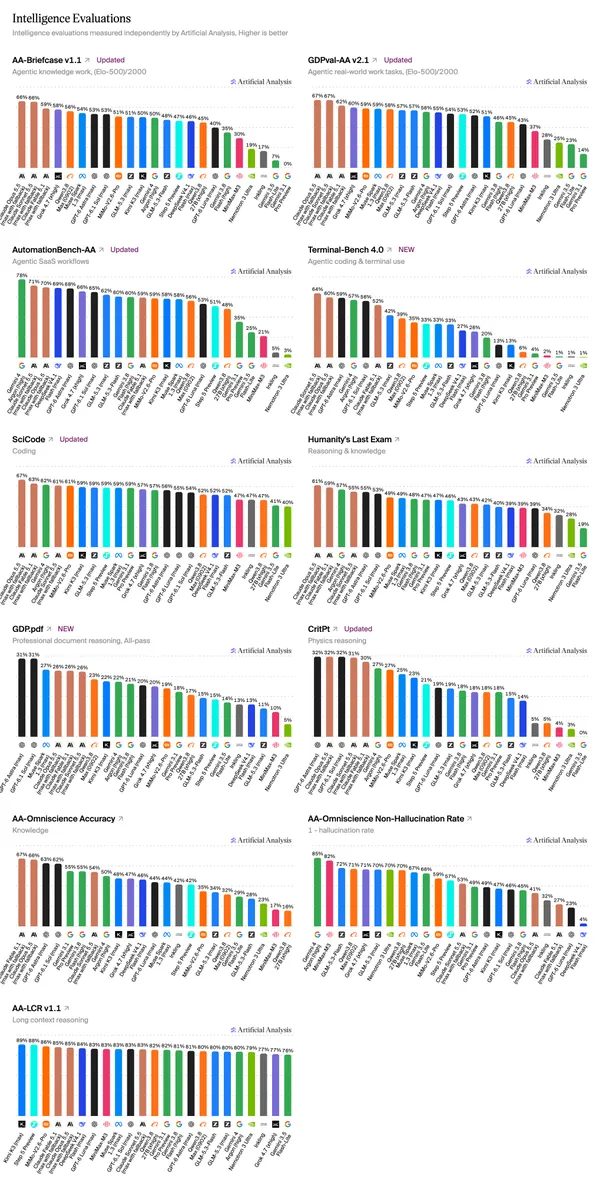
The CWE-bench v1 model checks whether a vulnerability can actually be fixed, with Argon ranking first with 68 percent. Google also claims that it can detect, verify, and generate PoC, which is proof that a vulnerability does exist.
It's easy to see how it's done, and we can finally look down the code.
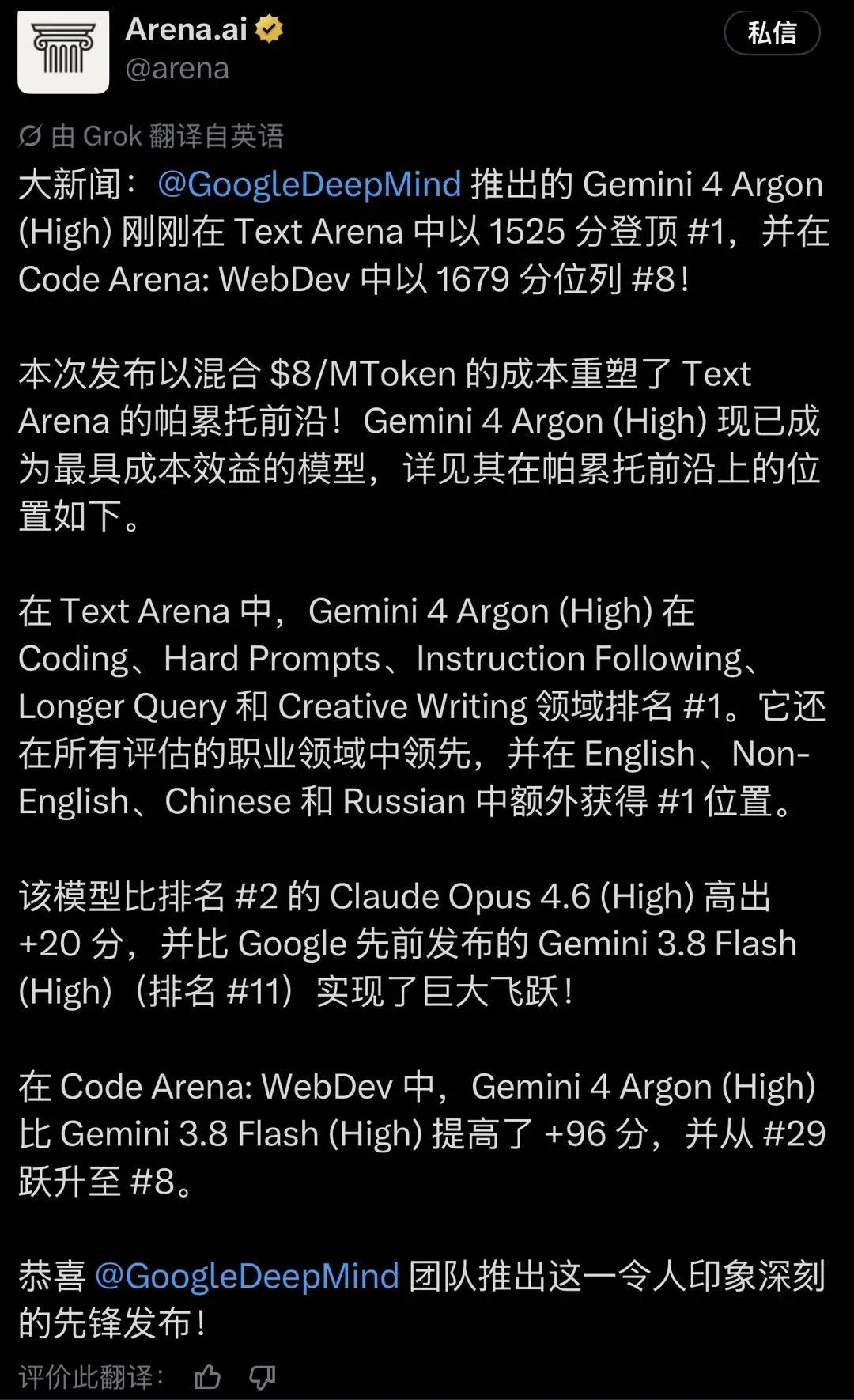
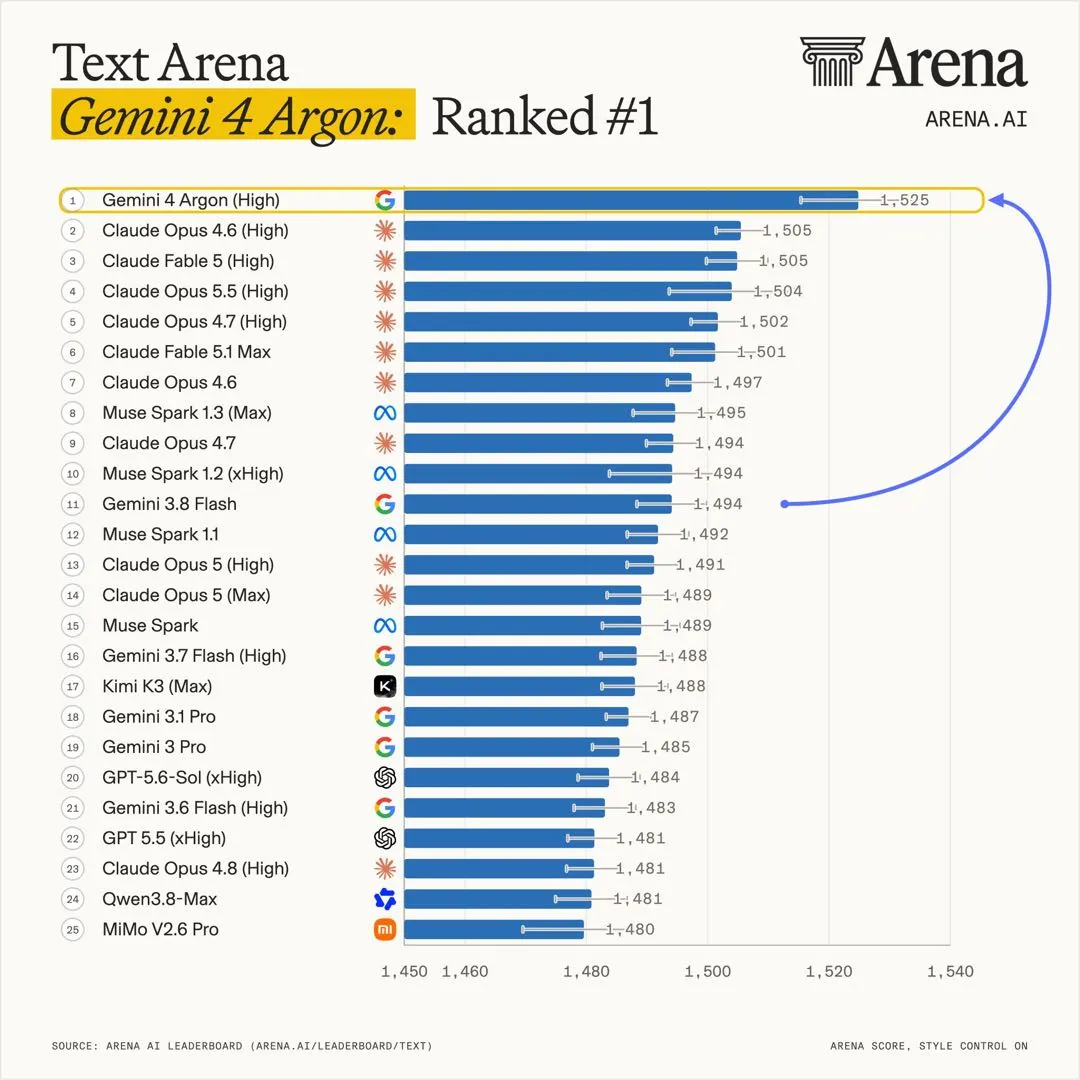
On Text Arena, Gemini 4 Argon was ranked number one.
What interests me more than the list is how Google uses it.
According to Google, the Argon smartphone has analyzed data on the performance of the data center to find memory optimization points, and the corresponding changes were subsequently uploaded, releasing more than 300 TiB of memory.
This process is very specific. There are systems in operation, there are performance data, there are changes, and there are results after deployment. It provides evidence beyond evaluation to model capabilities.
The 300 TiB here refers to the released memory capacity that can't be directly converted into how much electricity is saved or the cost of purchasing the server, and the material doesn't give such a bill.
The same material also states that Argon is involved in the migration of C/C++ code to Rust, involving more than 800,000 lines of in-house code, which must be audited and tested extensively before deployment.
An example of a video decoder is more complete. Google says that the smartphone has replaced 32,000 lines of SIMD code with secure Rust. This type of code is responsible for processing multiple data in parallel, which is important for operational efficiency.
The result is that the current version of Rust is 2.7 times faster and the video output is consistent.
Argon supports context on 1M Token, which allows you to receive text, images, video and voice, and output text.
For long-range tasks, the newly added Long Decode Continuation of the Gemini API allows long-range response to be suspended and then output via subsequent calls, allowing reasoning to run as long as possible to 1M output tokens, avoiding request overdue.
There are two different lengths here. The above context determines how much material it can hold at a time, and the output limit determines how long it can continue the process.
However, it is important to note that in order to be able to process more work continuously, it is necessary to deal with engineering tasks that cannot be completed in a few sentences.
The competition between OpenAI, Anthropic and Google makes for a three-way comparison. Users can compare scores and prices and finally see more concrete engineering results.
When the discount ends, how long the list will lead, with varying numbers. Google has already allowed AI to participate in the transformation of its own infrastructure, which is even more worth tracking.
The next time the model is released, I would like to see more results like this. What has been repaired, what has been saved, what changes have been made online.